
Custom Carpentry in Trenton, NJ: Trim and Millwork for Federal, Italianate and Victorian Houses
Cal HewittPublished
- custom carpentry
- historic homes
- permits
- trenton nj
- new jersey
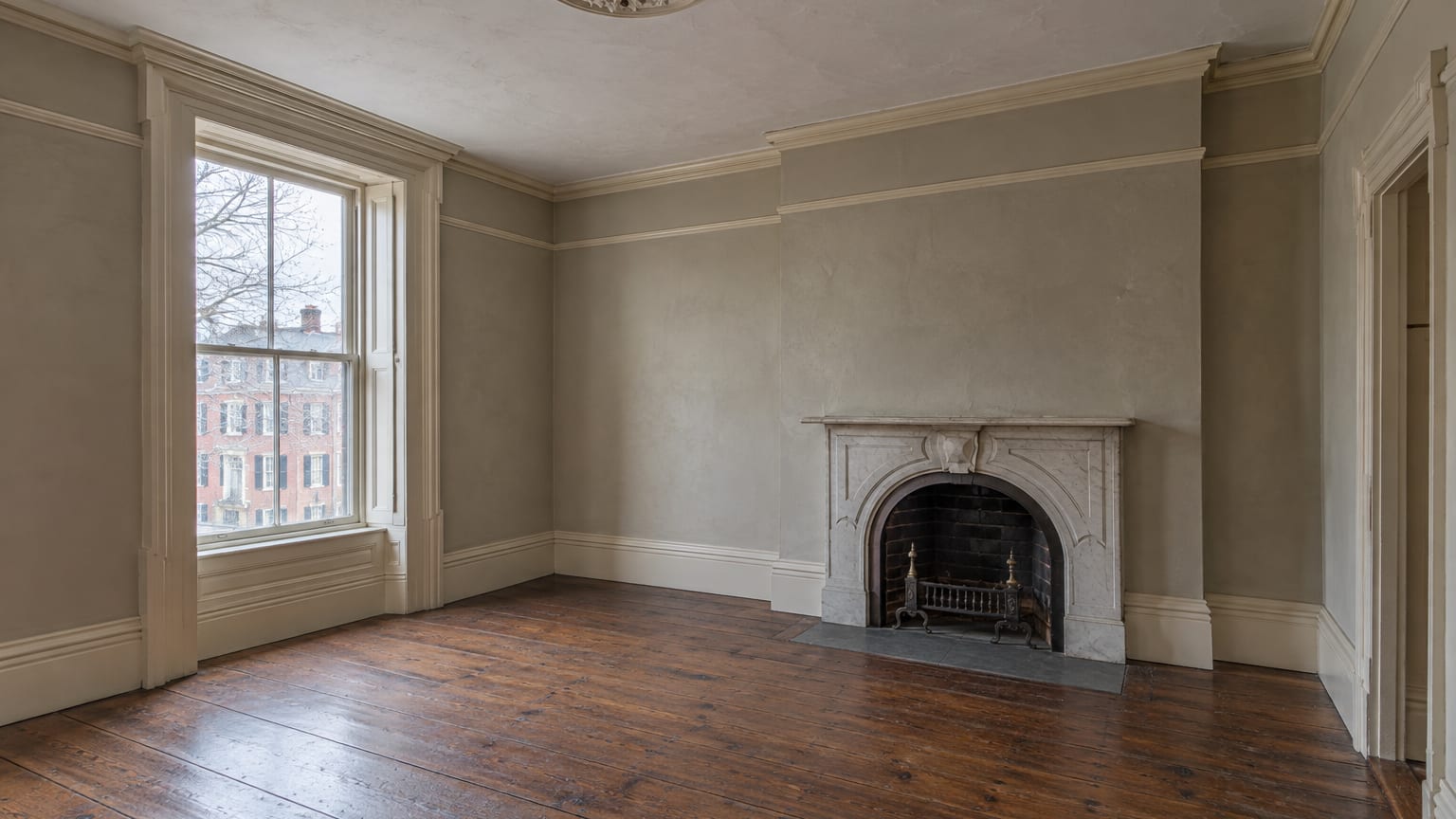
You own an older house, and you need new trim, a replacement door, a stair repair or built-ins that look as though they were always part of the place. A standard casing from the lumberyard rarely matches what is already on your walls, and the wrong profile is easy to spot from across a room. You may also be wondering whether the old paint on the woodwork is safe to sand or cut, and whether the city has to approve work on the outside. Custom carpentry in Trenton, NJ is mostly a matching job, and the house itself tells you what to match. The sections below cover how to read your trim, what lead-safe work means, which approvals to ask about and what to put in a written scope.
Key Takeaways
Describe the house to the carpenter
Give the address, the approximate age and photos of the casing, baseboard, doors and stair parts, because a Federal, Italianate or Victorian house calls for different profiles.
Do not dry-sand or cut suspect painted wood
New Jersey says to treat a pre-1978 home as potentially containing lead-based paint unless evaluated, and EPA requires certified firms and certified renovators using lead-safe practices for renovation that disturbs painted surfaces.
Ask before work starts
Many repairs and renovations need permits, Trenton says many renovation projects need plans, and exterior work on a designated property should go to the Landmarks Commission first.
Get the scope in writing
Quantities, exclusions, allowances, change-order rules and who pulls the permit belong in the contract, along with the contractor's New Jersey home improvement registration.
Reading the Trim You Need to Match
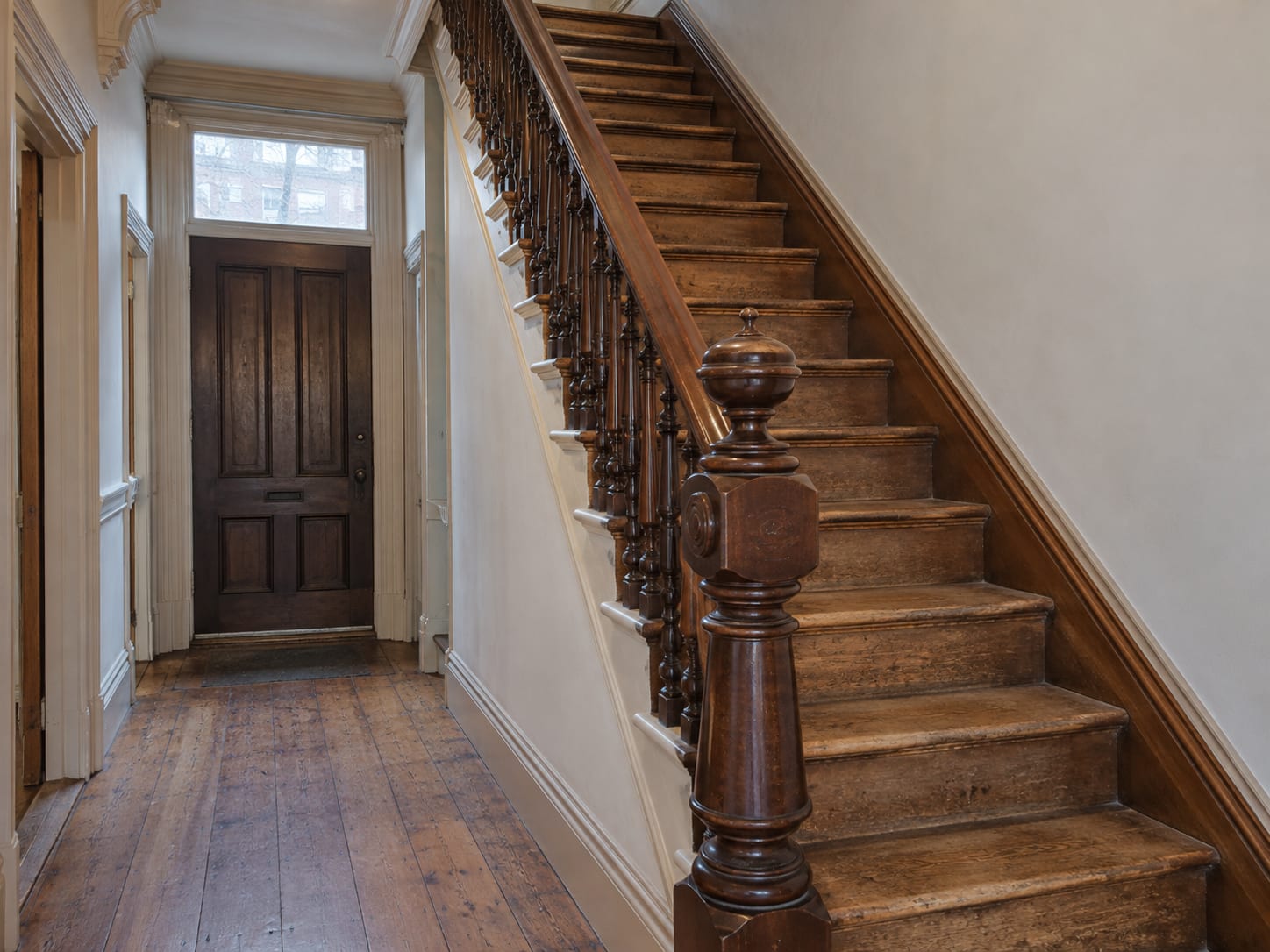
Before a carpenter picks up a saw, the useful work is looking. The profile of the casing around a door, the baseboard along the floor and the crown at the ceiling all have a shape, and that shape is what has to match. The panels on the doors, the newel post and balusters on the stair and the mantel or built-ins have to match as well. A good carpenter also checks the wood itself, and asks whether it is weathered, rotted or only worn, since that decides whether the existing piece can be repaired or has to be replaced.
Trenton's houses give those profiles a local character. The Trenton Historical Society describes the city's earliest housing as mostly simple wood-frame houses, with colonial-era and Federal-style buildings concentrated in the Mill Hill, Academy/Hanover and Greenwood/Hamilton historic districts. Elsewhere in the city you find nineteenth-century Greek Revival, Italianate, French Second Empire, Victorian and Queen Anne buildings. Six of the city's eight historic districts are residential.
That variety is the reason one profile does not fit every house. Federal-style woodwork tends to be restrained and finely proportioned, while Italianate and Victorian houses often carry heavier casings, brackets and turned or carved stair parts. You do not need to name the style yourself. Describe the address and the building age, and send photographs of the details you want to match, taken straight on and from an angle, with a tape measure in the frame.
Hover or tap a row to highlight it.
| Style | Where it shows up | What the woodwork tends to look like |
|---|---|---|
| Federal | Colonial-era and Federal buildings, especially in the Mill Hill, Academy/Hanover and Greenwood/Hamilton historic districts | Restrained and finely proportioned |
| Italianate and Victorian | Nineteenth-century buildings elsewhere in the city | Heavier casings, brackets and turned or carved stair parts |
A few practical points help the carpenter give you a real answer:
- Which pieces are original: Point out trim that has never been replaced, since it is the best pattern.
- Which pieces are missing or damaged: A carpenter can often copy a surviving section to rebuild a missing one.
- Where the work sits: Interior trim, a stair, an exterior door casing and a porch each raise different questions.
- How the room is built: Old walls and floors are often out of square, and trim has to follow them rather than fight them.
Getting New Work That Looks Like It Was Always There
Stock trim is made to common profiles in standard sizes, and older houses were often built with different shapes and dimensions. That is why replacement stock rarely matches an old profile. Custom milling solves it: a shop cuts knives to the shape of your existing trim and runs new lengths in matching wood. For a short run, a carpenter may instead reproduce the detail by hand, or combine a few stock pieces into a built-up molding.
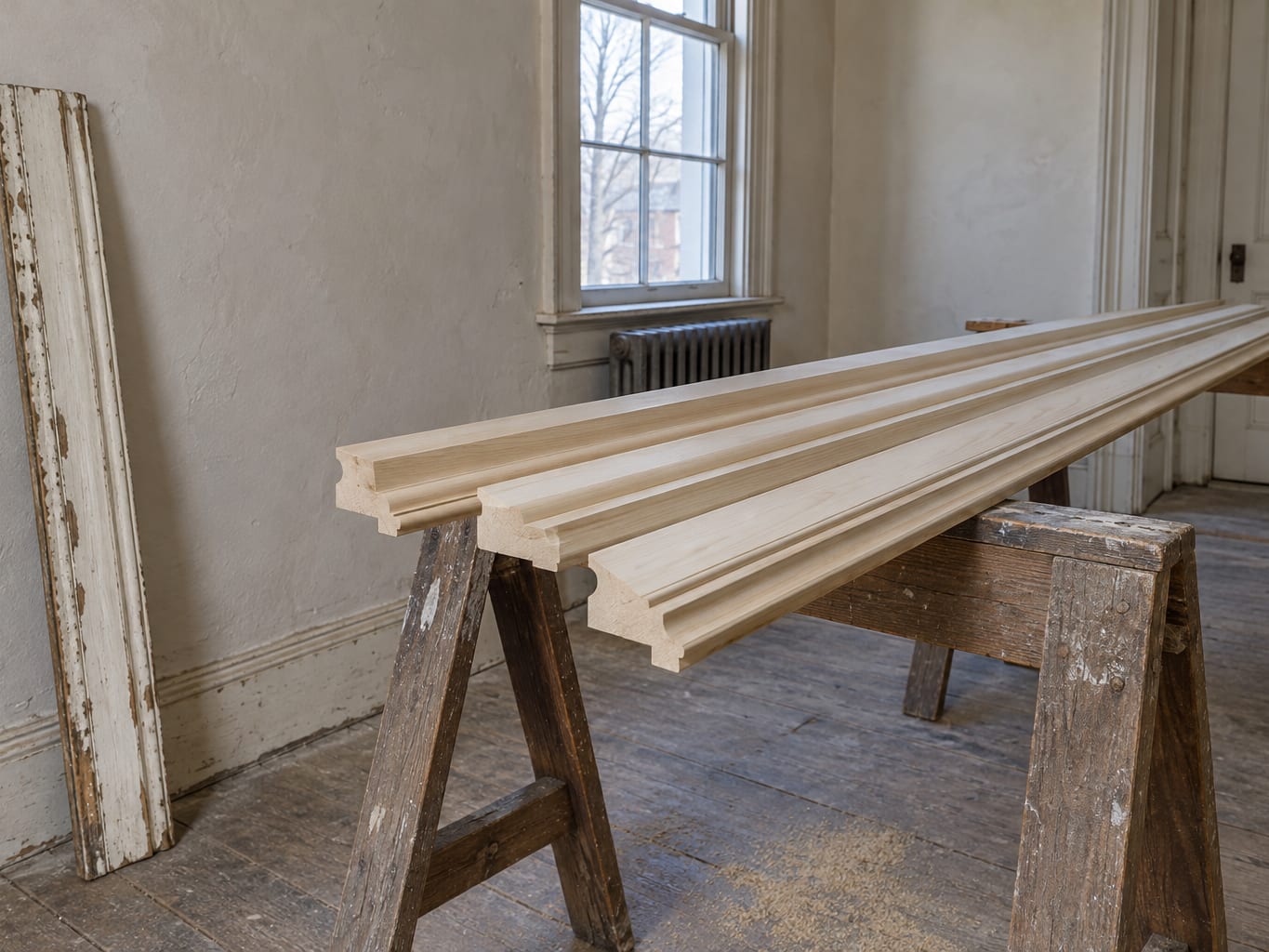
Repair is often the better answer. Weathered or partly rotted wood can sometimes be cut back to sound material and spliced with a matching piece, which keeps the original in place. A stair with a loose tread or a wobbly rail may need fastening and reinforcement instead of replacement.
Old construction is irregular, so plan for surprises. Walls may bow, floors may slope and framing may not sit where a modern house would put it. When a carpenter opens a wall or lifts a floor to make a repair, the concealed conditions should be photographed and noted before anything is covered again. Those photos protect you if a question comes up later, and they help the next person who works on the house.
Ask, too, how the new work will meet the old. A new section of casing beside an original one needs its joints, reveals and paint sheen to line up, or the eye finds the seam at once. Sample sections held up to the existing trim, before anything is cut in bulk, are a fair thing to ask for.
The wood matters too. Ask what species and grade the carpenter plans to use, how the new wood will be finished and how it will be primed and painted so it ages with the rest of the room.
Keeping Lead Paint Out of the Dust
If your house was built before 1978, the woodwork has probably been painted many times, and some of those layers may contain lead. The New Jersey Department of Health says to treat a home built before 1978 as potentially containing lead-based paint unless it has been evaluated, and that renovation should use lead-safe practices or a certified renovator. EPA requires certified firms and certified renovators using lead-safe practices for renovation that disturbs painted surfaces in pre-1978 homes, child-care facilities and preschools. New Jersey separately certifies firms that perform lead evaluation or abatement.
The practical rule for you is simple: do not dry-sand, cut or demolish suspect painted woodwork before the requirements are addressed. Sanding old trim, stripping a door or tearing out a casing can spread fine dust through the house. Ask any carpenter you hire whether the firm is EPA-certified for lead-safe work and how it will contain dust, protect floors and clean up.
One more caution belongs here. Older materials such as floor tile, pipe insulation and siding may contain asbestos, and disturbing suspect material calls for professional evaluation before you start.
What Should You Send a Carpenter Before the First Visit?
A short packet of information gets you a better first conversation and a more accurate scope. Send the property address and the building age if you know it, the work you want done and photographs of the trim, doors or stair parts involved. Add any prior repairs you know about, the dates of any water damage, and anything that limits access, such as a narrow entry, an occupied apartment or a stair that cannot be closed off.
Then ask three questions in the same message. Does lead-safe work apply to this house? Could asbestos be in any of the materials being disturbed? Does the exterior work need review by the city or the Landmarks Commission? A carpenter who answers plainly, or tells you who to ask, is one who has worked in older houses before.
Three Questions to Ask Before the Visit
Does lead-safe work apply to this house?
Ask whether the firm is EPA-certified and how it will contain dust, protect floors and clean up.
Could asbestos be in any of the materials being disturbed?
Older floor tile, pipe insulation and siding may contain it, and suspect material calls for professional evaluation.
Does the exterior work need city or Landmarks Commission review?
Ask before you order exterior trim, windows or porch parts.
Getting the City Approvals Right Before Work Starts
Many repairs and renovations need permits, and ordinary maintenance is the exception. New Jersey's permit guidance says permits cover new construction and many repairs, renovations, alterations, reconstructions and demolitions. Structural, electrical and plumbing work are inside the permit system, and required inspections happen while the work is in progress, before it is covered or concealed.
Trenton's Division of Technical Services issues building, plumbing, electrical and fire-protection permits, and says many renovation projects need architectural or engineering drawings or plans. Whether a swapped door casing or a rebuilt stair needs a permit depends on the work, so ask the contractor or Technical Services before anything starts. Confirm who is responsible for applying and for scheduling inspections.
If your house is a designated landmark or sits in a historic district, exterior restoration is a separate question. Trenton's ordinance provides for Historic Landmarks Commission review of restoration-permit applications, so check with the Commission before you order exterior trim, windows or porch parts. Interior work on a private stair or door casing is a different matter, and your permit questions still go to the code office.
Whatever the answer, keep the paperwork. Hold on to the permit, the inspection records, the contract, invoices, photographs, warranties and any change orders in one folder. If the house is sold or insured later, that folder shows what was done, when and by whom, and it saves a great deal of guessing about what is behind a finished wall.
Choosing a Carpenter You Can Verify
Anyone can say they match old trim, so ask to see it. Photographs of past work in older houses, and a description of how they matched a profile, tell you more than a price.
New Jersey home improvement contractor businesses must register with the Division of Consumer Affairs for covered residential work, and Trenton directs owners to verify the registration with the state. The state's registration instructions say those businesses must carry commercial general liability insurance of at least $500,000 per occurrence and workers' compensation insurance unless exempt by law. Ask for the certificate of insurance and a written contract.
Also ask whether the carpenter will pull the permit, who will meet the inspector and how the firm handles lead-safe practices on pre-1978 work.
Hover or tap a row to highlight it.
| Question | Who to ask or what to check |
|---|---|
| Does the work need a permit? | The contractor or Trenton's Division of Technical Services, before anything starts |
| Does exterior work on a designated property need review? | The Landmarks Commission |
| Is the contractor registered? | The New Jersey Division of Consumer Affairs home improvement registration |
| What insurance should the contractor carry? | Commercial general liability of at least $500,000 per occurrence, and workers' compensation unless exempt by law |
| Is lead-safe work required on a pre-1978 house? | An EPA-certified firm with certified renovators using lead-safe practices |
What Sets the Price of Custom Carpentry?
Nobody can price your trim without seeing it, so the useful question is what moves the number. These are the drivers:
- Material and grade: The species, the quality of the lumber and the finish.
- Custom milling and matching: Cutting knives, historic matching, specialty trim or nonstandard sizes.
- What is included: Whether doors, stairs, windows, cabinets, flooring or built-ins are part of the job.
- Framing or sheathing: Structural repair behind the finish work.
- Hazard controls: Lead-safe work, asbestos precautions and dust containment.
- Drawings, permits and inspections: Plans, fees and any historic review.
- Access: Narrow lots, occupied houses, staging, protection of adjacent finishes and debris removal.
- Changes found after demolition: Rot, movement or old repairs revealed once the wall or floor is open.
Ask for a written scope with quantities, materials, exclusions, allowances, change-order rules, who pulls the permit and what documents you receive at closeout. Compare itemized scopes instead of headline prices, and ask for the schedule to be written down, since it depends on material matching, permit review and what turns up when the work opens.
Rebuilding Woodwork After Water or Mold, in the Right Order
Some carpentry jobs follow a water leak, a flood or mold, and they need one extra step first. Replacing trim or flooring before the cause is fixed leaves the underlying problem in place. The order that protects your work is to correct the moisture source, then dry and remediate the affected area, then make structural repairs, and only then do the finish carpentry and painting.
The Right Order After Water or Mold
- 1
Correct the moisture source
Replacing trim or flooring before the cause is fixed leaves the underlying problem in place.
- 2
Dry and remediate the affected area
Keep this phase on its own line in the estimate.
- 3
Make structural repairs
Framing and sheathing behind the finish work.
- 4
Do the finish carpentry and painting
Only after the earlier phases are complete.
Keep those phases separate in the estimate so each has its own line. CDC advises removing mold and fixing the moisture problem, and it warns that damp and moldy places can cause respiratory symptoms in some people. Photograph the damage before it is disturbed, notify your insurer if a claim may apply, and keep permits, inspection records, invoices, photographs and warranties together. If the work moves from remediation to replacement, our build-back services cover that transition.
Frequently Asked Questions About Custom Carpentry Trenton NJ
Can I repair only the visible part of the damage?
Only after the cause of the damage is identified and adjacent materials are inspected. Replacing finish material without fixing a moisture or structural cause can leave the underlying problem in place.
Will the work require a permit?
Ask the contractor or Trenton's Division of Technical Services before work begins. Structural, alteration, plumbing, electrical, mechanical and fire-protection work, and many renovation projects, fall within the permit system.
Could the age of my house create another problem?
Yes. Painted surfaces from before 1978 may trigger lead-safe requirements, and older materials may contain asbestos. Do not sand, cut, demolish or disturb suspect materials until the applicable evaluation and safety requirements are addressed.
Who should I check before hiring a carpenter?
Verify the contractor's New Jersey home improvement registration with the state, ask for the certificate of insurance and get a written contract. For a pre-1978 house, also ask whether the firm is EPA-certified for lead-safe work.
Test Your Custom Carpentry Knowledge
1. How does New Jersey say to treat a home built before 1978?
2. What does custom milling do for old trim?
3. What should be done before replacing trim or flooring after a leak?
4. How long does Trenton's ordinance give the Historic Landmarks Commission to report on a restoration-permit application after referral?
Pick an answer to begin.
Wrapping Up
Good custom carpentry starts with the house: its era, its profiles and the condition of the wood already there. Describe it well, choose a carpenter who can show matching work and follow the lead-safe and permit rules before anything is cut. Put the scope, the schedule and the permit responsibility in writing.
The reward is trim, doors and stairs that look original and hold up, with a paper trail that helps whenever you sell or insure the house. Records of what was found behind the walls are worth as much as the finished woodwork.
If you have an older home in Trenton, NJ and want carpentry that fits it, ExecPro Restoration & Cleaning can look at the work and put together an itemized plan. We handle finish carpentry and build-back work, including after water or mold damage, so repairs and finishes can move in the right order. Call us at (888) 300-3772 or contact us to talk through your project.
Custom Carpentry Terms
Tap a term to see what it means.
Casing. The trim around a door or window.
Serving Trenton
ExecPro Restoration & Cleaning provides mold remediation services in Trenton, NJ, from inspection and testing through removal, drying, and post-remediation verification. Call (888) 300-3772 for 24/7 emergency response.
Related Articles
Custom Carpentry in Robbinsville, NJ: Built-Ins, Porches and Work Seen From the Street
Inside the house, built-ins and trim should match what is there; outside, porches and decks need zoning review. See custom carpentry in Robbinsville, NJ.
Custom Carpentry in Bridgewater, NJ: Trim, Stairs and Built-Ins That Match the House
Matching trim, doors and stairs to an older house starts with the zoning office and a registered contractor. Custom carpentry in Bridgewater, NJ, explained.
Basement Finishing in Trenton, NJ: Plan Review, Escape Openings and Finishes That Can Take Water
Plan it, get it reviewed, then finish it. What basement finishing in Trenton takes before walls go up, and what a flood policy will not pay for below grade.