Save It or Remove It: Mold Remediation in Historic Princeton NJ
Cal HewittPublished
- mold remediation
- mold
- historic homes
- new jersey
- princeton
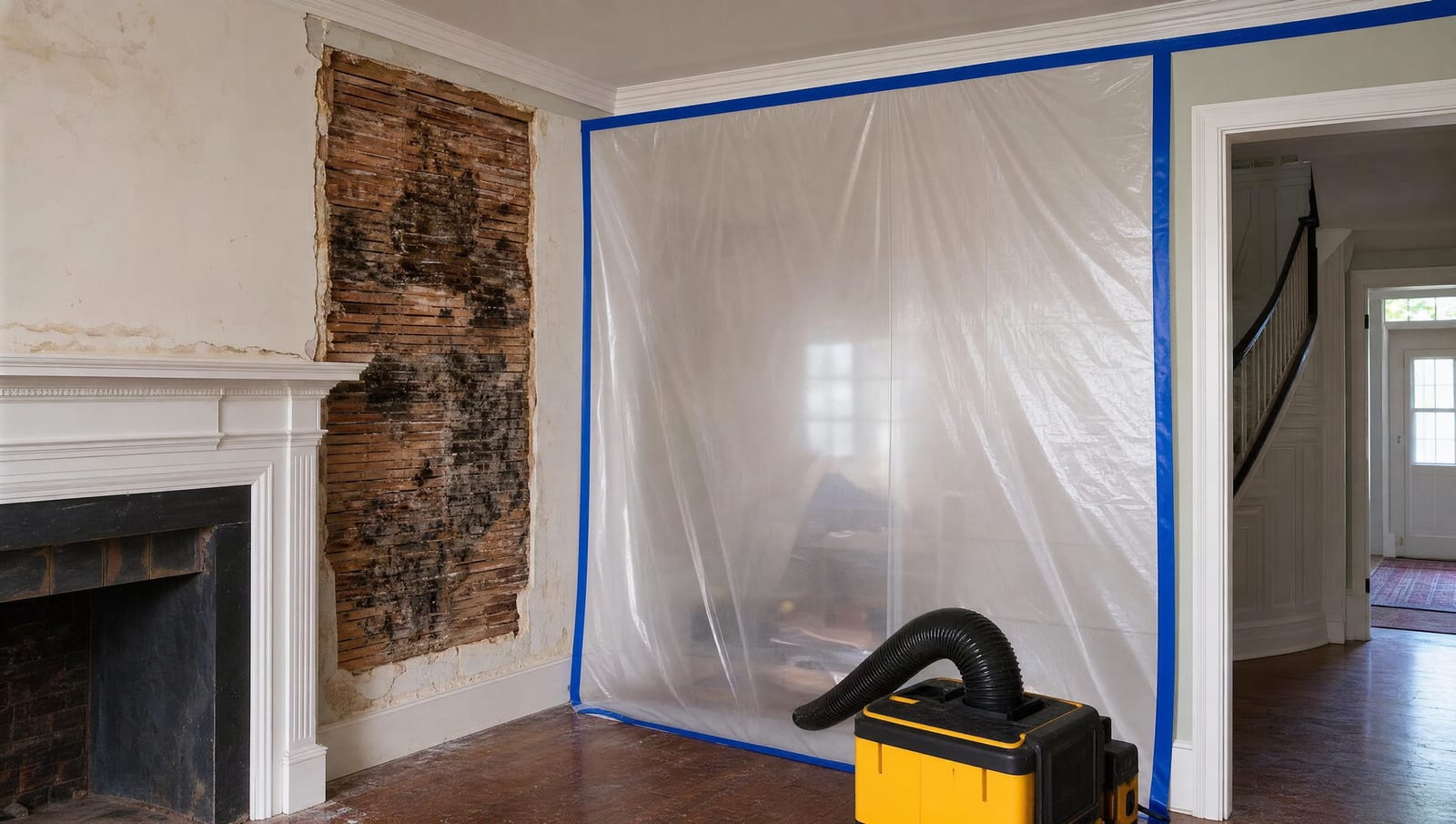
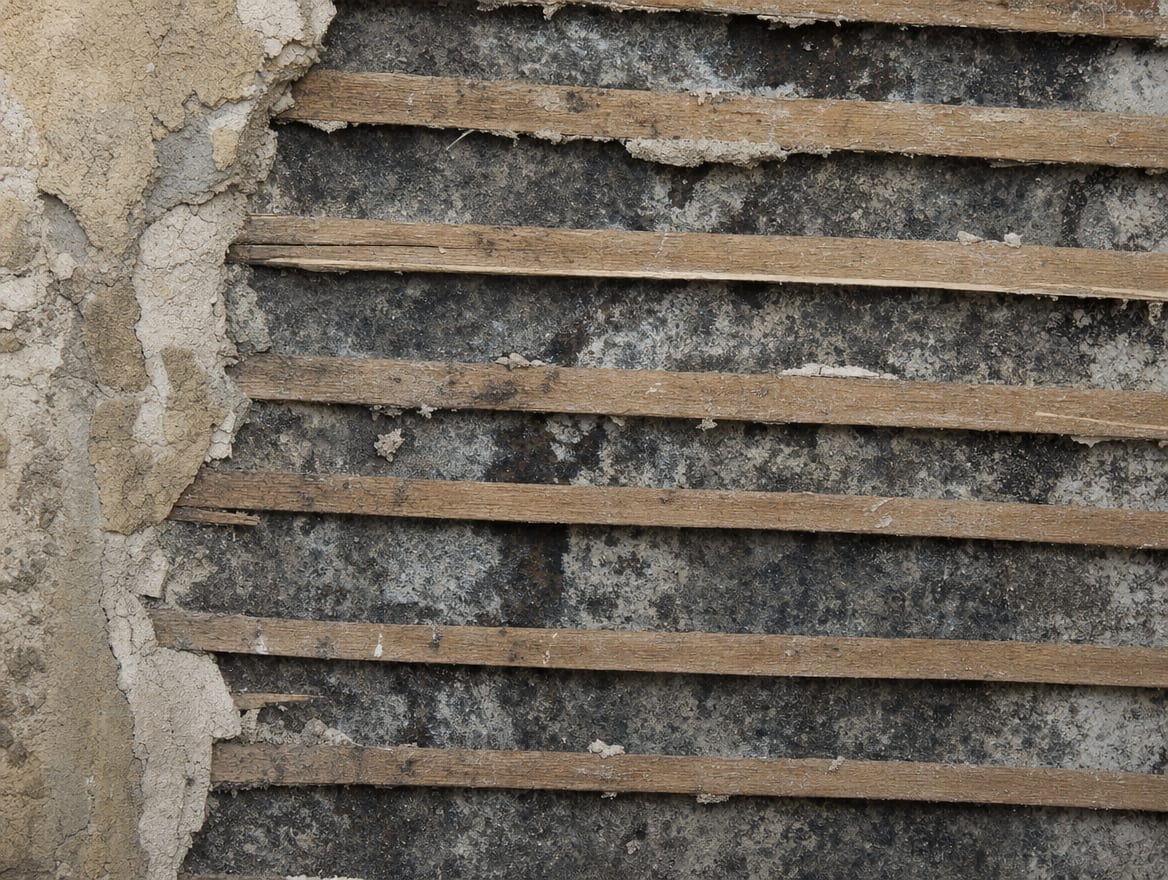
A contractor opens a section of wall in an older home a few streets off Nassau Street and the smell arrives first. Behind the original plaster, along the wood lath, is a dark bloom of mold that has been feeding on a slow leak nobody could see. The homeowner's first instinct is to save everything, because the plaster keys, the lath, and the millwork around the doorway are part of what makes the house what it is. The remediation crew's first instinct is different. Some of what is behind that wall can be cleaned and kept. Some of it is contaminated porous material that has to come out, no matter how old or original it is.
That tension is the real story of mold work in a historic Princeton home. It is not simply removing what looks bad. It is telling the difference between genuine preservation, saving materials that can be cleaned and dried and safely stay in place, and unsafe retention, leaving contaminated porous material in a wall because it is old. Get that call right and you protect both the building and the people in it. Get it wrong in either direction and you either strip out irreplaceable material that never needed to go, or you seal a contamination problem back inside the wall.
The Real Question Is Preservation Versus Contamination
Mold does not respect the value of a material. It grows wherever there is moisture and something organic to feed on, and in an older home that can mean the paper face of modern drywall in a back addition or the wood lath behind century-old plaster. The question a good remediation plan answers is not "is this material historic," it is "can this material be cleaned to a safe condition, or has the contamination gone into it in a way that cleaning cannot reach."
That comes down to how porous the material is and how deep the growth has traveled. Hard, non-porous surfaces like sealed masonry, metal, and glass can usually be HEPA-cleaned and kept. Semi-porous materials like wood framing and structural lath can often be cleaned and dried when the growth is caught on the surface, and evaluated more carefully when it has penetrated. Porous materials that have absorbed contamination, such as saturated drywall, wet fiberglass insulation, and carpet pad, generally have to be removed rather than cleaned in place, because EPA guidance is clear that mold can grow below the visible surface of porous materials where cleaning does not reach. A professional mold inspection is where those calls start, because the answer depends on the actual material and the actual growth, not on a rule of thumb.
The table below shows how those categories tend to sort out. It is a general guide, not a verdict on any one home, because the water category, how long the material stayed wet, and how far the growth spread all change the answer for a specific wall.
Hover or tap a row to highlight it.
| Material | Often cleaned and kept | Judgment call, may need a specialist | Usually removed when contaminated |
|---|---|---|---|
| Sealed masonry, brick, or stone | Yes, HEPA-cleaned when surface growth only | When a coating traps moisture against it | Rarely; the finish is more often the problem |
| Structural framing and wood lath | Often, when growth is on the surface | When growth has penetrated deep into the grain | If rotted, delaminated, or heavily contaminated |
| Original plaster on wood lath | Sometimes, cleaned when it still adheres | When the lath or cavity behind stays affected | If crumbling, delaminating, or contaminated through |
| Solid millwork and trim | Often, cleaned and reset carefully | Trim pulled to clean the wall behind, then reset | If swollen apart or contaminated beyond cleaning |
| Modern drywall in an addition | Small, clean, surface-only spots | Controlled cuts to reach and dry the cavity | When the paper face is contaminated or saturated |
| Fiberglass or foam insulation | Rarely holds up once contaminated | Not typically salvaged by cleaning | Usually removed and replaced |
| Carpet and pad | Surface carpet sometimes, by water category | Lifted to reach the subfloor beneath | Pad usually removed; carpet depends on the water |
The Decision Sequence, From Source to Clearance
A defensible mold job in an older Princeton home follows an order, and each step depends on the one before it. Skipping ahead is where problems start. Cleaning before the source is fixed means the mold comes back. Rebuilding before verification means sealing an unknown back into the wall. The sequence below is the spine of the whole project.
Mold Remediation, From Source to Clearance
- 1
Identify and stop the moisture source
Find where the water is coming from, whether a roof leak, a slow plumbing failure, foundation seepage, or chronic humidity, and stop it, because mold that has its water supply left in place will return no matter how well the surface is cleaned.
- 2
Classify safety and contamination
Sort each affected material by how porous it is, how deep the growth has gone, and the water category involved, then decide what can be cleaned and kept versus what has to be removed.
- 3
Document conditions
Photograph the growth, log moisture readings, and record the source findings and the planned scope before anything is disturbed, so there is a clear before-and-after record.
- 4
Check parcel and municipal constraints
Confirm whether the source repair or any exterior work triggers Princeton building and zoning review, flood-damage-prevention rules where the parcel is mapped, or historic-preservation review for a covered property.
- 5
Contain and remediate
Set containment and negative air pressure, remove contaminated porous material, HEPA-clean and treat salvageable surfaces, and dry the space to IICRC S520 standards.
- 6
Verify dryness and clearance
Confirm materials are dry and, when the scope calls for it, use third-party clearance testing to document that the space meets its completion criteria.
- 7
Repair to match
Rebuild only what has been proven dry and clear, matching the house, replastering where plaster belongs and resetting saved millwork rather than defaulting to modern finishes.
Start With the Source, Not the Stain
The most common mistake in mold work is treating the growth and ignoring the water. Mold in an older home is a signal that a material has been wet long enough to support it, and that water can come from a roof leak, a failed bathroom fan, a slow supply-line drip, foundation seepage, or humidity that sits in a below-grade space. Flood exposure in Princeton varies by parcel, so proximity to Stony Brook, Harry's Brook, or Lake Carnegie does not tell you what a specific property faces, and a clean interior leak is a different problem from stormwater intrusion. Whatever the source, it has to be corrected as part of the scope. A crew that cleans the plaster and leaves the leak has fixed nothing.
Classify Before You Remove
Once the source is controlled, every affected material gets sorted. This is where the save-versus-remove call actually happens, material by material, using the porosity and contamination-depth logic above. The water category matters here too. Clean water from a supply line is the most forgiving, while contaminated or grossly contaminated water such as sewage pushes porous materials toward removal regardless of how historic they are, because the contamination cannot be safely cleaned out of a porous material. When there is a question about whether a musty odor or a hidden problem justifies a defined scope, purposeful mold testing can answer it, but testing should answer a specific question and change a decision, not be run by reflex.
Document, Then Check Local Constraints
Photographs, moisture readings, and a written scope taken before work begins protect both the home and any later insurance conversation. Only the carrier decides coverage under the policy and the documented cause, so the record is what supports a claim rather than any promise a contractor can make. On the local side, emergency stabilization and interior cleaning generally do not carry the same approvals as construction, but once the fix moves to the exterior source, roofing, masonry, or new finishes, Princeton building and zoning review may apply, flood-damage-prevention rules may apply where the parcel is mapped, and a property in a designated historic district can trigger Historic Preservation Commission review for visible exterior work. Requirements should be confirmed with the town before that work begins.
Containment and IICRC S520 in an Occupied Home
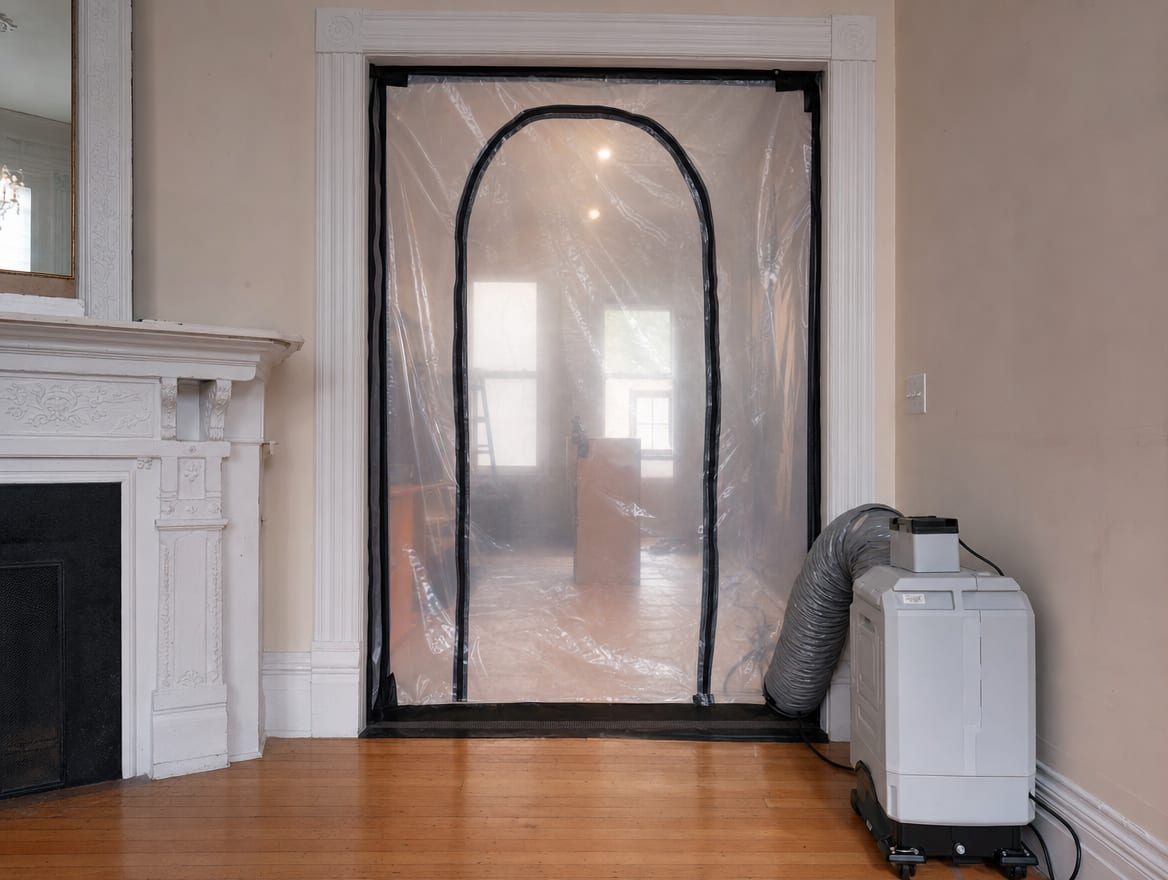
Older homes are often lived in during the work, which makes containment the part of the job you cannot cut. Disturbing mold without proper containment spreads spores into the rest of the house, and that is exactly what you are trying to avoid in a home where the surrounding finishes are part of the value. The IICRC S520 standard that guides professional remediation is built around sealing the work area, running negative air pressure so air flows into the containment rather than out of it, HEPA filtration and cleaning, careful removal of contaminated porous material, and drying the space before it is closed.
In a historic interior, containment does double duty. It keeps spores off the rooms you are trying to protect, and it lets a crew open only what has to be opened. Instead of gutting a full plaster wall, a technician who knows the contamination sits behind a limited section can make a controlled opening, remove what is contaminated, clean and dry the rest, and leave the intact plaster in place. When the growth points to a heavier problem, such as the dark, well-established growth people often call black mold, the scope tightens further with aggressive containment and full documentation, which is the standard approach to black mold removal regardless of where in the home it is found.
Signs It Is More Than a Surface Problem
Not every dark spot is a full remediation project, but several signs suggest the growth has gone past something you can wipe away. When more than one of these shows up together, treat it as a prompt to get the wall and the materials behind it evaluated rather than painted over.
Signs the Mold Is More Than Surface Deep
Musty odor with no visible growth
A persistent smell in a room with nothing obvious on the walls often means mold is present behind plaster, trim, or in a cavity you cannot see.
Growth that returns after cleaning
Mold that comes back within a season points to an active moisture source that was never corrected, not a cleaning that failed.
Staining that spreads behind trim or plaster
Discoloration creeping past the edges of the visible area, or following the line of a wet cavity, suggests the problem is larger than the spot you can reach.
Soft, crumbling, or delaminating plaster
Plaster that has lost its grip on the lath or feels soft has taken on sustained moisture, and the lath behind it needs to be checked.
Growth on porous materials over a wide area
Contamination across drywall, insulation, or carpet beyond a small patch generally calls for containment and removal rather than surface cleaning.
Occupant symptoms that ease away from the home
Respiratory, eye, skin, or allergy-type reactions that improve elsewhere are worth noting, though only a medical professional can connect them to a cause.
Lead, Asbestos, and Historic-Preservation Care
Older construction carries an extra layer of caution that newer homes do not. Plaster, painted trim, flooring, and pipe insulation in an older Princeton home may contain lead paint or asbestos, and any demolition that could disturb those materials calls for proper handling procedures. That is one more reason the save-versus-remove decision is made deliberately rather than with a pry bar. A crew that assesses those factors before the work starts protects the household from a second hazard that a rushed tear-out can release into the air.
Preservation review adds its own timing. Exterior repairs that fix the original moisture source, visible roofing, masonry, windows, or vents on a covered property, can require Historic Preservation Commission review, while the interior remediation itself is time-sensitive and moves ahead. Planning for that review early keeps the source repair from stalling after the inside is already clean and dry. It is the same principle throughout: honest mold work tells you what has to come out, what can be saved, and which steps the property and the municipality actually require, rather than promising to save everything or rushing past the parts that protect you.
Frequently Asked Questions
Does historic material always have to be removed if it has mold?
No. Whether a material can be cleaned and kept depends on how porous it is and how deep the growth has gone, not on its age. Sealed masonry and surface growth on framing can often be HEPA-cleaned and kept, while porous materials that have absorbed contamination usually have to be removed because cleaning cannot reach the growth below the surface. The point of the assessment is to make that call material by material.
How soon should I act after finding mold?
Address safety and stop any active water as soon as it is safe to do so. The EPA advises drying wet materials within 24 to 48 hours to reduce mold risk, so the sooner the water stops and drying begins, the more material you are likely to save. Waiting lets the contamination spread deeper and pushes salvageable materials toward removal.
Do I need mold testing before remediation?
Not always. Testing is most useful when it answers a defined question and changes a decision, such as identifying the source of a musty odor with no visible growth, or documenting results for a real estate transaction. When mold is already visible, the priority is usually correcting the source and remediating rather than sampling first.
Will insurance cover mold remediation?
Only your carrier can decide that under your policy and the documented cause of the loss. Mold from a sudden, accidental covered event is treated differently from mold caused by long-term moisture. A remediation contractor cannot guarantee coverage, but thorough documentation, photos, moisture readings, source findings, and the scope of work, is what supports the claim your insurer ultimately decides.
Is the mold in my home dangerous?
The CDC notes that damp and moldy environments may affect some people and not others, and that sensitive individuals can experience respiratory, eye, skin, or allergy-related effects. That is a reason to handle contamination carefully and to seek medical advice for any health concern, rather than a basis for anyone but a medical professional to diagnose a symptom.
How do I know the work is actually done?
Completion is confirmed by proving the space is dry and, when the scope calls for it, by third-party post-remediation verification testing that documents the space has met its clearance criteria before it is closed back up. Relying on how clean the area looks is not enough, because visible cleanliness does not confirm what is in the air or behind a finished surface.
Final Thoughts
Mold in a historic Princeton home is rarely a single, simple removal. One hidden leak can leave contaminated drywall in a back addition, surface growth on old framing, and a judgment call on original plaster all in the same project, and each of those wants a different answer. The work that protects the home is not the fastest tear-out. It is stopping the source, classifying every material honestly, documenting conditions, checking what the parcel and the town require, containing and remediating to standard, verifying the result, and rebuilding only what is proven dry and clear.
Handled that way, you keep what makes the property worth keeping while still clearing the contamination for good. Handled carelessly, you either strip out irreplaceable material that could have been saved or seal a problem back inside a wall. If you are facing mold in an older Princeton property and want a preservation-minded approach, ExecPro Restoration & Cleaning is ready to help. Call ExecPro Restoration & Cleaning at (888) 300-3772 or reach out through our contact page, and our team will help you tell what can be saved from what has to go, and document the whole result along the way.
Mold Remediation Terms
Tap a term to see what it means.
IICRC S520. The industry standard that guides professional mold remediation, covering assessment, containment, removal, and verification.
Serving Princeton
ExecPro Restoration & Cleaning provides mold remediation services in Princeton, NJ, from inspection and testing through removal, drying, and post-remediation verification. Call (888) 300-3772 for 24/7 emergency response.
Related Articles
Old House, New Systems: Air Quality Testing for Historic Homes and Rentals in Princeton, NJ
Older Princeton homes with modern HVAC, rentals, and renovations need a smarter air quality test. Here is how building history changes what to test and how to read it.
Structural Mold Repair in Princeton, NJ: Clean, Reinforce, or Replace Historic Framing
Structural mold repair in Princeton NJ means deciding when historic framing can be cleaned, when it should be reinforced, and when a member must be replaced and matched.
Post-Mold Remediation Rebuild in Princeton, NJ: A Preservation-Aware Plan for Older Homes
Rebuilding an older Princeton NJ home after mold remediation? Learn how to restore original character, review lead and asbestos, and rebuild without trapping moisture.