Who Has to Say Yes: Mold Remediation Authority in East Windsor, NJ
Cal HewittPublished
- mold remediation
- east windsor nj
- mercer county
- property management
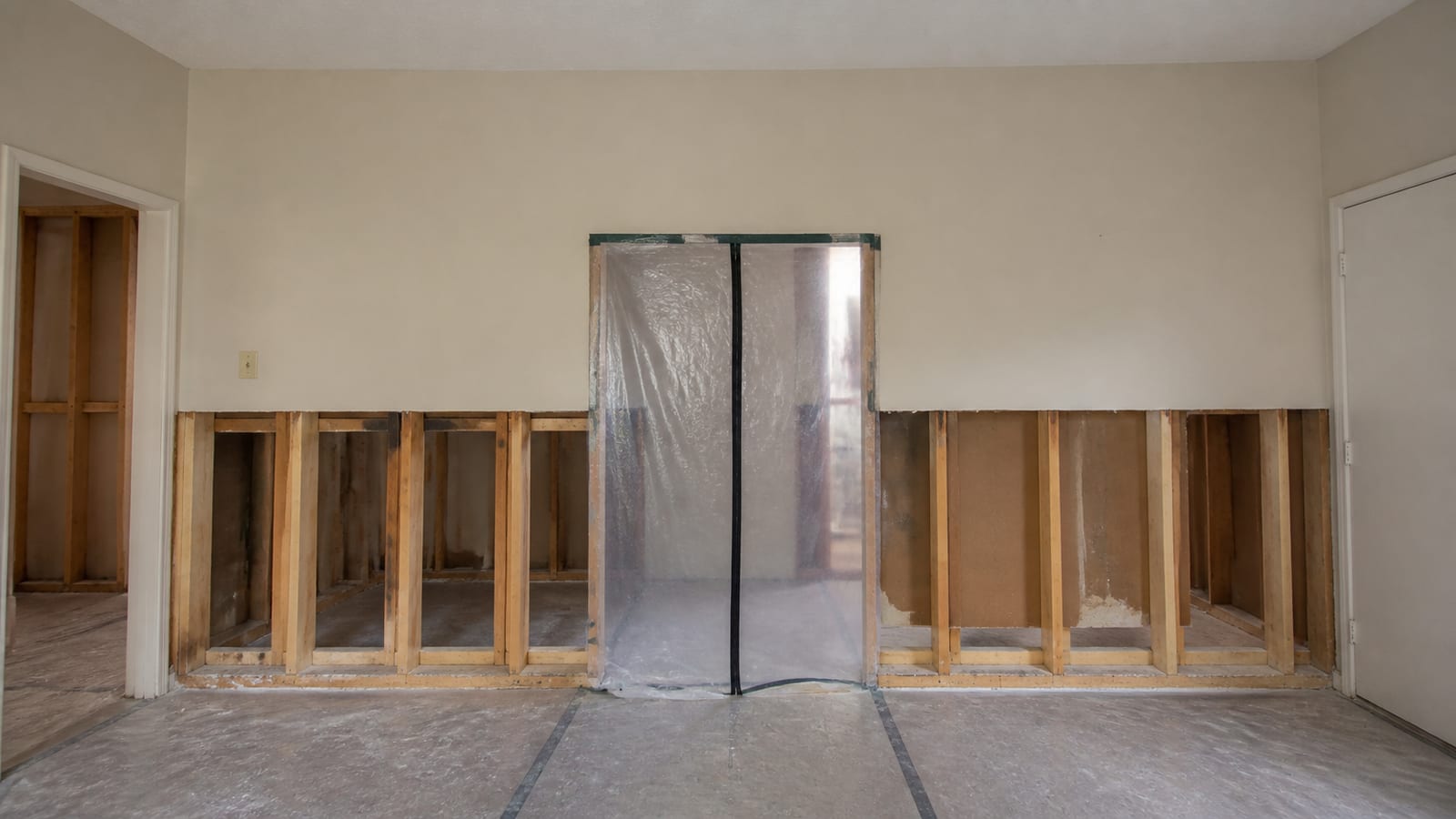
Before anyone talks about containment, drying equipment or what gets cut out, there is a smaller question that decides how the whole job runs. Who has to say yes? Not who noticed the smell in the hallway. Who can approve opening the wall, who can approve the plumbing repair behind it, and who is entitled to the invoice and the record afterward.
In East Windsor Township that question has a real answer more often than people expect, and the answer is frequently not the person standing in the room looking at the stain. Census Reporter estimates 12,422 housing units in the township, and about 54 percent of those sit in single unit structures. The rest are attached homes, small multifamily buildings and larger multifamily buildings. Census QuickFacts puts owner occupancy at 61.1 percent for the 2020 to 2024 period, which means roughly four households in ten are renting or living in a professionally managed setting.
That is not a demographic footnote. It is the reason two East Windsor properties with identical growth on identical drywall can run on completely different schedules. One owner walks into their own basement and authorizes the work. The other has to reach a management company, an association board or a neighboring unit owner before anyone can touch the pipe that caused it.
The Short Version
Authority comes before scope
The first thing worth establishing is who controls the suspected source, because that determines who can approve opening it and who can approve repairing it.
Mold is a moisture finding
EPA is direct that controlling indoor mold means controlling moisture, so the source location matters more than the size of the visible patch.
Ownership can split the job
In an attached or managed East Windsor property, the affected room and the water source can sit under two different parties.
Cleanup is not automatically construction
Removing wet material does not itself require a permit, but repairs that reach regulated building elements can go through the Township Construction Department.
Documentation travels with the property
A record of the source, the affected areas and the work performed is what makes the event intelligible to a later owner, insurer or manager.
Nobody issues a mold safety certificate
EPA has set no federal numerical limits for indoor mold spores, so no report can declare a building universally clear.
Mold Is a Moisture Finding, and Moisture Has an Address
The EPA's guidance on mold and moisture makes one point above all others: molds need moisture to grow, and the way to control indoor mold is to control moisture. That principle is easy to state and easy to nod along with. What it means on an actual job is harder, because the moisture is not an abstraction. It is arriving through a specific building component at a specific location, and that component belongs to somebody.
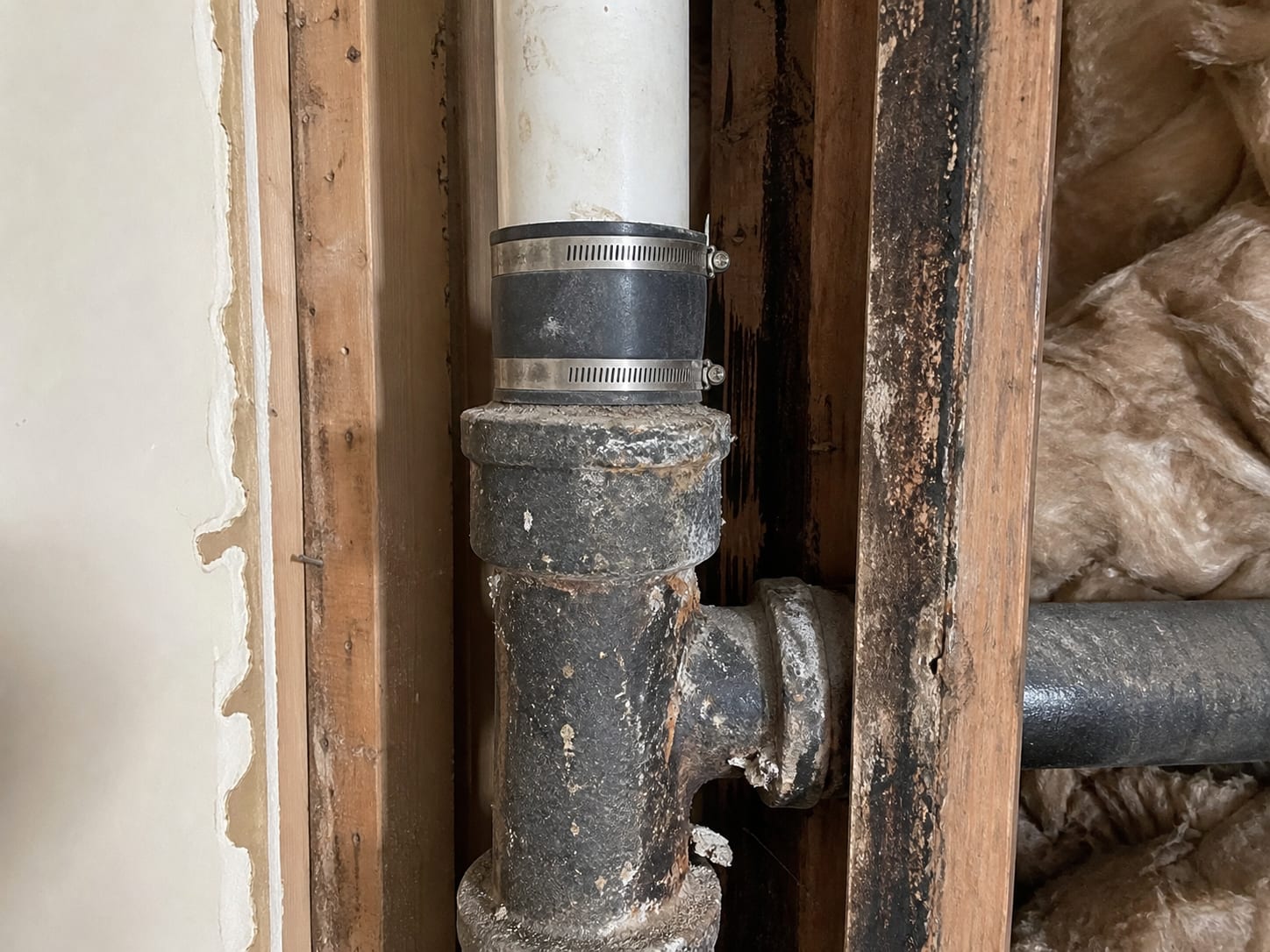
A supply line under a kitchen sink is almost always inside the boundary of the unit it serves. A roof, an exterior wall assembly, a common vent stack, a shared drain line or an irrigation grade problem usually is not. When the mold appears in a bedroom closet on an exterior wall, the visible material is inside one boundary and the likely water pathway is inside another. EPA also warns that simply killing mold is not enough, because dead mold can remain allergenic and the underlying water problem is still there. That is exactly the failure that a split ownership situation produces when nobody chases the source across the line.
So the honest first move on an East Windsor mold call is not a quote. It is a conversation about what is behind the wall and who controls it.
Four Authorization Patterns You Will Actually Meet
East Windsor's housing profile supports a property type first discussion rather than a single building stereotype. The township's environmental health profile reports that only 5.3 percent of its housing was built before 1950 for the 2016 to 2020 data period, well below Mercer County's 28.6 percent. That means East Windsor is neither a uniformly historic town nor a uniformly new one, and the assembly behind any given wall has to be established at the building rather than assumed from a build decade.
Hover or tap a row to highlight it.
| Property setting | Who usually finds it | Who usually controls the source | What that changes |
|---|---|---|---|
| Owner occupied single unit home | The owner | The same owner | Fastest path, since one party approves investigation, removal and source repair |
| Rented single unit home | The tenant | The landlord or their agent | Access and approval are separate steps, and the record should name both parties |
| Condominium or townhome | The unit occupant | Unit owner for interior, association for common elements | Scope can be split mid job, and the association may control the roof, exterior wall or shared piping |
| Apartment or managed multifamily | The resident | Property management, sometimes with an owner above them | Approval, building access and scheduling of adjacent units all sit with the manager |
| Commercial or retail space | The tenant business | Landlord or tenant, depending on the lease | The lease decides which side of the ceiling is whose, and it should be read before work is scoped |
None of that is a verdict on your situation. It is a set of questions to answer early, because answering them after demolition has started is expensive.
Twin Rivers Is Inside East Windsor, and That Matters
East Windsor includes concentrated planned residential communities as well as conventional neighborhoods. The Township's own parks material describes a 3.5 mile walking path through the Twin Rivers Planned Unit Development, which is an official reminder that a large planned community sits within the township boundary. In a planned unit setting, the questions above are not hypothetical. Roofs, exterior envelopes, common corridors and shared mechanical routes are frequently governed by an association rather than the household that noticed the odor.
Two other boundaries are worth stating plainly, because they get blurred constantly. Hightstown is a separate borough that East Windsor surrounds, with its own government. West Windsor is a different adjacent township. If a scope, a permit question or a code contact would apply equally well to West Windsor, it has not been localized. East Windsor Township runs its own Construction Department and adopted its own flood damage prevention ordinance, and those are the ones that govern an East Windsor address.
What a Split in Authority Changes About the Sequence
When the affected space and the water source sit under two parties, the job does not simply take longer. It changes shape. Investigation may be authorized before repair is. Removal may be approved in one unit while the pipe stays live in another. Drying may be scheduled and then paused while access to a common area is arranged.
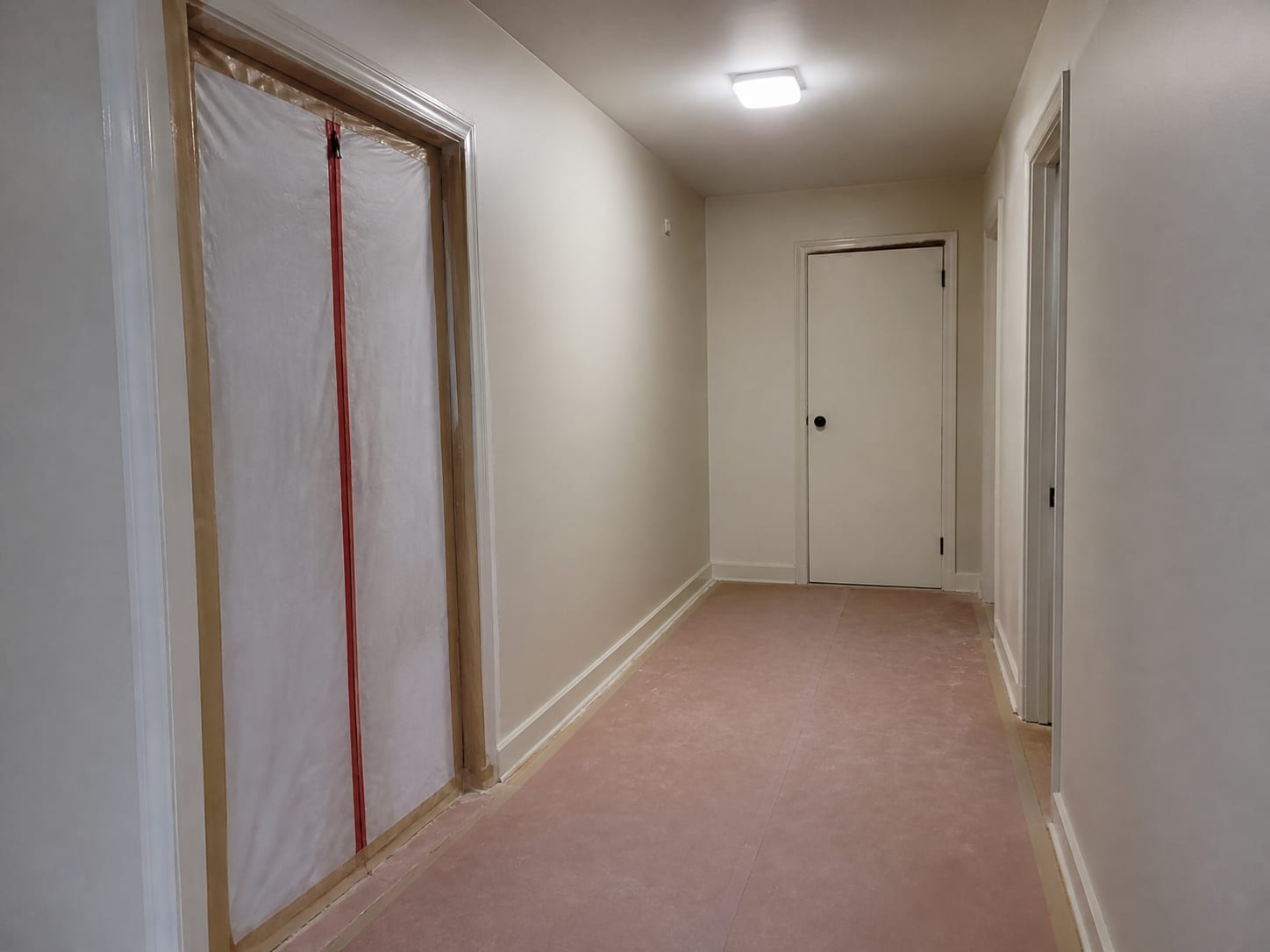
That is not a reason to wait. It is a reason to sequence the work so that each phase can proceed with the approval it actually has, and to write down what remains blocked and by whom. A scope that quietly assumes access it does not have is the one that turns into a change order.
How the Work Sequences When Authority Is Split
- 1
Establish the boundary
Identify the affected space, the suspected source location, and which party owns or controls each. This is a records and lease question as much as a building question.
- 2
Document before disturbing
Photograph conditions, note the observed water path, and record what is accessible and what is concealed, so the file makes sense to whoever reviews it later.
- 3
Get investigation authorized
Approval to open a finished surface for assessment is separate from approval to repair or rebuild, and it usually comes from a different point in the chain.
- 4
Correct the source, then clean
Cleaning a material while the water condition remains active produces recurrence. If the source sits with another party, that dependency belongs in writing.
- 5
Dry and verify the condition
Drying is measured against the materials that stayed in place, not against how the room feels, and the method used should be recorded.
- 6
Resolve the repair question locally
If reconstruction reaches regulated building elements, that is the point to take the scope to the Township rather than assume it is exempt.
If the extent or the source is genuinely unclear at the start, that is the moment for a professional mold inspection that maps the moisture evidence rather than guessing at a boundary and correcting it after the wall is open.
Where East Windsor Township Itself Has to Say Yes
The Township's Construction Department administers the State Uniform Construction Code and receives permit applications. Mold cleanup on its own is not automatically a construction project. Removing or replacing regulated building components, modifying regulated systems, or repairing substantial damage can change that. The Township publishes that a construction permit fee is the sum of the applicable subcode fees, not one flat charge, which is another reason a single bundled number for cleanup plus rebuild hides more than it explains.
East Windsor's adopted flood damage prevention ordinance adds a separate consideration when work sits in a regulated flood hazard context. The New Jersey Department of Health's community profile reports that 3.2 percent of East Windsor's urban land use area was flooded in its 2021 indicator. That figure does not identify any individual parcel or predict a particular building's risk, and it is not a reason for alarm. It is a reason not to assume that floodplain rules are irrelevant here. Notably, the ordinance defines an elevated building as one with no basement whose lowest elevated floor is raised above ground, which is a useful reminder that basement and floodplain terms should be used precisely rather than casually.
Where removal has left building components that need repair, that work belongs on its own line. Structural mold repair after materials are removed is a different scope from remediation, priced and documented separately.
Red Flags Worth Recognizing Early
The most consequential red flag is a proposal that never identifies or addresses the moisture source. If the plan is to clean, paint or treat a surface while the leak, condensation pattern or water entry point stays unresolved, the building condition has not been resolved either.
A second is a firm that presents routine sampling as the automatic answer to every visible condition. EPA's position on mold testing is that sampling is generally unnecessary when mold is already visible, and that there are no federal numerical limits against which a spore result could be measured. Testing has real uses, but it is not a substitute for finding the water.
A third is a credential claim that does not exist. EPA states that it does not certify mold inspectors or remediation firms. The New Jersey Department of Health publishes mold guidance for residents and maintains a list of remediation firms, while being clear that a listing is not an endorsement of a company's services. Treat "EPA certified" as a phrase to ask about, not a qualification to rely on.
A fourth, specific to attached and managed property, is proceeding without clarifying who controls the suspected leak, the adjacent unit, the roof or the common plumbing. That is how a scope ends up complete on paper and incomplete in the building. Where the water arrived recently or is still arriving, water damage restoration and drying usually needs to run before or alongside the mold work rather than after it.
Frequently Asked Questions About Mold Remediation in East Windsor, NJ
I rent in East Windsor. Who is responsible for the mold in my unit?
Responsibility depends on the lease, the ownership structure and where the water source actually sits, so it is not something a contractor can decide for you. What is generally true is that the person who sees the growth may not control the roof, the exterior wall, the shared piping or the adjacent unit involved. Document what you observe with dates and photographs, report it to the landlord or manager in writing, and keep the record. That file is what makes the sequence of events clear later.
Does mold remediation require a permit in East Windsor?
Not automatically. Cleanup and drying are not inherently construction work. The question changes when the job removes or replaces regulated building components or modifies regulated systems. East Windsor's Construction Department administers the State Uniform Construction Code and is the correct local point of contact for that determination. It is worth asking before the rebuild is scheduled rather than after.
How long does the work take?
There is no supportable answer before the affected area, the moisture source, the materials and the administrative scope are known. On a split authority property, add the time it takes to get access and approval from whoever controls the source. Anyone naming a completion date before seeing the property is estimating from a template.
Do I need a mold test first?
Usually not, if growth is already visible. EPA generally does not recommend routine sampling in that situation, partly because there is no federal standard to compare a result against. Sampling makes more sense when the extent is uncertain, when growth is suspected but not visible, or when a specific question needs an answer that observation alone cannot give.
Is the mold in my building making my family sick?
That is a question for a qualified clinician, not for a restoration company. EPA notes that molds can produce allergens and irritants, and CDC notes that mold can cause respiratory symptoms in some people, but neither supports the claim that a particular building condition diagnoses a particular illness. What a remediation firm can responsibly speak to is the building: where the moisture is coming from, which materials are affected, and whether the source has been corrected.
Does remediation increase my property value?
That is not a promise anyone should make. The realistic benefit is different and still worth having. Disclosed, source resolved, documented work is far easier for a later owner, buyer, manager, insurer or contractor to understand than unexplained staining or a moisture problem that keeps coming back. The value is in the record being intelligible.
My neighbor's unit is the source. What now?
Then the scope has a dependency, and it should say so in writing. Work inside your boundary can often proceed, but the source correction requires the authority of whoever controls that space. Naming that dependency in the documentation protects everyone, because it separates what was done from what was blocked.
The Practical Takeaway
Mold remediation in East Windsor is usually described as a materials problem. It is at least as much an authority problem. Before the first cut, someone has to establish which party controls the space the water is coming through, who can approve opening it, who can approve repairing it, and what happens to the schedule when those are different people. Get that settled and the rest of the job becomes a straightforward sequence of source correction, material decisions, drying and, where the repair reaches regulated work, a conversation with the Township.
Skip it and you get the outcome that keeps East Windsor property owners calling back a season later. Clean surface, tidy invoice, same water still arriving from a place nobody had permission to open.
If you are looking at growth in an East Windsor property and want the ownership boundaries and the source correction spelled out before anything is cut, the team at ExecPro Restoration & Cleaning works this way and documents what was reached and what was not. Call (888) 300-3772 or send us the details of your East Windsor property to get a scope you can evaluate.
Terms That Decide an East Windsor Mold Scope
Tap a term to see what it means.
Source correction. Repairing the water pathway that caused the condition, which is separate work from removing the material it damaged.
Serving East Windsor
ExecPro Restoration & Cleaning provides mold remediation services in East Windsor, NJ, from inspection and testing through removal, drying, and post-remediation verification. Call (888) 300-3772 for 24/7 emergency response.
Related Articles
Mold Remediation in Trenton, NJ: Planning the Whole Job Around the People Living There
When tenants or family are still living in the house, mold remediation in Trenton, NJ has to be planned around them. See the steps, the scope and the records.
The Phrase and the Building: Black Mold Removal in East Windsor, NJ
Color describes what a patch looks like. Moisture describes what the building is doing. Only one of those tells an East Windsor, NJ owner what to fix.
Flood Damage Cleanup in East Windsor, NJ: What to Do in the First Hours
Flood damage cleanup in East Windsor, NJ, where water arrives by rainfall, drainage and grade. What to do first, what the work involves, and what it costs.