Flood Damage Cleanup in East Windsor, NJ: What to Do in the First Hours
Cal HewittPublished
- flood damage cleanup
- east windsor nj
- mercer county
- inland flooding
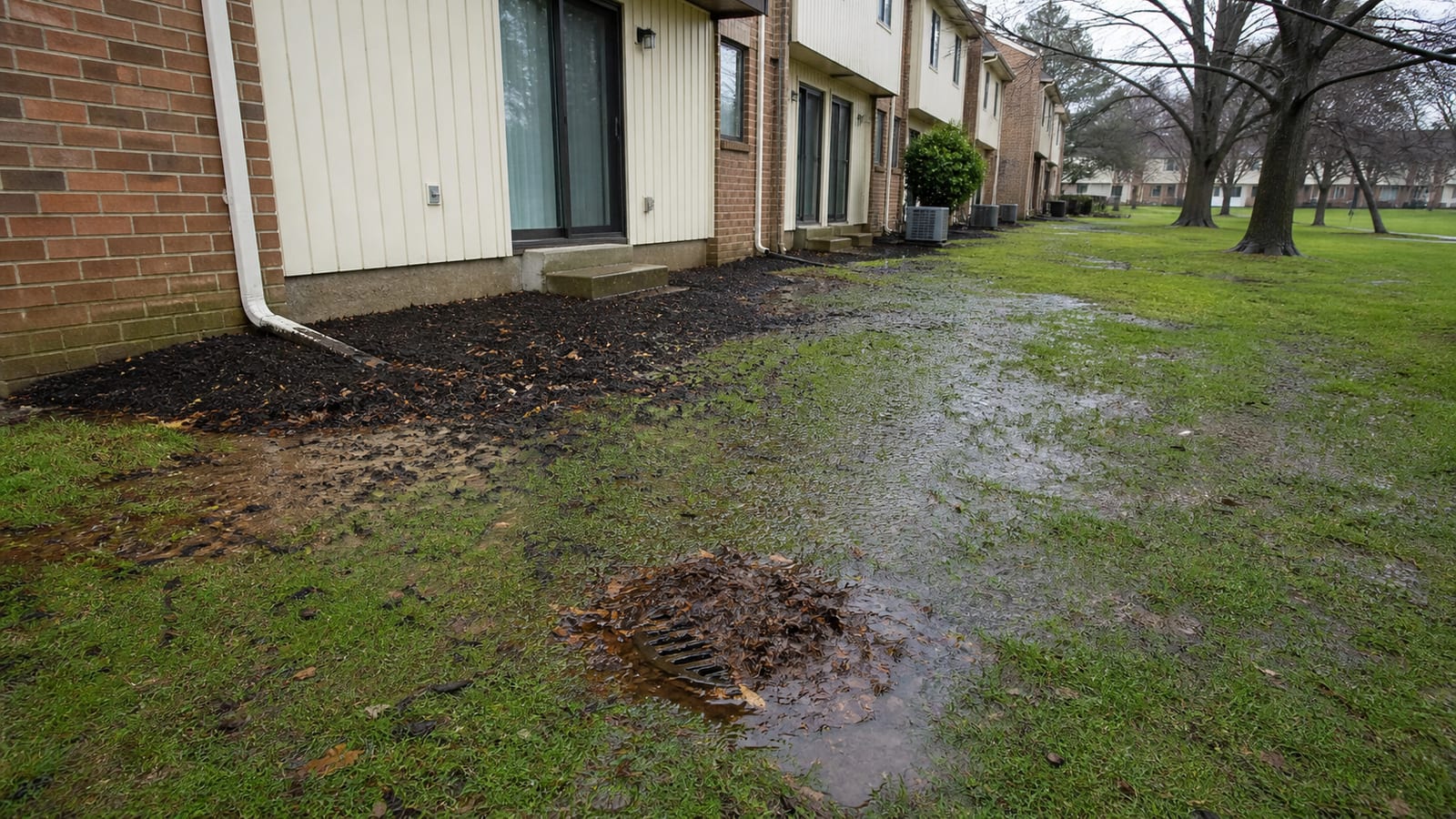
Say "flood" in New Jersey and most people picture the coast. Surge, tide lines, boarded windows, a barrier island on the evening news. That picture is the single most misleading thing an East Windsor property owner can carry into a flood cleanup, because it describes a mechanism that has nothing to do with this township.
East Windsor is an inland municipality in Mercer County, central New Jersey. There is no shoreline, no tidal exposure and no surge. Water that floods a building here comes from rainfall that outruns the ground's ability to absorb it, from drainage and grade that send it toward a structure instead of away from it, from watercourses that leave their channel, and from groundwater that rises into a lower level. The New Jersey Department of Health's community profile records that 3.2 percent of East Windsor's urban land use area was flooded in its 2021 indicator. That figure does not identify a single parcel, does not establish that any particular building sits in a mapped hazard area, and does not predict a future loss. What it does rule out is the idea that flooding is somebody else's subject here.
Dropping the coastal picture matters practically, not just semantically. It changes what you look for, what you document, and which local rules apply after the water is gone.
The Short Version
Inland means the pathway is local
Rainfall, drainage, grade, watercourses and groundwater are the mechanisms worth investigating at an East Windsor property, not surge.
Floodwater is a contamination question
EPA advises treating floodwater as potentially carrying bacteria, chemicals or other hazards, which changes cleanup from a wet floor response.
Safety comes before assessment
New Jersey guidance is to avoid a basement or room with water covered electrical equipment, full stop.
The 24 hour mark drives material decisions
EPA notes that materials left wet beyond about a day can support mold growth, which narrows what can be saved.
The Township holds the flood records
East Windsor's flood maps, studies, permits and substantial damage determinations are retained locally, and repair review draws on them.
Cleanup and reconstruction are different phases
Emergency work stabilizes the building, while flood related repair can cross into municipal review depending on the structure and scope.
What Inland Flooding Looks Like at an East Windsor Address
A coastal flood arrives as a front. An inland flood arrives at whatever the lowest opening in your building happens to be, and it is very specific to the property.
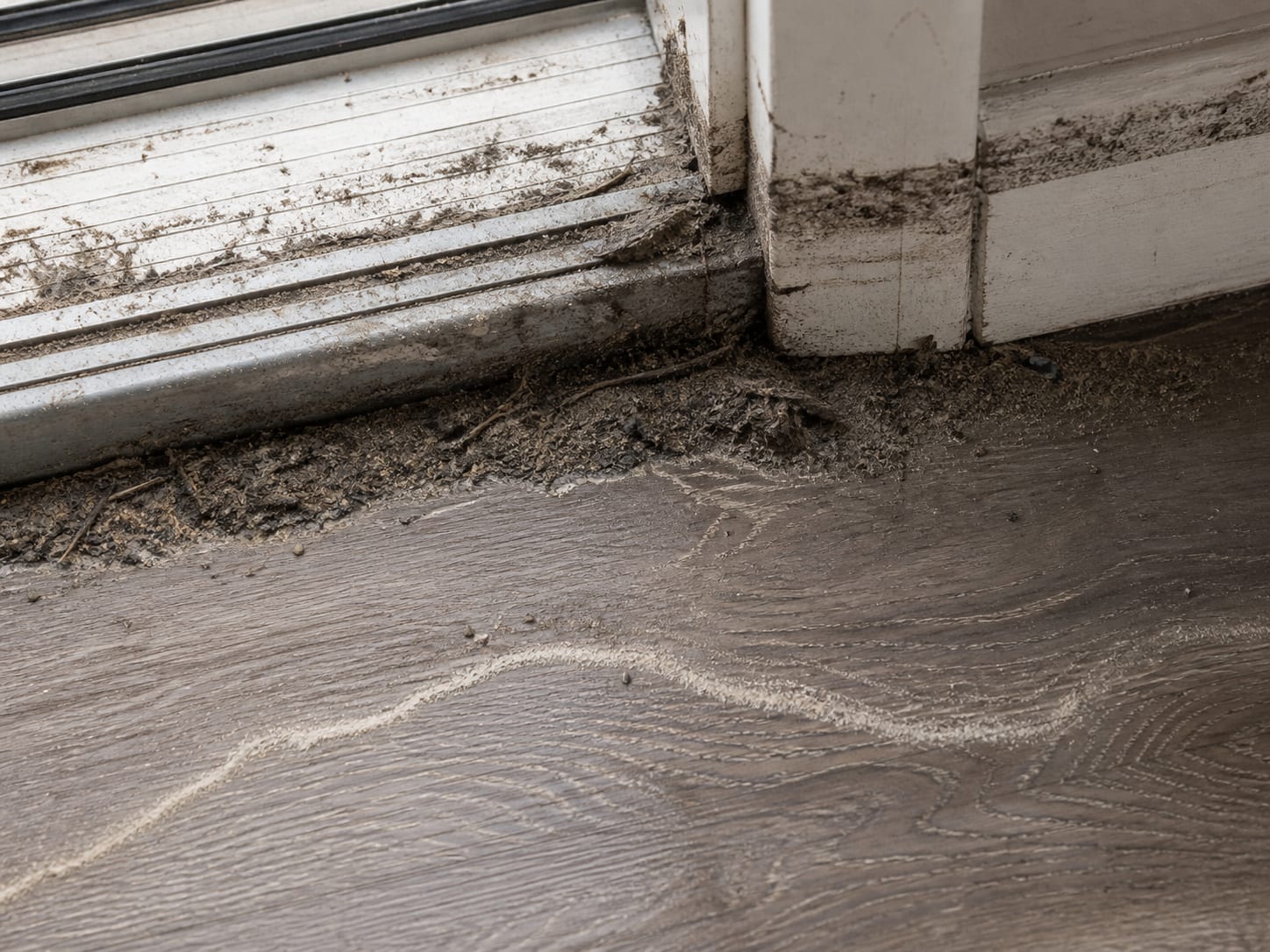
That means the useful investigation is site level. Where does surface water go during a heavy rain, and does the grade around the structure send it away or toward it? Is there a window well, a walk out door, a garage slab, a driveway that pitches back toward the house? Is there a watercourse or drainage channel nearby that reached beyond its normal limits? Did water enter through a foundation wall, a floor joint or a service penetration? East Windsor's flood rules reference riparian zone and state permitting concepts, another reason a local flood question cannot be answered with a generic water damage explanation.
The building configuration matters too. East Windsor's flood damage prevention ordinance defines an elevated building as one with no basement whose lowest elevated floor is raised above ground. That definition exists precisely because not every local structure has a basement, and a lower level flood response is not the same everywhere. Of the township's 12,422 housing units, Census Reporter puts about 54 percent in single unit structures, with the balance in attached and multifamily buildings where floodwater can reach a private unit, a shared corridor, a common mechanical space or several dwellings at once.
One more boundary, since it decides which municipal process applies. Hightstown is a separate borough that East Windsor surrounds. West Windsor is a different adjacent township. An East Windsor flood question goes to East Windsor.
Floodwater Is a Contamination Question First
The most consequential mistake after an inland flood is treating the water as ordinary indoor water that happened to arrive in quantity. EPA's flood cleanup guidance is that floodwater can make indoor air unhealthy and can contain bacteria, chemicals or other hazards. Its guidance on dealing with debris and damaged buildings goes further, recommending that floodwater be assumed contaminated with raw sewage or hazardous chemicals for cleanup planning purposes, and warning that failing to remove contaminated material and reduce moisture can create long term bacteria and mold risks.
That assumption is a planning posture, not a diagnosis of your building. It does not prove that a specific East Windsor loss contains sewage or chemicals. It means the source has to be assessed before materials are dried, retained or discarded, because the same visible wet carpet gets handled very differently depending on what soaked it. Where the water involved a sewer backup or similar contamination, that is a distinct scope, and sewage cleanup with the appropriate containment and disposal is not interchangeable with drying a clean water leak.
Time compounds it. EPA notes that materials wet for more than about 24 hours can support mold growth, so the contamination question and the clock arrive together.
Safety Comes Before Any of It
New Jersey's flood safety guidance is blunt about the first hazard: avoid a basement or room where electrical equipment is covered by water. NJOEM identifies both contamination and electrical dangers in flood conditions. EPA separately cautions against mixing bleach with other cleaning chemicals, because the combination can produce toxic fumes, a warning that matters after a flood when people reach for whatever is under the sink.
The safe posture is short. Do not re-enter a flooded lower level until the electrical situation is assessed, limit direct contact with floodwater, and do not improvise chemistry in an enclosed wet space. Where standing water needs to come out before any of that can be evaluated properly, emergency water extraction handled as a safety task is the right first call.
The Cleanup Sequence, and Where It Stops
Flood cleanup is not cosmetic cleaning at a larger scale. It runs in an order, and each step exists because the one before it changed what is possible.
Order of Operations After Inland Floodwater
- 1
Assess safety and re-entry
Establish the electrical situation and the contamination posture before anyone works in the space, because the hazards here are not visible.
- 2
Document the event and the water path
Record dates, photographs, the entry point, the observed route through the building, and the depth or high water line while the evidence still exists.
- 3
Remove standing water where safe
Extraction reduces contact time and limits how far the water migrates into materials that might otherwise have been saved.
- 4
Evaluate contaminated and wet materials
Sort by what the water was, how long it sat, and whether the material absorbs water into its body or sheds it.
- 5
Clean or remove under control
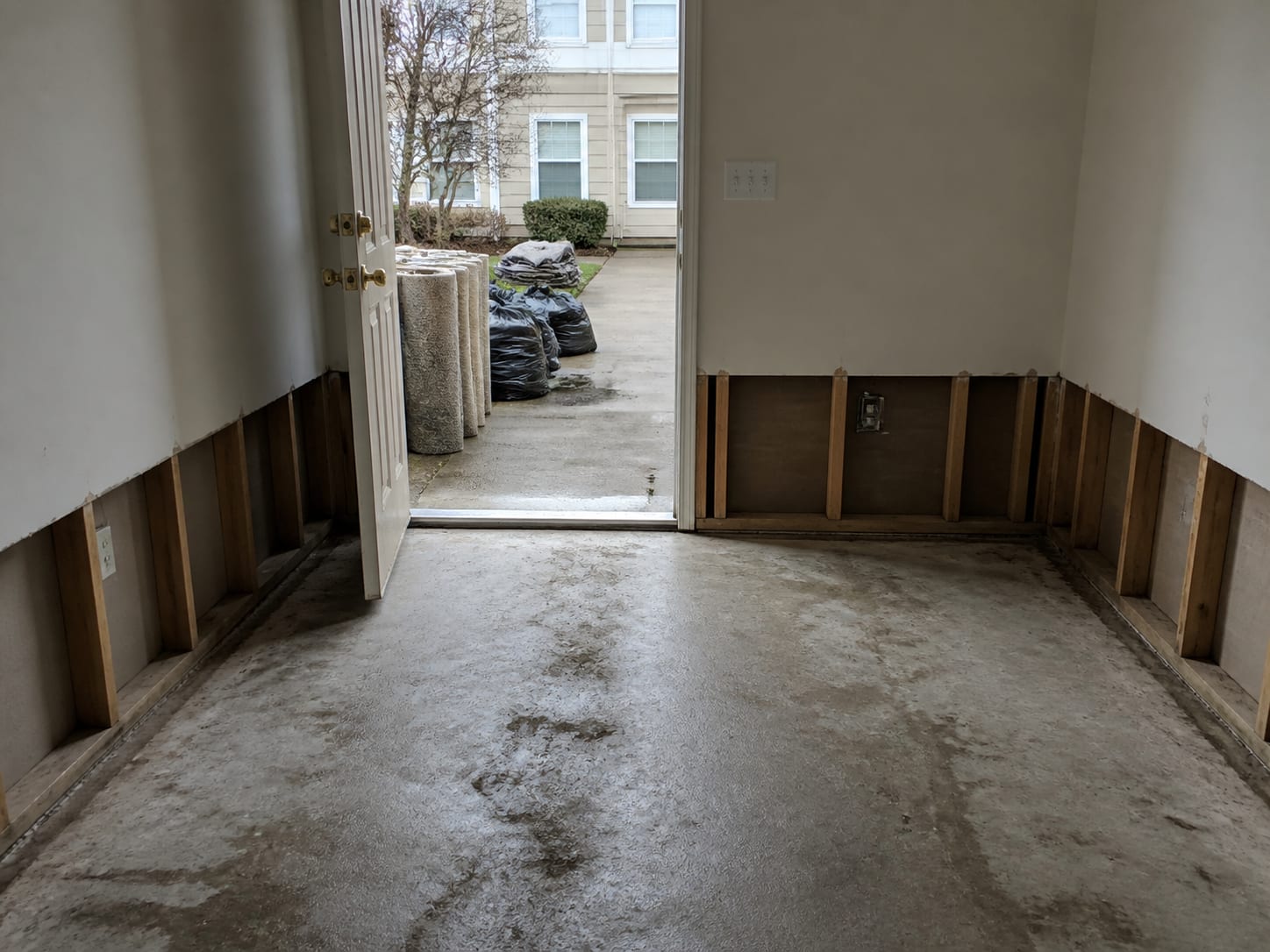
Contaminated porous material generally leaves the building, and removal should be recorded rather than performed and forgotten.
- 6
Dry the remaining assembly
Drying targets the materials that stayed, measured rather than assumed, since a room can feel fine while a cavity is still wet.
- 7
Hand off to repair, separately
Reconstruction is its own phase and may involve municipal review depending on the structure, the damage and the scope.
That last step is where a flood job differs most from an ordinary water loss. The East Windsor Construction Department administers the Uniform Construction Code, and the Township's flood ordinance calls for substantial improvement and substantial damage determinations for relevant damaged structures and related building permit applications. The ordinance does not say that every cleanup call produces such a determination. It says that flood related repair can cross into municipal review depending on the building and the scope, and that is a question to raise early rather than after the rebuild is booked. The Township's permit fee schedule states that a construction permit fee is the sum of the applicable subcode fees, so there is no single universal flood repair charge to quote from.
East Windsor Keeps the Records, So Your Cleanup Should Leave One
Here is the part that makes an inland flood cleanup different from a wet basement visit: the Township maintains a durable local file, and your building's repair may eventually be read against it.
East Windsor's technical standards state that flood hazard maps and studies are on file at the Municipal Building, and they require the Floodplain Administrator to retain records including Flood Insurance Studies, Flood Insurance Rate Maps, permit records, substantial damage determinations, certifications and elevation certificates where applicable. That is a records system built around exactly the questions that come up after a flood.
An emergency cleanup that removes contaminated material with no photographs, no water source description, no affected area list and no separation between mitigation and future repair leaves a gap that nobody can fill later. The material is gone, and so is the evidence of what it was and why it left. A cleanup record does not decide anything on its own. It is what allows the later decisions, code review, a rebuild scope, an insurance discussion, a sale disclosure, to be made from facts instead of recollection. When coordination of records and scope becomes its own workload, insurance restoration services that keep the documentation aligned can carry that side of the project.
Insurance Language Is Not Cleanup Language
The New Jersey Department of Banking and Insurance states that all homeowners policies exclude damage caused by flood, and directs residents toward flood insurance information separately. That constraint surprises people every year, and it is not a reason to skip documentation.
Whether a particular event meets a policy's definition of flood, and whether any policy applies, depends on the policy, its endorsements, the water source and the claim review. New Jersey's storm claim guidance advises prompt reporting and recording the claim number and adjuster information. A cleanup record that preserves photographs, the water route, the damaged materials, the mitigation work and the invoices supports a factual conversation. It does not determine coverage, and nobody should tell you otherwise.
Red Flags in a Flood Cleanup Proposal
The first is any plan that treats floodwater as clean water. If the proposal describes drying and reinstalling porous material that sat in floodwater with no discussion of the source or contamination, that is a scope built for a different event.
The second is a map claim made from a neighborhood name. Flood designations are parcel specific, East Windsor keeps the relevant maps and studies locally, and neither "we are not in a flood zone" nor "everyone around here floods" substitutes for checking the actual property.
The third is a credential that does not exist. EPA states that it does not run a certification program or contractor list for flood cleanup, so a claimed federal flood cleanup certification is worth examining rather than accepting.
The fourth is the absence of an evidence trail: no documented water source, no affected area record, no materials list, and no line between emergency cleanup and future repair.
Frequently Asked Questions About Flood Damage Cleanup in East Windsor, NJ
East Windsor is nowhere near the coast. Can it really flood?
Yes, by a completely different mechanism. Inland flooding comes from rainfall that exceeds drainage capacity, from grade that directs surface water toward a structure, from watercourses leaving their channel, and from groundwater rising into lower levels. The Township adopted a flood damage prevention ordinance and maintains flood mapping records locally, which is the clearest evidence that floodplain management is a live local building issue rather than a coastal one.
Is the water in my basement floodwater or just water damage?
That is determined by the source, not by the depth. Water from a failed supply line, a roof leak or an appliance is a different event from overland water that entered the building from outside. The distinction drives contamination handling, what material can be kept, disposal, documentation and insurance language, so it should be established and written down before cleanup decisions get made.
Can I clean it up myself?
Some of it, potentially, but safety should decide that rather than the size of the area. Avoid any space where electrical equipment is under water, limit direct contact with floodwater, and never combine bleach with other cleaning chemicals in an enclosed wet space. Porous materials that sat in contaminated water generally need removal rather than cleaning, which turns a mop up into a demolition and disposal job quickly.
How long do I have before mold becomes part of the problem?
EPA notes that wet materials such as wood, drywall, carpet and furniture can support mold growth after roughly 24 hours. That is a general guideline about material behavior, not a countdown clock for your specific building, and it does not establish that mold is present anywhere. It does explain why extraction and drying are urgent and why waiting for an adjuster before starting mitigation usually costs materials.
Will I need a permit to repair the damage?
Possibly, depending on the structure and the scope. East Windsor's flood ordinance calls for substantial improvement and substantial damage determinations for relevant damaged structures and the related building permit applications, and the Construction Department administers the Uniform Construction Code. Cleanup itself is not automatically a permit event. Repair that reaches regulated building elements can be, and that is a question for the Township rather than an assumption.
I live in a condominium. Who handles the common area water?
Whoever controls that element, which is usually the association rather than the unit occupant. Floodwater in an attached or managed East Windsor property often reaches shared corridors, common mechanical rooms and more than one dwelling at once. Establish early which party has authority over each affected space, and make sure the record names both what was done in your unit and what remains with the association.
Inland Flood Cleanup: Check Your Assumptions
1. What drives flooding in East Windsor Township?
2. How does EPA advise treating floodwater during cleanup planning?
3. What is the first safety check before re-entering a flooded lower level?
4. Roughly how long can materials stay wet before they can support mold growth?
5. Where are East Windsor's flood hazard maps and studies kept?
Pick an answer to begin.
The Practical Takeaway
Flood cleanup in East Windsor is a drainage and stormwater story from start to finish. The water arrives by a local pathway you can actually investigate, it carries contamination questions that decide what stays and what goes, it runs against a clock measured in hours, and it ends in a repair phase the Township may review against records it already holds.
Trade the coastal picture for the local one and the priorities sort themselves out: get safe, document the water and its route, remove and dry fast, sort materials by what the water was rather than how the floor looks, and keep a record good enough that a repair decision months from now can be made from evidence.
If inland water has reached an East Windsor property and you want the contamination, the material calls and the record handled properly from the first hour, the team at ExecPro Restoration & Cleaning works that way and separates cleanup from reconstruction in writing. Call (888) 300-3772 or describe the flooding at your East Windsor property and we will start with the source and the safety questions.
Inland Flood Terms for East Windsor Property Owners
Tap a term to see what it means.
Inland flooding. Flooding driven by rainfall, drainage capacity, grade, watercourses or groundwater rather than tidal or coastal conditions.
Serving East Windsor
ExecPro Restoration & Cleaning provides mold remediation services in East Windsor, NJ, from inspection and testing through removal, drying, and post-remediation verification. Call (888) 300-3772 for 24/7 emergency response.
Related Articles
The Phrase and the Building: Black Mold Removal in East Windsor, NJ
Color describes what a patch looks like. Moisture describes what the building is doing. Only one of those tells an East Windsor, NJ owner what to fix.
The Finished Room, in Reverse: Water Damage Restoration in East Windsor, NJ
Water damage restoration in East Windsor, NJ ends in a rebuilt room. What that room costs and how long it waits was decided in the first 24 to 48 hours.
Who Has to Say Yes: Mold Remediation Authority in East Windsor, NJ
Mold remediation in East Windsor, NJ stalls on one question more than any other: who actually controls the wall, roof or pipe the water arrived through?