The Phrase and the Building: Black Mold Removal in East Windsor, NJ
Cal HewittPublished
- black mold removal
- east windsor nj
- mercer county
- moisture control
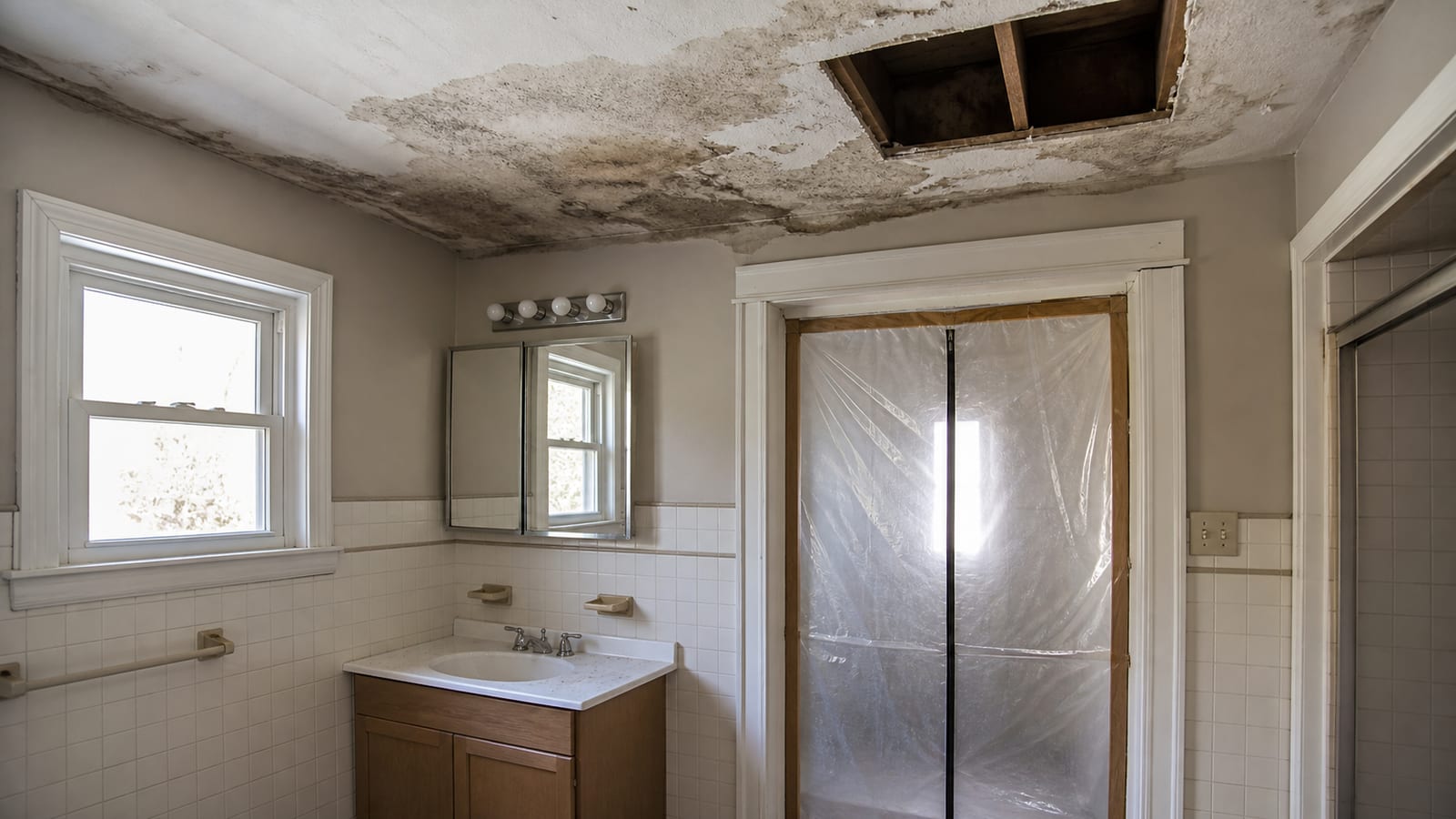
Almost nobody types "black mold removal" calmly. It gets typed after somebody moves a storage bin, pulls back a corner of carpet, or looks behind a washing machine and finds something dark that was not there before. The phrase is doing two jobs at once. It is describing what was seen, which is accurate and useful. And it is making a claim about what that thing is, which the sighting cannot support.
Both halves deserve to be taken seriously, and they lead in opposite directions. The description is a real observation about a real building, and it should be investigated. The claim, that darkness identifies a species and a level of danger, is where good decisions start going wrong, because it puts attention on a color rather than on the water that produced it.
So it is worth separating the phrase from the building. One of them tells an East Windsor property owner what to do next. The other mostly tells you how alarmed the person searching was.
Hover or tap a row to highlight it.
| What the phrase suggests | What the evidence actually supports | What that changes |
|---|---|---|
| The color identifies the organism | CDC describes *Stachybotrys chartarum* as greenish black, and appearance alone does not identify what is growing | Identification is not the decision point, and the job does not wait on it |
| Dark means more dangerous | CDC states no test proves an association between that mold and particular health symptoms | Health questions go to a clinician, not to a contractor or a color chart |
| The patch is the problem | EPA holds that indoor mold control is moisture control | The investigation follows the water, not the stain |
| A lab result will settle it | EPA sets no federal numerical limits for indoor mold spores | No sample can certify a building as clear against a standard that does not exist |
| Removing what you can see finishes it | EPA warns that dead mold can remain allergenic and cleaning without fixing water leads to recurrence | Source correction is part of the job, not an optional extra |
| The size of the stain sets the price | Scope follows source, materials, hidden migration, access and reconstruction | A quote from a photograph is a guess dressed as an estimate |
What Visible Growth Means, and What Happens Next
CDC describes *Stachybotrys chartarum* as a greenish black mold, and states that no test exists proving an association between that particular mold and specific health symptoms. Those two facts together do more work than any amount of alarming language. The first says that even the organism people mean when they say "black mold" is not reliably identified by looking at it. The second says that even a confirmed identification would not deliver the verdict people are hoping for.
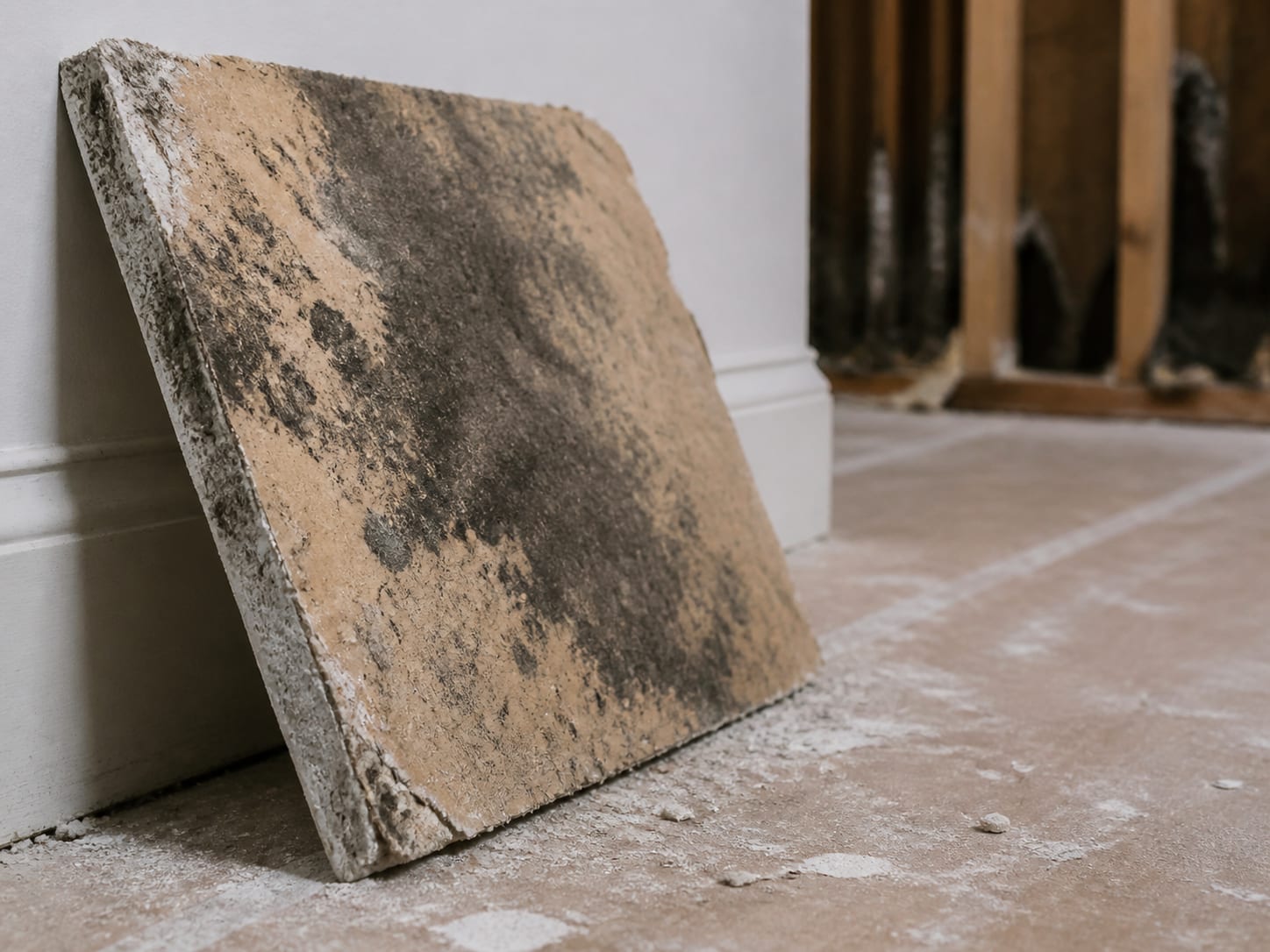
CDC also notes that no indoor environment is completely free of mold spores. That is not a reason to shrug at visible growth. It is a reason to stop treating presence as the question and start treating condition as the question. A patch of dark material on a wall in an East Windsor bedroom is evidence that something in that assembly has been wet, probably for a while. That is a genuine finding worth acting on, and it stays true no matter what color it happens to be.
None of this makes the concern silly. Somebody found growth in their home and wants it gone. The correction is narrow: the color does not tell you what it is, how risky it is, or how big the job is. What it does tell you is where to start looking for water.
What the Building Is Telling You Instead
EPA's guidance on mold and moisture puts the whole subject on one sentence: molds need moisture to grow, and the way to control indoor mold is to control moisture. That reframes the dark patch from a verdict into a marker. Something has been supplying water to that spot.
CDC's material adds a useful detail about where that shows up. *S. chartarum* can grow on chronically wet cellulose based materials including fiberboard, gypsum board paper, wallpaper, dust and wood. That does not establish the organism at any particular East Windsor property. It clarifies why an assessment has to consider the actual wet materials and how long they stayed wet, rather than the color visible on a painted surface. The paper facing of drywall, the back of wallpaper and the settled dust in a closed cavity all behave differently from the paint you are looking at.
In an inland Mercer County township like East Windsor, the plausible water pathways are the ordinary ones: plumbing failures, roof and exterior water entry, condensation on cold surfaces, foundation and drainage conditions, and inland flooding. There is no coastal exposure here, so surge and tidal language does not belong in the conversation. The Township does have an adopted flood damage prevention ordinance, and the New Jersey Department of Health's community profile reports 3.2 percent of East Windsor's urban land use area flooded in its 2021 indicator. Neither of those establishes a risk at any individual address. Together they simply mean rain and flood related water entry deserve to be on the list of things checked. When the source is not obvious from the growth location, water leak detection that traces the pathway before anything is opened is usually a better first spend than a sample.
The Sequence Does Not Change Because of the Color
Here is the part that frustrates people who arrived expecting a special protocol. The defensible removal sequence for dark growth is the same sequence used for growth of any other appearance, because it is driven by moisture and materials rather than by pigment.
EPA is clear that cleaning visible mold without correcting the water problem is likely to allow recurrence, and that dead mold can remain allergenic. So a job that ends with a treated surface and an untouched leak has not finished. EPA also generally does not recommend routine sampling where mold is already visible, and there are no federal numerical mold limits to measure a result against, which means a laboratory report should not be sold as the mandatory finish line for every job.
What a Source Focused Scope Contains
The documented moisture source
Where the water is coming from, established at the building rather than assumed from the growth location.
The affected material list
Which materials were wet, how long they were wet, and whether each absorbs water into its body or sheds it.
A defined work boundary
Which rooms and assemblies are in scope, which were checked and found unaffected, and which stayed concealed.
Control of spread where warranted
Containment appropriate to the condition, so demolition does not distribute dust and spores through the rest of the building.
Material handling with a reason
Removal, cleaning or retention decided on documented grounds, not on how dark the surface looked.
Drying to a measured condition
Confirmation that the materials left in place have actually dried, rather than a room that feels comfortable.
Correction of the water condition
The repair that stops it happening again, which is the difference between remediation and redecoration.
Any pending code question
A clear note where reconstruction may reach regulated work and needs review by the Township.
Where the growth is confirmed and the water condition is understood, this is ordinary work. Black mold removal treated as a moisture problem rather than a species problem follows exactly the outline above, and the removal is the easy half.
Where the Source Sits in an East Windsor Building
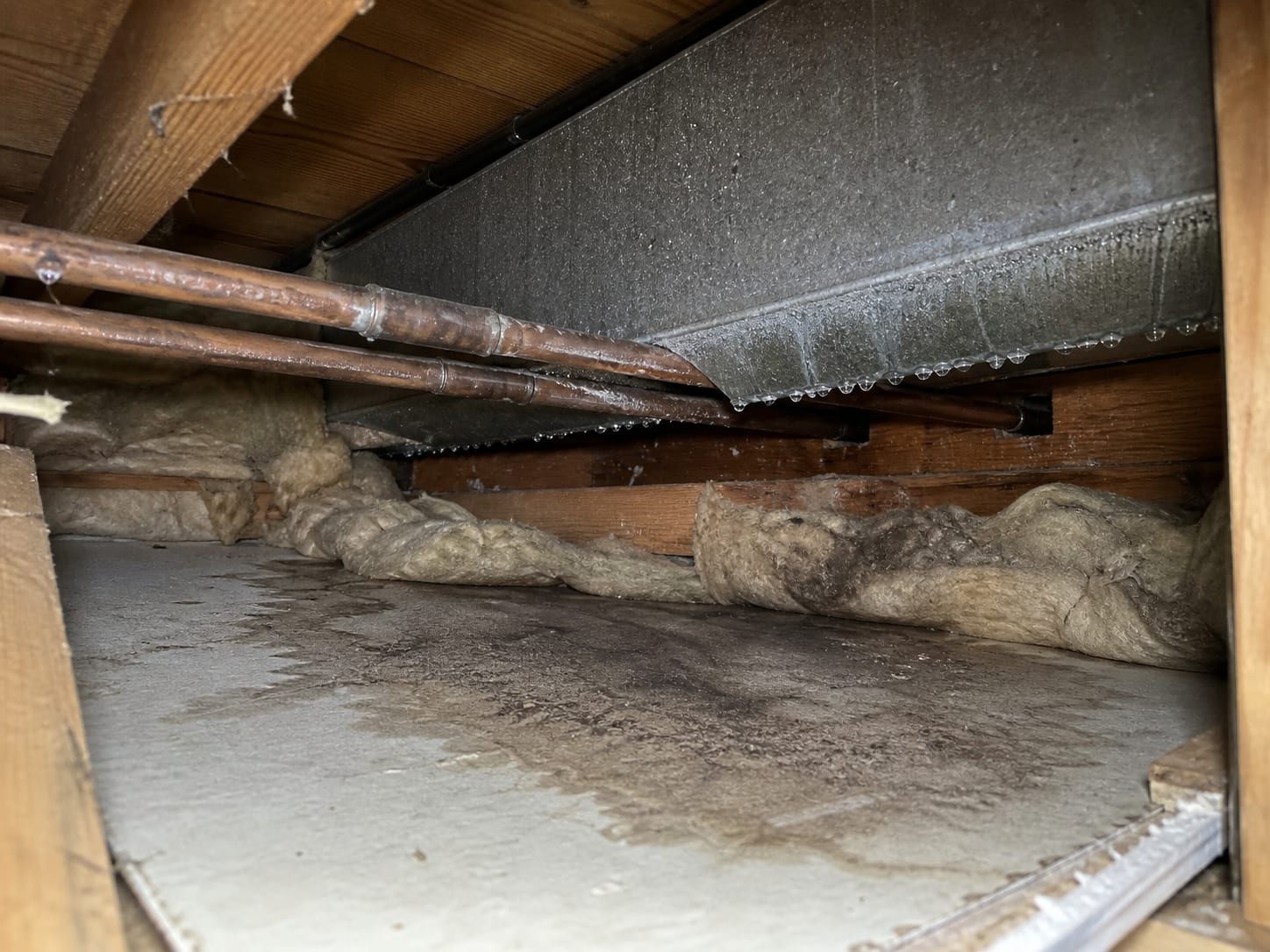
The stain is on a surface. The water almost never starts there.
East Windsor's housing inventory makes this more than a technicality. Census Reporter estimates 12,422 housing units in the township, with about 54 percent in single unit structures. The rest are attached and multifamily buildings, where a mold report can involve a unit, a common space, shared plumbing, an exterior wall or a ventilation route controlled by a different party. Census QuickFacts reports 61.1 percent owner occupancy for the 2020 to 2024 period, so a substantial share of the local audience is renting or living in a professionally managed setting. The person who sees the dark patch may have no way to access or repair whatever is producing it.
The Township's parks material identifies Twin Rivers as a Planned Unit Development within East Windsor, a reminder that planned residential environments sit alongside individual homes here. And East Windsor's health profile records 5.3 percent pre-1950 housing for the 2016 to 2020 period, which means neither "all historic" nor "all new construction" describes the township. The assembly behind any given wall has to be established at the building.
Two municipal boundaries are worth stating precisely, because they decide who you call. Hightstown is a separate borough that East Windsor surrounds. West Windsor is a different adjacent township. East Windsor Township runs its own Construction Department, which receives construction permit applications and administers code functions, and that is the office relevant to an East Windsor address.
Health Questions Belong With a Clinician
This is the point where a lot of writing on this subject overreaches, so it is worth being direct.
EPA says molds can produce allergens and irritants and recommends addressing moisture and cleanup. CDC states that no test has proved an association between *S. chartarum* and particular health symptoms. Neither supports the claim that a building condition diagnoses an illness, and neither supports the "toxic black mold" framing that shows up in advertising. If someone in the household has symptoms they are worried about, that belongs with a qualified medical professional who can actually evaluate the person.
What a restoration company can responsibly speak to is the building. Whether moisture has supported growth, which materials are involved, how long they have been wet, and whether the water condition has been corrected. That is a real and useful set of answers. It is just not a medical one.
Credentials, Listings and What Nobody Can Certify
New Jersey's Department of Health publishes mold guidance for residents and maintains a list of remediation firms, while stating plainly that it does not endorse or qualify the services of listed private companies. EPA likewise states that it does not have a certification program for mold inspectors or remediation firms, so a claim of being "EPA certified" is worth asking about rather than relying on.
The New Jersey Department of Health also observes that, because mold regulations are limited, government offices have limited authority to cite building owners for mold contamination. That is a meaningful piece of context for a tenant or a unit owner. It does not mean nothing applies, since code, tenancy, insurance and construction requirements still exist. It does mean that accurate documentation and source correction carry more weight here than an appeal to a rule that may not be there.
On the construction side, mold cleanup by itself is not automatically a permit event. Removing or replacing regulated building elements can change that question, and East Windsor's Construction Department is the right place to resolve it. The Township publishes that a construction permit fee is the sum of the applicable subcode fees rather than one universal project charge, which is another reason cleanup and reconstruction should be priced and recorded as separate scopes.
Frequently Asked Questions About Black Mold Removal in East Windsor, NJ
Is the black mold in my house toxic?
That framing does not hold up. CDC describes *Stachybotrys chartarum* as greenish black and states that no test proves an association between it and particular health symptoms. Appearance also cannot identify what is growing. If you are concerned about symptoms, see a clinician. If you are concerned about the building, the useful questions are where the water came from, which materials got wet, and whether the source has been fixed.
Should I get it tested before removal?
Usually not, when growth is already visible. EPA generally does not recommend routine sampling in that situation, and there are no federal numerical limits a result could be compared against. Testing earns its cost when the source or extent is genuinely unclear, when growth is suspected but not visible, or when a specific question needs an answer that observation cannot provide. If that describes your situation, black mold testing scoped to an actual question is reasonable. As a reflex before every cleanup, it is not.
Can I just paint or bleach over it?
No, and for two separate reasons. Porous materials hold growth below the visible surface, so a surface treatment does not reach it. And EPA warns that dead mold can remain allergenic, so killing it is not the same as resolving it. More importantly, neither approach touches the water that produced the growth, which means the condition is still being supplied.
Does dark growth mean a bigger, more expensive job?
The color does not set the scope. What sets it is the confirmed moisture source, the material types involved, the affected area including any hidden migration, the number of rooms or units, access, containment needs, contents, drying and any reconstruction afterward. A firm quoting a premium because a patch looks dark is pricing a description rather than a condition.
The growth is in my unit but the leak seems to be next door. What happens?
Then the scope has a dependency that needs to be written down. Work inside your boundary can often go ahead, but the source correction requires the authority of whoever controls that space, whether that is a neighboring owner, a landlord or an association. Document what you observed with dates and photographs and report it in writing, so the record shows who was notified and when.
How do I know the removal actually worked?
By what is documented, not by what looks clean. A credible record identifies the reported condition, the moisture source, the affected areas, which materials were removed or retained and why, the drying results, and any repairs that followed. What no report can give you is a certificate that a building is safe, because EPA has set no standard that would let anyone issue one.
The Phrase Versus the Building
1. What does the color of mold tell you about the species?
2. What does EPA identify as the way to control indoor mold?
3. When is routine mold sampling generally unnecessary?
4. Who should answer questions about symptoms in the household?
5. What does EPA say about mold inspector and remediation firm certification?
Pick an answer to begin.
The Practical Takeaway
The phrase and the building are two different subjects. The phrase carries an identification and a risk verdict that a sighting cannot support, and chasing it leads to sampling that answers nothing, premiums priced off a photograph, and language about toxicity that nobody can back up. The building carries a much plainer message: water reached this material and stayed long enough for something to grow.
Follow the building. Find the water, establish which materials it affected and for how long, define the boundary of the work honestly including what stayed concealed, remove and clean on documented grounds, dry to a measured condition, and correct the source so the same wall is not opened again next year. Do that and the color becomes what it always was, a thing you noticed, not a thing you are treating.
If you have found dark growth in an East Windsor property and want the source and the material decisions handled without the toxicity theater, the team at ExecPro Restoration & Cleaning documents what was found, what was done, and what remains. Call (888) 300-3772 or tell us what you found at your East Windsor property and we will start with the water.
Terms Worth Knowing Before You Say Black Mold
Tap a term to see what it means.
Stachybotrys chartarum. A greenish black mold that CDC notes cannot be linked by any existing test to particular health symptoms.
Serving East Windsor
ExecPro Restoration & Cleaning provides mold remediation services in East Windsor, NJ, from inspection and testing through removal, drying, and post-remediation verification. Call (888) 300-3772 for 24/7 emergency response.
Related Articles
Flood Damage Cleanup in East Windsor, NJ: What to Do in the First Hours
Flood damage cleanup in East Windsor, NJ, where water arrives by rainfall, drainage and grade. What to do first, what the work involves, and what it costs.
The Finished Room, in Reverse: Water Damage Restoration in East Windsor, NJ
Water damage restoration in East Windsor, NJ ends in a rebuilt room. What that room costs and how long it waits was decided in the first 24 to 48 hours.
Who Has to Say Yes: Mold Remediation Authority in East Windsor, NJ
Mold remediation in East Windsor, NJ stalls on one question more than any other: who actually controls the wall, roof or pipe the water arrived through?