Insurance Restoration in Princeton, NJ: Coordinating a Claim on a Historic or Mixed-Use Property
Cal HewittPublished
- insurance restoration services
- insurance restoration
- mold remediation
- historic buildings
- new jersey
- princeton
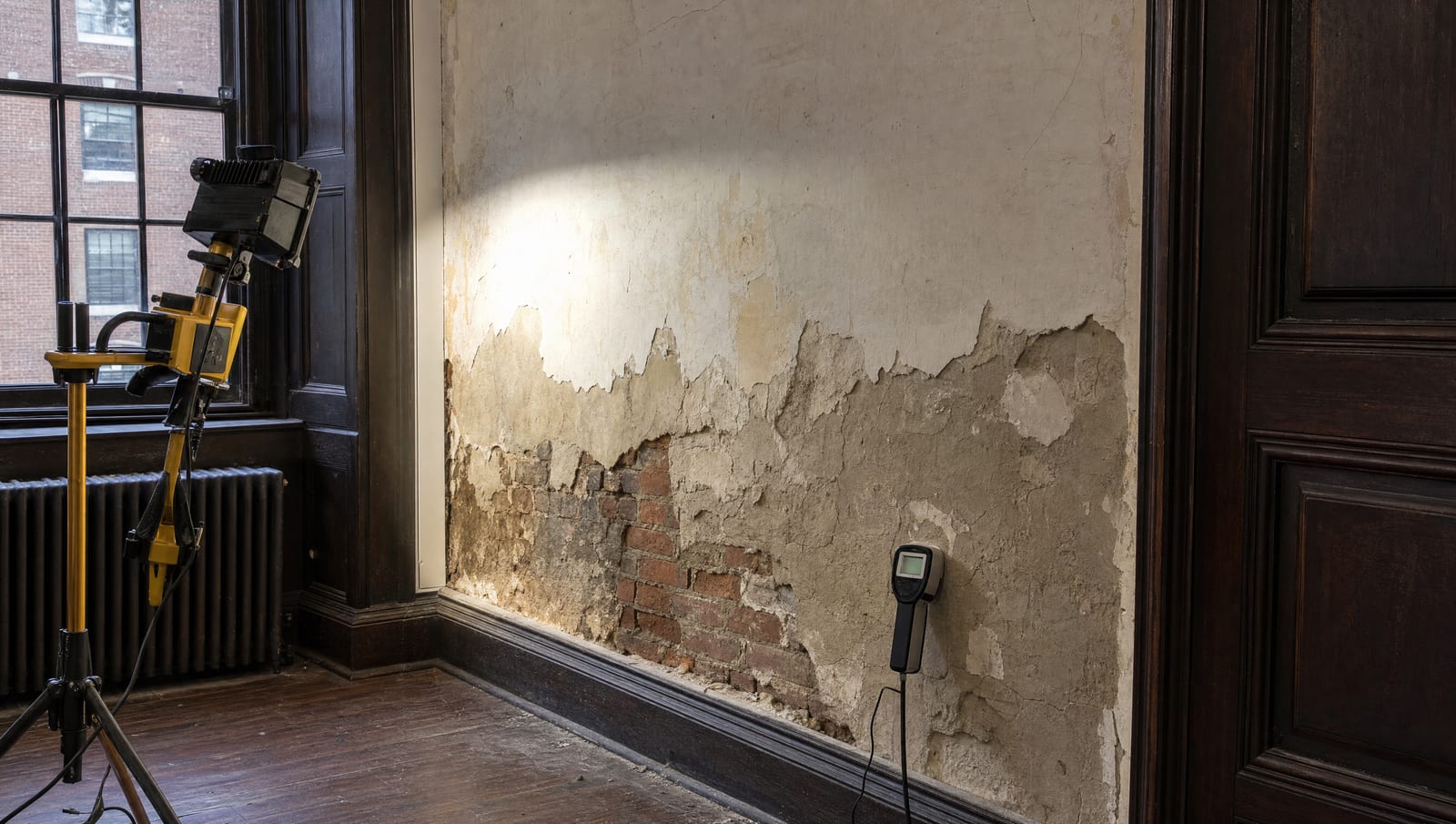
When water, fire suppression, or a storm hits an older Princeton building, the hardest part is rarely the cleanup itself. It is keeping the paperwork straight while the property is still wet. Princeton mixes century-old masonry and wood-frame homes, historic districts, university-adjacent buildings, established neighborhoods, and multifamily and mixed-use spaces. On a property like that, an insurance claim is not just about stopping the damage. It is about producing a clean record of what happened, what was there before, and what it took to make the building whole again.
This post walks through how a documented claim comes together on an older Princeton property. The focus here is the coordination work, meaning the photos, the scope, the access, and the municipal check-ins, rather than a step-by-step remediation guide. One thing to say plainly up front: a contractor documents and coordinates, but a contractor cannot decide or guarantee what your insurance will cover. Only your carrier can do that, based on your policy language and the documented cause of loss. Nothing here is legal or insurance advice.
Why an Older Princeton Property Changes the Claim
A newer, single-family home with a simple floor plan is easier to document. An older Princeton property adds layers. Finishes may be original or high-character, such as plaster, trim, or flooring that a standard replacement would not match. The building may hold more than one household or a mix of residential and commercial space, so access and control of each room is not automatic. And depending on the parcel, the site may sit inside a flood-hazard area or a historic-preservation district, which brings the municipality into the picture.
None of those facts prove anything about a specific loss on their own. Property age alone does not tell you the foundation type, whether water reached concealed cavities, or whether a finish can be saved. That is why the work has to be scoped by address: the building history, the affected assemblies, access, utilities, occupancy, and any prior repairs. The goal is a record that a carrier and, where needed, a municipal reviewer can follow without guessing.
Start by Documenting Before Anything Is Disturbed
The most valuable documentation happens before demolition begins. Once safety is handled and the water source is stopped, the conditions get photographed and measured as found. On an older property, that means capturing the historic or high-character finishes in place, not just the damage. If original plaster, trim, or flooring has to come out later, the pre-work record is what shows what was there and what matching may involve.
The Federal Emergency Management Agency's guidance on documenting and reporting losses reinforces the same idea: photograph and record conditions early, before cleanup changes the scene. Keep the water pathway, the moisture readings, and the source findings together with the photos, so the file tells one consistent story.
Hover or tap a row to highlight it.
| What to document | Why it matters for the claim | Historic or municipal note |
|---|---|---|
| Cause of loss and date | The carrier decides coverage from the documented cause, so a clear record of what happened and when anchors the file | Distinguish floodwater from plumbing water, since flood insurance is separate from a standard homeowners policy |
| Condition of historic finishes | Shows what original plaster, trim, or flooring was in place before demolition | Finish matching may trigger preservation review on covered properties |
| Regulated-material findings | Flags materials that need special handling before work proceeds | Confirm handling rules with the authority having jurisdiction |
| Access and occupancy notes | Records who controlled each affected space and when it could be entered | Matters in multifamily or mixed-use buildings with several occupants |
| Itemized scope of work | Ties each extraction, drying, demolition, and repair line to a documented condition | Permits may be required before certain repairs begin |
| Invoices and correspondence | Connects the money spent to the work performed | Keep carrier messages, change orders, and disposal records together |
Sorting Out Safety and Cause of Loss
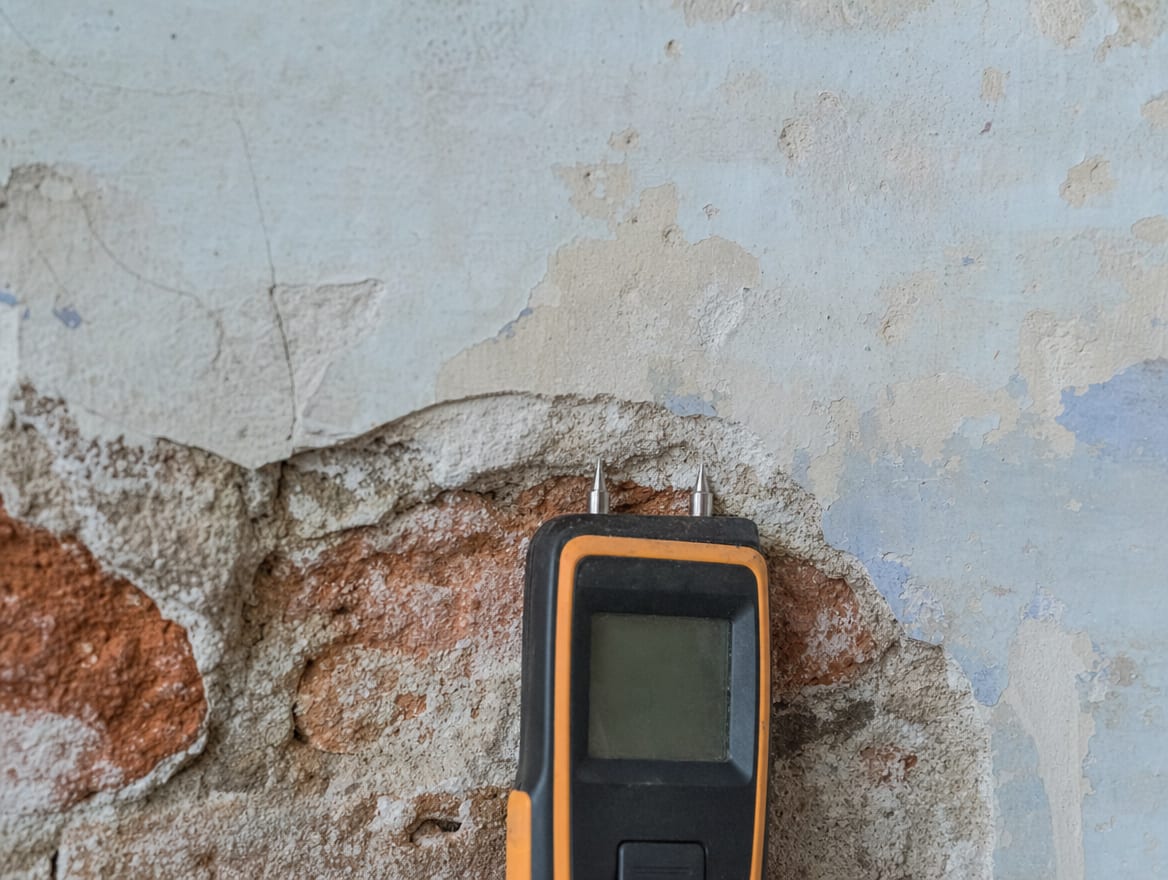
Before documentation goes far, the situation gets classified. Not all water is the same. Floodwater, groundwater, rain entry, plumbing water, sewage, and condensation each carry different safety, insurance, and remediation implications, so the file should name which one applies. This matters for coverage too, because flood insurance is separate from a standard homeowners policy, and the cause of loss drives which policy responds.
Speed also protects the property. The Environmental Protection Agency advises drying wet materials within 24 to 48 hours to reduce the risk of mold growth, which is one reason emergency stabilization should not wait on a coverage debate. Get the building safe and start drying, and document as you go, rather than letting the two compete.
A note on health, kept in its proper place. The Centers for Disease Control and Prevention state that damp and moldy environments may affect some people and not others, and that sensitive individuals can experience respiratory, eye, skin, or allergy-related effects. That is a reason to seek appropriate medical advice if someone is concerned, not a diagnosis and not a claim about any specific property.
Coordinating Access in Mixed-Use and Multifamily Buildings
A single-owner home has one decision-maker. A mixed-use or multifamily building often does not. One water event can cross a storefront, a shared basement, a hallway, and two or three separate units, each with a different occupant or a different party who controls entry. When that access is not mapped early, drying gets delayed in the very spaces where moisture likes to hide.
The coordination step is to map, in writing, who occupies and who controls each affected space, then schedule access so mitigation can reach all of it. Keeping that map in the claim file also helps later, when the scope and invoices need to show why work happened where it did.
Coordinating a Claim Across a Mixed-Use Building
Document originals before demo
Photograph historic and high-character finishes in place before anything is removed, so the record shows what was there.
Map who occupies and controls each space
Write down which party holds each unit, the shared areas, and any commercial space, so access can be scheduled without guesswork.
Check for regulated materials
Confirm whether the work may disturb materials that need special handling, and confirm the rules with the authority having jurisdiction.
Ask flood-zone cause questions
Check the parcel against the FEMA map and record whether the water was flood-related, since that changes which policy responds.
Confirm municipal and preservation review
Verify Princeton building, zoning, flood-damage-prevention, and historic-preservation requirements before repair work begins.
Keep all correspondence
Save carrier messages, approvals, change orders, and disposal records together so the file stays consistent.
Flood-Zone Questions Are Answered by Parcel, Not by Reputation
Princeton does not have one flood story. Some parcels sit inside a flood-hazard area and some do not, and New Jersey's climate trending wetter does not establish a loss at any single address. So flood-zone questions get answered by the parcel, not by a neighborhood's general reputation.
That means checking the address against the FEMA Map Service Center and the state flood-risk tools, then documenting the observed water pathway onsite. Where the loss is flood-related, the record needs to reflect that, because flood coverage is separate from a standard homeowners policy and the two are handled differently. The New Jersey Department of Banking and Insurance homeowner resources are a useful reference for how coverage, notice, and documentation fit together, though the carrier remains the only party who decides the claim.
How Municipal and Preservation Review Fits In
On an older or historic Princeton property, the municipality can be part of a documented rebuild. The town regulates flood-hazard development, maintains historic-preservation review procedures for covered properties, and issues the construction permits that certain repairs require. When finish matching or exterior work touches a covered property, preservation requirements may apply.
The honest way to handle this is to confirm requirements with the authority having jurisdiction before the work, rather than assuming. Review can add visits, approvals, or steps, and building that into the plan up front keeps the claim record and the repair timeline aligned. It is worth saying that no fixed duration is supportable without a defined scope, because drying, any laboratory or engineering input, permits, verification, material procurement, and reconstruction each add their own time.
Claim Coordination, Step by Step
- 1
Protect life and stop the water
Make the building safe and stop further damage when it is safe to do so, then begin drying without waiting on a coverage decision.
- 2
Notify the carrier
Report the loss so the claim is opened under the policy and the documented cause.
- 3
Photograph and measure conditions
Record the damage, the water pathway, moisture readings, and the historic finishes as found, before anything is disturbed.
- 4
Check the parcel and municipal constraints
Verify the FEMA flood map, plus Princeton building, zoning, flood-damage-prevention, and historic-preservation requirements for the address.
- 5
Mitigate and remediate
Complete extraction, drying, and any needed removal, keeping itemized records and preserving evidence or samples when requested.
- 6
Verify dryness or clearance
Confirm that materials are dry, and obtain independent verification where the situation calls for it, before rebuilding.
- 7
Reconcile scope and repair
Obtain approvals and permits, reconcile any supplements with the carrier, complete the repairs, and document the finished work.
Keeping the Record Clean Through the Rebuild
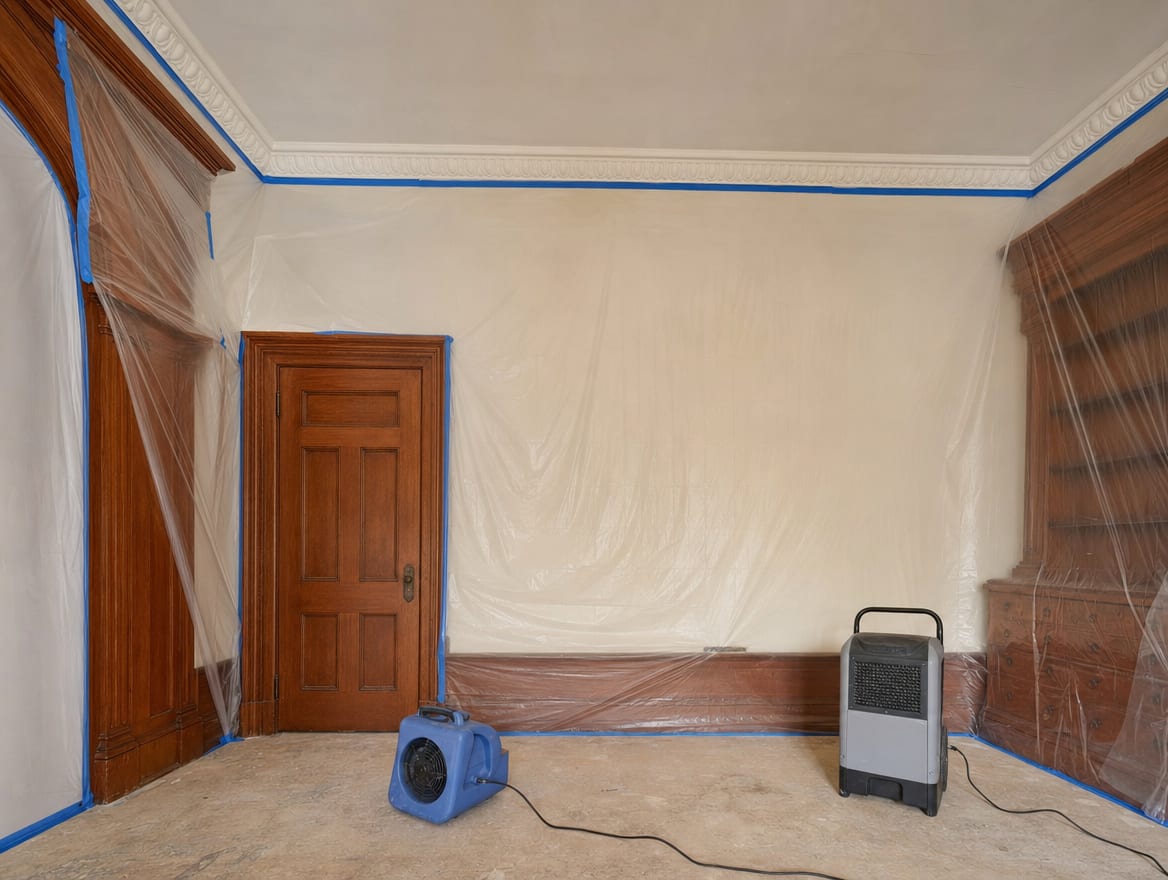
The claim does not close when the building dries. It closes when the file shows what was found, corrected, removed, dried, verified, and rebuilt. On an older property with matched finishes, that paper trail carries real weight, because it explains why a repair took the form it did.
Practical records to keep together include pre-work photos, moisture readings, source findings, the scope and its exclusions, change orders, equipment and drying logs, disposal records, permits, inspection results, post-work photos, verification reports where required, invoices, and carrier correspondence. Where a defined question needs an answer, independent post-remediation verification can confirm a result before the rebuild proceeds. Testing should answer a specific question and change a decision, not run by default.
A few red flags are worth naming, because they show up in restoration work. Be cautious about pricing offered without an inspection, a single-product cure, an undefined scope, no correction of the moisture source, no completion criteria, or any promise that insurance will pay. That last one is the clearest tell, since coverage is the carrier's decision, not the contractor's.
Frequently Asked Questions
Does insurance cover mold or water damage on an older Princeton property?
It depends, and it cannot be guaranteed by a contractor. Coverage turns on your policy language, the documented cause of loss, any exclusions, timely notice, and your documentation. Flood-related losses are handled under separate flood coverage, not a standard homeowners policy. Only your carrier can decide the claim. A restoration contractor's role is to stabilize the damage and produce a clear, itemized record you can use in that process.
How do you document historic or high-character finishes for a claim?
By photographing and recording them in place before any demolition. If original plaster, trim, or flooring has to come out, the pre-work record shows what was there and what matching may involve. Those photos and notes stay in the claim file alongside the cause of loss, moisture readings, and scope, so the story stays consistent from the first day through the rebuild.
Who coordinates access in a mixed-use or multifamily building?
Access starts with a written map of who occupies and who controls each affected space, including shared areas and any commercial units. From there, entry can be scheduled so drying and mitigation reach every affected room, not just the easy ones. Keeping that map in the file also helps explain, later, why work happened where it did.
Do flood-zone questions affect coverage?
They can, which is why they are checked by parcel rather than assumed. The address is checked against the FEMA flood map and the state flood-risk tools, and the observed water pathway is documented onsite. If the loss is flood-related, that matters, because flood coverage is separate from a standard homeowners policy. The carrier still decides how each policy responds.
Does historic-preservation review slow down a claim?
It can add steps, and the right move is to confirm requirements with the municipality before the work rather than guessing. Princeton maintains historic-preservation review procedures for covered properties and issues the permits that certain repairs need. Building that review into the plan up front keeps the repair timeline and the claim record aligned, so nothing has to be redone.
Get a Documented Starting Point
If you are looking at damage in an older, mixed-use, or historic Princeton building and are not sure how to keep the claim organized, ExecPro Restoration & Cleaning can help you get a documented starting point. We stabilize the damage, record conditions clearly, and coordinate access, insurance restoration services, and the full range of build-back work so your file holds together from the first photo through the finished rebuild. We also serve Princeton through our mold remediation team in Princeton, NJ. We document and coordinate, and we leave coverage decisions to your carrier. To talk through your situation, reach out through our contact page or call (888) 300-3772.
Insurance Restoration Terms
Tap a term to see what it means.
Cause of loss. The event that caused the damage, such as a burst pipe, a storm, or a flood. The carrier decides coverage based on the documented cause and the policy language.
Serving Princeton
ExecPro Restoration & Cleaning provides mold remediation services in Princeton, NJ, from inspection and testing through removal, drying, and post-remediation verification. Call (888) 300-3772 for 24/7 emergency response.
Related Articles
Insurance Restoration Services in Deal, NJ: Building a Claim File That Holds Up
In Deal, NJ, a strong insurance claim starts with documentation. See what belongs in a coastal claim file and how a restoration contractor records a loss.
Insurance Restoration in Princeton Junction NJ: Building the Paper Trail Your Claim Depends On
When a basement loss starts while you commute, your Princeton Junction NJ insurance claim rests on documentation. Here is the paper trail that supports it.
Property Management Mold Services in Princeton, NJ: A Portfolio Protocol for Mixed-Age Buildings and Occupied Units
How Princeton property managers run mold response across a mixed-age portfolio: historic review, resident notice, containment, and recurrence tracking.