After a Loss in Livingston NJ: Who Decides Coverage, Repairs, and Code
Cal HewittPublished
- insurance restoration
- property damage
- documentation
- new jersey
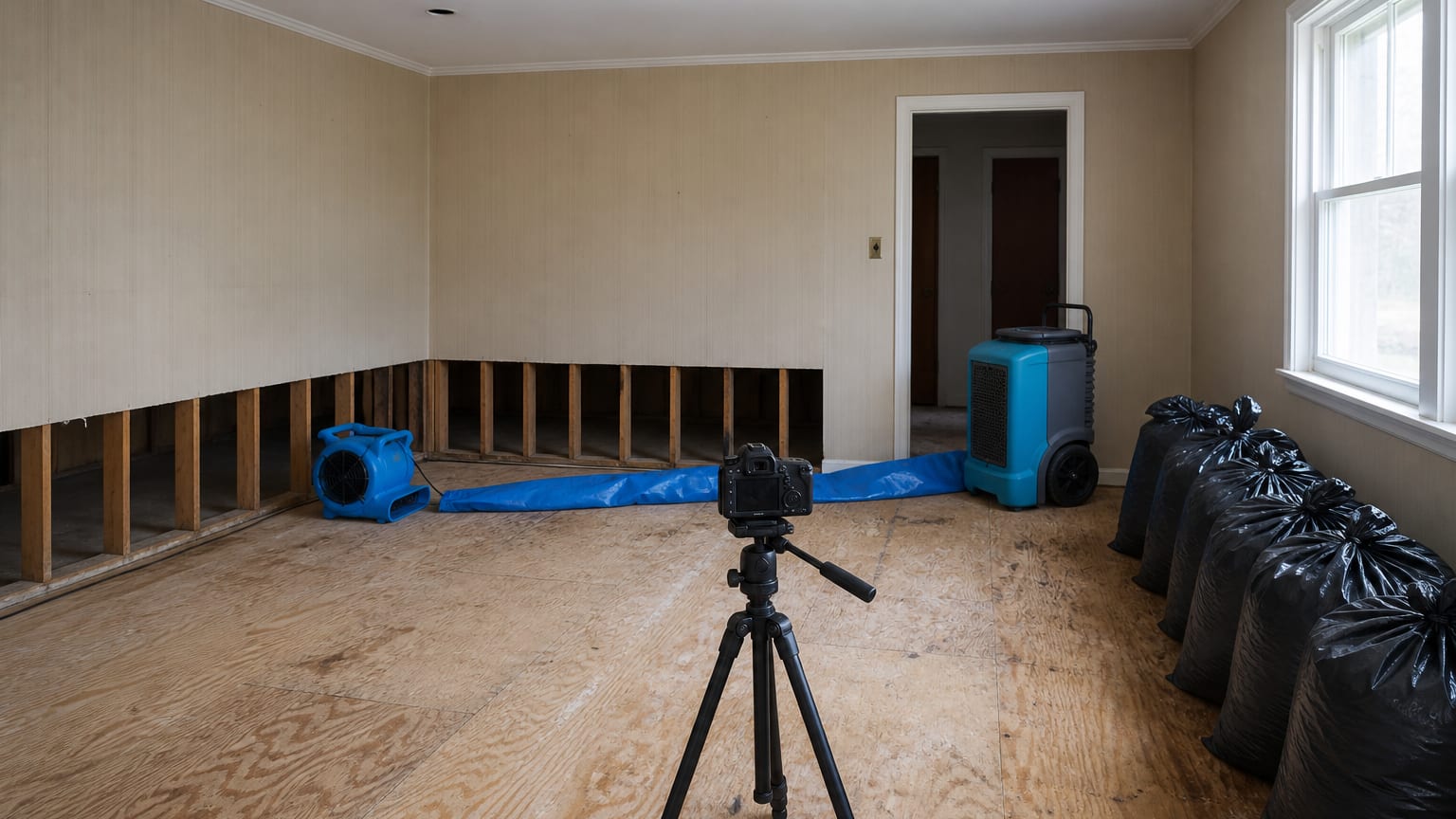
Stand in a Livingston basement the morning after a supply line lets go, and three questions are already running at once. What is wet, and how far did the water travel. Whether the policy pays for any of it. Whether the repair needs a permit before new drywall goes up. Those feel like one problem, because they all landed on the same floor on the same morning. They are not one problem. They are three separate decisions, and three different parties make them.
The restoration contractor decides what the condition is and what the repair scope needs to be. Your insurer decides whether the policy covers the loss and on what terms. The township decides which parts of the repair need a permit and an inspection. None of the three can make the other two decisions, and each can move on its own timeline. Once you see the lanes clearly, a claim stops being one unanswerable question and becomes three answerable ones.
Key Takeaways
Three parties, three lanes
The contractor documents condition and repair scope, the insurer decides coverage under your policy, and the township decides permits and inspections. No one crosses into another lane.
No contractor can approve your claim
Coverage, deductibles, limits, and exclusions live in your policy and are decided by your insurer. Anyone who promises a payment before the insurer evaluates the loss is telling you something they cannot know.
An estimate is not a permit
A repair estimate describes proposed work. Permit and code questions go to the Livingston Building Department, which handles construction matters for the township.
Dated condition records do the heavy lifting
Photos, moisture readings, affected materials, contents, and the timing of each step give every party what it needs to make its own decision.
Emergency work and rebuild work are different things
Stopping active damage is separate from discretionary reconstruction, and a clear file keeps them separate.
Waiting for an answer can cost you
Active water and unsafe conditions get worse while a decision is pending, so safety and drying do not wait on paperwork.
Three Decisions That Arrive Together
Losses do not announce which lane they belong to. A washing machine hose, a slow roof leak, a kitchen fire, a plumbing failure inside a wall, all of them produce the same first hour of confusion. What separates a clean recovery from a messy one is usually not how bad the damage was. It is whether the three decisions stayed in their own lanes.
What the Restoration Contractor Decides
A restoration company can tell you what it observed, when it observed it, and what it did about it: which rooms and materials are affected, where moisture readings were taken, what was removed and why, what emergency mitigation was performed, and what repair scope is being proposed. It can also tell you which parts of that scope depend on another trade, such as plumbing, roofing, electrical, mechanical, or framing work.
What a contractor cannot do is tell you the claim outcome. It does not read your policy for you, it does not set your deductible, and it cannot conclude that a specific cause of loss is covered or excluded. That boundary is not modesty. It is the actual division of authority, and a company that respects it is giving you a record you can use rather than a promise that falls apart later.
What the Insurer Decides
Your policy is a contract, and coverage is decided under that contract by the insurer handling your claim. Deductibles, policy limits, endorsements, exclusions, and depreciation terms are financial facts that belong to your specific policy, not to the type of service you happen to need. The New Jersey Department of Banking and Insurance is the state resource for insurance consumer information, and its guidance points policyholders back to the same two places every time: read your own policy, and contact your insurer.
This is also where the flood question belongs. Standard homeowners policies in New Jersey do not cover flood damage, which is why the state requires that limitation to be spelled out for consumers and why flood coverage is handled separately. Whether a given water event in your home falls under that limitation is a policy question, decided by your insurer.
What the Township Decides
Reconstruction is a code question, and code in Livingston belongs to the township. The Livingston Building Department provides construction code information and permit services, and the township publishes permits and applications resources for planned work. A loss report is not a permit. An estimate is not a certificate of occupancy. Those documents answer different questions for different readers.
The township also keeps construction records by address. If a loss runs into a prior renovation, an open permit, or work done by a previous owner, that record search can fill in history nobody in the house remembers.
Hover or tap a row to highlight it.
| The decision | Who makes it | What it rests on | What it is not |
|---|---|---|---|
| Condition and repair scope | The restoration contractor | Direct observation, photos, moisture readings, affected materials, mitigation performed | A coverage opinion or a code approval |
| Coverage and payment | Your insurer, under your policy | The policy contract, deductible, limits, endorsements, exclusions, and the insurer's investigation | Something a contractor estimate can settle |
| Permits and inspections | The Livingston Building Department | The applicable construction code and the scope of proposed reconstruction | Established by a loss report or an estimate |
| Medical questions | A medical professional | Your own health history and examination | Something a restoration report can answer |
Where the Lanes Get Blurred
The blurring almost always runs one direction. Somebody in a stressful week wants a single answer, and the nearest person willing to give one is the contractor standing in the room. That is how an owner ends up believing a claim is approved because a technician said the damage "looks covered," or believing a rebuild is cleared because an estimate was written for it.
The cost of that blur is not just a surprise later. It also damages the record. Once discretionary upgrades get folded into an emergency mitigation invoice, or a rebuild begins before the condition was photographed, the file gets harder for everyone to read. The loss can be entirely real and the paperwork can still fail to show it.
What Belongs in the Condition Record
The useful version of a restoration file is boring and specific. It identifies the affected rooms and materials, the source information available at the time, photographs taken before removal where that was safe and practical, the mitigation timing, the contents involved, and whether any part of the planned reconstruction will need municipal review.
Just as important, it keeps four categories apart: what was emergency mitigation, what is proposed repair, what has been authorized, and what requires a permit. Those four are not the same list, and a file that runs them together forces every reader to guess. Guessing is what slows claims down. If active water started your loss, that first hour of emergency water extraction is also the first entry in the record, which is why its timing gets written down rather than remembered.
Property Type Changes Who Has to Sign Off
Livingston has roughly 10,699 housing units, and the township's construction record system separates single family, multifamily, and commercial property. That distinction is not bureaucratic trivia. It changes who has authority to approve work.

A private home can involve one owner and one policy. A multifamily setting can involve a unit owner, an association, a landlord, a tenant, and shared building systems, which means the same wet ceiling may sit on the boundary between two responsibilities. A commercial loss can involve an owner, a tenant, inventory, operations, and lease obligations, and a tenant fit out can include specialized finishes that a residential scope would never contain.
None of that decides coverage either. It decides who needs to be in the conversation before work starts, which is a different and equally practical question.
A Livingston Loss Is an Address Story, Not a Weather Story
Livingston sits inland in Essex County, and the losses here follow that geography. They tend to start at a specific address with a specific failure: a supply line, a water heater, an appliance connection, a roof detail, an aging drain, a fire, or a stretch of freezing weather that found a vulnerable pipe. Statewide recovery programs, such as the ones that followed Hurricane Ida, describe a general history. They do not establish that a particular Livingston property was damaged by a storm or that any policy responds to it.
That is why the loss chronology has to come from your own records. Your photos, your invoices, your notes on when the water was first noticed, and your correspondence with the insurer place a real event at a real address on a real date. Season can shape the kind of event you report, but the actual source and timing still come from the building itself.
Do Not Let a Pending Decision Stall Active Damage
Owners frequently pause mitigation while they wait to hear from an adjuster. It feels responsible. It usually is not, because water and unsafe conditions keep working on the building whether or not a decision has been issued. The EPA's guidance on moisture and mold is consistent that drying wet materials promptly and correcting the moisture source is what limits secondary damage.
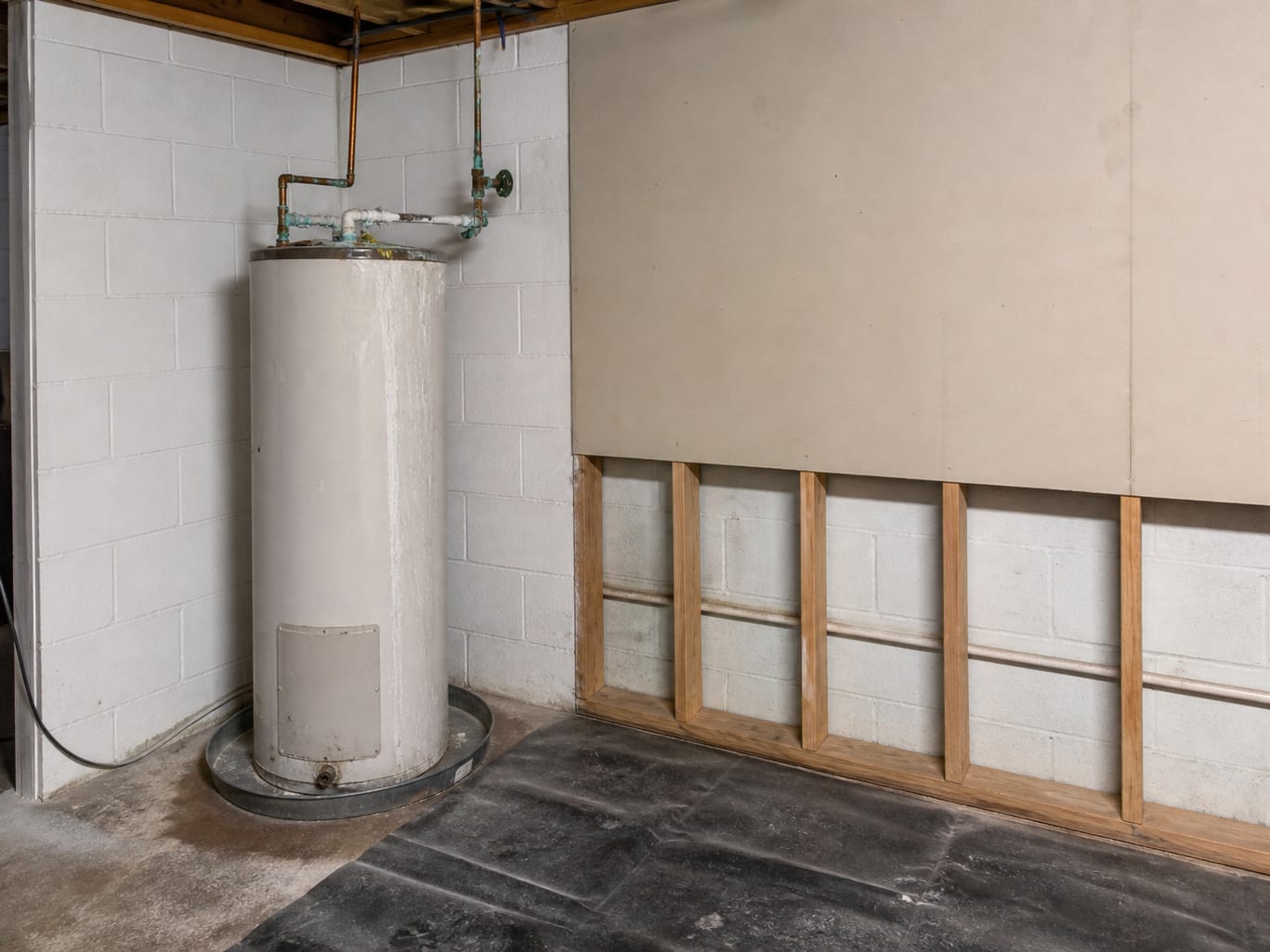
There is a reasonable middle path. Address urgent safety and moisture problems right away, and preserve the evidence while doing it: photograph conditions before material is removed, note what was wet and where, and keep the readings. Nothing about acting quickly requires acting undocumented. Where a wet assembly has already reached framing, the conversation shifts toward structural mold repair, and the record needs to show when the scope changed.
What Actually Drives the Cost of the Work
The price of restoration work is driven by the loss itself, not by a neighborhood rate. The real drivers are the affected rooms and materials, whether the source needs correcting, contents handling, specialized cleaning, demolition, drying, mold work where the condition warrants it, reconstruction, access, occupancy, and whether permits apply.
Your deductible, limits, endorsements, exclusions, and depreciation terms are a separate financial track, decided under your policy, and they cannot be inferred from the type of service you booked. Livingston publishes a fee schedule for regulated construction work, but those municipal fees are not a proxy for the cost of a job and may not apply to a mitigation job at all. The honest version of an estimate says what was already done, what is proposed, what is excluded, and what depends on another trade. It does not guarantee what an insurer will pay.
Red Flags Worth Walking Away From
The clearest warning sign is a company that promises coverage, approval, a payment figure, or an outcome before the insurer has evaluated the policy and the loss. That promise is not optimism. It is a claim about a decision the company does not get to make.
Two more are worth watching for. One is a broad reconstruction scope starting before the condition was documented, which quietly erases the evidence that would have supported the claim. The other is an estimate presented as though it settles the permit question, when code review is the township's role.
Frequently Asked Questions About Insurance Restoration in Livingston NJ
Does the restoration company decide whether my claim is covered?
No. Coverage is decided by your insurer under your specific policy, including the deductible, limits, endorsements, and exclusions that apply to it. A restoration company documents what it observed and what it repaired. The New Jersey Department of Banking and Insurance publishes consumer insurance information for the state, and its guidance directs policyholders to their own policy and their insurer for claim specifics.
Is a repair estimate the same as a permit?
No. An estimate describes proposed work and its cost. Permits and inspections for construction work in Livingston are handled by the township Building Department, and the township publishes permit and application resources separately. Reconstruction that falls under the construction code needs municipal review regardless of what an estimate says.
Should I wait for the insurer before starting any work?
Urgent safety and moisture problems generally should not wait, because active water and unsafe conditions keep causing damage while a decision is pending. The practical approach is to handle the emergency, photograph conditions before materials are removed where that is safe, and keep the emergency mitigation clearly separate from any later rebuild work.
Does standard homeowners insurance cover flood damage?
Standard homeowners policies in New Jersey do not cover flood damage, and the state requires that limitation to be disclosed to consumers. Flood coverage is handled through a separate policy. Whether a specific water event at your property falls under that limitation is a question your insurer answers by reading your policy and investigating the loss.
What documents should I hold onto after a loss?
Keep the policy, the claim number, any notices you receive, photographs of the damage, invoices, mitigation logs, estimates, and your written communications. Those records may be relevant to how the claim is evaluated, though holding them does not predetermine the result.
Does my property type change how the claim is handled?
It changes who needs to be involved. Livingston's construction records distinguish single family, multifamily, and commercial property. A single family home may involve one owner and one policy, while a multifamily building can involve unit owners, an association, a landlord, tenants, and shared systems, and a commercial loss can involve a tenant, inventory, operations, and lease terms. Those are scope and authority differences, not coverage conclusions.
Test Your Insurance Restoration Knowledge
1. Who decides whether a loss is covered?
2. What does a restoration contractor's report actually establish?
3. Who handles permits and inspections for repair work in Livingston?
4. Should urgent water or safety problems wait for a claim decision?
5. Does a standard New Jersey homeowners policy cover flood damage?
Pick an answer to begin.
Final Thoughts
A property loss feels like chaos partly because three different systems start running at the same moment, using different records and different clocks. Separating them is what makes the week manageable. Write down the condition. Let the insurer read the policy. Let the township read the code. Keep those three sets of documents legible and distinct, and each party can do its own job without waiting on a decision that was never theirs to make.
That is also the honest limit of what a restoration company brings to a claim. Not a prediction, not an approval, and not a shortcut through the permit office. What it brings is a traceable account of what the building looked like, what was done to stabilize it, and what the repair actually requires, produced carefully enough that it holds up six months later.
If you are working through a loss at a Livingston property and want that record built properly from the first hour, the team at ExecPro Restoration & Cleaning handles documented mitigation, drying, and repair coordination, and our insurance restoration services page explains how that work runs from the first condition report through reconstruction. Call (888) 300-3772 or reach out online, and we will start with what is in front of us, which is the building.
Insurance Restoration Terms
Tap a term to see what it means.
Mitigation. The immediate work that limits further damage after a loss, such as extracting water, drying materials, protecting openings, or removing unsafe materials.
Serving Livingston
ExecPro Restoration & Cleaning provides mold remediation services in Livingston, NJ, from inspection and testing through removal, drying, and post-remediation verification. Call (888) 300-3772 for 24/7 emergency response.
Related Articles
Mold Remediation in Robbinsville, NJ: Hiring the Whole Job and Keeping the Paperwork
Once the water source is found, the written plan protects you. See what to get before you sign for mold remediation in Robbinsville, NJ, and what to keep.
How Commercial Mold Remediation Works While a New Jersey Building Stays Open
Commercial mold remediation in New Jersey while tenants and staff stay: containment, after-hours phasing, notice, and the closeout documents to ask for.
Mold Testing in New Jersey Commercial Buildings: What Gets Sampled and What the Results Mean
Mold testing for a New Jersey commercial building: when sampling helps, how air, surface and bulk tests differ, and how to read the lab report.