Three Separate Records: Insurance Restoration Services in East Windsor, NJ
Cal HewittPublished
- insurance restoration
- claims documentation
- water damage
- east windsor nj
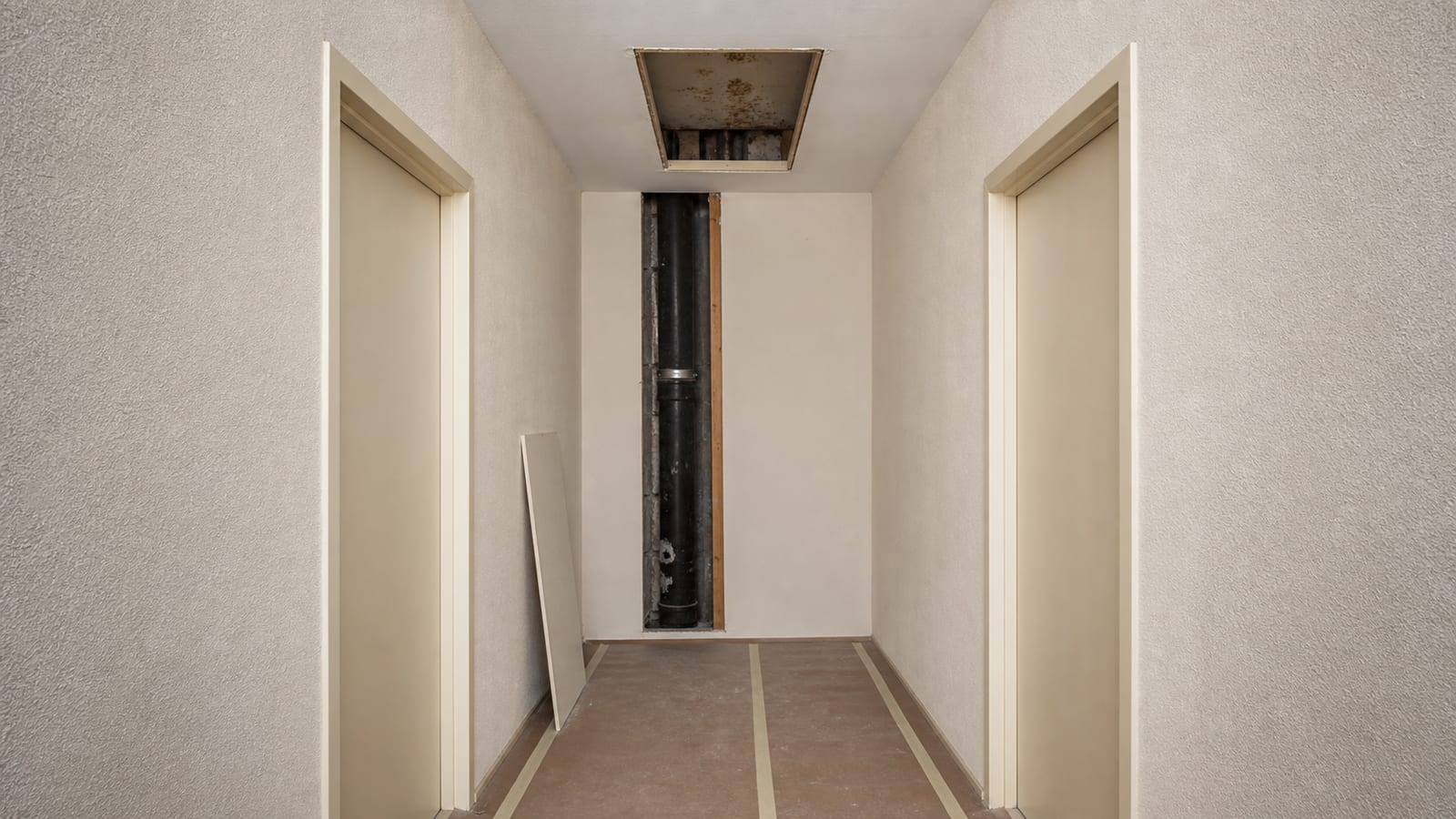
After a water loss, a fire, or a mold discovery, most property owners end up building one big folder. Photos, estimates, an adjuster's name on a sticky note, a contractor's scope, a permit receipt, all in the same place. That feels organized. It is actually where the file starts losing value, because one folder is holding three kinds of records, produced by three parties, answering three questions.
The split is worth memorizing before anything else. A restoration contractor documents condition and scope: what is wet, what is damaged, what was removed, what needs repair. An insurer decides coverage: whether the loss falls within a specific policy, at what value, subject to a deductible. The township decides code: whether the work is regulated construction and whether it passes review. None of the three can do another's job. A contractor cannot approve a claim. An insurer cannot approve a repair for code purposes. East Windsor Township cannot rule on your policy.
Every reliable piece of guidance in this area is built on that split. New Jersey's Department of Banking and Insurance tells consumers to report a loss promptly and record the claim number and adjuster contact, which is a records instruction, not a coverage promise. The same department is equally direct that homeowners policies exclude water damage caused by flood, which is a coverage fact no contractor can talk around. And East Windsor's own Construction Department, not an insurer, is the office that reviews regulated repair inside the township.
Key Takeaways
Three parties, three records
The contractor documents the building's condition and the repair scope, the insurer decides coverage under a specific policy, and the township reviews the construction work.
No one can pre-approve a claim
Coverage depends on the cause of loss, the policy language, and the claim review, so any promise made before that review is not something a contractor can keep.
Flood is a named exclusion in New Jersey
State guidance is explicit that standard homeowners policies do not cover flood damage, which makes the actual water source a critical fact rather than a detail.
Prompt reporting and clean notes carry weight
Recording the claim number, the representative you spoke with, and the dates of every step is the part of the process you fully control.
Mitigation is not the same as reconstruction
Emergency stabilization, source repair, cleanup, and rebuilding are separate scopes and should be documented separately even when one company does all of them.
Ownership can move the record
In attached homes, rentals, and planned communities, the damaged space and the failed component may sit under different policies and different authority.
Why the Three Records Get Blended
The blending is understandable. All three conversations happen in the same week, often in the same room, using overlapping vocabulary. An adjuster asks about scope. A contractor asks about coverage. Somebody says "approved" without saying who approved what. By the time the work is done, the file cannot answer basic questions, and the person who needs those answers is usually a future owner or a different adjuster on a later claim.
There is a second reason, and it is less innocent. An unclear file is convenient for anyone who wants credit for a decision they did not make. A contractor who implies the claim is handled, or who suggests the adjuster does not really need to come out, is describing authority they do not have. State guidance notes that a contractor speaking with an adjuster directly can sometimes help, which only makes sense because the roles are distinct. Communication between lanes is good. Erasing the lanes is not.
The fix is unglamorous. Keep the records separate from day one and label each entry with who produced it. A file that says "insurance covered it" is nearly worthless two years later. A file that says what was found, what was reported and when, what scope was written, and what was reviewed is useful to everyone.
Record One: The Contractor Documents Condition and Scope
The contractor's record is a description of the building, not a prediction about money. Done properly, it captures the date of discovery, the observed source, the rooms and units affected, the materials and contents involved, the readings taken, the emergency steps performed, and the boundaries of what was removed. It should also state what was inaccessible or excluded, because an honest gap is more credible than silence.
Two details make this record substantially stronger. The first is separating emergency mitigation from later reconstruction. Stopping the spread of water is a different scope with a different urgency than replacing drywall and flooring, and blending them into one line item makes both harder to evaluate. Emergency water extraction belongs in its own record with its own timestamps, on its own schedule rather than waiting for anyone's approval.
The second is documenting the source repair, not just the damage. Insurance files often describe wet material in detail and say almost nothing about the pipe, roof detail, or drainage condition that produced it. Moisture that is not controlled comes back, and a file that never mentions the correction cannot show that it will not.
Record Two: The Insurer Decides Coverage
This is the record a contractor contributes to and never controls. Coverage turns on the cause of loss, the policy in force, its endorsements and exclusions, the deductible, and the insurer's review. A restoration company can supply evidence into that process. It cannot pre-approve, predict, or guarantee the outcome, and any company that offers to is promising something it cannot deliver.
New Jersey's consumer guidance sets out the parts you do control. Contact the insurer as soon as possible with your policy information ready. Write down the claim number, the representative's name, the date, and what was said. Keep receipts. That is the most useful thing an owner can do in the first week of a loss.
Flood Is the Clearest Example of Why the Source Matters
Nothing illustrates the lane separation better than flood. New Jersey's insurance regulator states that standard homeowners policies exclude water damage caused by flood, which means "water damage" is not one category with one answer. A failed supply line, a roof entry point during a storm, a backed up drain, and inland floodwater are different causes with different policy implications, even when the wet carpet looks identical.
East Windsor is inland in Mercer County, so its flooding story is a drainage and runoff story, and the township maintains both a stormwater program and a flood damage prevention ordinance. If floodwater is genuinely involved, document it as what it is, with the observed water path and conditions, and handle it through flood damage cleanup with the coverage question stated honestly. New Jersey also requires sellers and landlords to disclose known and potential flood risk, which is another reason the record should be accurate about the source.
Record Three: East Windsor Reviews the Repair
An adjuster's estimate is not a construction permit, and a permit is not a coverage decision. These two are confused constantly, usually because both involve a stranger approving something. They approve different things, on different authority, for different reasons.
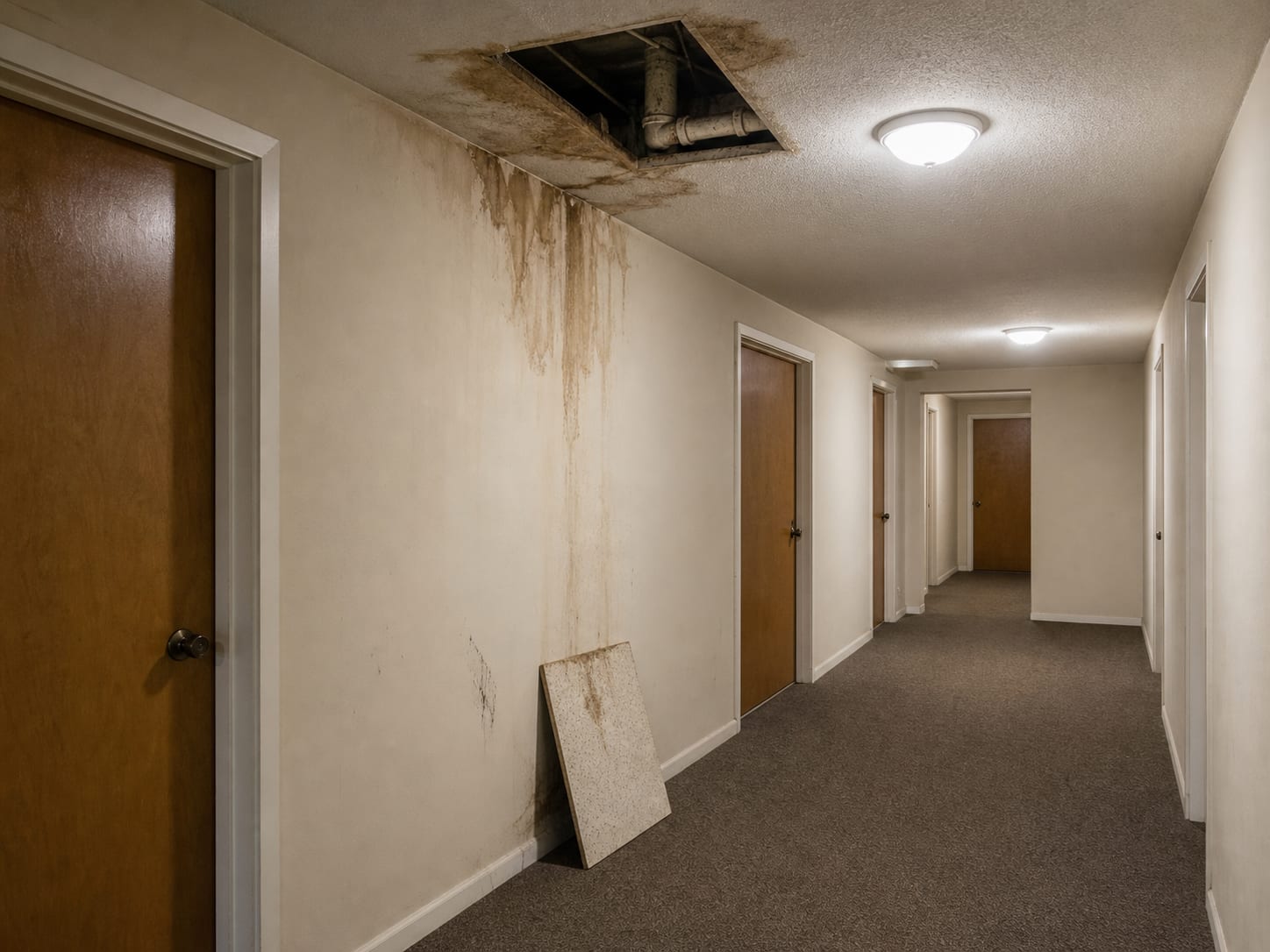
East Windsor Township administers the Uniform Construction Code through its own Construction Department, which handles applications, plan review, and inspections. The township's resident guidance lists permits for work such as structural member repair, rearranging plumbing, HVAC work, roof and siding work, and electrical changes. Loss repairs routinely land in one or more of those categories, and permit fees are the sum of the applicable subcode fees, a plain signal that a repair touching several trades has several review paths.
One local reminder is worth stating because it causes real confusion. East Windsor Township is not Hightstown, the separate borough it surrounds, and it is not West Windsor, the adjacent township with the similar name. Calling the wrong municipality wastes days at exactly the point in a claim when days matter.
Three Lanes, Side by Side
The table below answers the question that generates most of the confusion: who decides this, and what does their decision actually mean?
Hover or tap a row to highlight it.
| Question | Who answers it | What their answer does not mean |
|---|---|---|
| What is wet, damaged, or affected? | The restoration contractor, from observation and readings | It does not establish that the damage is covered |
| What caused the water or damage? | Documented evidence at the property, recorded by the contractor | It does not settle how the policy treats that cause |
| Is this loss covered, and for how much? | The insurer, under the specific policy and its review | It does not authorize construction or satisfy code |
| Is the repair scope reasonable? | Negotiated between the policyholder, adjuster, and contractor | An agreed estimate is not a permit |
| Does this repair need a permit? | East Windsor's Construction Department | A permit says nothing about coverage or payment |
| Did the completed work pass? | Township inspection where the work is regulated | Passing inspection does not resolve a claim dispute |
| Who authorizes work on a shared component? | The owner, landlord, or association that controls it | An occupant's consent does not create that authority |
The Order a Loss Should Follow
Sequence protects all three records. Emergency steps happen first because water damage gets worse with time, and EPA drying guidance is why nobody waits for permission to stop the spread.
From Discovery to Finished Repair
- 1
Make it safe and stop the spread
Address immediate hazards, shut off the source where possible, and begin extraction and drying, photographing conditions before anything is moved or removed.
- 2
Report the loss and record the details
Contact the insurer promptly with policy information in hand, then write down the claim number, the representative's name, the date, and what was discussed.
- 3
Document condition and cause
Record the observed source, affected rooms and units, materials, contents, readings, and the boundary of anything removed, keeping mitigation notes separate from future repair scope.
- 4
Repair the source, then dry to a stable condition
Correcting the water route comes before any restoration material, because moisture that continues will undo the repair regardless of who paid for it.
- 5
Define the reconstruction scope in writing
Separate lines for mitigation, source repair, cleaning or remediation, building repair, permit fees, and any elective upgrade, so nothing is bundled into a single number.
- 6
Handle township review where the work requires it
Regulated construction goes through East Windsor's permit and inspection process on its own track, independent of where the claim stands.
When Ownership Splits the Record
East Windsor is a mixed housing township, not a uniform subdivision. Census Reporter estimates roughly 12,422 housing units, about 54 percent of them single unit structures, and Census QuickFacts puts owner occupancy near 61 percent. A large share of residents live in attached homes, apartments, rentals, or managed communities. Twin Rivers, which the township identifies as a Planned Unit Development, is the local example most people recognize.
In those settings, the three records can belong to more than three parties. A tenant may discover the loss and photograph it while having no policy on the building and no authority over a shared roof, riser, or exterior wall. A unit owner may carry coverage for interior finishes while an association's policy responds to a common element. None of this makes documentation less valuable. It makes identifying the right recipient for each record part of the job.
So establish early and in writing who owns each damaged component, who must authorize each part of the repair, and which policy is being notified for which piece. Doing that on day two is a phone call. Doing it after reconstruction has started is a dispute.
Where This Goes Wrong
The most damaging mistake is a coverage promise made before the cause and policy are reviewed, and it cuts both ways. Telling an owner that water damage is always covered is false as a blanket statement, given the flood exclusion alone. Telling an owner a water loss is definitely excluded is equally unsupported without the source facts and the policy in hand.
The second is a file that never separates mitigation, source repair, cleanup, and reconstruction. When those are blended, an adjuster cannot tell what was emergency work, an owner cannot tell what they are paying for outside the claim, and a future buyer cannot tell whether the underlying problem was ever fixed.
The third is treating an insurer's estimate as a construction authorization. An estimate is a valuation document. It does not evaluate whether framing repair, plumbing changes, or electrical work inside East Windsor needs review. Neither record substitutes for the other.
Frequently Asked Questions About Insurance Restoration in East Windsor NJ
Can a restoration company tell me whether my loss is covered?
No. Coverage is decided by your insurer under your specific policy, based on the cause of loss and the claim review. A restoration company can document what it observes and provide a scope of repair, and that evidence supports the conversation. It cannot approve, predict, or guarantee an outcome, and a company that offers to should be treated with caution.
Is water damage covered by homeowners insurance in New Jersey?
It depends on the cause, which is why the source matters so much. New Jersey's insurance regulator states plainly that standard homeowners policies exclude water damage caused by flood. Other causes are evaluated against the policy terms and the claim facts. Documenting the actual water route, rather than writing "water damage" and moving on, changes the quality of the file.
Should I wait for the adjuster before doing anything?
Do not wait to make the property safe or to stop the spread of water. Wet materials get worse quickly, and prompt drying is standard building practice. Photograph everything first, then mitigate. Report the loss to your insurer as soon as possible and record the claim number and the representative's name. What you should wait on is reconstruction, which is a different scope from emergency stabilization.
Does an approved insurance estimate mean I can start rebuilding?
Not on its own. An estimate addresses value under the policy. Whether the repair requires a construction permit is a separate question answered by East Windsor's Construction Department. Repairs involving structural members, plumbing rearrangement, HVAC, roofing, siding, or electrical changes commonly need that review regardless of who is paying.
I rent in East Windsor and my unit was damaged. What is my record?
Yours is the condition record for your unit and your contents. Photograph and date everything, report to the property manager or landlord in writing, and notify your own renter's policy about contents if you carry one. The building's policy and repair authority over shared components generally sit with the owner or association, so your notes are evidence even though the repair decisions may not be yours.
What should I keep once the work is finished?
Keep the discovery photos, the source finding and its repair, the drying records, the written repair scope with its separate lines, all claim correspondence with dates and names, invoices, and any permits and inspection records. That package answers the questions a future buyer, lender, insurer, or contractor will ask. It does not guarantee any financial or legal outcome.
Final Thoughts
Insurance restoration is not a repair method. It is a coordination job, and what is being coordinated is evidence. When the three records stay distinct, each gets stronger: the contractor's description of the building holds up because it is not doing sales work, the claim conversation stays anchored to facts, and township review proceeds on its own merits.
When they collapse into one story, everyone loses the thread. The common version of that failure is a finished room, a paid invoice, and no record of what caused the water or whether it was fixed. That problem returns, usually to a different owner with no way to find out what happened.
If your East Windsor property has an active loss, our team at ExecPro Restoration & Cleaning documents condition, source, and scope in a form your insurer and your township can each use, without claiming authority over either decision. Read more about our insurance restoration services, call (888) 300-3772 to talk through what you are looking at, or reach our restoration team online to start the first records today.
Claim and Repair Terms Worth Knowing
Tap a term to see what it means.
Cause of loss. The documented event or condition that produced the damage, which is the fact most policy decisions turn on.
Serving East Windsor
ExecPro Restoration & Cleaning provides mold remediation services in East Windsor, NJ, from inspection and testing through removal, drying, and post-remediation verification. Call (888) 300-3772 for 24/7 emergency response.
Related Articles
Emergency Mold Remediation: When It Can't Wait and When It Can
Found mold after a leak? Learn which signs make emergency mold remediation in NJ urgent, what to do tonight and what changes the cost.
How a Mold Remediation Estimate Is Built, Line by Line
Holding a mold remediation estimate in NJ? See what each line covers, what moves the price, and how to compare two bids on equal terms before you sign.
Flood Damage Cleanup in Bridgewater, NJ: When the Brook or River Comes Inside
When water comes in from outside, it is treated as contaminated. What to throw out, what to keep clear of, and what the township wants before you rebuild.