Flooded Basement in Princeton Junction NJ: Map the Source First
Cal HewittPublished
- flood damage cleanup
- flood
- basement
- new jersey
- princeton junction
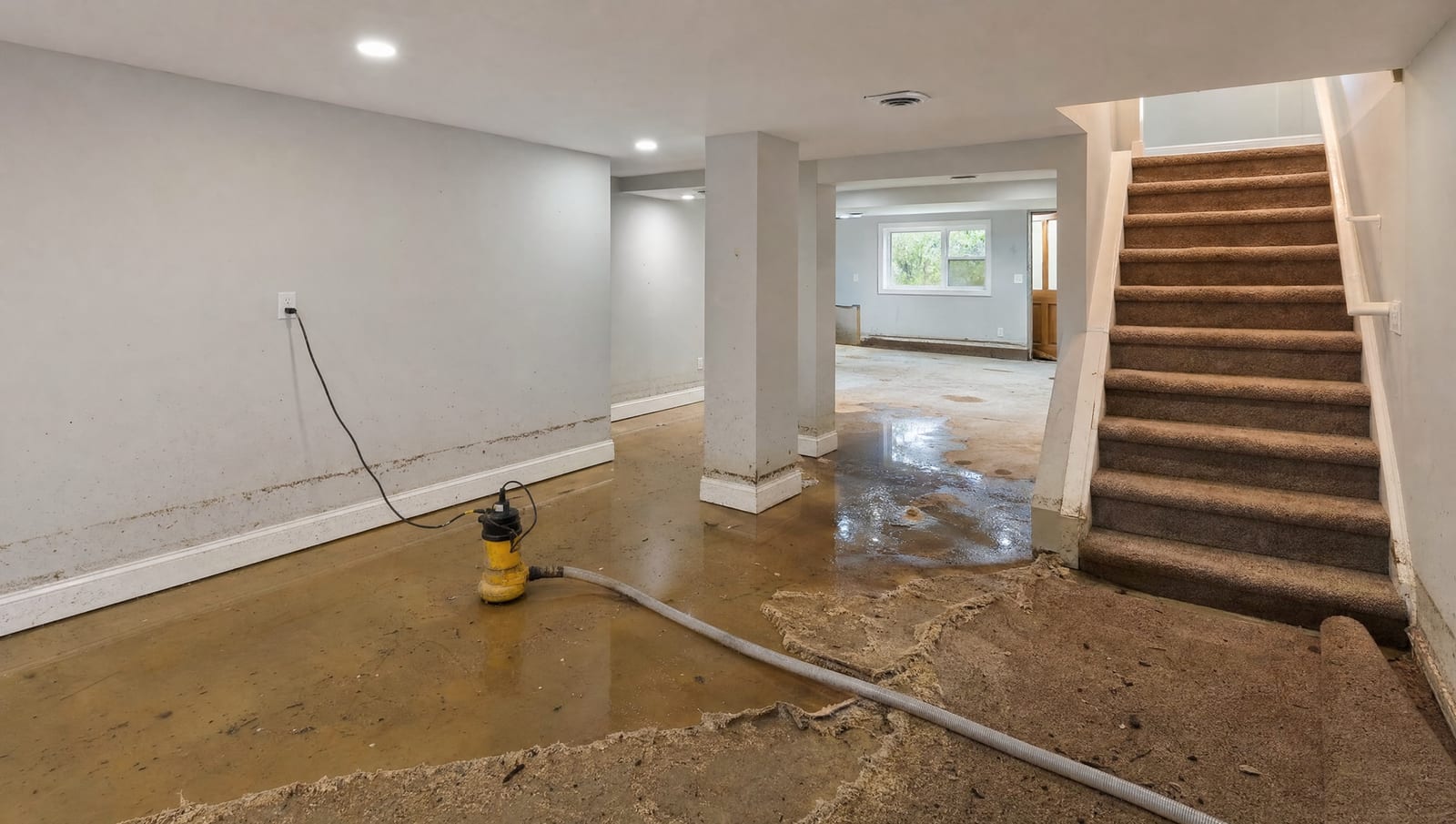
Someone walks down to the finished basement on a rainy Saturday and finds an inch of water across the floor. The first word out of most people's mouths is "flood." It is a reasonable reaction, but it is also the moment where the wrong assumption can send the whole cleanup down the wrong track. In a Princeton Junction home, a wet basement can come from several very different sources, and the source is what decides how dangerous the water is, whether it is likely a covered loss, and what actually has to come out of the house.
Princeton Junction is a commuter community and census-designated place inside West Windsor Township, full of postwar and late-century subdivisions with finished basements, plus townhouses and condominiums, and pockets of older homes near the historic rail village. The area sits within the Millstone River watershed and near Bear Brook and other stream corridors, with FEMA and NJ-mapped flood-hazard areas scattered through it. That matters, but only at the parcel level. Not every property sits in a mapped zone, and not every wet basement is a true flood. Before anyone starts hauling out drywall, the job is to figure out where the water came from and what kind of water it is. This guide walks through that decision sequence through the Princeton Junction lens, and it deliberately picks up where the sitewide flood page and the local water damage and mold guides leave off.
Why "Flood" Is the Wrong First Word Sometimes
A flood, in the sense that matters for safety and insurance, usually means water that came from outside the building and across the ground before it entered. That is not the only way a basement gets wet. In a suburban home, the same puddle on the floor could be any of four very different things, and telling them apart is the first real decision.
External floodwater rolls in over the ground during heavy rain or when a nearby stream or drainage channel overtops. It picks up soil, lawn chemicals, road runoff, and whatever else is on the ground on the way in, which is why floodwater is treated as contaminated. A failed sump pump is a different story: the pump that normally keeps groundwater out of the pit stops working during a storm or a power outage, and the water that backs up is often groundwater rather than surface runoff. Straight seepage through a foundation wall or a slab crack is different again, and so is a plumbing or drainage backup that shows up at the same time as the storm. Each one carries a different contamination risk, insurance path, and cleanup scope. Calling all of them a "flood" hides the exact facts that determine what to do next.
Hover or tap a row to highlight it.
| Likely source | What it usually means for safety | What it usually means for insurance |
|---|---|---|
| Overland flow (external floodwater) | Treat as contaminated Category 3 water carrying soil, chemicals, and debris; wear proper protection and remove porous materials it soaked | External surface flooding is generally handled under separate flood insurance, not standard homeowners coverage; only the carrier decides |
| Sump-pump failure | Often groundwater rather than surface runoff, but a pump that failed during a sewage or drain backup can still be contaminated; verify before assuming it is clean | Coverage depends on the policy and the cause; some policies add sump-failure or water-backup endorsements, others exclude it |
| Groundwater or foundation seepage | Usually cleaner than overland flow, but long-standing seepage points to an ongoing moisture problem, not a one-time event | Gradual seepage and long-term moisture are commonly excluded; documentation and cause matter |
| Stream or drainage overtopping | External water that crossed the ground; treat as contaminated like overland flow and check the parcel's flood mapping | Typically the separate flood-insurance path, and being in or out of a mapped zone can affect it; confirm with the carrier |
None of these categories apply to every Princeton Junction home the same way. A house on higher ground with a dry basement and a working pump has a different risk picture than one near a stream corridor with a history of seepage. The point of mapping the source is that it is a per-property question, answered on site, not a label you can assume from the neighborhood.
Step One: Identify the Source at the Parcel Level
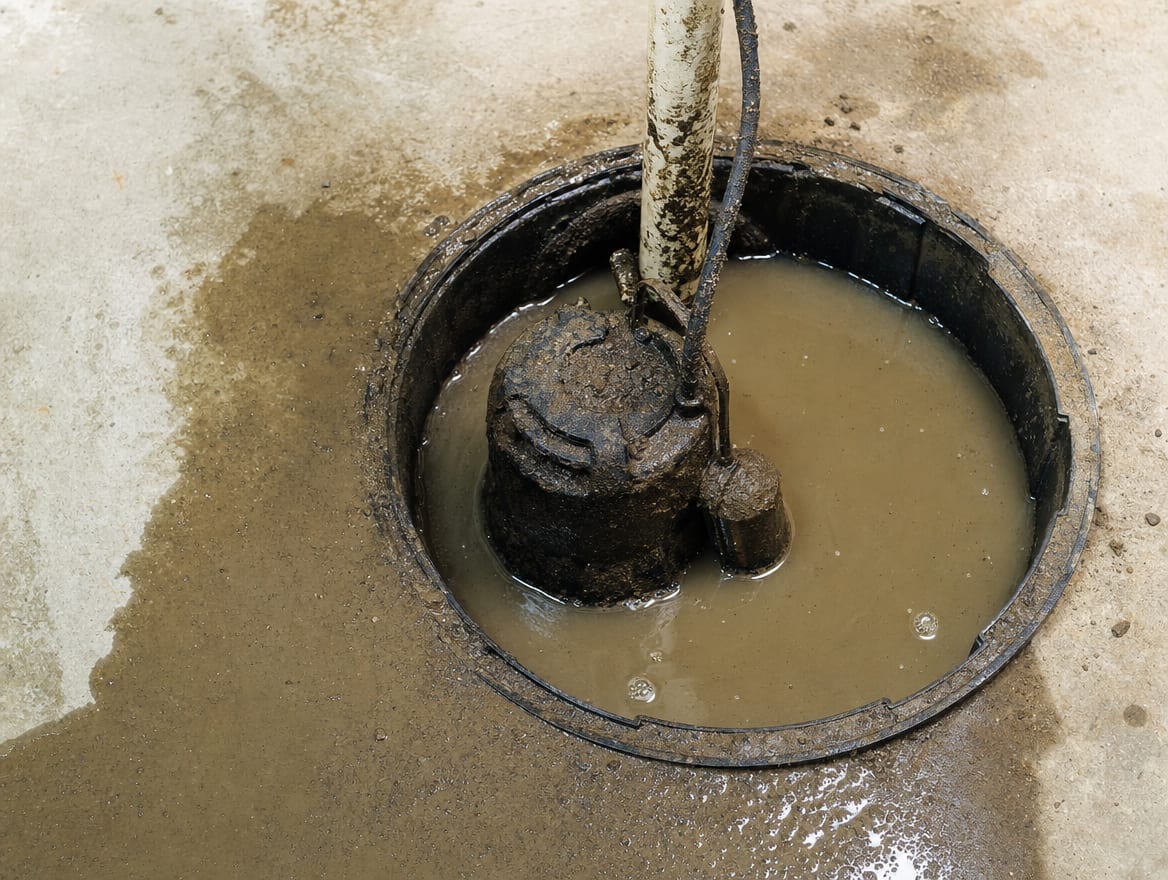
The first real step is figuring out where the water is coming from, because everything after it depends on the answer. That means looking at the water itself and at the building. Is water still entering? Is it coming up through the floor, in through a wall, down a utility chase from above, or backing up out of a drain or the sump pit? Is the pump running, and did it fail before or during the event? A restoration team traces the entry path rather than just noting where the water pooled, because the lowest spot in a basement is where water collects, not necessarily where it got in.
Parcel-level flood mapping is part of this step, not an afterthought. FEMA's address-level flood maps and the NJDEP flood-risk tools show whether a specific Princeton Junction parcel sits in a mapped flood-hazard area, which helps distinguish an external flood event from an internal water problem that happened to coincide with a storm. Statewide, New Jersey is getting wetter, but a regional trend does not prove what happened at one address. The observed water pathway on site, read together with the parcel's mapping, is what identifies the source honestly.
Step Two: Classify Safety and Contamination
Once the source is understood, the next question is how safe the water is, because that drives the protective steps and the salvage decisions. External floodwater and stream or drainage overtopping are treated as Category 3 water, the most contaminated class, which can carry sewage, chemicals, soil, and biological material. Groundwater seepage and a clean sump failure can start cleaner, but water does not stay clean forever. A loss that sat for a day or more, or one that mixed with a drain backup, can shift toward a dirtier category simply because of what it touched and how long it sat.
Safety comes before cleanup. Standing water near outlets, a running furnace, or a submerged appliance is an electrical hazard, and contaminated water calls for proper protective equipment before anyone wades in. When the water is or may be contaminated, porous materials that soaked it up, such as carpet, pad, drywall below the wet line, and insulation, generally cannot be reliably cleaned and are removed rather than dried in place. When the source involves sewage or a drain backup, sewage cleanup protocols apply on top of the water work, because that category of water carries its own biological risk. Getting the classification right early is what keeps the scope honest instead of either over-tearing a clean loss or under-treating a contaminated one.
First Steps After a Flooded Basement (and What Not to Do)
Protect yourself before you enter
If water is near outlets, the panel, the furnace, or appliances, stay out and cut power safely from a dry spot or call an electrician before wading in.
Stop or isolate the source if it is safe
Shut a valve on a plumbing source, but do not try to fight active external floodwater or reach into an energized sump pit.
Assume floodwater is contaminated
Keep children and pets out, avoid skin contact with standing water, and do not run a household wet vac through contaminated water as if it were clean.
Do not start tearing out or throwing away yet
Removing soaked materials before the loss is documented can weaken an insurance claim; photograph first.
Do not just run fans and call it dry
Moving air without controlling humidity spreads moisture instead of removing it, and it hides water still sitting in cavities.
Note the source and the timing
Write down when you found it, what the weather was doing, and where the water seems to be entering, so the crew can map it accurately.
Step Three: Document Before Anything Is Disturbed
Here is a rule worth keeping: photograph and record before you remove. The instant soaked carpet is dragged out or wet drywall is cut away, the evidence of what happened leaves with it, and on a flood claim that record can carry real weight. A strong file captures the date and time of the loss and of discovery, the weather leading up to it, photos and video of the water and the entry point, moisture readings, the source findings, and a contents inventory.
That documentation matters more for flood losses than almost any other kind, because the coverage question is genuinely complicated. Insurance depends on the policy language, the cause, exclusions, notice, and documentation, and external flooding usually falls under separate flood insurance rather than a standard homeowners policy. A contractor can build a thorough, organized file and document conditions, but a contractor cannot decide what a policy covers and cannot promise that a claim will be paid. That is exactly where insurance restoration services support the property owner, keeping the record complete and clear alongside the physical work, so the carrier is deciding on facts rather than gaps.
Step Four: Check Parcel and Municipal Constraints
Because Princeton Junction is a community within West Windsor Township rather than its own municipality, permit and code questions route through West Windsor. When a flood cleanup turns into reconstruction, or when work might disturb regulated materials or sit near a mapped constraint, the requirements get verified with the authority having jurisdiction before work proceeds. West Windsor's construction and engineering offices are the local points of contact, and site-specific stream or wetland constraints can apply to some parcels and not others.
This is also where the parcel-level flood picture connects back to the paperwork. FEMA address-level mapping and NJDEP flood tools confirm whether the property lies in a flood-hazard area, which can affect both the insurance path and any rebuild requirements. Older homes near the rail village add another wrinkle: demolition in an older structure can disturb lead paint or asbestos-containing materials, which calls for extra care. None of these constraints apply uniformly across Princeton Junction, which is precisely why the check happens per property and per scope rather than being assumed from a map of the general area.
Step Five: Mitigate and Remediate
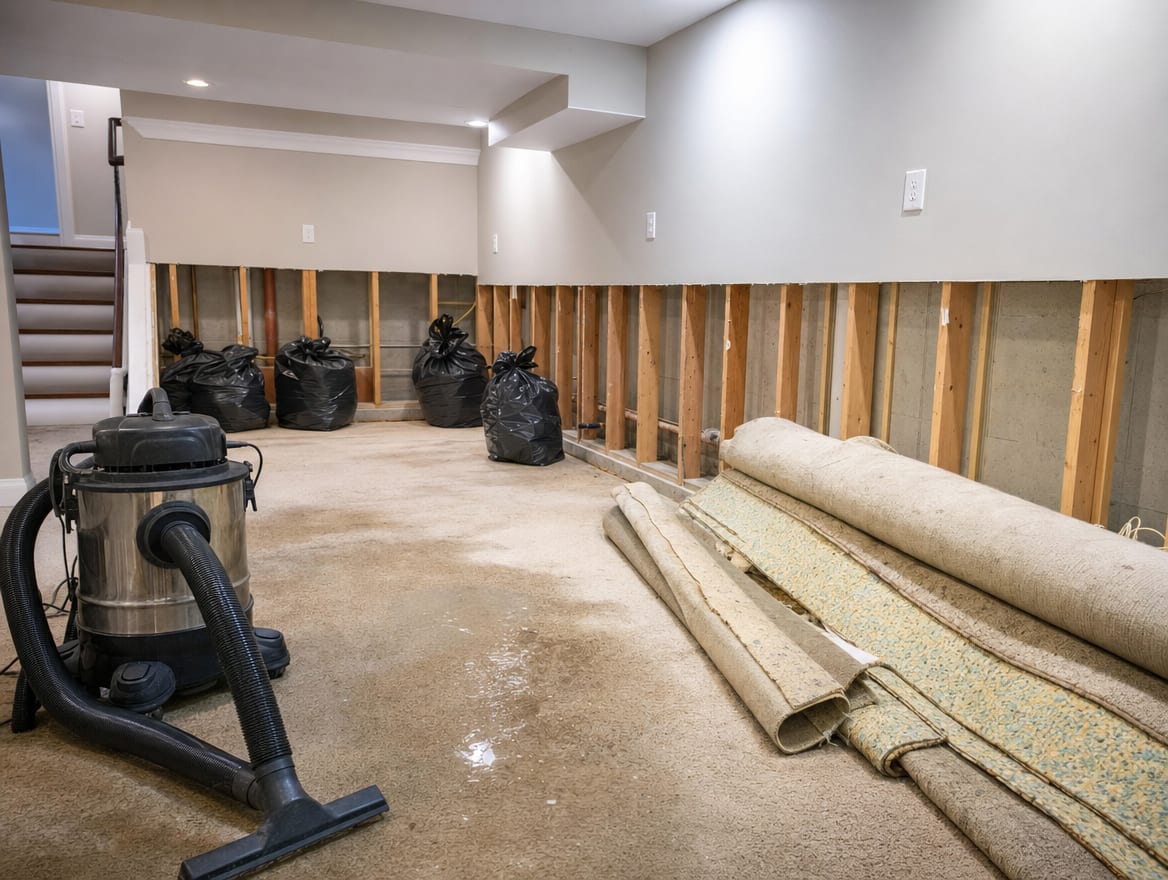
With the source identified, the water classified, the conditions documented, and the local constraints checked, the physical work follows a defined order. When active water is still present, the priority is fast emergency water extraction to pull out standing water before it wicks further into the structure. Every hour contaminated water sits, it reaches deeper into porous materials, wall cavities, and framing, so mechanical removal comes first.
After extraction, the crew removes the porous materials that cannot be safely kept, cleans the surfaces that can, and applies antimicrobial treatment where contaminated-water exposure calls for it. Selective demolition means opening or removing only what needs to go, both to protect what can be saved and to give drying equipment access to the cavities where water hides. When floodwater or a backup soaked a finished lower level, the cleanup and any needed basement mold remediation are handled together rather than as two disconnected jobs, because a flood that sat past the EPA's 24-to-48-hour drying target can start growing mold in the same walls that are being dried. Folding the mold step into the same plan keeps the drying, the removal, and the cleanup working from one scope.
The Source-to-Clearance Decision Sequence
- 1
Identify the source
Trace where the water is actually entering and read the parcel's FEMA and NJDEP flood mapping, so a true external flood is told apart from a sump failure, seepage, or a backup.
- 2
Classify safety and contamination
Determine the water category, the electrical and structural hazards, and which porous materials are salvageable versus removal.
- 3
Document conditions
Record the timing, weather, photos, moisture readings, and source findings before anything is disturbed.
- 4
Check parcel and municipal constraints
Confirm permit and code questions through West Windsor, verify flood mapping by parcel, and watch for regulated materials in older homes.
- 5
Mitigate and remediate
Extract standing water, remove unsalvageable porous materials, clean and treat surfaces, and add mold remediation when the evidence supports it.
- 6
Verify dryness and clearance
Confirm the structure is dry to a documented standard and, when warranted, use independent testing before closing anything up.
- 7
Repair and rebuild
Reconstruct the finishes only after the source is corrected, the space is dry, and any needed clearance is documented.
Step Six: Verify Dryness and Clearance
Drying is not finished when the floor feels dry to the touch. After extraction and any selective demolition, the building has to be dried to a documented standard, guided by repeated moisture readings, not by how it looks. Professional structural drying pairs air movers with dehumidification so the water actually leaves the structure instead of migrating into a new cavity, and the readings get logged over several visits as the framing, subfloor, and insulation give up their moisture. Household fans alone do not do this; they move air without removing water from the building.
Verification has two parts. The first is proving the structure is dry to standard. The second, when the loss ran long enough or was contaminated enough to warrant it, is confirming that conditions have returned to normal, which for a mold step means post-remediation verification through an independent, accredited lab. Testing is not automatic. It should answer a defined question and change a decision rather than being run by reflex. When it is warranted, that independent record is useful for the homeowner, for an insurance claim, and for any future sale. The documentation is the proof that the work reached its intended standard, not just that the visible water is gone.
Step Seven: Repair Only After the Space Is Clean and Dry
The last and one of the most expensive mistakes is rebuilding too early. New drywall, flooring, and paint installed over a wet cavity or an uncorrected source can trap moisture and set up repeat damage and new mold behind a wall that looks finished. In a market like Princeton Junction, where homes trade often, that kind of hidden repeat problem can resurface later during a sale.
Reconstruction begins only after the file shows the source is corrected, the structure is dry to standard, the porous materials that had to go were removed, and any needed clearance is documented. Then the finishes that were removed get rebuilt, this time over materials that are confirmed dry and a water pathway that has actually been closed. That order is what turns a flood cleanup into a lasting fix instead of a temporary dry-out.
Frequently Asked Questions
How soon should a homeowner respond to a flooded basement?
Immediately address safety and stop further water when it is safe to do so. The EPA advises drying wet materials within 24 to 48 hours when possible to reduce the risk of mold. A basement that took on water while nobody was home, which is common in a commuter community, may already be inside that window by the time it is discovered, so the response is about protecting people first and then moving quickly on extraction and drying.
Is water from an external flood the same as a sump-pump failure?
Not for safety or insurance. External floodwater rolls in over the ground and is treated as contaminated Category 3 water, and it usually falls under separate flood insurance. A sump-pump failure often involves groundwater rather than surface runoff and may be handled differently by a policy, sometimes through a specific endorsement. Because the source changes both the contamination class and the coverage path, telling the two apart is one of the first things a good crew documents.
Will insurance cover a flooded basement in Princeton Junction?
Only the carrier can decide, based on the policy language, the cause, exclusions, notice, and documentation. External surface flooding generally requires separate flood insurance rather than standard homeowners coverage, and sump-failure or water-backup situations depend on whether the policy includes that specific coverage. A contractor can provide thorough documentation to support a claim, but a contractor cannot guarantee that an insurer will pay.
Does every Princeton Junction property have the same flood risk?
No. The area includes the Millstone River watershed, stream corridors like Bear Brook, wetlands, and mapped flood-hazard zones, but not every parcel sits in one. Flood exposure has to be checked by address using FEMA and NJDEP mapping, and permit questions route through West Windsor case by case. Two homes on the same street can have very different exposure, which is why the check is done per property.
Is testing always required after a flood cleanup?
No. Testing should answer a defined question and change a decision rather than being run by default. In many cases the moisture readings and the visible conditions already tell the crew what to do. Testing and post-remediation verification become useful when the extent is unclear, when a mold step was involved, or when documentation is needed for a claim or a transaction.
What contractor claims are red flags after a flood?
Be cautious of a guaranteed insurance payout, a guaranteed health outcome, a promise of permanent prevention without correcting the water source, a one-product cure, or a final scope quoted without an adequate inspection. A credible flood cleanup starts by identifying the source and the water category, and it defines completion criteria before the work is called done.
When you want a clear read on where the water came from and what it actually is, ExecPro Restoration & Cleaning maps the source at the parcel level, classifies the safety and contamination, and documents the work from the first inspection through verified dryness and clearance. Call ExecPro Restoration & Cleaning at (888) 300-3772 or reach out through the contact form to get straight answers and a clear plan for your Princeton Junction property.
Flood Cleanup Terms to Know
Tap a term to see what it means.
Overland flow. Surface water that runs across the ground during heavy rain or a stream overtopping and enters a building, picking up contaminants along the way, which is why it is treated as a true flood.
Serving Princeton Junction
ExecPro Restoration & Cleaning provides mold remediation services in Princeton Junction, NJ, from inspection and testing through removal, drying, and post-remediation verification. Call (888) 300-3772 for 24/7 emergency response.
Related Articles
Flood Damage Cleanup in Deal, NJ: How the Source Changes the Job
Flood damage cleanup in Deal, NJ: how the source of the water changes your safety steps, your insurance position, and the cleanup itself.
Come Home to a Leak in Princeton Junction NJ: Get the Water Out Fast
In a Princeton Junction commuter home, a leak can run all day unseen. Smart shutoff and leak sensors help, but fast water extraction is what limits the loss.
Room to Basement Mold Pathways: A Princeton Junction NJ Guide
In a Princeton Junction NJ home, an upstairs HVAC, bath, or addition leak can travel down and grow mold in a finished lower level. Trace the pathway and the fix.