
Come Home to a Leak in Princeton Junction NJ: Get the Water Out Fast
Cal HewittPublished
- emergency water extraction
- water damage
- basement
- new jersey
- princeton junction
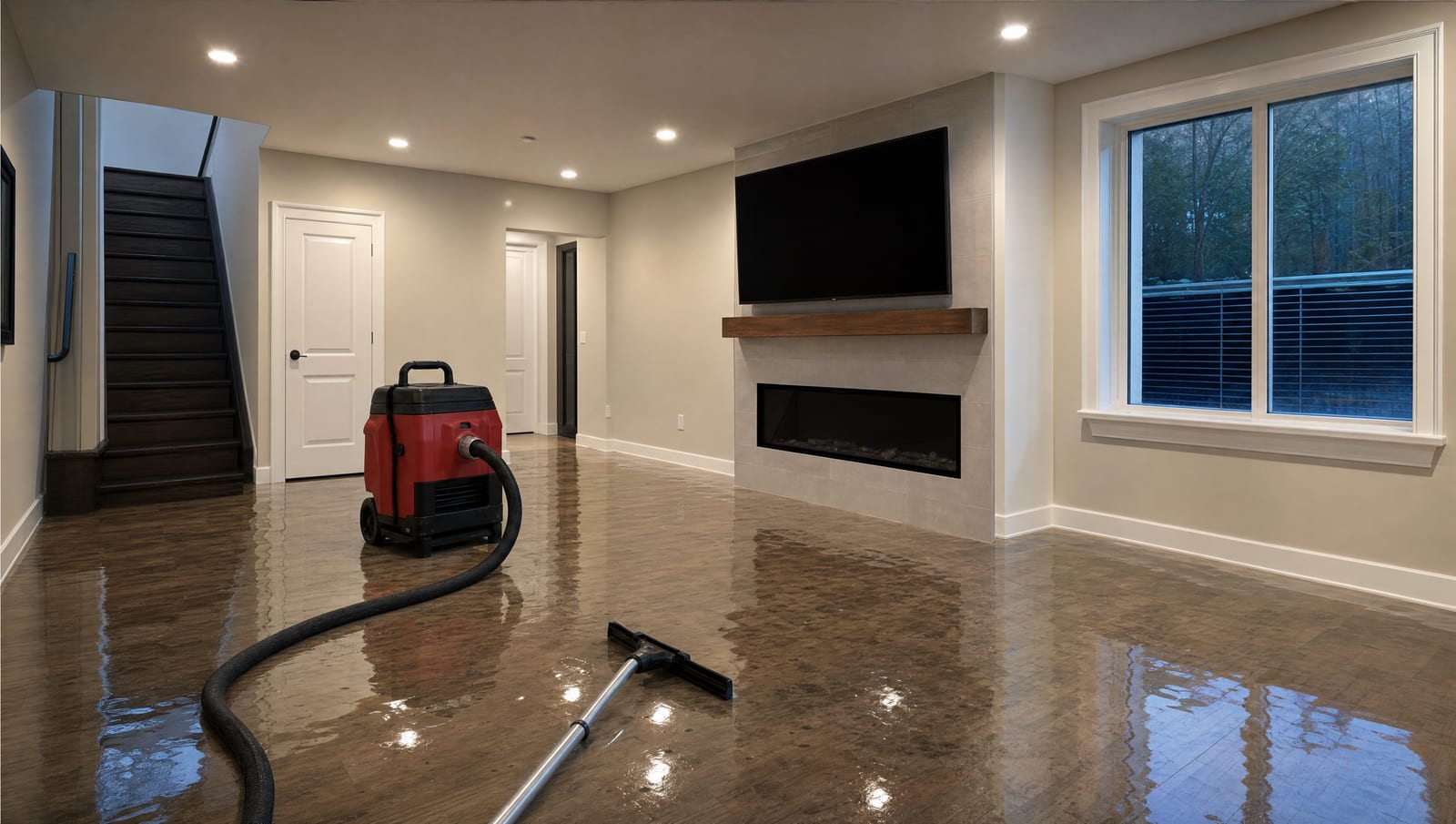
Here is the situation that defines water damage in Princeton Junction: nobody is home when it starts. Both adults are on the early train to the city, the kids are at school, and the house sits empty from breakfast until dinner. Somewhere in that quiet, a supply line behind the dishwasher gives way, or a water heater in the basement starts to weep, and clean water begins to spread across a floor with no one there to hear it. The leak does not announce itself. You find it hours later, when you walk in the door in the evening and hear dripping, or step onto a soaked basement carpet in your socks.
When a leak is caught in the first minute, you close a valve and wipe up a puddle. When it runs all day in an empty house, standing water has had a long head start, and the single most useful thing anyone can do is get that water out of the building as fast as possible. That is what emergency water extraction is: the urgent first-response stage that pulls standing water out before it soaks deeper into floors, walls, and finished basements. This guide stays in that lane. It is about the first hours after discovery, not the full restoration that follows. For how a Princeton Junction loss plays out across floors and finished basements from start to finish, the local water damage restoration guide walks the whole lifecycle. Here, the focus is narrower and more urgent: find it, reach it, and get the water out.
Why an Empty House Raises the Stakes
Princeton Junction is a commuter community and census-designated place inside West Windsor Township, built around the Northeast Corridor rail station. A lot of the households here are dual-income, away all day and sometimes away for days at a time. Much of the housing is the kind where water can travel far before anyone notices: multi-level subdivisions and townhouses, many with finished lower levels. Not every home here shares the same basement, foundation, or flood exposure, and that has to be checked property by property. But the common thread in a commuter household is time. A leak that would be trivial if someone were standing there becomes a spreading loss when the house is empty for nine hours.
That head start matters because of what water does while no one is watching. It runs downhill through floor cavities and utility chases, wicks into wall assemblies, and pools in the lowest finished space. The EPA advises drying wet materials within 24 to 48 hours where possible to limit mold growth. A leak discovered in the evening may already be well into that window before the first piece of equipment arrives, which is exactly why the response has to move quickly and why extraction cannot wait until the next morning.
Catching a Leak Before You Walk in the Door
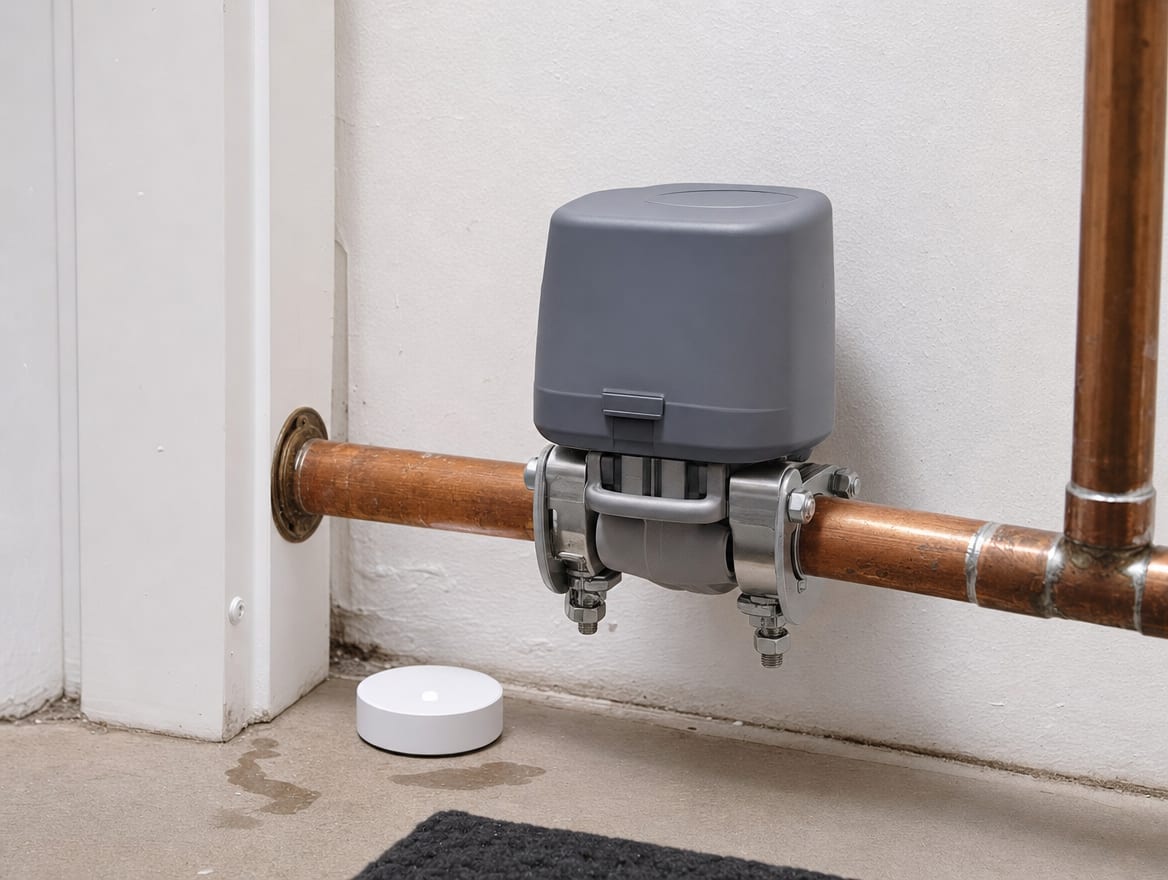
The best water loss is the one that never gets a full day to spread. For a house that sits empty on a weekday, the practical defense is remote detection: technology that notices water while you are still at your desk in the city. Point-of-use leak sensors placed near the water heater, washing machine, dishwasher, sump pit, and finished-basement floor can send an alert to your phone the moment they get wet. An automatic shutoff valve on the main line goes a step further, cutting the water supply when it senses an abnormal flow or a sensor trips, so a failed hose does not run for eight hours.
None of this replaces extraction, and none of it is a guarantee. Sensors can be placed in the wrong spot, batteries die, and some leaks start behind a wall where no sensor sits. But for a commuter household, anything that shortens the gap between when a leak starts and when someone knows about it directly shrinks the size of the eventual loss.
Cutting the Water Risk in an Empty House
Place leak sensors at the usual failure points
The water heater, washing machine, dishwasher, HVAC condensate line, sump pit, and finished-basement floor are the spots most worth monitoring in a home that sits empty all day.
Add an automatic main shutoff
A valve that closes when it senses abnormal flow can stop a failed supply line from running for hours while no one is home.
Know where your main shutoff is
Whoever gets home first should be able to close the main water valve in the dark without hunting for it.
Keep an after-hours contact ready
A leak found at 9 p.m. needs a team that answers then, not one that opens the next morning.
The First Move When You Find Standing Water
When you do walk in on standing water, the order of the first few actions matters, and safety comes before everything. Standing water in a finished basement can be an electrical hazard, especially where outlets, a furnace, or a sump pump are involved, and wet materials can be heavier and less stable than they look. The defensible sequence starts with confirming it is safe and stopping the source, then classifying the water, documenting the scene, and only then extracting. Getting those steps in the right order protects both the people in the house and the claim that may follow.
The First Hours After You Find a Leak
- 1
Make it safe
Before stepping into standing water, cut power to the affected area at the panel if you can do it safely, and stay clear of any outlet, appliance, or wiring sitting in water.
- 2
Stop the source
Close the main water shutoff or the local valve so no more water is added while everything else happens.
- 3
Document before you touch much
Photograph the standing water and the affected rooms. These images matter later for the insurer, who decides coverage under your specific policy.
- 4
Call for extraction
Reach a team that can respond after hours, because the sooner standing water is pulled out, the less of it soaks into floors, walls, and the finished basement.
- 5
Extract, then reassess
Once the standing water is removed, the picture of what is wet and what can be saved becomes far clearer.
Getting Into a Finished Basement, and Getting the Water Out
In a lot of Princeton Junction homes, the lowest point in the house is a finished basement, and that is where standing water ends up. It is also the hardest place to extract from, because the water is not sitting on bare concrete. It is under carpet and padding, behind baseboards, inside wall cavities, and soaked into whatever was stored down there. Rapid access is the first challenge: a responding crew needs a clear path to the water and someone who can point them to the source and the shutoff. That is another reason a commuter household benefits from having a plan and an after-hours contact in place before anything happens.
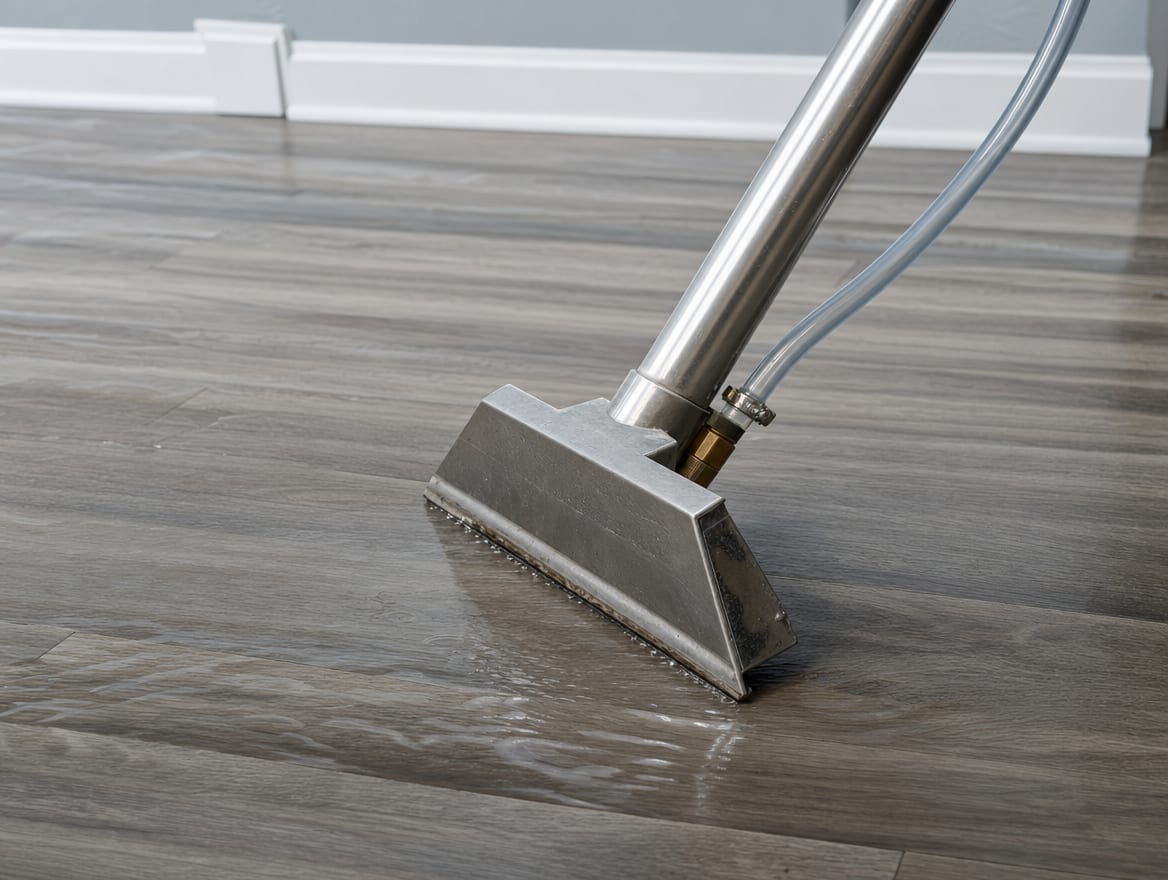
Extraction itself uses truck-mounted or portable pumps and extraction units to pull standing water out fast, followed by tools that lift trapped water from carpet and padding. Getting standing water out quickly is what a 24-hour water damage response is built to do. Whether a carpet can stay often depends on how long it sat wet and what kind of water reached it; carpet water extraction can save some flooring while other pieces have to come out. The goal in this stage is singular: remove the standing water so it stops migrating and stops feeding the conditions that lead to mold.
Not All Water Is the Same
One reason a professional classifies the water before hauling anything out is that the type of water changes what is safe to keep. Clean water from a supply line is a different problem from groundwater pushing up through a slab, and both are different from a sewage backup. Floodwater, groundwater, rain entry, plumbing water, sewage, and condensation each carry their own safety, insurance, and cleanup decisions. Extraction does not erase that distinction. It is the moment the distinction gets made, because whether a material is porous and contaminated or non-porous and cleanable decides whether it is dried in place or removed entirely.
Hover or tap a row to highlight it.
| Where the water came from | What that usually means | Effect on what can be saved |
|---|---|---|
| Supply line, water heater, or appliance | Generally clean water at the source | More materials may be dried and kept if reached quickly |
| Groundwater or seepage through the slab | Can pick up soil and contaminants along the way | Porous materials it soaks are more likely to be removed |
| Storm or overland floodwater | Treated as contaminated | Soaked porous materials usually come out |
| Sewage or a drain backup | Treated as contaminated and a health hazard | Affected porous materials are removed, not cleaned in place |
Following the Water You Cannot See
Pulling the visible water off the floor only handles the water you can see. In a house where a leak ran for hours, water has already moved into places a mop never reaches: down through the subfloor, along framing, into wall cavities, and under cabinets and baseboards. Part of the extraction visit is finding that hidden moisture with meters and, where useful, thermal imaging, so the wet zone is mapped rather than guessed. This is where the urgent extraction stage hands the baton to drying. Extraction gets the standing water out; confirming and pulling the moisture that soaked into the structure is the job of structural drying with air movers and dehumidifiers, monitored until materials read dry. Skipping that step is how a basement that looks handled grows mold two weeks later.
Saving What Can Be Saved
While the water is coming out, decisions get made about contents. Hard, non-porous items and sealed surfaces can often be dried and kept. Porous materials that sat in contaminated water, or that stayed wet too long, are more likely to be removed. There is no value in guessing here, and there is no single product that fixes a water loss, so be wary of anyone who quotes a scope without inspecting or promises a one-step cure. Documentation runs alongside all of it: photos, moisture readings, and a record of what was extracted, removed, and kept. That record is what an insurer relies on, and coverage is always the carrier's decision under your policy, with flood insurance separate from a standard homeowners policy.
Where Extraction Ends and the Rest Begins
It is worth being clear about what emergency water extraction is not. It is not the full restoration. Once the standing water is out and the wet zone is mapped, the job moves into drying, any needed removal of unsalvageable material, cleaning where the water category calls for it, verifying that everything has dried, and finally repair. No honest timeline can be promised before a scope is set, because a small clean-water loss and a large contaminated one are not the same job. What extraction buys you is the head start: every gallon pulled out in the first hours is a gallon that is not soaking deeper, and in a commuter home where the leak already had a long run, that head start is often the difference between a contained loss and a gutted basement.
Frequently Asked Questions
How fast should I act after finding standing water?
Immediately, once it is safe. Stop the source of the water if you can reach the valve, keep clear of any electrical hazard, and get extraction moving. The EPA advises drying wet materials within 24 to 48 hours where possible to limit mold growth, and a leak found in the evening may already be into that window, so the response should not wait for morning.
Do I need water testing before extraction?
Not always. Testing should answer a specific question and change a decision. What matters most in the first hours is identifying where the water came from and whether it is clean or contaminated, because that classification drives what is safe to keep and what has to be removed.
Will my insurance cover the water loss?
Only your carrier can decide that, under your specific policy and the documented cause of the loss. A sudden event like a burst supply line is handled differently from long-term seepage, and flood insurance is separate from a standard homeowners policy. Clear photos and records from the first hours help support whatever claim you file.
Can a finished basement carpet be saved after it floods?
Sometimes. It depends on how long the carpet sat wet and what kind of water reached it. Clean water caught quickly gives the best odds, while carpet soaked by contaminated water usually comes out. A responding crew makes that call during extraction rather than promising an outcome up front.
What is a red flag when hiring for emergency extraction?
Be cautious with anyone who quotes a full price without inspecting, promises a single-product cure, guarantees insurance will pay, or claims a specific health outcome. A credible response starts with safety and a real look at the water and the affected materials, not a guarantee made over the phone.
Does every Princeton Junction home face the same water risk?
No. Princeton Junction sits within West Windsor Township near the Millstone River watershed and mapped flood-hazard areas, but exposure has to be checked parcel by parcel. Basement type, foundation, and flood zone vary from property to property, and municipal questions route through West Windsor's construction and engineering offices.
When you get home to standing water, the clock is already running, and the fastest way to limit the damage is to get that water out. ExecPro Restoration & Cleaning responds to water emergencies in Princeton Junction and throughout the West Windsor area, extracting standing water, mapping where moisture has migrated, and moving the job into drying and restoration from there. Call (888) 300-3772 or reach out through our contact page to get a team on the way.
Water Extraction Terms
Tap a term to see what it means.
Emergency water extraction. The urgent first-response stage of a water loss, focused on removing standing water from the building as fast as possible before it soaks in deeper.
Serving Princeton Junction
ExecPro Restoration & Cleaning provides mold remediation services in Princeton Junction, NJ, from inspection and testing through removal, drying, and post-remediation verification. Call (888) 300-3772 for 24/7 emergency response.
Related Articles
Emergency Water Extraction in Bridgewater, NJ: Getting Standing Water Out Safely
Keep clear of wet outlets and standing water until the power question is settled. What safe entry looks like, how extraction goes and what backup coverage adds.
Emergency Water Extraction in Robbinsville, NJ: The First Hour and the 72-Hour Permit Window
Within the first hour of standing water, shut off power from a dry spot and call. See how emergency water extraction in Robbinsville, NJ works, permits too.
Emergency Water Extraction in Trenton, NJ: Rowhouses, Shared Walls and the Unit Below
In a rowhouse or a two-to-four-unit building, water can cross a shared wall or floor. What to do about power, gas and the unit below in the first hour.