Flood Damage Cleanup in Deal, NJ: How the Source Changes the Job
Cal HewittPublished
- flood damage cleanup
- flood
- coastal
- new jersey
- deal
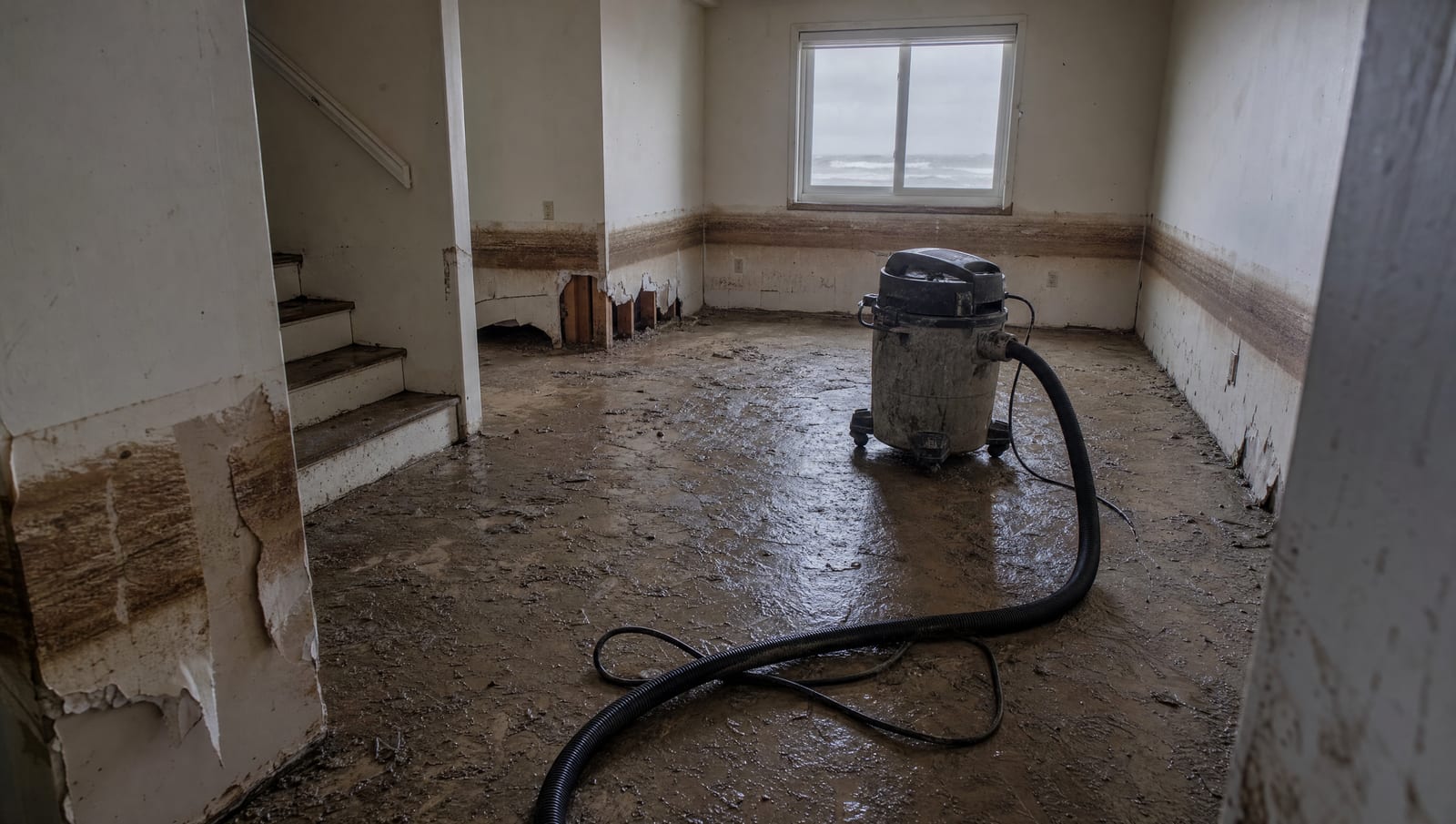
You walk into a room in your Deal home and find water where it does not belong. The instinct is to call it "flooding," grab towels and a shop vac, and start pulling up what is wet. Hold on. Before anyone touches a thing, there is one question that matters more than how much water there is: where did it come from? On this stretch of the Jersey Shore, the source of the water, not the size of the puddle, decides three separate things at once. It decides how dangerous the water is to be around, it decides which insurance policy even applies, and it decides what you get to keep versus what has to go in a bag.
That is the part most cleanup advice glosses over. Coastal floodwater pushed in by a storm and a clean supply line that let go in an upstairs bath can leave the same size wet spot on the floor and be two completely different problems. One is contaminated and hazardous and usually falls under a separate flood policy. The other is comparatively clean and often sits under your standard homeowners coverage. Treat them the same and you can end up wading into contaminated water you should never have touched, throwing out materials you could have saved, or filing a claim with the wrong carrier. This post sorts the four kinds of water a Deal owner is likely to see and walks the local decision sequence that follows from correctly naming the source.
"Flooding" Is Not One Problem in Deal
Deal sits right on the Atlantic, and its water losses come from more than one direction. Coastal storms and nor'easters can drive ocean water and storm surge inland. Wind-driven rain can breach a roof, a window, or a flashing detail and run down through the structure. Groundwater can rise into a lower level, or a sump can fail during a long storm and let below-grade water in. And in a home that sits closed and lightly watched for a season, a burst supply line or a failed appliance can discharge clean water that runs for days before anyone notices. All four land on the floor as "water." Only one of them is clean.
None of this is uniform across the borough. Flood exposure in Deal varies from one parcel to the next, so what is true at an oceanfront address may not be true a few streets inland. That is exactly why the first job is to name the source at your specific property rather than assume a townwide story. The table below is the mental sort a technician runs before deciding anything else.
Hover or tap a row to highlight it.
| Water source | What it usually is | Safety implication | Insurance pathway |
|---|---|---|---|
| Coastal flood or storm surge | Category 3, contaminated with sewage, chemicals, and debris | Hazardous; wear PPE, do not wade in, and most porous materials it soaks are discarded | Separate flood insurance (NFIP or private), not standard homeowners |
| Storm or wind-driven rain through the envelope | Cleaner where it enters, but degrades as it travels and sits | Safer than ground floodwater, but hidden cavity moisture still needs mapping | May fall under homeowners as storm damage, depending on the policy and cause |
| Groundwater rise or sump failure | Often gray to contaminated, carried in from the ground | Treat as contaminated until confirmed; add below-grade and electrical hazards | Commonly excluded from homeowners; may fall to flood coverage |
| Clean plumbing supply line | Category 1 clean at the source | Lowest contamination, though it can degrade if it sits | Often covered as sudden and accidental internal discharge, depending on the policy |
Read down the "insurance pathway" column and you can see why the source question is not academic. New Jersey Department of Banking and Insurance materials make the point that standard homeowners policies exclude flood damage, which is why flood coverage is a separate purchase. Name the water wrong and you can spend days pointing a claim at a policy that was never going to respond.
Why Contaminated Floodwater Changes the Safety Rules
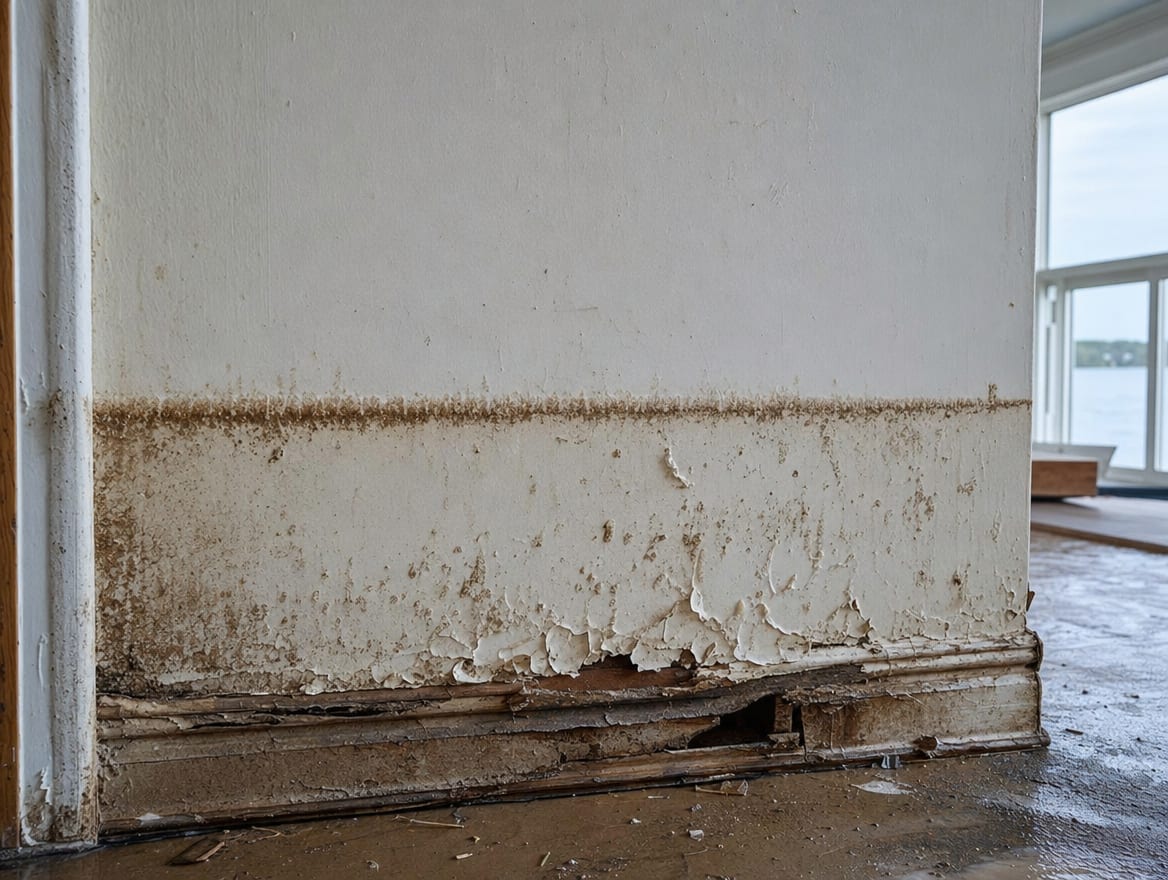
When the water came from outside the building envelope during a coastal event, treat it as Category 3, the most contaminated class, often called black water. Storm surge, overwhelmed drainage, and ground and surface flooding can carry sewage, fuel and lawn chemicals, soil, sharp debris, and biological material into the home. That is a different hazard than a clean leak, and it changes how the space has to be handled from the first minute.
The practical rules that follow are not fussy. Do not walk into standing floodwater near outlets, panels, or fixtures, because you cannot see what the water is touching. Do not assume the water is "just muddy," because contamination is about what is dissolved and suspended in it, not how it looks. When the loss involves sewage or backed-up drain lines, sewage cleanup carries its own protective equipment, containment, and disinfection steps that a clean-water dry-out never requires. And the discard rules tighten: porous materials that soaked contaminated floodwater, things like carpet and pad, drywall to an appropriate cut line, and insulation, usually cannot be reliably cleaned once contamination has penetrated, so they come out. Hard, non-porous surfaces such as concrete, tile, and metal can often be cleaned and treated instead of replaced. A clean plumbing overflow, by contrast, leaves far more on the "can be dried and saved" side of that line.
The clock is part of the safety math too. The EPA advises drying water-damaged materials within 24 to 48 hours when possible to limit mold growth, and it notes that items wet longer than that may need to be discarded. That is a target to aim for, not a promise, and it is why the very first moves matter so much.
Your First Moves After a Flood in a Deal Home
Confirm it is safe to enter
Watch for electrical, gas, structural, and contaminated-water hazards before stepping in, and stay out from under any sagging ceiling.
Do not wade into standing floodwater
Coastal and ground floodwater can be Category 3, and you cannot see debris, energized water, or sharp hazards below the surface.
Stop or isolate the source if it is safe
Shut a valve, address a failed sump, or contain the entry point, since extraction on an open loss is only temporary.
Photograph before you touch anything
Capture the water, the rooms, and the contents while conditions are still as found, for both the claim and the scope.
Do not tear out wet materials yet
Document and classify the water first, because what gets discarded depends on the contamination category.
Do not run the HVAC through contaminated air
Moving air across contaminated wet materials can carry contaminants into clean parts of the house.
Call the caretaker, owner, and insurer
A seasonal home needs someone to authorize access and open the claim, and flood and homeowners claims may go to different carriers.
Do not wait on permanent repairs to start drying
Emergency mitigation and later rebuild are separate phases, and wet materials need attention inside that 24-to-48-hour window.
Documenting the Loss and Pointing the Claim Correctly
Because the source decides which policy applies, documentation is not paperwork you do at the end. It is what proves the cause. A defensible file starts before the cleanup does: pre-work photos and video, the date and time of loss and discovery where known, moisture readings, the identified source and water category, the weather and power history for a storm event, and any caretaker or alarm records that show when the home was last known to be dry. From there it grows to include the scope and exclusions, drying and equipment logs, disposal records, permits, and the final verification.
That record is what your carrier needs, whichever one it is. Only the insurer can decide coverage under the actual policy language, the documented cause, the exclusions, and the notice and mitigation you provided, and no restoration contractor can guarantee a claim will be paid. Anyone who promises that coverage is a red flag. What a thorough contractor can do is document the loss cleanly enough that the cause is not in dispute, and then coordinate the paperwork through insurance restoration services so the claim and the repair are not two disconnected efforts. New Jersey also asks sellers and landlords to disclose known and potential flood-risk information, which is one more reason an accurate, source-specific flood record has value long after the water is gone.
The Deal-Specific Constraints to Check Before You Rebuild
Two local checks belong in every Deal flood job, and a generic cleanup article skips both. The first is parcel-level flood status. Rather than assume the ocean's nearness settles it, a property's flood exposure is confirmed against FEMA's address-level flood maps and NJDEP coastal-risk tools for that specific parcel. That status can shape not just the claim but the rebuild, since properties in mapped flood hazard areas can face elevation, flood-resistant material, or utility-placement requirements during major reconstruction, and work touching dunes, beaches, or regulated coastal features may trigger NJDEP review.
The second is timing. The Borough of Deal publishes a summer construction moratorium, with construction required to cease from June 24 through the Wednesday following Labor Day. Water does not wait for that calendar. A storm can hit or a pipe can fail right as the window closes, which means emergency stabilization and the permanent rebuild often cannot happen in the same stretch. The key distinction is that stopping water, extracting, and drying is emergency mitigation, not construction. Because the Borough's published page does not by itself spell out every emergency exception, contact the Deal Building Department right away to understand how emergency work is treated, and confirm permit requirements for the eventual reconstruction with the authority having jurisdiction. What should never happen is delaying drying while those rebuild questions get sorted.
The Decision Sequence, Source to Clearance
Once the source is named and the water is classified, the rest of the job is an orderly sequence where each step depends on the one before it. Skipping ahead, especially rebuilding before the structure is verified dry, is how a flood loss becomes a repeat loss.
From Source to Clearance on a Deal Flood Loss
- 1
Identify the source
Determine whether the water is coastal flood, storm rain through the envelope, groundwater, or a clean plumbing line, because everything downstream depends on this answer.
- 2
Classify safety and contamination
Set the water category, decide what protective gear and containment are needed, and separate porous materials that must be discarded from hard surfaces that can be cleaned.
- 3
Document conditions
Record photos, moisture readings, the source finding, and the loss history that ties the damage to a covered cause.
- 4
Check parcel and municipal constraints
Confirm flood status on FEMA and NJDEP maps and check the Deal Building Department and its summer construction moratorium before scoping any rebuild.
- 5
Mitigate and remediate
Extract standing water, remove and bag unsalvageable materials, clean and disinfect suitable surfaces, and correct the source so it cannot recur.
- 6
Verify dryness and clearance
Confirm the structure is dry to a defined standard, and use independent verification when the situation warrants it, before containment comes down.
- 7
Repair and rebuild
Only after the space is verified dry and clean, restore the finishes, matching the custom detail these coastal homes often carry.
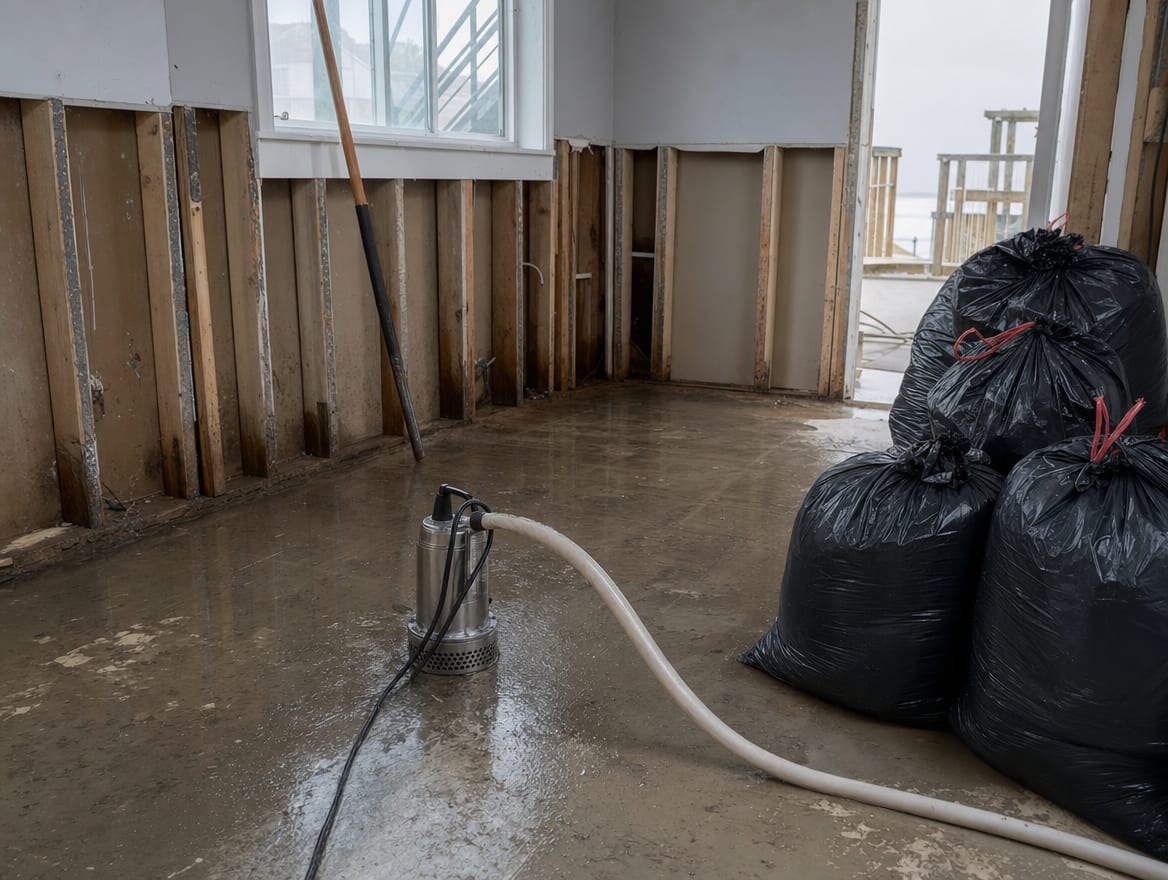
Two steps in that list are where a flood job earns its keep. Extraction has to be mechanical and fast, because standing water wicks into porous materials and travels through cavities every hour it sits, so emergency water extraction is the difference between a contained loss and one that keeps spreading while you decide what to do. And drying has to be proven, not assumed, which is the last section.
Verify Dryness Before Any Repair Begins
Reconstruction should never start on a home that has not been proven dry. New finishes installed over damp framing, subfloor, or wall cavities trap moisture and set up the exact conditions that support mold, which on a high-value Deal interior is an expensive way to do the same job twice. Surfaces can feel dry to the touch while the assemblies behind them still hold moisture above acceptable levels.
That is why structural drying is tracked with calibrated moisture meters and daily logs rather than judged by feel. Drying is declared complete when the readings across the affected structure reach dry standard, not when the floor stops looking wet. When the water was contaminated or the drying was delayed, a check for mold and, where warranted, independent post-remediation verification confirm the space has returned to normal conditions before anything gets closed back up. The verification file also becomes part of the loss record that supports the claim and any future sale.
Frequently Asked Questions
Is floodwater from a coastal storm the same as water from a burst pipe?
No, and the difference drives the whole response. Coastal floodwater, storm surge, and ground or drainage backup are treated as Category 3, contaminated water that may carry sewage, chemicals, and biological material. A clean supply-line failure starts as Category 1 clean water, though it can degrade if it sits. The contaminated source calls for different protective equipment, more aggressive removal of porous materials, and disinfection that a clean dry-out does not require. When in doubt, the water is treated as contaminated until confirmed otherwise.
Which insurance covers a flood in Deal?
It depends on the source and your specific policy, and only your carrier can decide. Standard homeowners policies exclude flood damage, so surface flooding from storm surge, coastal flooding, or drainage backup generally falls to separate flood insurance through the NFIP or a private carrier. Damage from wind-driven rain that entered through storm-caused envelope damage may fall under homeowners, depending on the policy and cause, and a clean internal plumbing discharge is often handled as sudden and accidental water damage. Thorough documentation of the source supports whichever claim applies.
How soon should I respond after finding flood water?
Address anything unsafe and stop the water as soon as it is safe to do so, then begin drying quickly. The EPA advises drying wet materials within 24 to 48 hours when possible to reduce the chance of mold, and it notes items wet longer than that may need to be discarded. That window is why emergency mitigation should start before the full rebuild scope is even known.
What usually has to be thrown out after a contaminated flood?
Porous materials that soaked Category 3 water are typically removed because they cannot be reliably cleaned once contamination penetrates. That commonly includes carpet and padding, drywall to a cut line, and insulation. Hard, non-porous surfaces such as concrete, tile, and metal can often be cleaned and treated instead of replaced. Moisture mapping identifies which materials are compromised even when they do not look obviously damaged, so the discard list is based on findings rather than guesswork.
Does Deal's summer construction moratorium stop emergency drying?
The Borough's published page states construction must cease during the listed summer period, but stopping water, extracting, and drying is emergency mitigation, not construction. The page does not by itself define every emergency exception, so contact the Deal Building Department right away to understand how emergency work is treated. Emergency water control and drying should not be delayed while permit and rebuild questions are being clarified.
Is flood water a health concern?
The CDC notes that damp and moldy environments may affect some people and not others, and that sensitive individuals can experience respiratory, eye, skin, or allergy-related effects, so any specific health question is one for a medical professional. On the cleanup side, the point is to limit exposure: keep people out of contaminated water and active work areas, remove and dispose of contaminated porous materials properly, disinfect suitable surfaces, and verify the space is dry and clean before it is reoccupied.
Flood Cleanup Terms
Tap a term to see what it means.
Category 3 water. Grossly contaminated water, such as sewage, storm surge, and ground or surface floodwater, that calls for the strictest handling and removal of most porous materials it touches.
When water shows up in a Deal home, the smart first move is to name the source before you name the solution, because the source is what tells you how to stay safe, which policy to call, and what can be saved. That is exactly how ExecPro Restoration & Cleaning approaches a coastal flood loss, from source identification and contaminated-material handling through documentation, structural drying, verification, and the high-value rebuild that follows. Call (888) 300-3772 or reach out through our contact page to get an assessment scheduled and move from standing water to a fully restored, documented home as quickly as possible.
Serving Deal
ExecPro Restoration & Cleaning provides mold remediation services in Deal, NJ, from inspection and testing through removal, drying, and post-remediation verification. Call (888) 300-3772 for 24/7 emergency response.
Related Articles
Reopening a Deal NJ Shore Home: When Air Quality Testing Answers a Real Question
Reopening a closed Deal NJ shore home? Learn when air quality testing helps after vacancy, humidity, a storm, or renovation, and what a test cannot tell you.
Property Management Mold Services in Deal NJ: A Seasonal-Home Protocol
A repeatable mold protocol for managers of seasonal Deal NJ homes: pre-arrival inspections, remote humidity monitoring, emergency access, and owner reporting.
Structural Mold Repair in Deal NJ: Clean, Reinforce, or Call an Engineer
Structural mold repair in Deal NJ starts with one decision: is framing cleanable, decayed, or a job for a licensed engineer. Here is how to tell.