
Emergency Water Extraction in West Windsor, NJ: Safe First Moves
Cal HewittPublished Updated
- emergency water extraction
- electrical safety
- access
- west windsor nj
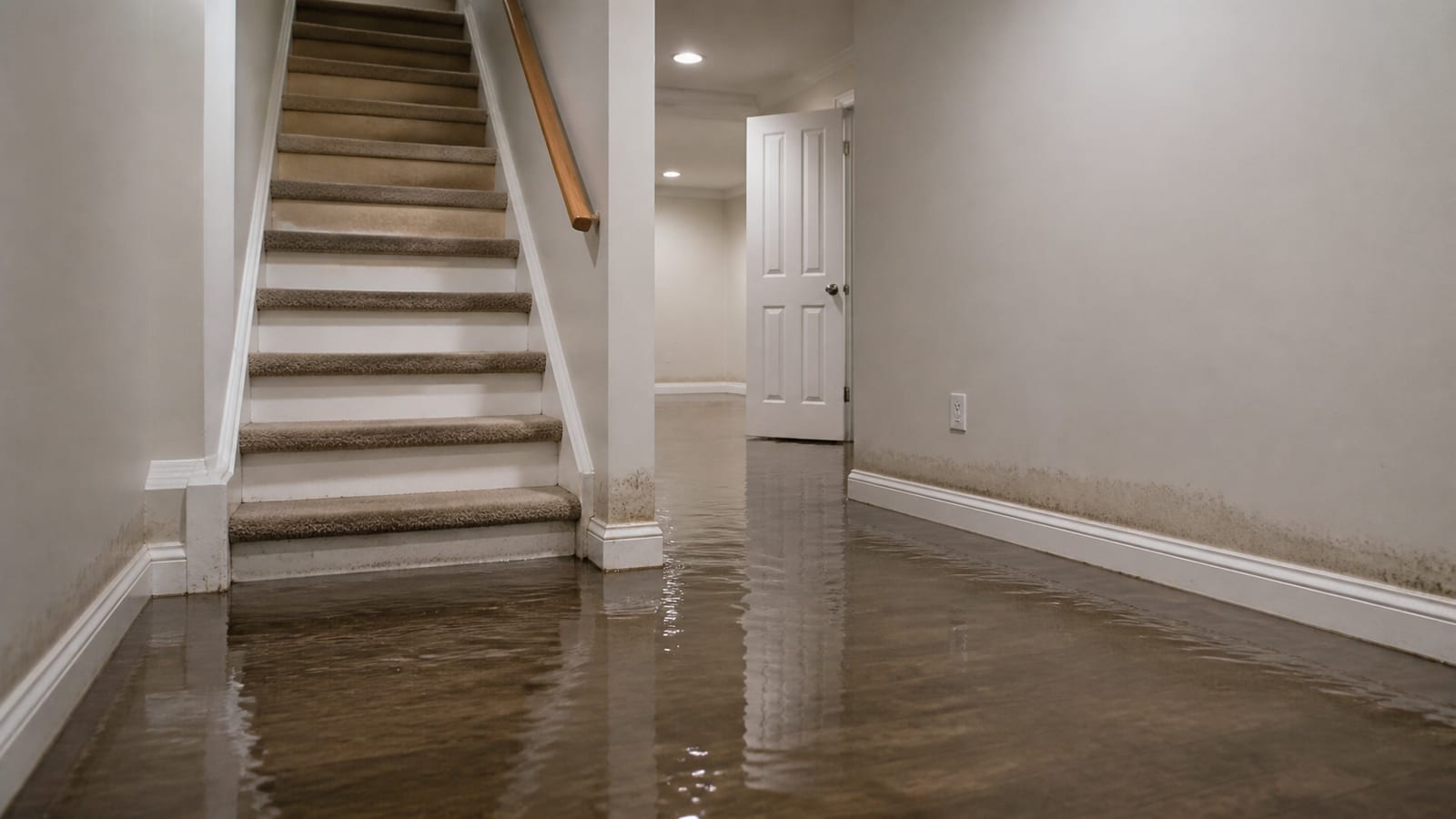
If there is standing water in your property right now, the fastest thing you can do for yourself is not to start moving it. It is to work out, in about two minutes, whether the room is safe to be in and whether the water is still arriving. Both answers change what happens next, and both are things you can establish from a doorway. After that the job is ours: bulk water out, materials assessed, the structure dried to a measurement. What follows is the short version you can act on while you are waiting, and the longer version of what the work involves once we are there.
Key Takeaways
Treat every piece of electrical equipment as live until an electrician says otherwise
, which is the federal guidance and the reason most water losses do not become injuries.
Stop the source only if reaching it is safe
, and photograph the room before anything moves.
Standing water comes out first, before any drying equipment is placed
, and porous material wet for 48 hours or more often has to be removed rather than dried.
Heavy rain can close low roads in West Windsor
, so telling us the safe approach to your address genuinely speeds up arrival.
Water in the House Right Now: Safe First Moves Before Extraction
Four things, and the first two are about you rather than the building.
Assume the electricity is live. NIOSH's 2025 flood-response guidance is unambiguous: treat electrical equipment as energised until it has been tested, do not touch water-damaged breakers, fuses, outlets or equipment, and have a qualified electrician inspect before power is restored. If the panel, an outlet, the furnace or the water heater is standing in it, you are looking from the doorway and calling an electrician or the utility. That is not caution for its own sake. It is the single most likely way a water loss hurts somebody.
Stop the source if the valve is safe to reach. A fixture shut-off or the main, if getting to it does not mean wading past energised equipment. If the water is arriving from outside, or you cannot tell where it is coming from, leave it.
Photograph before you move anything. The waterline, every affected room, the contents, the source area if it is visible safely. Ninety seconds of video is better than nothing and it cannot be recreated once the room is cleared.
Then call, and tell us two things: what the water appears to be coming from, and how to reach you if the roads are wet. More on that second one below, because in West Windsor it is a real variable rather than a pleasantry.
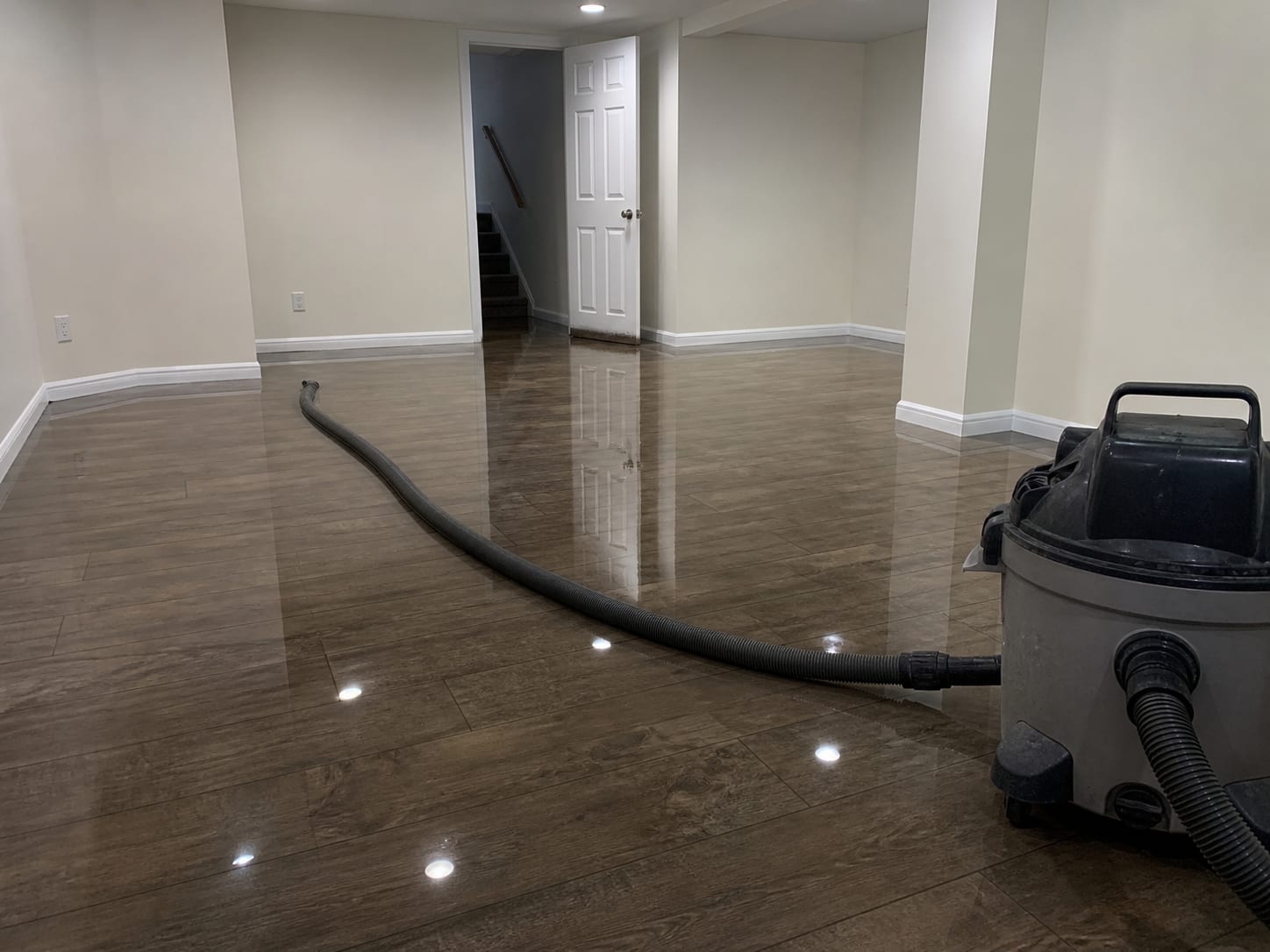
Where the Water Came From Changes the Whole Job
Three broad sources, and they are not variations on a theme.
A clean plumbing loss from a supply line or an uncontaminated overflow is the most contained case. Materials that were wet briefly can often be dried in place, and the EPA's 24 to 48 hour window for drying wet materials is the guidance that applies.
Storm or groundwater that entered from outside is a different assessment. It may have travelled across ground, through a foundation, or under a door, and what it collected on the way matters.
Sewage-contaminated water changes the scope outright. The EPA is explicit that contaminated floodwater cleanup can require considerably more material removal and disinfection than a clean-water loss, and that absorbent contents wet for 48 hours or longer may have to go rather than be cleaned.
This is why nobody can price or scope an extraction over the phone from the depth of the water. The volume tells you how long the pumping takes. The source tells you what the job actually is.
Hover or tap a row to highlight it.
| Source | What it means for the job |
|---|---|
| Clean plumbing loss | The most contained case. Materials wet briefly can often be dried in place, within the EPA's 24 to 48 hour window |
| Storm or groundwater | A different assessment, because the water may have travelled across ground, through a foundation or under a door, and what it collected on the way matters |
| Sewage-contaminated water | Changes the scope outright, with considerably more material removal and disinfection, and absorbent contents wet for 48 hours or longer may have to go |
Heavy Rain Can Close West Windsor Roads, So Tell Us the Approach
This is the local fact worth knowing before you need it, and it comes from the Township rather than from us.
West Windsor's Utilities Plan documents regular flooding of low-lying roads at Duck Pond Run, Little Bear Brook, Clarksville Road near Wyeth, and near Grovers Mill Pond. The plan goes further than describing an inconvenience: it says those road conditions can compromise emergency services.
That is a straightforwardly useful thing for a property owner to know during a storm. It does not mean any building near those places floods, and the same plan records no known storm-event building impacts from flooded watercourses. What it means is that during heavy rain the route to an address can matter as much as the distance.
So when you call during a rain event, tell us the approach you know is passable, and tell us if something on your usual route is under water. We plan around it rather than discovering it. It is also why we will not give you a fixed arrival time in the middle of a storm; a number invented at the moment of the call is worth nothing to somebody standing in water. What we will give you is a straight answer about where the crew is and what the road situation looks like.
From Standing Water to a Dry Structure
How an Emergency Extraction Runs
- 1
Make the space safe
Electrical, structural and contamination hazards settled before anyone works in the water.
- 2
Confirm the source is stopped
Extraction into an active leak is pumping against the tap.
- 3
Document the condition
Photographs before contents move, so the record exists for the claim.
- 4
Identify the water
Clean plumbing loss, storm or groundwater, or sewage-contaminated. This sets everything after it.
- 5
Extract the bulk water
Standing water out first. Drying equipment placed into standing water achieves nothing.
- 6
Assess the wet porous materials
What can be cleaned and dried, and what has absorbed too much or the wrong thing.
- 7
Remove what cannot be saved
Cut to a clean line above the affected zone rather than to the visible edge.
- 8
Dry and monitor the assembly
Readings logged by location until they fall and hold, not until the surface feels dry.
The step that separates a finished job from a repeat visit is the last one. A floor can be dry to the hand while the pad, the subfloor and the bottom of the wall cavity are not, and putting finishes back over that produces the same damage again in about six weeks. Drying ends on a measurement.
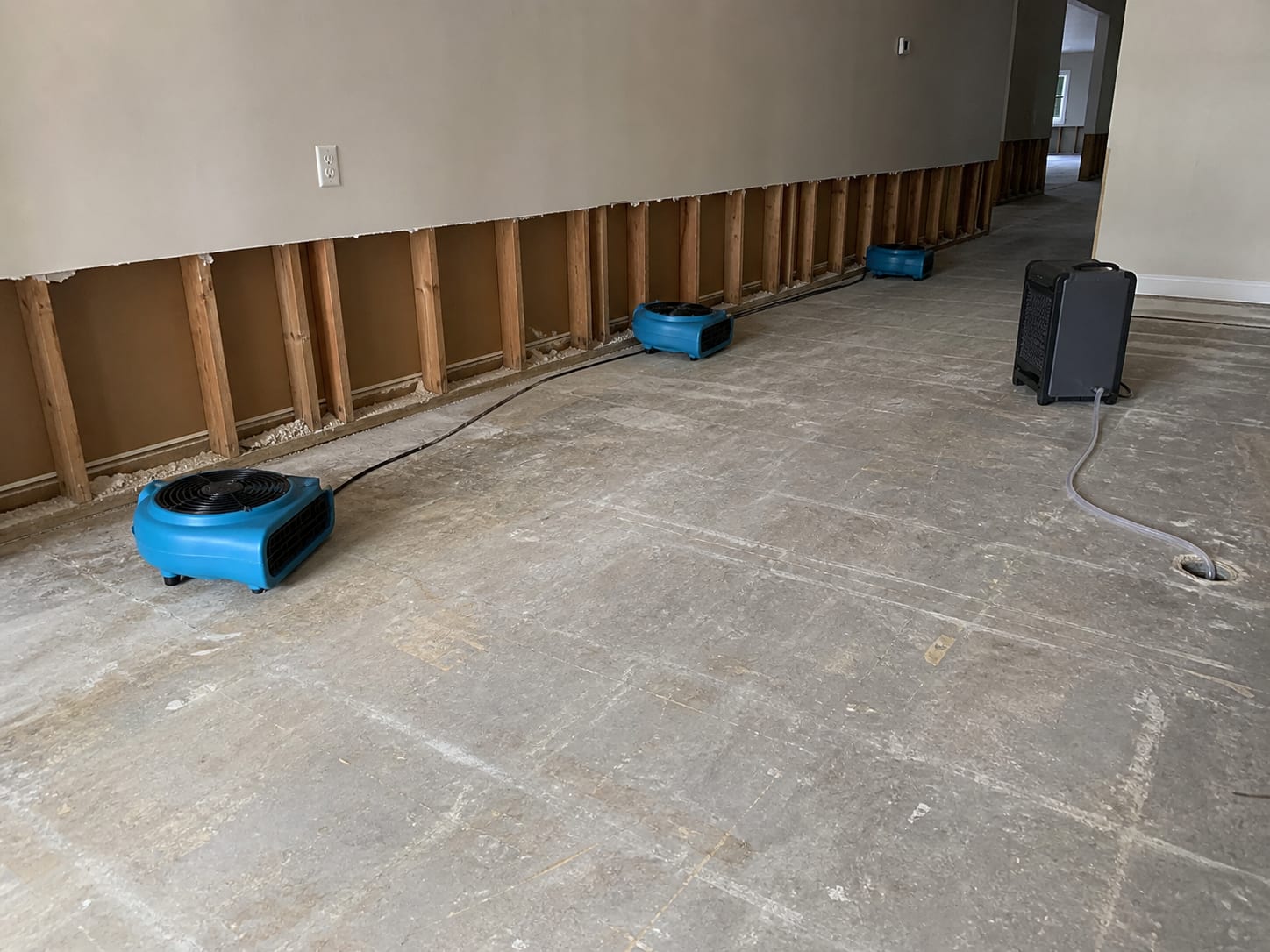
Winter Is When the Supply Line Fails
Most of what is above applies whatever the season. This part does not, and it is worth its own heading because winter is when the calls come from inside the house rather than from outside it.
The pipes that go first are predictable. The National Weather Service puts them on exterior walls and in the places that stay cold, meaning the basement, the attic and the runs under kitchen cabinets. That is also why a burst is so often discovered late: those are the three places nobody was standing in.
New Jersey's own winter guidance is short and it works. NJOEM says to wrap pipes in insulation, to run both the hot and cold taps to a continuous drip because running water will not freeze as quickly, and to open cabinet doors so warmer air reaches uninsulated pipes on an outer wall. It adds the one piece of preparation that changes an emergency into an inconvenience: keep a wrench near the valves and know how to shut the water off before you need to.
Winter Pipe Steps From NJOEM
Wrap pipes in insulation
Especially on exterior walls and in the places that stay cold.
Drip both taps
Run hot and cold to a continuous drip, because running water will not freeze as quickly.
Open cabinet doors
So warmer air reaches uninsulated pipes on an outer wall.
Know the shut-off
Keep a wrench near the valves and know how to shut the water off before you need to.
If a pipe is already frozen but has not split, the National Weather Service sequence is to turn the faucet on first, then warm the pipe with a space heater, a heating pad, a hair dryer or hot water on a cloth. Never an open flame. Water will drip as the pipe warms, which is the sign it is working.
Two honest limits on all of that. Neither source names a temperature at which pipes freeze, so anybody quoting you one is guessing. And a frozen pipe that has already split does not announce itself until it thaws, which is why the useful moment to look is when the cold breaks rather than during it. If you find water at that point, everything in the first section of this page applies: electricity first, source second, photographs third.
Your Building Type Decides Who Has to Be Involved
An extraction in a detached house is a conversation with one owner. The same loss elsewhere is not.
In a condominium or townhouse, the drainage or the wall the water came through may be a common element, which brings the association into a decision you would otherwise make alone. In a rented apartment, the tenant reports and the owner authorises. In an office or retail suite, there is a landlord, possibly a tenant improvement history, and a business interruption question sitting alongside the building one.
Hover or tap a row to highlight it.
| Building type | Who is involved |
|---|---|
| Detached house | One owner |
| Condominium or townhouse | The drainage or the wall may be a common element, which brings the association into the decision |
| Rented apartment | The tenant reports and the owner authorises |
| Office or retail suite | A landlord, possibly a tenant improvement history, and a business interruption question alongside the building one |
None of that slows the extraction, and it should not. But it changes who signs, whose insurer is involved, and who needs the documentation afterwards, so it is worth naming when you call. For the record, no West Windsor-wide rule was found requiring association authorisation before an emergency extraction, and no special historic-district approval for it either. Your own governing documents are what settle that, and in practice associations want to know quickly rather than to be asked permission slowly.
Extraction Does Not Wait for a Permit, But the Rebuild Might
Two separate questions that get run together in the panic.
The extraction itself. No municipal permit was identified for extraction alone, and you should not delay getting water out of a building while anyone chases paperwork.
The work that follows, if you are in a mapped flood-hazard area. This is where West Windsor's code has real teeth. Repair, replacement, rebuilding, grading, fill and other development in a local flood-hazard area go to the Floodplain Administrator, and a floodplain development permit may be required in addition to a building permit. The ordinance provides for even ordinary maintenance and minor work in those areas to be evaluated through that process, because it is how substantial-improvement and substantial-damage compliance gets assessed. For new construction or a substantial improvement in those areas, the lowest floor including the basement, along with specified utilities, has to be elevated to or above the local design flood elevation, confirmed by an elevation certificate.
That is a significant fork in the road for anybody rebuilding a lower level, and it is much cheaper to discover on day two than after the drywall is ordered. If you do not know your address's flood-hazard status, the NJDEP and FEMA mapping tools and the Township Floodplain Administrator are the places that settle it. Proximity to a brook or a road that floods does not.
What Changes the Scope and the Cost
There is no published West Windsor price range for emergency extraction, and a number quoted before anyone has seen the property is describing a different job. What genuinely moves it:
- The source and its contamination, which is the single largest factor.
- How long materials were wet, and whether that crosses the 48 hour mark for absorbent contents.
- How far the water travelled into cavities, under finishes and between floors.
- Access, including stairs, tight lower levels, and whether equipment can be got in.
- Contents handling, which is often the slowest part of an occupied property.
- Whether the job stops at drying or continues into removal and rebuild.
Hover or tap a row to highlight it.
| Factor | Why it matters |
|---|---|
| The source and its contamination | The single largest factor |
| How long materials were wet | Whether it crosses the 48 hour mark for absorbent contents |
| How far the water travelled | Into cavities, under finishes and between floors |
| Access | Stairs, tight lower levels, and whether equipment can be got in |
| Contents handling | Often the slowest part of an occupied property |
| Whether the job stops at drying | Or continues into removal and rebuild |
Frequently Asked Questions About emergency water extraction West Windsor NJ
Is it safe to walk into a flooded basement?
Not until the electricity question is settled. Federal guidance is to treat electrical equipment as energised until tested, not to touch water-damaged breakers, fuses, outlets or equipment, and to have a qualified electrician inspect before power is restored. If any of that equipment is in the water, look from the doorway and call an electrician or the utility first.
How quickly can you get here?
We will tell you where the crew actually is rather than quote you a number. In heavy rain that matters, because the Township's own planning record documents low roads at Duck Pond Run, Little Bear Brook, Clarksville Road near Wyeth and near Grovers Mill Pond flooding regularly, and says those conditions can compromise emergency services. Tell us the approach you know is passable and we will use it.
Can I just rent a pump and do it myself?
You can move standing water, and if the source is clean and you can do it safely that is time well spent. What a rental will not do is tell you what is still wet behind the wall, and drying to the touch instead of to a reading is what produces the second loss in the same place. Water removal in West Windsor NJ is the easy half; verifying the assembly is dry is the half that decides whether it comes back.
Do I need a permit before you can start?
Not for the extraction. If your property is in a mapped flood-hazard area, the repair or rebuild that follows may need a floodplain development permit in addition to a building permit, so that is worth establishing early rather than at the point of ordering materials.
The water came from a toilet overflow. Is that different?
Yes, materially. Sewage-contaminated water changes what can be kept and what has to be removed, and the cleanup involves disinfection a clean-water loss does not. It also changes whether the property is safe to occupy while the work happens, which is a question to ask at the start rather than the end.
My townhouse association says it is their pipe. What do I do?
Report it immediately and start the extraction anyway. Getting water out of the building protects everybody's interest including theirs, and delay is the one thing that reliably increases the cost. Who ultimately pays is a separate conversation from who acts tonight.
Emergency Extraction Quick Check
1. How should you treat electrical equipment in a flooded room until an electrician says otherwise?
2. What comes out first?
3. What does drying end on?
4. How long can absorbent contents stay wet before they often have to go?
5. Does extraction alone have to wait for a municipal permit?
Pick an answer to begin.
Final Thoughts
An emergency extraction is decided in the first twenty minutes: whether the room is safe, whether the source has stopped, whether the condition got documented, and what the water actually is. Those four answers set the scope of everything that follows, and they are all obtainable before anybody arrives.
After that it is a mechanical job done in a fixed order, and the finish line is a moisture reading rather than a dry-looking floor. Properties that get that last part right do not see the same damage twice.
If there is standing water in your West Windsor property, call us now and we will talk you through what is safe to touch while the crew is on the way. ExecPro Restoration & Cleaning has run emergency water work across Mercer County since 2015, from Princeton Junction NJ through West Windsor NJ, Princeton NJ, Plainsboro NJ, Hightstown NJ, Robbinsville NJ and the surrounding towns. Call ExecPro Restoration & Cleaning at (888) 300-3772 or get in touch. We are available 24/7 for extraction, structural drying, mold containment and the build-back afterwards, and we handle the documentation your insurer will ask for.
Emergency Extraction Terms
Tap a term to see what it means.
Extraction. Removing the bulk standing water first, before any drying equipment is placed.
Serving West Windsor
ExecPro Restoration & Cleaning provides mold remediation services in West Windsor, NJ, from inspection and testing through removal, drying, and post-remediation verification. Call (888) 300-3772 for 24/7 emergency response.
Related Articles
Emergency Water Extraction in Warren, NJ: What to Do First
Standing water in your Warren, NJ property? Shut off the power, stay out of it, and call. What extraction involves, what gets saved, and what happens next.
Emergency Water Extraction in Bridgewater, NJ: Getting Standing Water Out Safely
Keep clear of wet outlets and standing water until the power question is settled. What safe entry looks like, how extraction goes and what backup coverage adds.
Emergency Water Extraction in Robbinsville, NJ: The First Hour and the 72-Hour Permit Window
Within the first hour of standing water, shut off power from a dry spot and call. See how emergency water extraction in Robbinsville, NJ works, permits too.