
First Hours, Tight Access: Emergency Water Extraction in Princeton NJ
Cal HewittPublished
- emergency water extraction
- water damage
- historic homes
- new jersey
- princeton
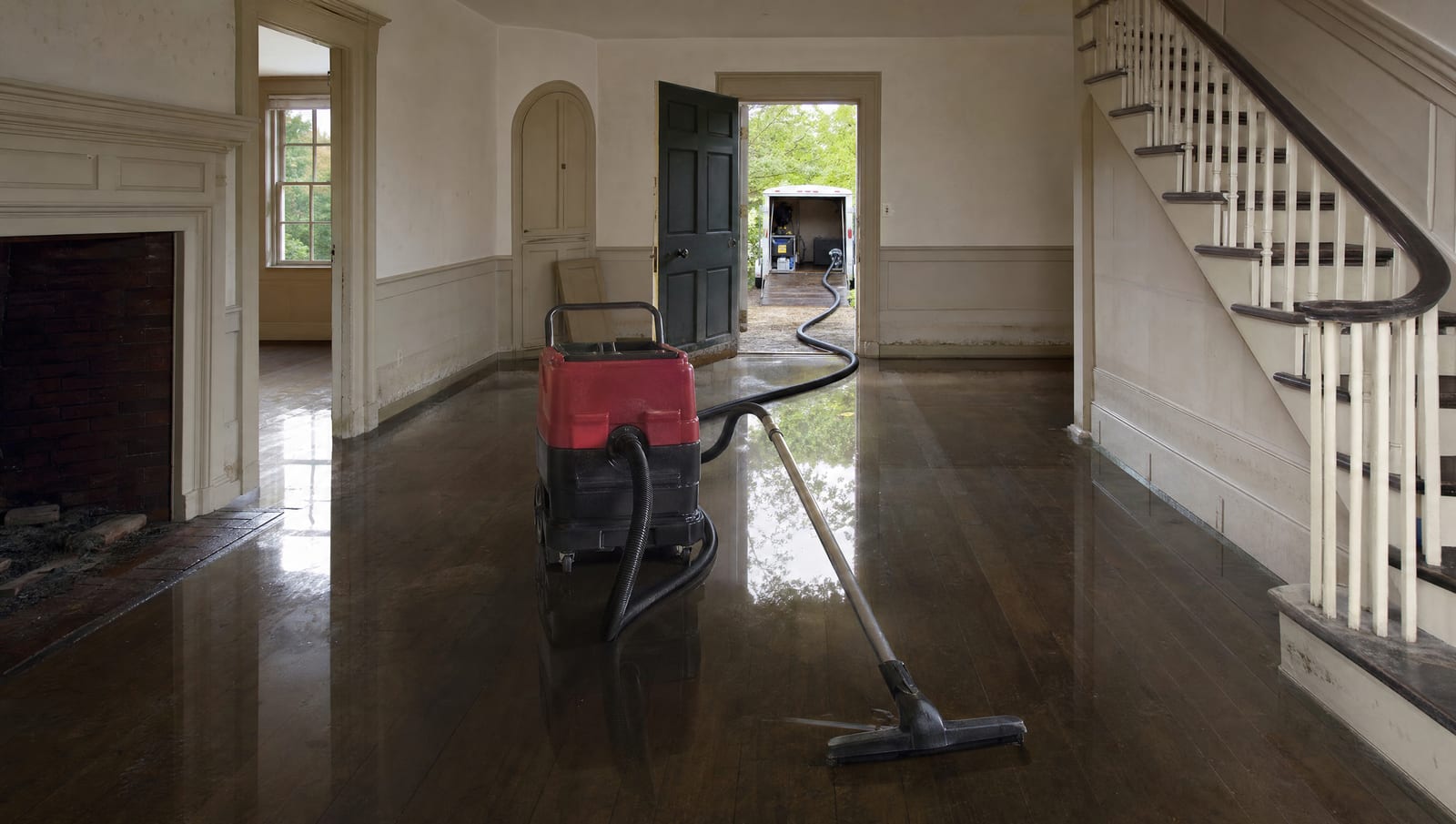
It is late on a rainy night in an older building a few blocks off Nassau Street. A supply line lets go on an upper floor, or a sump quits during a downpour, and now water is spreading fast across floors that have been there for generations. In a single-family colonial that is bad enough. In a divided-up multifamily house or a densely occupied building, it is harder still, because the water is already finding the stairwell, the shared ceiling, and the unit below before anyone has found the shutoff. The first job is not the rebuild. It is getting the standing water out fast, safely, and without wrecking finishes that cannot be replaced.
That first-hours window is its own distinct problem in Princeton. Older masonry and plaster, narrow stairs, occupied units, and shared plumbing all get in the way of the one thing that helps most, which is moving water off materials before it soaks deeper. This post stays in that urgent extraction lane: safe entry, stopping the source, documenting the scene, pulling the standing water, and protecting what is in the room. The longer arc of drying, salvage calls, and reconstruction is covered separately in our Princeton water damage restoration guide. Here the focus is the race in the first hours.
The First Hour, In Order
- 1
Make entry safe
Before stepping into standing water, rule out electrical hazards, sagging ceilings, and unstable footing, and cut power to the wet area at the panel when it is safe to reach.
- 2
Stop or isolate the source
Shut the supply valve, kill the failed appliance, or isolate the wet riser so no new water is added while extraction gets set up.
- 3
Document the scene
Photograph the water line, the affected rooms, and any historic or high-value finishes before anything is moved or extracted.
- 4
Read the water category
Judge whether the water is clean, gray, or grossly contaminated, because that decides both crew safety gear and what can stay.
- 5
Extract standing water first
Get the visible pooled water off floors and out of low spots fast with truck-mount or portable extractors, working from the source outward.
- 6
Protect finishes and contents
Lift rugs and furniture off wet floors, block legs, and shield millwork and stairs so extraction access does not add its own damage.
- 7
Hand off to drying
Once standing water is gone, set the loss up for structural drying and the material-by-material decisions that follow.
Start With Safe Entry, Not the Water
The instinct is to run at the puddle. In an older or shared building, the first move is to make sure the room is safe to enter at all. Standing water and electricity are a dangerous mix, and in a building where wiring has been added to over decades, you cannot assume an outlet or a light fixture near the water is dead. Where it can be reached safely, power to the wet area should be cut at the panel before anyone wades in. If the panel itself is in the flooded zone, that is a job for the utility or an electrician, not a homeowner in ankle-deep water.
Overhead matters too. Water pooling above a ceiling adds real weight, and a sagging or bulging ceiling can come down without much warning. In a multifamily building the hazard often sits between units, where water from an upstairs failure loads the ceiling of the unit below. Safe entry means looking up as well as down, keeping people out from under a loaded ceiling, and watching footing on stairs that may be wet and slick. None of this is wasted time. A crew that gets hurt on entry cannot extract anything.
Stop or Isolate the Source
Extraction is pointless while water is still coming in. The next move is to stop the source or isolate it. For a supply line or fixture failure that can be as simple as closing a shutoff valve or the main. For a failed appliance it means killing the water and the power to it. In older and multifamily Princeton buildings, the wrinkle is shared systems: one shutoff may control several units, valves may be old and stiff, and the person standing in the water may not have access to the basement or the riser that feeds the leak. Knowing where the main shutoff is, before an emergency, is one of the most useful things a property owner or manager can do.
Some sources are not a valve at all. Roof entry, foundation seepage, a sewer backup, or stormwater intrusion cannot simply be switched off, and the right trade, whether a plumber, a roofer, or the town, becomes part of stopping the flow. What matters in the first hour is separating the water that can be stopped now from the water that has to be managed while a repair is arranged, so extraction can begin on everything that is no longer being added to. Our 24-hour water damage response exists for exactly this window, when the source has to be controlled before the clock does more damage.
Document Before You Disturb
Before extraction disturbs anything, the scene gets documented. Photos of the water line on the wall, the affected rooms, standing water depth, and the condition of finishes take seconds and are worth keeping. In an older Princeton home the historic finishes deserve their own frames: original plaster, wood floors, stairs, and millwork, photographed as found. In a multifamily building the record should also show which units and shared areas were touched, because more than one party may end up involved.
This is not paperwork for its own sake. A restoration contractor cannot decide an insurance claim, and only the carrier can say what a policy covers. What good documentation does is tie the damage to its cause and its extent while the evidence is still fresh, which is exactly the record that supports a claim later. The most common and costly mistake here is discarding wet contents or ripping out material before it is photographed. Once it is in a dumpster, the proof goes with it.
Read the Water Category
Not all water is equal, and in the first hour the category shapes both how the crew protects itself and what can be saved. Clean water from a supply line is the most forgiving. Water that has picked up contaminants is more serious, and grossly contaminated water such as sewage or long-standing floodwater carries real health risk. The category does not change the goal of getting standing water out fast, but it does change the gear, the handling, and which porous materials are worth extracting around versus removing outright.
Duration works alongside category. Water caught in hours gives materials far better odds than the same water left to soak for days, because time lets it spread deeper and, past the drying window, invites mold. That is the whole reason speed matters so much in these older buildings. The table below is a general guide to how category and material type point toward extracting and drying versus removing. It is not a verdict on any one property, since the water, the duration, and the construction all move the answer.
Hover or tap a row to highlight it.
| What got wet | Clean water, caught fast | Gray or contaminated water | Long-soaked or sewage |
|---|---|---|---|
| Standing water on floors | Extract first, work source outward | Extract with proper crew protection | Extract, treat as a health hazard |
| Original plaster and wood floors | Extract nearby, then dry and evaluate | Evaluate carefully before drying | Often removed once contaminated |
| Solid masonry and framing | Usually dries after water is pulled | Assess for absorbed contamination | May need removal if contaminated |
| Carpet and pad | Extract water, pad often still removed | Pad removed, carpet by category | Usually removed entirely |
| Saturated insulation | Rarely holds up once soaked | Removed | Removed |
| Contents on wet floors | Lift, block, and dry in place | Lift and evaluate item by item | Move out, document, decide later |
Get the Standing Water Out, Fast
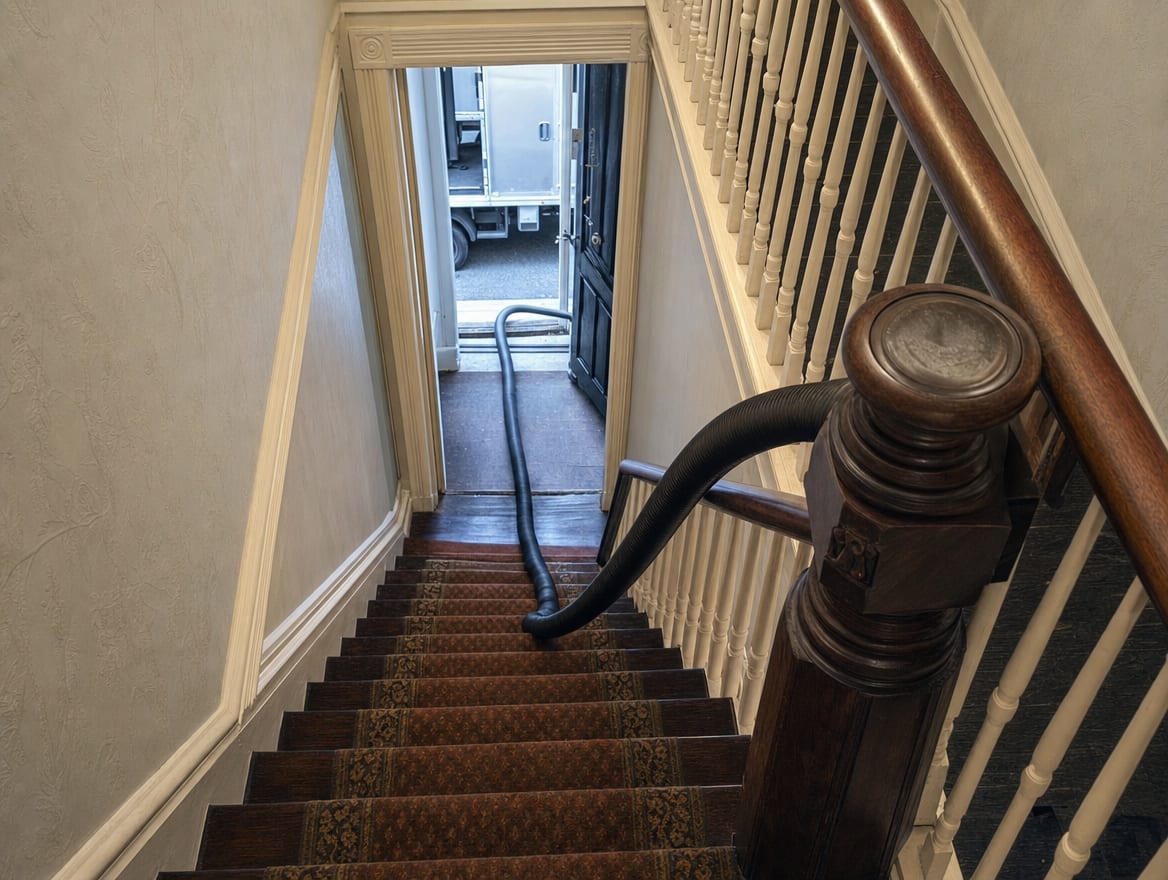
With entry safe, the source stopped, the scene documented, and the category read, the actual extraction begins. Standing water comes first, before any material removal, because every hour it sits is an hour it spreads deeper into floors, cavities, and the levels below. Crews reach for one of two tools. Truck-mounted extractors, run from a unit parked at the curb, move large volumes of water quickly and are the workhorse for a big loss with good access. Portable extractors are smaller machines carried to the water, and in Princeton's older and multifamily buildings they earn their keep, because a truck-mount hose can only reach so far up a narrow staircase or into a back unit.
Access is the quiet variable that decides how fast extraction really goes. Narrow historic stairs, tight doorways, occupied units that have to be coordinated, on-street parking that keeps the truck a long hose-run from the door, and shared hallways all slow the setup even when the crew and equipment are ready. Getting standing water off a hardwood floor in the first hours is what makes it possible to save that floor at all, which is why crews plan the extraction path around the building's real constraints instead of fighting them. Once the pooled water is gone, a carpet water extraction pass pulls water held in soft flooring that a wet-vac leaves behind.
What Slows Extraction in an Older or Shared Building
Narrow historic stairs and doorways
Tight, original stairwells limit hose runs and force smaller portable extractors instead of a truck-mount, so plan the shortest safe path to the water.
Occupied and shared units
Coordinating access through neighboring apartments and common areas takes time, and the water may sit behind a door the crew cannot open alone.
Shared plumbing and shutoffs
One valve can control several units and old valves stick, so locating and reaching the right shutoff is half the battle.
Fragile finishes in the path
Original plaster, wood floors, stairs, and millwork have to be protected as equipment moves through, not sacrificed for speed.
Parking and long hose runs
On-street parking near the historic core can leave a truck-mount a long run from the door, favoring portable units placed close to the loss.
Uncertain wiring near the water
Decades of added circuits mean nearby outlets and fixtures cannot be assumed dead, so power gets cut before extraction, not during.
Protect Finishes and Contents While You Work
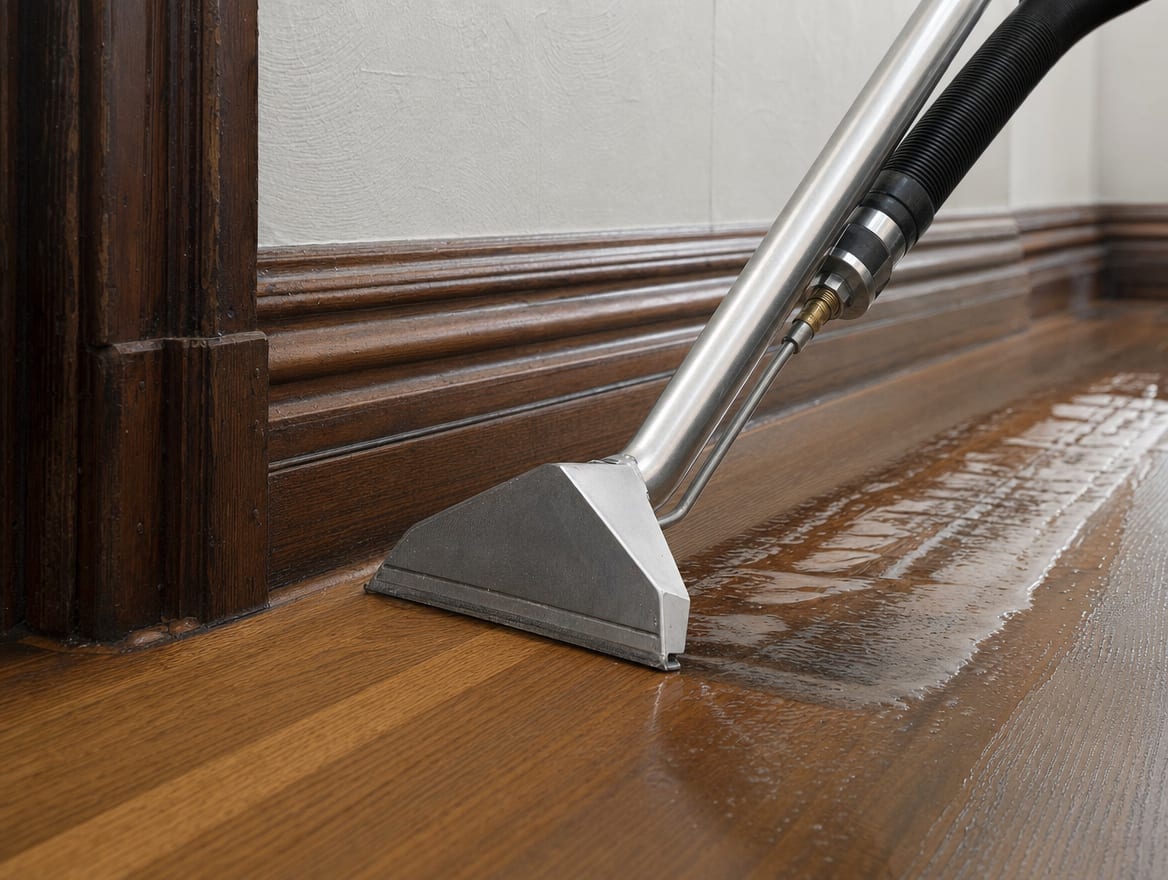
Fast extraction should not create its own damage. As crews move machines and hoses through a building, the finishes in the path need protecting, especially in a historic interior where the floor, the stairs, and the trim are part of the value. That means lifting rugs and small furniture off wet floors so dyes do not bleed into hardwood, blocking the legs of heavier pieces up out of the water, and shielding stair treads and millwork from the equipment traffic. In a multifamily building it also means keeping the work from spreading water, and the mess of moving it, into dry units and shared spaces.
Contents get their own quick triage during extraction. Books, documents, artwork, rugs, and electronics can be worth more than the finishes around them, and the rule is simple: document first, then move the highest-risk items out of the wet zone before deciding their fate. Power down electronics and do not switch on a wet unit. Get paper and textiles off wet floors fast. None of this is the full restoration, but doing it during extraction protects both the property and the record that supports a claim.
Check Local Constraints as Extraction Runs
Emergency extraction and interior water removal are time-sensitive mitigation, and they generally do not wait on the approvals that construction work needs. Even so, an older Princeton building can carry constraints worth flagging in the first hours so the later repair does not stall. Flood exposure varies by parcel, and proximity to Stony Brook, Harry's Brook, or Lake Carnegie does not tell you what a specific property faces, so the address should be checked against FEMA and NJ flood mapping rather than assumed. Not every Princeton property shares the same flood picture or the same review requirements.
Two more Princeton wrinkles belong on the radar early. Exterior repairs to the source, such as roofing, masonry, or visible mechanical changes on a property in a designated historic district, can trigger Historic Preservation Commission review, which shapes the repair that follows the drying even though it does not slow the interior extraction. And older buildings may hold lead paint or asbestos in plaster, flooring, or pipe insulation, so any removal that could disturb those materials calls for proper handling. Requirements should always be confirmed with Princeton's construction department for the specific property. Noting these while the water is being pulled keeps the source repair from surprising anyone after the interior is dry.
Hand Off to Drying
Extraction ends where drying begins. Getting the standing water out fast is the move that makes everything after it possible, but pulling the visible water is not the same as a dry building. Water hides in wall cavities, under floor assemblies, and inside subfloors and masonry that look dry on the surface, and that residual moisture is what feeds mold and secondary damage if it is left alone. The EPA advises drying wet materials within 24 to 48 hours to reduce mold risk, though dense plaster, thick masonry, and layered floors can take longer and need close monitoring rather than a promised deadline.
That is the point where this urgent first-hours work hands off to structural drying, the placement of air movers, dehumidifiers, and cavity or floor systems that pull moisture out at depth, plus the material-by-material salvage decisions, moisture logging, verification, and any reconstruction. All of that is covered in the fuller Princeton water damage restoration guide. The clean line is this: extraction wins the first hours by getting standing water out safely and protecting what is in the room, and drying takes it from there.
Frequently Asked Questions
How soon should I act on standing water?
Right away, once it is safe. Make entry safe, stop or isolate the source, and get standing water off materials as fast as you safely can. The EPA advises drying wet materials within 24 to 48 hours to reduce mold risk, so the sooner extraction starts, the more can be saved.
What is the first thing to do before extraction?
Rule out hazards. Standing water near electricity is dangerous, and older buildings often have wiring added over the years, so power to the wet area should be cut at the panel where it can be reached safely. Watch for sagging ceilings loaded with water above, and keep footing sure on wet stairs.
Truck-mount or portable extractor, which is used?
Both, depending on access. Truck-mounted extractors move large volumes quickly and suit a big loss with a clear path from the street. Portable extractors are carried to the water and are often the better fit in older or multifamily Princeton buildings, where narrow stairs, occupied units, and long hose runs limit what a truck-mount can reach.
Does the type of water change what happens?
Yes. Clean water from a supply line is the most forgiving, while contaminated water or sewage carries health risk and pushes porous materials toward removal. The category sets both the crew's protection and which materials can be extracted around and dried versus taken out.
Will insurance cover the extraction?
Only the carrier can decide, based on the policy, the cause of the loss, exclusions, and how quickly mitigation began. A contractor cannot guarantee coverage. What helps is documentation from the first hour, including photos of the water and the source, which ties the damage to its cause for the claim.
Do I need permits for emergency water extraction in Princeton?
Emergency extraction and interior drying are time-sensitive mitigation and generally are not held up by the approvals that construction needs. Later exterior repairs, and work in a historic district, may involve Princeton permits or Historic Preservation Commission review, and older materials like lead paint or asbestos call for proper handling. Confirm the specifics with the town's construction department for your property.
When water is spreading through an older or multifamily Princeton building, the first hours decide how much can be saved, and that is exactly the window ExecPro Restoration & Cleaning is built for. Our team handles safe entry, source control, documentation, and fast extraction while protecting the finishes and contents that matter, then carries the loss through to drying and repair. Call ExecPro Restoration & Cleaning at (888) 300-3772 or reach out through our contact page for emergency water extraction in Princeton, day or night.
Emergency Water Extraction Terms
Tap a term to see what it means.
Emergency water extraction. The urgent first-response work of safely removing standing water from a property fast, before the fuller drying and restoration begin.
Serving Princeton
ExecPro Restoration & Cleaning provides mold remediation services in Princeton, NJ, from inspection and testing through removal, drying, and post-remediation verification. Call (888) 300-3772 for 24/7 emergency response.
Related Articles
Emergency Water Extraction in Bridgewater, NJ: Getting Standing Water Out Safely
Keep clear of wet outlets and standing water until the power question is settled. What safe entry looks like, how extraction goes and what backup coverage adds.
Emergency Water Extraction in Robbinsville, NJ: The First Hour and the 72-Hour Permit Window
Within the first hour of standing water, shut off power from a dry spot and call. See how emergency water extraction in Robbinsville, NJ works, permits too.
Emergency Water Extraction in Trenton, NJ: Rowhouses, Shared Walls and the Unit Below
In a rowhouse or a two-to-four-unit building, water can cross a shared wall or floor. What to do about power, gas and the unit below in the first hour.