Emergency Basement Drying in New Jersey: The First Hours Decide the Rest
Cal HewittPublished Updated
- emergency water extraction
- basement drying
- insurance claims
- new jersey
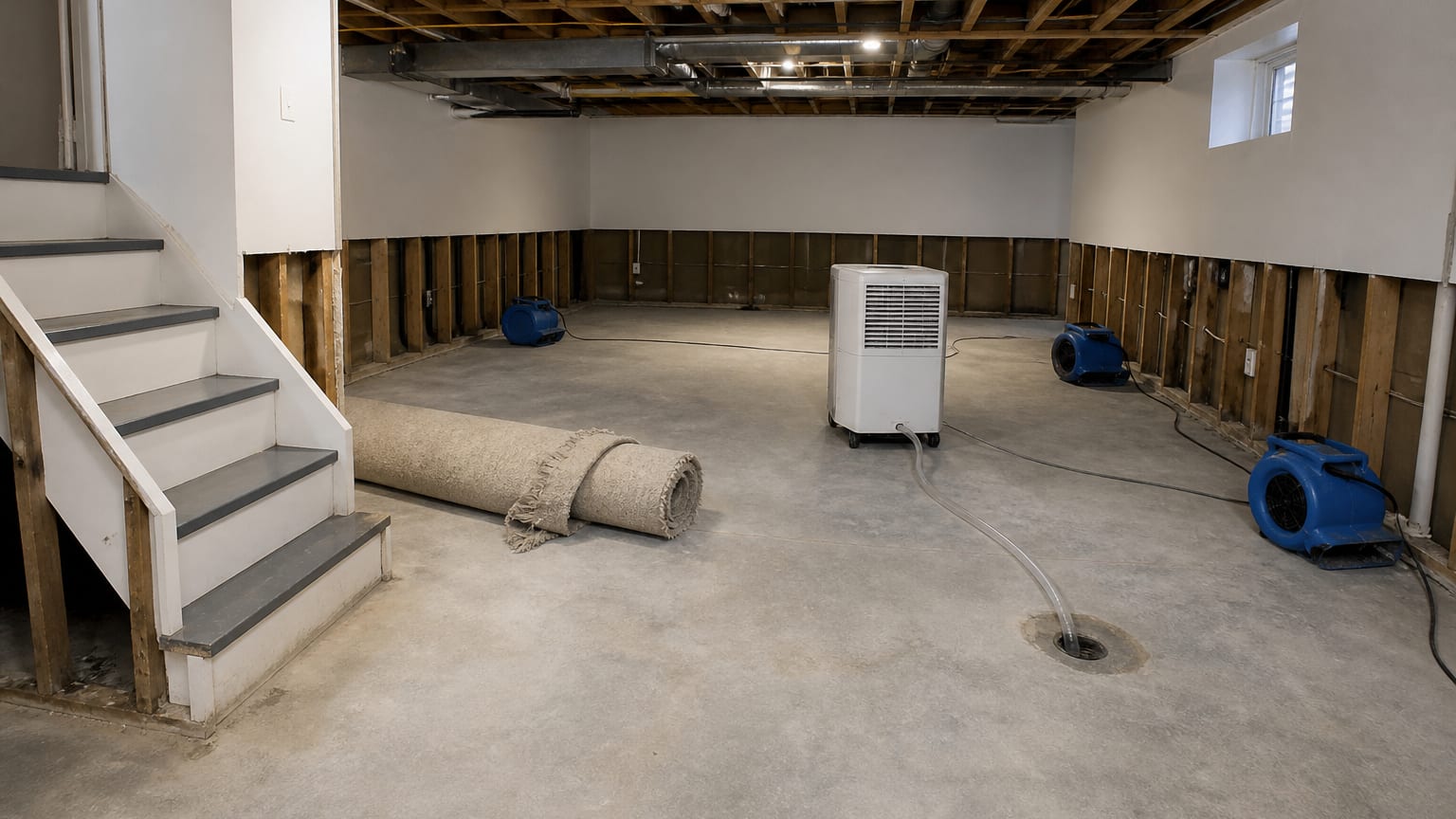
You are standing at the top of the basement stairs with a phone in your hand, and there is water down there. Maybe it is a slow spread across the slab, maybe it is over the treads. What you want to know in the next sixty seconds is not what causes basement flooding. It is whether it is safe to walk down, what you are allowed to touch, and who you are supposed to call first. That order matters more than most people realise, because two of the commonest mistakes pull in opposite directions: doing nothing lets the damage spread through materials that could have been saved, and cleaning up too fast destroys the evidence your insurer needs. The good news is that the sequence is short, it is the same for most losses, and you can start it before anybody arrives.
Key Takeaways
Safety comes before water
electricity and sewage decide whether you go down the stairs at all, and New Jersey's emergency guidance is blunt that current passes readily through water.
Photograph before anything moves
the state's insurance regulator tells homeowners to document damage before disposal and to hold damaged property until the insurer has inspected it or released it.
Drying is measured, not judged by eye
a floor can feel dry while the wall cavity, the pad and the subfloor are still wet, which is what turns a water loss into a mold job.
Is It Safe to Go Down There Yet?
Before the water, the power. The New Jersey Office of Emergency Management is direct about this: stay away from downed lines and electrical wiring, because current passes readily through water, and shut off water and electricity if officials tell you to. If the panel, the outlets, the furnace or the water heater are standing in it, that is not a drying problem yet. That is a call to the utility or an electrician, from dry ground.
Sewage is the second stop sign. NJOEM's flood guidance says water that came in from outside may carry raw sewage, chemical waste and other disease-spreading substances, and that toilets should not be used where sewage lines may be damaged. A backup is a different job from a burst supply line, with different protective equipment and a different decision about what can stay in the building.
One more thing belongs in this section because people reach for it early and it kills. Do not run a generator in the basement, the garage or any enclosed space. The New Jersey Department of Health puts the distance at more than twenty feet from the home, doors and windows, and its storm recovery guidance recorded the cost of getting this wrong: 398 New Jersey emergency room patients were treated for carbon monoxide exposure in the two weeks after Superstorm Sandy, against 14 in the two weeks before.
What Kind of Water Event Are You Actually Dealing With?
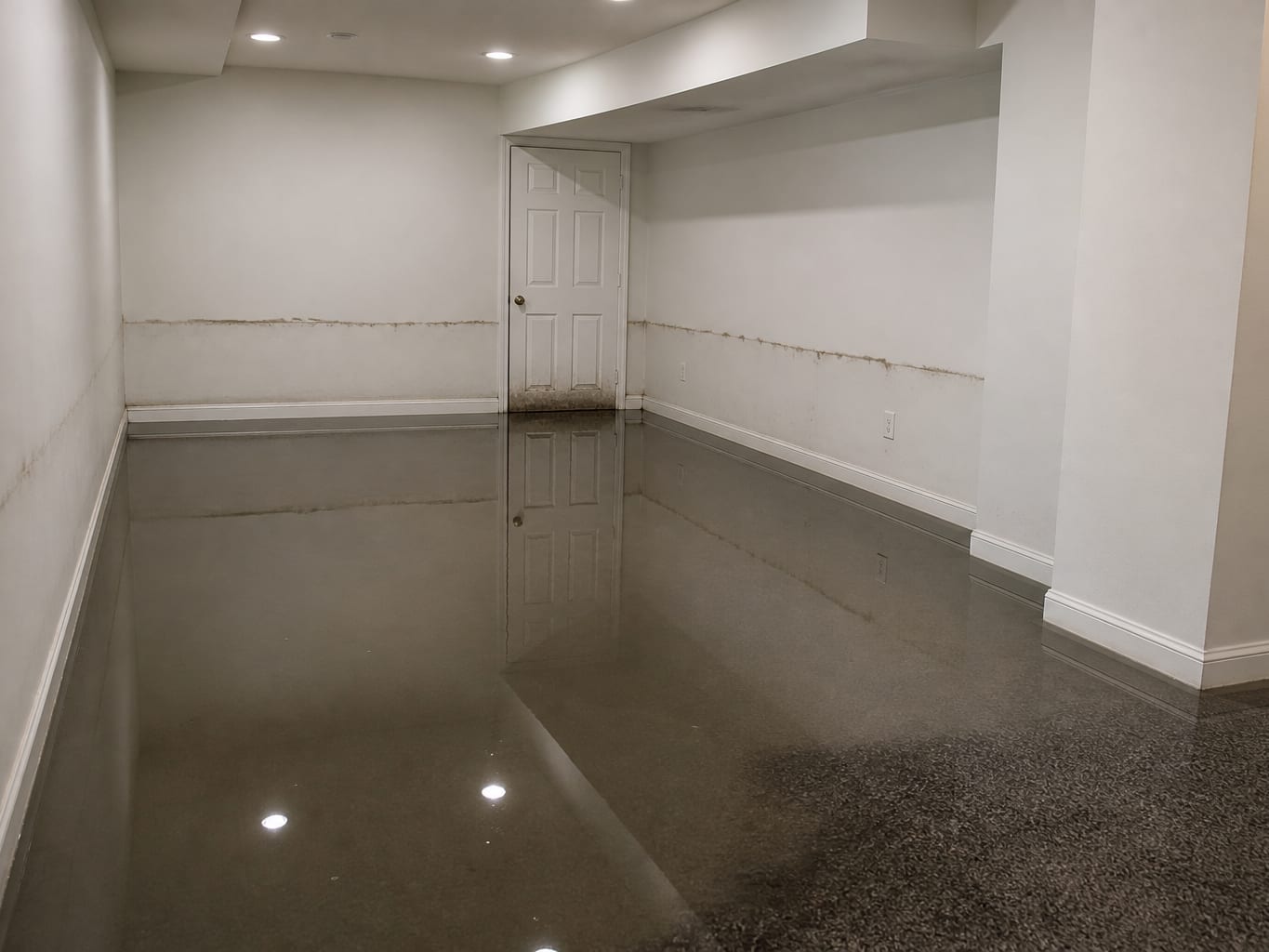
The cause changes almost everything downstream, so it is worth naming early. A supply line that let go behind a finished wall is clean water and a contained scope. Storm water that came up through a window well is a different category. A sewer backup is different again.
New Jersey gives you several distinct windows rather than one basement season. NJOEM names winter and early spring rain combined with snowmelt, spring and summer thunderstorms, and summer and autumn hurricanes or tropical systems as flood drivers, and says the risk can occur at any time of year. The Atlantic hurricane season runs 1 June through 30 November.
What the state does not publish is a statewide basement flooding rate, a statewide depth to groundwater, or a count of New Jersey homes with basements, so treat any page quoting one with suspicion. What is available at your address is screening data: NJDOH describes NJFloodMapper as carrying FEMA flood zones, sea level rise and hurricane surge layers, and its companion tools show housing units in FEMA-designated flood hazard areas by county. That tells you about exposure. It does not promise that a particular basement will or will not take water.
What Has to Happen in the First Few Hours?
This is the part that most repays getting right, and it is four steps.
Stop the source, but only if stopping it is safe. For an interior plumbing failure that usually means closing an accessible supply valve. For rain, surface water, sewer, structural or unknown sources, the next call is emergency services, the utility, a plumber or a restoration contractor rather than a valve you cannot reach.
Photograph everything before it moves. The waterline on the wall, every affected room, the contents, and the source area if it can be seen safely. Video as you walk. This is the single cheapest thing you will do all week and the one that cannot be recreated later.
Report the loss and ask what they want. The New Jersey Department of Banking and Insurance tells homeowners to report promptly, record the claim number and adjuster details, photograph damage before disposal, retain damaged property where possible until inspection, and ask the insurer what documentation is required. Asking that last question early saves an argument later.
Protect against further loss without starting the repair. DOBI's claims guidance draws the line clearly: necessary temporary repairs to prevent further damage are important and the receipts should be kept, while permanent repairs should wait until the adjuster has reviewed the damage. Extraction, drying and removing soaked material are protection. New drywall and new flooring are repair. Keeping those apart is what keeps a claim intact.
The First Few Hours, in Four Steps
- 1
Stop the source, but only if it is safe
For an interior plumbing failure, that usually means closing an accessible supply valve. For rain, surface water, sewer, structural or unknown sources, call emergency services, the utility, a plumber or a restoration contractor.
- 2
Photograph everything before it moves
The waterline on the wall, every affected room, the contents, and the source area if it can be seen safely, with video as you walk.
- 3
Report the loss and ask what they want
Report promptly, record the claim number and adjuster details, and ask what documentation the insurer requires.
- 4
Protect against further loss without starting the repair
Necessary temporary repairs are important and the receipts should be kept, while permanent repairs wait until the adjuster has reviewed the damage.
What Does a Complete Basement Drying Response Cover?
The visible water is the smallest part of the job. Carpet and pad, drywall, insulation, baseboards, stored contents, wall cavities and subfloor assemblies all hold water, and none of them announce it.
How an Emergency Drying Job Runs
- 1
Make the space safe
Electrical, structural and sewage hazards are settled before anyone works in the water.
- 2
Assess with instruments, not eyes
Moisture meters and thermal imaging find the wet material behind and beneath the visible area.
- 3
Extract the standing water
Bulk water comes out before any drying equipment is placed.
- 4
Remove what cannot be dried
Saturated porous material comes out, cut to a clean line above the affected zone.
- 5
Dry the assembly and monitor it
Readings are logged by location until they fall and hold, rather than until the floor feels dry.
- 6
Verify and document the close
The record is what supports a claim, a future sale, or a landlord and tenant file.
That instrument step is where a professional response separates from a wet vacuum and a fan. Our technicians use moisture meters and thermal imaging to look past the visibly wet area, then extract and dry with monitored readings, which is also how we know when to stop. Where the assessment finds growth, emergency mold and water damage response moves into containment and remediation rather than continuing to dry around it.
When Do Floodwater, Sewage or Mold Change the Plan?
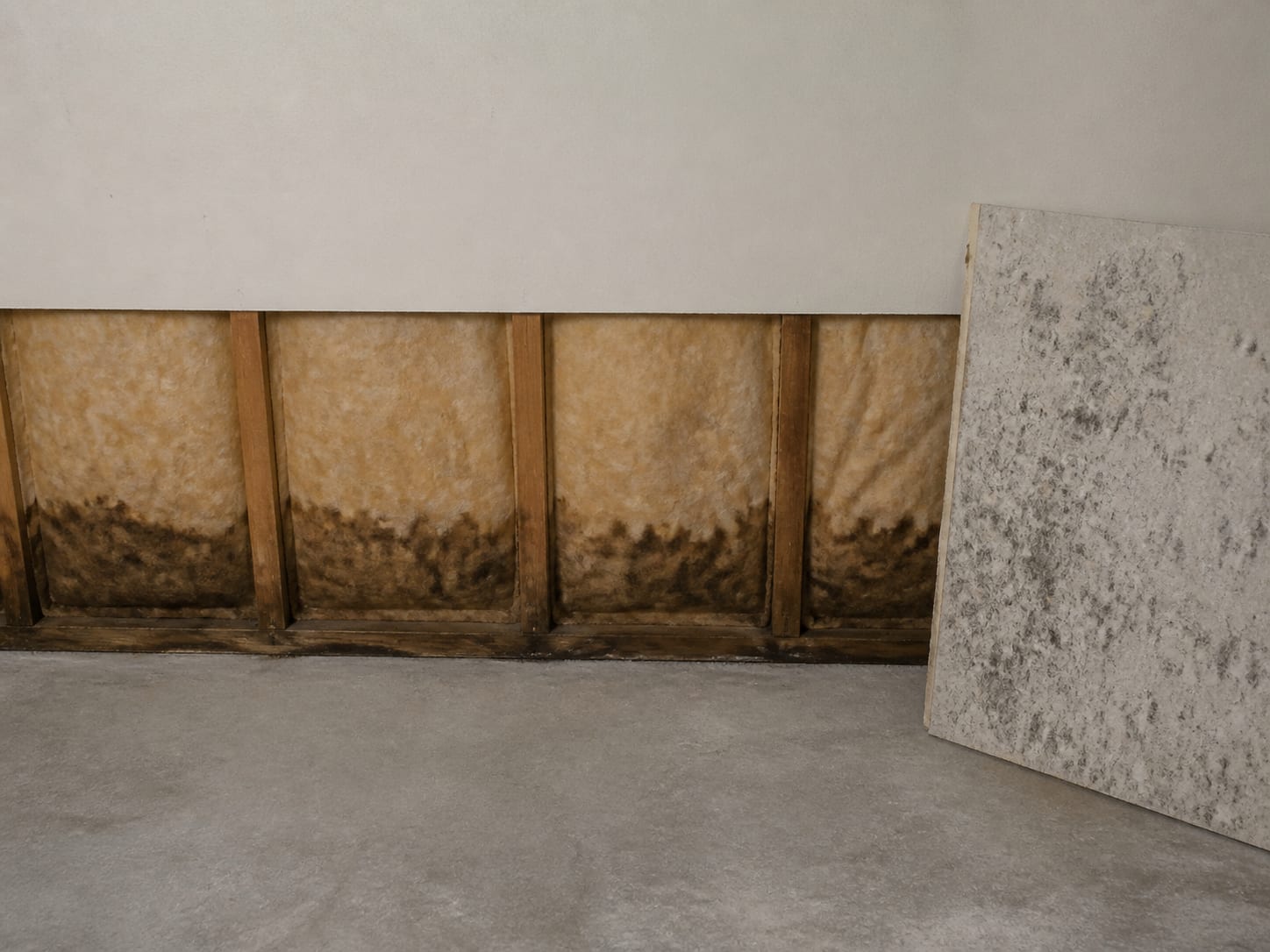
Contamination changes what can be kept. NJDOH's storm guidance says to discard absorbent materials that floodwater has touched, naming carpeting, couches, mattresses and insulation. It also gives a timing marker worth writing down: items wet for two days or longer likely have mold growing inside them even when nothing is visible. That statement is dated 15 September 2021 and it is guidance rather than a laboratory threshold, but as a planning rule it is the reason speed matters.
Mold itself needs water, which is why a drying job that stalls becomes a remediation job. NJDOH's mold guidance names water damage, visible growth and a musty or earthy odour as the signs, and is measured about health effects: exposure can cause nasal and throat irritation, coughing or wheezing, and eye irritation, and people with mold allergies or chronic lung illness may react more strongly. It also says it is not known how much mold is needed to cause health problems, so anyone promising you a number is ahead of the evidence.
Two practical limits belong here. People with asthma or allergies should not carry out mold removal themselves. And New Jersey runs no state certification programme for mold or general indoor air firms, so a contractor claiming to be state certified for mold remediation is describing something that does not exist.
What Decides the Scope and the Cost?
No honest New Jersey price range for emergency basement drying is published by the state, university or industry sources available, so this page will not invent one. A written property-specific scope is what settles cost for a real loss, and any number offered before somebody has measured the moisture is a guess wearing a suit.
What can be named is what moves the number:
- Whether water is still entering. An active source means the scope is open.
- The cause of loss. Plumbing, storm, sewer, appliance, roof or unknown, each with different handling.
- Contamination. Clean water, grey water and sewage are three different jobs.
- How far it travelled. Standing depth matters less than distribution through materials.
- What is concealed. Wall cavities and subfloors carry the hidden half of the scope.
- Whether rebuilding follows. Drying and build-back are separate stages, and only one of them is an emergency.
Coverage is a cost driver too, and it surprises people. DOBI states that homeowners policies exclude water damage caused by flooding, and that flood insurance is separate. It also notes that a new flood policy normally is not effective until 30 days after purchase, which is the sentence that turns a bad week into a worse one for anybody who bought cover as the forecast came in.
Hover or tap a row to highlight it.
| Cost driver | Why it matters |
|---|---|
| Whether water is still entering | An active source means the scope is open |
| The cause of loss | Plumbing, storm, sewer, appliance, roof or unknown, each with different handling |
| Contamination | Clean water, grey water and sewage are three different jobs |
| How far it travelled | Standing depth matters less than distribution through materials |
| What is concealed | Wall cavities and subfloors carry the hidden half of the scope |
| Whether rebuilding follows | Drying and build-back are separate stages, and only one of them is an emergency |
| Insurance coverage | DOBI states that homeowners policies exclude water damage caused by flooding, and that flood insurance is separate. A new flood policy normally is not effective until 30 days after purchase |
What Do New Jersey's Own Rules Add?
Three checks, none of them obvious in the moment.
Three New Jersey Checks
Contractor registration
A person may not offer or engage in the home improvement business unless registered with the Division of Consumer Affairs, and registrations are annual. Contractors must display an NJHIC number and provide proof of commercial general liability insurance of at least $500,000 per occurrence as part of registering. Ask for the number.
Permits before the rebuild
Drying itself is not a permit question. Electrical, plumbing, structural or alteration work that follows a loss is the part to check with your local construction official.
Keep the file
A dated folder of photographs, invoices, claim correspondence, moisture records and any reports lets you answer the Seller's Property Condition Disclosure Statement questions with evidence instead of memory.
Verify the contractor's registration. New Jersey's Contractors' Registration Act says a person may not offer or engage in the home improvement business unless registered with the Division of Consumer Affairs, and registrations are annual. The state's contractor quick start guide says home improvement contractors must display an NJHIC number and provide proof of commercial general liability insurance of at least $500,000 per occurrence as part of registering. Ask for the number.
Ask about permits before the rebuild, not before the drying. Drying itself is not a permit question. The New Jersey Uniform Construction Code is administered through local construction code enforcement, and the DCA distinguishes full permits, minor work permits and ordinary maintenance. Electrical, plumbing, structural or alteration work that follows a loss is the part to check with your local construction official.
Keep the file, because the property keeps the history. New Jersey's Seller's Property Condition Disclosure Statement asks about basement and crawl space leakage, dampness, mold, repairs attempted to control water, sump pumps and their problems, foundation cracks, flood hazard zone status and drainage problems. A dated folder of photographs, invoices, claim correspondence, moisture records and any reports is what lets you answer those questions with evidence instead of memory. If the water is gone but there is still odour, staining or recurring dampness, a residential mold inspection produces exactly that kind of record, and buyer and seller protection is where it matters at sale.
How Do You Stop It Happening Again?
Prevention after a loss is mostly about the things the loss just revealed. Where did the water come in, and what failed to move it away. Gutters, downspout discharge, grading that has settled back toward the house, window wells without drainage, and a sump pump with no tested backup are the usual list, and the loss you just had normally points at one of them.
Worth knowing the name of the place it most often actually enters, because it helps you describe the problem accurately. On a poured foundation, the cove joint is the seam where the basement floor slab meets the foundation wall. It is a construction joint rather than a defect, and when the ground outside is saturated it is the path of least resistance: water arrives along the floor at the base of the wall rather than running down the wall face. A basement that takes water at the wall-floor line after heavy rain, with dry wall above it, is describing a cove joint problem, and that points the correction outward at drainage and grade rather than inward at the wall.
The second half is watching the weather that matters here. NJOEM's own distinction is worth keeping: a watch means flooding is possible, a warning means it is expected very soon or already happening. Multi-day rain, snowmelt on top of rain, and tropical remnants are the patterns to act on rather than read about. Knowing your address's flood mapping before the next one is a twenty minute job on a dry day and a scramble on a wet one.
Frequently Asked Questions About emergency basement drying New Jersey
How fast do I need to act on a wet basement?
Quickly, and the useful marker is NJDOH's: material wet for two days or longer likely has mold growing inside it even where nothing is visible. That is guidance rather than a laboratory line, but it is why emergency basement drying services in New Jersey are treated as same-day work rather than something scheduled for next week.
Is a flooded basement covered by my homeowners policy?
Not if the cause was flooding. DOBI states that homeowners policies exclude water damage caused by flooding and that flood insurance is separate. A burst supply line, an appliance failure and a surface flood are three different coverage questions, and only your policy and your insurer's position answer them.
Can I throw out the ruined carpet before the adjuster comes?
Photograph it first, and ask. DOBI's guidance is to document damage before disposal and retain damaged property where possible until the insurer has inspected it or told you otherwise. Removing saturated material is often necessary to prevent further damage, which is why asking the insurer what they require is the step that protects you both ways.
How do I know when the basement is actually dry?
By measurement. Basement drying contractors in New Jersey log moisture readings by location and keep drying until those readings fall and hold. A surface that feels dry tells you nothing about the wall cavity, the pad or the subfloor behind it.
Do I need a permit to dry out a basement?
No. Drying is not the permit question. Electrical, plumbing, structural or alteration work in the rebuild that follows may be, and the New Jersey Uniform Construction Code is administered locally, so your municipal construction official is the one to ask.
Is a company that says it is state certified for mold remediation better?
That claim describes something that does not exist. NJDOH states that New Jersey has no state certification programme for mold or general indoor air firms. Ask instead about NJHIC registration, liability cover, and how the work will be documented.
Test Your Wet Basement Knowledge
1. How far from the home, doors and windows should a generator run, according to the New Jersey Department of Health?
2. What does NJDOH say about items wet for two days or longer?
3. When is a new flood policy normally effective after purchase, according to DOBI?
4. Does New Jersey run a state certification program for mold or general indoor air firms?
5. How do you know a basement is actually dry?
Pick an answer to begin.
Final Thoughts
An emergency basement is a sequencing problem more than a technical one. Safety settles whether you go down the stairs, the cause settles what the job is, photographs and a prompt call settle what your insurer can do for you, and measured drying settles when it is finished. Almost everything that goes badly wrong in a New Jersey basement loss traces back to one of those four being done out of order.
Handled properly, a wet basement is a bad fortnight rather than a problem that returns every spring. The record you build while it is happening is what protects the claim now and answers the disclosure questions years later when you sell.
If there is water in your basement now, call us and we will talk you through what to touch and what to leave. ExecPro Restoration & Cleaning has handled emergency water and mold work across central New Jersey since 2015, from our base in Princeton Junction NJ and through West Windsor NJ, Princeton NJ, Plainsboro NJ, Hamilton NJ, Trenton NJ and the surrounding towns. Call ExecPro Restoration & Cleaning at (888) 300-3772 or get in touch. We are available 24/7 for emergency water extraction, structural drying, mold containment and the build-back that follows.
Wet Basement Terms
Tap a term to see what it means.
Cove joint. On a poured foundation, the seam where the basement floor slab meets the foundation wall. It is a construction joint rather than a defect, and when the ground outside is saturated it is the path of least resistance for water.
Related Articles
Emergency Water Extraction in Bridgewater, NJ: Getting Standing Water Out Safely
Keep clear of wet outlets and standing water until the power question is settled. What safe entry looks like, how extraction goes and what backup coverage adds.
Emergency Water Extraction in Robbinsville, NJ: The First Hour and the 72-Hour Permit Window
Within the first hour of standing water, shut off power from a dry spot and call. See how emergency water extraction in Robbinsville, NJ works, permits too.
Emergency Water Extraction in Trenton, NJ: Rowhouses, Shared Walls and the Unit Below
In a rowhouse or a two-to-four-unit building, water can cross a shared wall or floor. What to do about power, gas and the unit below in the first hour.