Water Damage and Homeowners Insurance in NJ: What's Covered
Cal HewittPublished
- insurance restoration
- claim documentation
- water damage
- new jersey
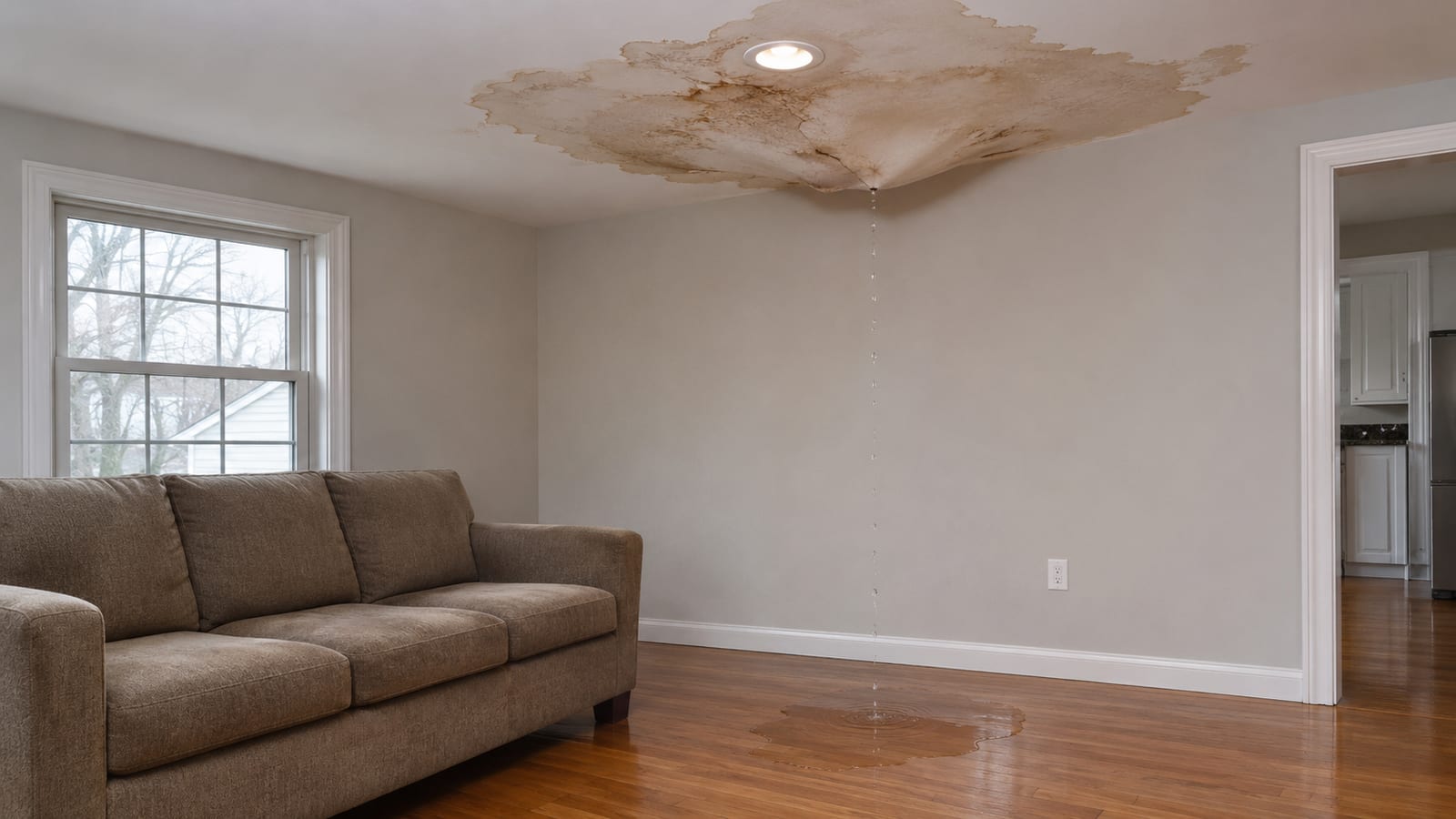
There is water on the floor, a stain spreading across a ceiling, or a basement that smells like a storm drain, and one question keeps coming back: does homeowners insurance cover water damage in your case? In New Jersey it often can, but the answer turns on where the water came from and what your policy says.
A burst pipe or a roof leak may be treated very differently from groundwater, a backed-up sewer or a leak that has been seeping for months. Those differences decide whether you file, what you protect first and what you hand the insurer.
Before you read further, find your declarations page. It lists your coverages, limits and deductible, and every answer below points back to it.
Key Takeaways
Cause of loss sets the starting point
Sudden plumbing or roof-leak damage is typically covered, while flood, groundwater, rain runoff and snowmelt are not typically covered, and your policy controls.
Sewer backup is a separate question
Sewer backup and sump-pump overflow are commonly excluded unless an endorsement applies, and NJDOBI's consumer guide cites a $5,000 limit for the limited coverage.
The first day builds the claim
Stop the source if it is safe, photograph before you move anything, call your insurer, keep receipts and wait for the adjuster before permanent repairs.
A denial is not the last step
Ask for it in writing, and if the issue stays open, contact the New Jersey Department of Banking and Insurance.
Does Homeowners Insurance Cover Water Damage in New Jersey?
Your policy answers by cause, not by how wet the house is. The National Association of Insurance Commissioners (NAIC) says water damage from leaky plumbing and roofs is typically covered, while flood, groundwater, rain runoff and snowmelt are not typically covered. The New Jersey Department of Banking and Insurance (NJDOBI) adds that homeowners policies exclude water damage caused by flood and describes flood insurance as separate coverage. Your policy controls every one of these points.
What type of water damage is covered by home insurance?
Sudden damage from household plumbing, such as a burst pipe or an accidental plumbing discharge, is typically covered, subject to the policy's exclusions, limits and deductible. Roof-leak damage is treated the same way under a standard policy. Your policy controls, and the declarations page and endorsements show what applies to you.
What kind of water damage is not covered by insurance?
Typical exclusions include flood, groundwater, rain runoff, snowmelt, normal wear and tear and neglect. NJDOBI's consumer guide also lists sewer backup and sump-pump overflow among commonly excluded losses unless your policy includes applicable coverage. Gradual or repeated seepage may be treated differently from a sudden event. Your policy controls.
What Happened: Burst Pipe, Roof Leak, Sewer Backup or Flood?
Name the source before you call anyone, because the insurer will ask. For an HO-3-style policy, the practical line is usually the cause and timing of the loss, though the HO-3 label alone does not decide a claim. The declarations, endorsements, exclusions, conditions and limits do.
- Burst pipe or plumbing failure: Sudden, accidental water from inside the plumbing is typically treated more favorably than a long-developing leak. Our burst pipe cleanup work starts after the source is stopped.
- Leaking water heater: The same questions apply, sudden or gradual and what your policy says. The cost to repair a failed appliance, pipe or roof can be treated differently from the water damage it caused.
- Roof leak: Typically covered under ordinary homeowners insurance, subject to exclusions, limits and the deductible.
- Sewer backup or sump-pump overflow: Commonly excluded or limited unless an endorsement applies.
- Flood, groundwater, rain runoff or snowmelt: Not typically covered by a homeowners policy; flood coverage is separate.
Gradual seepage, repeated leakage and maintenance-related deterioration call for a careful read of your policy's exclusions and the facts. Give the insurer your observations and dated photographs rather than a guess about the cause. Your policy controls.
Hover or tap a row to highlight it.
| Cause | How the post describes it |
|---|---|
| Burst pipe or plumbing failure | Sudden, accidental water from inside the plumbing is typically treated more favorably than a long-developing leak |
| Roof leak | Typically covered under ordinary homeowners insurance, subject to exclusions, limits and the deductible |
| Sewer backup or sump-pump overflow | Commonly excluded or limited unless an endorsement applies |
| Flood, groundwater, rain runoff or snowmelt | Not typically covered by a homeowners policy; flood coverage is separate |
What To Do in the First 24 Hours
Start with safety, then protect the evidence, then call your insurer. This order follows NJDOBI's claim guidance and CDC's advice on reentering a flooded home.
- Stop the source: Shut off the water if you can do it safely.
- Mind the electricity: Turn off power to wet areas only from a dry, safe location, and stay out of areas with electrical hazards.
- Stay out of sewage water: Sewage backups can cause disease, damage valuables and create electrical malfunctions.
- Photograph first: Take photos and video of the source, standing water, rooms, ceilings, walls, floors and contents before you move anything.
- Call your insurer or agent: Ask what emergency mitigation your policy requires.
When you call, ask three things: which cause of loss the insurer is applying, what the deductible and limits mean for this loss, and what the coverage position is in writing. Your policy controls each answer.
Temporary repairs and mitigation are part of your responsibilities after a loss, so arrange extraction or drying when waiting would let the damage grow. CDC says mold can grow when flood-damaged buildings and contents are not dried within about 24 to 48 hours. Keep gas-powered pumps and generators outdoors, because of carbon monoxide. Our emergency water extraction removes standing water, and structural drying handles the materials it soaked into.
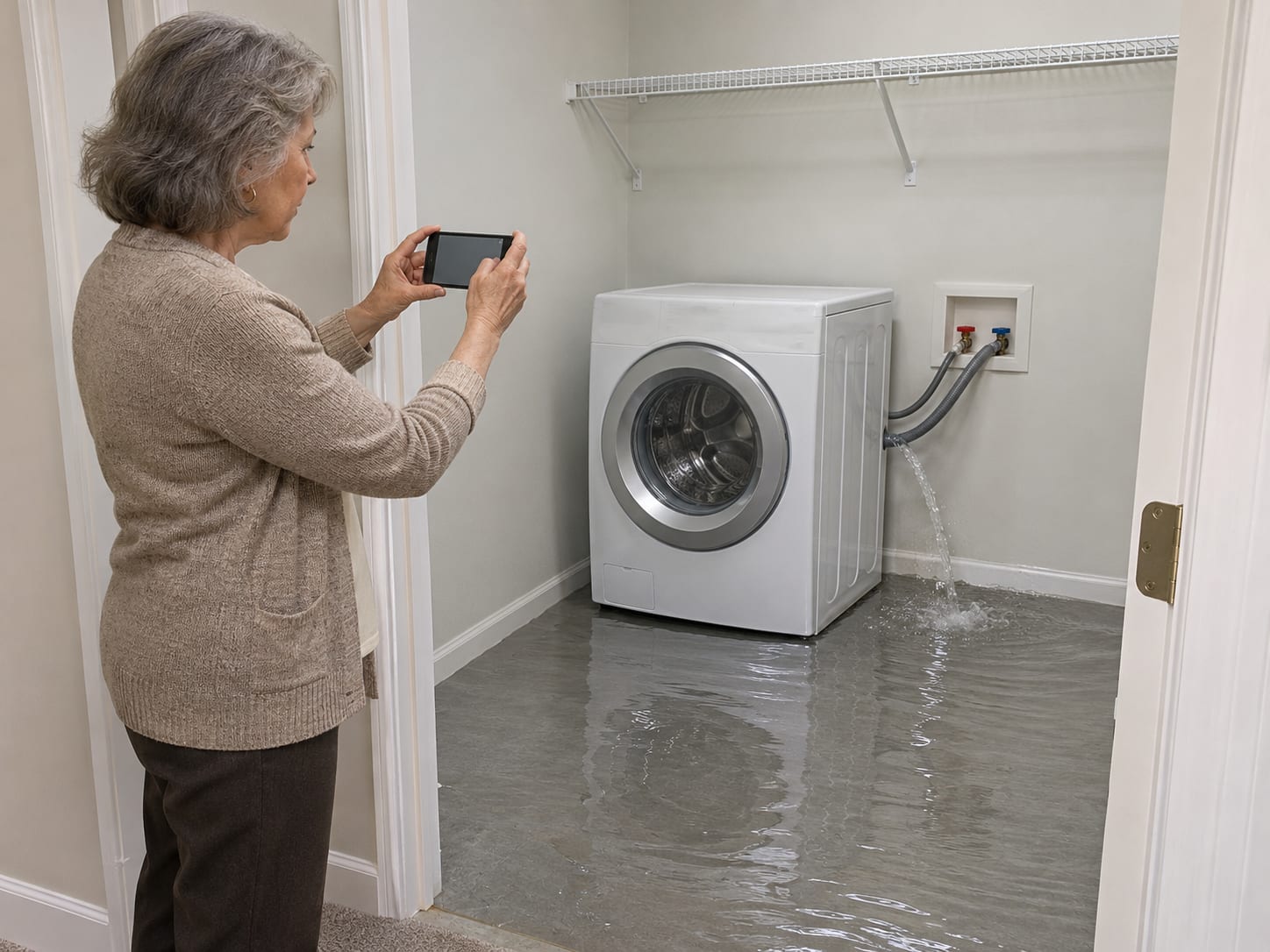
By the next day, give the insurer your policy number, the date and time of the loss, the suspected cause, photographs, temporary-repair receipts and a first inventory. Ask for the claim number, the adjuster's contact information, the deductible and instructions for temporary housing. Keep damaged property available for inspection unless it creates a health or safety hazard.
The First Day After Water Damage
- 1
Stop the source
Shut off the water if you can do it safely.
- 2
Mind the electricity
Turn off power to wet areas only from a dry, safe location, and stay out of areas with electrical hazards.
- 3
Photograph first
Take photos and video of the source, standing water, rooms, ceilings, walls, floors and contents before you move anything.
- 4
Call your insurer or agent
Ask what emergency mitigation your policy requires.
- 5
Arrange extraction or drying
Do this when waiting would let the damage grow.
- 6
Report by the next day
Give the insurer your policy number, the date and time of the loss, the suspected cause, photographs, temporary-repair receipts and a first inventory.
- 7
Wait for the adjuster
Permanent repairs should wait until the adjuster has reviewed the damage.
How Documentation Affects the Claim
Your claim is built from records, and the adjuster reads them before anything else. NJDOBI's guidance asks you to document the source, the affected rooms and materials and your contents, then make a written list of damaged property with purchase dates, purchase prices and comparable replacement costs where you have them.
Records to Have Ready
Photos and video
The source, standing water, rooms, ceilings, walls, floors and contents, taken before cleanup and before you move anything.
A written inventory
Damaged property with purchase dates, purchase prices and comparable replacement costs where you have them.
Receipts and invoices
Purchase information, temporary-repair receipts, and hotel, meal and storage receipts if the home is unsafe to occupy.
Mitigation records
Moisture readings, drying logs and written scopes of work show what was wet, when, and what was done.
How do you prove water damage?
Show the source, the timing and the spread. Photograph and video conditions before cleanup, keep damaged items where it is safe to do so, build an itemized inventory, and save purchase information, receipts and invoices. Mitigation records carry weight too: moisture readings, drying logs and written scopes of work show what was wet, when, and what was done.
As part of our insurance restoration services, we document the source, affected materials, moisture readings, drying progress, demolition and repairs, and we coordinate with your adjuster. The coverage decision stays with your insurer.
What's the biggest mistake people often make when dealing with an insurance claim?
Delaying notice is the first mistake on the common list, often because the homeowner is unsure the loss is covered. Report it and let the insurer apply the policy.
Other costly mistakes include discarding damaged property before inspection, starting permanent repairs or demolition before the adjuster has reviewed the loss, taking only a few overview photographs and skipping receipts for hotels, equipment and temporary repairs. Treating flood, sewer backup, sump-pump failure and a plumbing leak as the same event causes trouble too, since each is read under different language. A contractor, adjuster or neighbor cannot settle coverage for you; your policy and the insurer's written position do.
Deductibles, Limits, Mold and Additional Living Expenses
Once the water is stopped, the money questions start. Four items on your declarations page do most of the work: the deductible, the limits, any mold limit and additional living expense coverage. A documented loss can still produce a small payment when these interact. Your policy controls each one.
Hover or tap a row to highlight it.
| Item | What the post says |
|---|---|
| Deductible | The portion of a covered property loss you pay before the insurer pays beyond that threshold; a fixed-dollar and a percentage deductible can both appear |
| Limits | Mitigation, emergency services, contents, living expenses and reconstruction can fall under different coverages or limits |
| Mold limit | Standard policies typically exclude mold, fungi and bacteria unless the mold results from a covered peril such as a burst pipe; a sublimit or endorsement may restrict it further |
| Additional living expenses | Coverage may apply when a covered loss makes the home unlivable; keep every receipt |
How much does insurance usually pay for water damage?
There is no universal payment amount. Settlement depends on the covered damage, the deductible, policy limits, whether payment is based on replacement cost or actual cash value, depreciation, additional living expense coverage and any sublimits. A neighbor's settlement is not a reliable comparison.
NAIC describes a deductible as the portion of a covered property loss you pay before the insurer pays beyond that threshold. If the covered damage is below or close to it, the claim may produce little or no payment even though the loss is documented. Some policies use a fixed-dollar deductible and a percentage deductible for particular perils, and the declarations page shows which applies. Mitigation, emergency services, contents, living expenses and reconstruction can fall under different coverages or limits, so ask the insurer how each piece of the loss is treated.
Will my homeowners insurance go up if I file a water damage claim?
It depends on the insurer, its underwriting rules, your claim history, the loss type and other rating factors. Report the loss promptly, and ask your insurer how a claim may affect renewal or future underwriting.
Mold has its own rules. Standard homeowners policies typically exclude mold, fungi and bacteria unless the mold results from a covered peril such as a burst pipe, and a sublimit, endorsement or long-term-moisture exclusion may restrict it further. Look for the limit on your declarations page and in any mold endorsement; our post on homeowners insurance and mold in New Jersey goes through those questions. If a covered loss makes the home unsafe to occupy, keep every hotel, meal and storage receipt and submit them for review under the policy.
New Jersey Flood and Sewer-Backup Coverage Details
Basement water is where two policies, not one, are often in play. Flood coverage generally comes through the National Flood Insurance Program (NFIP) or a private flood policy, and your homeowners policy and any flood policy have to be read separately.
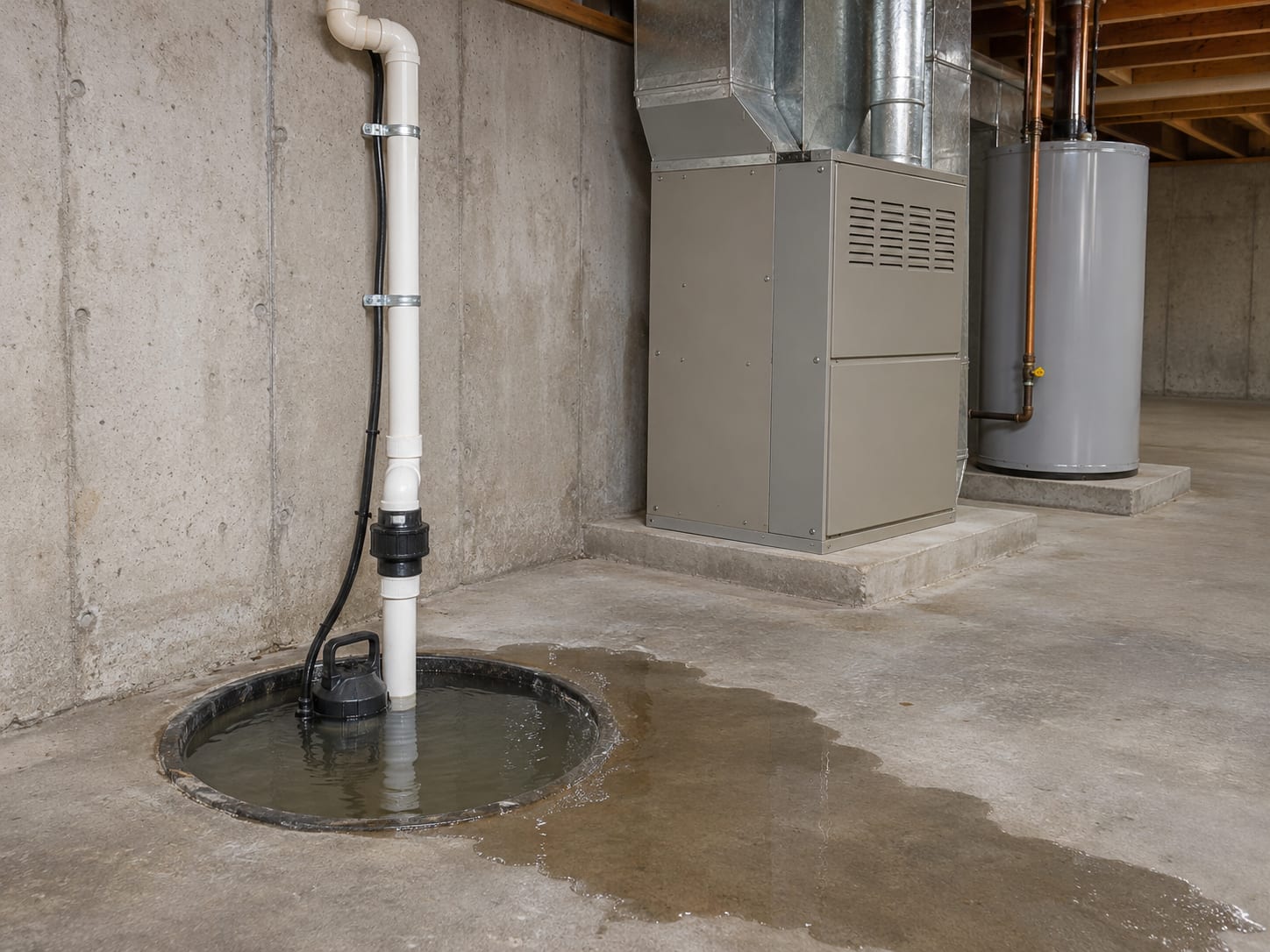
For NFIP purposes, a basement is an area with a floor below ground level on all sides, and FEMA's basement fact sheet says coverage there is limited. It names covered building items such as furnaces, water heaters, sump pumps, electrical components, fuel tanks and certain cleanup expenses, with optional contents coverage for specified items such as washers, dryers, freezers and portable air conditioners. Finished-basement improvements such as wallpaper and carpeting, along with furniture and many finished contents, generally fall outside it.
Hover or tap a row to highlight it.
| Item | How the post describes it |
|---|---|
| Furnaces, water heaters, sump pumps, electrical components, fuel tanks and certain cleanup expenses | Named as covered building items, with basement coverage described as limited |
| Washers, dryers, freezers and portable air conditioners | Optional contents coverage for specified items |
| Wallpaper, carpeting, furniture and many finished contents | Generally fall outside NFIP basement coverage |
Sewer backup sits in a different category. NJDOBI's consumer guide says limited coverage may be available by endorsement, usually with a $5,000 limit in that guide, and NAIC describes water-backup-of-sewer coverage as an optional homeowners coverage for sewer or drain backup. An NFIP policy does not automatically fill that gap. A sewer backup that is not caused by a general condition of flooding is treated differently, since FEMA's guidance requires general surface flooding as the proximate cause. Check your declarations and endorsements for the sewer-backup wording, sublimits, deductibles and whether cleanup is included. Your policy controls.
If the water followed a declared emergency, our post on flood insurance claims after a New Jersey state of emergency covers that claim. For the physical work, our basement flood cleanup and sewage cleanup services handle the water and contamination.
When the Claim Is Denied or the Estimate Is Too Low
A denial or a low estimate is a reason to get the insurer's position in writing, not the end of the claim. Ask the insurer to name the policy language it relied on. Then compare the adjuster's estimate with your inventory room by room, covering materials, contents, depreciation, deductibles, sublimits and omitted work. Talk through any gaps with the adjuster and your contractor before you accept it.
Why would insurance deny a water damage claim?
Possible reasons include an excluded cause such as flood, gradual seepage, neglect or wear and tear; a limit or endorsement restriction; damage that exceeds policy limits; unmet policy conditions; or difficulty establishing the cause and timing of the loss. The insurer should identify the basis for a denial in writing.
If the issue stays open, contact the NJDOBI Consumer Inquiry and Response Center. Include the insurer or agent, your policy and claim numbers, correspondence and supporting records. NJDOBI assigns a tracking number and may require the insurer or producer to respond. Its consumer page lists 609-292-7272 and 1-800-446-7467. For a legal question about a dispute, ask an attorney.
Restoring the Property and Preventing the Next Loss
Drying and repair can move forward alongside the claim as long as the records keep up. We handle emergency stabilization, documentation and adjuster coordination, and our post-water-damage reconstruction rebuilds what the water took. Keep repair invoices and mitigation records, because they may matter again when the property is sold. If floodwater or suspected mold reached the HVAC system, CDC says an experienced professional should check and clean it before use. For the next loss, read your declarations page now for flood and sewer-backup wording, since those are the two causes a standard policy commonly leaves out.
Frequently Asked Questions About Homeowners Insurance and Water Damage in New Jersey
What counts as water damage?
Physical damage to the building or contents from an identifiable water event, including wet drywall, flooring, insulation, ceilings, framing, cabinets, personal property and structural components. Coverage depends on the source of the water and your policy's terms.
Can I remove wet drywall before the adjuster arrives?
Photograph and inventory it first, and keep damaged property available for inspection unless health or safety requires removal. Permanent repairs should wait until the adjuster has reviewed the damage.
Who pays for a hotel if the home is unsafe?
When a covered loss makes the home unlivable, additional living expense coverage may apply under your policy. Keep every receipt and ask your insurer for instructions on temporary housing.
Can a restoration company document the loss without deciding coverage?
Yes. We record the source, moisture readings, drying progress and the work performed, and your insurer decides coverage under your policy.
Water Damage and Homeowners Insurance Quick Check
1. What does your policy answer by, according to the post?
2. Which page lists your coverages, limits and deductible?
3. Sewer backup and sump-pump overflow are commonly excluded unless what applies?
4. Permanent repairs should wait until when?
5. If a coverage issue stays open after a denial, who can you contact?
Pick an answer to begin.
The Bottom Line
Water damage coverage in New Jersey comes down to the cause of the loss, the endorsements on your policy and the facts you can document. Sudden plumbing and roof-leak damage is typically covered, flood, groundwater, rain runoff and snowmelt are typically not, and sewer backup and sump-pump overflow generally need an endorsement. Ask your insurer which cause of loss applies, what the deductible and limits mean for this loss and what the coverage position is in writing. Your policy controls each answer.
Photographs, receipts, moisture readings and a written inventory give you something solid to set against the estimate, and a prompt call keeps a small problem from growing. If a result looks wrong, you have a clear path: ask for the denial in writing, then contact NJDOBI.
If you have water in your New Jersey home, call ExecPro Restoration & Cleaning at (888) 300-3772 or reach us through our contact page. We handle water extraction, structural drying, documentation and adjuster coordination, so you have the records in hand while your insurer makes the coverage decision.
Water Damage Insurance Terms
Tap a term to see what it means.
Declarations page. The page of your policy that lists your coverages, limits and deductible.
Related Articles
Homeowners Insurance and Mold in NJ: What Decides a Claim
Does homeowners insurance cover mold in New Jersey? See what decides a claim, how flood coverage differs, and what to document and ask your adjuster.
Sewage Backup Cleanup in NJ: First Steps and What to Discard
Sewage backing up in a New Jersey home? Learn the first-hour safety steps, who handles the sewer line, what usually goes and how insurance treats sewer backup.
Flood Damage Cleanup in Robbinsville, NJ: What to Discard, Dry and Document After Creek Water
Soaked carpet, swollen drywall and wet insulation from creek water usually come out. See what flood damage cleanup in Robbinsville, NJ discards and dries.