One House, Several Below-Grade Zones: Crawl Space Mold Remediation in Princeton Junction, NJ
Cal HewittPublished
- crawl space mold remediation
- crawl space mold
- mold remediation
- new jersey
- princeton junction
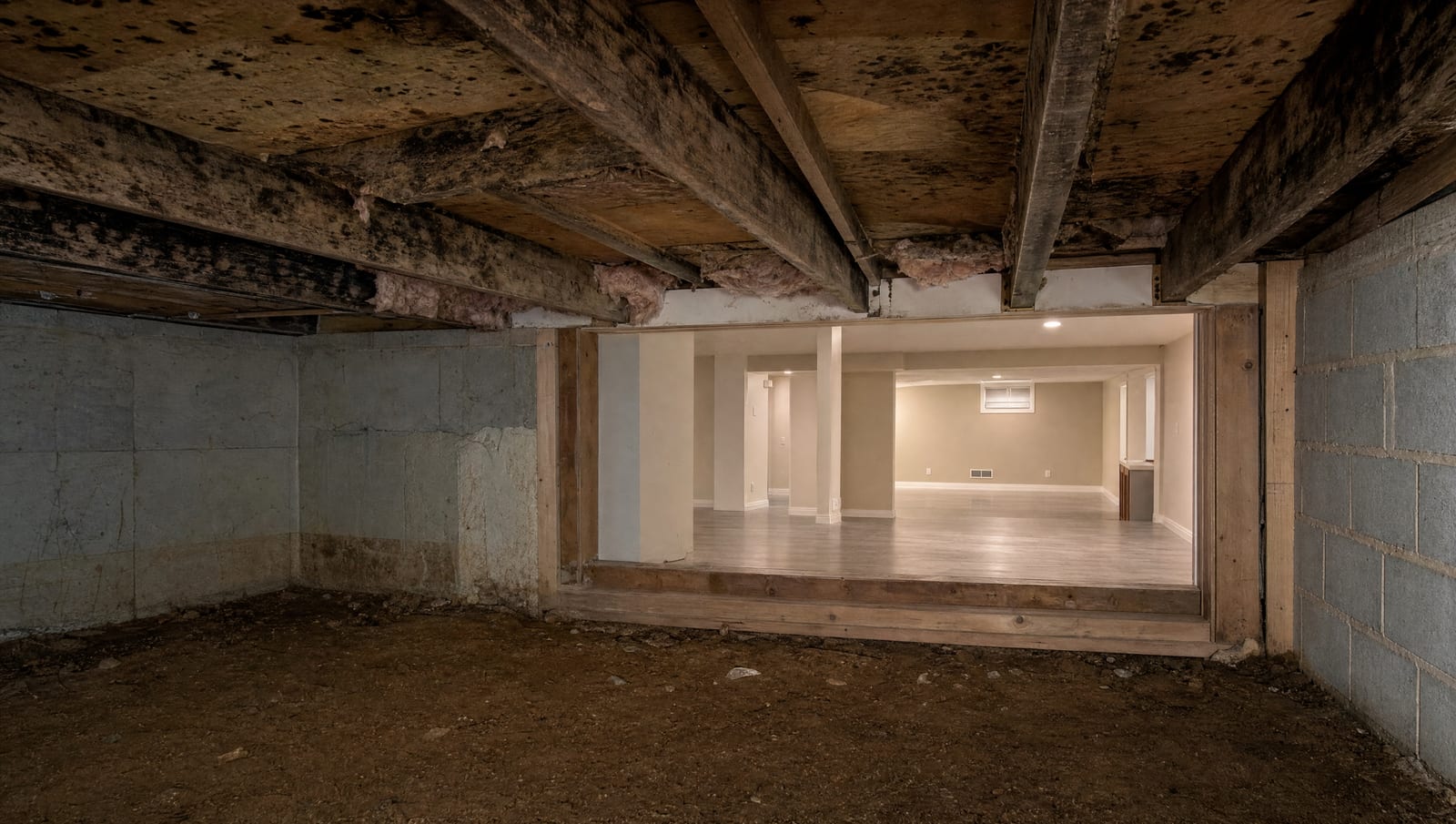
The home inspection flagged mold, and the owner was confused by the report. Her main Princeton Junction basement was finished, dry, and comfortable, with a working sump and clean air. Yet the inspector kept pointing to a musty smell near the back of the house, in the family room that had been added years after the original build. Under that addition sat a low, dirt-floored crawl space she had never once entered. The finished basement was fine. The problem lived in a separate below-grade zone a few feet away, one with its own floor, its own access, and its own moisture behavior.
This is the situation many older and expanded homes in Princeton Junction share. The house has grown over time, and each addition, porch, sunroom, or utility bump-out often sits over its own shallow crawl space rather than an extension of the original basement. Those zones do not behave the same way. A full basement and a shallow crawl space can sit under one roof and tell two completely different moisture stories. Before anyone removes material or plans a repair, the first job is to map the zones and treat each one on its own terms.
Why One Property Can Have Several Below-Grade Zones
The house you see from the street is often not the house that was first built. Princeton Junction, a community within West Windsor Township, has a housing mix that includes original construction, later subdivisions, and homes that owners expanded room by room. When a family adds a family room, a sunroom, a mudroom, or a garage, the new footprint usually gets its own foundation. Sometimes that means a full basement extension, but very often it means a shallow crawl space, because a crawl space is cheaper and simpler to build under an addition.
The result is a single property with more than one below-grade personality. The main basement may be poured concrete, tall enough to stand in, finished, and served by a sump pump and a dehumidifier. The crawl space under the addition may be short, dirt-floored or slab, vented to the outside, and rarely visited. A porch or utility area can hide a third small void with its own access hatch. Each zone has a different depth, a different floor, a different level of airflow, and a different relationship to the soil and the weather. Treating the whole underside of the house as one space is how moisture problems get missed.
Hover or tap a row to highlight it.
| Factor | Full basement | Shallow crawl space under an addition |
|---|---|---|
| Typical moisture behavior | Often served by a sump and dehumidifier, so liquid water and humidity are actively managed | Frequently unmanaged, with bare-soil vapor, condensation on cool surfaces, and slow drainage entry going unnoticed |
| Access and clearance | Stand-up height, stairs, and lighting make inspection and work straightforward | Low clearance, a small hatch, tight framing, and poor light make access and safe work harder |
| How the scope shifts | Contained finish materials, easier equipment placement, simpler drying | Vapor barrier or encapsulation, careful material removal in a confined space, and site-specific drying and monitoring |
Identifying the Source in Each Zone
Mold is the signal, not the cause. The EPA's guidance on mold and moisture is consistent that controlling moisture is the only reliable way to control mold, so the work starts by finding where the water comes from in each zone. In a crawl space, the source is usually one of a few pathways, and a full basement may have a different one entirely.
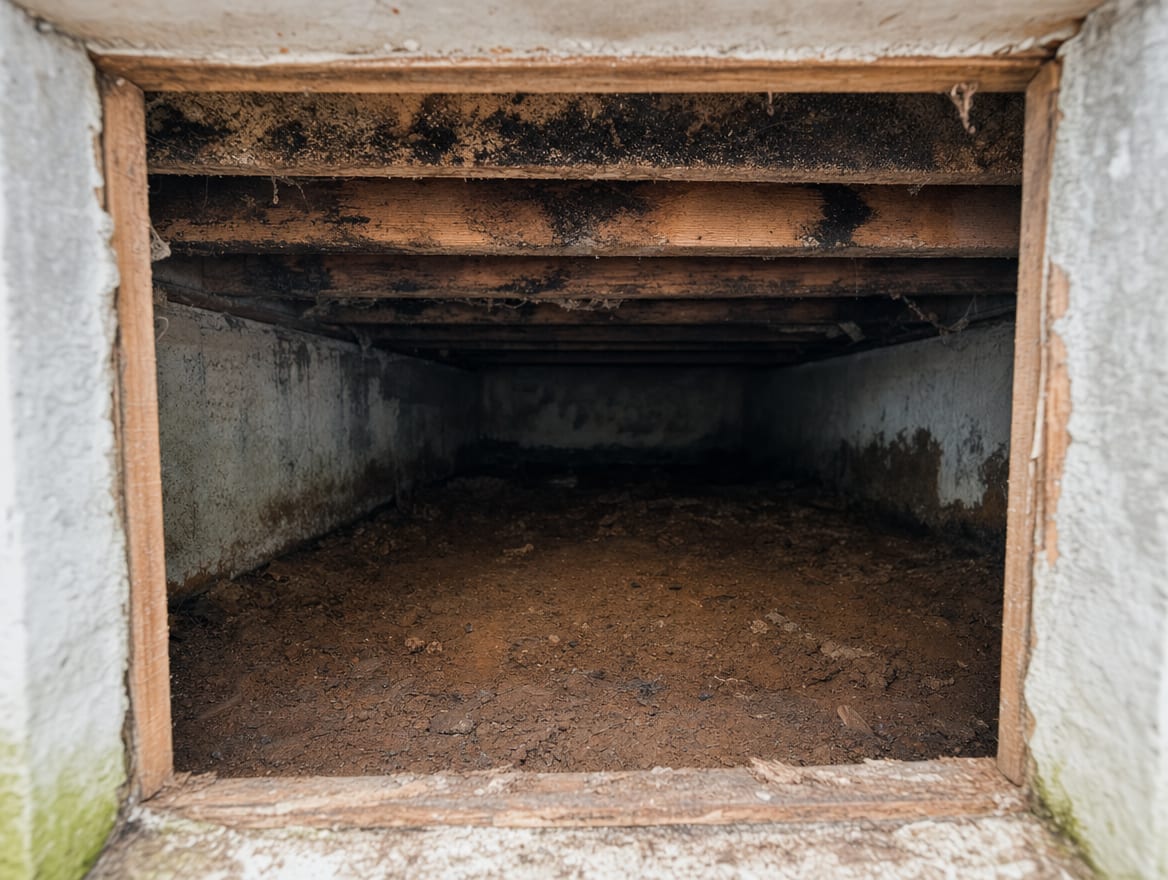
Bare-earth soil vapor is common under additions with a dirt floor. Moisture rises out of the ground as vapor, and without a barrier it feeds the framing above. Humid-air condensation is another driver, when warm outdoor or indoor air meets cool crawl-space surfaces and leaves them damp. Plumbing and drainage failures put liquid water into the space, from a supply line, a drain, an HVAC condensate line, or poor grading that pushes water toward the foundation. Storm or flood water is a separate category with its own safety concerns. Each pathway calls for a different correction, which is why a working basement sump does nothing for a crawl space fed by ground vapor a few feet away.
Crawl-Space Source Signs
Musty odor upstairs
An earthy smell in the rooms above, often stronger in humid weather, pointing to moisture and growth below the floor.
Soil-vapor dampness
A bare-earth crawl space that feels damp or humid, where moisture is rising out of the ground into the framing.
Condensation on cool surfaces
Beads of water or a damp film on pipes, ducts, or foundation walls where warm air meets cooler material.
Plumbing or drainage evidence
Stains, active drips, or standing water near a supply line, drain, condensate line, or a wall where exterior water is entering.
Storm or flood intrusion signs
A high-water line, silt, or debris that indicates outside water reached the space during a rain or flood event.
Sagging or stained insulation
Batt insulation that hangs, darkens, or falls away, a sign that moisture has been active long enough to break it down.
Classifying Safety and Contamination
Before cleanup begins, each zone needs to be classified for safety and for the kind of water involved. The category of water matters because clean water, gray water, and sewage carry very different risks and call for different handling. Water that entered from a storm or a backed-up drain is treated with more caution than condensation from humid air. The source finding drives that call, which is one more reason the source has to be identified first.
A shallow crawl space adds hazards a full basement does not. Low clearance means a technician may have to work on their back or knees in a confined area. There can be electrical wiring, pest activity, sharp framing, poor lighting, and contaminated insulation to contend with. Air can also move from the crawl space up into the living rooms above through gaps and penetrations, which is why containment matters even in a space no one uses. Classifying these conditions honestly, zone by zone, is what keeps the work safe and keeps a small problem from being spread through the rest of the house.
Documenting Conditions and Checking Local Constraints
With the source and safety understood, the conditions get documented before anything is disturbed. That means photos of each zone, moisture readings on the framing and materials, notes on the water pathway, and a clear record of what is affected and what is not. This documentation protects the homeowner later, whether the question is scope, cost, or an insurance claim.
Location-specific checks belong in this step too. Flood exposure in Princeton Junction is not uniform, and it has to be checked parcel by parcel rather than assumed for the whole community. The FEMA Flood Map Service Center and the NJDEP flood risk tools should be reviewed by exact address, because one street can sit differently from the next. Because Princeton Junction is part of West Windsor Township, permit and code questions route through the township. Any question about permits, approvals, or work near streams or wetlands should be confirmed directly with the West Windsor Township Community Development and Construction offices before work begins. Not every property carries the same flood exposure or the same approval requirement, so this is an address-level check, not a rule of thumb.
Completing Mitigation or Remediation
Once the plan is clear, the physical work follows a defined order. The affected zone is contained so spores and dust do not travel into the rest of the home during the work. Contaminated porous materials that cannot be salvaged, such as compromised insulation, are removed rather than cleaned in place, because the EPA notes that porous materials with significant growth generally need to be removed. Salvageable structural surfaces like joists and subfloor are cleaned using appropriate methods, and the air is filtered with HEPA equipment to capture what the work releases.
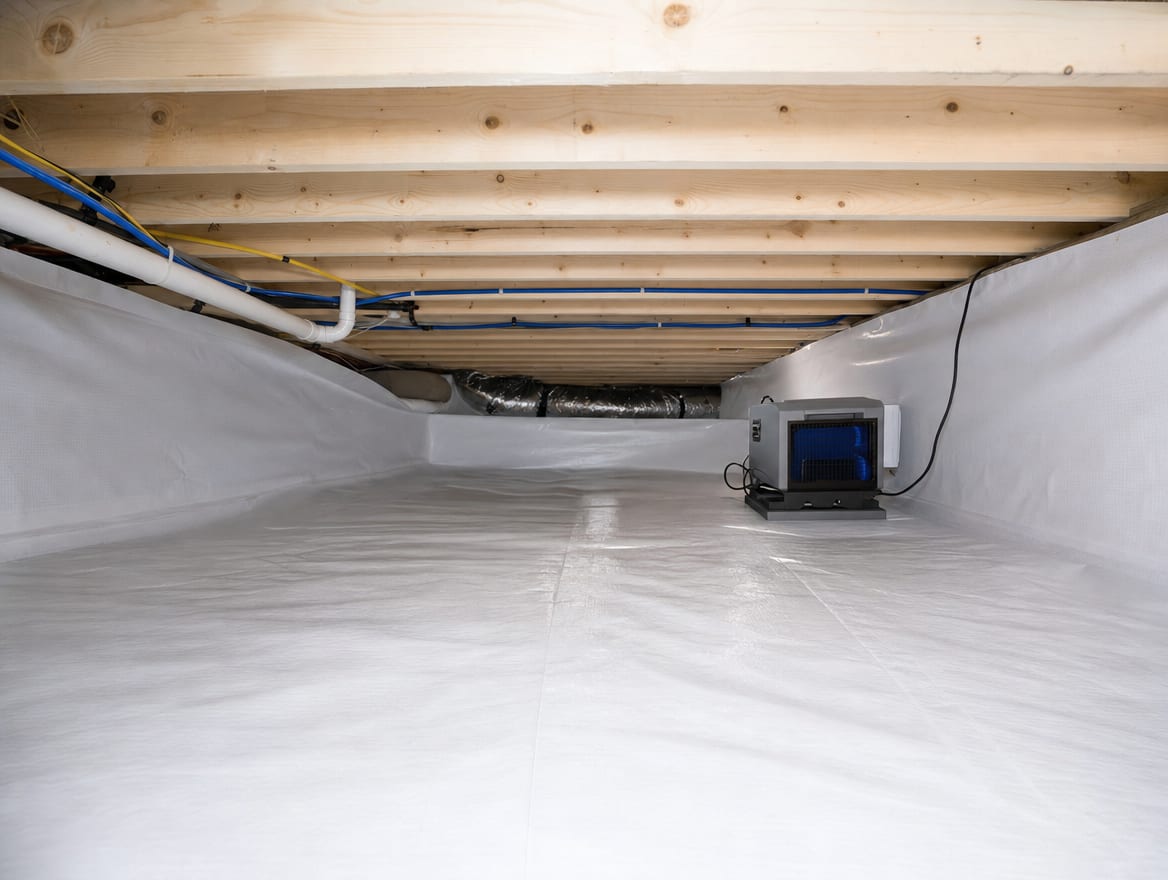
Then the space is dried. Structural drying uses professional equipment to pull moisture out of wood and building materials at depth, not just off the visible surface, and drying is confirmed by measurement rather than by look or feel. Alongside the drying, the moisture source gets corrected, which is the step that separates a lasting fix from a temporary cleanup. In a crawl space that often means installing a vapor barrier over bare soil, and where it fits the conditions, encapsulation and dehumidification to keep the space dry going forward. A basement fed by a different pathway may need a drainage or plumbing correction instead. The correction is matched to the source that was found in that specific zone.
The Crawl-Space Decision Sequence
- 1
Identify the source
Trace the moisture to a pathway in each zone, whether soil vapor, condensation, plumbing or drainage failure, or storm and flood water.
- 2
Classify safety and contamination
Determine the water category and note access, clearance, electrical, pest, and insulation hazards before entering.
- 3
Document and check parcel and municipal constraints
Photograph, take moisture readings, and check FEMA and NJDEP by exact address, confirming permits with West Windsor Township.
- 4
Contain, remove contaminated material, and HEPA clean
Seal the zone, remove unsalvageable porous material, clean salvageable surfaces, and filter the air.
- 5
Complete structural drying
Pull moisture from framing and materials at depth and confirm dryness by measurement.
- 6
Correct the source and add a vapor barrier or encapsulation
Fix the water pathway, and where appropriate install a vapor barrier, encapsulation, and dehumidification.
- 7
Verify dryness or clearance
Confirm the space meets completion criteria before rebuilding.
- 8
Repair
Rebuild and replace materials once the zone is verified dry.
Verifying Dryness or Clearance, Then Repairing
Repair does not start until the zone is verified. Verification can mean confirming that materials have reached a dry standard by measurement, and in some cases it means independent post-remediation verification that checks the work against defined completion criteria. Testing is not automatic. It should answer a specific question and change a decision, not be run for its own sake. When a job crosses more than one zone, each zone is verified on its own, because the crawl space can still be drying after the basement is already clear.
Only after a zone passes does rebuilding begin. That may include new insulation, a finished vapor barrier or encapsulation left in place, and any framing or finish repair the moisture caused. Doing this in order, zone by zone, is what keeps a homeowner from closing up a wall or laying new flooring over material that is still wet. It also gives a clean record of what was found, corrected, removed, dried, verified, and rebuilt in each part of the house.
Frequently Asked Questions
Why is my basement dry but the crawl space under my addition is not?
Because they are separate zones with separate conditions. A full basement is often served by a sump and a dehumidifier that manage water and humidity, while a shallow crawl space under an addition may have a bare-earth floor, little airflow, and no active moisture control. The two sit under one roof but face different water pathways, so one can stay dry while the other stays damp.
Does a crawl space always need encapsulation?
No. Encapsulation and a vapor barrier are common and useful where the source is soil vapor or persistent humidity, but the right correction depends on what is actually driving the moisture in that space. A crawl space with a plumbing or drainage failure needs that specific repair first. The correction is matched to the source found on site, not applied as a default.
Do I need a permit for crawl-space mold work in Princeton Junction?
It depends on the work and the property. Princeton Junction is part of West Windsor Township, so permit and code questions route through the township. Confirm whether a permit or approval is required, especially near streams or wetlands, directly with the West Windsor Township Community Development and Construction offices before work begins.
Is testing needed before removing the mold?
Not always. Testing should answer a defined question and change a decision. In many cases the source and the affected materials are clear enough to document and remediate without upfront sampling. Verification testing after the work is a separate question, and it may be justified when a defined standard needs to be confirmed.
Will my insurance cover the crawl-space work?
That cannot be promised. Coverage depends on your policy language, the cause of the loss, exclusions, notice, and documentation, and flood damage is handled separately from standard homeowners coverage. Only your carrier can decide. Keeping clear records of the source, the conditions, and the work done is what supports any claim you choose to file.
How do I keep it from coming back?
Recurrence is controlled by keeping each zone dry. That means correcting the water source, managing soil vapor with a barrier or encapsulation where it fits, keeping humidity down, and checking the space after heavy storms or freeze events. Surface cleaning without a moisture correction tends to let growth return in the same season.
Get a Clear Map of Every Zone Under Your Home
If a home inspection or a musty smell has pointed below your floors, the useful first step is to map every below-grade zone and treat each one on its own terms. ExecPro Restoration & Cleaning serves Princeton Junction, West Windsor, and the surrounding communities, and handles the full sequence from crawl space mold remediation through structural drying, source correction, and verified rebuild. You can also start with the Princeton Junction mold remediation team to have your specific property assessed. To get from uncertainty to a documented plan, contact ExecPro Restoration & Cleaning through our contact page or call (888) 300-3772.
Crawl-Space Mold Terms
Tap a term to see what it means.
Crawl space. A shallow, low-clearance area below part of a house, often under an addition or utility area, that you cannot stand up in.
Serving Princeton Junction
ExecPro Restoration & Cleaning provides mold remediation services in Princeton Junction, NJ, from inspection and testing through removal, drying, and post-remediation verification. Call (888) 300-3772 for 24/7 emergency response.
Related Articles
The Deal, NJ Crawl-Space Investigation: Planning Mold Remediation Around Coastal Moisture and the Summer Building Moratorium
A Deal, NJ crawl-space mold job is a sequence of local calls: trace the moisture source, check flood risk by address, and time work around the summer moratorium.
One Home, Many Air Zones: Designing Indoor Air Testing for Princeton Junction, NJ Properties
Indoor air is not one thing across a Princeton Junction, NJ home. Learn how to design air-quality testing per zone, per floor, and against an outdoor baseline.
Property Management Mold Services in Princeton Junction, NJ: A Repeatable Protocol for Managed Homes and Multifamily Units
How Princeton Junction property managers run mold response across managed units: pre-authorized access, a leak escalation path, and a consistent closeout file.