The Deal, NJ Crawl-Space Investigation: Planning Mold Remediation Around Coastal Moisture and the Summer Building Moratorium
Cal HewittPublished
- crawl space mold remediation
- crawl space mold
- mold remediation
- coastal
- new jersey
- deal
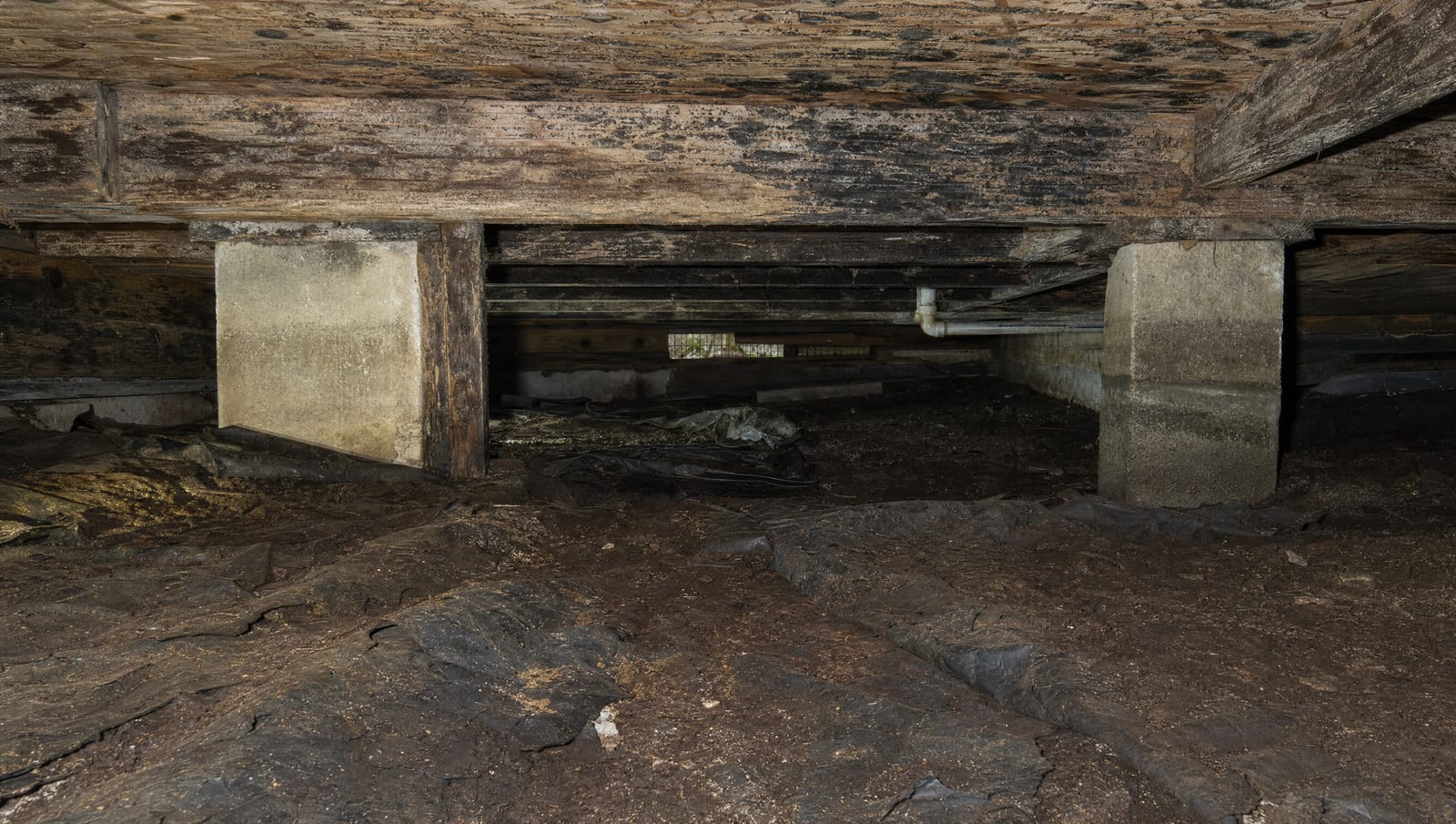
The odor reached the living room first. A faint musty note that came and went, stronger on warm afternoons, gone again by evening. The floor felt fine. Nothing looked wrong at eye level. But the smell kept pulling attention downward, toward the low space under the addition where the framing sits close to bare soil. When someone finally opened the crawl-space hatch in that Deal home and pointed a flashlight into the dark, the wood along one side looked stained, and the air down there carried the same note that had drifted up into the house. That is where the investigation starts. Not with a product, and not with a price, but with a single question that decides everything else: what is putting moisture into this space, and where is it coming from.
A crawl space is easy to ignore because almost no one goes into it. That is exactly why a small problem there can run for a long time before anyone notices. In Deal, a coastal borough where many homes are large, altered over the years, and sometimes occupied only part of the year, the crawl space can hold a moisture story that the main floor never tells. This post treats a Deal crawl-space mold job the way a careful owner should: as a sequence of local decisions. Find the moisture pathway first. Build a property file. Check flood risk by the exact address. Watch the house when no one is home. Time the work around the borough's summer construction rules. Then prove the space is dry before anyone closes it back up.
Start With the Moisture Pathway, Not the Stain
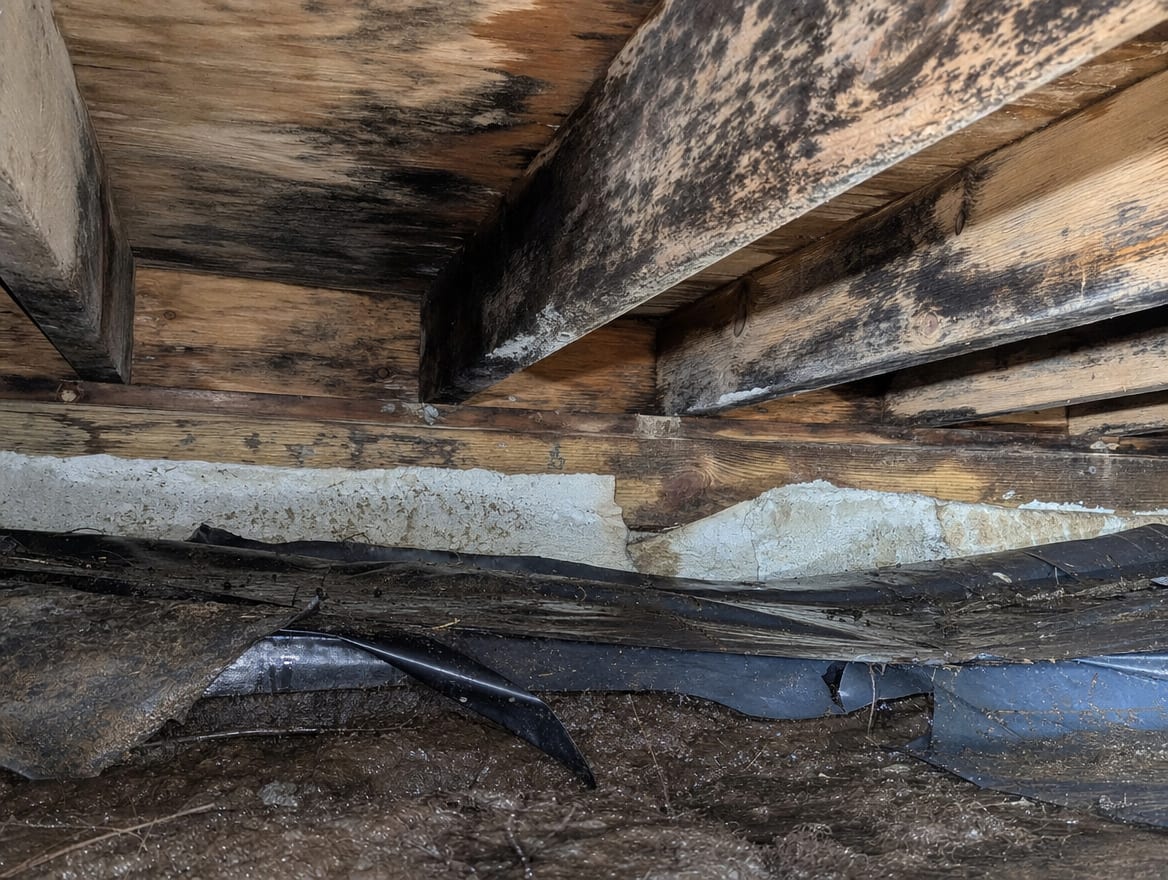
The most common mistake is treating the dark growth as the problem. The growth is a signal. Something kept the wood or the air wet long enough for mold to take hold, and until you name that source, any cleanup is temporary. Below-floor moisture in a coastal setting usually traces back to one of four pathways, and each one calls for a different scope of work.
Soil vapor is the quiet one. Bare earth under a crawl space gives off water vapor, and that moisture rises into the air and settles on framing, ducts, and pipes. Humid-air condensation is the seasonal one. Warm, moisture-heavy outdoor air moves into a cooler crawl space and condenses on surfaces the way a cold glass sweats in summer. Adding more vents does not automatically fix this, because outside air can carry moisture in under the wrong conditions. Plumbing or drainage failure is the direct one. A slow supply-line drip, a failed condensate line, poor exterior grading, or a downspout dumping water against the foundation can wet materials from a fixed point. Storm or flood water is the bulk one. Heavy rain, a high water table, or coastal flooding can push liquid water into the space and soak everything it reaches.
Naming the pathway matters because the fix changes with it. A soil-vapor problem may point toward a ground vapor barrier and better moisture control. A condensation problem may point toward the crawl space's ventilation or conditioning strategy. A plumbing failure needs the leak repaired before anything else. Flood water needs extraction and a hard look at how the water got in. Confusing one for another is how a crawl space gets a coating sprayed over an active leak and grows the same mold back within a season.
Hover or tap a row to highlight it.
| Moisture source | How it shows up | What scope it calls for |
|---|---|---|
| Soil vapor from bare earth | Musty air and surface moisture with no visible leak, worse in humid stretches | Moisture control at the ground, often a vapor barrier or encapsulation after drying |
| Humid-air condensation | Damp framing, ducts, and pipes that sweat, tied to warm outdoor air | A ventilation or conditioning correction, not just more vents |
| Plumbing or drainage failure | Wet materials near a fixed point, a supply drip, condensate line, or bad grading | Repair the leak or drainage defect first, then remove and dry |
| Storm or flood water | Standing water or soaked materials after heavy rain or coastal flooding | Extraction and drying first, then find how bulk water entered |
The Deal Property File
Before a technician ever measures moisture, the owner can do a lot of the diagnostic work by gathering the property's history. A crawl space cannot talk, but the paperwork and the timeline around it often can. Think of this as a property file you assemble once and hand over, so the assessment starts from facts instead of guesses.
Pull together how the house has been used, when storms hit, and what has gone wrong with water before. If the home sits empty for stretches, note those dates. If a dehumidifier or sump pump has ever failed or lost power, that is a lead. Old additions and porch conversions matter too, because they often created the shallow, poorly ventilated pockets where crawl-space moisture hides. Photos of what you see, any past inspection reports, and insurance correspondence round it out. The more complete the file, the faster the source gets found and the less the assessment relies on assumption.
The Deal Crawl-Space Property File
Occupancy history
Note the months the home sits empty or lightly used, since a quiet leak runs longer when no one is there to catch it.
Storm and flood dates
Record heavy rain events and coastal storms, especially any that lined up with a new odor or damp feeling.
Plumbing events
List past leaks, pipe repairs, condensate-line trouble, or water heater issues near or above the crawl space.
Dehumidifier and sump history
Track any dehumidifier or sump pump that failed, filled, or lost power, with rough dates if you have them.
Prior additions and renovations
Flag additions, porch conversions, and utility areas that may sit over shallow crawl space with weak airflow.
Flood-zone lookup
Check the property's flood status by exact address rather than assuming the whole neighborhood shares one zone.
Photos, reports, and insurance
Gather crawl-space photos, prior inspection reports, and any insurance correspondence tied to water.
Check Flood Risk by the Address, Not the Neighborhood
It is tempting to assume every home near the water in Deal carries the same flood exposure. That assumption can send a scope in the wrong direction. Flood risk is parcel by parcel. Two homes on the same street can sit in different flood situations depending on grade, elevation, and how the land drains.
The way to know is to check the exact property address against the official sources. FEMA's Map Service Center holds the current National Flood Insurance Program hazard information for a specific parcel. New Jersey's environmental agency, the NJDEP, publishes climate-adjusted flood tools that show risk beyond today's FEMA maps. Coastal New Jersey averages roughly 40 to 45 inches of rain a year, and the state's recent rainfall has run above its long-term average, so moisture resilience is a fair concern for the region. Even so, regional data does not prove a single crawl space has flooded. Only an address-level check and a look at the property's own history can do that. Flood-zone status is also not the same as an insurance decision, and a flood policy is separate from a standard homeowners policy, so the map tells you about risk, not coverage.
Watching a House That Is Often Empty
A person living in a home is a monitoring system. Someone empties the full dehumidifier tank, hears the sump alarm, and notices when the air downstairs turns musty. In a Deal home used part of the year, that system is switched off for months, and a small crawl-space problem gets time it should never have. This is not a claim about every Deal owner, it is simply a smart way to protect any property that sits unattended.
Remote monitoring closes that gap at low cost. A humidity sensor in the crawl space can flag when moisture climbs. A leak sensor near the water heater, supply lines, or the sump pit can catch a drip early. A sump pump with an alarm or a backup can warn you when the pit rises or the power fails. Pair those with a simple habit: have someone check the space and its equipment after major coastal storms, after long humid stretches, before reopening the home for the season, and after any winter freeze that could crack a pipe. The goal is not gadgets for their own sake. It is to shorten the time a problem runs unseen, because time is what turns a minor leak into a wall cavity full of mold.
The Construction-Moratorium Checkpoint
Deal has a summer construction moratorium. The borough's published schedule runs from June 24 through the Wednesday after Labor Day, and it says construction must stop during that window. For a crawl-space project, this is a real scheduling checkpoint, and it needs care rather than panic.
Draw a line between two kinds of activity. On one side sits assessment and emergency stabilization: inspecting the space, mapping moisture, finding the source, and taking urgent action to stop active water or limit spreading contamination. On the other side sits regulated construction: demolition, alteration, structural repair, permitted trade work, and build-back. The moratorium page addresses construction, but it does not spell out how it treats every inspection, cleaning action, or emergency response. That is the whole point of the checkpoint. Do not assume the work is blocked, and do not assume it is allowed. Confirm the specific scope with the Deal Building Department, and ask directly whether your proposed activity is restricted and whether an emergency authorization or exception applies. Permits may also come into play when the project includes structural repair, plumbing, electrical, mechanical, or floodplain work, so the same office is the right place to confirm what your scope requires. Planning around this early keeps a summer discovery from turning into a scheduling surprise.
What a Complete Crawl-Space Scope Includes
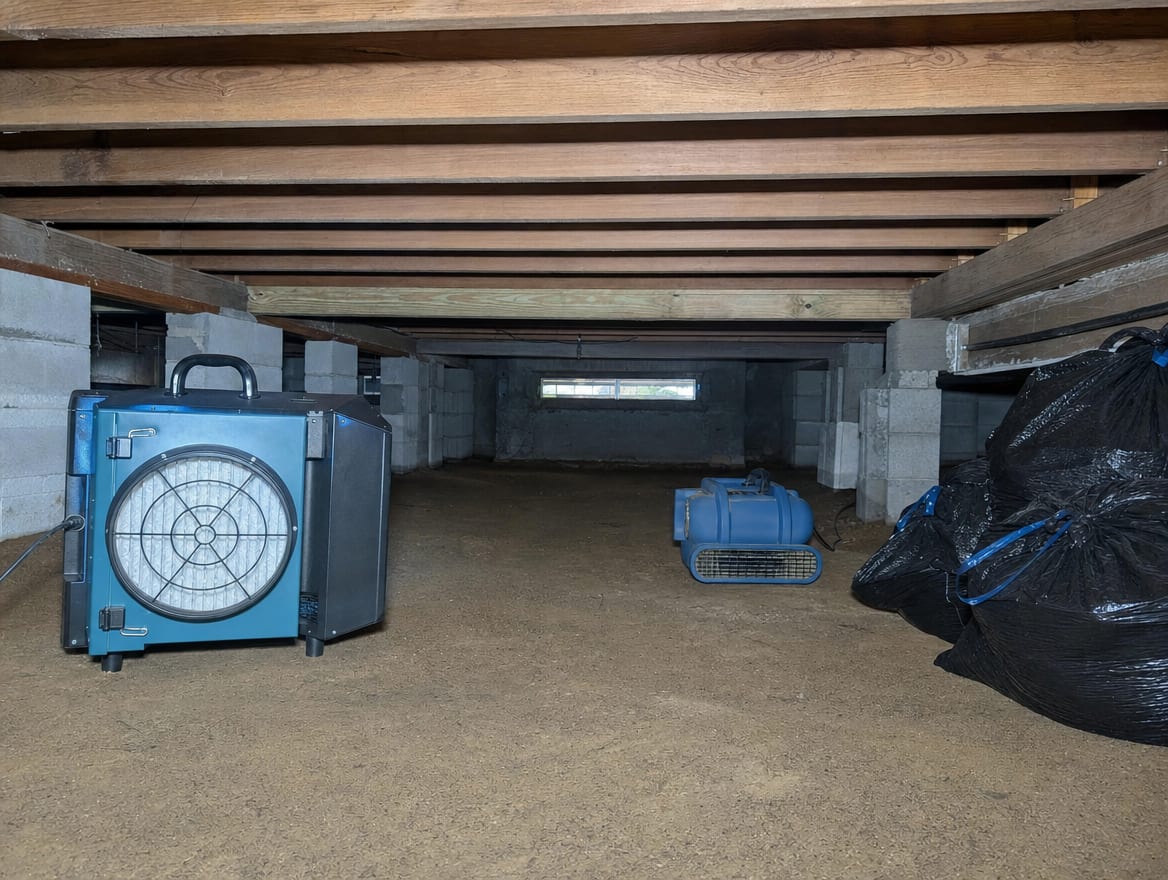
Once the source is named and the scheduling is clear, the actual remediation follows a condition-based sequence rather than a fixed package. A defensible scope contains the work area so spores do not spread through the home. It removes contaminated porous materials that cannot be cleaned, such as soaked insulation and compromised subfloor. It uses HEPA air filtration to control dust and cross-contamination in a tight space. It dries the structure with the right equipment so the wood and framing lose moisture at depth, not just on the surface. Crucially, it corrects the moisture source, because mold work without moisture correction is incomplete.
Where the diagnosis supports it, the scope may add a ground vapor barrier or crawl-space encapsulation to control soil moisture, along with air sealing, drainage, insulation correction, or a crawl-space dehumidifier. These are not interchangeable and should never be prescribed sight unseen. Encapsulation over an active leak or standing water is a classic way to trap the problem instead of solving it. The right combination comes out of the inspection, matched to the pathway that caused the trouble in the first place. If you want to understand what a full below-floor scope covers before you compare estimates, our overview of crawl-space mold cleanup and moisture control walks through the pieces, and pulling residual moisture out of the framing explains why drying to depth matters more than a dry-looking surface.
Crawl-Space Remediation: Investigate to Verified Dry
- 1
Assess and find the source
Inspect access, clearance, soil or slab, framing, drainage, and utilities, then take moisture readings to identify the water source before planning anything.
- 2
Classify safety and contamination
Judge how far the growth has spread, what materials are involved, and what worker and occupant safety the low, tight space demands.
- 3
Document and check permits or the moratorium
Record findings with photos and readings, then confirm scope with the Deal Building Department for permits and the summer construction window.
- 4
Contain, remove, and HEPA filter
Seal the work area, remove contaminated porous materials that cannot be cleaned, and run HEPA filtration to control dust and spore spread.
- 5
Dry the structure
Use professional drying equipment to pull moisture from wood and framing at depth, not just off the visible surface.
- 6
Correct the source and add moisture control
Repair the leak or drainage defect and, where the diagnosis supports it, add a vapor barrier or encapsulation and matching moisture control.
- 7
Verify
Confirm the moisture condition is corrected and materials are dry, with independent post-remediation verification when the project calls for it.
Proof That the Work Actually Held
The visible result in a crawl space is easy to fake and hard to see, since almost no one climbs back in to check. That is why documentation carries so much weight on this kind of job, especially for a higher-value Deal property where the record can matter later for maintenance, insurance conversations, or a future sale. Proof of completion means the moisture source was corrected, the materials read dry on the meter, and the whole story is captured in photos and readings from before, during, and after the work. It includes any permits the scope required and, when the project justifies it, an independent check.
That independent step is worth understanding. An independent post-remediation verification is a separate confirmation that the space meets the agreed completion criteria before anyone closes it back up. It is not automatic on every job, but on a transaction-driven case, a disputed condition, or a health-sensitive household, it turns "we cleaned it" into a documented result you can stand behind. Schedule it before reconstruction hides the work, not after.
Frequently Asked Questions
Does a Deal crawl space need a vapor barrier or full encapsulation?
Not always. The right measure depends on the soil, the drainage, whether water is entering, the ventilation or conditioning strategy, the access, and the rest of the building envelope. A vapor barrier or encapsulation is a strong tool for soil-vapor moisture once the space is dry, but installing it over an active leak or standing water traps the problem. The decision comes out of the inspection, matched to the moisture pathway that caused the growth.
Will the summer construction moratorium delay my crawl-space work?
It might, depending on the scope, which is why it is a checkpoint rather than a flat answer. Assessment and emergency stabilization are different from regulated demolition, alteration, and build-back. The borough's moratorium page addresses construction but does not classify every action, so confirm your specific scope with the Deal Building Department and ask whether an emergency authorization or exception applies. Sorting this out early keeps a summer discovery from stalling.
Do I need flood testing before remediation?
You do not need flood "testing," but you should check the property's flood status by its exact address. Use FEMA's Map Service Center for current hazard mapping and the NJDEP's climate tools for added future risk. A neighborhood assumption cannot replace a parcel-level look, because flood exposure in Deal varies from one property to the next. That check informs the scope and how you plan around bulk-water risk.
Is mold testing needed before removal?
Not automatically. When growth is already visible and the moisture source is clear, testing may not change the plan. Testing earns its place when it answers a defined question and affects a decision, such as a real estate transaction, a health-sensitive household, a disputed condition, or confirming completion after the work. If a contractor pushes testing without explaining how the result changes the scope, ask why.
Will insurance cover a crawl-space mold job?
Coverage cannot be guaranteed, because it depends on the policy, the cause of loss, the exclusions, the timing, and the documentation. Mold, seepage, groundwater, and flood are often treated differently from sudden covered water damage, and a flood policy is separate from a standard homeowners policy. Notify your carrier promptly when a covered loss may be involved, preserve photos and moisture records, and ask for any coverage decision in writing.
How do I keep crawl-space mold from coming back?
By keeping the space dry, which means correcting the moisture source rather than cleaning the surface. Depending on the diagnosis, that can include a vapor barrier or encapsulation, better drainage, air sealing, or a crawl-space dehumidifier, plus monitoring the space when the home is empty. Moisture control is the reliable way to control mold, so recurrence prevention is built into a proper scope, not added as an afterthought.
Ready to Investigate Your Deal Crawl Space
A crawl-space mold problem in Deal is really a sequence of local calls: trace the moisture pathway, build the property file, check flood risk by address, monitor a home that sits empty, time the work around the borough's summer rules, and prove the space is dry before it is closed. Handle those in order and you get a fix that holds, not a coating over a leak.
When you are ready to get a clear read on what is happening below your floor, our team at ExecPro Restoration & Cleaning is here to help. We serve Deal and the surrounding shore communities, and you can see the full local picture on our Deal mold remediation service area page. We find the source, document everything, and confirm the space is dry before anyone closes it back up. Call us at (888) 300-3772 or reach out through our contact page to get from a musty odor to a defensible scope as quickly as possible.
Crawl-Space Mold Terms
Tap a term to see what it means.
Soil vapor. Water vapor given off by bare earth under a crawl space, which rises into the air and settles on framing, ducts, and pipes.
Serving Deal
ExecPro Restoration & Cleaning provides mold remediation services in Deal, NJ, from inspection and testing through removal, drying, and post-remediation verification. Call (888) 300-3772 for 24/7 emergency response.
Related Articles
Reopening a Deal NJ Shore Home: When Air Quality Testing Answers a Real Question
Reopening a closed Deal NJ shore home? Learn when air quality testing helps after vacancy, humidity, a storm, or renovation, and what a test cannot tell you.
Property Management Mold Services in Deal NJ: A Seasonal-Home Protocol
A repeatable mold protocol for managers of seasonal Deal NJ homes: pre-arrival inspections, remote humidity monitoring, emergency access, and owner reporting.
Structural Mold Repair in Deal NJ: Clean, Reinforce, or Call an Engineer
Structural mold repair in Deal NJ starts with one decision: is framing cleanable, decayed, or a job for a licensed engineer. Here is how to tell.