Mold Behind the Storefront: Commercial Mold Remediation in Princeton NJ Historic Mixed-Use Buildings
Cal HewittPublished
- commercial mold remediation
- commercial mold
- mold remediation
- historic buildings
- new jersey
- princeton
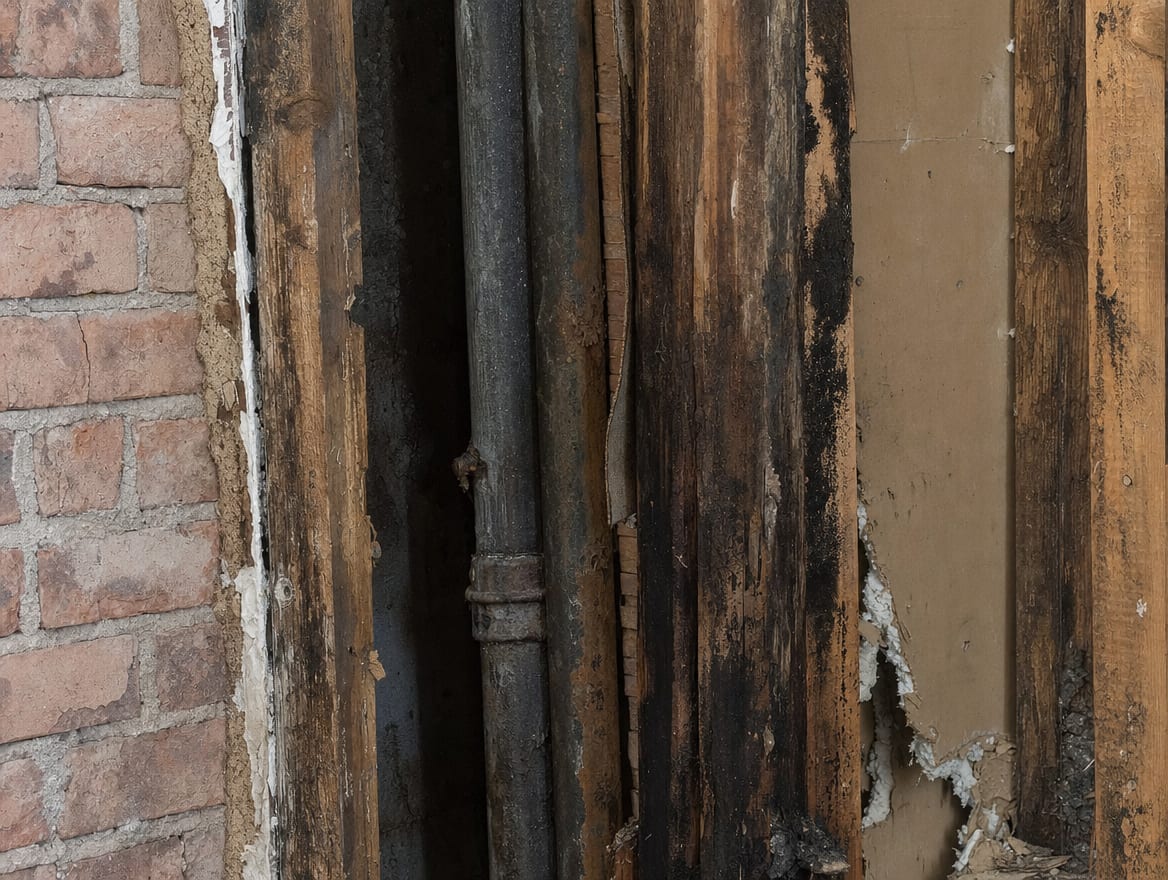
A roof leak in an older Princeton building rarely stays in one place. Water finds its way in near a parapet or a flashing joint, travels along framing you cannot see, and shows up as a stain in an upstairs office, a soft spot in a retail ceiling, and a musty smell along a shared wall. By the time someone notices, the moisture has usually been active for a while, and the problem now touches more than one tenant and more than one use of the building.
That is the situation many commercial and mixed-use property owners face near Nassau Street and throughout the older parts of Princeton. The storefront needs to stay open. The tenants above need to keep working. The building itself may sit in a historic district, with plaster, masonry, and millwork that cannot simply be torn out. Correcting mold in this kind of building is less about a single cleanup and more about planning the work so the source gets fixed, the historic materials are protected, and each part of the building can reopen as it is verified. This article walks through how that phased approach fits together for a public-facing Princeton property.
Why Historic Mixed-Use Buildings Hide Moisture
Older Princeton buildings were assembled over many decades, sometimes over more than a century. A single structure may combine brick or stone masonry, plaster walls and ceilings, wood framing and millwork, older roofs and flashing, and mechanical systems that were added in several separate renovation phases. Narrow stairs and limited service access make some cavities hard to reach at all.
Those layers are exactly what let moisture stay hidden. Water can enter at an old roof transition, chimney, or parapet and move a long way before it becomes visible. Plaster and masonry hold moisture differently than modern drywall, so a wall can stay damp behind the surface without an obvious stain. When a building has a retail or office space below and residential or office units above, the first sign of a problem often appears in a completely different space from where the water actually got in. The mold you can see is a signal that a wet condition has lasted long enough to support growth, not a map of where the leak started.
How Shared Walls, Roofs, and Vertical Chases Spread the Problem
The feature that defines a mixed-use building is shared systems. A single roof may cover a shop, offices, and apartments. Plumbing stacks, party walls, common foundations, and central mechanical runs can all carry water or odor past the first affected tenant. A leak that begins above one unit can migrate along a shared wall or down a vertical chase and appear two spaces away.
This is why an occupied commercial project has to start with the whole building, not just the room where the stain showed up. A useful early step is to map how the affected area connects to its neighbors: which walls are shared, which chases run vertically between floors, and how the roof drains. Understanding those pathways early is what prevents a crew from cleaning one ceiling while the same moisture keeps feeding a cavity next door. If the scope or the source is unclear at this stage, a focused commercial mold remediation assessment can define the work zones before any demolition begins.
Hover or tap a row to highlight it.
| Phase | What it involves | What stays open to the public | Preservation and permit note |
|---|---|---|---|
| Assessment and planning | Building review, source diagnosis, mapping shared systems and work zones | Storefront and tenants stay open | Confirm historic-district status early |
| Containment setup | Barriers, negative air, and HEPA filtration around the first zone | Areas outside the contained zone stay open | Protect historic finishes near the barrier line |
| Removal and cleaning | Remove affected porous materials, HEPA clean salvageable surfaces | Public areas stay open when separated from the work | Selective, preservation-sensitive demolition only |
| Drying and source repair | Structural drying, plus roof, plumbing, or HVAC repair | Depends on the trade and location of the repair | Exterior repairs may need municipal review |
| Verification and reopening | Confirm dryness, cleanliness, and completed repairs zone by zone | Verified zones reopen as they clear | Keep permit and approval records in the file |
Why Phased Containment Protects Neighboring Tenants
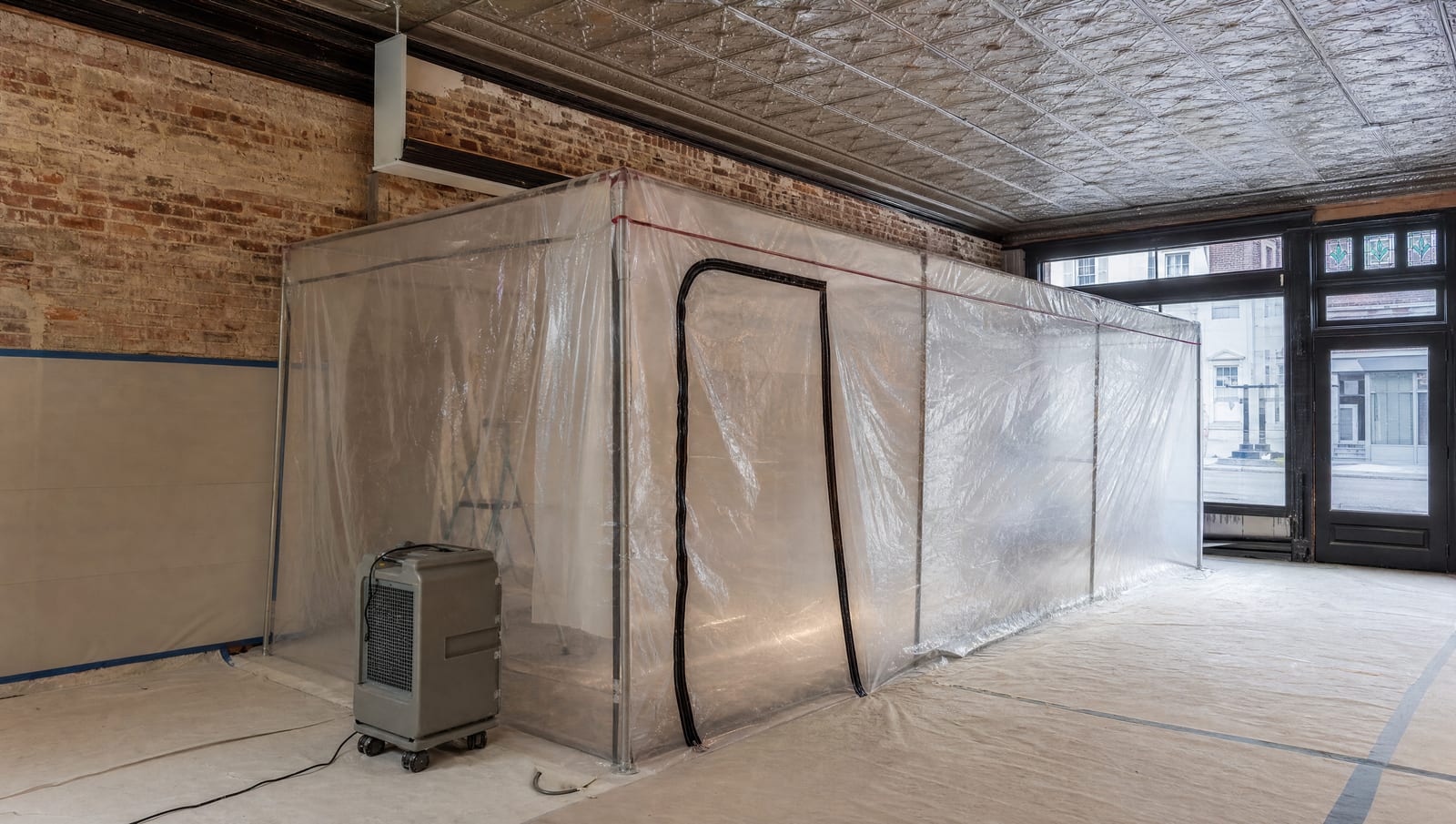
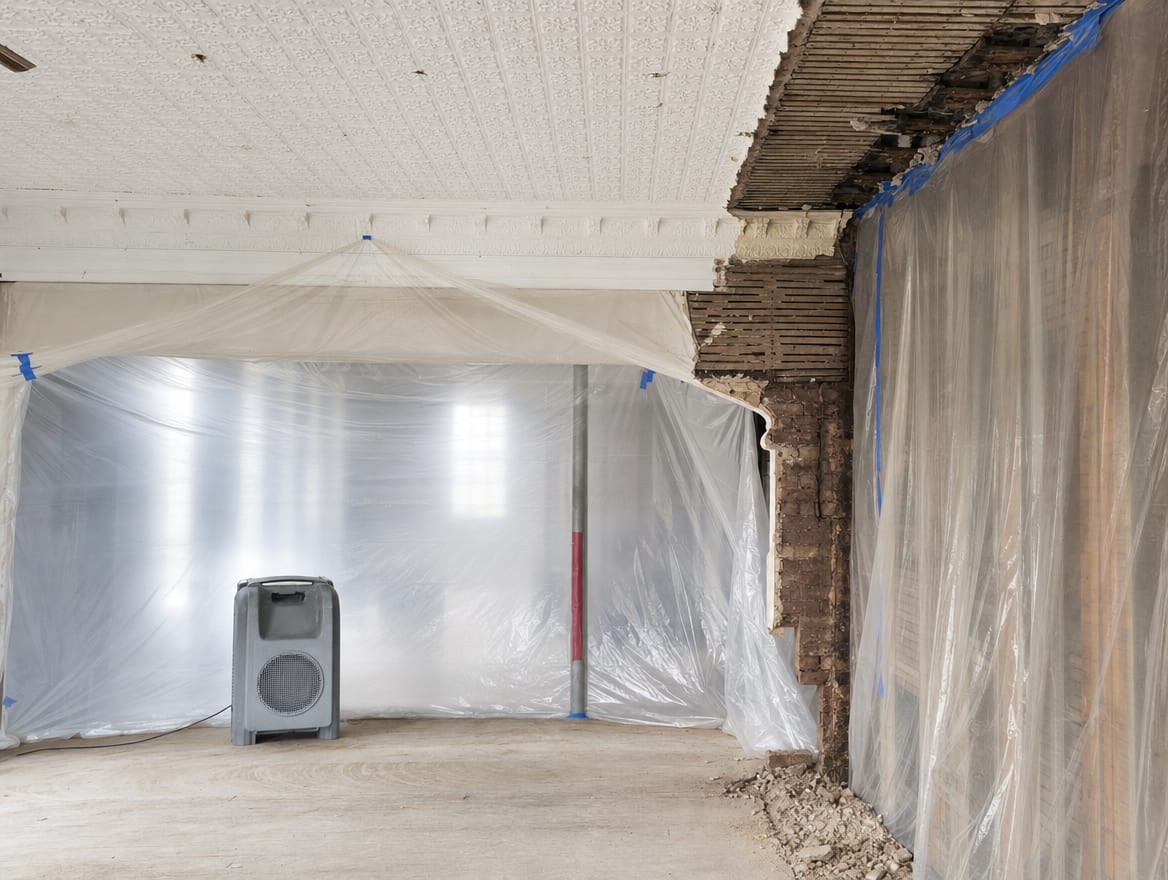
In an occupied building, containment does two jobs at once. It keeps mold spores and dust from spreading during removal, and it lets the rest of the building keep operating. Sealing off one work zone with barriers, negative air, and HEPA filtration means the storefront can often stay open while the office above is being worked on, or the reverse.
Phasing extends that idea across the whole project. Instead of closing the entire property, the work is broken into zones that are contained, corrected, and cleared one at a time. Off-hours and overnight work help keep a public-facing space usable during business hours. Dust and odor control, protected access routes, and clear signage keep customers and staff safe and informed while the work continues behind the barrier. Poor communication tends to create more concern, complaints, and rumors than the work itself, so telling tenants and staff what is happening and when is part of the job, not an afterthought.
Protecting a Public-Facing Space During Remediation
Public-area containment
Barriers and negative air separate the work zone from sales floors, lobbies, and shared entrances so the public stays clear of active work.
Off-hours work
Scheduling loud or disruptive tasks in the evening or overnight keeps a storefront usable during business hours.
Dust and odor control
HEPA filtration and sealed pathways limit the dust and smell that reach occupied areas.
Historic-material protection
Plaster, masonry, and millwork near the work are shielded before removal begins.
Tenant and upstairs coordination
Neighboring tenants and upper-floor occupants are told the schedule, access changes, and what to expect.
Signage and egress
Clear signs and protected exit routes keep customers and staff safe and oriented.
Verification
Each zone is checked for dryness and cleanliness before the barriers come down.
How HVAC Zones Affect Work Boundaries
Mechanical systems can quietly undo good containment. If an air handler pulls from or pushes into an affected zone, it can move particles through ductwork into clean parts of the building and break down the pressure separation a crew has set up. In a shared building, one HVAC system may serve several tenants, so a shutdown in one area affects everyone on that loop.
That makes HVAC part of the plan from the start. The work boundaries often have to follow the mechanical zones, not just the walls. Isolating or shutting down the system that serves the affected area, and cleaning ductwork only where it is justified, keeps the containment honest. Night setbacks, weekend schedules, condensate failures, and weak dehumidification can also be part of why moisture built up in the first place, so the HVAC review does double duty: it protects the containment and it may point to the source.
When Historic Materials Can Be Preserved
Not every wet material has to be removed, and in a historic building the goal is to remove only what genuinely has to go. Porous materials with real contamination, like saturated ceiling tile, drywall, insulation, or carpet, usually need to come out because cleaning cannot reliably reach growth below the surface. But original plaster, masonry, and millwork are different. Whether they can be saved depends on how wet they are, how far any contamination has gone, the condition and structural integrity of the material, and whether it can actually be cleaned.
The mistake to avoid is over-demolishing historic finishes without a clear need and a repair plan. Preservation-sensitive demolition means protecting the surrounding original material, taking out only what is compromised, and cleaning and drying what can stay. Older Princeton buildings may also contain lead-based paint or asbestos in older plaster, pipe insulation, flooring, ceiling tile, or adhesives, so any demolition has to account for those regulated materials before work starts.
There is a permit and review layer here too. Routine interior cleaning generally does not change the exterior of a building. But roofing, masonry repair, window or vent work, and visible mechanical changes can trigger municipal review, and exterior work in a designated historic district may require Historic Preservation Commission review. Whether a specific repair needs a permit or historic review should be confirmed with the municipality rather than assumed, because the interior remediation can often move forward while the exterior repair is being reviewed.
Occupied-Building Remediation, Step by Step
- 1
Incident and building review
Gather building use, lease and operating schedules, leak and HVAC history, complaint locations, and historic-district status.
- 2
Inspection and source assessment
Find visible and hidden moisture, check the roof, plumbing, masonry, and HVAC, and identify what can be cleaned versus removed.
- 3
Operational and preservation plan
Define work zones, containment, negative air, access routes, after-hours work, and preservation-sensitive demolition.
- 4
Containment and removal
Isolate the zone, run HEPA-filtered negative air, remove affected porous materials, and HEPA clean salvageable surfaces.
- 5
Drying and source correction
Dry the building fully, then complete or assign roof, plumbing, drainage, or HVAC repairs to the right trade.
- 6
Verification and reopening
Confirm dryness, cleanliness, and completed repairs, then reopen each zone as it clears.
What Documentation Managers and Tenants Need
A commercial project generates paperwork for a reason. Property managers, tenants, and insurers all need a clear record of what happened and what was done. A strong project file usually includes an incident chronology, occupancy and complaint records, photographs, moisture maps, the remediation protocol, containment and equipment logs, daily progress reports, waste records, tenant and staff communication, reopening criteria, and any permit or historic-approval records.
That record does more than close out the job. It shows the moisture source, the areas affected, the materials removed or preserved, the source repairs, and the verification results. For a high-value, historic, or public-facing Princeton property, that kind of documentation supports the building's operations and reputation and gives everyone involved a shared, factual account of the work.
Insurance is its own question. Whether a policy covers the remediation and any business interruption depends on the policy terms, the cause of loss, exclusions, notice, and mitigation. A contractor cannot guarantee coverage. What a well-documented project can do is give the owner and their insurer a clear, organized basis for the claim.
When Testing and Third-Party Verification Add Value
Testing is not automatic. The EPA notes that sampling is usually unnecessary when mold is already visible, because you do not need a lab to confirm what you can see. Testing earns its place when it answers a defined question: a hidden or disputed condition, a baseline for documentation, a sensitive or institutional space, or a real estate, insurance, or regulatory request.
Post-remediation verification is where testing often matters most in a commercial setting. Before a zone reopens, the goal is confirmed dryness, no moldy odor, clean surfaces, a completed source repair, and clean adjacent areas. When written criteria call for it, independent post-remediation verification provides a third-party check that the work met its standard. That outside confirmation is especially useful in a building with multiple tenants, public access, or institutional oversight, where a documented all-clear carries more weight than a crew signing off on its own work.
What a Realistic Zone-by-Zone Reopening Plan Requires
Reopening a whole building at once is rarely the right move in an occupied property. A phased plan reopens each zone as it is verified, so the storefront, the offices, and the shared areas can come back online on their own timelines rather than waiting for the slowest part of the job.
The one rule that holds across every zone is that a space should not reopen before its source is fixed and its materials are dry. A visually clean room can still hold unresolved moisture behind a wall or above a ceiling, and reopening early tends to bring the problem back. The owner or authorized manager makes the reopening call using the written remediation and verification criteria, with input from qualified professionals.
Because every building is different, there is no single timeline that fits all of them. How long the work takes depends on the building size, the number of zones or tenants, occupancy restrictions, the extent of contamination, drying time, historic-material handling, the source repairs required, and any permits, testing, or reconstruction. Owners are usually better served comparing written scopes than comparing bottom-line totals, since a lower quote may leave out source repair, historic-material handling, after-hours labor, testing, verification, or rebuild.
Frequently Asked Questions
Can the storefront and upstairs tenants stay open during remediation?
Often, yes. It depends on where the work is, how well the zone can be contained, how access and HVAC are handled, and how sensitive the neighboring occupants are. Phased containment and off-hours work are the tools that let a public-facing space keep operating while one zone is corrected at a time. Some situations still call for temporary relocation of a specific tenant or use.
Do we need mold testing before the work starts?
Not automatically. When mold is already visible, the EPA says sampling is usually unnecessary. Testing is worth doing when it answers a specific question, such as a hidden condition, a disputed area, a baseline for documentation, or a formal verification requirement. Otherwise the inspection and moisture assessment drive the scope.
Can original plaster, masonry, and millwork be saved?
Sometimes. It depends on how wet the material is, how far any contamination has gone, its condition and structural integrity, and whether it can be cleaned. The aim in a historic building is preservation-sensitive demolition, removing only what is genuinely compromised and cleaning and drying what can stay, rather than tearing out original finishes by default.
Will exterior repairs need historic review or permits?
They might. Interior cleaning alone generally does not change the exterior. But roofing, masonry, window, vent, or visible mechanical work can require municipal permits, and exterior changes in a designated historic district may require Historic Preservation Commission review. Whether a specific repair needs review should be confirmed with the municipality, and the interior remediation can often proceed while that review happens.
Who decides when each area can reopen?
The owner or authorized property manager makes that call, using the written remediation and verification criteria and input from qualified professionals. The standard for reopening a zone is a completed source repair, dry materials, clean surfaces, no moldy odor, and clean adjacent areas, confirmed by verification when the criteria require it.
Will insurance cover the remediation and lost business time?
That depends on the policy terms, the cause of loss, exclusions, notice, mitigation, and any business-interruption provisions. A contractor cannot guarantee coverage. Thorough documentation of the incident, the work, and the verification gives the owner and their insurer a clear, organized basis for the claim.
Moving Forward
Mold in a Princeton mixed-use building is usually a coordination problem as much as a cleaning problem. The building system, the people who occupy it, and the historic materials all have to be handled together, with the source repaired and each zone verified before it reopens. Done in phases, the work protects the storefront, the tenants, and the character of an older building at the same time.
If you manage a commercial, historic, or mixed-use property in Princeton and you are seeing stains, odors, or a leak that crosses more than one space, ExecPro Restoration & Cleaning can help you plan the work zone by zone. Our team handles the assessment, containment, source coordination, and verification, and we document the project so you and your tenants have a clear record. You can reach us at (888) 300-3772 or contact us online to get started. Learn more about our full range of commercial restoration services when you are ready to talk through your building.
Commercial Mold Terms
Tap a term to see what it means.
Containment. Sealing off a work zone with barriers so mold spores and dust do not spread into occupied or public parts of the building during removal.
Serving Princeton
ExecPro Restoration & Cleaning provides mold remediation services in Princeton, NJ, from inspection and testing through removal, drying, and post-remediation verification. Call (888) 300-3772 for 24/7 emergency response.
Related Articles
Open on Time: Commercial Mold Remediation in Deal NJ Before the Season Starts
Commercial mold remediation in Deal NJ, planned around a seasonal reopening. Phased containment, documentation, and the source repairs that keep your doors open.
One Wing at a Time: Phased Commercial Mold Remediation for Princeton Junction, NJ Buildings That Cannot Close
Commercial mold remediation in Princeton Junction NJ, phased so an office, school, or managed building keeps operating while affected zones are contained and dried.
Property Management Mold Services in Princeton, NJ: A Portfolio Protocol for Mixed-Age Buildings and Occupied Units
How Princeton property managers run mold response across a mixed-age portfolio: historic review, resident notice, containment, and recurrence tracking.