Open on Time: Commercial Mold Remediation in Deal NJ Before the Season Starts
Cal HewittPublished
- commercial mold remediation
- commercial mold
- mold remediation
- coastal
- new jersey
- deal
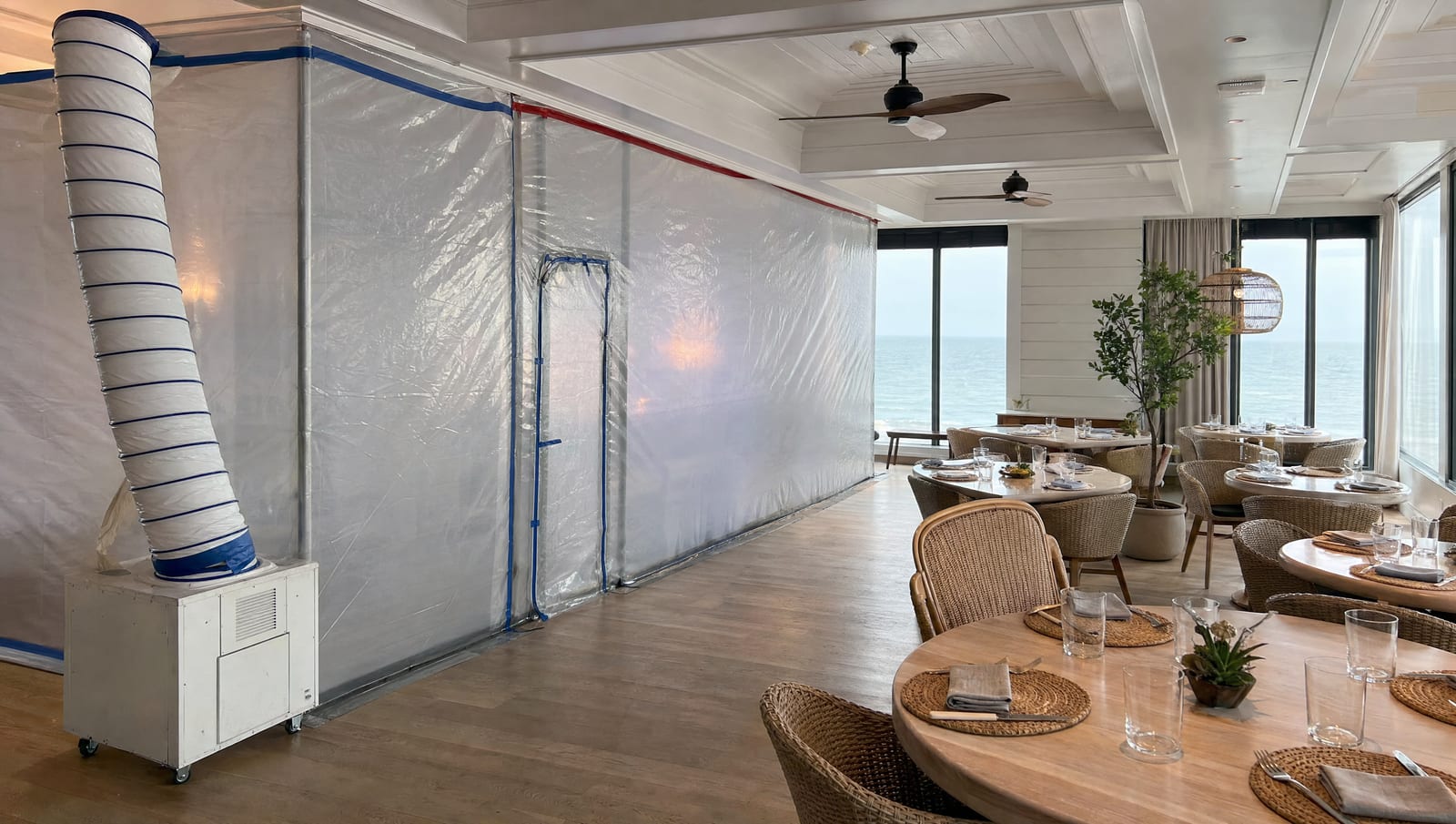
The hardest part of a commercial mold problem in Deal is rarely the mold itself. It is the calendar. A beach club, a shop, a restaurant, an office, or a civic building has a date it needs to open, and that date does not move because a leak was found late. When a manager pulls back a ceiling tile in a storage room three weeks before the season starts and sees dark growth spreading across the deck above, the question is not only how to clean it. The question is how to correct it, document it, and reopen without losing control of the schedule, the staff, or the building's reputation in a small borough where word travels fast.
That is a different problem than a house. A commercial building has occupants, tenants, members, or guests to protect. It has business functions that need to keep running while part of the space is worked on. It has owners and sometimes insurers who need a clear record of what happened and what was done. This is a guide to handling commercial mold remediation in Deal, NJ around a reopening deadline, so the work protects both the building and the business behind it.
Before You Reopen: The Commercial Mold Checklist
Source found and corrected
The roof, plumbing, HVAC condensate, flood path, or humidity problem that fed the mold is identified and repaired, not just cleaned around.
Containment and HEPA filtration
Affected zones are sealed with negative air and HEPA scrubbers so spores and dust do not move into the parts of the building that stay open.
Contents and equipment handled
Furniture, records, kitchen equipment, athletic gear, and inventory are protected, relocated, or cleaned rather than left in the work zone.
Dried to a documented standard
Materials are dried to a defined dry target and confirmed with meters, not judged by how a surface looks or feels.
Verification when the situation calls for it
Visual clearance, and independent testing where a written criterion, a tenant, or an insurer requires it, before the space goes back into use.
Moratorium and permits confirmed
Any regulated build-back is checked against Deal's permit requirements and its summer construction rules with the Building Department before demolition or reconstruction starts.
Staff and tenants informed
Occupants know what is happening, where, and for how long, which cuts down on rumors, complaints, and reputational fallout.
Why Seasonal Buildings Find Mold Late
Many Deal commercial and institutional properties are quiet for long stretches. A seasonal club or event space may sit closed or lightly staffed through the colder months. During that time a roof flashing can fail, a pipe can develop a slow leak, an HVAC drain pan can back up, or humidity can simply build in a locker room or kitchen that is no longer being conditioned. With no one walking the building daily, drywall, insulation, ceiling tile, wood, flooring, and stored items can stay damp for weeks before anyone notices.
Deal's coastal position adds to this. An Atlantic location means wind-driven rain, high winds, salt-laden air, and coastal storms that push water in through roofs, flashing, windows, doors, and mechanical openings. Salt does not grow mold on its own, but over time it can corrode flashing, fasteners, HVAC equipment, and exterior vents, and those failures can open a new path for water. Winter brings its own risks, from frozen pipes to freeze-thaw cycles that create hidden leaks. By the time reopening prep begins, the moisture that fed the mold may have been present for a long while.
The practical takeaway is that a pre-opening walkthrough should not be a quick glance. It should be a deliberate inspection built around one idea: something may have been wet in here for months, and the goal is to find it before opening day rather than after a member or a parent smells it.
The Pre-Opening Inspection
A commercial assessment starts with history, not with a moisture meter. Before anyone opens a wall, the team should review how the building is used and when, its storm and plumbing and HVAC history, where and when any complaints came in, and whether there are alarm, caretaker, or maintenance logs that hint at a leak event over the off-season. That context tells an inspector where to look and often why a problem started.
From there the inspection moves through the building envelope and the systems most likely to have failed: the roof and flashing, plumbing and drainage, HVAC systems including drain pans, coils, and condensate lines, and the higher-moisture rooms like kitchens, locker rooms, showers, storage, and mechanical spaces. The inspector maps visible and hidden moisture, checks wall, ceiling, floor, and cavity conditions, and sorts materials into what can be cleaned and dried in place versus what needs to come out. Flood exposure is worth checking too, but it varies parcel by parcel. FEMA, NJDEP, and NJFloodMapper tools should be checked for the specific property, and a flood zone on a map does not by itself prove where a given mold problem came from.
Hover or tap a row to highlight it.
| Phase | What can stay usable | Timing and permit note |
|---|---|---|
| Assess and document | Most of the building; inspection is low-impact | Do this first so scope, cost, and schedule are known before demolition |
| Containment and zone-off | Areas outside the sealed zone, if access and HVAC allow | Setup is quick; the point is to keep unaffected operations running |
| Remediation and removal | Adjacent zones behind proper separation | Removing porous materials is usually cleaning, not regulated construction |
| Structural drying | Dried zones as they are cleared | Building must reach a documented dry target before rebuild |
| Regulated build-back | Depends on scope and staging | Permits and Deal's summer construction rules may apply; confirm with the Building Department |
Separating the Causes: Roof, HVAC, Plumbing, Flood, Humidity
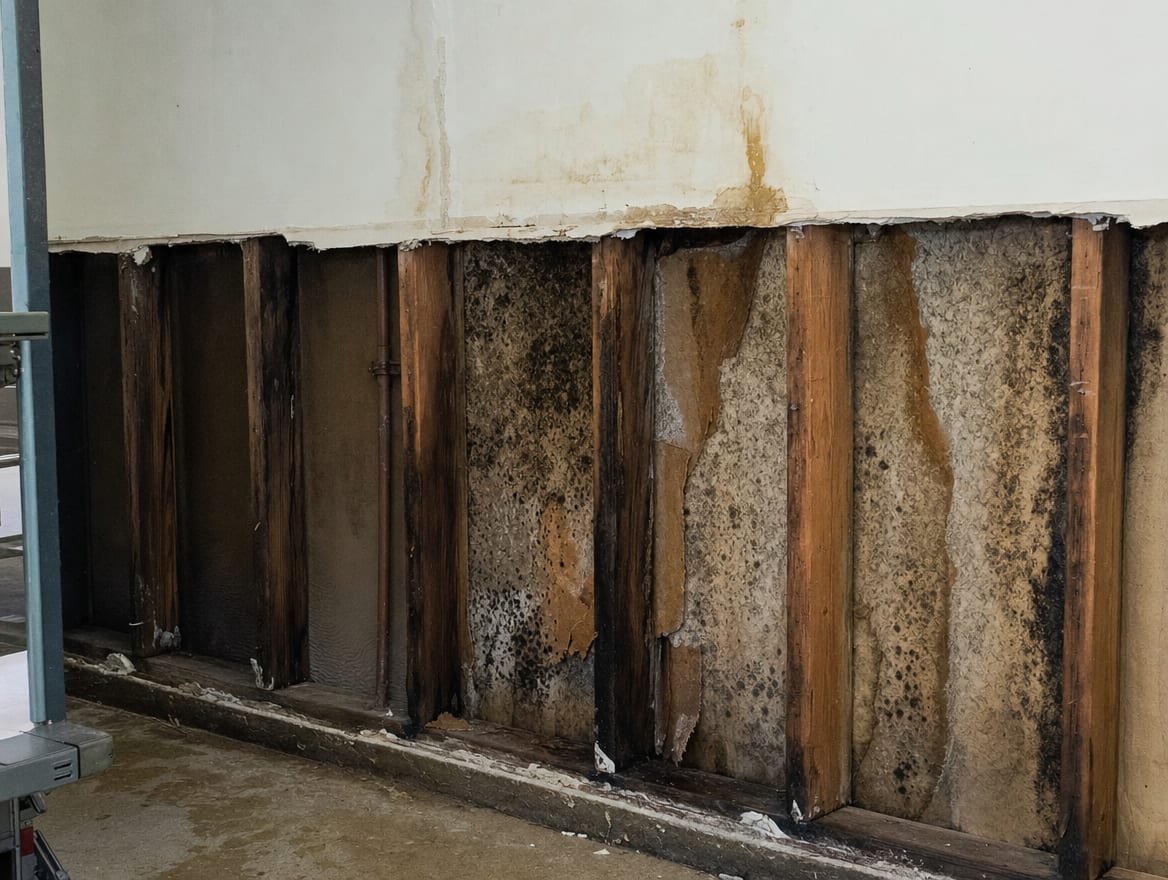
Mold is a signal that something has been wet. Correcting it permanently means naming the source, and in a commercial building there is often more than one candidate. A roof or flashing failure and an HVAC condensate problem can both be feeding the same ceiling at once, which is exactly the kind of overlap a seasonal building tends to produce. Cleaning the growth without settling which source, or sources, caused it almost guarantees it comes back.
Roofing and building-envelope leaks show up near the roof line, penetrations, and exterior walls, and are common after coastal storms. HVAC problems tend to appear around air handlers, drain pans, coils, and supply paths, and can spread particles building-wide if the system keeps running through an affected zone. Plumbing leaks track along stacks and fixtures. Flood and storm-surge water enters low and is often the most contaminated. Humidity is the quiet one, raising indoor moisture across locker rooms, kitchens, and storage in buildings running reduced seasonal HVAC. Each of these may need a different trade to repair, which is why the diagnosis has to come before the rebuild is scheduled.
How Phased Containment Keeps the Rest Open
For a commercial property racing a reopening, containment is not just a safety measure. It is what lets the building keep working while remediation happens in one part of it. The affected area is sealed off and put under HEPA-filtered negative air so that spores and dust are pulled into the work zone and captured rather than drifting into occupied space. Done well, this means a club can still run its front desk, an office can keep part of its floor staffed, or a kitchen can stay closed while the dining room stays open.
That separation is what makes phasing possible. Work zones are defined, occupied and unoccupied areas are marked, and access routes, noise, dust, and odor are managed so operations continue around the job. Because Deal is a small borough, commercial sites often have narrow service access, limited staging space, shared parking, and close neighbors, so a lot of this work happens after hours, overnight, or during a closure window. The HVAC strategy matters here as much as the plastic sheeting: running mechanical systems through an affected zone can defeat the containment and carry particles across the building, so the system is isolated or managed as part of the plan.
A commercial job is also a contents job. Furniture, records, kitchen equipment, computers, inventory, linens, and athletic equipment may need to be protected in place, inventoried, relocated, or cleaned. Deciding that early keeps a reopening from stalling because nobody planned where the equipment would go.
From Discovery to Doors Open
- 1
Review and inspect
Gather building history and complaints, then inspect the envelope, plumbing, HVAC, and high-moisture rooms to find every moisture source.
- 2
Plan the zones
Define work zones, occupied areas, containment, negative air, access, after-hours windows, communication, and written reopening criteria.
- 3
Contain and remove
Seal the affected area, run HEPA negative air, remove contaminated porous materials, and HEPA vacuum and damp-clean salvageable surfaces.
- 4
Dry and correct the source
Dry the building to a documented target and complete or assign the roof, plumbing, HVAC, drainage, or envelope repair that caused the problem.
- 5
Verify and reopen
Confirm visual cleanliness, no musty odor, dry materials, and completed source repair, adding testing when a written criterion requires it, before the owner or manager approves reopening.
The Documentation Managers and Owners Need
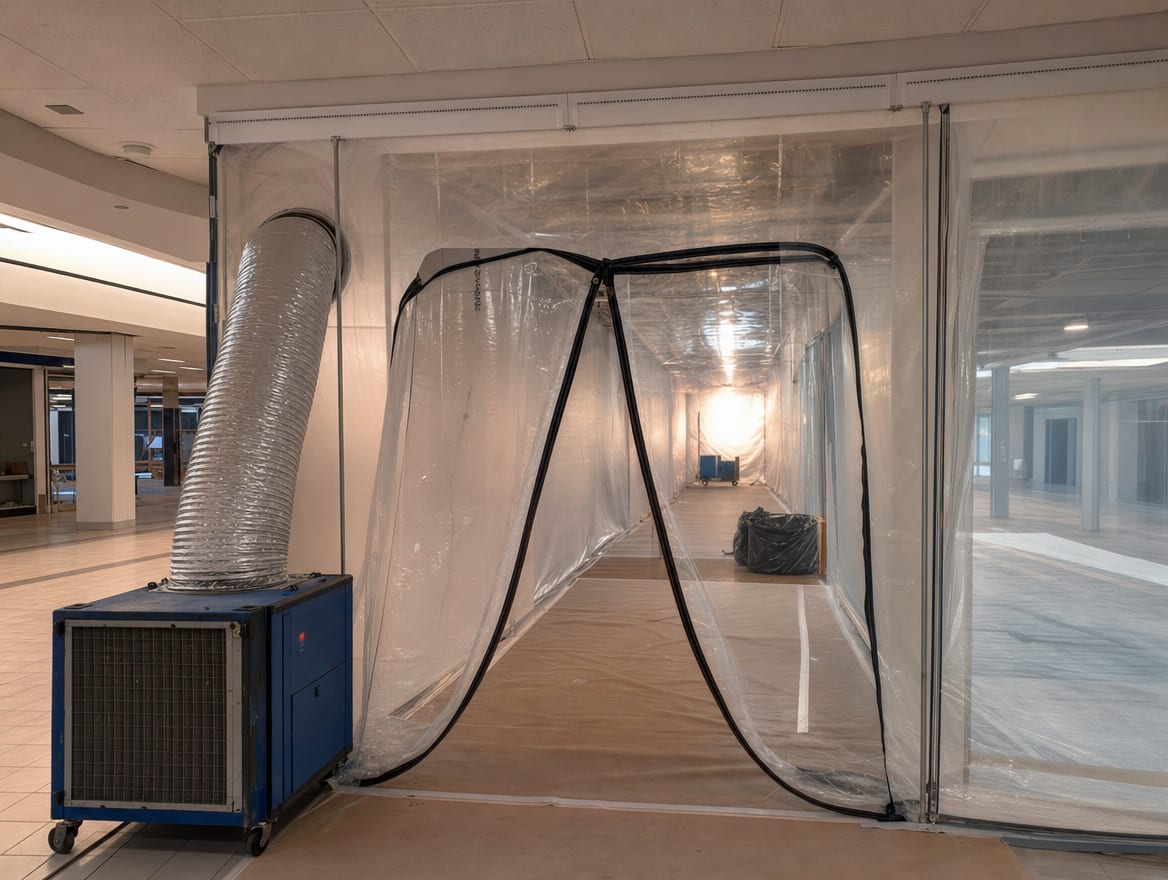
On a commercial job the paperwork is part of the product. Owners, property managers, and sometimes insurers need a record that shows what was wrong, what was done, and why the building is safe to reopen. A strong project file tends to include an incident chronology, occupancy and complaint records, photographs, moisture maps, any roof or plumbing or HVAC reports, the remediation protocol, containment and equipment logs, daily progress reports, waste and disposal records, contents records, the reopening criteria, and any verification results.
Insurance sits alongside this, and it needs an honest frame. Whether a policy covers a given loss and any business interruption depends on the policy language, the cause of loss, exclusions, endorsements, notice, and mitigation. A contractor cannot guarantee coverage. What good documentation does is give the owner and their carrier a clear, organized account to work from, which is usually far more useful than any promise about the outcome of a claim.
When Testing and Third-Party Verification Add Value
Testing is not automatic, and it should not be sold that way. The EPA notes that sampling is usually unnecessary when mold is already visible, because you do not need a lab to confirm what you can see. Testing earns its place when it answers a defined question: mapping hidden or disputed conditions, developing a protocol, setting a baseline, documenting a sensitive or institutional space, satisfying a real estate, insurance, or regulatory request, or confirming that the work is finished.
That last case is where independent, third-party checking is worth the most. For a building that has to reopen to the public, independent post-remediation verification gives owners a result that does not come from the same crew that did the removal. When a written criterion, a tenant, or an insurer calls for it, that outside confirmation is what turns a visually clean space into a documented, defensible reopening.
Coordinating the Trades and the Reopening Decision
A commercial mold project usually pulls in more than a remediation crew. A roofer, an HVAC contractor, a plumber, and the rebuild trades may all have a hand in it, and the order matters: the source repair and the drying come before reconstruction, or the new finishes go up over a problem that has not actually been solved. Sequencing these against the reopening date, and against Deal's access and staging limits, is much of the work of running the job well.
The build-back stage is where the borough's rules come back into focus. Routine cleaning and porous-material removal are not the same as construction, but demolition, plumbing, electrical, HVAC changes, roofing, structural repair, insulation, and reconstruction can require Borough of Deal permits. Some shore towns also limit certain construction work during the summer season. Before any regulated build-back is scheduled, the scope should be confirmed with the Deal Building Department so a permit requirement or a seasonal construction restriction does not surprise the project at the worst possible moment. Older buildings add one more check: lead-based paint or asbestos-containing materials may be present, and demolition can disturb them, so that possibility is evaluated rather than assumed away.
The reopening decision itself belongs to the property's authorized decision-makers, the owner or manager, using the written criteria the project was built around. A realistic sign-off means the space is visually clean, there is no musty odor, materials are dry, the source repair is complete, adjacent areas are clean, and any required verification has passed. A date on the calendar is a goal, not a clearance. The value of planning the job around the reopening from day one is that the goal and the clearance usually end up meeting.
Frequently Asked Questions
Can our building stay open during commercial mold remediation?
Often part of it can. It depends on where the mold is, whether the area can be sealed with proper containment and negative air, how access and HVAC are arranged, and how sensitive the occupants are. Phased, after-hours, or closure-window work is common in Deal precisely so a club, shop, or office can keep functioning while one zone is remediated.
We have a hard reopening date. How do you plan around it?
By working backward from three deadlines: the day the problem was found, the day the building must reopen, and the day source repairs and verification must be complete. The scope, the phasing, the trade sequence, and the reopening criteria are all built to fit inside that window rather than being figured out as the job goes.
Do we need mold testing before the work starts?
Not automatically. When mold is visible, sampling is usually unnecessary to begin remediation. Testing is worth doing when it answers a specific question, such as documenting a hidden condition, meeting an insurer or regulatory request, or verifying the work is complete for a public building.
Will our commercial policy cover the remediation and lost business?
That depends entirely on the policy, the cause of loss, the exclusions and endorsements, and the notice and mitigation terms, including any business-interruption coverage. No contractor can guarantee coverage. What helps is a thorough, organized project record that you and your carrier can work from.
Who decides when the building can reopen?
The property owner or authorized manager makes that call, using the written remediation and verification criteria and input from qualified professionals. Reopening rests on the building being clean, dry, and source-corrected, not on the calendar date alone.
Does Deal's summer construction rule affect the job?
It can affect the regulated build-back stage, not the cleaning and removal. Demolition and reconstruction may need Borough of Deal permits, and some shore towns restrict construction work during the season. Confirm the specific scope with the Deal Building Department before scheduling that phase so timing is not derailed.
Reopen With the Problem Actually Solved
A commercial mold problem discovered before Deal's season is a scheduling challenge as much as a technical one. Handled with a real inspection, a source correction rather than a surface cleaning, phased containment that keeps the rest of the building working, and documentation the owner and any insurer can rely on, it becomes a job you can plan and reopen around instead of one that runs the calendar for you.
When you are facing that on a Deal property, ExecPro Restoration & Cleaning can help you scope it. Our team handles commercial mold remediation and the broader commercial services a building needs to reopen, and we work throughout the area, including mold remediation in Deal, NJ. To get a plan built around your reopening date, reach out to our team or call (888) 300-3772.
Commercial Mold Terms
Tap a term to see what it means.
Containment. Sealing off the work area during remediation so mold spores and dust do not move into the parts of the building that stay open.
Serving Deal
ExecPro Restoration & Cleaning provides mold remediation services in Deal, NJ, from inspection and testing through removal, drying, and post-remediation verification. Call (888) 300-3772 for 24/7 emergency response.
Related Articles
Reopening a Deal NJ Shore Home: When Air Quality Testing Answers a Real Question
Reopening a closed Deal NJ shore home? Learn when air quality testing helps after vacancy, humidity, a storm, or renovation, and what a test cannot tell you.
Property Management Mold Services in Deal NJ: A Seasonal-Home Protocol
A repeatable mold protocol for managers of seasonal Deal NJ homes: pre-arrival inspections, remote humidity monitoring, emergency access, and owner reporting.
Structural Mold Repair in Deal NJ: Clean, Reinforce, or Call an Engineer
Structural mold repair in Deal NJ starts with one decision: is framing cleanable, decayed, or a job for a licensed engineer. Here is how to tell.