
Burst Pipe Cleanup in Princeton Junction NJ: Mechanics and Shared Walls
Cal HewittPublished
- burst pipe cleanup
- burst pipe
- townhouse
- new jersey
- princeton junction
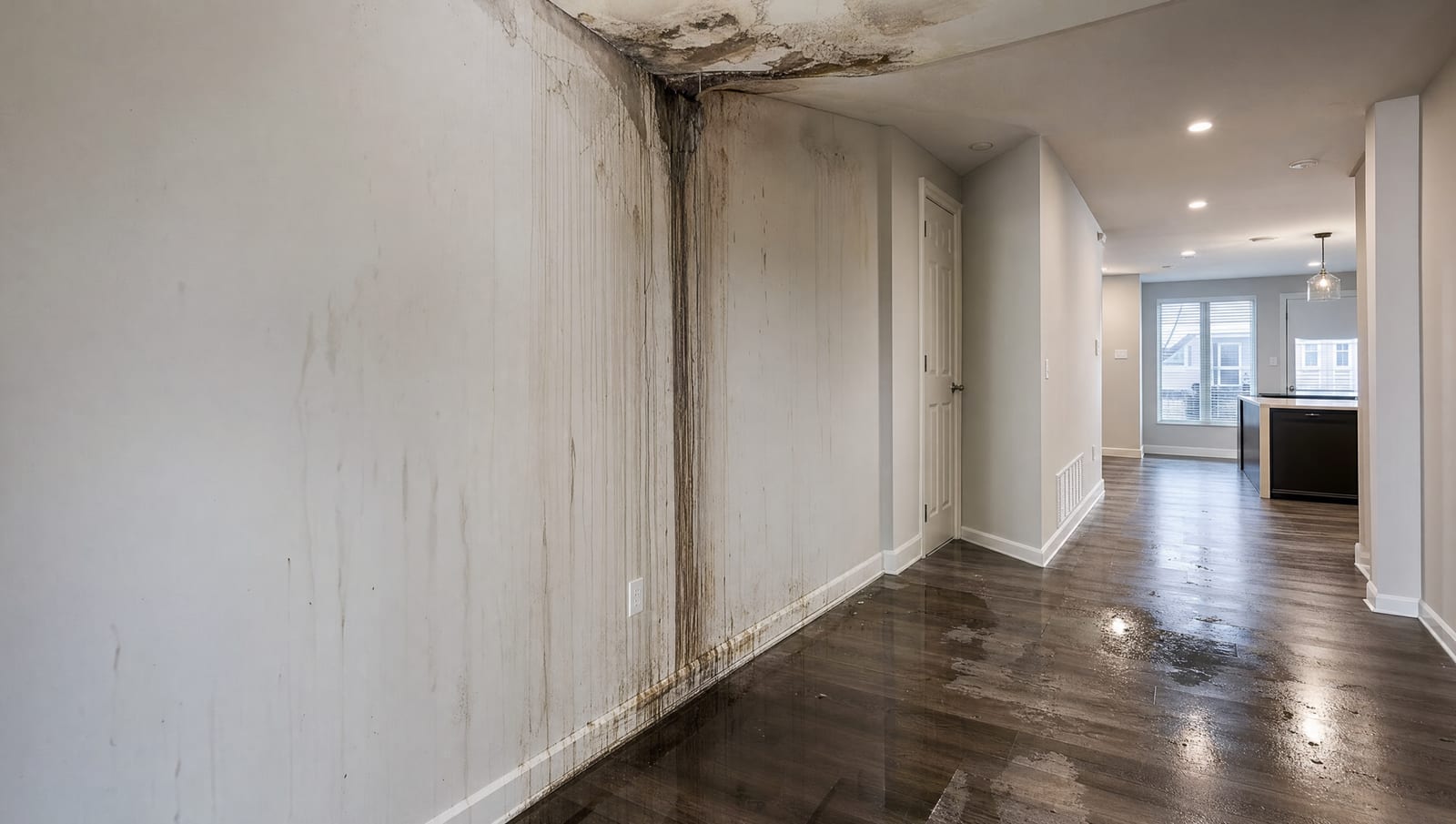
In a lot of Princeton Junction households, the house is empty during the workday. Both adults catch the train from the Northeast Corridor station, the kids are at school, and nobody is standing in the basement when a pipe lets go. That empty stretch is why a burst here so often gets found in the evening instead of the moment it starts. But the commute is only the reason a burst runs unnoticed. It is not the reason a pipe bursts in the first place, and it is not what decides how bad the cleanup gets. Those come down to the pipe itself: what failed, how much pressure was behind it, and where the water went once it was loose.
This guide stays in that lane. It is about the mechanics of a burst pipe and what makes cleanup in a Princeton Junction townhouse or detached home different from a simple puddle. If you want the broader picture of how a local water loss plays out from discovery through rebuild, the Princeton Junction water damage restoration guide walks the full lifecycle. Here, the focus is narrower: why pipes burst, why a pressurized line is so much worse than a slow leak, the shared-wall problem in a townhouse or condo, and how to shut the water off before it does more.
Why Pipes Actually Burst
A pipe does not usually fail for one dramatic reason. Most bursts trace back to a handful of ordinary causes, and in an older home more than one can be at work in the same run of pipe. Knowing which one you are dealing with matters, because a pipe that froze in an exterior wall is a different repair and a different prevention plan than a fitting that corroded through under a sink.
Hover or tap a row to highlight it.
| Cause | What is happening | Where it tends to show up |
|---|---|---|
| Freeze-thaw | Water freezes and expands inside the pipe, and the pressure that builds ahead of the ice splits the pipe or pops a fitting | Exterior walls, attics, garages, crawl spaces, and unheated rooms during a cold snap |
| Water hammer | A valve or appliance shuts fast and the moving water slams to a stop, shocking joints and fittings over time | Near washing machines, dishwashers, and fast-closing valves |
| Corrosion | Older metal pipe, especially galvanized steel, rusts and thins from the inside until the wall gives way | Aging supply lines in older village homes and additions |
| Failed fittings | A push-fit connector, a supply-line hose, or a soldered joint that was never quite right lets go under everyday pressure | Under sinks, behind toilets and appliances, at any recent connection |
| Excess pressure | Water pressure that runs too high strains every joint and shortens the life of hoses and connectors | Whole-house, worst at the weakest fitting |
Freeze-thaw is the one most people picture, and it earns the attention. When water inside a pipe freezes, it expands, and the trouble is not the ice at the split. It is the pressure that builds in the trapped water between the ice and a closed faucet, which is what actually ruptures the line. New Jersey winters bring the cold snaps and freeze-thaw swings that put exposed plumbing at risk, so pipes in exterior walls, attics, garages, and crawl spaces are the usual casualties. But water hammer, corrosion, a failed push-fit connector, and pressure that simply runs too high all break pipes in every season, not just January.
A Pressurized Burst Is Not a Slow Drip
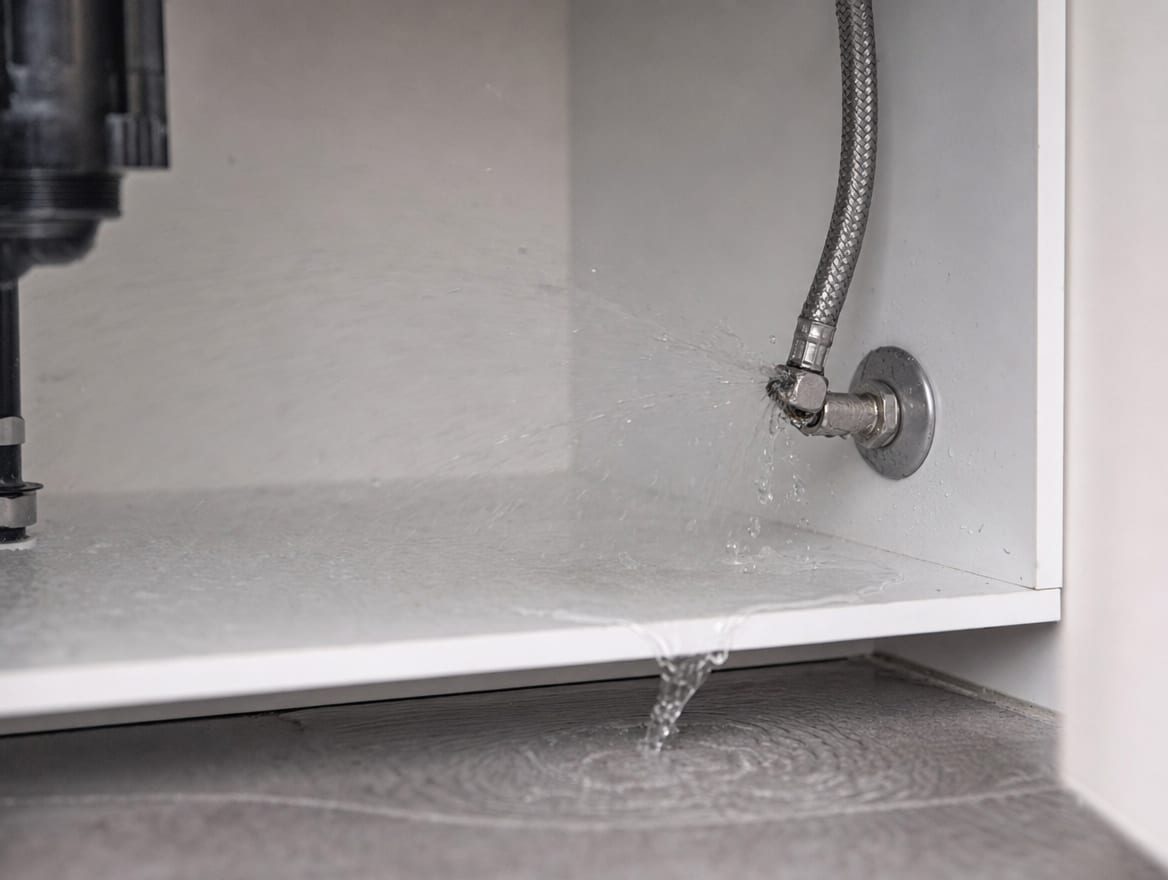
The single most important thing to understand about a burst supply line is speed. A supply line is pressurized all the time, waiting behind the valve for you to open a faucet. When that line breaks, the water does not seep. It sprays under full house pressure and keeps coming until someone closes a valve. Left alone in an empty house, a burst supply line can move a large volume of water in a short time, and it does not stop on its own the way a rainstorm eventually does.
That is what separates a burst from the slow problems people often lump in with it. A drain line only carries water when something upstream is draining, so a crack in a drain leaks in bursts and stays fairly local. A slow drip under a cabinet might dampen a shelf over weeks. A pressurized supply-line failure is a different category of loss: it can fill a floor, find the nearest opening, and run down into the level below while nobody is home to hear it. That volume and that speed are exactly why fast emergency water extraction matters so much after a burst, and why the size of the eventual cleanup is tied so closely to how long the line ran before the water was shut off.
Water that gets loose does not sit politely where it started, either. It runs downhill through floor cavities and utility chases, wicks sideways into wall assemblies, and pools in the lowest finished space in the house. In a Princeton Junction home with a finished basement, that lowest point is often a family room or a home office, which is why so much burst-pipe damage ends up there even when the pipe failed a floor or two above.
The Townhouse and Condo Wrinkle
In a detached home, a burst pipe is your problem inside your own four walls. In a townhouse or condominium, the walls are shared, and that changes almost everything about the response. A pipe can fail inside your unit and send water straight through a party wall, a common chase, or a floor assembly into the unit next door or the one below. Your emergency becomes your neighbor's emergency, sometimes before either of you knows it started.
That shared construction creates a second layer of questions on top of the cleanup. Who is responsible for the pipe that failed, and who handles the wall it ran through? The answer is not something a restoration crew can decide. It lives in the community's governing documents, which may split responsibility between the unit owner and the association across common plumbing, exterior walls, party walls, and shared chases, and it may involve both an association insurance policy and a unit-owner policy. Those documents, not a rule of thumb, decide who owns which line. A good contractor documents the conditions carefully and coordinates access, but does not make the legal call on who pays.
The practical takeaways in a shared building are simple and worth acting on fast:
- Notify the property manager, HOA, or condominium association early, because water can keep moving into common areas and neighboring units until access is arranged.
- Expect the cleanup to include units and common spaces beyond your own front door, which means separate documentation and coordinated drying, not just a crew working one room.
- Keep your own records, since a shared-building loss often turns into overlapping insurance claims where clear photos and a timeline protect you.
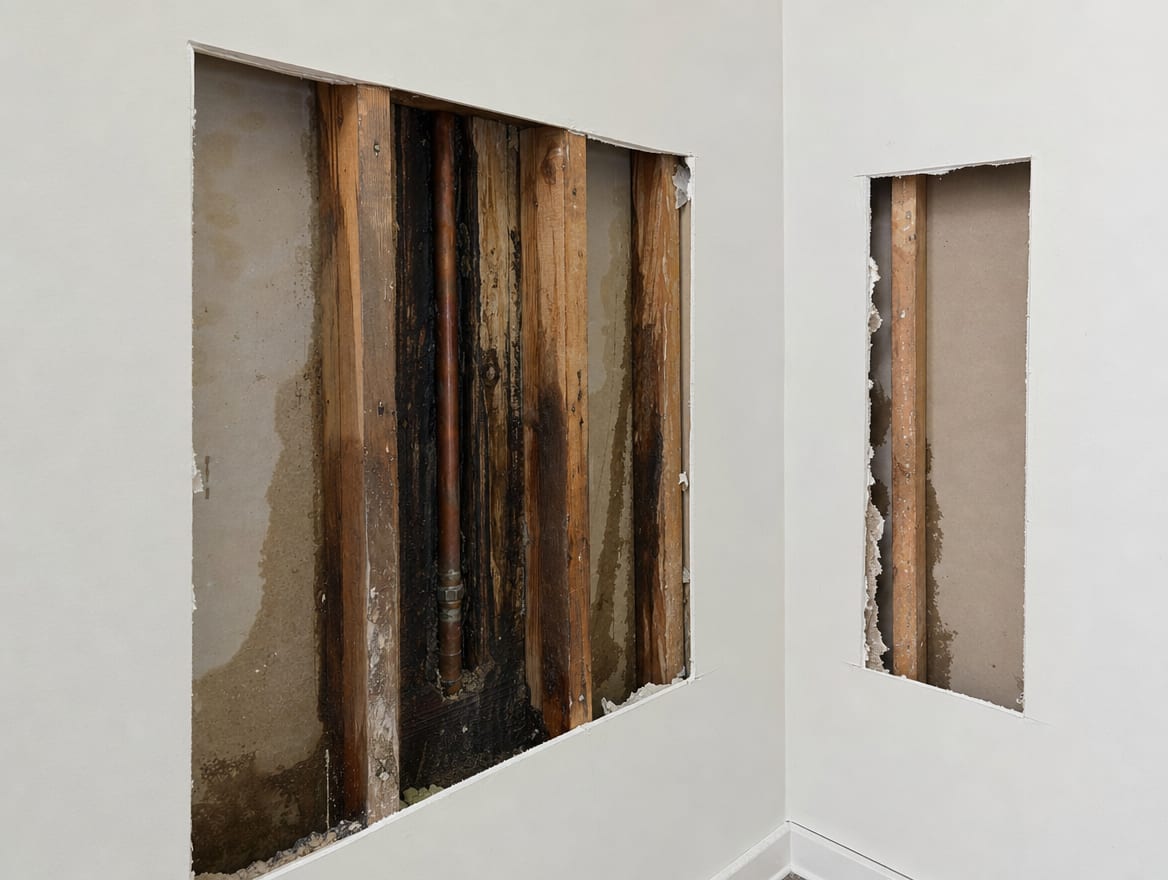
When a burst reaches a party wall or a stacked unit, the job is no longer a single-room dry-out. It becomes a multi-unit loss that needs structural drying across shared assemblies and careful mapping of where the water actually traveled, which is rarely just the room where the pipe broke.
Find the Main Shutoff Before You Need It
Everything above is why the first move after a burst is the same in a townhouse or a detached home: stop the water. The faster the supply is isolated, the smaller the loss, because every minute a pressurized line runs is more water into the structure. That means knowing where your main shutoff valve is before an emergency, so whoever gets home first can close it in the dark without hunting. In many homes the main valve sits where the water line enters, often near the water meter, the front foundation wall, or a utility area. Large homes can have several branch valves as well, and a single shutoff may not isolate every zone, so it helps to know your layout in advance.
Once the water is off, safety comes before belongings, and the cleanup follows a clear order.
The First Hour and the Cleanup That Follows
- 1
Shut off the water
Close the main shutoff or the affected branch valve so no more water is added. In a shared building, this may be your unit valve rather than a building main.
- 2
Stay clear of electrical hazards
Do not step into standing water near outlets, a furnace, or a panel, and do not enter under a sagging ceiling. People come before property.
- 3
Call a plumber and a restoration team
A licensed plumber repairs or isolates the failed pipe. A separate restoration crew handles the water, the drying, and the structure. Notify your HOA or manager if walls are shared.
- 4
Document before you move much
Photograph the water and the affected rooms before cleanup starts, since those images matter to the insurer who decides coverage under your specific policy.
- 5
Extract and map the moisture
Standing water is pulled out first, then meters and thermal imaging trace where water soaked into floors, cavities, and shared walls so nothing wet gets sealed up.
- 6
Dry, then verify
Air movers and dehumidifiers pull moisture from the structure, monitored until materials read dry, before any wall or floor goes back.
That plumbing repair and the water cleanup are two related but separate jobs. Fixing the split pipe stops the source. It does nothing for the ceiling, the insulation, the finished basement, or the neighbor's wall that the water already reached. Repairing the pipe and skipping the moisture mapping is one of the most common and most costly mistakes, because a surface can feel dry while the assembly behind it stays wet. A fast, around-the-clock response is built for exactly this, and getting standing water out quickly is what a 24-hour water damage response is designed to do before the moisture spreads any further.
If the water sat for a while, which is common when a pipe bursts in an empty commuter home, drying alone may not be the end of it. The EPA advises drying wet materials within 24 to 48 hours where possible to limit mold growth, and a burst discovered in the evening may already be into that window. When materials stayed wet past it, the job can grow to include inspecting for mold and, where evidence supports it, remediation before anything is rebuilt.
Preventing the Next Burst
You cannot stop every pipe from failing, but the common causes point to a short list of defenses that genuinely lower the odds and shrink the damage when something does let go. None of these is a guarantee, and each one only helps when it is in place and working before the burst, not after.
Lowering Your Burst-Pipe Risk
Know your shutoff
Find the main water valve now and make sure everyone in the house can close it fast in the dark. In a townhouse or condo, learn your unit valve too.
Insulate vulnerable pipes
Pipes in exterior walls, attics, garages, crawl spaces, and unheated rooms are the freeze-prone ones. Insulating them cuts the cold-snap risk that freeze-thaw creates.
Keep the heat on and even
A furnace failure, a tripped breaker, or a closed heating zone can let interior temperatures fall enough to freeze a line, so keep vulnerable areas warm during cold spells.
Add leak sensors and a smart shutoff
Point-of-use sensors near the water heater, washing machine, and finished-basement floor can alert your phone, and an automatic main shutoff can close the line when it senses abnormal flow while no one is home.
Watch pressure and aging fittings
Water pressure that runs too high strains every joint. Old galvanized pipe, tired supply-line hoses, and questionable connectors are worth replacing before they fail.
For a commuter household, the sensors and the automatic shutoff carry extra weight, because they shorten the gap between when a line breaks and when someone knows about it. A valve that closes on abnormal flow can stop a failed supply line from running for hours in an empty house. That does not replace cleanup, and it will not catch every burst, especially one that starts inside a wall where no sensor sits. But anything that gets the water off sooner directly shrinks the loss you are left to clean up.
Frequently Asked Questions
What should I do first when a pipe bursts?
Shut the water off if it is safe to reach the valve, then keep clear of any electrical hazard and stay out from under a sagging ceiling. Once the source is stopped, call a licensed plumber to repair the pipe and a restoration team to handle the water and drying. If you share walls with a neighbor, notify your HOA or property manager early so access can be arranged.
Why is a burst supply line worse than a slow leak?
A supply line is pressurized all the time, so when it breaks the water sprays under full house pressure and keeps coming until a valve is closed. A slow drip or a drain leak releases far less water and stays more local. A pressurized burst in an empty house can move a large volume fast and run down into the level below before anyone notices.
Who pays when a pipe bursts in a townhouse or condo?
That depends on the source of the leak, the community's governing documents, and the insurance policies involved, which may include both an association policy and a unit-owner policy. Responsibility for common plumbing, party walls, and shared chases is defined in those documents. A restoration contractor should document the conditions but should not make the legal determination of who is responsible.
Do all the wet walls have to come out?
No. Whether a wall is removed depends on the material, how wet it is, whether it is contaminated, and whether the cavity can be dried in place. Some assemblies can be dried and kept, while soaked porous materials that cannot be dried are removed. Moisture mapping before demolition is what tells the crew which is which.
How fast can mold become part of the job?
The EPA advises drying wet materials within 24 to 48 hours where possible because mold can grow when materials stay damp. A burst found in the evening after an all-day commute may already be into that window, so if water sat, the cleanup can grow to include inspecting for mold and remediating it where the evidence supports it.
Will my insurance cover a burst pipe?
Only your carrier can decide that, under your specific policy and the documented cause of the loss. Homeowners policies generally treat a sudden internal plumbing failure differently from external flooding, and some policies limit freezing coverage when reasonable care was not taken to keep the heat on. Clear photos and records from the first hour help support whatever claim you file.
When a pipe bursts in a Princeton Junction home or townhouse, the water is already moving and the clock is running, and the fastest way to limit the damage is to get the supply off and the water out. ExecPro Restoration & Cleaning responds to burst-pipe emergencies in Princeton Junction and throughout the West Windsor area, extracting standing water, mapping where moisture traveled through floors and shared walls, and carrying the job through drying and rebuild. Call (888) 300-3772 or reach out through our contact page to get a team on the way.
Burst Pipe Terms
Tap a term to see what it means.
Supply line. A pressurized water pipe that carries water to fixtures and appliances. Because it holds pressure at all times, a break sprays water fast until a valve is closed.
Serving Princeton Junction
ExecPro Restoration & Cleaning provides mold remediation services in Princeton Junction, NJ, from inspection and testing through removal, drying, and post-remediation verification. Call (888) 300-3772 for 24/7 emergency response.
Related Articles
Frozen Pipe, Empty House: Burst Pipe Cleanup in Deal, NJ
A pipe freezes in a closed Deal, NJ home, splits, then thaws into hours of water. Here is how a burst supply line becomes a whole-house loss and how to stop it.
One Home, Many Air Zones: Designing Indoor Air Testing for Princeton Junction, NJ Properties
Indoor air is not one thing across a Princeton Junction, NJ home. Learn how to design air-quality testing per zone, per floor, and against an outdoor baseline.
Property Management Mold Services in Princeton Junction, NJ: A Repeatable Protocol for Managed Homes and Multifamily Units
How Princeton Junction property managers run mold response across managed units: pre-authorized access, a leak escalation path, and a consistent closeout file.