
Frozen Pipe, Empty House: Burst Pipe Cleanup in Deal, NJ
Cal HewittPublished
- burst pipe cleanup
- burst pipe
- coastal
- new jersey
- deal
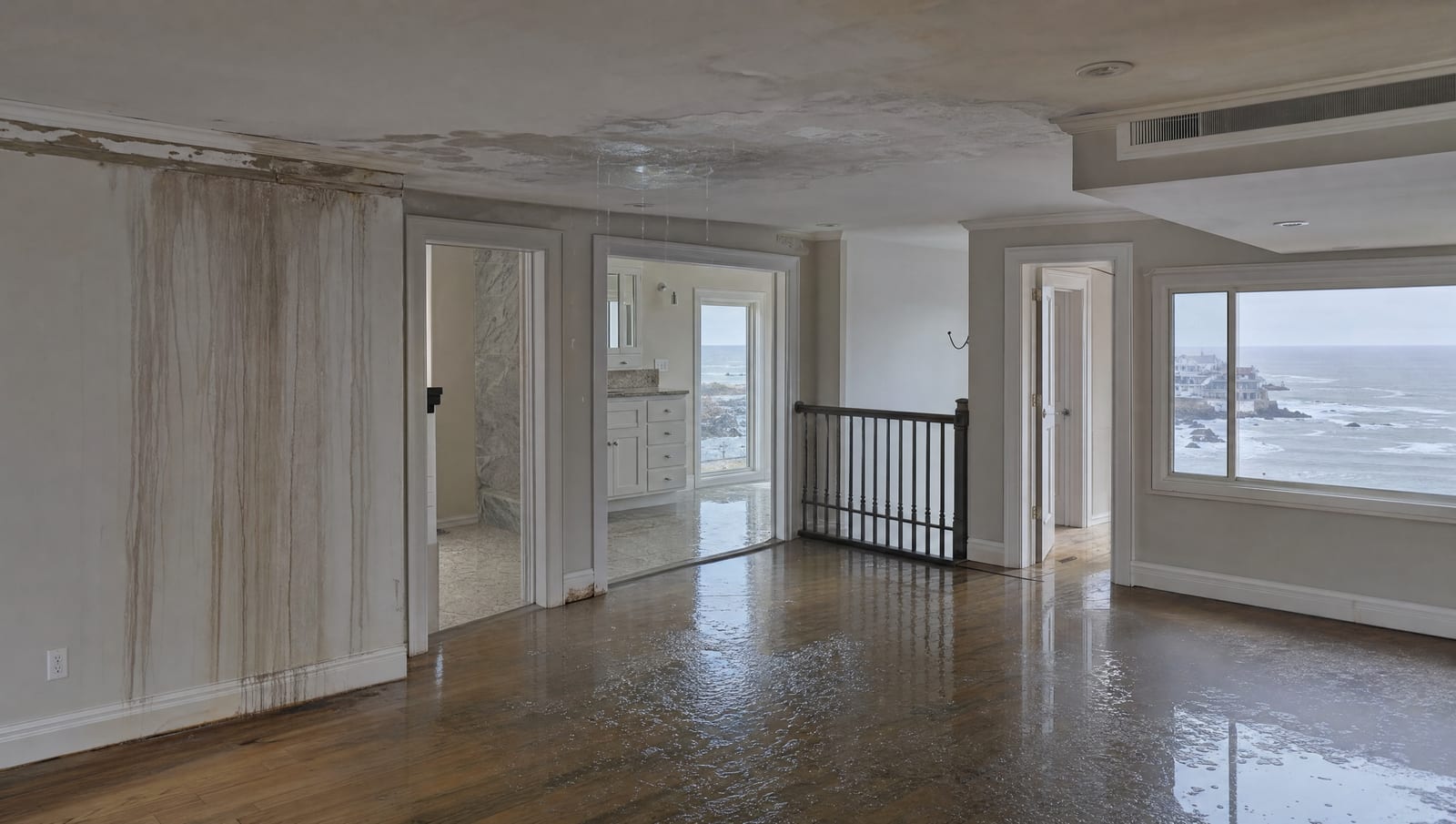
It is the middle of January, and a large home in Deal has been closed since the fall. The heat is turned low or off, the owner is somewhere warmer, and there is no one inside to notice the cold working its way into a bathroom on an exterior wall. Inside one copper line, the water stops moving and starts to freeze. That single event, in an empty house on a cold night, is the beginning of one of the most damaging losses a seasonal shore home can suffer. By the time anyone opens the door, the water may have been running for hours or days, and it did not stay in one room.
A burst pipe is a different animal from the slow, hidden leaks that trouble a closed home in the summer. It is fast, it is high volume, and it starts with a mechanism most owners never think about until it happens to them. Understanding how a pipe actually freezes and bursts, how much water a pressurized supply line can release, and what the very first move should be is what separates a contained loss from a whole-house one. This post stays on that specific problem: the frozen-pipe failure in a Deal home that no one was standing in when it let go.
How a Frozen Pipe Actually Bursts
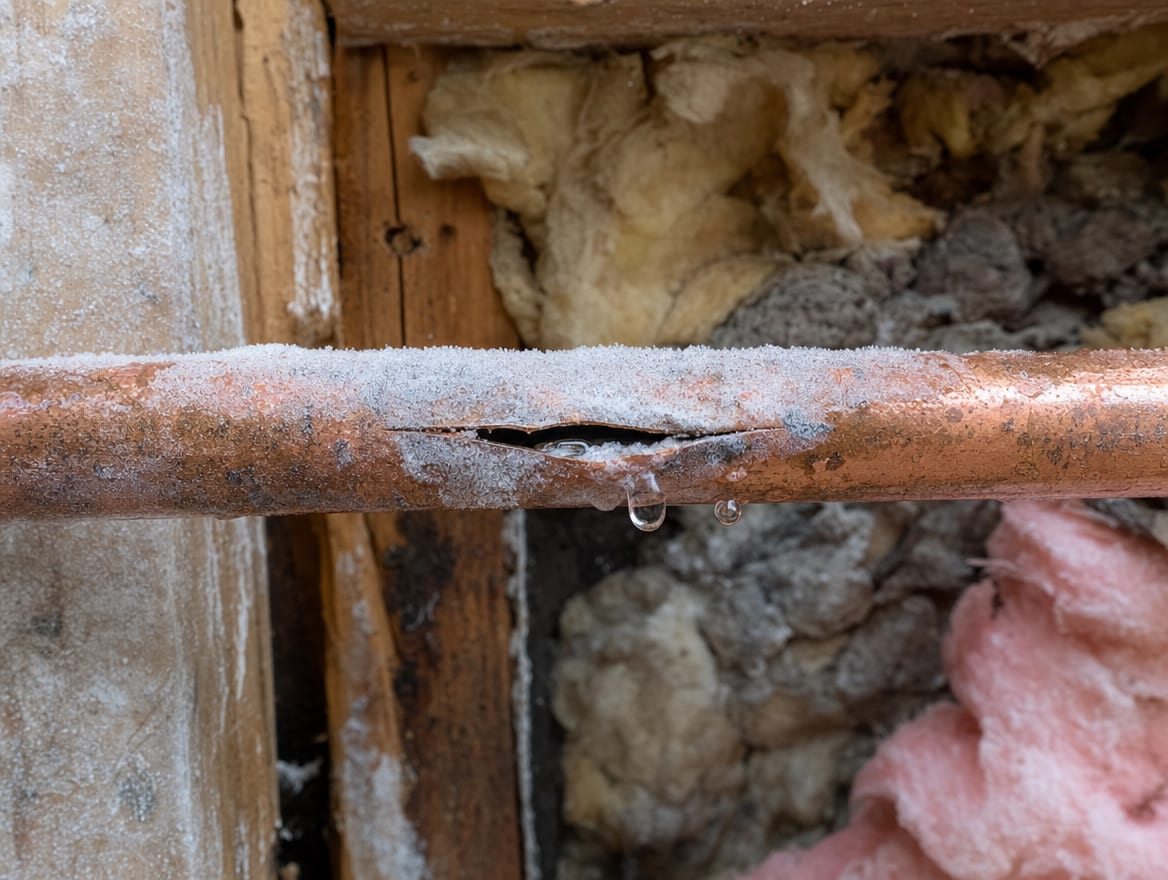
The failure is not really about the ice blocking the pipe. It is about pressure. When water inside a pipe freezes, it expands as it turns to ice. That expanding ice pushes the remaining liquid water ahead of it, and in a closed section of pipe there is nowhere for that water to go. Pressure builds between the ice plug and the closed end or fixture until the pipe wall can no longer hold it, and the metal or plastic splits. The crack often opens at a spot away from the ice itself, which is one reason the damage can surprise people.
Here is the part that turns a split pipe into a flood. The pipe does not pour while it is still frozen. The ice is holding everything in place. The water starts to escape when the pipe thaws, when a warm afternoon, a restored furnace, or returning power melts the ice plug. Now there is an open crack in a line that is still connected to the water main in the street, and that line is under constant pressure. It does not drip and stop. It pours, and it keeps pouring for as long as the water stays on. In an occupied home someone hears it and shuts the water within minutes. In a closed Deal home, there is no one to hear it at all.
Why a Closed Deal Home Is Especially Exposed
Freezing needs cold, and cold gets into a house through the places builders could not fully protect. Pipes that run through exterior walls, unheated attics, garages, crawl spaces when present, mechanical rooms, and detached structures like a pool house all sit closer to outside temperatures than the pipes buried inside heated living space. When the home is warm and lived in, those runs usually stay above freezing. When the heat is off or turned down and the house is empty, the margin disappears.
Deal adds its own pressures on top of that. The heat may be intentionally kept low to save fuel in a home no one is using, or a furnace, thermostat, or fuel supply can fail with no one there to catch it. Winter storms and nor'easters can knock out power for hours, and when the power goes so does the heat and any monitoring that depended on it. The oceanfront setting means wind pushing hard against the building envelope, and drafts through gaps pull heat away from the very wall cavities where vulnerable pipes tend to run. None of these freezes a well-heated pipe on its own, but stacked together in a closed house they let interior temperatures fall to where a pipe can freeze and split.
Why Pipes Freeze and Where They Burst
The real culprit is pressure, not ice
Freezing water expands and pushes the liquid ahead of it against a closed point in the line, and the pipe splits when it can no longer hold that pressure.
The flood starts on the thaw
A frozen pipe stays sealed by its own ice, then a warm spell or restored heat melts the plug and a pressurized line pours out of the crack.
Exterior walls and unheated spaces are the risk zones
Pipes in outside walls, attics, garages, crawl spaces, mechanical rooms, and detached buildings sit closest to the cold.
An empty house removes the safety net
With no one inside to hear the water and shut it off, a burst can run for hours or days before anyone finds it.
Heat loss and power loss stack the odds
Low or failed heat, a winter storm outage, and wind-driven heat loss along the coast can drop indoor temperatures far enough to freeze a vulnerable line.
A Supply Line Does Not Drip, It Pours
The volume is what makes this loss so severe, and it comes back to that constant pressure. A slow leak, the kind that stains a ceiling over weeks, releases a little water at a time. A split supply line is connected to the pressurized water coming in from the street, so once it is thawed and open it discharges continuously. Every hour it runs unnoticed is another hour of water entering the home at full pressure, with nothing to shut it down.
Then gravity takes over, and this is why a single burst can involve the whole house. Water released on an upper floor does not pool politely where it started. It finds the path of least resistance and heads down. It runs across the subfloor, saturates the ceiling below, and follows wall cavities, stair openings, and the chases that carry plumbing and wiring between floors. A pipe that burst in a second-floor bathroom or an attic can send water through custom ceilings, down through wall assemblies and finished rooms, and into a basement or lower level when the property has one. By the time it is discovered, a technician may be mapping a loss that spans several floors from one point of failure, and the visible standing water at the bottom is only the end of the trip.
That vertical path is also why a burst-pipe loss cannot be judged by what is wet on the floor. Insulation, subfloors, wall cavities, ceilings, cabinetry, and framing along the water's route can be soaked while surfaces around them already look dry. The absence of a puddle in a room does not mean the assemblies inside its walls and above its ceiling are dry.
The First Move: Find and Close the Main Shutoff
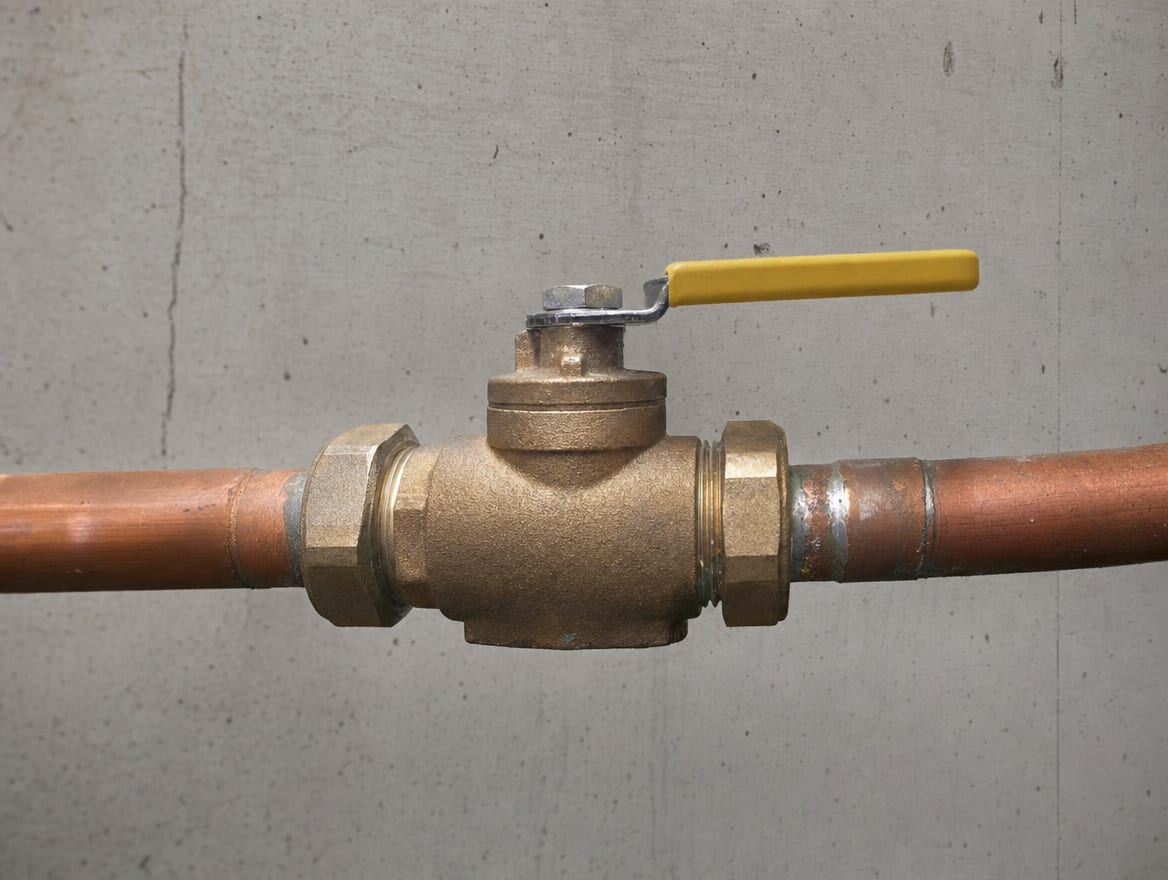
When a burst is discovered, the single most important action is to stop the water, and the fastest way to stop it is the main shutoff valve. This is the valve where water enters the home, often near the meter, in a basement, mechanical room, garage, or utility area. Closing it cuts water to the entire house at once, which matters because a large home can have several plumbing zones and branch valves, and a single branch valve may not isolate the line that failed. When in doubt, shut the main. Official cold-weather guidance for a burst or frozen pipe is consistent on this point: turn the water off right away, and when thawing a frozen pipe, never use an open flame.
Safety comes before cleanup. Water and electricity do not mix, so no one should walk into standing water near outlets, panels, or fixtures, and no one should step under a sagging, water-filled ceiling to reach the shutoff or grab belongings. If there is any doubt about an electrical hazard, power to the affected area is cut at a safe point first, and the utility or a licensed electrician is brought in when the situation calls for it. Once the water is off and the area is safe, two calls follow. A licensed plumber repairs or isolates the failed pipe, which is the plumbing side of the job. A restoration team handles the water, which is a separate task: extracting what has pooled, mapping how far it traveled, drying the structure, and deciding what can be saved. For a seasonal property, the caretaker, property manager, or owner needs to be looped in early so access can be authorized and the insurance claim can start. Before anything is moved, photograph the conditions as found, because that first record is the one a claim will lean on later.
From Shutoff to Rebuild: The Cleanup Sequence
Once the water is off, a burst-pipe cleanup runs as an orderly sequence, and each step depends on the one before it. Because the water arrived under pressure and traveled through the structure, the early diagnostic work is where a careful response separates itself from a quick surface mop-up. The same first-response urgency that makes a fast 24-hour water damage response valuable is exactly what a discovered burst calls for.
Burst Pipe Cleanup, Step by Step
- 1
Stop the source and stay safe
Close the main shutoff to cut water to the whole house, manage electrical and structural hazards, and bring in a plumber to repair the failed line.
- 2
Inspect and map the water
Find the burst location, estimate how long it ran, and use moisture meters and thermal imaging to trace the water down through ceilings, walls, cavities, and lower levels.
- 3
Classify the water and check safety
Supply-line water starts clean, but it can degrade as it sits and contacts building materials, so the category and any contamination are set before removal decisions are made.
- 4
Document the loss
Record photos, moisture readings, the source finding, and the discovery timeline that a seasonal-home claim depends on.
- 5
Extract and protect contents
Remove standing water quickly, then move, lift, or shield furniture, millwork, and belongings out of the water's path.
- 6
Dry the structure and monitor
Run air movers and dehumidifiers, dry wall cavities and subfloors at depth, and log readings until materials reach a dry standard.
- 7
Check for mold if discovery was delayed
When materials stayed wet, inspect for growth and odor and add remediation only where the evidence supports it.
- 8
Verify dryness, then repair
Confirm the structure is dry before any rebuild, so new finishes do not seal moisture behind the wall.
Two steps in that list carry the most weight on a burst loss. Extraction has to be fast and mechanical, because water that ran for hours keeps wicking into porous materials every minute it sits, which is why rapid emergency water extraction is the front end of controlling the damage. And drying has to be proven with readings, not judged by touch, because the moisture that traveled inside walls and above ceilings is often the larger share of the loss. Thorough structural drying of cavities, subfloors, and mechanical spaces is frequently the difference between a finished job and a repeat problem in a large home.
What Can Be Dried and What Has to Come Out
Clean supply-line water is a point in the home's favor, because a Category 1 clean-water loss leaves more materials on the salvageable side than a contaminated flood does. But clean does not mean harmless, and it does not stay clean forever. Water that sits for a long time in a closed home, soaking into drywall, insulation, and organic materials, can degrade in category as it goes. The decision on any given material depends on what it is, how long it stayed wet, the moisture readings, whether it can be dried in place, and whether the assembly can be reached to dry it, not on a blanket rule to tear out everything damp or to save everything on sight. Because Deal has older homes among its building stock, painted plaster, older flooring, pipe insulation, and similar materials may involve lead or asbestos considerations during any demolition, which is a reason to test and plan rather than rush the tear-out. When a burst went undiscovered long enough for materials to stay wet, the team also inspects for mold, since damp building materials can support growth, and remediation is added only where the findings call for it.
If the reconstruction that follows involves plumbing, electrical, structural, insulation, drywall, flooring, or similar building work, some of that scope may require Borough of Deal permits and inspections. Requirements depend on the specific scope and property, so they are confirmed with the Building Department rather than assumed. For the full picture of stabilizing a coastal loss first and rebuilding as its own phase, our guide to water damage restoration in Deal walks through both stages.
Winterizing a Deal Home Before You Close It
The most reliable time to deal with a burst pipe is before it happens, and a home that will sit closed through the cold months is exactly the case where prevention pays off. There is no single correct winterization plan, because the right approach depends on the home's heating system, any fire-suppression or sprinkler lines, boilers, the plumbing design, insurance conditions, and the caretaker arrangement. Those choices should be set with qualified plumbing, HVAC, fire-protection, and insurance professionals for the specific property. Within that, the tools below are the ones that reduce both the chance of a freeze and the length of time a burst can run undiscovered.
Winterizing a Closed Deal Home
Keep heat at a safe minimum
Leaving the heat on at a low set point, rather than off, helps keep vulnerable pipe runs above freezing while the home sits empty.
Consider a full drain-down
For a home that will stay unheated, having a professional drain and, where appropriate, protect the plumbing removes the water that could freeze in the first place.
Add temperature and freeze sensors
Monitors that alert a caretaker or owner when indoor temperatures fall toward freezing give a chance to act before a pipe splits.
Install leak detectors
Water sensors placed near at-risk lines and low points can flag a discharge early, when it may still be a small loss.
Use an automatic or smart shutoff
A whole-home shutoff that can close on a detected leak, or be closed remotely, can stop a burst from running for hours in an empty house.
Know where the main shutoff is
Make sure the owner and the caretaker both know the main valve's location and how to close it fast.
Protect exposed runs and keep power reliable
Insulating or protecting pipes in unheated and exterior areas, and planning for power loss during winter storms, closes the gaps where freezes start.
None of these systems eliminates every risk, and no monitor replaces a real winterization plan built for the home. What they do is shorten the two windows that make a Deal burst so damaging: the time a pipe spends cold enough to freeze, and the time a burst runs before anyone knows.
Frequently Asked Questions
What should I do first when a pipe bursts in my Deal home?
Shut off the water at the main shutoff valve if it is safe to reach, since that cuts water to the whole house at once. Stay clear of standing water near electrical hazards and do not go under a sagging ceiling. Then call a licensed plumber to repair the pipe and a restoration company to handle the water, and notify the owner, caretaker, or insurer for a seasonal property. Photograph the conditions before anything is moved.
Why does a burst pipe release so much water?
A supply line is connected to the pressurized water coming in from the street, so once it splits and thaws it discharges continuously rather than dripping and stopping. It keeps pouring until the water is shut off. In an empty home with no one to hear it, that can mean hours or days of water at full pressure, which is why finding and closing the main shutoff is so important.
How does one burst pipe damage a whole house?
Water released on an upper floor follows gravity down. It saturates the ceiling below and travels through wall cavities, stair openings, and plumbing chases, so a pipe that failed in an attic or upstairs bathroom can wet several floors before reaching a lower level. That vertical path is why a burst loss is mapped through the structure and not judged by the standing water alone.
Can the water damage be dried, or does everything get torn out?
It depends on the material, how long it stayed wet, the moisture readings, and whether the assembly can be reached and dried. Clean supply-line water leaves more on the salvageable side than contaminated water does, but it can degrade the longer it sits. The right call is selective, based on findings, rather than tearing out every damp material or trying to save materials that cannot be dried.
How fast does mold become a concern after a burst pipe?
The EPA advises drying water-damaged materials within 24 to 48 hours when possible, because materials that stay damp can begin to support mold. That is a target to aim for, not a guarantee, and it is exactly why drying should start quickly, especially in a closed home where a burst may already have run for some time before discovery.
How can I keep a closed Deal home from having a burst pipe?
The right winterization plan depends on the home's heating, any fire-suppression lines, boilers, plumbing design, insurance conditions, and caretaker arrangement, so it should be set with qualified plumbing, HVAC, fire-protection, and insurance professionals. Common measures include keeping heat at a safe minimum or draining the system, adding temperature and leak sensors, using an automatic shutoff, and making sure someone knows where the main shutoff is. No single measure removes all risk.
When a frozen pipe lets go in a Deal home, the water does not wait and neither should the response. ExecPro Restoration & Cleaning handles burst-pipe losses on the Jersey Shore from source control and rapid extraction through moisture mapping, structural drying, documentation, and the high-value rebuild that follows. Call (888) 300-3772 or reach out through our contact page to get an assessment scheduled and move from a burst pipe to a fully dried, documented home as quickly as possible.
Burst Pipe Terms
Tap a term to see what it means.
Supply line. A pressurized pipe carrying water into the home from the street main, which discharges continuously once it splits until the water is shut off.
Serving Deal
ExecPro Restoration & Cleaning provides mold remediation services in Deal, NJ, from inspection and testing through removal, drying, and post-remediation verification. Call (888) 300-3772 for 24/7 emergency response.
Related Articles
Reopening a Deal NJ Shore Home: When Air Quality Testing Answers a Real Question
Reopening a closed Deal NJ shore home? Learn when air quality testing helps after vacancy, humidity, a storm, or renovation, and what a test cannot tell you.
Property Management Mold Services in Deal NJ: A Seasonal-Home Protocol
A repeatable mold protocol for managers of seasonal Deal NJ homes: pre-arrival inspections, remote humidity monitoring, emergency access, and owner reporting.
Structural Mold Repair in Deal NJ: Clean, Reinforce, or Call an Engineer
Structural mold repair in Deal NJ starts with one decision: is framing cleanable, decayed, or a job for a licensed engineer. Here is how to tell.