Black Mold Removal in Livingston, NJ: What Sets the Scope and What It Costs
Cal HewittPublished
- black mold
- mold removal
- moisture control
- livingston nj
- essex county
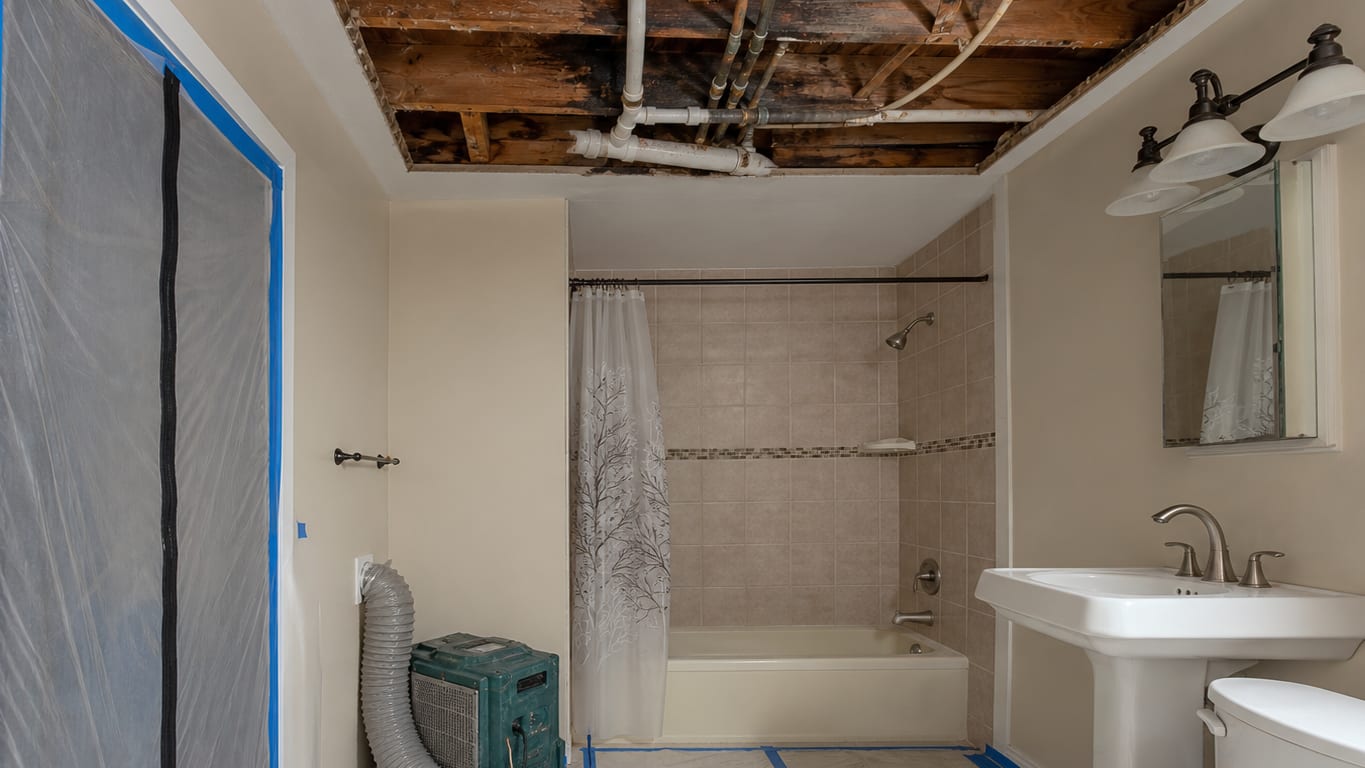
You have found a dark patch on a basement wall, on attic sheathing, or on a ceiling near a bathroom, and you want to know how serious it is, what it takes to remove, and what it is going to cost. Four things about the building decide all three, and every one of them can be established in a single visit.
Worth settling once, because it changes where you look: the CDC's guidance on mold says the color of mold does not identify what type it is or whether it is more dangerous, and the EPA treats all indoor mold similarly for potential health concerns and removal. The dark patch is still real, and it still needs dealing with.
What decides the work is the building itself: which material is affected, where the water is coming from, how far the condition extends, and how easy it is to reach.
What Sets the Scope of the Job
Four facts define the job
The affected material, the moisture source, the extent, and the access are what a scope is built from.
Visible growth is already enough to act on
EPA advises treating all molds similarly with respect to potential health concerns and removal, so the work can start from what you can see.
There is no threshold number to clear
There are no EPA health-based standards for indoor mold-spore levels, so a good report documents conditions at the property rather than chasing a figure.
Health questions belong with a clinician
A condition report describes a building, not a person.
What a Dark Patch Tells You, and What Comes Next
It tells you something has been wet long enough to support growth. That is useful, that is actionable, and it is worth acting on now. What it cannot give you on its own is the species, the risk level, or the amount of material involved, and those are exactly what the next steps establish.
A lab result naming a species does not, on its own, change what happens next. The EPA's guidance on mold testing or sampling notes that when mold is visible, routine sampling is generally not necessary to decide that the moisture problem and the affected material need addressing. Testing answers specific questions. It cannot substitute for finding the pathway that put the water there.
This cuts the other way too. A limited view of one surface does not prove a whole building is affected, and no visible growth on the wall you can see does not rule out a concealed water problem behind it.
The Four Facts That Set the Scope
Instead of the color, look at what a removal scope is built from.
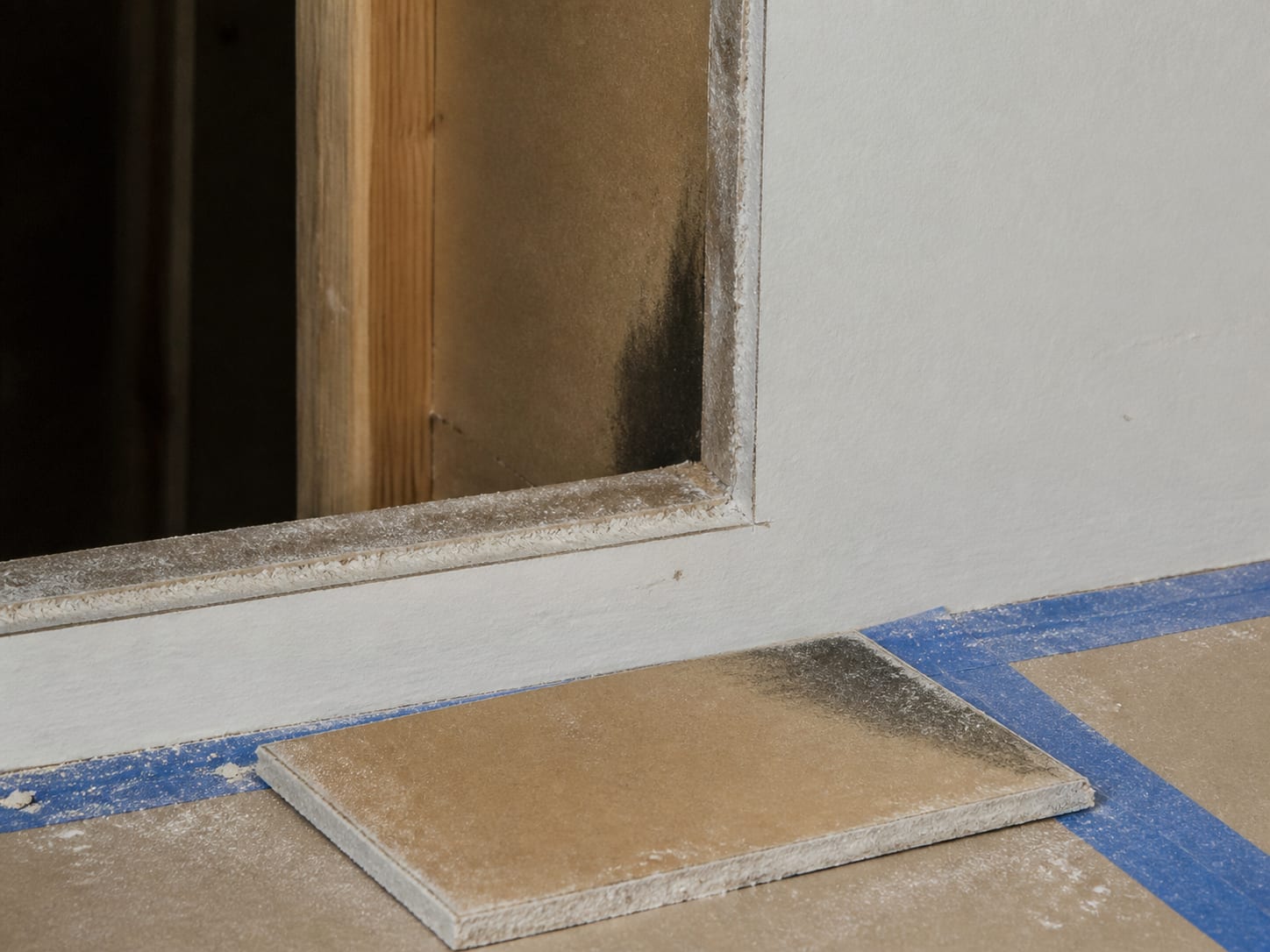
The material. Drywall, wood framing, roof sheathing, carpet, insulation, ceiling tile, stored goods, and mechanical components all behave differently. Porous material that has stayed wet often needs different handling than a sound surface that can be cleaned in place.
The moisture source. A roof leak, a plumbing loss, appliance discharge, foundation entry, condensation, weak ventilation, or material never dried after a known event. The EPA's brief guide to mold and moisture recommends fixing moisture problems and drying water-damaged materials promptly, whatever the growth looks like.
The extent. What is visible, what sits inside an accessible cavity, and what cannot be reached without opening something up. An honest assessment says which of the three it describes.
The access. Work at height, in a crawl space, behind finished surfaces, or around stored contents changes the method and the time.
Hover or tap a row to highlight it.
| The question you arrive with | What CDC and EPA support | What to look at |
|---|---|---|
| "Is this the toxic kind?" | Color does not identify the type of mold or whether it is more dangerous | The material affected and how long it has been wet |
| "Will a lab test tell me how bad it is?" | When mold is visible, routine sampling is generally not needed to decide that moisture and affected material must be addressed | Whether the water source has been found and corrected |
| "Is there a legal limit for spore levels?" | There are no EPA health-based standards for acceptable indoor mold-spore levels | Documented conditions at the property, not a threshold number |
| "Does darker growth mean a bigger job?" | Scope is set by area, material and access | Area, material porosity, access, drying, and source repair |
What Livingston Buildings Change About the Job
Livingston sits inland, in Essex County. Storm-surge and shoreline explanations are not a responsible default here, and they are a fast way to spot a report written from a template rather than from a visit. The mechanisms that matter in a Livingston building are ordinary ones: a leaking roof penetration, a failed supply line or drain, a below-grade wall taking on water, condensation on a cold surface, or an exhaust fan with nowhere good to send its air.
Age deserves the same discipline. Roughly two thirds of Livingston's housing predates 1970, across a census count of 10,699 units. That is real background, and it gets quoted as if it were evidence. It is not. Mold needs moisture. Age changes what you check first. It does not establish that anything is wrong.
Property type changes the picture more than age does. Livingston's construction-record form recognizes single-family, multifamily, and commercial uses separately, and that distinction belongs in the report. A detached house usually has a private attic, basement, bathroom, or laundry source to trace. A multifamily building can involve shared plumbing, common areas, or a neighboring unit, so the source may not sit inside the space where the stain appeared. A commercial property adds occupancy and facility coordination.
How the Removal Work Is Actually Ordered
The sequence protects you, not the label on the growth. Documentation comes first, source control comes with it, and reconstruction stays separate from both.
From Dark Stain to Corrected Source
- 1
Document the condition
Record the location, the apparent extent, the materials, the moisture-source indicators, and the limits of what was reachable. A mold inspection for the affected area turns a color observation into a described condition.
- 2
Trace and correct the moisture
Find the pathway putting water into the assembly and fix it. After a recent water event, water damage restoration and drying belongs here rather than after cleanup.
- 3
Contain, remove, and clean to match the material
Protect unaffected areas and choose removal or cleaning based on what the material actually is.
- 4
Keep regulated repairs separate
If correcting the source changes a roof assembly, plumbing, electrical, mechanical, structure, or occupancy, that is construction work, and the township's Building Department handles permits for it.
A visit that only documents a condition does not by itself create a permit requirement. The reconstruction that follows may. Keeping the observations, the remediation tasks, and any later regulated repairs in three separate parts of the file keeps everyone honest.
What Drives the Cost
No authoritative local source stands behind a flat price for "black mold removal," and any number offered before someone has seen the building is a guess wearing a suit.
What drives cost: the affected area, the material type and how porous it is, correcting the moisture source, whether containment is needed, how reachable the work is, handling of contents, drying, any laboratory analysis you decide to run, work at height or in confined spaces, and repairs after removal. A small accessible surface with the source already fixed is not the same job as concealed growth behind finishes.
A meaningful estimate spells out the documented condition, its assumptions, the work boundaries, who is responsible for the source repair, the removal approach, the exclusions, and any reporting included. If permits are required, those municipal fees sit outside the remediation scope, and the township is the place to confirm them.
The Red Flags Worth Knowing
The clearest warning sign is a contractor or report that identifies "toxic black mold" by sight and then uses that label to make medical, legal, or insurance promises. CDC's position removes the ground under that claim: color is not a reliable indicator of type or danger.
A quieter version of the same problem is treating a lab species name as the remedy while the water source stays active. So is paint, fragrance, or surface cleaning applied over a leak or over wet material. Both improve the appearance while the condition continues.
There is a risk in the other direction too. Disturbing a large or hidden condition before anyone has documented where it is and what feeds it can spread the problem and erase the evidence. Photographs, locations, materials, water-source indicators, and access limits are worth capturing first.
On health, the line is firm. CDC notes that people react differently to mold exposure, and that individuals with allergies, asthma, or immune suppression may be more susceptible. Those are general considerations. They do not let anyone connect one person's symptoms to one dark surface. A clinician handles health questions, and a good contractor says so.
Frequently Asked Questions About Black Mold in Livingston, NJ
Is black mold a separate kind of mold?
No. "Black mold" describes what something looks like. CDC states that color does not identify the type of mold or determine whether it is more dangerous, and EPA advises treating all molds similarly for potential health concerns and removal. The color is a prompt to investigate the moisture, not a classification.
Do I need a lab test before anything can be removed?
Usually not. EPA's guidance says that when mold is visible, routine sampling is generally unnecessary to establish that the moisture problem and the affected material need to be addressed. Testing answers a specific question you have. It does not replace tracing the pathway that caused the growth.
Does darker growth mean a bigger or more expensive job?
Color is not a measure of scope. The area, the material and its porosity, the access, the drying required, and the repair to the moisture source set the size of the work. A small reachable patch with a corrected source is a different job from concealed growth behind a finished wall.
My Livingston house was built in the 1950s. Does that mean I have black mold?
No. Age alone is not evidence of contamination. Mold requires moisture, so an older home with no water problem is not automatically affected, and a newer one with an active leak can be. Build date tells you what to inspect first, not that something is wrong.
Do I need a permit from Livingston to have mold removed?
Documenting a condition does not by itself trigger a permit. Corrective work can, if it changes a roof assembly, plumbing, electrical, mechanical, structure, or occupancy. Livingston's Building Department handles code guidance, permits, and inspections, and project-specific requirements are worth confirming with them directly.
Who should I ask about health effects?
A clinician. CDC notes that reactions to mold exposure vary and that people with allergies, asthma, or immune suppression may be more susceptible, but no contractor can connect symptoms to a particular surface. The building side of the answer is moisture correction and properly scoped removal.
The Simple Version
All visible mold needs the same two things: the moisture stopped and the affected material handled properly. The color adds urgency and nothing else. If you take one thing from the phrase "black mold," let it be a reminder to go look for the water.
When you are ready to turn a dark patch into a described condition with a known source, the team at ExecPro Restoration & Cleaning works through Livingston and the surrounding Essex County communities, tracing the moisture and scoping removal to the materials involved rather than to a label. Call (888) 300-3772 and we will start with the building, not the guesswork. You can also contact us with the details and we will reply with the next step.
Terms Used in This Article
Tap a term to see what it means.
Black mold. A visual description of dark growth, not a species name or a risk level. CDC states that color does not identify the type of mold or whether it is more dangerous.
Serving Livingston
ExecPro Restoration & Cleaning provides mold remediation services in Livingston, NJ, from inspection and testing through removal, drying, and post-remediation verification. Call (888) 300-3772 for 24/7 emergency response.
Related Articles
What Leaves and What Stays: Mold Remediation Scope in Livingston, NJ
Some materials leave a Livingston, NJ home and others get cleaned and dried in place. Porosity draws that line; the water source behind it decides the rest.
Mold Inspection in Livingston, NJ: What It Can Confirm and What It Cannot
An inspection confirms what is visible, reachable and measurable in a Livingston, NJ home. No honest report calls a house mold free, because none can.
From the Ground Up: Crawl Space Mold Remediation in Livingston, NJ
Moisture under a Livingston, NJ home starts at the soil and ends at the floor you stand on. Read it in that order or the repair misses the source.