Sump, Slab, and Shared Drainage: Basement Mold Across Three Kinds of Home in Princeton Junction, NJ
Cal HewittPublished
- basement mold remediation
- basement mold
- mold remediation
- sump pump
- new jersey
- princeton junction
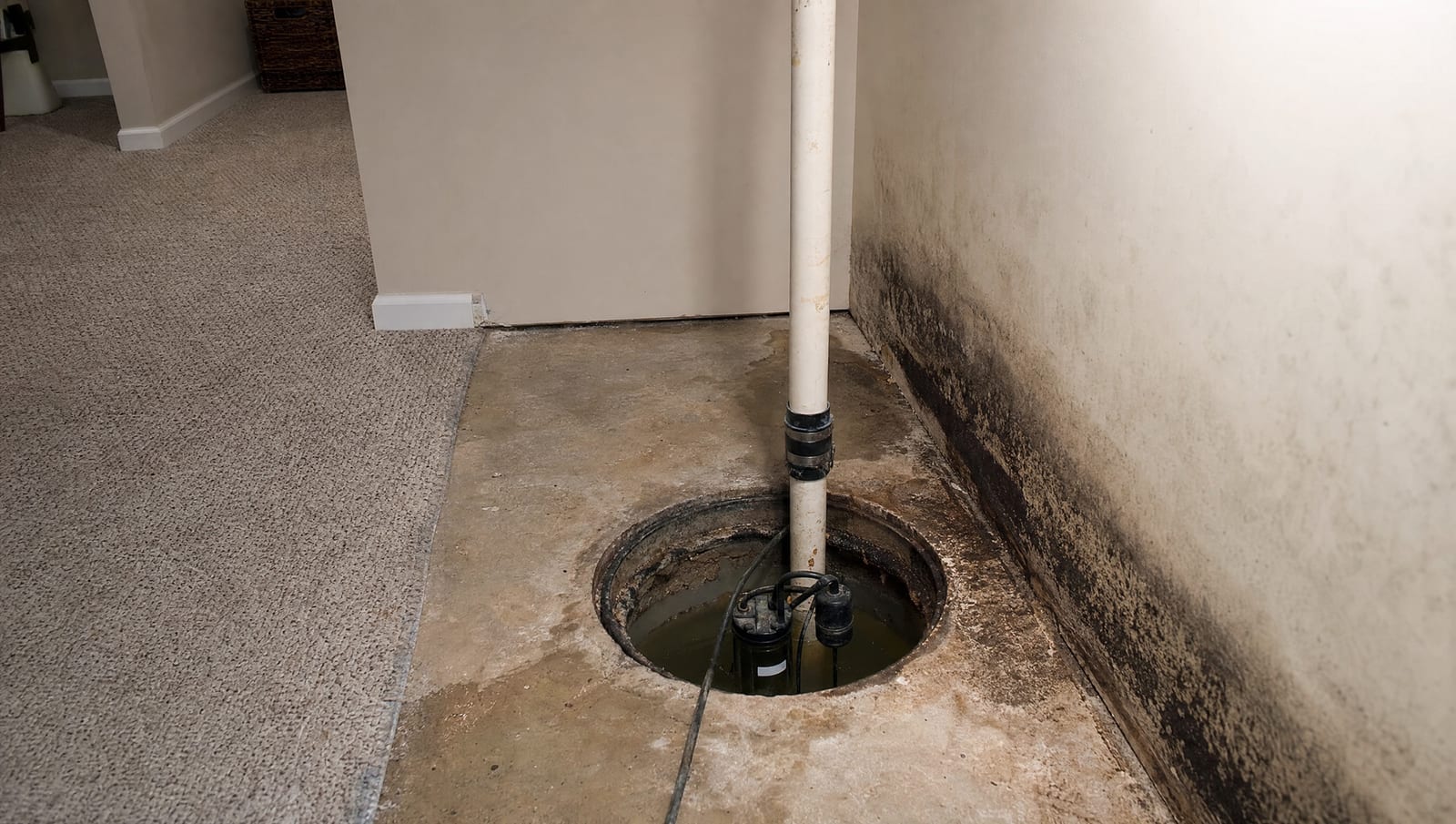
A Princeton Junction townhouse owner did everything that felt reasonable. She noticed a musty smell in the finished basement, found a soft spot behind a baseboard, pulled back a piece of drywall, and saw growth spreading along the bottom of the wall. She bought a dehumidifier, set it running around the clock, and watched the room humidity drop. Yet the wall stayed damp and the smell kept coming back. The dehumidifier was drying the air in the room, but it was not reaching the water inside the wall assembly, and the water was arriving from somewhere the machine could never fix. In her community, the exterior grading and drainage along the foundation belong to the association, not to her.
That is the trap with basement mold. The growth you can see is the last step in a chain that starts with water you often cannot see, moving through parts of the building you may not control. A dehumidifier is a comfort tool, not a diagnosis. Before anyone removes drywall or plans a rebuild, the real question is where the moisture is coming from and how far it has already traveled inside the finished walls and floor. This guide walks through that question in the three kinds of home most common around Princeton Junction: a detached house with a finished basement and a failing sump pump, a townhouse with moisture along a shared foundation wall, and a condominium or managed building where drainage and plumbing may be common systems. The same mold looks similar in all three, but the plan to fix it changes with the building.
Why Finished Basements Hide the Moisture
A finished basement is built to look like the rest of the house. Drywall, framing, insulation, flooring, trim, and built-in cabinets sit a few inches in front of the concrete, and that finished layer is exactly what makes moisture so easy to miss. Water can wick up a foundation wall, spread sideways behind the drywall, and soak insulation and framing while the painted surface still looks clean and dry.
By the time a homeowner notices anything, the signal is usually indirect. A faint earthy odor that grows on humid days. A baseboard that feels soft. A patch of flooring that never quite dries. Carpet that smells even after cleaning. The visible clue is small because most of the damage is hidden inside the assembly. This is why running a single dehumidifier can be misleading. It lowers the humidity of the open room air, so the space feels better, while the wall cavity and the base of the framing stay wet. The moisture that feeds mold is behind the surface, and controlling room air alone does not dry the structure. Finding out how wet the hidden materials really are takes moisture readings, not a nose and a hygrometer.
The Four Ways Water Reaches a Basement
Before you can match a plan to a building, it helps to know how water gets into a basement in the first place. Almost every case traces back to one of four pathways, and telling them apart is the core of a good assessment.
The first is a sump system failure. When a sump pump stops working, loses power, or cannot keep up with heavy rain, groundwater rises into the basement. The second is grading and exterior drainage. When soil slopes toward the house, or gutters and downspouts dump water at the foundation, that water pushes against the wall and seeps through. The third is a plumbing leak, from a supply line, a drain, a water heater, an HVAC condensate line, or a fixture, which can run slowly for a long time inside a wall or under a floor. The fourth is humidity and condensation, when warm moist air meets cool basement surfaces and leaves them damp enough to support growth over time.
Sorting out which pathway is at work matters because each one is fixed by a different trade, and in shared housing each one can sit on a different side of the ownership line. The table below shows how the likely source and the path to a fix shift across the three kinds of home.
Hover or tap a row to highlight it.
| Home type | Likely water source | Who typically diagnoses and fixes it | Access consideration |
|---|---|---|---|
| Detached house | Sump failure, exterior grading, or an interior plumbing leak, all within the property | The owner, working with a remediator plus a plumber, drainage, or sump contractor | The whole water path is inside your own lot and walls |
| Townhouse | Moisture along a shared foundation wall or exterior drainage the association maintains | Remediator documents conditions; the source repair may fall to the association's trade | May require access to a neighbor's unit or common areas, arranged through the association |
| Condominium or managed building | Common drainage, a shared plumbing stack, or a common foundation | Remediator documents; property manager coordinates the common-system repair | Governing documents decide who owns the system; the remediator does not |
The table is a starting map, not a ruling. Every association and condominium writes its own governing documents, and those documents are the authority on which components are common and which belong to the unit. A remediator records where the moisture is and where it came from. It does not decide who is legally responsible.
The Detached Home: Start at the Sump and the Drainage
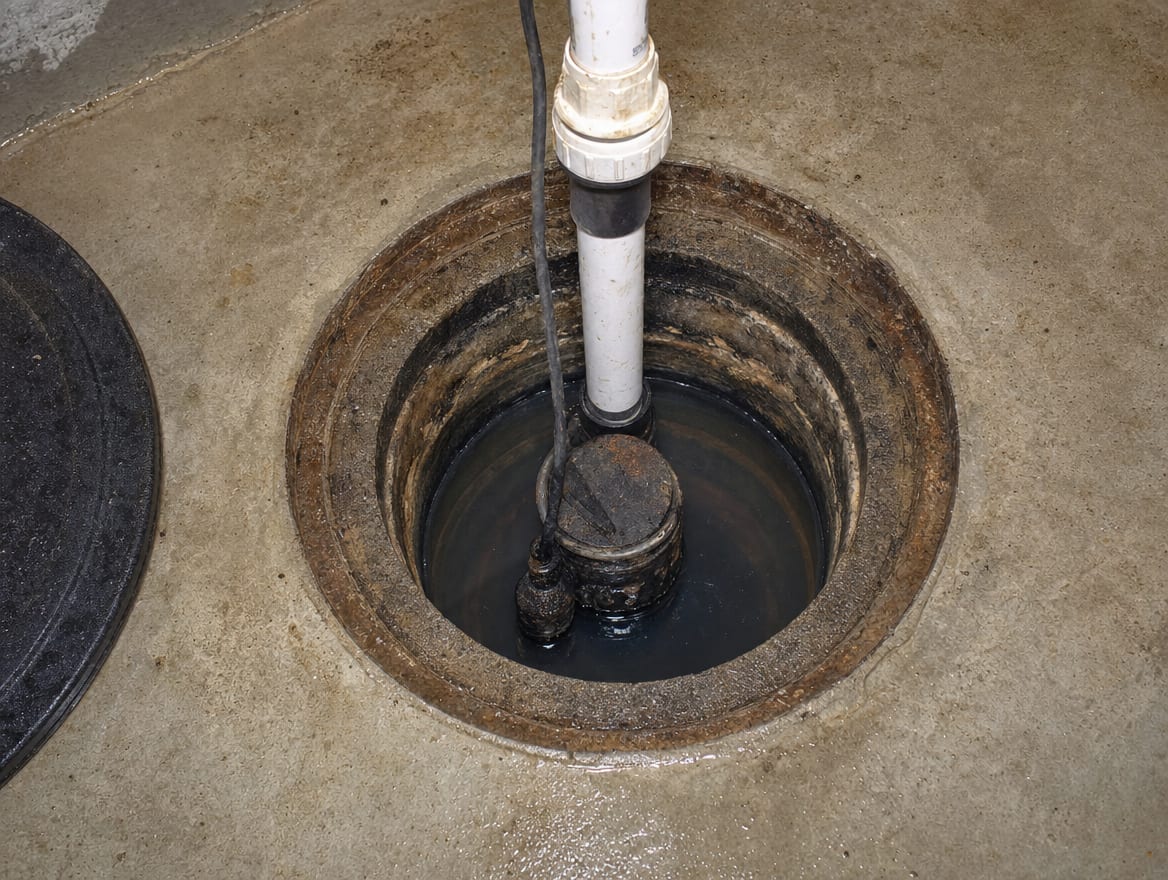
In a detached house, the entire water path belongs to the owner, which makes the sump system and the exterior drainage the first things to check. A finished basement in a larger home may sit over a sump pit that runs quietly for years until the one storm it fails on, and by then the water is already in the walls.
A sound inspection of a detached home looks at the sump pump itself and everything connected to it, then widens out to how water is managed around the house. If the pump did not run when it should have, or ran but could not move the water away from the foundation, that is a source you can correct. The checklist below covers the parts worth confirming.
Sump System and Drainage Check
Sump pump operation
Confirm the pump actually turns on when the pit fills and moves water, rather than humming, sticking, or sitting dead after a power loss.
Float switch
The float is what tells the pump to start. A float that is stuck, tangled, or set wrong can leave a working pump idle while the pit overflows.
Discharge line and extension
The pipe should carry water well away from the house. A short or disconnected extension dumps water right back against the foundation it just left.
Check valve
This one-way valve keeps pumped water from draining back into the pit. A failed check valve makes the pump cycle over and over without clearing the water.
Battery or backup pump
A backup pump keeps working during a power outage or when the main pump fails, which is often exactly when the heaviest water arrives.
Exterior grading
Soil should slope away from the foundation. Ground that tilts toward the house steers rain straight at the basement wall.
Gutters and downspouts
Clogged or short downspouts concentrate roof water at the foundation instead of carrying it off, adding to what the sump has to handle.
None of these are mold repairs. They are water repairs, and they are the reason the mold appeared. A remediator can clean and dry the basement, but if the sump, the discharge, or the grading is left as it was, the moisture returns and the growth comes with it. In a detached home, the good news is that every one of these fixes is within the owner's control.
The Townhouse: Moisture Along a Shared Foundation Wall
A townhouse changes the picture because the wall you are looking at may not be entirely yours. The foundation can be shared with the building, and the grading and drainage outside are often maintained by the association. That is the exact situation in the opening story. The mold sits inside the unit, but the water that feeds it arrives through exterior components the owner does not control.
The engineering question is still the same as in a detached home. Where is the water coming from, and how far has it spread inside the finished wall? What changes is the repair path. If the assessment traces the moisture to exterior drainage or a common foundation, the interior work still happens, but the source correction belongs to the association's contractor, not to the unit owner's plumber. A remediator documents that the source sits in a shared component and shares those records so the association can coordinate the outside repair. The owner handles the finished materials inside the unit; the moisture that damaged them may originate outside the owner's authority. Keeping that distinction clear early, and reporting it to the property manager promptly, is what keeps a townhouse project from stalling once the interior is opened up.
The Condominium or Managed Property: Common Systems
In a condominium or a managed building, more of the building is shared, so more of the possible sources are common systems. A vertical plumbing stack may serve several stacked units. The foundation and the site drainage may be common elements. A drainage backup or a slow stack leak can wet framing and drywall in one unit while the source sits in a system the whole building shares.
Here the coordination matters as much as the cleanup. The remediator maps the moisture and the extent of the growth, documents whether the source is a unit branch or a common system, and gives the property manager what is needed to bring in the right trade for the shared component. Working through professional property management mold services is common in these buildings, because one loss frequently touches more than one unit and more than one insurance policy. The remediator records conditions across the affected areas. The governing documents and the manager decide who owns the system and who arranges the repair. As before, a contractor documents; it does not adjudicate.
Why Moisture Mapping Comes Before Demolition
It is tempting to start tearing out drywall the moment mold appears, but opening the wrong wall wastes work and can spread contamination. Moisture mapping comes first for a reason. Using moisture meters and, where useful, other readings, a professional traces how far the wet area actually extends inside the finished walls and floor, rather than guessing from the visible patch.
That map does two things. It shows the true boundary of the affected materials, so removal is sized to the real problem instead of a rough estimate. And it points back toward the source, because the pattern of wet materials often reveals whether the water came up from the slab, in from a wall, or down from a leak. Mapping before demolition turns a guess into a plan. It tells the crew what to open, what to protect, and what to leave alone, and it gives the owner a documented picture of conditions before anything is removed.
What a Complete Remediation and Drying Scope Includes
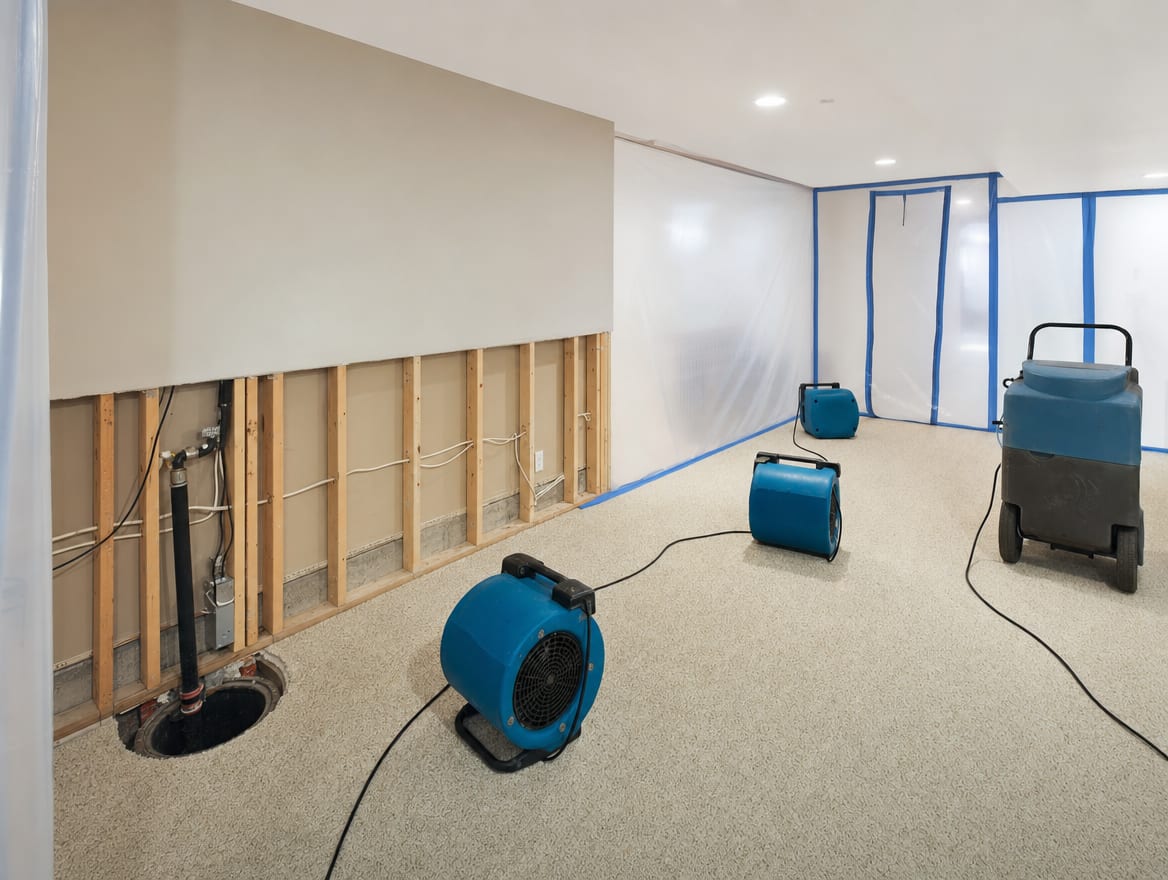
Once the source is understood and the wet area is mapped, a complete project follows a clear sequence. Spray-only, fogging-only, bleach-only, or paint-over work is not a solution when wet materials and an active source remain. A sound scope contains the area, removes what cannot be saved, dries the structure to a target, corrects the source with the right trade, and verifies the result before rebuilding.
Finished-Basement Mold: Map, Contain, Dry, Verify
- 1
Assessment and moisture mapping
A professional inspects the basement, takes moisture readings, and maps how far the wet area extends behind the finished surfaces.
- 2
Identify the source and who controls it
The assessment names the water pathway and documents whether the source is a unit component or a shared one.
- 3
Selective opening
Only the mapped wet sections are opened, so demolition matches the real problem instead of guesswork.
- 4
Containment and HEPA air control
The work area is sealed with barriers and HEPA-filtered air scrubbers so spores do not spread to clean parts of the home.
- 5
Remove unsalvageable finishes
Saturated drywall, insulation, carpet, and pad are removed and bagged, while salvageable framing and masonry are cleaned.
- 6
Structural drying to a dry standard
The framing, slab, and remaining materials are dried to a documented target, confirmed by readings, not by how the room feels.
- 7
Source correction by the right trade
The sump, drainage, plumbing, or grading problem is repaired, or formally assigned to the plumber, drainage contractor, or association responsible.
- 8
Verification and rebuild
Completion is confirmed against written criteria, then drywall, flooring, insulation, and trim are restored.
Every step can involve a different trade, and in shared housing one step can involve a different owner entirely. That is why comparing written scopes matters more than comparing bottom-line prices. A low quote that leaves out drying, source correction, shared-property coordination, or rebuild is not cheaper. It is smaller, and the missing pieces return as the next problem. No honest contractor states a fixed local price or timeline before seeing the extent of the hidden damage, the number of rooms, and how long the structure takes to dry. Reaching a documented dry standard through proper structural drying that meets a measured target is what makes the rebuild hold.
Which Trade Owns the Repair
Because the source can be one of several different problems, the source repair often belongs to a trade other than the remediator. A failed sump pump, a bad check valve, or a plumbing leak is a plumber's or sump contractor's work. Grading, downspout extensions, and exterior drainage are drainage work. A shared foundation or common drainage in a townhouse or condominium is usually the association's responsibility to repair. The remediator handles inspection, containment, removal, drying, and verification, and coordinates with whichever trade owns the source.
What the remediator does not do is decide legal responsibility. In a shared building, who pays for a common-system repair is a matter for the governing documents and the insurance carriers, not the restoration crew. The remediator documents where the water is and where it came from, and that record supports the conversation without settling it.
What to Document Before You Rebuild
The finished basement should not be closed back up until the conditions and the work are on paper. Good documentation protects the owner during an insurance claim, a real estate sale, or an association discussion, and it is the difference between a repair that reads as thorough and one that raises questions later.
Owners should keep the date and cause of any water event, photographs and video of the conditions, the moisture readings and drying logs, the written remediation scope, any inspection or laboratory reports, a contents inventory, and the invoices. In a townhouse or condominium, add the governing documents and your correspondence with the property manager or association, since those define which components are common and show that you reported a shared source in a timely way. Insurance coverage depends on the policy terms and the cause of loss, and a contractor cannot guarantee it, so clear records from the start are what give a claim its best footing.
Frequently Asked Questions
Why does a finished basement hide mold so well?
The finished layer of drywall, framing, insulation, and flooring sits in front of the concrete, so water can wick up and spread behind it while the painted surface still looks clean. Most of the damage is inside the wall assembly, which is why the first clue is usually an odor or a soft spot rather than visible growth. Moisture readings are what reveal how wet the hidden materials really are.
How do I know if my sump pump failed?
Signs include water on the basement floor after heavy rain, a pump that hums or stays silent when the pit is full, a float switch that is stuck or tangled, or a discharge line that dumps water right back at the foundation. A pump can also run yet fail to keep up during a big storm, or stop during a power outage if there is no battery backup. An inspection of the pump, float, check valve, and discharge line usually tells the story.
Who fixes the water source in a townhouse or condominium?
That depends on the governing documents. If the source is exterior drainage, a shared foundation, or a common plumbing stack, the repair often falls to the association or the managed building, while the finished materials inside the unit are usually the owner's. A remediator documents where the moisture is and where it came from, but it does not decide who is legally responsible. That answer lives in the community's declaration, bylaws, and rules.
Do we have to test the mold before removing it?
Usually not. When mold is already visible, the response does not change based on the species, so testing is not an automatic first step. Testing earns its place when it answers a defined question, such as confirming hidden growth, supporting a real estate or insurance matter, or checking post-remediation criteria. The priority with visible growth is the moisture and the material, not a label.
Will insurance cover basement mold?
Only your carrier can decide, based on your specific policy, the cause of loss, and any exclusions. A sudden plumbing failure may be treated differently from long-term seepage or groundwater, and in a shared building both an association policy and a unit-owner policy can be involved. A contractor cannot guarantee coverage, which is why documented conditions and a clear scope matter from the beginning.
Do you have to tear out all the drywall?
No. Removal is sized to the mapped wet area and the condition of the materials, not to the whole room by default. Moisture mapping shows how far the damage actually extends, so only the affected sections are opened. Dry, unaffected finishes can often stay in place.
When basement mold turns up in a Princeton Junction home, the right first move is to find the water before touching the wall, then let a documented source diagnosis guide the scope. ExecPro Restoration & Cleaning serves Princeton Junction and the West Windsor area with professional mold remediation across Princeton Junction, handling inspection, moisture mapping, containment, removal, drying, source coordination, and rebuild, with independent post-remediation verification when a project calls for it. You can reach our team at (888) 300-3772 or get in touch through our contact page to start with a clear assessment of what you are actually dealing with.
Basement Mold and Sump Terms
Tap a term to see what it means.
Sump pump. A pump set in a pit at the low point of a basement that removes groundwater before it rises into the room. When it fails or cannot keep up, water enters the basement.
Serving Princeton Junction
ExecPro Restoration & Cleaning provides mold remediation services in Princeton Junction, NJ, from inspection and testing through removal, drying, and post-remediation verification. Call (888) 300-3772 for 24/7 emergency response.
Related Articles
The Closed-House Basement: Finding Hidden Mold in a Reopened Deal, NJ Home
A closed Deal, NJ shore home can look dry when you reopen it and still hide basement mold. Why source history and moisture mapping beat what you can see.
Behind the Finished Wall: Basement Mold and Old Foundations in Princeton, NJ
Many Princeton NJ basements pair an old stone foundation with modern finishes, and mold can hide behind a clean-looking wall. Here is how to find and fix it.
Basement Mold Remediation in Bridgewater, NJ: Seepage, Sumps and a Musty Lower Level
A musty lower level after rain often means water is still getting in. How to read seepage, a struggling sump or a leak, and what removal in a basement involves.