Finished or Utility: Basement Mold Remediation in Livingston, NJ
Cal HewittPublished
- basement mold
- mold remediation
- moisture control
- livingston nj
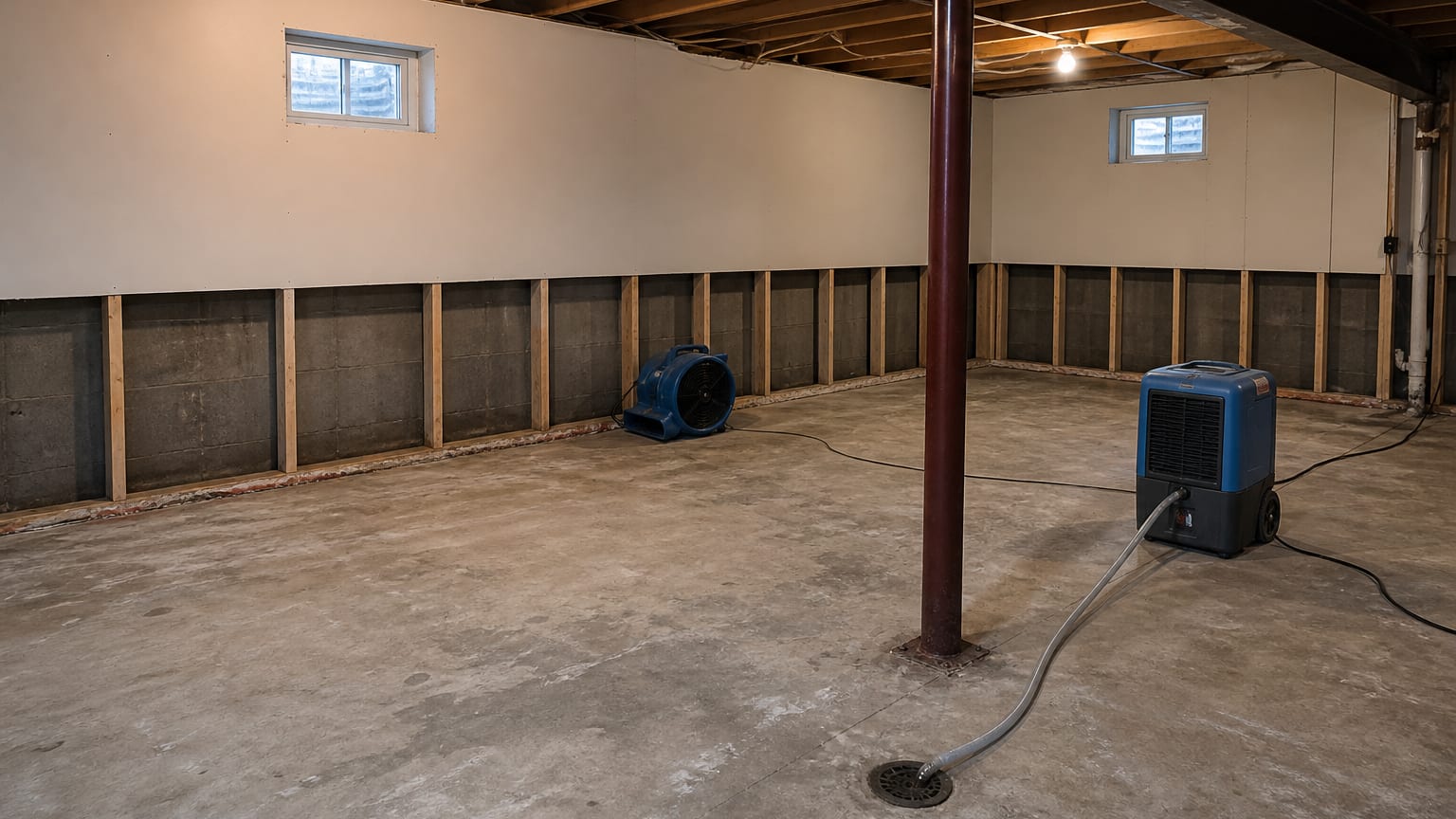
Picture two basements on the same street in Livingston. The first is finished: carpet over the slab, framed walls with drywall and insulation, a guest room, a bathroom in the corner. The second is a utility basement: bare foundation walls, painted concrete floor, the furnace and water heater in plain view, shelving along one side holding boxes and paint cans.
Now the same water gets into each one. Same rain, same weekend, same volume. In the utility basement you will probably see it: a wet line on the wall, a damp patch near a joint, a puddle heading for a drain. In the finished basement you might see nothing, because the water is behind the drywall and under the carpet pad, sitting against wood framing where nobody is looking. Weeks later, the only clue is a smell.
That difference is the whole story below grade. The mold is not the problem. The water is, and the materials in the room decide how long it takes to notice, how much has to come out, and how much of the job is rebuilding rather than cleaning.
Key Takeaways
Materials decide the evidence
An exposed foundation wall shows you moisture directly, while finished walls, flooring and insulation can hide wet material for weeks with no visible sign.
The source comes first
Cleaning mold without correcting the water pathway is not a durable fix, which is why source tracing comes before any removal.
Below grade water has several routes
Foundation, plumbing, appliances, windows, grading and drainage, and indoor condensation are all possible pathways, and only direct observation identifies which one is active.
Livingston is an inland township
Essex County basements deal with rain related entry, surface drainage, groundwater conditions, plumbing failures and indoor humidity.
Porous and non porous materials are handled differently
Wet drywall, insulation, carpet and contents often cannot be saved, while sound structural surfaces can usually be cleaned and dried.
Remediation and rebuild are separate jobs
Removal and drying are one scope, and putting the room back together is another, with different requirements and sometimes municipal review.
Two Basements, Two Different Problems
Livingston Township has roughly 10,699 housing units, and the township's own records recognize single family, multifamily and commercial classifications. A below grade area here might be unfinished storage, a finished recreation room, a mechanical utility room, a condominium common area, or the lower level of a commercial building. Each has different contents, different access, and often a different person who has to approve the work.
Construction age does not prove a basement defect on its own. What it changes is the history a job needs first: foundation type, prior waterproofing, whether there is a sump or drainage system, where the plumbing runs, how the finished walls were assembled, and what renovation work has happened over the years.
The Utility Basement: What You Can See
An unfinished basement is honest with you. Concrete and block do not hold water the way drywall and insulation do, and there is nothing between you and the evidence. You can look at the wall to floor joint, see staining below a window well, and see whether the floor near the mechanical drain is wet. That visibility pays off: drying is easier when air reaches the surfaces, access is easier when nothing has to be opened, and the scope tends to stay close to the original estimate.
The catch is that a utility basement is usually where the stored contents live. Cardboard, paper, fabric, upholstered furniture and old carpet remnants absorb water and support growth even when the walls around them are bare. A room can have a sound foundation and still have a real mold problem sitting on a stack of boxes.
The Finished Basement: What the Walls Hide
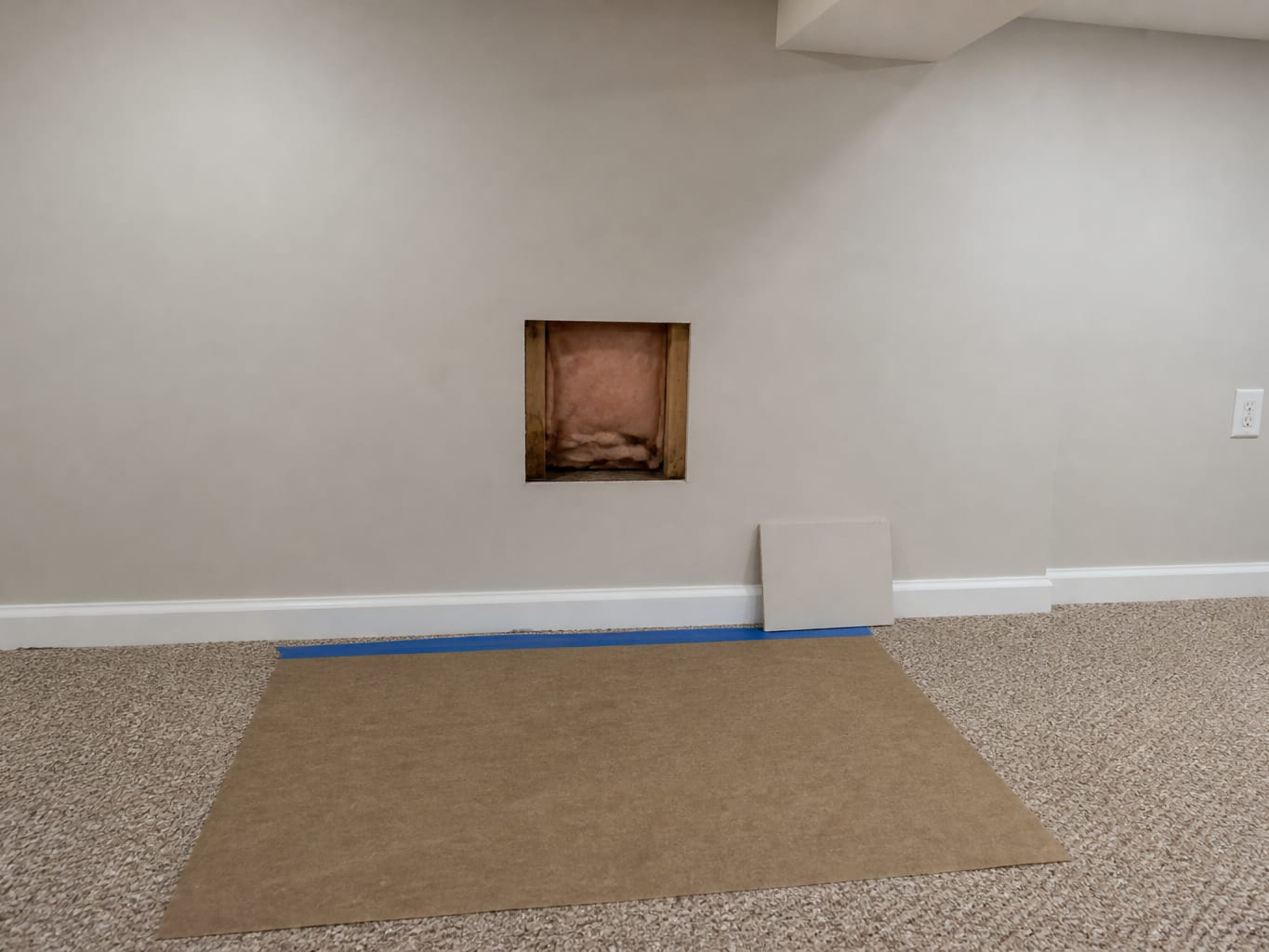
A finished basement is a different investigation, because the assembly is the issue. A framed wall with insulation behind drywall can hold wet material against wood for a long time without showing anything on the painted surface. Carpet and pad stay damp underneath while the top feels dry. Baseboard trim wicks water upward from the slab. Built in cabinetry blocks both airflow and view.
Newer assemblies can trap moisture more effectively than older ones, because tighter construction gives a small leak fewer ways to dry out on its own. So the assumption that a newer basement is a safer basement does not hold. The material logic does: the more layers between you and the foundation, the longer a small water event stays hidden. That is also why a finished basement scope can widen once work starts. The first honest look behind a wall happens when that wall is opened, and the wet area is not always the size of the stain on the front.
Hover or tap a row to highlight it.
| What you are comparing | Utility basement | Finished basement |
|---|---|---|
| How the problem shows up | Visible staining, damp patches, standing water, odor | Often odor first, with little or nothing visible on the surface |
| Main materials at risk | Stored contents, furniture, boxes, sometimes framing near a source | Drywall, insulation, framing, carpet and pad, baseboard, cabinetry |
| Access for inspection | Direct, surfaces are exposed | Limited, walls and flooring must be selectively opened |
| Drying conditions | Air can reach most surfaces | Moisture can sit inside a wall cavity or under flooring |
| Likelihood the scope grows | Lower, since the condition is mostly visible | Higher, because concealed material is only confirmed once opened |
| Rebuild involvement | Usually minimal | Often significant, since finishes have to be replaced |
Where the Water Is Actually Coming From
Livingston sits inland in Essex County, and water reaches a basement here by a short list of routes: rain related entry, surface drainage, groundwater, sewer or plumbing failures, and condensation.
The EPA's guidance on mold and moisture makes the general rule plain: keep indoor humidity down and correct water problems promptly. What general guidance cannot do is diagnose one specific foundation. Only address specific observation does that. Moisture at a wall joint, staining under a window, water pooling near a mechanical drain, a fitting that weeps under a laundry connection: those are findings. A storm having happened is not, because it does not establish that a particular basement was affected.
The fix follows the pathway, so telling those routes apart is the first useful thing a site visit does. A heavy rain event, a recurring humidity problem and an appliance failure call for three different corrections. Seasonal use counts too: a basement closed up with little air circulation, a dehumidifier that has been full longer than anyone realized, or air conditioning condensation collecting where it should drain. None of that is proven from the street. It is found by walking the room.
Finding the Source Before Anything Comes Out
Source tracing comes first because cleanup without a water correction does not last. Remove the growth, put the wall back, leave the pathway open, and the room is wet again the next time conditions repeat.
A proper look documents the exterior and interior indications, the accessible foundation walls, the plumbing and appliance conditions, the finishes, the contents, any odor, and moisture readings where those help. It also records what could not be reached. Saying plainly that a section behind built in cabinetry was not opened beats implying the whole room was cleared.
One point surprises people: when mold is already visible, sampling is not necessarily needed to decide what to do. The EPA is direct that sampling is not routinely required when mold is visible, because wet material and an active source have to be addressed either way. Testing earns its place when the question is genuinely open, and then a dedicated mold inspection answers it before any removal scope is written.
How a Below Grade Scope Is Built
- 1
Trace the water pathway
Walk the exterior and interior, check foundation walls, plumbing, appliances, windows, drainage and humidity conditions, and take moisture readings where they help.
- 2
Map the affected materials
Establish what is actually wet, including concealed drywall, insulation, framing, flooring and stored contents, and note every area that could not be accessed.
- 3
Correct the source
Stop the water at its pathway, whether that means plumbing, drainage, grading, waterproofing or a mechanical correction, before treating the removal work as durable.
- 4
Remove and clean by material
Take out unsalvageable porous material under containment, clean sound structural surfaces, and handle contents according to their actual exposure.
- 5
Dry and confirm
Bring the assembly down to a measured dry standard rather than a dry feeling surface, and document the confirmation.
- 6
Separate the rebuild
Treat replacing finishes as its own scope, and check local requirements before any regulated repair or alteration.
What Comes Out and What Gets Cleaned
The material decides its own fate. Porous material that absorbed water and supported growth generally comes out: wet insulation, saturated drywall, carpet and pad, soaked baseboard, affected cabinetry, and contents that held water. Sound structural surfaces, including foundation walls and undamaged framing, can usually be cleaned and dried in place. That is the biggest reason a finished basement job runs larger than a utility basement job with the same water. The water was not worse. It landed in more removable material.
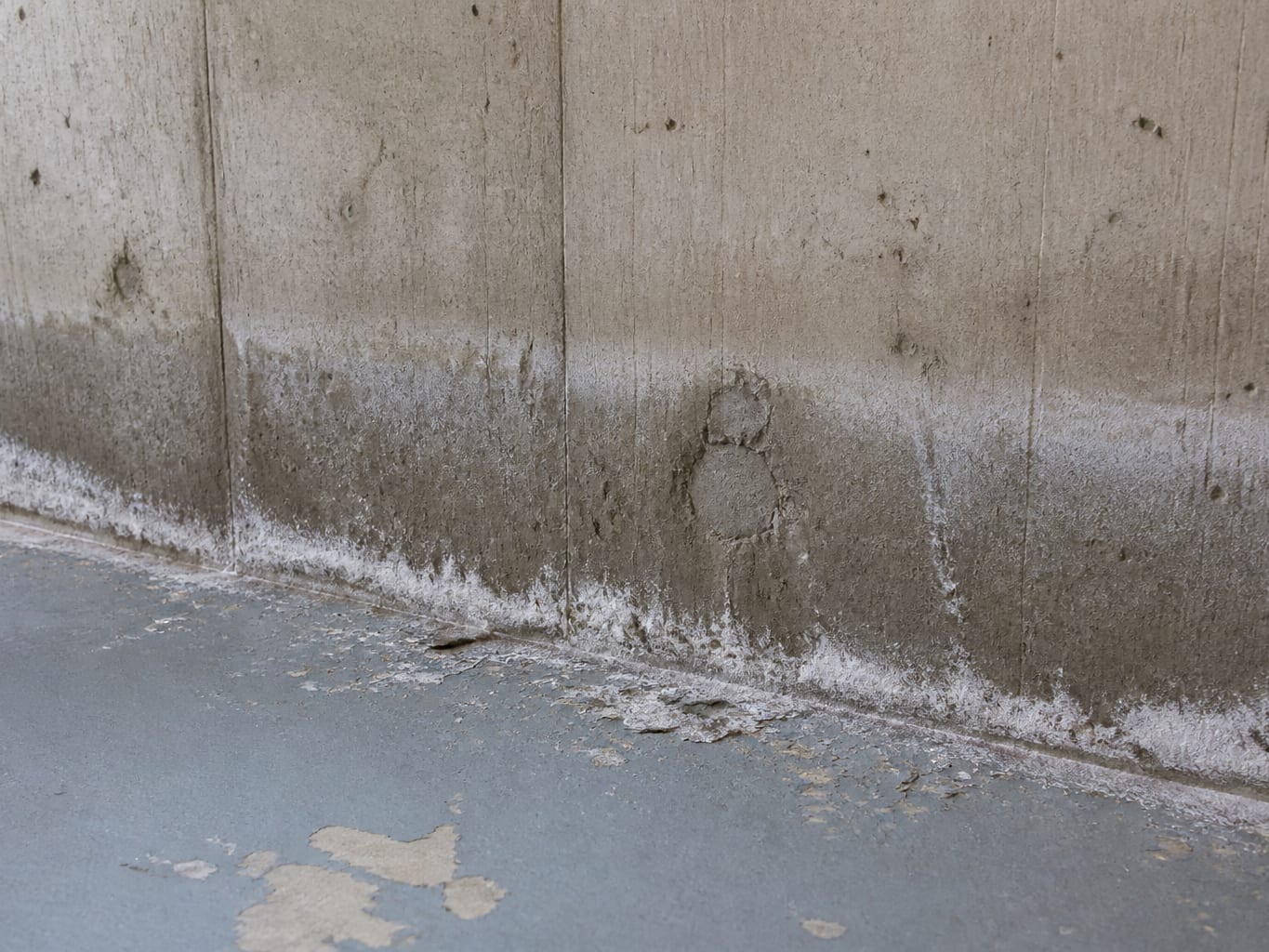
Drying is its own step, not a side effect of removal. Wood and building materials hold moisture below the surface, and a basement that feels dry to the touch can still carry enough in the assembly to keep conditions favorable. Confirmed drying is what turns a cleanup into a finished job, and it should be measured rather than assumed. For the fuller version, our page on how basement mold remediation is handled walks through the scope.
Where Remediation Ends and Construction Begins
An assessment is not a construction permit determination. Removal, cleaning and drying are the remediation scope. Putting the finished basement back, which can mean new framing, insulation, drywall, flooring and trim, is construction. When repairs change electrical, plumbing, mechanical, structural or occupancy related conditions, local requirements come into play. The Livingston Building Department is the local source for code and permit information, and its construction record search can show open or closed permits at a property, useful history when a basement has been renovated before.
That record cannot tell you whether the basement has mold or water damage. It tells you what work was permitted. Matching the two files is more defensible than treating either as the whole story. The rebuild side has its own sequence, covered on our page about post mold remediation rebuild work.
What Actually Drives the Cost
There is no honest single price for a basement without a defined condition, and any number quoted before someone has seen the room is a guess dressed up as an estimate. What genuinely moves it: whether water is still active, the size and accessibility of the affected area, the type and amount of wet material, content handling, containment, drying equipment, whether plumbing, drainage, waterproofing or HVAC correction is part of the fix, and whether finishes have to be rebuilt. A proposal worth reading names what it covers, from source investigation through removal, drying, cleaning and final documentation, and names what it excludes. Reconstruction is the most common exclusion.
Mistakes That Keep a Basement Wet
A few errors repeat often enough to be worth naming. Treating odor as proof of one cause, when a musty smell tells you something is wet but not whether the water came from the foundation, a supply line, an appliance or condensation. Painting over staining, which removes the evidence rather than the condition. Replacing only the visible drywall while the insulation behind it is still wet or the leak that soaked it is still running. Running a dehumidifier while entry water continues, which manages humidity without closing a pathway. Assuming a dry floor on one visit means a dry basement, when concealed finishes and intermittent rain or plumbing events mean a single dry day proves very little.
Safety Below Grade
Basement conditions carry practical risks beyond the mold itself. Wet electrical components, slip hazards, contaminated porous contents, poor light and restricted exits are why a below grade job gets treated carefully, and disturbing affected material without control moves it around. The EPA identifies people with asthma, allergies or immune suppression as groups who may have particular concerns around mold exposure, and health questions belong with a clinician rather than a contractor. Treating a sample result as a health answer is a mistake in the other direction, since a property assessment describes conditions and corrective scope, not anyone's diagnosis.
Documentation earns its keep later. In a sale, a management file or a claim, it separates observed condition, suspected source, repair history and inaccessible areas. It does not establish a property value increase or guarantee an insurance payment, since coverage depends on the policy and the facts of the claim.
Frequently Asked Questions About Basement Mold in Livingston, NJ
Does a finished basement always cost more to remediate than an unfinished one?
Not automatically, but it often does, and the reason is material rather than difficulty. A finished basement holds more removable material in the water's path: drywall, insulation, carpet and pad, trim, cabinetry. It also needs selective opening to confirm what is wet, and usually a rebuild afterward.
Do I need a mold test if I can already see mold in my basement?
Usually not to make the decision. The EPA notes that routine sampling is not necessary when mold is visible, because visible growth plus a moisture source already tells you both the material and the water need addressing. Testing is more useful when the question is open, such as an odor with no visible growth, and results always need reading in context.
My basement floor was dry when the contractor came. Does that mean I am fine?
One dry visit is weak evidence, especially in a finished space. Rain related entry and plumbing events can be intermittent, and finishes hold moisture out of sight while the exposed floor looks clean. The history of the room matters, and so does selective inspection where materials hide the assembly.
Will I need a permit to put my basement back together?
That depends on what the rebuild touches. Removal and drying are not reconstruction. When work changes electrical, plumbing, mechanical, structural or occupancy related conditions, local requirements can apply, and the Livingston Building Department is the place to confirm before the work starts rather than after.
How do I know the job was actually finished?
By what the file says at the end: confirmed drying rather than a surface that feels dry, a named and corrected water source, a clear list of what was removed and what was cleaned, photographs, and an honest statement of anything that could not be accessed. A report that reads as an unqualified all clear, with no limits stated, is telling you less than it appears to.
Final Thoughts
The two basements in that opening are not two levels of severity. They are two investigations of the same question: where is the water getting in, and what did it land on? If your basement is finished, expect the process to include opening something. If it is a utility space, expect more attention on contents and on the pathway itself. Either way the sequence is the same, and the part that decides whether the fix lasts happens before any cleaning starts.
When you want a straight read on what is happening below your first floor, ExecPro Restoration & Cleaning traces the moisture pathway before anything is opened, maps what is actually affected, corrects the source, dries the assembly to a measured standard, and documents the work so you have real records for a sale, a manager or an insurer. Call (888) 300-3772 or reach out through our contact page to get your Livingston basement looked at properly.
Basement Mold Terms
Tap a term to see what it means.
Below grade. Any part of a building that sits at or under the surrounding ground level, which is why basements face moisture pressures the floors above do not.
Serving Livingston
ExecPro Restoration & Cleaning provides mold remediation services in Livingston, NJ, from inspection and testing through removal, drying, and post-remediation verification. Call (888) 300-3772 for 24/7 emergency response.
Related Articles
From the Ground Up: Crawl Space Mold Remediation in Livingston, NJ
Moisture under a Livingston, NJ home starts at the soil and ends at the floor you stand on. Read it in that order or the repair misses the source.
What Leaves and What Stays: Mold Remediation Scope in Livingston, NJ
Some materials leave a Livingston, NJ home and others get cleaned and dried in place. Porosity draws that line; the water source behind it decides the rest.
Basement Mold Removal: What Comes Out, What Can Stay, and Why
Basement mold removal in NJ: see which materials usually come out, which can be cleaned and kept, when DIY stops and how to keep mold from coming back.