Follow the Air: Attic Mold Remediation in Livingston, NJ
Cal HewittPublished
- attic mold
- mold remediation
- ventilation
- livingston nj
- new jersey
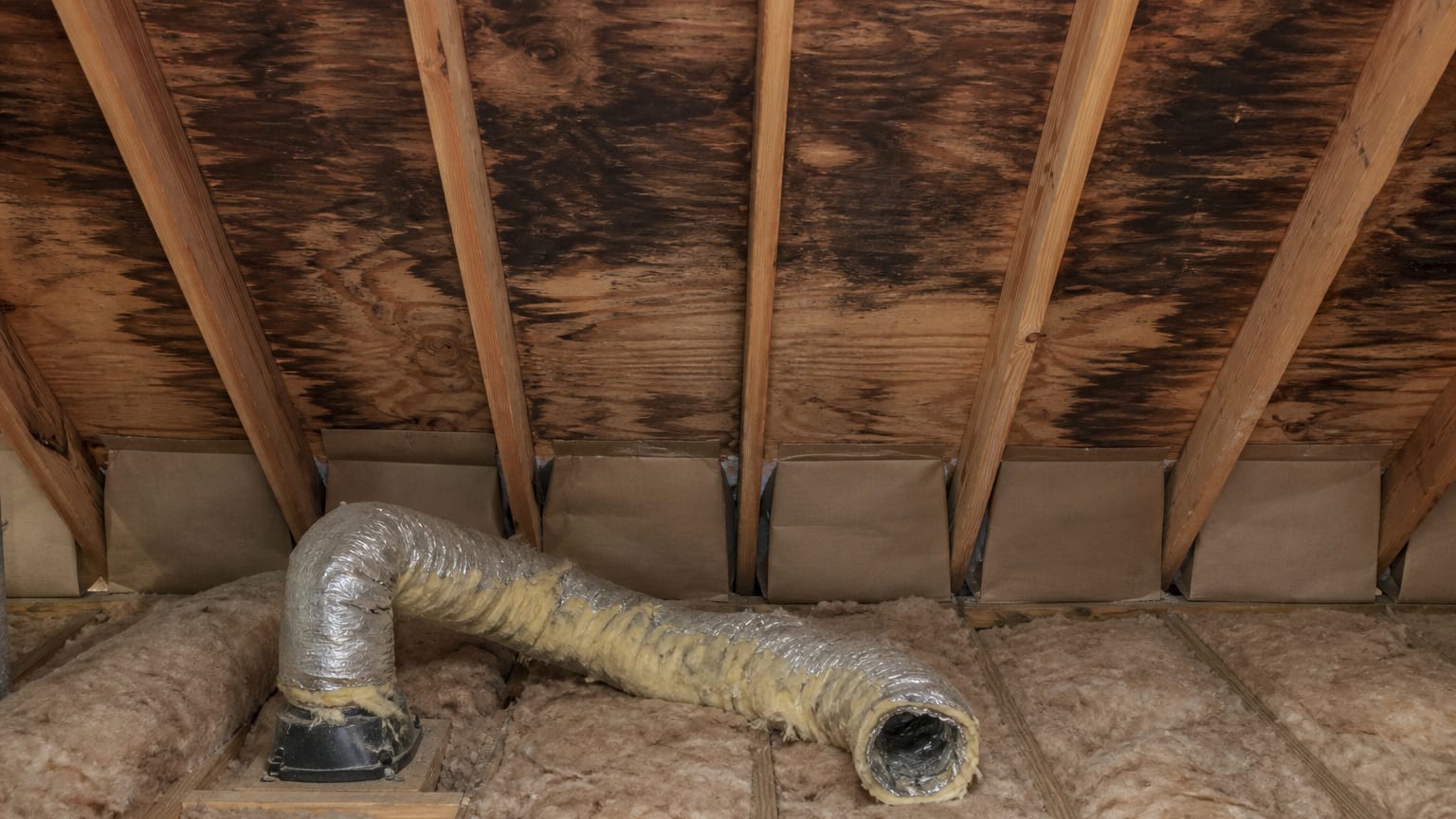
Stand at the attic hatch and ask a plain question before you look at anything: where does the air in this space actually go? In a vented attic the answer is supposed to be short. Outside air comes in low, at the soffit vents tucked under the eaves. It moves up along the underside of the roof. It leaves high, at the ridge. The Department of Energy treats ventilation as part of how a house manages moisture, and in an attic that loop is what carries damp air back outside before it can settle on cold wood.
So when a Livingston homeowner finds dark staining on the roof sheathing, the more useful question is not what the stain is called. It is where the air stopped moving the way it was supposed to. The EPA's guidance on mold is built around a single idea: control the moisture and you control the mold. In an attic, moisture shows up one of two ways. Rain gets in through the roof, or household air carries it up from the rooms below. From the top of a ladder they can look almost identical. They are not fixed the same way.
The Loop the Attic Was Built Around
A vented attic is a system, not a room. Its parts are the intake openings at the eaves, the open channel along the roof deck, and the exhaust at or near the peak. Each part depends on the others. Intake with no exhaust stalls. Exhaust with no intake pulls air from wherever it can find it, which is often the heated house below.
How Air Is Meant to Move Through a Vented Attic
- 1
Intake at the soffits
Outside air enters through vents under the eaves, at the lowest point of the attic, where the roof meets the wall.
- 2
Travel along the roof deck
That air moves up the underside of the sheathing, picking up humidity and heat as it goes.
- 3
Exhaust near the peak
Ridge or roof vents let the air leave at the top, which keeps the channel moving instead of stalling.
- 4
Balance between the two ends
Intake and exhaust work as a pair, so a shortage at either end weakens the whole loop.
Not every roof is built this way. Some homes have a conditioned roof assembly instead, where the insulation follows the roofline and the attic is meant to be part of the heated space. That design is not broken, but it is not a vented attic and it should not be judged as one. Knowing which of the two you have is the first thing worth settling, because the same stain means different things in each.
Where the Loop Gets Interrupted
The details that decide whether the loop works are ordinary and easy to overlook. Depth and continuity of the insulation. The size of the access opening. Roof geometry, including valleys, dormers, and low corners where the deck comes down close to the floor of the attic. Whether soffit and ridge vents are present at all, and whether anything is sitting in front of them.
Blocked intake is the most common quiet failure. Insulation pushed out toward the eaves during an energy upgrade can cover the soffit openings completely. From inside the house nothing looks different. From inside the attic the loop has lost its low end, and the air along the deck goes still. Cold sheathing plus still, damp air is the condition mold needs, and it can hold for an entire heating season before anyone notices.
What Gets Pushed Into the Loop From Below
The other half of the picture is everything the house sends upward. Warm interior air carries moisture, and when it reaches colder attic surfaces that moisture condenses on the sheathing. Every hole in the ceiling plane is a possible route.
Hover or tap a row to highlight it.
| Opening | Where it usually sits | Why it matters in an attic |
|---|---|---|
| Bath fan duct | Above a bathroom ceiling | If it ends inside the attic instead of outdoors, it delivers shower moisture straight to cold wood |
| Kitchen exhaust | Above the range or cooktop | Cooking moisture and grease follow the same path when the duct terminates short |
| Recessed lights | Ceiling of the top floor | Each fixture is a gap in the ceiling plane that warm indoor air can rise through |
| Plumbing stacks | Wherever pipes pass upward | The framed opening around the pipe is often larger than the pipe itself |
| Attic hatch or pull-down stair | Hallway or closet ceiling | A large opening with a thin cover, often the biggest single leak in the ceiling |
| Ductwork run through the attic | Along joists | Joints and connections can leak conditioned air into the attic year round |
Renovation history matters here more than the age of the house. Past roofing, insulation, HVAC, or bathroom work can change how the attic breathes or leave an exhaust duct disconnected behind a finished ceiling. Newer homes are not exempt either. A tight, well insulated house still moves air, and an exhaust fan that terminates in the wrong place does the same damage in a ten year old attic as in a sixty year old one. Recent changes are worth mentioning to whoever inspects, since a humidifier in use, a new thermostat habit, or envelope work finished last season all shift how much moisture the house produces. None of that diagnoses an attic on its own, but it gives the on-site work a place to start.
Rain Is the Other Pathway, and It Behaves Differently
Livingston sits inland, in Essex County, and the mechanics here are straightforward. Rain can enter through a roof defect. Warm indoor air can condense on cold sheathing. A single North Jersey attic can face both in the same season.
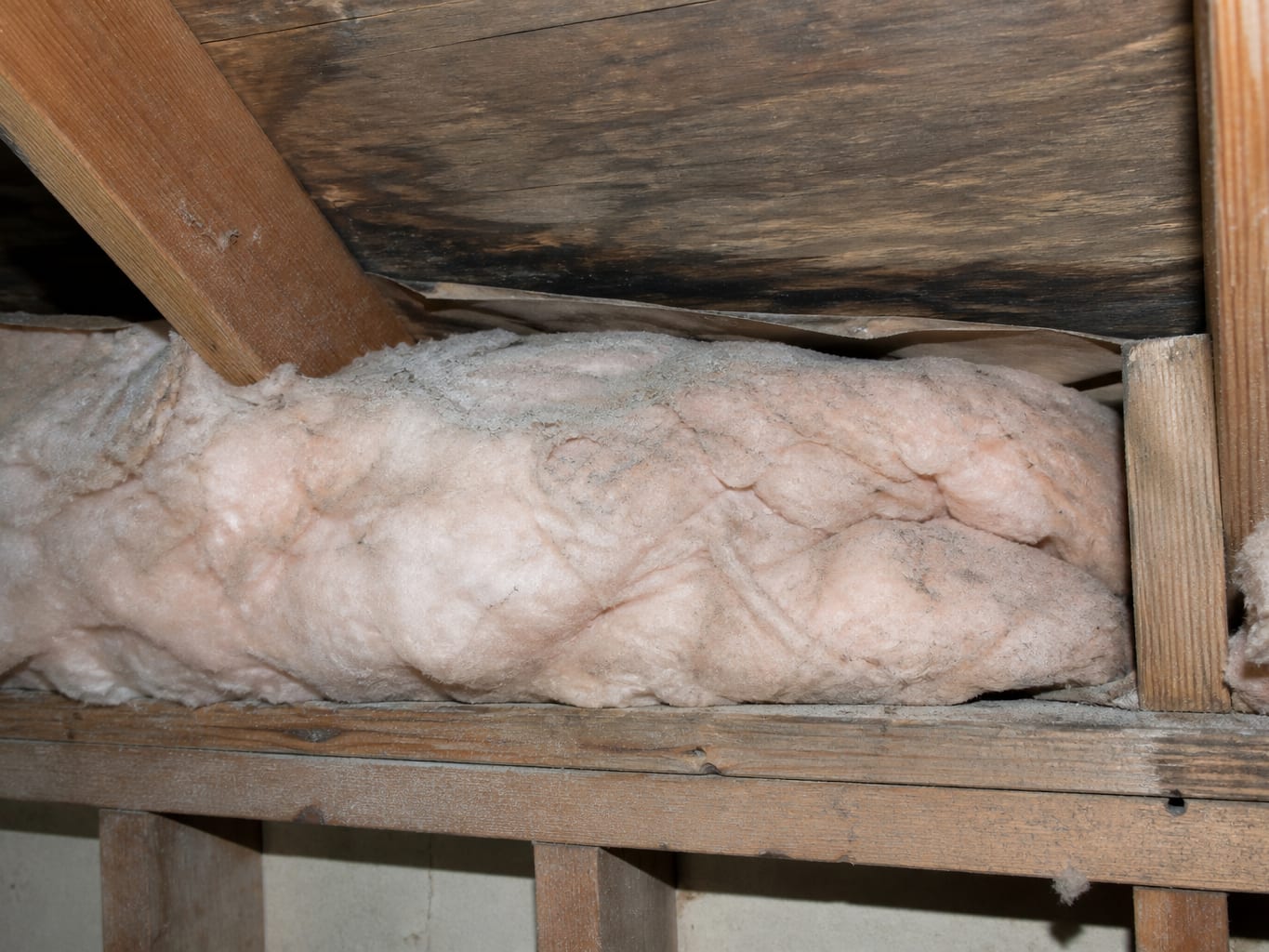
Two Moisture Pathways, Two Different Corrections
Water entering through the roof
Rain finds a defect and runs in. The evidence tends to be concentrated near a penetration, a valley, or a flashing detail, and the correction is roofing work.
Household air carrying moisture upward
Warm damp air escapes the living space and condenses on cold wood. The evidence tends to be spread across a broad area of sheathing, and the correction is air sealing, exhaust routing, and ventilation.
Both at the same time
One building can have both, which is why a single explanation for every stain in the attic is usually the wrong one.
Why the distinction decides the work
Two attics can look the same from the hatch and still need entirely different trades, so the pathway gets identified before the scope is written.
If a storm preceded the discovery, document that address rather than the region. Statewide storm recovery records show that extreme weather matters in New Jersey. They do not show that a particular Livingston roof leaked. A post-storm inspection separates roof-entry indicators from broad condensation patterns, because those two findings send the project down different paths.
What a Livingston Property Adds to the Picture
Census figures put Livingston at 10,699 housing units, and the township's own property records distinguish single-family, multifamily, and commercial classifications. That mix matters for practical reasons rather than statistical ones. A single-family attic usually has one owner, one hatch, and one decision maker. An attached or multifamily building may involve shared roof area and attic access that needs coordination before anyone goes up. A commercial property can bring a much larger roof area and mechanical systems that put moisture into the assembly in ways a house never would.
None of that means one neighborhood or one era of local construction has an attic problem. It means the access arrangements, the roof configuration, and the mechanical equipment vary enough that the assessment starts with the specific building.
Reading the Attic Before Anything Comes Out
Safe access comes first, then a source investigation, then scope. A useful assessment records where the discoloration or growth appears, whether the sheathing or framing is actually wet, the roof and vent configuration, where every exhaust duct terminates, the condition and placement of the insulation, and any known water event. It also names what could not be reached, because an attic almost always has corners nobody can get to and that limitation belongs in the write-up rather than in a guess.
Testing is a narrower tool than most people expect. EPA notes that sampling is generally not necessary before acting on visible mold, and that laboratory identification does not replace correcting the moisture source. A defined question can justify sampling. Curiosity about a name usually does not. If the goal is a diagnostic look at conditions rather than removal, a focused mold inspection is the right starting point.
Scope, Trades, and the Township
Corrective work splits into two halves that are easy to confuse. One half is containment and removal of affected material. The other half is correcting the source: the roof leak, the exhaust that terminates in the wrong place, the gap in the insulation, or the ventilation shortfall. Removing what you can see without correcting the source leaves the same conditions in place, which is the whole reason EPA puts moisture correction ahead of cleanup.
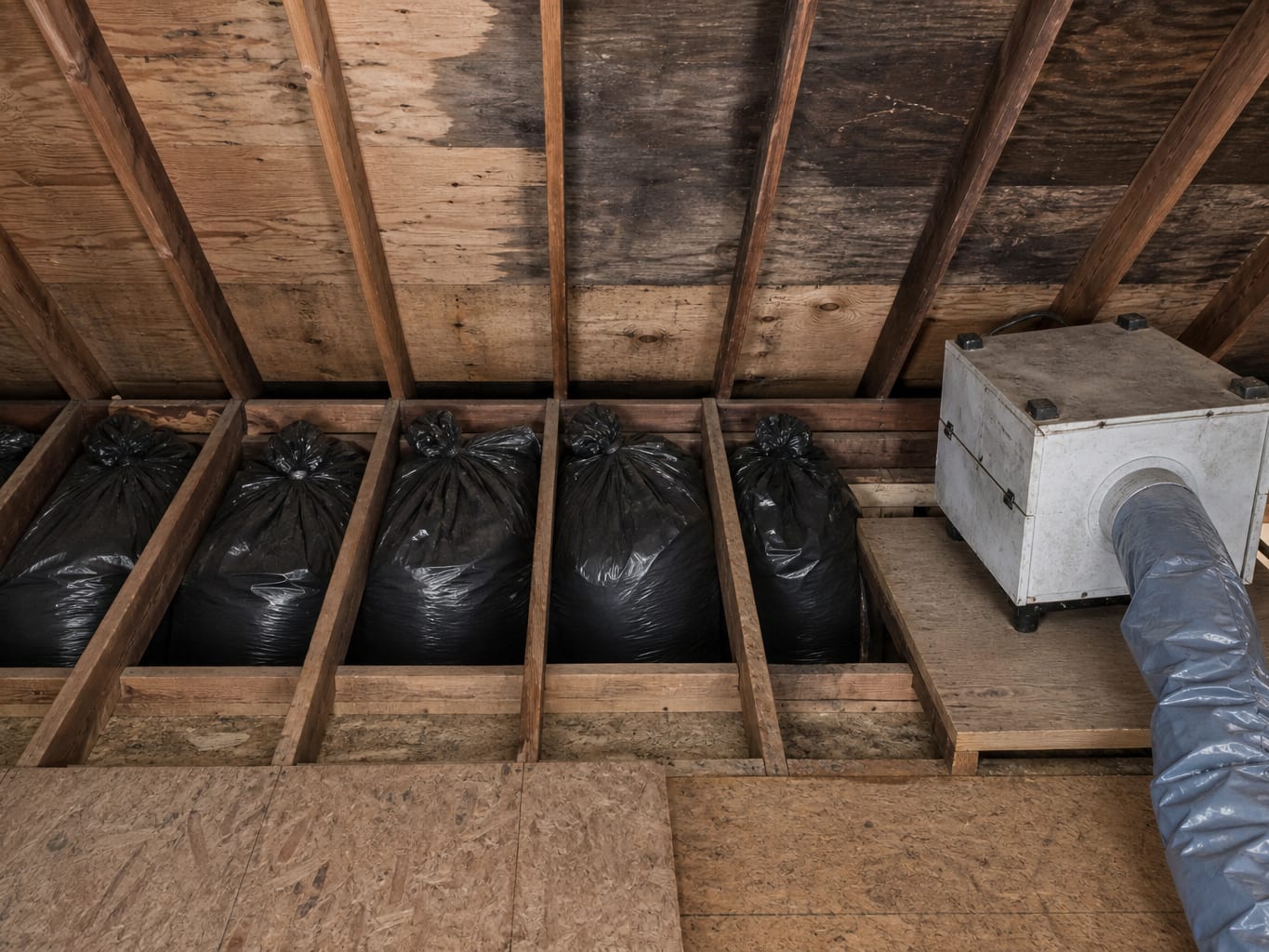
Timing depends on access, affected area, drying needs, any laboratory work, and whether roof or mechanical correction is part of the job, so a universal completion date does not exist. Cost follows the same drivers, plus framing obstacles, working height, containment, and the condition of the insulation. Correcting the source can cost more than cleaning the surface, because roofing, insulation, ductwork, and mechanical work are separate trades. A clear proposal says what is being remediated, what source repair is included, what access it assumes, whether insulation handling is covered, and what documentation you receive.
Some of that work is regulated and some is not, and a diagnostic attic visit is not construction. The Township of Livingston Building Department is the local authority on codes and issues permits for construction, renovation, and additions, so work that alters a mechanical exhaust, roof structure, or electrical components may need municipal review. The township's construction-record search can show open or closed permits at an address, which is useful history, though it says nothing about the condition of attic air. Township fee schedules cover regulated construction work and are separate from a contractor's remediation scope. If the sheathing or framing has decayed to the point that components need rebuilding, that crosses into structural mold repair and should be priced as its own scope rather than folded quietly into a cleaning line item.
Where Attic Projects Go Sideways
The most common error is treating a dark deck as a settled conclusion. Color is not a species and it is not a health finding. EPA does not set health-based standards for indoor mold spore levels, which is exactly why a written report describes observations, accessible areas, moisture findings, photographs, and scope boundaries rather than declaring an attic universally safe.
The second error is spraying first. A coating or cleaner applied before anyone checks for roof leaks, a bath fan discharging into the attic, a disconnected duct, blocked soffit openings, or interior air leakage treats the surface and leaves the mechanism running. The third is insulation handled carelessly, either compressed and contaminated during the work or replaced before anyone documented whether it was wet and whether the underlying defect had been fixed.
Be skeptical of any pitch that ventilation alone solves every attic condition. Ventilation is one part of a system that also includes insulation, air sealing, roof configuration, and how much moisture the household generates. Adding vents to an attic that is being fed by an unsealed hatch and a bath fan pointed at the ridge does not end the cycle.
Safety deserves the same plain treatment. Attic work involves limited footing, restricted egress, heat, nails, and exposed electrical components, so casual entry is not risk free. EPA also notes that people with asthma, allergies, or immune suppression may have particular concerns around mold and points health questions to a medical professional. An attic report can describe conditions and steps that reduce exposure. It cannot diagnose anyone.
Frequently Asked Questions About Attic Mold in Livingston, NJ
How do I tell condensation from a roof leak in my attic?
Look at how the evidence is distributed. Water coming through the roof tends to concentrate near a specific detail, such as a penetration, a valley, or flashing, and often leaves a defined track. Condensation tends to appear across a broader area of sheathing and near ceiling openings where warm air rises into the attic. Both can happen in the same building, which is why the assessment separates them before the repair is chosen.
Does mold in my attic mean my roof is leaking?
Not necessarily. Indoor air escaping through recessed lights, a pull-down stair, plumbing openings, or a bath fan that ends inside the attic can produce staining with no roof defect at all. Blocked soffit vents can make it worse by stalling the airflow that would otherwise carry the moisture out. A roof leak is one possibility on the list, not the default answer.
Do I need testing before the work starts?
Usually not for visible growth. EPA's position is that sampling is generally not necessary before acting on mold you can already see, and that identifying a species does not replace correcting the moisture. Testing earns its place when there is a specific question it can answer, such as an unexplained condition or a documentation need tied to a transaction.
Will I need a permit for attic work in Livingston?
It depends entirely on what is being changed. An observation-only visit does not by itself trigger a permit. Work that alters mechanical exhaust, roof structure, electrical components, or other regulated building systems can require municipal review, and the Township of Livingston Building Department is the place to confirm that before the work is scheduled rather than after.
How do I check out a mold company in New Jersey?
New Jersey has no state certification program for mold remediation companies, so a license number is not the screening tool people assume it is. What you can evaluate is the proposal itself: whether it names the moisture source it intends to correct, states its access assumptions, says whether insulation handling is included, and describes what documentation you get at the end.
Can insurance cover attic mold?
Coverage turns on your policy language, the cause of loss, notice requirements, and how the claim is handled, so nobody can promise an outcome from the attic floor. What helps is a clean record: dated photographs, a written assessment, invoices, moisture repair records, and correspondence, with the physical findings kept separate from any insurer or municipal determination.
Before You Climb Back Down
An attic tells you more about the rest of the house than most owners expect. The stain on the sheathing is the last step in a chain that started somewhere else: a covered soffit vent, a duct that stops short of the roof, a gap around a light fixture two floors down. Find the point where the air stopped doing its job and the rest becomes ordinary work in a known order.
If you would rather have that traced by someone who does it regularly, the team at ExecPro Restoration & Cleaning handles the full path from source investigation through attic mold remediation, drying, and the repairs that follow. Call (888) 300-3772 or send us a message through the contact page to get a look at what is actually happening above your ceiling.
Attic and Airflow Terms
Tap a term to see what it means.
Soffit vents. Intake openings under the eaves that let outside air into the low end of a vented attic.
Serving Livingston
ExecPro Restoration & Cleaning provides mold remediation services in Livingston, NJ, from inspection and testing through removal, drying, and post-remediation verification. Call (888) 300-3772 for 24/7 emergency response.
Related Articles
Attic Mold in Princeton NJ: What Homeowners Need to Know
Attic mold in Princeton NJ can spread fast behind insulation. Learn the warning signs, what causes it, and how professional remediation actually works.
Attic Mold Remediation in Robbinsville, NJ: Bath Fans, Dryer Ducts and 1980s to 2000s Roofs
Is the bathroom fan venting into the attic? Trace dark roof boards to a leak, condensation or exhaust before attic mold remediation in Robbinsville begins.
Attic Mold Remediation in Bridgewater, NJ: Roof Boards, Vents and Homes of Every Age
Before anyone disturbs the insulation, check whether dark roof boards mean a leak, condensation or a vent fan. Attic mold remediation in Bridgewater, NJ.