Attic Mold in Princeton NJ: What Homeowners Need to Know
Cal HewittPublished
- attic mold
- mold remediation
- ventilation
- new jersey
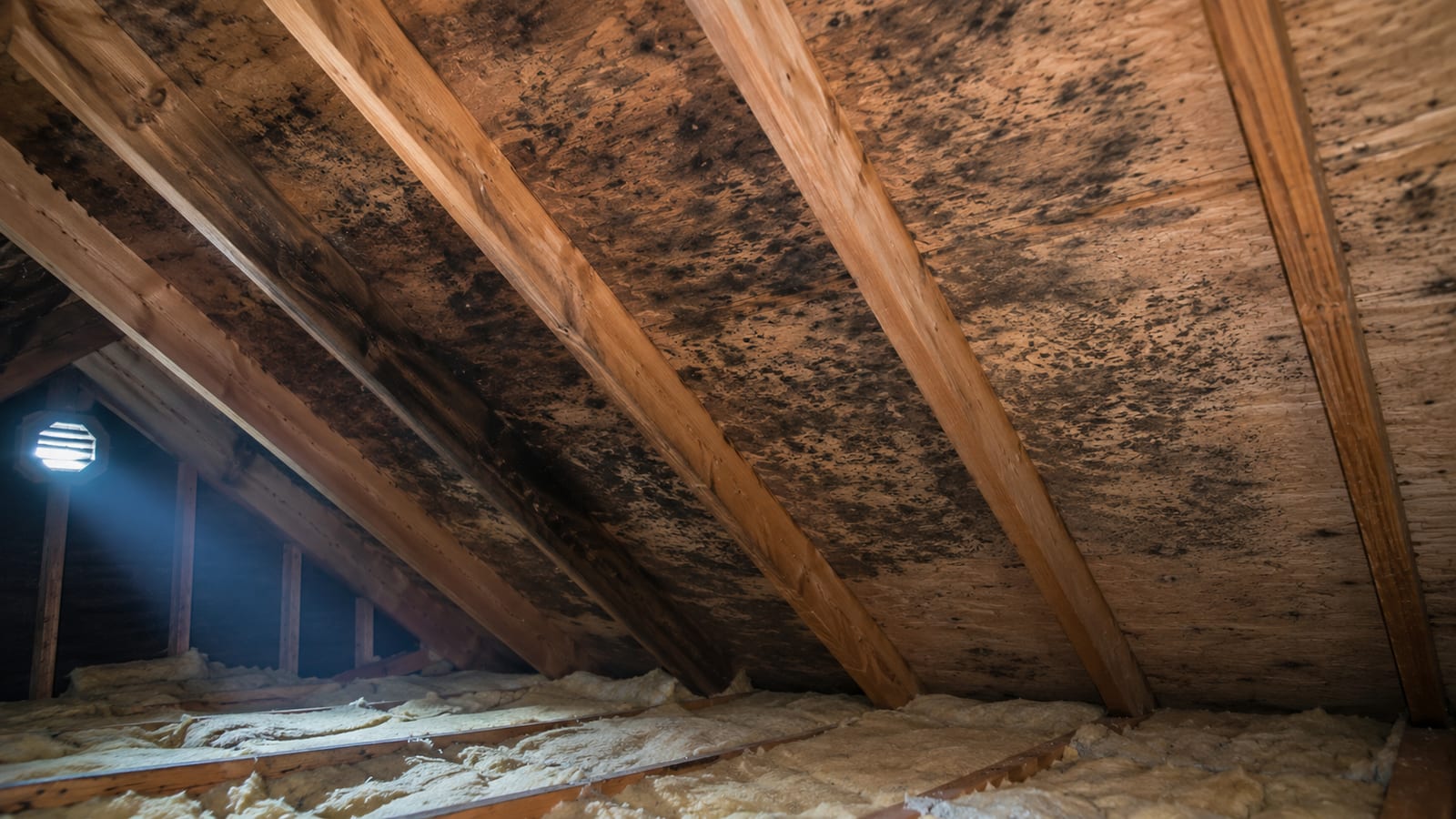
You pulled down the attic stairs, climbed up with a flashlight, and now you're staring at something dark on the rafters or the underside of the roof decking. Maybe it's just a water stain. Maybe it's something worse. The uncertainty is the hardest part, and it's exactly why attic mold in Princeton NJ tends to catch homeowners off guard. You're not sure how long it's been there, how far it may have spread behind the insulation you can't see, or whether that small visible spot is the whole problem or just the edge of a much larger one.
What most people don't realize right away is that the mold itself is not the root issue. It's a warning signal pointing to a moisture problem that has been quietly building above your living space. Princeton and the surrounding communities like West Windsor sit in a climate that swings hard between humid summers and cold, wet winters, creating the exact conditions where attic moisture problems develop. Older housing stock in the area means aging roof systems, variable insulation quality, and ventilation setups that may not have kept up with modern standards. You don't need to panic, but you do need to understand what you're actually looking at before you decide what to do next.
Key Takeaways
Mold is a symptom, not the source
Attic mold almost always points to a hidden moisture problem, and treating the surface without addressing that source will not solve the issue long-term.
Three main causes drive most cases
Roof leaks, poor attic ventilation, and air leaks from the living space below are responsible for the majority of attic mold growth in Princeton-area homes.
The warning signs are often subtle at first
Musty odors, dark staining on wood surfaces, damp insulation, and ceiling water stains are all common early signals homeowners notice before mold becomes widespread.
Delay makes the problem more expensive
Ignoring attic mold allows the moisture source to continue damaging insulation, roof decking, and wood framing over time.
Proper remediation follows a clear sequence
Inspection, moisture source identification, containment, cleaning, structural drying, and source correction all need to happen in order for the fix to hold.
Prevention is built into the repair
Balanced ventilation, air sealing, and prompt roof repair are what keep attic mold from returning after remediation is complete.
Why Attic Mold Matters
Attic mold grows quietly for months before a homeowner ever notices it. It sits above the insulation, away from daily foot traffic, out of sight until a home inspection or a strong odor finally draws attention upward. By the time most Princeton homeowners find it, the moisture that created the right conditions has often been present for a while. The mold isn't just a cosmetic issue. It can work into roof sheathing, weaken wood framing, and reduce the effectiveness of your insulation, all while the moisture source continues unchecked.
Cleanup alone will not resolve the problem. Treating visible mold growth on the surface of a rafter does not fix a leaking ridge cap or a bathroom exhaust fan that has been venting warm, humid air into the attic for years. Without addressing the source, mold growth is likely to return even after visible growth is removed. The structure of the problem is always the same: moisture creates conditions, conditions create mold, and mold is the signal that tells you something above your ceiling has been wet long enough to support biological growth.
Moisture as the Root Cause
Warm air rises, and in most homes it carries humidity with it. When that air finds its way into the attic and contacts colder surfaces like roof sheathing or nail heads, it condenses. Over time, repeated condensation cycles on wood create the sustained moisture that mold needs. Roof leaks and ventilation failures both accelerate this process by either introducing water directly or preventing humid air from escaping before it causes damage. The EPA's guidance on mold and moisture is clear that controlling moisture is the only reliable way to control mold, which is why every legitimate remediation approach starts with finding the water, not cleaning the stain.
Common Warning Signs
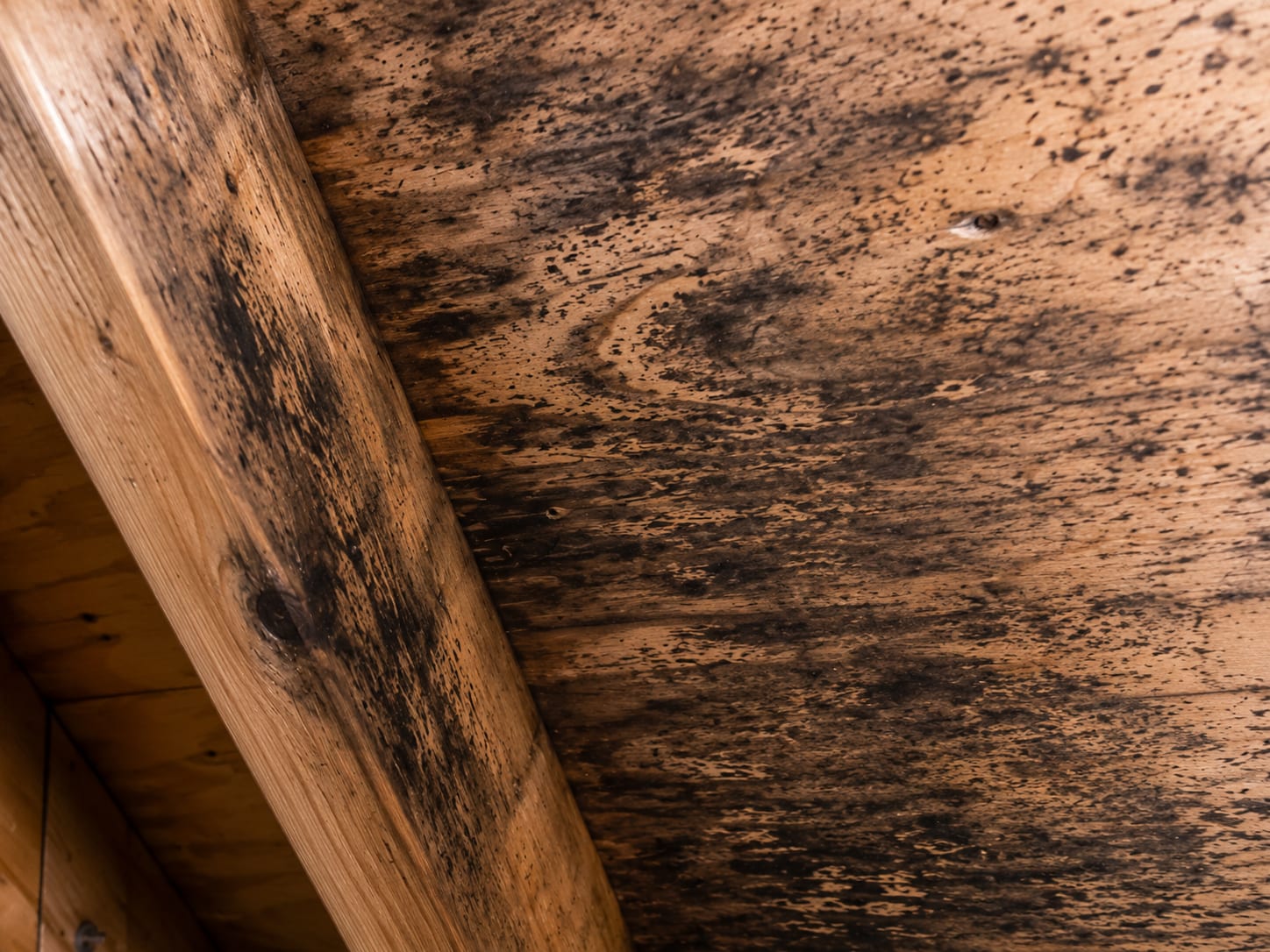
Most homeowners don't go looking for attic mold. They find it because something else prompted the search: a real estate transaction, a persistent smell, a ceiling stain that reappeared after being painted over, or a home inspector's report flagging a material defect. Early detection limits how far the damage spreads and reduces what remediation ultimately costs.
Hover or tap a row to highlight it.
| Warning sign | Where it shows up | What it may indicate |
|---|---|---|
| Musty odor | Upstairs rooms and hallways, stronger in warm humid weather or after rain | Mold present above the ceiling, even with no visible growth |
| Dark staining or discoloration | Roof decking, rafters, framing around vents and skylights | Sustained moisture exposure, sometimes near air leak locations |
| Damp or compressed insulation | Attic insulation | Moisture still active in the attic, not just an old problem |
| Water stains | Ceiling below the attic | A past leak or an ongoing one, especially with ring patterns or layers |
Musty Odors
A persistent musty smell in an upstairs room or hallway is often one of the first signals homeowners notice. That odor is produced by mold as it processes organic material, and it tends to be stronger in warm, humid weather when attic temperatures rise and increase air movement into the living space. If the smell is intermittent or worse after rain, treat it as a prompt to look more carefully. Signs of attic mold don't always look the way people expect, and a smell without any visible growth in the living space is still worth investigating above the ceiling line.
Dark Staining or Discoloration
Dark streaks or spotting on roof decking, rafters, or the wood framing around vents and skylights are among the more direct visual signals. This staining can look like dirt, water damage, or biological growth, and in many cases it's some combination of all three. What matters is not just whether there is visible mold but whether the wood shows signs of sustained moisture exposure, because that history tells you the moisture source has likely been active for some time. Staining along the path of air movement, such as near attic hatch openings or around recessed light fixtures, often points specifically to air leak locations worth sealing.
Damp Insulation or Water Stains
Wet or compressed insulation is a sign that moisture is still active in the attic, not just a relic of an old problem. Damp insulation loses its thermal performance and can hold moisture against wood surfaces for extended periods, which is one reason why insulation that appears fine from a distance sometimes needs to be removed during remediation. Water stains on the ceiling below the attic can indicate either a past leak or an ongoing one. If a stain has a clear ring pattern or shows multiple layers, that typically means water has reached that spot more than once.
Main Causes of Attic Mold
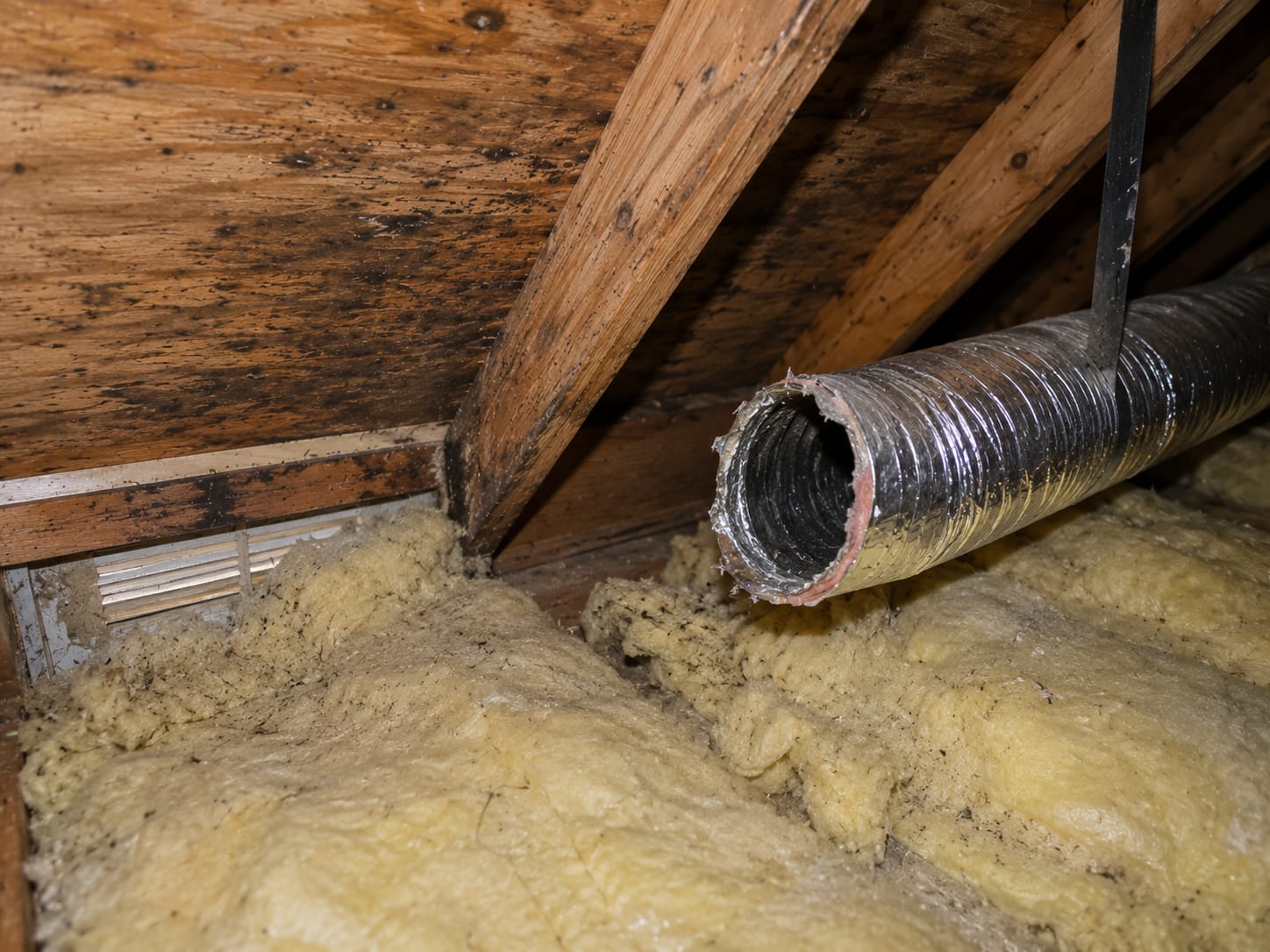
Understanding what causes attic mold in Princeton NJ homes turns you from someone staring at a problem into someone who can start asking the right questions. The causes break down into three main categories, and in many homes more than one is contributing at the same time. That overlap is why a thorough inspection matters more than a quick visual check.
Three Main Causes of Attic Mold
Roof leaks
Damaged shingles, failing flashing around chimneys or skylights, and storm breaches let water into the attic directly, and ice damming in winter can force water under shingles at the eave line.
Poor ventilation
When soffit intake vents and ridge or peak exhaust vents are blocked, mismatched, or insufficient, airflow breaks down and humidity builds until it condenses on wood surfaces.
Air leaks from the home below
Warm indoor air escaping through attic hatches, recessed lights, plumbing penetrations, or a bathroom fan that vents into the attic carries humidity upward all heating season.
Roof Leaks
Damaged shingles, failing flashing around chimneys or skylights, and storm-related breaches can all allow water to enter the attic directly. Princeton and West Windsor see significant precipitation across all four seasons, including ice damming in winter, which can force water under shingles at the eave line. Roof leaks are a primary driver of attic mold growth and are often the hardest to find because water can travel along framing members before dropping onto insulation, meaning the visible stain may be far from the actual entry point.
Poor Ventilation
Attic ventilation is designed to move air continuously through the space, preventing humidity from building up to the point where condensation occurs on wood surfaces. When intake vents at the soffits and exhaust vents at the ridge or roof peaks are blocked, mismatched, or simply insufficient, that airflow breaks down. Inadequate attic ventilation is one of the most common factors NJ home inspectors identify in attic mold cases, and it's particularly relevant in older Princeton-area homes where ventilation systems may not have been updated to keep pace with changes in how the home is insulated or conditioned.
Air Leaks from the Home Below
This is the cause most homeowners don't immediately think about. Every time warm indoor air escapes into the attic through an attic hatch, a recessed light fixture, a plumbing penetration, or a bathroom exhaust fan that vents incorrectly, it carries humidity with it. Over a heating season, the cumulative amount of moist air passing through those openings can be substantial. Bathroom and kitchen exhaust fans that terminate inside the attic rather than outdoors are a particularly common and often overlooked source. Sealing these air leaks is a standard part of any prevention strategy and sometimes part of the remediation itself.
Why Professional Remediation Matters
There is a version of attic mold that a handy homeowner might manage safely on their own, and the EPA does outline guidance for small areas under about 10 square feet. But in most Princeton attic mold cases, the problem is beyond that threshold by the time it's found, and the moisture source has not yet been identified or corrected. That combination makes professional remediation the appropriate response, not an overreaction.
Source Correction
A remediation approach that skips source identification is incomplete. Finding and fixing the moisture source is what separates a permanent repair from a temporary cleanup. That might mean roof repair, ventilation improvements, sealing air leaks and addressing insulation gaps, or correcting exhaust fan routing. A thorough professional assessment will identify which combination applies to the specific home and attic configuration, because no two situations are identical.
Safety and Scope
When mold coverage is extensive or when a home has sustained significant water damage, the EPA recommends professional remediation because of the containment, personal protection, and material disposal requirements involved. Disturbing mold without proper containment can spread spores into the living space. Porous materials like insulation that are contaminated often need to be removed and replaced, not cleaned in place. Getting the scope of the problem assessed accurately before deciding on a course of action protects both the home and the people living in it.
The Attic Mold Removal Process
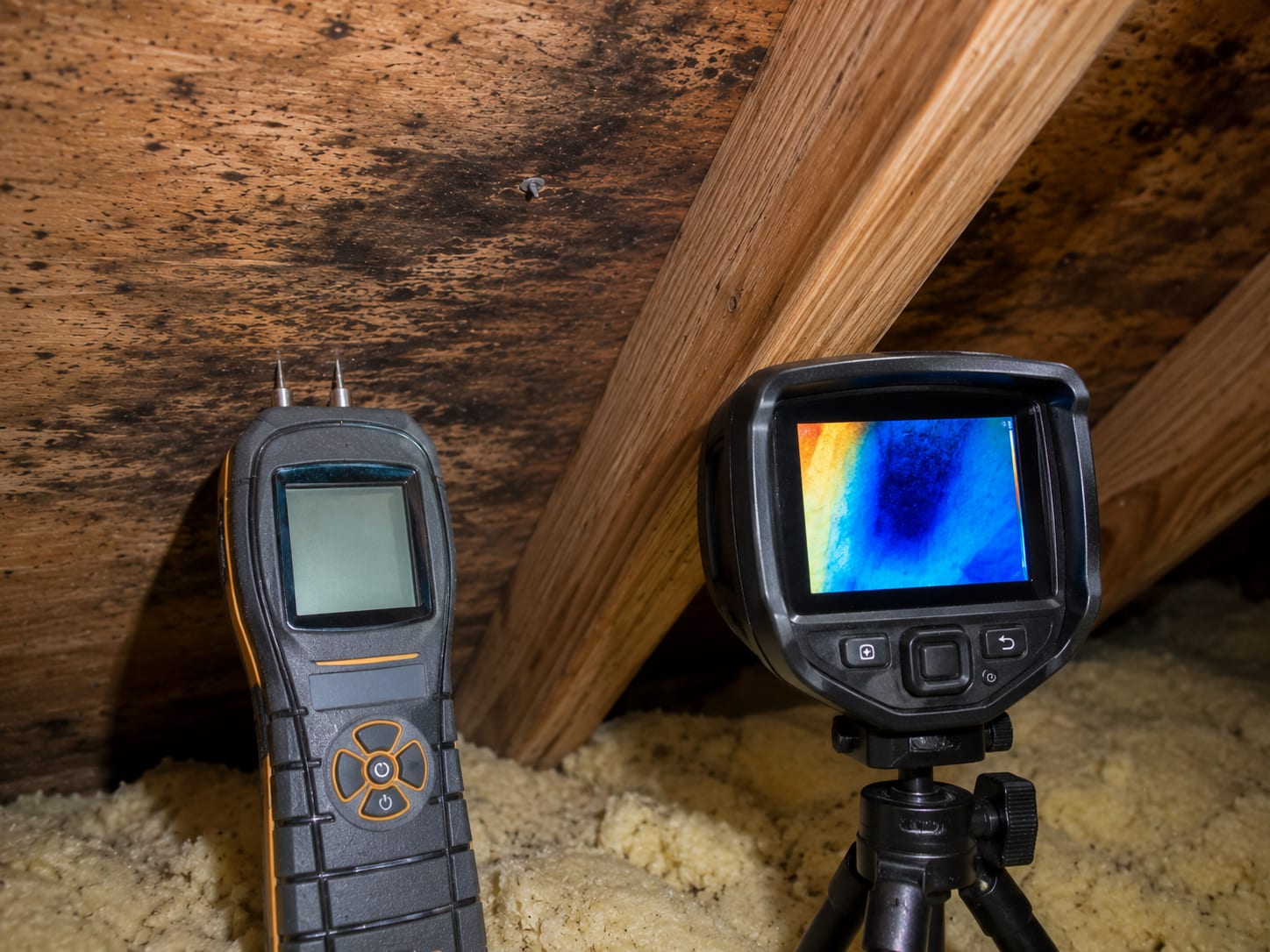
A well-run attic mold removal process isn't complicated to understand, but each step matters and the order matters. Homeowners who understand what a professional process should look like are better positioned to evaluate whether the work being proposed actually addresses their situation.
The Attic Mold Removal Process
- 1
Inspect and identify moisture sources
A qualified technician inspects beyond the visible mold, checking for active leaks, using moisture detection tools to find wet wood or insulation, and evaluating the ventilation with thermal imaging and moisture mapping.
- 2
Contain and clean affected areas
The area is sealed off to stop spores from moving through the home, contaminated porous materials including compromised insulation are removed, and structural surfaces like roof decking and framing are cleaned.
- 3
Dry and restore the attic
Structural drying pulls residual moisture from wood and building materials at depth, then restoration replaces insulation, repairs or improves ventilation, and addresses structural damage the moisture caused.
Step 1: Inspect and Identify Moisture Sources
Before anything is cleaned or removed, a qualified technician should perform a thorough inspection that goes beyond the visible mold. That means checking for active leaks, using moisture detection tools to find wet wood or insulation that isn't visibly stained, and evaluating the ventilation system. Thermal imaging and moisture mapping can reveal problem areas that visual inspection alone would miss.
Step 2: Contain and Clean Affected Areas
Once the source has been identified and documented, the affected area is contained to prevent spore movement into the rest of the home during cleanup. Contaminated porous materials, including compromised insulation, are removed. Structural surfaces like roof decking and framing are cleaned using appropriate remediation methods. The EPA's guidance on mold cleanup is clear that porous materials with significant mold growth generally need to be removed rather than cleaned in place, because the root structure of the mold can penetrate beneath the surface.
Step 3: Dry and Restore the Attic
After contaminated materials are removed and surfaces are treated, the attic needs to be dried thoroughly so that residual moisture does not continue to create conditions for new growth. Structural drying uses professional equipment to pull moisture from wood and building materials at depth. Once drying is confirmed, restoration work begins: replacing insulation, repairing or improving ventilation, and addressing any structural damage the moisture caused over time.
How to Prevent Future Mold
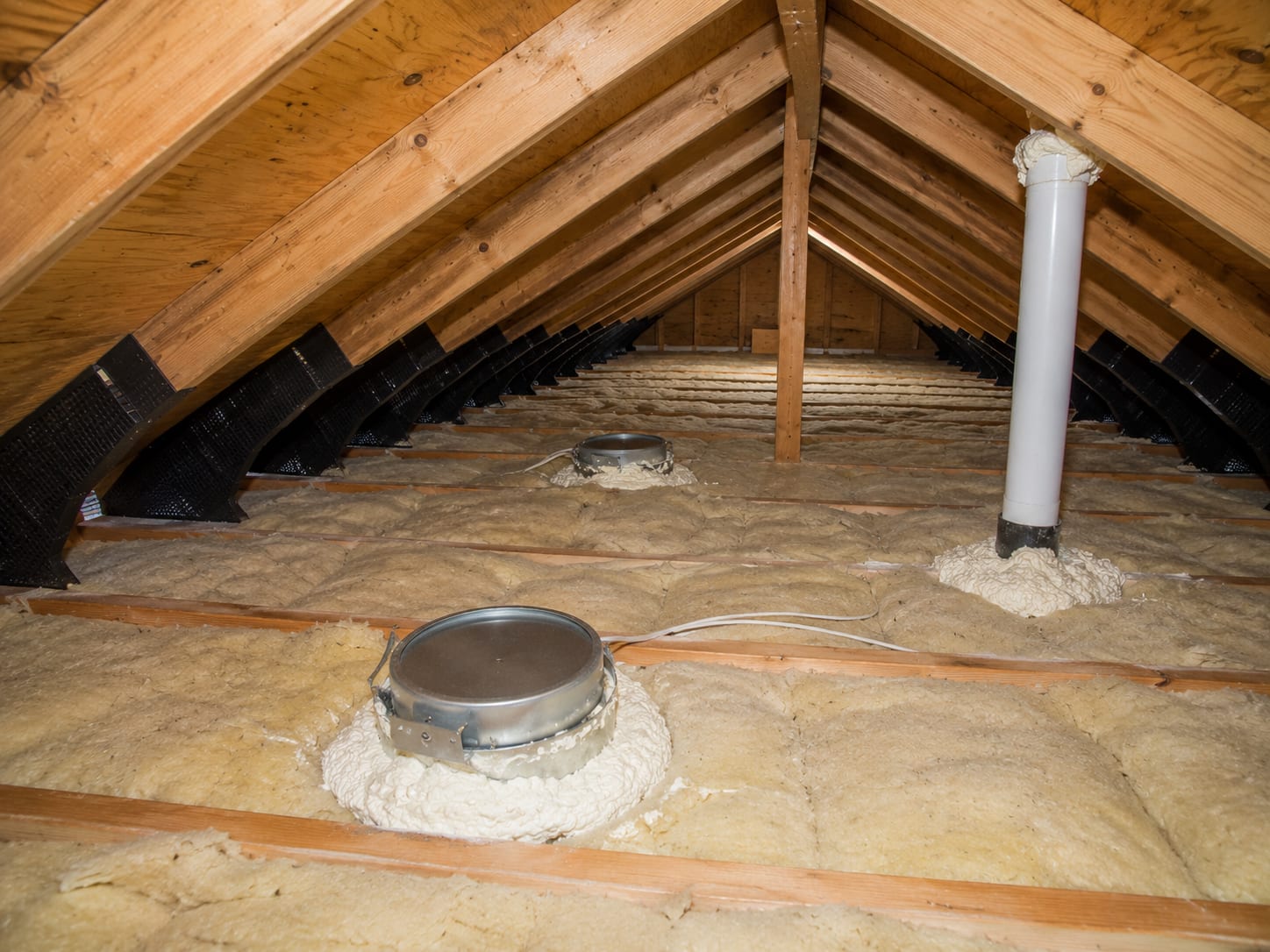
Keeping attic mold from returning is almost entirely about maintaining the right conditions inside the attic space: dry, ventilated, and sealed off from the warm humid air that rises from the living space below.
Keeping Attic Mold From Returning
Improve ventilation
Balanced intake and exhaust airflow prevents the humidity buildup that leads to condensation on wood surfaces.
Air seal attic penetrations
Seal around recessed lights, attic hatch frames, plumbing pipes, and wiring that passes through the ceiling plane to cut off humid indoor air.
Maintain roof and exhaust systems
Keep shingles, flashing, and gutters in good condition, and make sure bathroom and kitchen fans vent outdoors, not into the attic.
Check the attic after storms
Inspecting after significant storms or winter ice dam events catches water intrusion before moisture sits long enough to support mold.
Improve Ventilation and Air Sealing
Balanced attic ventilation with adequate intake and exhaust airflow prevents the humidity buildup that leads to condensation on wood surfaces. Paired with good air sealing at attic penetrations, it cuts off the two primary pathways through which moisture problems develop. This means sealing around recessed lights, attic hatch frames, plumbing pipes, and any wiring that passes through the ceiling plane. Air sealing work is low-cost relative to remediation and has the added benefit of improving your home's energy efficiency.
Maintain Roof and Exhaust Systems
Keeping roof components in good condition, including shingles, flashing, and gutters, reduces the risk of water intrusion before it reaches attic wood. Bathroom and kitchen fans must exhaust to the outdoors, not into the attic cavity. Checking the attic after significant storms or ice dam events in winter can catch water intrusion early, before moisture sits long enough to support mold growth.
Common Pitfalls
One of the most frequent mistakes homeowners make is treating attic mold as a surface issue. Paint or bleach applied to porous wood may reduce visible staining temporarily, but it does not eliminate the mold at depth, and it does nothing to stop the conditions from recreating the problem within the same season. The EPA's guidance on mold and moisture is consistent on this point: moisture control is the only approach that actually works.
A second common mistake is dismissing early warning signs because the visible area seems small. Attic mold that looks contained to a small section of decking may already have spread into adjacent insulation or along framing members that aren't easily visible from an access hatch. Small leaks and minor condensation are easier and cheaper to fix when caught before the wood framing has been exposed to repeated wet and dry cycles.
Frequently Asked Questions About Attic Mold in Princeton NJ
What causes attic mold in Princeton NJ?
The most common causes are roof leaks from aging shingles or flashing failures, poor attic ventilation that traps humid air, and warm moist air leaking into the attic from the home below through attic hatches, bathroom exhaust fans, or unsealed penetrations. New Jersey home inspection guidance points to all three as frequent contributors, and in many homes more than one is active at the same time.
How do homeowners know if they have attic mold?
Musty odors in upstairs rooms, dark staining or spotting on attic wood surfaces, damp or compressed insulation, and water stains on the ceiling below the attic are all common warning signs. These signs can appear gradually, which is why they are easy to overlook early on. Attic mold is also frequently discovered during home inspections, particularly in the Princeton and West Windsor real estate market where older homes are common.
Can attic mold just be cleaned away?
Not if the moisture source is still active. Surface cleaning may reduce what you can see, but mold will often return if the conditions that created it have not been corrected. Porous materials like insulation and wood can hold mold below the visible surface, and bleach applied to those materials does not reach deep enough to address the root growth.
When should a professional be called?
Professional help is appropriate when mold coverage is widespread, when the attic has experienced water damage, or when the source of moisture is not obvious. The EPA recommends professional remediation when mold coverage exceeds roughly 10 square feet or when significant water damage has occurred. For most homeowners who discover mold during a home inspection or after noticing odors or ceiling stains, the problem has usually progressed past the point where a DIY approach is safe or effective.
Is attic mold dangerous?
It can be, particularly if the moisture problem continues and mold spores move into the living space. Beyond air quality concerns, attic mold can weaken roof decking, reduce insulation performance, and cause structural damage to wood framing over time. The EPA's guidance on household mold notes that some individuals are more sensitive to mold exposure than others, including people with respiratory conditions or compromised immune systems.
How can attic mold be prevented?
The most reliable prevention comes from keeping the attic dry, well-ventilated, and sealed off from humid indoor air. That means maintaining roof components in good condition, making sure bath and kitchen fans vent outdoors, sealing air leaks at attic penetrations, and ensuring the ventilation system provides balanced airflow through the attic year-round. Checking the attic after storms or winter ice events can catch new moisture intrusion before it develops into a recurring problem.
Test Your Attic Mold Knowledge
1. What is attic mold usually a sign of?
2. What are the three main causes of attic mold?
3. When does the EPA recommend professional remediation for attic mold?
4. Why does bleach or paint fail to fix attic mold on wood?
5. According to EPA guidance, what is the only reliable way to control mold?
Pick an answer to begin.
Final Thoughts
Attic mold in Princeton NJ makes a lot more sense once you understand that the mold itself is the symptom, not the cause. The real work is finding where the moisture is coming from, stopping it, and then cleaning and restoring what it damaged. Whether the source turns out to be a slow roof leak, a ventilation system that hasn't kept pace with the home's insulation, or years of humid air slipping through an unsealed attic hatch, the path forward is the same: identify it, address it, and give the attic the conditions it needs to stay dry going forward.
Homeowners who take that full approach come out on the other side with more than a clean attic. They have a home that performs better, insulation that works as intended, and the confidence of knowing the problem has actually been resolved rather than temporarily covered up.
When you're ready to get a clear picture of what's happening above your ceiling, our team at ExecPro Restoration & Cleaning is here to help. We serve Princeton Junction NJ, West Windsor NJ, and the surrounding communities, handling the full scope of the process from mold inspection and air quality assessment through attic mold remediation, structural drying, insulation replacement, and rebuild work. We use thermal imaging and moisture mapping to find what visual inspection misses, and we document everything so you have verified results to move forward with. Call us or reach out online to get from uncertainty to answers as quickly as possible.
Attic Mold Terms
Tap a term to see what it means.
Condensation. Warm humid air meeting colder surfaces like roof sheathing or nail heads and turning to water on the wood, which over repeated cycles gives mold the moisture it needs.
Serving Princeton
ExecPro Restoration & Cleaning provides mold remediation services in Princeton, NJ, from inspection and testing through removal, drying, and post-remediation verification. Call (888) 300-3772 for 24/7 emergency response.
Related Articles
Follow the Air: Attic Mold Remediation in Livingston, NJ
Stained sheathing in a Livingston, NJ attic often starts at a bathroom fan, not the roof. Follow the air path from soffit to ridge and the source shows up.
Attic Mold Remediation in Robbinsville, NJ: Bath Fans, Dryer Ducts and 1980s to 2000s Roofs
Is the bathroom fan venting into the attic? Trace dark roof boards to a leak, condensation or exhaust before attic mold remediation in Robbinsville begins.
Attic Mold Remediation in Bridgewater, NJ: Roof Boards, Vents and Homes of Every Age
Before anyone disturbs the insulation, check whether dark roof boards mean a leak, condensation or a vent fan. Attic mold remediation in Bridgewater, NJ.