Warm Air Meets a Cold Deck: Attic Mold Remediation in East Windsor, NJ
Cal HewittPublished
- attic mold remediation
- condensation
- air sealing
- east windsor nj
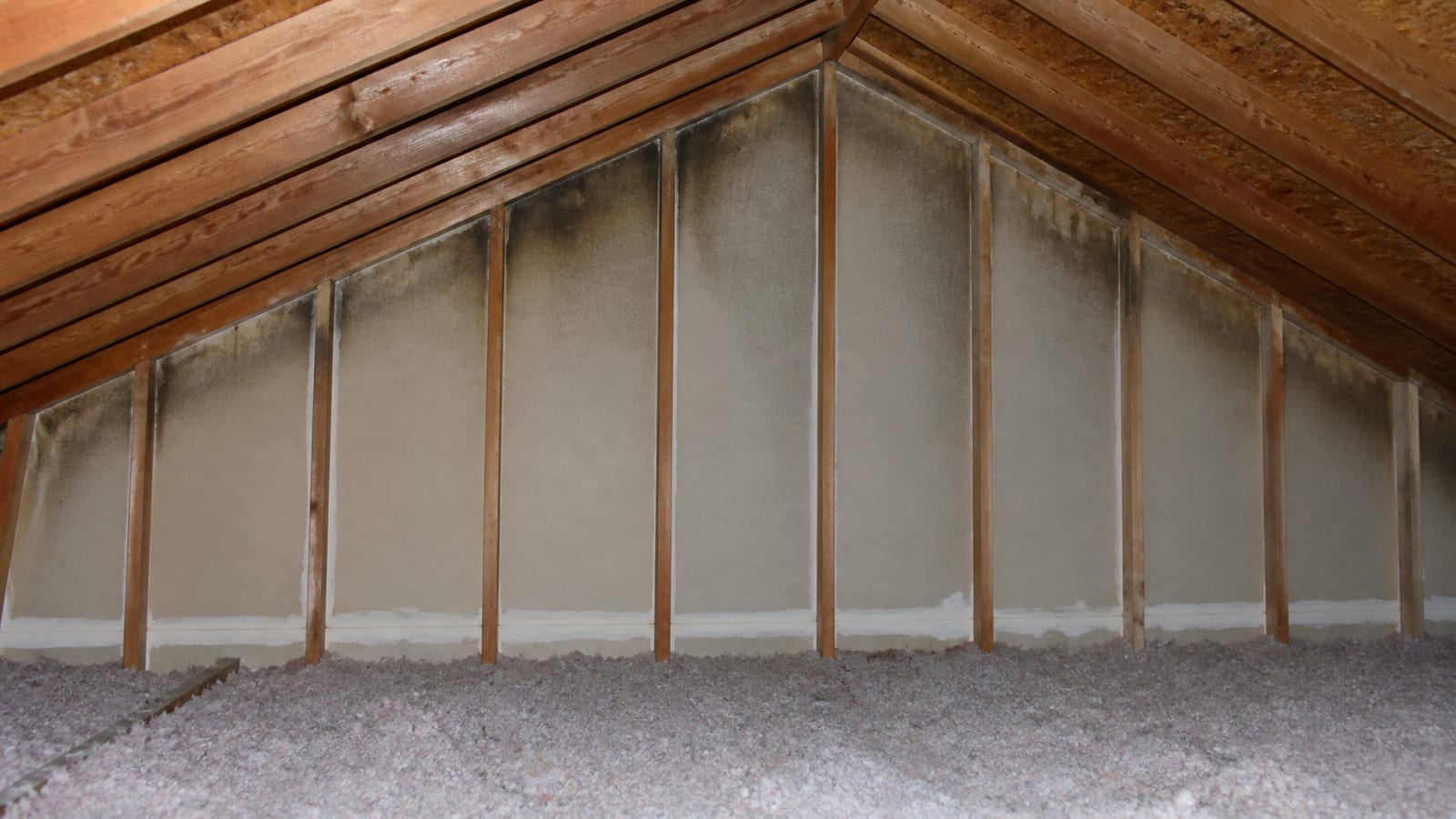
Air holds water, and how much it can hold depends on how warm it is. Warm the air in a shower, a kitchen, or a laundry room and it picks up moisture readily. Cool that same air and it has to give some of that moisture back, because it can no longer carry the amount it was holding. It gives it back to the first cold surface it touches.
In a house during a New Jersey winter, the coldest surface available is the underside of the roof. Sheathing is a thin layer of wood with outdoor temperature on one side of it and very little between. So the sequence is short and entirely ordinary: moisture is generated in the living space, warm air carrying it finds a way through the ceiling, it reaches the cold roof deck, and the water leaves the air and lands on wood. Repeat that through a heating season and the wood stays wet long enough for growth to take hold. Understanding that chain matters more than any single observation about an East Windsor attic, because each link in it is a place the problem can be broken.
Key Takeaways
The mechanism has three parts
A moisture source indoors, a path through the ceiling, and a cold surface upstairs. Remove any one and the chain stops.
Most attic moisture starts inside the house
Showers, cooking, laundry, and exhaust fans that terminate in the attic all put water into air that is already heading up.
The ceiling plane is the real doorway
Hatches, recessed fixtures, plumbing and wiring penetrations, and framing gaps are how indoor air reaches the deck.
Season reveals the problem, it does not cause it
Cold weather makes condensation visible, but the moisture supply and the air path are present year round.
A roof leak is the other explanation
Water can arrive from above instead of below, and the two conditions leave different patterns and call for different repairs.
Order of operations is not optional
Department of Energy guidance calls for repairing roof leaks and reducing interior moisture sources before air sealing or insulation work.
Where the Water in the Air Comes From
Before anything condenses, something has to put moisture into the air, and in most homes that something is daily life. Showers and baths, cooking, dishwashing, laundry, and simply breathing all release water vapor into the living space. A house full of people generates a meaningful amount of it every day, and in a heating season that air is warm, which means it is capable of carrying a lot.
Then there are the sources that skip the living space entirely and deliver moisture straight upstairs. A bathroom or kitchen exhaust fan that terminates inside the attic instead of outdoors is the clearest example, because it takes the wettest air in the building and discharges it directly against the coldest wood in the building. A duct that has come loose from its outdoor termination does the same thing without anyone knowing it changed. These are the sources that make an attic condition look severe relative to the size of the house, and they are worth ruling in or out early.
How That Air Gets Past the Ceiling
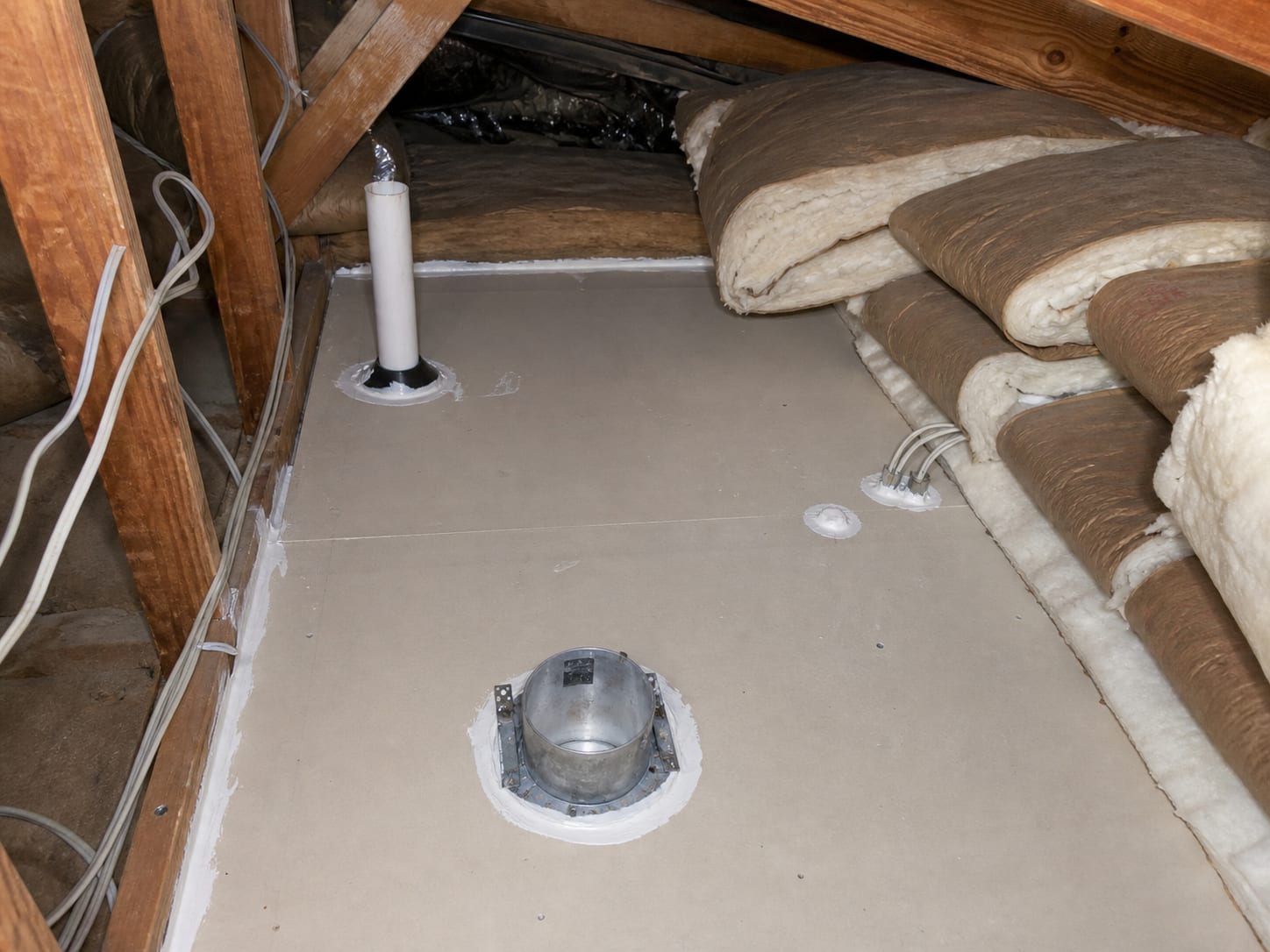
The ceiling looks like a barrier and mostly is not one. Air moves through it wherever there is an opening, and openings are numerous in a normal house: the attic hatch or pull down stair, recessed light fixtures, plumbing vent and supply penetrations, wiring holes, the gaps at top plates where interior walls meet the ceiling, chases around ductwork and chimneys, and bath fan housings themselves. None of these are defects. They are how buildings get assembled.
What makes them matter is pressure. Warm air is buoyant, so during the heating season the upper part of the house is pushing air outward and upward through every one of those openings, all day and all night. Each one carries the moisture that air is holding. This is why sealing the ceiling plane is such a powerful move: it does not treat the condensation, it cuts the supply that feeds it.
Why the Roof Deck Is the Cold Surface
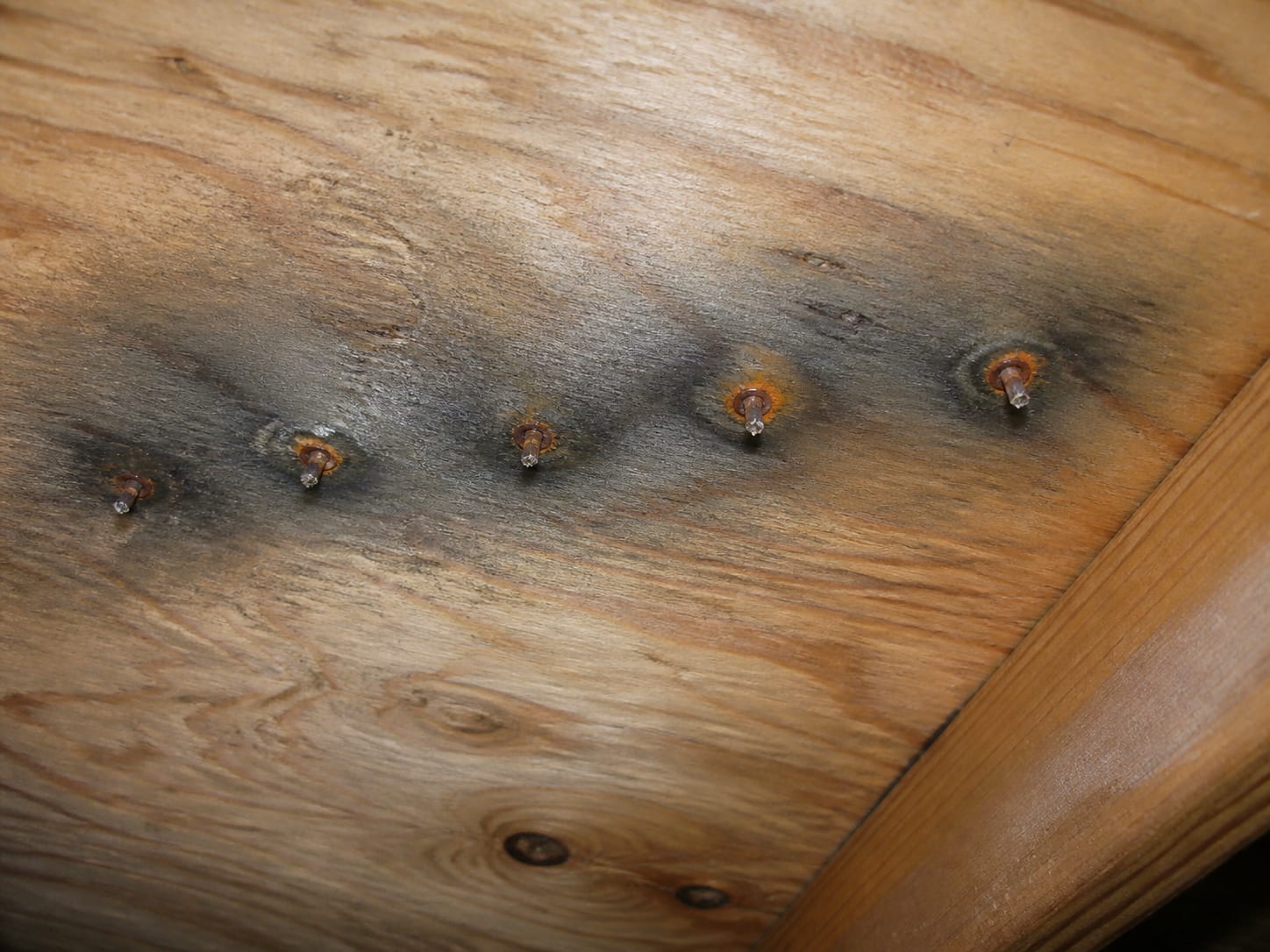
The last link in the chain is temperature, and the roof deck wins that contest in almost every house. It is thin, it faces the sky, and on a clear night it can radiate heat and drop below the outdoor air temperature. Nail points driven through the sheathing get colder still, which is why frost often appears on nail tips before anywhere else. Insulation on the attic floor is doing its job by keeping the deck cold, which is a useful thing to understand: a well insulated attic is more prone to condensation, not less, if the air path below it is left open.
How the Moisture Ends Up in the Wood
- 1
Moisture enters the indoor air
Bathing, cooking, laundry, and occupancy release water vapor into warm air in the living space.
- 2
Warm air rises and finds openings
Buoyancy pushes that air toward the ceiling, where hatches, fixtures, penetrations, and framing gaps let it through.
- 3
The air arrives in a cold space
Above the insulation, the attic is close to outdoor temperature through most of the heating season.
- 4
It contacts the coldest surface available
Roof sheathing, and the nail points through it, are typically the coldest materials in the assembly.
- 5
The water leaves the air
Cooled air cannot hold what it was carrying, so moisture condenses onto the wood as frost or liquid.
- 6
The wood stays wet
If the cycle repeats and the space cannot dry between events, the sheathing and framing remain damp rather than drying out.
- 7
Growth takes hold
Sustained moisture on organic material supports mold, which is why EPA guidance treats moisture control as the basis of mold control.
Season is part of the story here, but it is not the cause. Cold weather makes the mechanism visible, sometimes dramatically, because water condensing in January is obvious and the same moisture leaving through a well ventilated attic in June is not. The supply and the pathway are present all year. That is why a report that blames a cold snap and stops there has not actually explained anything.
The Other Way Water Arrives
A roof leak is the alternative explanation, and it deserves equal weight rather than a footnote. Damaged or aged roofing, failed flashing at a chimney, skylight, or valley, a compromised vent boot, or storm damage can all admit water from above. It travels along framing before it drops, which means the stain that appears may sit some distance from the entry point.
Telling the two apart is the practical work of an attic assessment, and the evidence usually separates cleanly. The EPA's moisture control guidance covers roof and ceiling assemblies alongside plumbing and mechanical systems, which is a reminder that the source list is broader than roofing alone. Plumbing vent stacks pass through the attic. Air handlers and ducts sometimes live there. Any of those can wet materials without the roof being involved at all. A documented mold inspection is how those observations get separated from each other rather than blended into a single guess.
Hover or tap a row to highlight it.
| What you observe | Points toward condensation | Points toward water entry from above |
|---|---|---|
| Distribution across the deck | Broad and fairly even, often heaviest on the north facing plane | Localized, in a defined area or run |
| Relationship to openings below | Concentrated above bath fans, hatches, and recessed fixtures | No consistent relationship to what is below |
| Relationship to roof details | No particular pattern at flashing or penetrations | Clustered at chimneys, skylights, valleys, vent boots, or the eave line |
| Timing | Appears or worsens during the heating season | Follows rain, wind driven rain, or a snow and ice event |
| Nail points | Frost or rust at nail tips is common | Nails unremarkable outside the wet area |
| Insulation condition | Damp across a wide area, sometimes with a surface crust | Wet in a defined footprint below the entry |
Breaking the Chain, in the Right Order
Because the mechanism has three parts, the repair has three possible targets, and they are not equally effective. Cutting the moisture supply is the strongest move, which means venting bath and kitchen fans to the outdoors and confirming they actually terminate there. Closing the air path is next, which means sealing the ceiling plane at hatches, fixtures, penetrations, and top plates. Managing the cold surface is the ventilation question, where balanced intake and exhaust airflow helps the space carry moisture away, though ventilation is a poor substitute for stopping the supply in the first place. New Jersey field guidance describes attic ventilation as serving a moisture removal function, which is a supporting role rather than a cure.
The order is not a preference. Department of Energy weatherization guidance is explicit that roof leaks should be repaired and moisture sources entering the attic should be identified and removed or reduced before air sealing or insulation work is performed. Insulating over a wet deck or air sealing around an active leak buries the problem under new material. Once the source is corrected and affected materials are removed to a documented boundary, replacing insulation and restoring the assembly is its own stage, which is the territory covered by post-remediation rebuild work. What the attic work itself involves is set out on our attic mold remediation service page.
Below grade spaces run this in reverse, with water arriving from soil rather than from the living space, so basement and crawl space conditions are assessed as their own services rather than folded into an attic scope.
Who Controls the Roof, and What the Township Reviews
East Windsor has an estimated 12,422 housing units, and roughly 54 percent are single unit structures. In the attached and multifamily share, the roof and the upper envelope are frequently common elements, so the person looking at a stained bedroom ceiling may have no authority to open, inspect, or repair the assembly above it. Census figures put owner occupancy near 61.1 percent, which means tenants, landlords, associations, and managers are regularly part of the decision. Twin Rivers, identified by the Township as a planned unit development, is one local example of that arrangement. Sorting out who controls the roof is not paperwork. It determines whether the source can be corrected at all.
Cleanup by itself does not establish that a permit is needed. It becomes a question when the work moves into roofing, structural repair, ventilation changes, or mechanical and electrical work, and East Windsor's Construction Department is the local authority that reviews building, electrical, fire, mechanical, and plumbing applications and inspections. That determination belongs to East Windsor, not to West Windsor or Hightstown, which are separate municipalities with their own processes.
Frequently Asked Questions About Attic Mold Remediation in East Windsor NJ
How can I tell whether my attic problem is condensation or a leak?
Look at the distribution before anything else. Condensation tends to spread broadly across the deck, often heaviest on the north facing plane and concentrated above bath fans, hatches, and light fixtures. Water entering from above tends to be localized and to cluster near roof details such as flashing, valleys, vent boots, or the eave line. Timing helps too, since one follows the heating season and the other follows a storm.
My attic is well insulated. Why would it have a moisture problem?
Insulation on the attic floor works by keeping heat in the living space, which by design leaves the roof deck cold. That is not a flaw, but it does mean the deck is a ready condensing surface any time indoor air reaches it. Insulation without air sealing can therefore make condensation more likely rather than less. The two go together, and the sealing is the part that addresses moisture.
Will adding more vents fix it?
Ventilation helps a space carry moisture away, and New Jersey field guidance describes that as its purpose. It is a supporting measure, not a cure for an ongoing supply. If a bath fan is discharging into the attic or the ceiling plane is wide open, more vents move some of the moisture without reducing how much arrives. Cutting the supply comes first, and ventilation works far better after that.
Can I just clean the stained sheathing and be done?
Not if the chain that wet it is still intact. Cleaning treats what happened last winter and changes nothing about what happens next winter. EPA guidance is consistent that controlling moisture is the basis of controlling mold, so the sequence is to identify the route, correct it, then address affected materials on the evidence.
Does my bathroom fan really matter that much?
It can be the single largest factor. A fan that terminates inside the attic delivers the wettest air in the house to the coldest wood in the house, on a schedule, every day. Confirming that each fan actually discharges outdoors, and that the duct has not separated from its termination, is one of the more consequential checks in this whole subject.
Whose responsibility is the roof in a townhouse or condominium?
That depends on the governing documents rather than on where the water shows up. In many attached and managed properties the roof and the exterior envelope are common elements maintained by the association, while the interior finishes are the unit owner's. Establishing that before the work is scoped avoids a cleanup that finishes with the source untouched.
Final Thoughts
An attic moisture problem is easier to think about once you stop treating it as a mystery and start treating it as a sequence. Moisture is produced indoors, air carries it upward, it passes through openings in the ceiling, and it meets the coldest wood in the building, where it stops being vapor and becomes water. Every practical repair is an attempt to interrupt that at one of those points, and the interruptions closest to the source are the ones that hold.
The alternative explanation, water arriving from above, is equally real and reads differently on the deck. Distinguishing the two is what an honest assessment produces, and it is what keeps a homeowner from paying for ventilation that was never the problem or roofing that was never leaking.
If there is staining on your roof sheathing and you want to know which link in that chain is actually broken, ExecPro Restoration & Cleaning can trace the moisture route and tell you what the evidence supports. Call (888) 300-3772 or reach our team through the contact page, and we will start with the physics rather than the stain.
Attic Moisture Terms
Tap a term to see what it means.
Roof sheathing. The wood panel layer fastened over the rafters or trusses that forms the surface under the roofing, visible from inside the attic.
Serving East Windsor
ExecPro Restoration & Cleaning provides mold remediation services in East Windsor, NJ, from inspection and testing through removal, drying, and post-remediation verification. Call (888) 300-3772 for 24/7 emergency response.
Related Articles
Above the Hudson, Below the Roof: Attic Mold Remediation in Alpine, NJ
An Alpine attic problem is a moisture source question and an access question. The Palisades setting changes how you get to the roof, not what wet the wood.
Leak or Condensation: Attic Mold Remediation in Plainsboro, NJ
Dark staining on a Plainsboro roof deck is usually one of two things. How to tell which, what the work costs, and why paint over it is the wrong answer.
Mold in HVAC Ducts and Air Handlers: What Cleaning Can and Can't Fix
Mold in HVAC ducts or the air handler? See which parts can be cleaned, which are replaced, what drives cost, and what to ask a New Jersey contractor.