Mold in HVAC Ducts and Air Handlers: What Cleaning Can and Can't Fix
Cal HewittPublished
- hvac mold remediation
- condensation
- moisture control
- new jersey
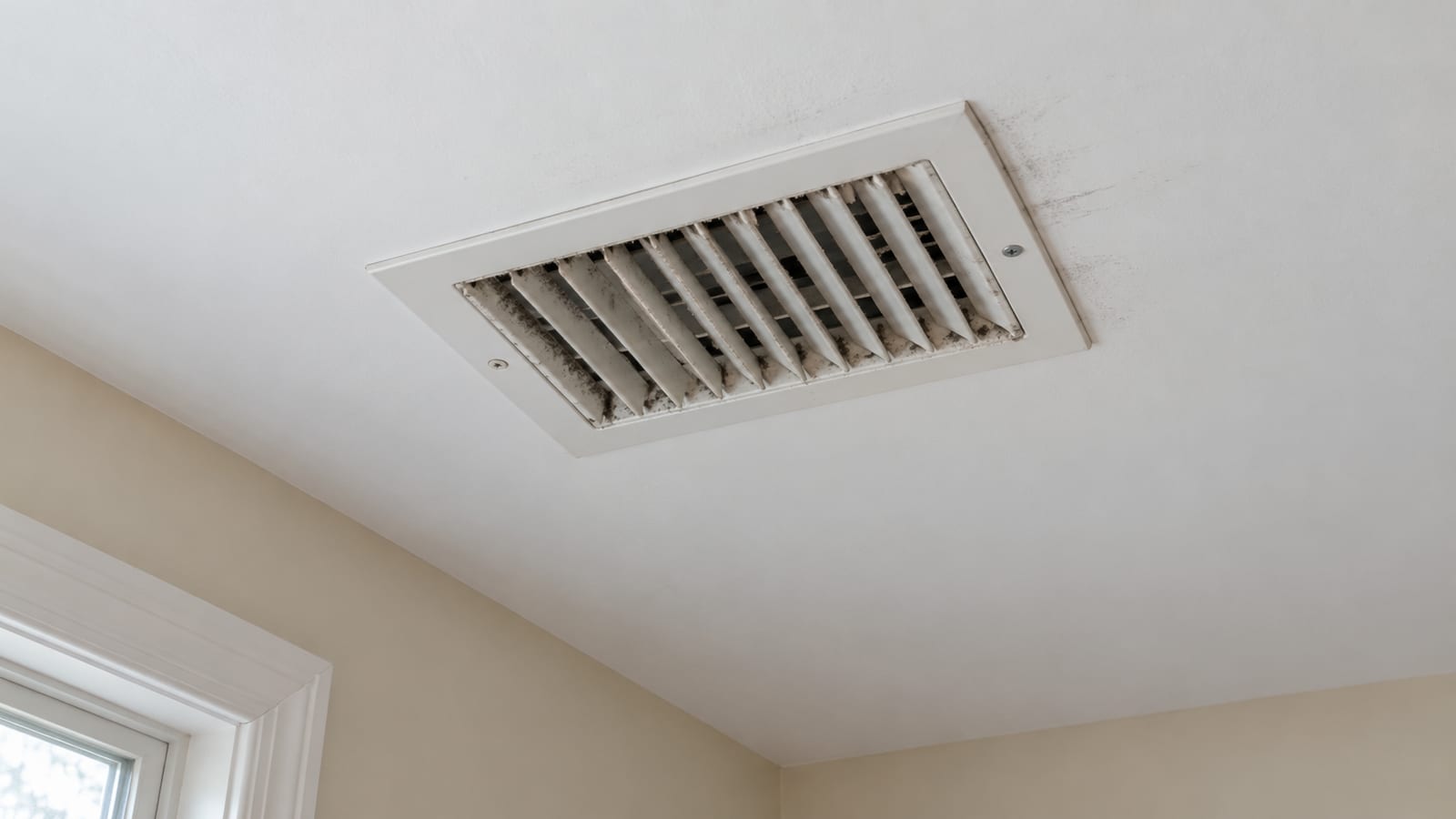
HVAC mold remediation usually starts with a small, uncomfortable moment: dark growth on a supply vent, a musty smell the minute the system kicks on, or a technician telling you the air handler or ducts have mold. Now you are deciding whether to keep the system running, whether the ducts can be cleaned or have to be replaced, whether you can stay in the house, and what any of it should cost. The answers depend on the duct material, which parts of the system are involved, and where the water is coming from. Shut the system off while you arrange an assessment, take photos, and read on for how the decisions break down.
Key Takeaways
Material decides clean or replace
Bare sheet-metal ducts can be physically cleaned, while wet or moldy fiberglass duct insulation has to come out and be replaced, and flex duct is often less costly to replace than to clean.
Moisture comes first
Cleaning without correcting the condensate drain, leak, duct insulation or oversized equipment behind the growth invites the mold back.
Get the scope in writing
Ask for inspection, moisture correction, containment, cleaning, replacement, verification and any HVAC repair priced and listed separately, with the suspected contamination shown to you.
Mold in the Heating and Cooling System Starts With Moisture
The EPA's duct guidance puts it simply: the key to mold control is moisture control. Condensation near cooling coils, standing water in drain pans, leaks, poor insulation, duct leakage and equipment that removes humidity poorly can all give mold what it needs. That is why the first question to ask about a moldy vent is where the water came from, and why the answer shapes everything that follows.
Your health is part of the story too. The CDC says damp and moldy places cause no symptoms for some people and contribute to a stuffy nose, sore throat, coughing, wheezing, eye irritation, skin rash or asthma reactions in others, and that people with chronic lung disease or weakened immune systems face greater risk. If anyone in the building has trouble breathing or a severe asthma reaction, seek medical care, and ask your physician about everyday symptoms. The amount of mold needed to cause health problems varies, according to the New Jersey Department of Health, and depends on the person and the conditions.
Signs That Point to a Moisture Problem in the HVAC System
A few conditions justify an inspection: a musty odor when the system runs, visible growth at registers or on accessible duct surfaces, wet insulation, standing water in the drain pan, water damage near the equipment, or moisture that keeps returning. EPA notes that appearance alone may leave the question open, so the inaccessible parts of a system call for a professional inspection, and laboratory analysis can supply final confirmation when it is needed.
How do you know if mold is in air ducts?
Start with what you can see and smell, and write down when the odor appears, which rooms the system serves, and whether there has been a leak, a flood, a clogged condensate drain or recent HVAC work. Then take these steps in the next hour:
- Photograph the evidence: Capture visible growth, wet insulation, standing water, damaged filters, condensate leaks and the equipment location.
- Turn the system off: OSHA's mold remediation guidance says HVAC systems should be shut down before remedial work, so switch it off while you arrange the assessment.
- Leave the liner and insulation alone: Brushing, vacuuming or cutting into suspected contaminated duct liner or insulation can spread what is inside.
In the next day, arrange a full-system inspection and start drying anything wet. The EPA's mold guidance calls for drying water-damaged areas within 24 to 48 hours.
A Full-System Assessment Looks at Every Component
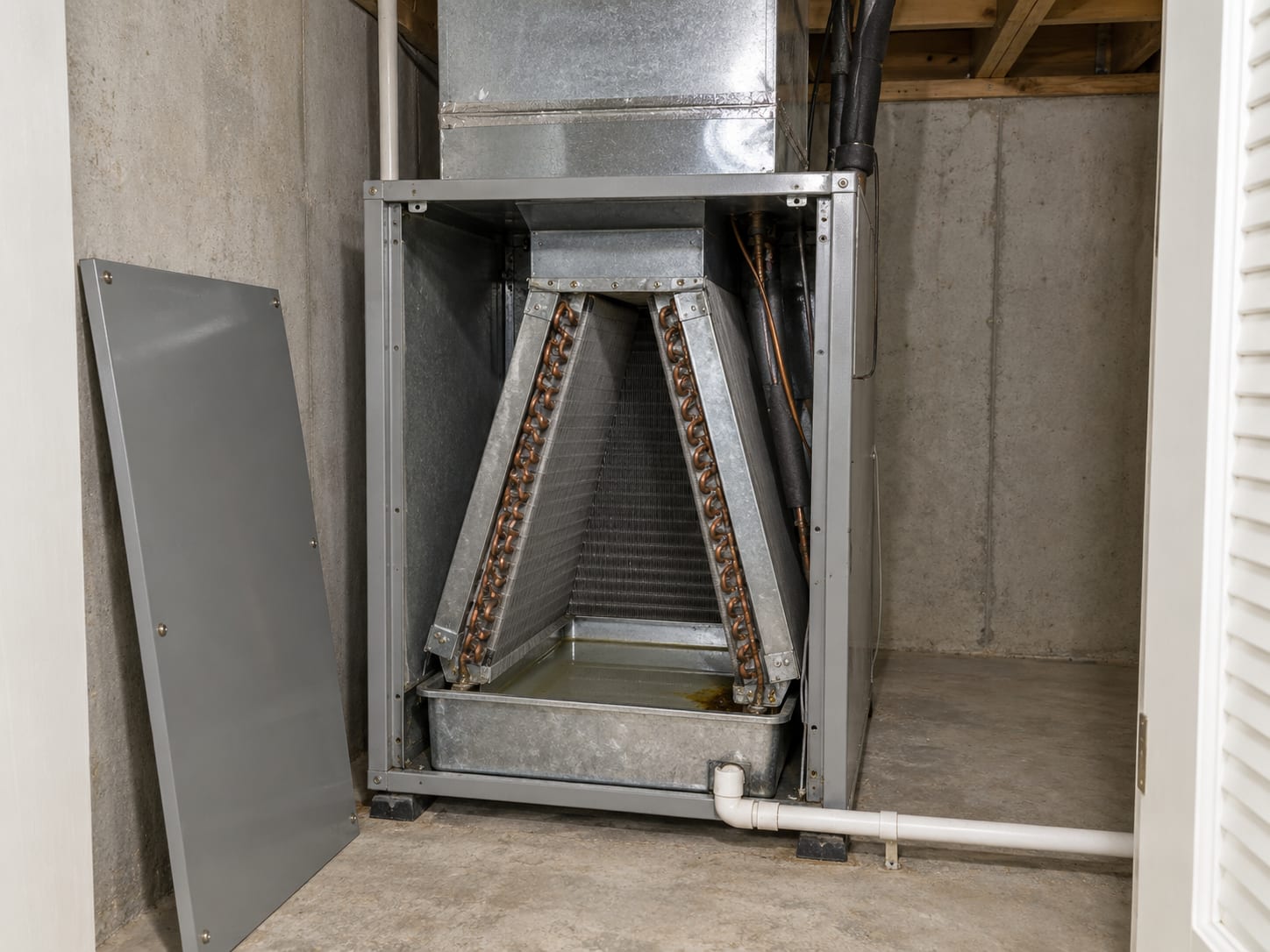
A dark mark at one register tells you where to start looking. The assessment should cover the air handler, cooling coil, drain pan, condensate line, blower compartment, filters, plenums (the boxes that distribute air to the ducts), supply ducts, return ducts and insulation. The EPA warns that cleaning one contaminated component and leaving the others dirty allows recontamination, so a scope that covers only the visible ducts leaves the likely source in place.
The NADCA ACR standard, the trade standard for assessing, cleaning and restoring HVAC systems, asks for an assessment of the components, a decision on whether cleaning is necessary, procedures written for each component, trained and qualified personnel, controls for worker and occupant hazards, and verification of cleanliness. Use that as a yardstick when you talk to a contractor. New Jersey has no state certification program for companies doing mold or general indoor air work, and the Department of Health's company lists are informational, so ask each contractor about training, tools and what the written report will contain.
Put these questions to anyone who inspects your system:
- Where exactly is the suspected contamination? Ask to be shown it.
- Which components were inspected? The list above is your checklist.
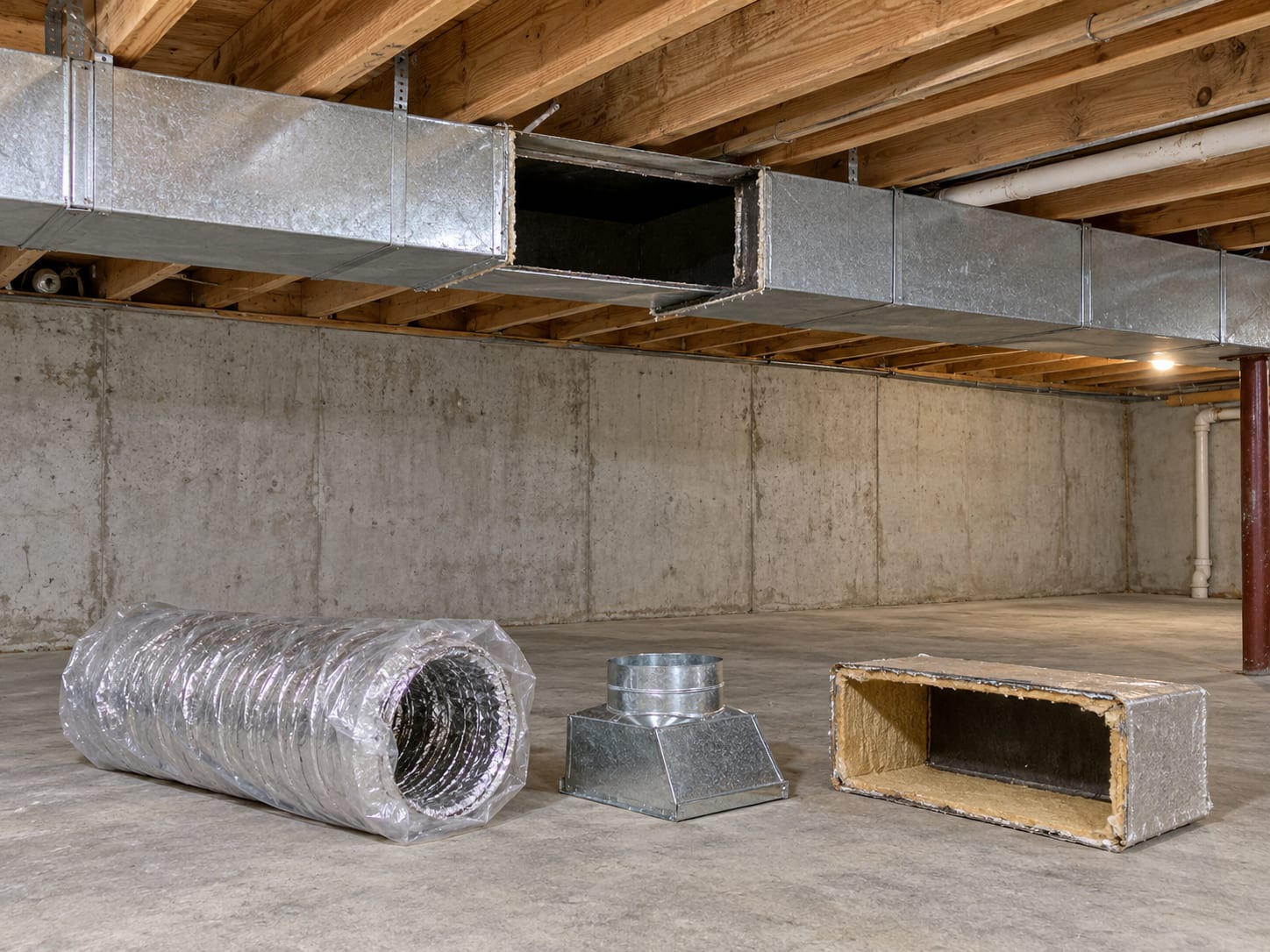
- What is the duct made of? Bare sheet metal, fiberglass-lined duct board and flex duct are handled differently.
- What caused the moisture? The answer should name a specific condition that gets corrected.
- Which parts get cleaned and which get replaced? Ask for it component by component.
For a multi-unit or commercial building, our property management mold services page describes how we work with managers who need records for tenants and insurers.
Questions for Anyone Who Inspects Your System
Where is the contamination
Ask where exactly the suspected contamination is, and ask to be shown it.
Which components were inspected
The air handler, coil, drain pan, condensate line, blower compartment, filters, plenums, ducts and insulation are your checklist.
What is the duct made of
Bare sheet metal, fiberglass-lined duct board and flex duct are handled differently.
What caused the moisture
The answer should name a specific condition that gets corrected.
What is cleaned and what is replaced
Ask for it component by component.
Cleaning, Replacement and the Project Timeline
The duct material and the location of the growth set the scope. Partial cleaning leaves sources of recontamination, so each part gets its own decision. The table shows how the EPA and OSHA guidance treats each part of the system.
Hover or tap a row to highlight it.
| Component | Usual position |
|---|---|
| Bare sheet-metal ducts | Physical cleaning when the contamination is accessible; EPA says substantial visible mold in hard-surface ducts can justify cleaning |
| Cooling coils | Inspect and clean when contaminated; condensation forms here, so they are a major moisture source |
| Drain pans and condensate lines | Inspect, clean or repair so water drains correctly; standing water or debris signals a problem |
| Blower compartment | Inspect and clean as part of the whole system; OSHA directs that HVAC surfaces be cleaned before reuse |
| Filters | Replace contaminated filters |
| Fiberglass duct board or lined duct | Remove and replace wet or moldy material; regrowth follows cleaning |
| Flex duct | Accessible flex duct can sometimes be cleaned, though replacement may cost less; replace it when it is wet, damaged or moldy |
| Plenums, registers and air-handler surfaces | Inspect, then clean or replace by material, access and contamination |
Can mold be removed from HVAC ducts?
Yes, with the answer depending on the material. Substantial visible mold on hard-surface ducts or HVAC components can justify cleaning, and wet or moldy fiberglass insulation comes out and goes back in new. If it sounds like a lot of replacement, the reason is that fiberglass holds moisture, which keeps feeding regrowth after a cleaning.
Does duct cleaning include mold removal?
A routine duct cleaning covers dust and debris. A mold scope adds the contaminated components, the moisture source, containment, cleaning or replacement decisions, filters and verification. If the quote you hold lists only duct cleaning, ask what it says about each of those items.
What kills mold in HVAC ducts?
Physical removal of the growth from accessible hard surfaces, and replacement of porous material, do the work. The EPA says biocides belong in an HVAC system only when the product label specifically authorizes that use, and that no biocides are registered for internally insulated air ducts. EPA recommends against routine sealants to encapsulate duct contamination, and sealants should never cover wet liner, active mold or debris. Biocides and ozone can travel through the system and have limited evidence of effectiveness in ducts, so ask any contractor which product they plan to use and show you the label.
What are the downsides of air duct cleaning?
A poorly scoped job can leave coils, drain pans, blowers or duct sections untouched, and improper tools can damage fiberglass-lined materials. Both are reasons to want the full-system scope, the component list and written verification before work starts.
How long does it take to remove mold from air ducts?
The schedule depends on how many HVAC components are involved, how reachable they are, how far the contamination goes, whether material is replaced, what moisture repairs are needed, and what containment and verification require. Ask for a written project schedule that separates inspection, moisture correction, containment, cleaning, replacement, drying, verification and the restart of the system. Have your HVAC contractor confirm when the system can safely return to service.
How an HVAC Mold Schedule Breaks Down
- 1
Inspection
A full-system assessment of every component.
- 2
Moisture correction
The water source behind the growth is fixed.
- 3
Containment
The work area is separated from the rooms people use.
- 4
Cleaning
Accessible hard surfaces are cleaned.
- 5
Replacement
Wet or moldy porous material is removed and replaced.
- 6
Drying
Wet materials are dried.
- 7
Verification
The work is checked and documented.
- 8
Restart of the system
The HVAC contractor confirms when the system can safely return to service.
What Drives HVAC Mold Remediation Cost
Price follows scope, and a good scope names its parts. The items that move the number are the duct materials, how many components are affected, how easy they are to reach, the moisture repair behind the growth, containment, replacement material, verification, and any mechanical repair to the equipment, drain or duct system. Mechanical repairs sit on their own line because a defective drain or leaking duct belongs to the HVAC trade. The way to compare quotes is to ask each contractor to list inspection, moisture correction, cleaning, replacement, containment, verification and HVAC repair separately, with the duct materials, affected components, moisture cause and work boundaries named. After the system is inspected, a written, property-specific estimate has what you need.
If duct access, opening a wall or replacing HVAC equipment is part of the job, ask your local construction official whether the work needs a permit. New Jersey's Uniform Construction Code, N.J.A.C. 5:23, sets the rules, and the Department of Community Affairs code page lists the subcodes.
Does homeowners insurance cover mold in ductwork?
Coverage depends on the policy, the cause of loss, exclusions, limits and whether the mold came from a covered peril during the policy period. The Department of Banking and Insurance's Bulletin 03-24 describes a $10,000 aggregate mold coverage option for personal and commercial property policies, with optional $25,000 and $50,000 limits, and that option includes testing, removal and access-related tear-out when the loss results from a covered peril. Commercial insurers may offer mold liability coverage, a sublimit or an exclusion. Notify your insurer before permanent repairs if a water event may be involved, and ask for a written coverage position. The state's consumer insurance guide outlines how homeowners policies work.
Keep dated photographs, the inspection report, the duct-material identification, the proposed scope, estimates, invoices, receipts, product labels, filter and material disposal records, HVAC repair records and the post-work verification.
Can Occupants Stay During the Work?
The contractor should give you an occupancy decision based on containment, how much material gets disturbed, any chemicals involved, the layout of the building and the health of the people in it. Those factors vary from job to job, and the plan should be in writing before work begins.
Two points are firm. OSHA says the HVAC system should be shut down during remediation, because a running system can distribute disturbed material through the building, and contaminated filters and porous insulation come out. The EPA advises occupants and pets to leave during biocide application as a precaution. People with asthma, mold allergies, chronic lung disease or weakened immune systems should talk to their physician about staying in the building while the work is underway.
Ask these questions about the work area:
- How will the work area be separated from the rooms people use?
- Will the system stay off, and for how long?
- Is any chemical involved, and does its label authorize HVAC use?
- What confirms the system can return to operation?
Preventing Mold From Returning in New Jersey HVAC Systems
New Jersey's weather gives these systems plenty to work against. Rutgers' New Jersey climate overview describes high humidity and moderate temperatures when winds come from the south or east, and the state has distinct northern, central, southern and coastal climate zones. NJ Clean Energy explains that air conditioners remove heat and humidity, and that an oversized unit cools fast but removes less humidity.
The usual routes back for moisture are:
- Cold surfaces in humid air: Summer humidity meets cold coils, ducts or air-handler surfaces and condenses.
- Drain trouble: A clogged, damaged or poorly sloped condensate pan or drain line lets water stand or overflow.
- Short cycling: Oversized equipment shuts off before it has run long enough to dehumidify.
- Duct leaks and thin insulation: Humid attics, crawl spaces and basements feed moisture into the system, and return-side leaks draw that air in.
- Water events: Flooding, plumbing leaks or water intrusion near the equipment can leave filters, insulation and other porous materials wet.
The fixes match the routes. Repair the water source, keep drain pans and condensate lines draining, maintain the coils, size equipment correctly, seal duct joints, insulate ducts in unconditioned areas, and replace wet or moldy porous material. The EPA states that moisture should stay out of ducts and that moisture control is the most effective prevention. If a leak or flood started the problem, our water damage restoration and structural drying work addresses the wet building materials, and our mold inspection finds hidden moisture elsewhere in the building.
Hover or tap a row to highlight it.
| Route | What happens | The fix |
|---|---|---|
| Cold surfaces in humid air | Summer humidity meets cold coils, ducts or air-handler surfaces and condenses | Maintain the coils |
| Drain trouble | A clogged, damaged or poorly sloped condensate pan or drain line lets water stand or overflow | Keep drain pans and condensate lines draining |
| Short cycling | Oversized equipment shuts off before it has run long enough to dehumidify | Size equipment correctly |
| Duct leaks and thin insulation | Humid attics, crawl spaces and basements feed moisture into the system, and return-side leaks draw that air in | Seal duct joints and insulate ducts in unconditioned areas |
| Water events | Flooding, plumbing leaks or water intrusion near the equipment leaves porous materials wet | Repair the water source and replace wet or moldy porous material |
How often should HVAC ductwork be cleaned?
The EPA bases duct cleaning on a specific condition: substantial visible mold, substantial dust or debris, or vermin contamination. Routine maintenance means inspections, filter changes and moisture control, and those cover most of what keeps a system healthy.
HVAC Mold Terms
Tap a term to see what it means.
Plenum. A box that distributes air to the ducts.
Frequently Asked Questions About HVAC Mold Remediation
Who do I call first, an HVAC contractor or a mold company?
Start with a full-system assessment, and expect both trades to appear. Mechanical repairs such as a defective drain or leaking duct are listed separately from the cleaning and replacement scope, and the HVAC contractor confirms when the system can run again.
Should I clean the vents myself?
Photograph the growth, turn the system off and have the assessor show you the suspected contamination. Brushing or vacuuming liner and insulation can spread it, so leave that to the person doing the scoped work.
Do I have to replace every duct in the house?
Only the parts the assessment shows to be wet, moldy or damaged beyond cleaning. Sheet metal usually gets cleaned, fiberglass liner usually gets replaced, and flex duct is cleaned or replaced depending on its condition and the cost of each choice. A component-by-component list tells you where each section lands.
What should I give my insurer or property manager?
The dated photos, inspection report, written scope, invoices, product labels, disposal records and the post-work verification. Our HVAC mold remediation page describes the scope we write up.
Test Your HVAC Mold Knowledge
1. What decides whether duct material is cleaned or replaced?
2. What happens to wet or moldy fiberglass duct insulation?
3. What should you do with the system while you arrange an assessment?
4. When does EPA say a biocide belongs in an HVAC system?
5. Why does an oversized air conditioner add to mold risk?
Pick an answer to begin.
What This Means for You
Mold in an HVAC system points to moisture, and the moisture decides the plan. Shut the system off, photograph what you see, and get a written full-system assessment that names the duct material, the affected parts and the water source. Cleaning is the answer for hard surfaces and replacement is the answer for wet liner, and a scope that lists each part tells you which one applies.
Getting the moisture fixed and the work verified protects the system, the building materials around it and the people who breathe its air. It also leaves you with records for an insurer, a tenant, a buyer or the next contractor.
If you are in New Jersey and want a system looked at, we at ExecPro Restoration & Cleaning assess coils, drain pans, blower compartments, air handlers, supply and return ducts and plenums, and we separate remediation from routine duct cleaning in the written scope. Call us at (888) 300-3772 or use our contact page with a description of what you see and smell, and we will confirm service-area availability and schedule the assessment.
Related Articles
What a Home Indoor Air Quality Test in New Jersey Actually Checks
Indoor air quality testing in NJ: what a professional test measures, what a home monitor misses, what sets the cost and which steps to take first today.
Basement Mold Removal: What Comes Out, What Can Stay, and Why
Basement mold removal in NJ: see which materials usually come out, which can be cleaned and kept, when DIY stops and how to keep mold from coming back.
Finishing a Basement in New Jersey: The Moisture Checks to Do Before Framing
Planning on finishing a basement in NJ? Walk through the moisture checks, below-grade materials, permits and records that come before framing.