Mold Remediation in East Brunswick, NJ
East Brunswick is a Middlesex County township of mostly postwar houses, with the South River, Lawrence Brook and Farrington Lake running through it. ExecPro Restoration & Cleaning traces the moisture, removes the growth and dries the structure so the repair lasts. Tell us what you see and where, and we will tell you what to do next.
Who handles mold remediation in East Brunswick, Middlesex County?
Mold remediation in East Brunswick, Middlesex County, means locating the moisture that fed the growth, sealing off the affected area, removing the materials mold has reached, and drying the building so the problem does not simply come back. ExecPro Restoration & Cleaning serves East Brunswick Township from the Route 18 corridor to the Riva Avenue section and out to the Old Bridge Turnpike and the South River side of town. If you can see or smell growth, or you have had water in a basement, a wall or a ceiling, call (888) 300-3772 and tell us which room, how long it has been damp and where you think the water came from. On that call we will tell you what to do in the next few hours and what to leave alone. Most East Brunswick houses were built after the war, and we plan the work around the age of yours.
Why do East Brunswick homes need mold remediation that fits the property?
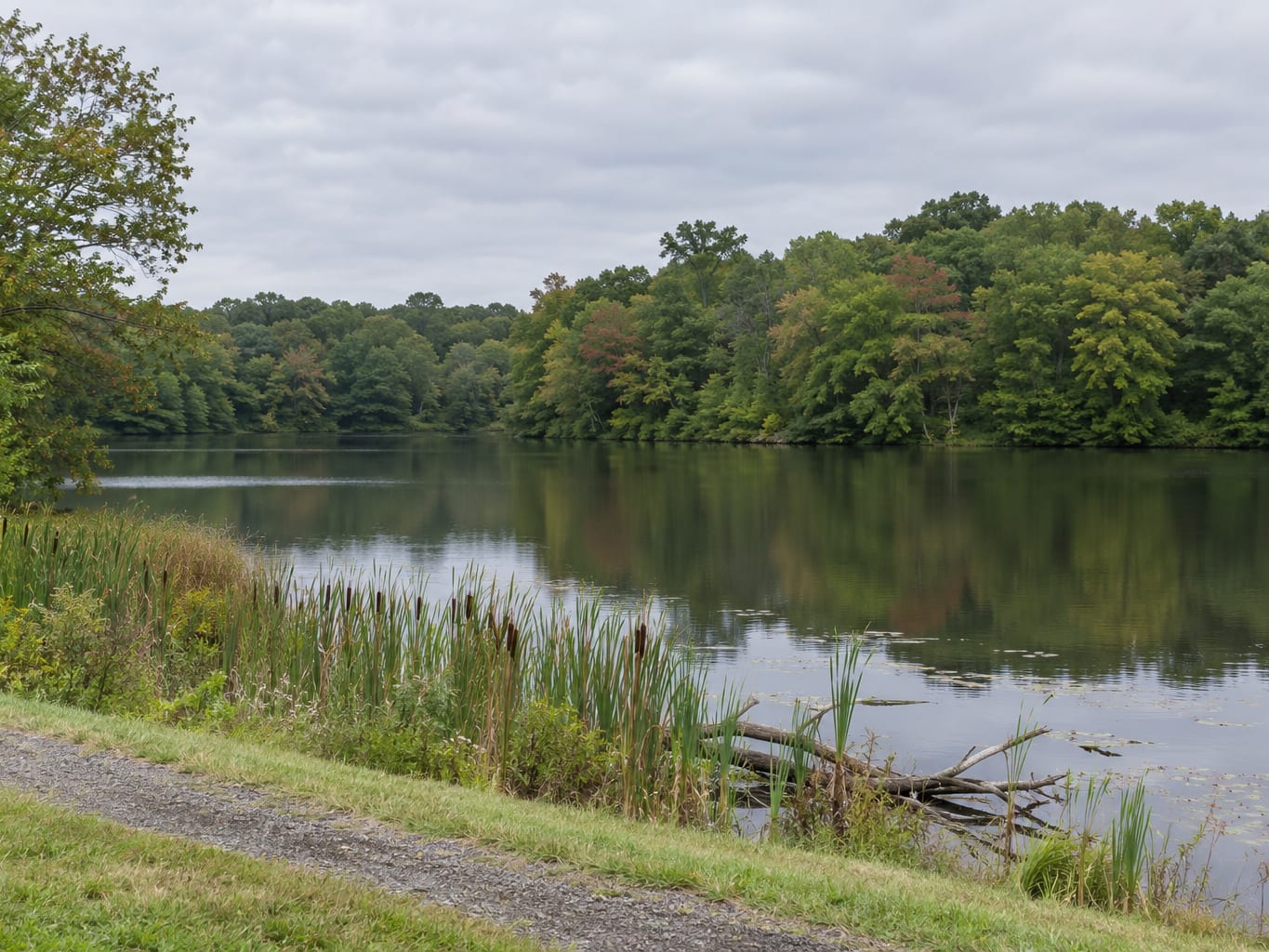
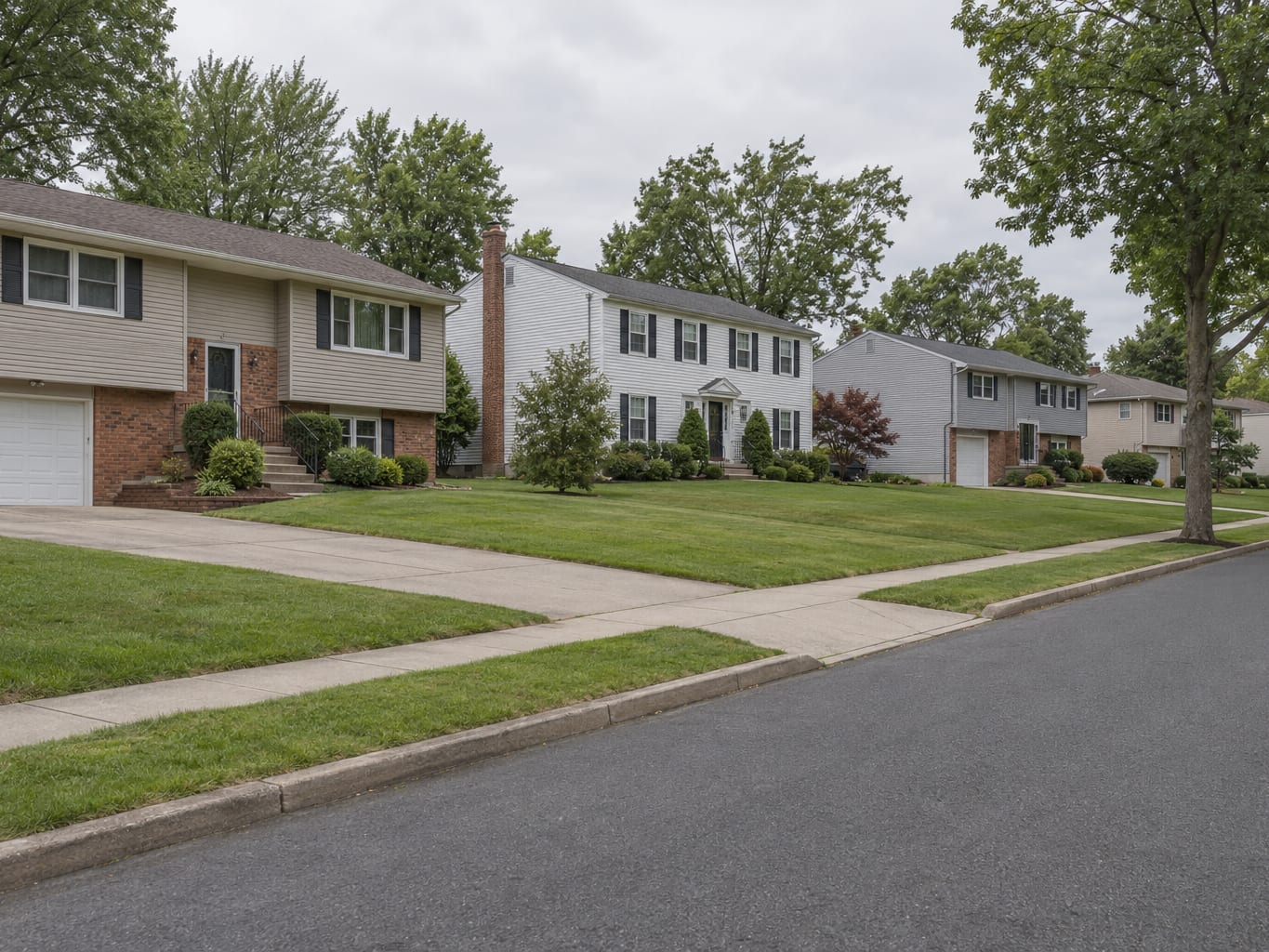
Route 18 was built in 1935 and the New Jersey Turnpike was completed in 1952, and the suburban growth that followed produced the housing most owners live in now. The township's 2025 housing report, using 2019 to 2023 Census estimates, counts 17,524 housing units. Of those, 3,113 were built in the 1950s, 3,268 in the 1960s, 2,471 in the 1970s and 3,711 in the 1980s, which puts about 72 percent of the township's homes between 1950 and 1989. The Census puts the owner-occupied rate at 80 percent, so most people reading this are the ones who will pay for the repair and live with the result. A house of that age is not one thing. Foundations vary between a basement, a crawl space and a slab, and additions may have been built decades after the original house. The right remediation plan depends on which of those you have, where the water enters and how far the damage has traveled, and that is why we start by looking at your building instead of quoting from a standard list. There is also water in the township itself. The South River runs along the eastern side, including the Old Bridge historic district. Lawrence Brook and Farrington Lake sit near the Riva Avenue section, and a state study of the Route 18 area found wetlands, floodplains, forested areas and streamside zones along the corridor. Whether any of that reaches your lot is a question about your address, not the township.
What are the signs of moisture problems in an older suburban house?
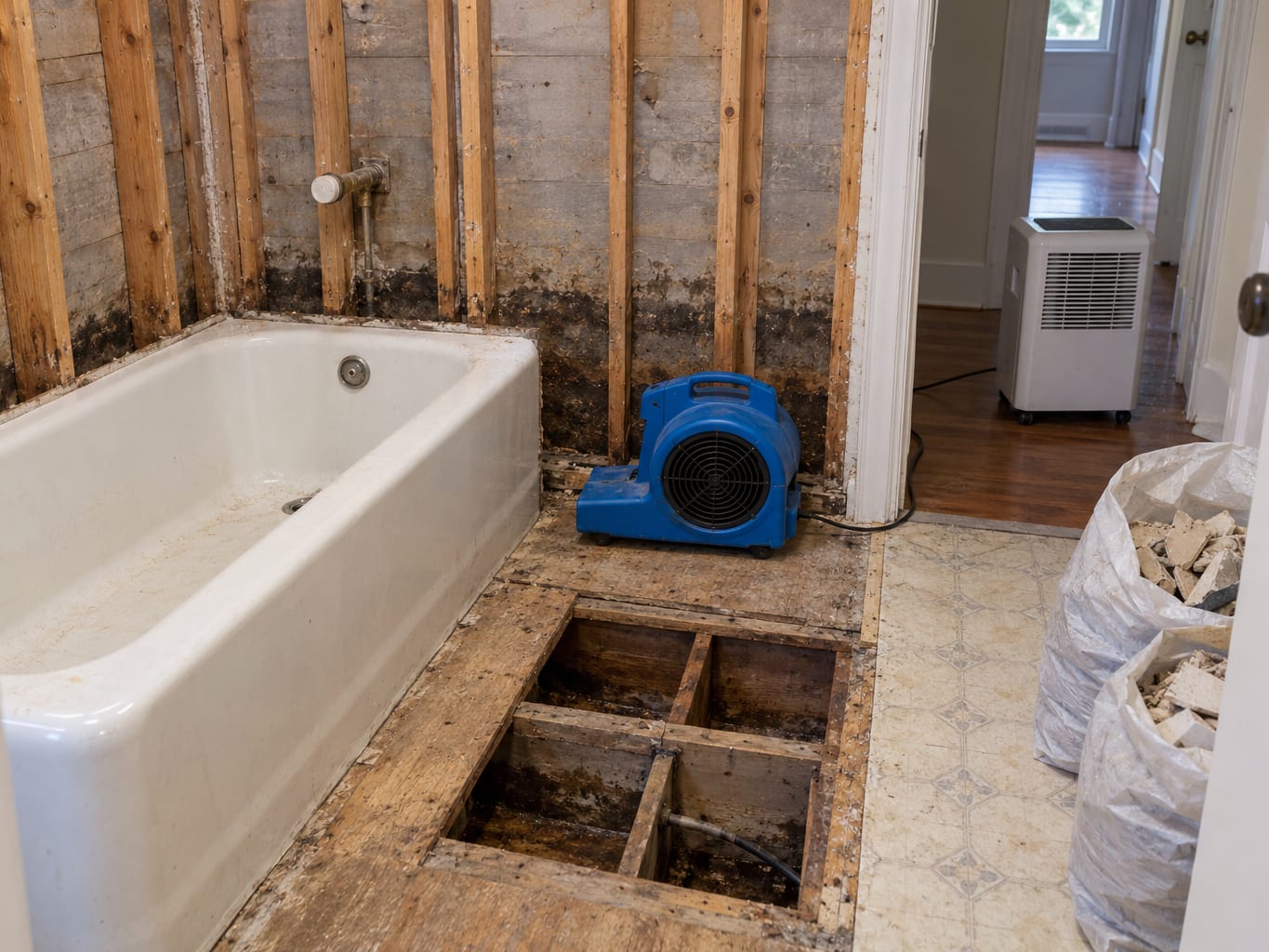
In a house built between the 1950s and 1980s, the original parts are now old enough to fail: supply lines behind walls, window flashing, roof edges, bathroom fans and the caulk around tubs and showers. Moisture from any of them tends to show up somewhere else than where it starts. A musty smell in a finished basement, in a closet on an outside wall or in a bedroom above a bathroom is the most common first sign. Others are paint that bubbles at the bottom of a wall, ceiling stains that grow after rain, baseboards that swell, wood flooring that cups, carpet that feels damp under furniture, and dark spotting on the ceiling of a bathroom with a fan that vents into the attic instead of outside. Check the places nobody looks. Behind a washing machine, under a kitchen sink, around a water heater and at the back of a basement wall are where slow leaks hide. If you find growth on a wall or ceiling in a room with heating vents, tell us, because ductwork can carry moisture and spores to other rooms, and we may want to look at HVAC mold remediation as part of the job. Leave the surface alone until we talk; scrubbing or bleaching a patch can spread spores and does not reach the material behind it.
How does mold remediation work after a leak, a flood or persistent dampness?
The order matters more than any single step. Remediation goes wrong when someone removes visible growth before finding the water, because the growth returns. Our work in an East Brunswick house follows this sequence. If you are not sure whether you need an inspection or testing, the deciding question is whether the result would change what you do; we will tell you honestly when it would not.
Scroll the steps sideways to follow the full process.
Which mold and water services do East Brunswick homeowners ask about most?
These services match the mix of finished basements, older mechanical systems and streamside lots in the township.
Basement Mold Remediation
Finished basements in East Brunswick's postwar houses hold carpet, drywall and insulation that stay damp after a leak or seepage, and we remove and treat what mold has reached.
Basement Flood Cleanup
When storm water or a failed sump reaches a basement floor, we extract the water, remove what it soaked and start drying the same day we arrive.
Crawl Space Mold Remediation
Houses with crawl spaces can hold damp air and wet insulation under the floor, and growth on joists needs cleaning and drying.
Water Leak Detection
Slow leaks behind walls in older plumbing stay hidden until a stain or smell appears, and we locate them with meters before opening anything.
Structural Drying
Framing and subfloor take longer to dry than the surface does, so we dry to readings rather than to how it looks.
What do mold remediation prices in East Brunswick depend on?
The price of mold removal follows the scope, and the scope follows five things. The first is how much material is wet or affected. The second is what the material is; a wall of drywall comes out quickly, while a finished basement with built-in cabinetry and carpet takes longer. The third is access, meaning how easy it is to reach the damage. The fourth is the source: clean water from a supply line is a different job than groundwater or floodwater, which carries dirt and often means removing what it soaked. The fifth is whether you need rebuilding afterward.
In a township where about 72 percent of the houses date from 1950 to 1989, the most common price drivers are a finished basement with carpet and paneling over a wall that stayed damp, a bathroom ceiling under a fan that vents into the attic, and ductwork that has to be cleaned along with the room. When you compare quotes from different companies, check that each one covers the same things: finding the water, containment, removal, drying and a final check. There is a local rule that can change a project's size. East Brunswick's flood-damage regulations address basements and crawl spaces in flood-hazard areas, and an existing below-grade basement or crawl space may have to be modified when a project counts as a substantial improvement. If your lot is in a flood-hazard area and you plan more than a repair, ask the township before you design the rebuild. We do not quote a price from a web page. We look at the space, explain what drives the number and give you the scope before work begins. If you are filing an insurance claim, ask us about our insurance restoration services so the photos and moisture readings your insurer wants are collected as we go.
What time of year is worst for mold in East Brunswick?
The worst time is whenever a damp material stays damp, and in East Brunswick that happens in three seasons for three different reasons. In the humid summer months, a finished basement in a 1960s or 1970s house holds moist air, and carpet, paneling and stored boxes take it up. In spring and after any stretch of heavy rain, water reaches foundations and window wells, which matters most for lots near the South River, Lawrence Brook, Farrington Lake or the wetlands along the Route 18 corridor. In winter, closed windows and long showers push moisture into bathrooms and attics, and a fan or dryer vent that empties into the attic instead of outside leaves it there.
So, the useful habit is to look at the same places each season: the basement walls and floor edge after a hard rain, the bathroom ceilings and attic in winter, and any closet on an outside wall in summer. If you smell something musty at any time of year, trace the water before you clean.
When should you walk away from a house with mold?
Walk away when the mold is the visible part of a bigger problem you cannot price yet. That means an active leak that nobody has located, growth on framing or across a large share of a finished basement, or damage in a house where the seller cannot show where the water came from or what was done about it. Staining on one bathroom ceiling with a known cause, such as a failed fan duct, is a smaller repair and a reasonable thing to negotiate.
Buyers in East Brunswick should add one local step. The township's flood-damage regulations address basements and crawl spaces in flood-hazard areas, and an existing below-grade basement or crawl space may have to be modified when a project counts as a substantial improvement. If the house is near a brook, the South River or Farrington Lake, check the address against current FEMA and state flood-hazard maps and ask the Construction Inspection Division what a rebuild would involve before you commit.
Get a mold inspection during your inspection period, ask for the cause, the extent and a scope of work in writing, and bring the scope to your agent and attorney to negotiate the price, a repair before closing or a credit. If the scope keeps growing as the inspector opens the space, that is the signal to step back.
What can East Brunswick property owners do before help arrives?
What you do in the first few hours changes how much has to be removed later.
Stop the water
Turn off the supply to a leaking fixture or the main shutoff if you cannot tell which line it is. If water is coming in from outside, get to a dry floor and stay away from standing water near outlets, cords and the electrical panel.
Move what you can
Lift furniture off wet carpet, pull rugs and take boxes off a damp floor. Wet cardboard grows mold fast.
Photograph before you clean
Take dated photos of the water line, the materials and any growth, and keep damaged items until your insurer clears you to discard them.
Leave growth alone and close the door
Do not scrub or bleach it, and turn off any fan that pulls air through that room.
Call with the details
Tell us the room, how long it has been wet and where the water came from, and we will tell you what to do next.
How do East Brunswick's roads, waterways and neighborhoods affect service?
East Brunswick is a large township, and getting to it depends on where you are. The New Jersey Turnpike serves the township at Exit 9, Route 18 runs through the middle, and U.S. Route 1 is how traffic reaches Route 18 from the north. Old Bridge Turnpike and Bordentown Road are the historic arteries, and Riva Avenue, Tices Lane, Cranbury Road and Ryders Lane carry local traffic. When you call, give us your cross streets and tell us if any route to you is blocked or under water. The places people use to describe where they are also tell us something about moisture. The Riva Avenue section is associated with Farrington Lake and Lawrence Brook. The Old Bridge historic district sits along the South River. The Route 18 corridor has homes and businesses together, and the township treats it as its own corridor. The township keeps a Planning and Engineering Department at 4 Harts Lane and a Construction Inspection Division for construction-code permits and inspections. Call them before structural work, and ask about stormwater and flood-hazard rules if your lot is near a stream or wetland. East Brunswick has stormwater ordinances and a stormwater management plan, so a regrade or a change to how a downspout drains can involve more than it appears.
How do you prevent repeat moisture problems in East Brunswick?
Start outside. Gutters that overflow, downspouts that dump at the foundation and soil that slopes toward the house put water where it does the most harm. Extend downspouts several feet from the walls and check the grade after the next hard rain by watching where water goes. Inside, control humidity in the spaces that stay damp. Run a dehumidifier in a finished basement and empty it or drain it to a sink, and keep a small humidity reader in the room so you know what the air is doing. Vent bathroom fans to the outside, and make sure a dryer vent runs clear to an exterior wall. In a house built in the 1960s or 1970s, those fixes matter, because the original ductwork and vents may have been moved, capped or crushed over the years. If your basement takes on water after heavy rain, deal with the source instead of only drying the floor. If the water reaches you often, a visit for basement drying can help you decide what needs to change.
Where do we work in and around East Brunswick, NJ?
We serve East Brunswick Township, ZIP code 08816, including the Riva Avenue section, the Old Bridge historic district, the Route 18 corridor and the neighborhoods around Community Park, Country Lane Park, Lenape Park, Frost Woods and Washington Heights Park. We also work in the towns that border it: Edison, Sayreville, South River, Old Bridge, Spotswood, Helmetta, Monroe, Milltown and North Brunswick, plus South Brunswick and New Brunswick.
What are East Brunswick customers saying?
See what our customers are saying.
Frequently Asked Questions About Mold Remediation in East Brunswick, NJ
The price depends on the scope described above. We look at the space and explain the scope and what drives the number before any work starts.
Talk to ExecPro Restoration & Cleaning about mold in East Brunswick
About East Brunswick, NJ
East Brunswick is a township in Middlesex County, in inland central New Jersey, and the 2020 Census counted 49,715 residents. Most of its houses were built after the war. The township's 2025 housing report, using 2019 to 2023 Census estimates, lists 17,524 housing units, with 3,113 built in the 1950s, 3,268 in the 1960s, 2,471 in the 1970s and 3,711 in the 1980s. That is about 72 percent of the homes between 1950 and 1989, and 80 percent of units are owner-occupied. In houses of that age, original supply lines, window flashing, roof edges, bathroom fan ducts and dryer vents are the places moisture tends to start, and it often shows up in a finished basement or a ceiling far from the source.
Water is part of the township too. The South River runs along the eastern side, including the Old Bridge historic district, and Lawrence Brook and Farrington Lake sit near the Riva Avenue section. A state study of the Route 18 corridor found wetlands, floodplains, forested areas and streamside zones there, and the township has stormwater ordinances and flood-damage regulations that cover basements and crawl spaces in flood-hazard areas. If a repair may count as a substantial improvement, an existing below-grade basement or crawl space may have to be modified, so ask the township before you design the rebuild. Check your address against current FEMA and state flood-hazard maps, and call the Construction Inspection Division before structural work.
Neighborhoods We Serve in East Brunswick
Around East Brunswick
- Community Park
- Country Lane Park
- Lenape Park
- Frost Woods
- Washington Heights Park
- Historic District of Old Bridge
- Farrington Lake
- Lawrence Brook
- South River
- Edison Township
- Sayreville Borough
- South River Borough
- Old Bridge Township
- Spotswood Borough
- Helmetta Borough
- Monroe Township
- South Brunswick Township
- North Brunswick Township
- Milltown Borough
- New Brunswick
Do not see your neighborhood? We serve all of East Brunswick and the surrounding area. Reach out and we will confirm coverage.