Mold Remediation in Dayton, NJ
ExecPro Restoration & Cleaning handles mold inspection, testing, removal and the moisture repair behind it for homes in Dayton, in South Brunswick Township, Middlesex County. Call us with the address, and we will tell you what to do first.
Mold Remediation Services in Dayton, NJ
Mold remediation in Dayton, NJ means finding the water that let mold grow, drying and cleaning the affected materials under containment, and repairing what caused the moisture so the growth does not return. Dayton is a village in South Brunswick Township, Middlesex County, and its homes sit along Georges Road, Culver Road and New Road, close to Route 130 and Route 522. Most jobs here start with a phone call about a damp corner, a musty lower level or a stain that keeps coming back. ExecPro Restoration & Cleaning walks the property, reads the moisture, and gives you a written scope before any work begins. Call (888) 300-3772 or use the contact form, and have your street address ready.
Why Does a Dayton Home Need a Property-Specific Mold Assessment?
Dayton is a compact place. The Census Bureau counted 8,138 residents here in 2020 across about 2.41 square miles, roughly 3,381 people per square mile, and 88.0 percent of occupied homes are owner-occupied according to the 2020 to 2024 American Community Survey. Those are people who own the walls, the roof and the lower level the mold is growing in, and who decide what gets repaired. The median value of an owner-occupied home in Dayton is $496,600 for the same period, so a hidden moisture problem is worth catching early.
Dayton is also made up of many separately planned sections rather than one housing style. South Brunswick's neighborhood map names more than a dozen of them, and each was laid out and built on its own schedule, with its own roof lines, grading and lower-level layouts. A homeowner in one section cannot assume a neighbor two sections over has the same water route into the house.
That is the reason we assess the building in front of us. Two houses a few streets apart can have very different moisture problems, and the right fix depends on where the water is coming from, how long the material stayed wet and what the structure is made of. We take readings first, then write the scope.
What Are the Signs of Hidden Moisture in a Dayton Property?
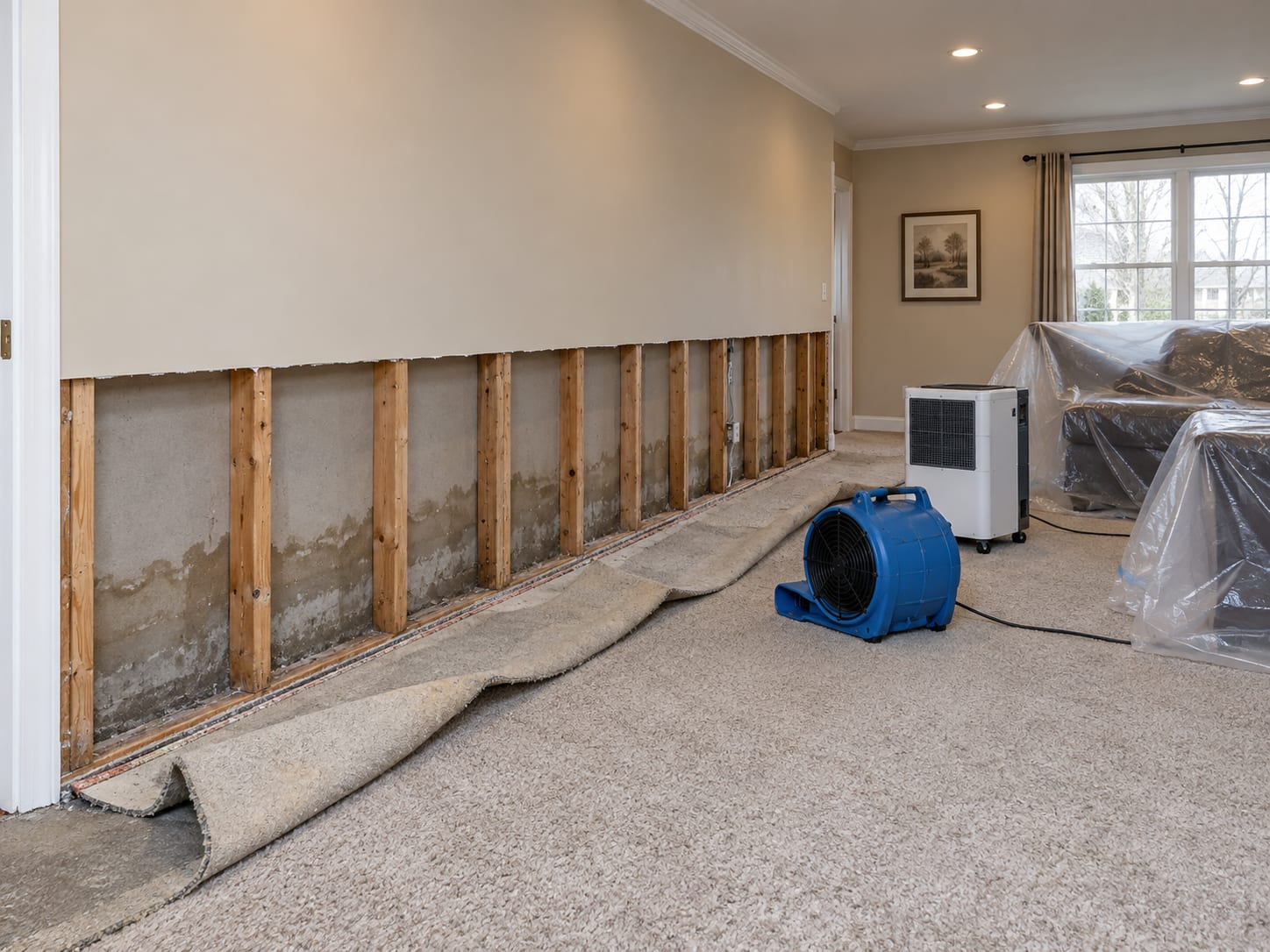
The earliest sign is usually a smell. A closed basement, a laundry room or a closet on an outside wall that smells musty when you open the door is holding humid air or a damp surface you cannot see. Next comes visible change: paint that bubbles or peels, drywall that feels soft near the floor, baseboards that swell, a white crust of mineral salts on masonry, or dark spotting on the ceiling in a bathroom with a weak fan.
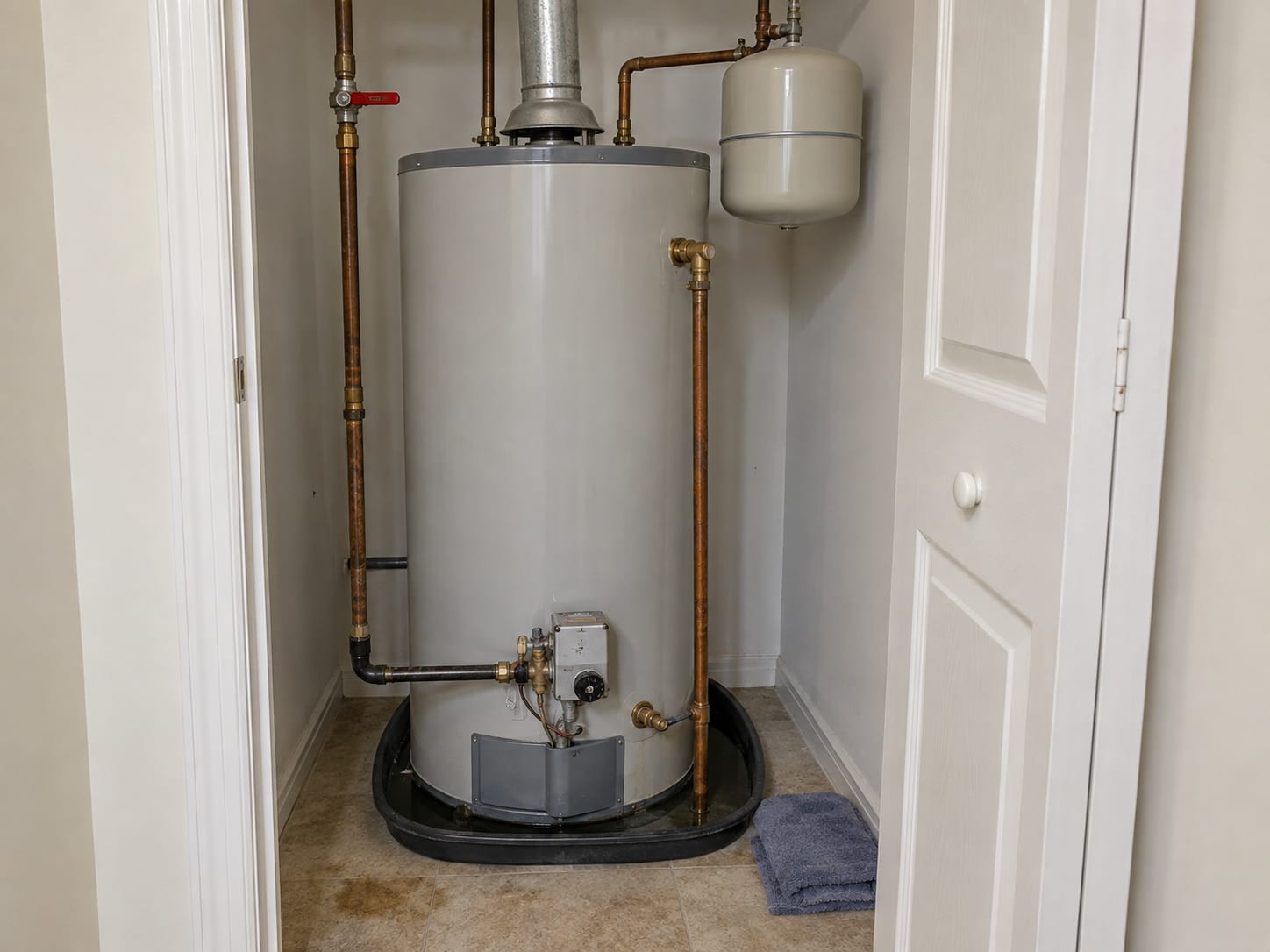
Some signs sit above the living space. Stains that spread on a ceiling after heavy rain point to the roof, a flashing detail or an attic vent. Rust on the bottom of a water heater or a damp patch at a washing machine hose points to a plumbing or appliance source. Condensation on windows that lasts into mid-morning tells you the house is holding more humidity than its ventilation clears.
Any of these is a reason to call before you scrub or paint. Painting over a damp wall seals the moisture in, and scrubbing dry mold can spread spores into the rest of the room. A moisture reading takes minutes and tells you whether the area is still wet.
What Does Professional Mold Remediation Include?
A remediation job follows a set order, and each step depends on the one before it.
Walkthrough and moisture mapping
We inspect the affected room and the rooms around it, use a moisture meter to find wet material, and trace the source. You get the findings in plain language and a written scope.
Containment
We seal the work area with plastic barriers and run negative air machines fitted with HEPA filters, so disturbed spores stay in the work zone and out of the rest of your home.
Removal of affected material
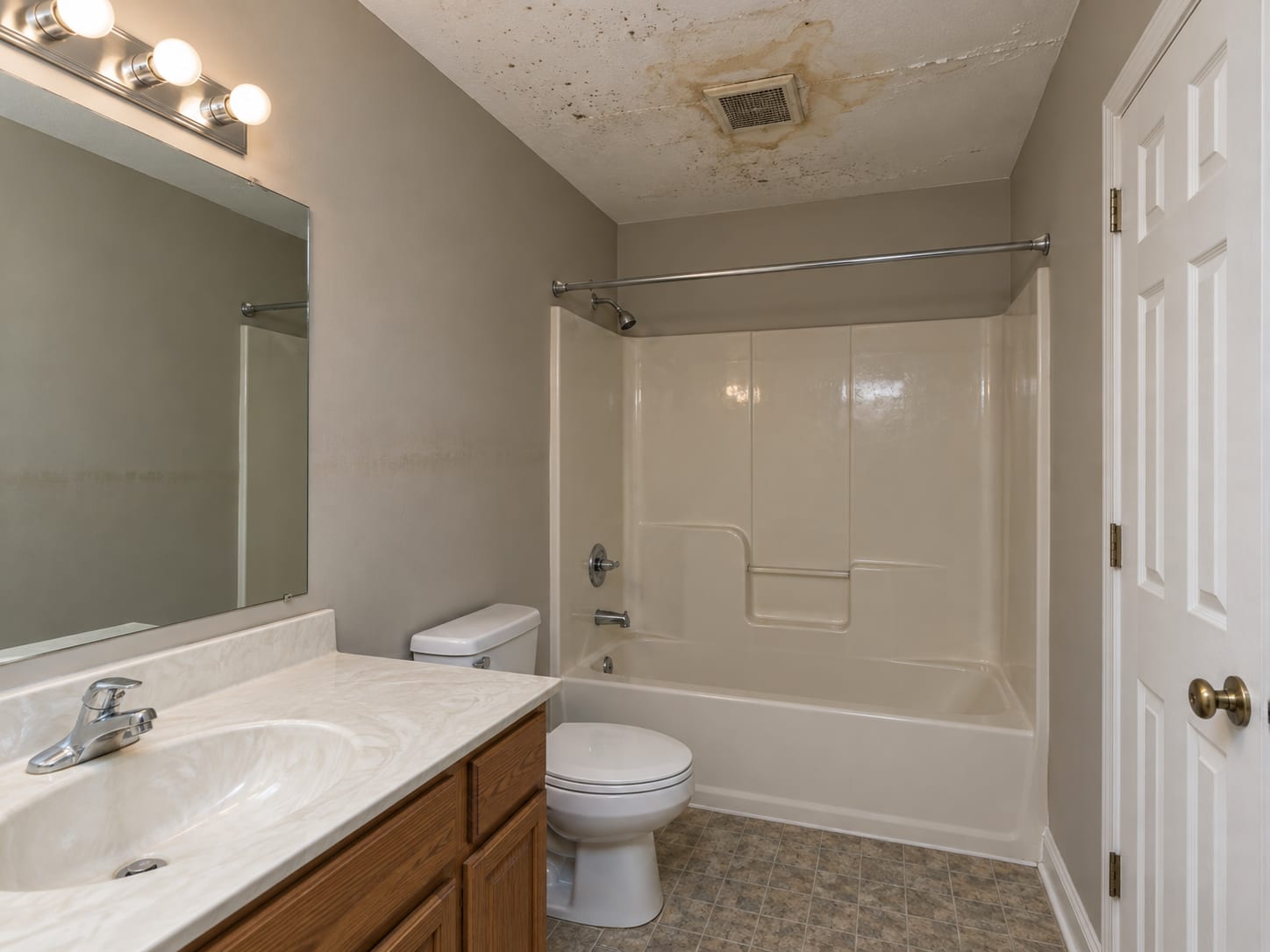
Porous materials that hold growth, such as wet drywall, insulation and carpet pad, are cut out, bagged and removed. Solid framing is cleaned by HEPA vacuuming and wire brushing or sanding, then wiped down.
Drying and air cleaning
We dry the structure until readings match dry material nearby, and we run air filtration through the job so airborne particles settle and get captured.
Verification
Before the work area is opened up, we take moisture readings again. If you want independent confirmation, post-remediation verification testing is available, and we can arrange it.
How Do Water Damage and Mold Connect in Dayton Homes?
Mold needs moisture, an organic material to feed on and time. In a house that means drywall paper, wood framing, insulation, carpet and cardboard boxes stored on the floor. Take away any one of the three and growth stops, and the practical one to control is moisture. That is why a mold job in Dayton usually starts as a water job.
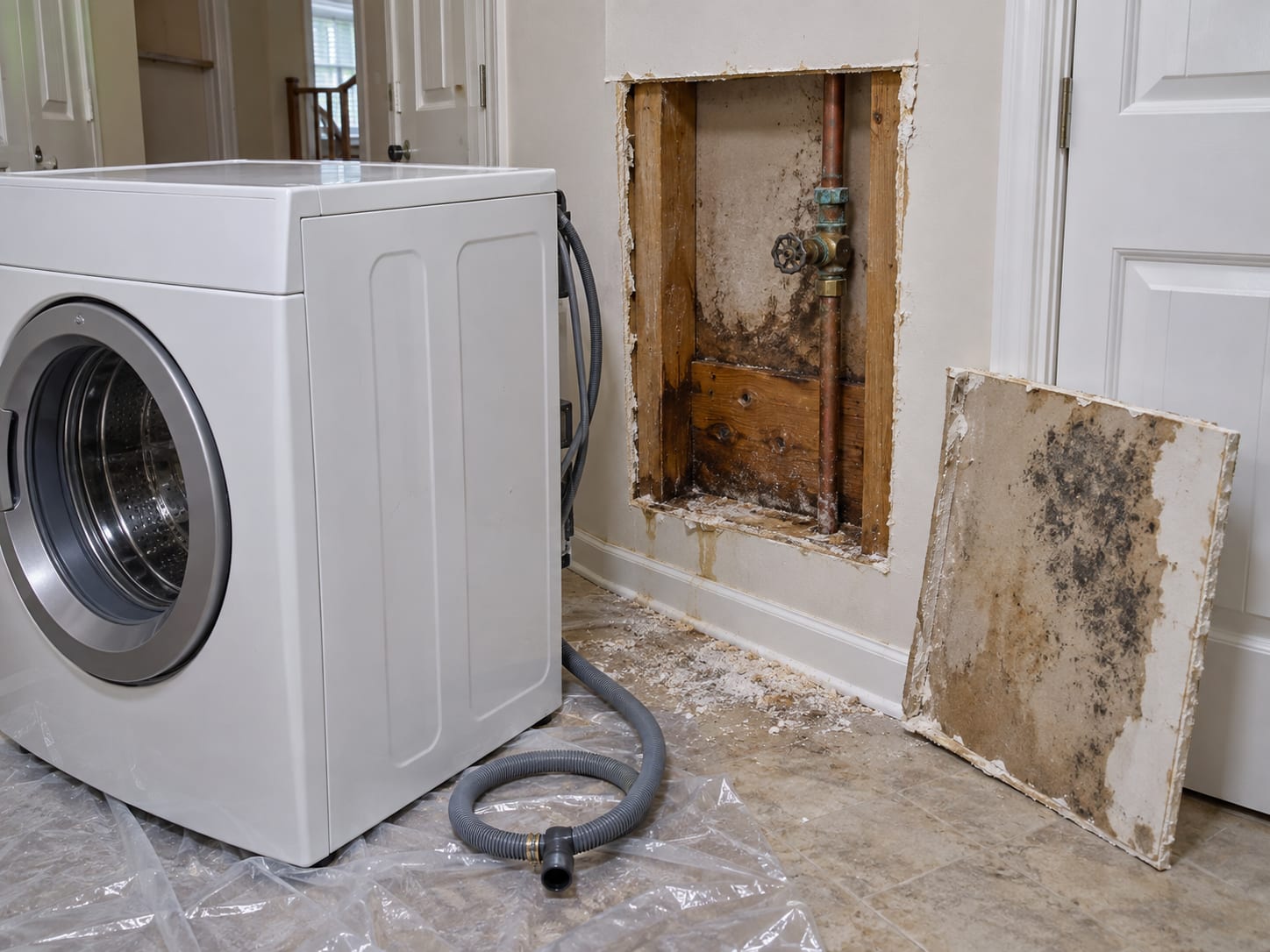
The water can come from a lot of places: a supply line that sweats or leaks inside a wall, an appliance hose, a roof leak, a window or door that sheds water badly, a foundation that lets in groundwater, or a sewer backup. South Brunswick runs municipal water and wastewater utilities, so a failed plumbing fixture inside the house is a common route. Each source needs a different repair.
Timing matters. Wet materials that get professional drying within the first day or two often dry without lasting damage. When they stay wet longer, mold can start growing on drywall and framing. If you have had a leak, a burst pipe or a flooded lower level, our water damage restoration team dries the structure so it does not turn into a mold job. Structural drying is done with air movers and dehumidifiers, and the drying is tracked with readings at each visit.
What Drives the Cost of Mold Remediation in Dayton?
We do not quote a number without seeing the job. The price is set by a few things you can see and measure on site: how much material is affected, which rooms it is in, whether the source has been repaired, how much containment the area needs, whether affected material has to be removed and replaced, and how much drying is required.
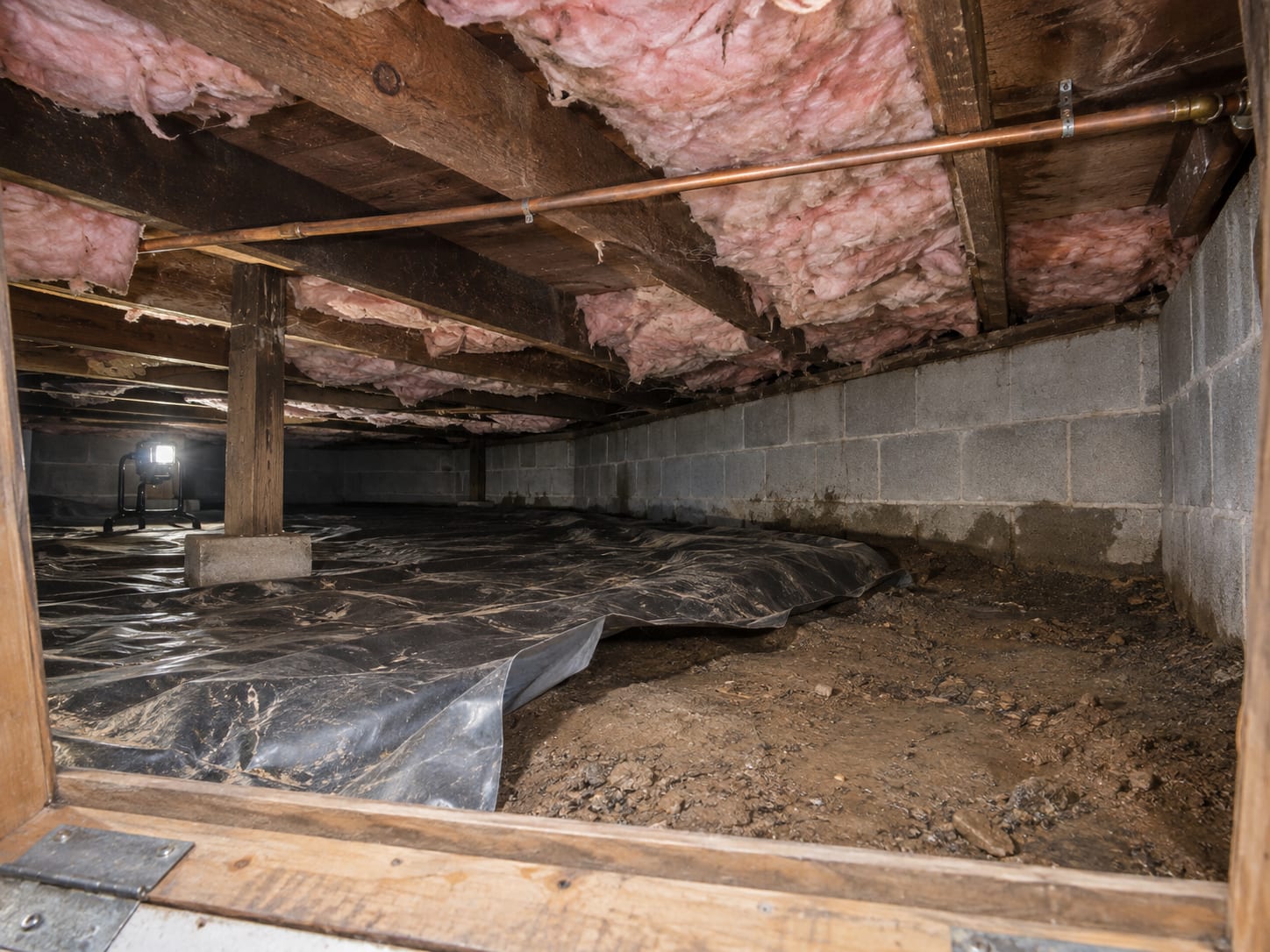
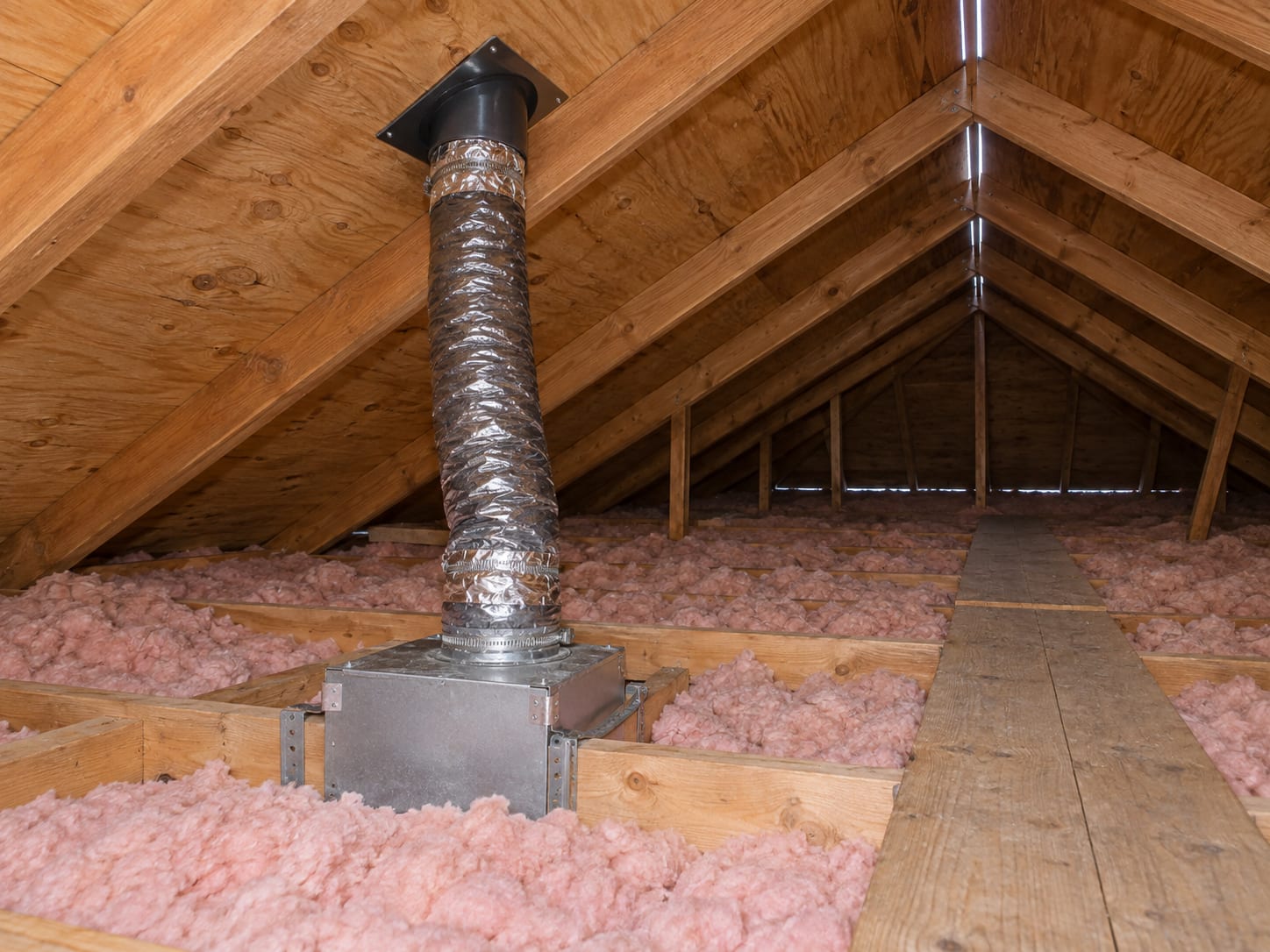
A small patch of surface growth on a bathroom ceiling, where the fan was the cause, is a much smaller job than a finished basement with wet drywall on several walls. A mold problem behind a shower wall may need the wall opened and the plumbing repaired first. Access matters too, because a low crawl space or a tight attic takes more time and equipment than an open room.
Insurance can change how the work is handled. Coverage often depends on whether the cause was sudden, such as a burst pipe, or gradual, such as a slow leak, so read your policy and call your carrier early. We document the moisture readings, photos and scope so your claim has clear records, and our insurance restoration services team can work with your adjuster on the repair side.
The scope we write lists what will be removed, what will be cleaned, what will be dried and what will be rebuilt, so you can compare it with any other estimate line by line.
What Should You Do Before Remediation Begins?
Stop the water first. If a pipe is leaking, shut off the water at the main valve. If an appliance is the cause, unplug it and turn off its supply. If water is coming in from outside, move belongings out of the wet area and lift what you can off the floor.
Then limit how far the problem travels. Turn off any fan that blows across the affected area, and keep the HVAC system from running air through it. Close the door to the room and, if you can, keep children, pets and anyone with breathing sensitivities out of it. Wear gloves and an N95 mask if you have to go in.
Take photos and video of the damage before anything moves, write down when you first saw it, and keep any damaged items you plan to claim. Skip bleach and household sprays on porous material, because they do not reach the roots in drywall or wood and they leave the moisture in place. Skip the vacuum over visible growth unless it has a HEPA filter.
For growth in a small area on a hard surface, cleaning it yourself may be enough if the moisture source is fixed. For a larger area, a musty smell with no visible source, or any growth after a flood, call us. If you need help right away, our emergency mold removal team can arrange a visit.
Which Dayton Neighborhoods, Roads and Parks Do We Serve?
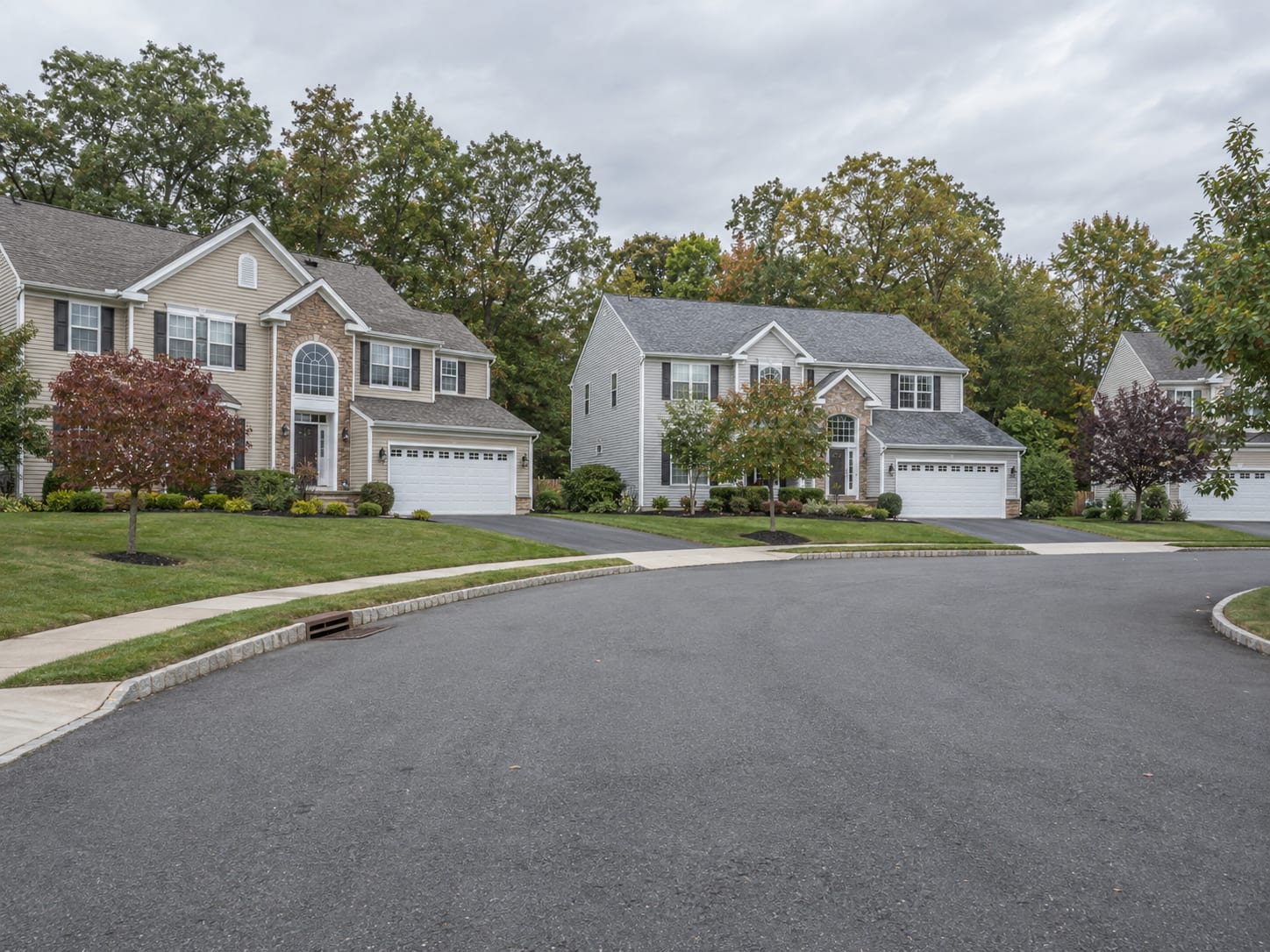
Dayton's ZIP code is 08810, and the municipal government is South Brunswick Township. The township's neighborhood map lists sections including Dayton Center, Dayton Square, Dayton Center East Garden, the Village of Dayton, Summerfield, Fresh Ponds Village, Regents Square, Turnbury, The Pointe at Turnbury, Deerfield Estates, Drinking Brook Estates, Wetherill, Willow Hill and The Estates at Dunhams Farms. We work in all of them, and in the older and newer houses between them.
The wooded and open ground around Dayton shapes how water moves on many lots. Harvest Woods Park on Culver Road covers about 77 acres of woods, fields and turf, and Tall Timbers Park at 178 Culver Road adds about 23 acres of woods, open field and an unpaved trail. Summerfield Park sits at Summerfield Boulevard and Larkspur Court, and the Wetherill Historic Site is at 269 Georges Road. If your lot backs onto woods or an open field, watch how water leaves your yard after a hard rain and where your downspouts and grading send it.
Getting to a job here is straightforward. We reach Dayton by Route 130, Route 522, Route 1 and Route 27, and then by local roads such as Georges Road, Old Georges Road, New Road, Friendship Road, Culver Road and Ridge Road. Cranbury-South River Road, Deans Rhode Hall Road, Plainsboro Road and Route 535 also serve the area.
South Brunswick's boundary map shows Franklin, Princeton, Plainsboro, Monroe and Cranbury townships along the township line. If you are near an edge of the township, give us your exact address, because that is how we confirm the visit. Neighbors outside Dayton can find their own page, for example Plainsboro or Princeton.
How Can You Prevent Repeat Moisture Problems?
Check the flood map for your exact address. FEMA directs property owners to its Flood Map Service Center, where you enter a street address and see the zone. Flood status is decided property by property, so look yours up, then ask your insurer what your policy covers for water entering from outside.
Look at the outside of the house next. Clean gutters, downspouts that discharge several feet from the foundation, soil that slopes away from the walls and a roof without loose or missing shingles handle most outside water. Inside, keep lower-level humidity under about 50 percent with a dehumidifier, run bathroom fans during and after showers, and vent the dryer outside. A blocked dryer vent puts a lot of warm, moist air into a house, and our dryer duct cleaning service clears it.
If a repair needs a building permit, South Brunswick's construction office handles it, and applications call for a survey and plan sets. Build-back after mold, such as replacing drywall, is handled through our drywall replacement after mold service. After any cleanup, keep an eye on the area for a few weeks, and call us if the smell or the staining comes back.
Mold Remediation in Dayton: Common Questions
The cost depends on how much material is affected, where it is, how much containment is needed and what has to be replaced. We give a written scope after seeing the property, so the number matches your building.
About Dayton, NJ
Dayton is a village in South Brunswick Township, Middlesex County, in central New Jersey. It is an unincorporated community, so the township is its municipal government, and the Census Bureau counted 8,138 residents across about 2.41 square miles in 2020. Owner-occupancy runs high, at 88.0 percent of occupied homes for 2020 to 2024, which means most of the people we work with own the building and decide on the repair themselves. What sets Dayton apart from a single-style suburb is how it was built: the township's neighborhood map names Dayton Square, the Village of Dayton, Regents Square, Summerfield, Turnbury, The Pointe at Turnbury, Deerfield Estates, Drinking Brook Estates and The Estates at Dunhams Farms, among others. Each section has its own layouts and roof lines, so one street's water problem does not tell you much about the next.
Wooded and open ground shapes many Dayton lots. Harvest Woods Park and Tall Timbers Park, both on Culver Road, bring woods and open fields into the middle of the village, and the township runs its own water and wastewater utilities. What a property owner should check starts at the lot line: where downspouts and grading send rain, whether the lower level stays dry after a hard storm, and what FEMA's Flood Map Service Center shows for the exact street address, since flood status is decided property by property. Inside, a musty smell in a lower level, a stain that keeps returning, or soft drywall near the floor is worth a moisture reading before anyone paints or scrubs.
Neighborhoods We Serve in Dayton
Around Dayton
Do not see your neighborhood? We serve all of Dayton and the surrounding area. Reach out and we will confirm coverage.