
A Water Main Break Flooded Your Basement in New Jersey: What to Do First
Cal HewittPublished
- water damage restoration
- water main break
- basement flooding
- new jersey
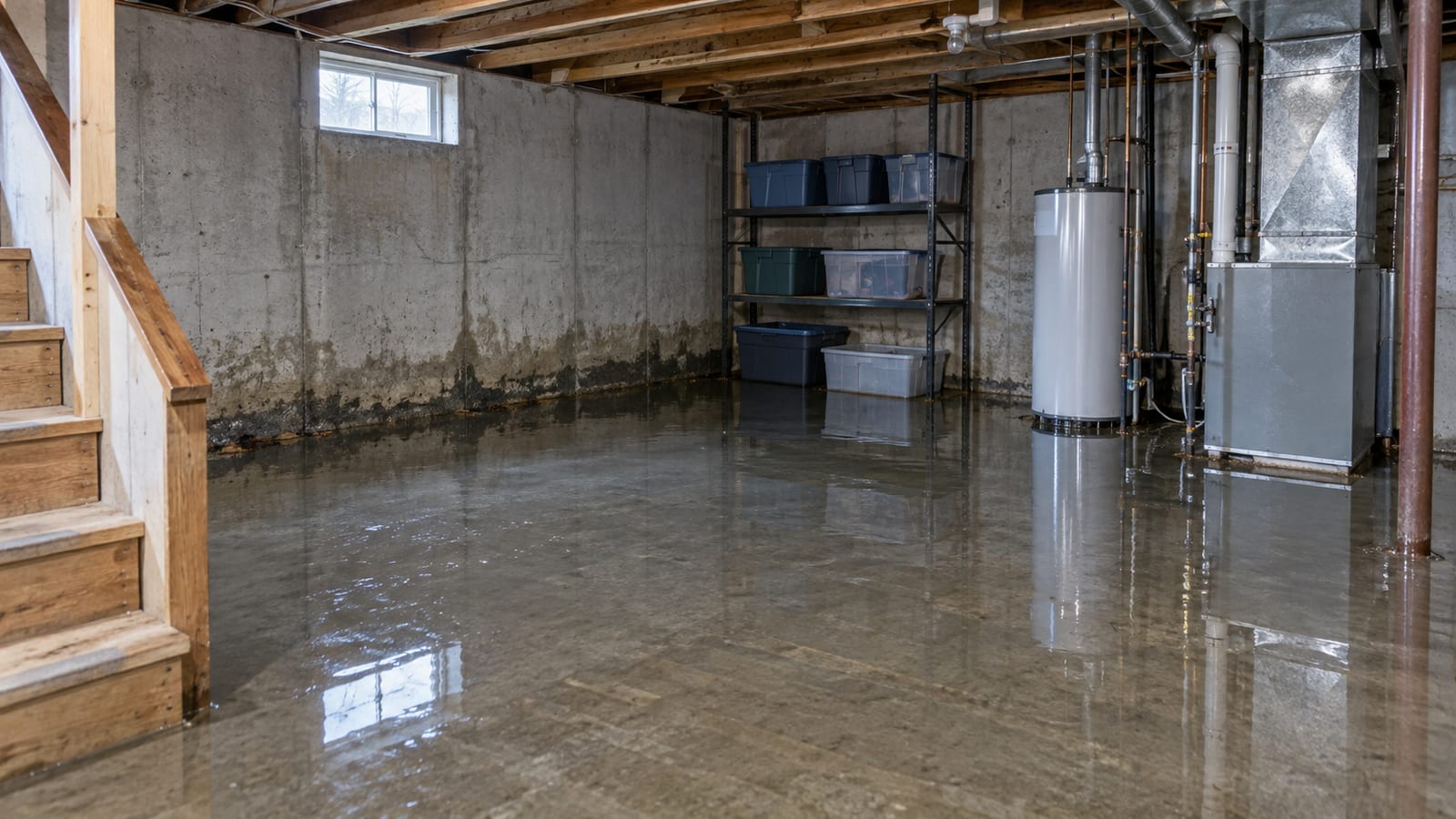
You came downstairs, or got a call from a tenant, and there is water across the basement floor. The street outside may already have crews and orange cones, or you may not know yet that a main broke nearby. Right now the questions stack up fast: what is safe to touch, who do you call first, and how long before wet drywall and insulation turn into a bigger problem? A water main break flooded basement in New Jersey can feel like an emergency with no owner, because the water came from somewhere other than your own plumbing. The good news is that the next few hours follow a clear order. Keep everyone safe, report it, photograph everything, and get drying started, and you protect both the building and any claim you may need to make.
Key Takeaways
Safety first
Stay out of standing water near outlets, panels, appliances, fuel or chemicals, and shut off your water only if the valve is reachable without wading in.
Two calls tonight
Report the break and your interior damage to the serving utility, get a ticket number, and notify your insurer before discarding major items.
Water changes category
Water from a treated main generally starts out clean, but soil, debris, sewage or a contaminated basement can change that, so the route the water took matters.
The 24 to 48 hour window
EPA and CDC guidance points to drying within roughly 24 to 48 hours, and written records keep both mold prevention and your claim on track.
What Happened in Newark and Warren County?
Two recent breaks show how often this happens across the state. The City of Newark posted an official alert on September 23, 2026 reporting a 36-inch water main break at South 6th Street and 11th Avenue in the West Ward, with crews working on repairs. The same alert page lists other 2026 breaks, including 6-inch and 36-inch mains in several wards.
In Warren County, a September 28, 2026 report described a New Jersey American Water main break near North Lincoln Avenue and West Church Street in Washington Borough. The report said a mandatory boil-water advisory covered Franklin Township, Mansfield Township, Washington Borough and Washington Township, that the main had been isolated, and that repairs and testing were still pending. If you live in one of those communities, confirm your address and the advisory status directly with New Jersey American Water before relying on any news summary.
Hover or tap a row to highlight it.
| Where | Date | What was reported |
|---|---|---|
| Newark, West Ward | Official city alert, September 23, 2026 | A 36-inch water main break at South 6th Street and 11th Avenue, with crews working on repairs. The alert page also lists other 2026 breaks, including 6-inch and 36-inch mains in several wards. |
| Washington Borough, Warren County | Report dated September 28, 2026 | A New Jersey American Water main break near North Lincoln Avenue and West Church Street. A mandatory boil-water advisory covered Franklin Township, Mansfield Township, Washington Borough and Washington Township. The main had been isolated, and repairs and testing were still pending. |
What Should You Do in the First Hour After a Main Break Floods Your Basement?
Start with people and pets. Keep everyone out of standing water until electrical and structural hazards have been assessed, and never step into water near outlets, appliances, an electrical panel, fuel, chemicals or damaged building components. If water is rising toward the panel, stay out and call the utility or an electrician.
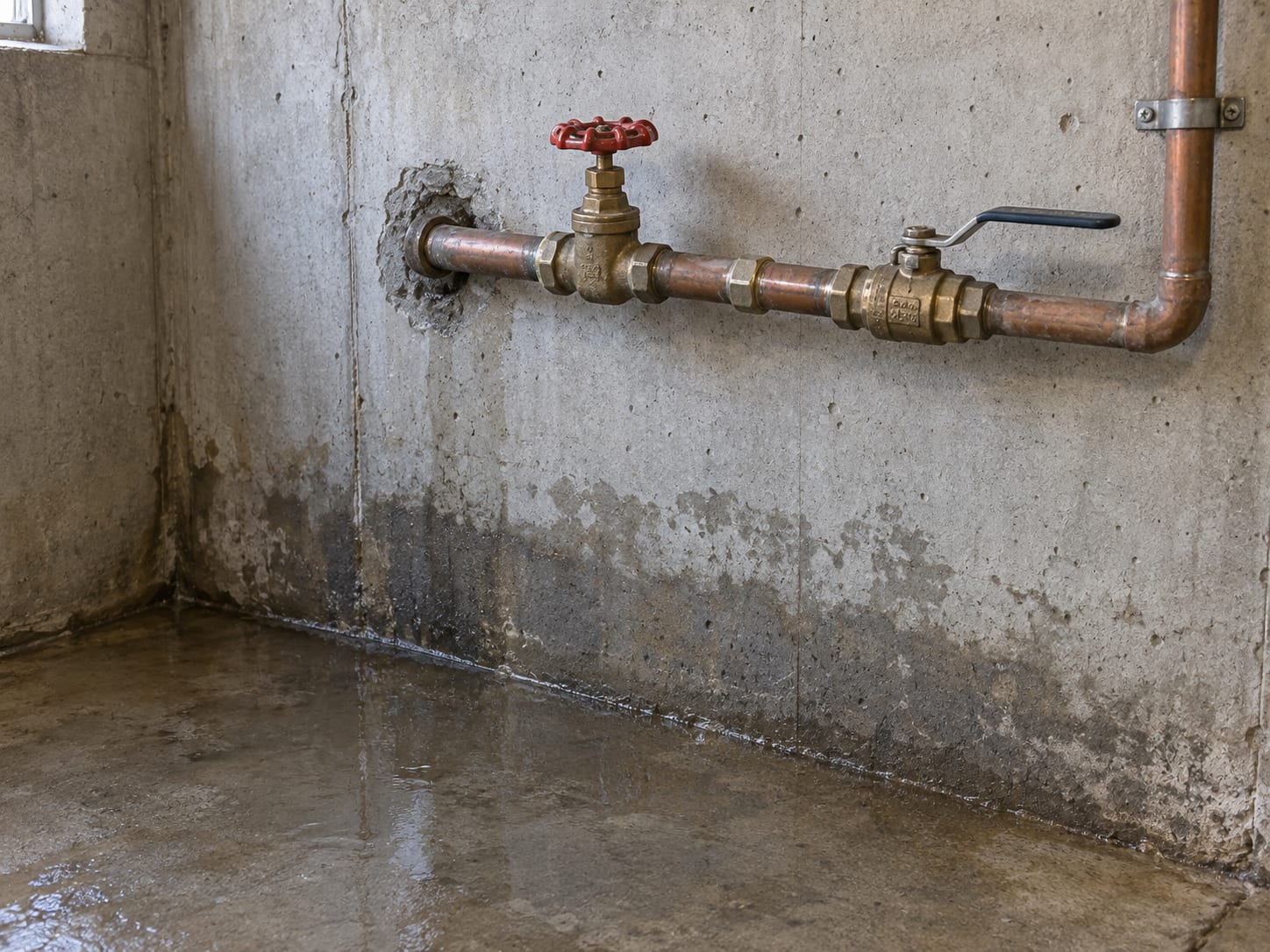
Next, stop the water only if you can do it safely. If your shutoff valve can be reached without entering hazardous water, close it. If it cannot, leave it and tell the utility when you report the break.
Then document while the evidence is still fresh. From a safe spot, photograph the water level, each affected room, the path the water took, damaged contents, and the walls and flooring. If you can do it safely, photograph the street or main-break location too. Put a tape measure or ruler beside the highest water mark.
Finally, make your calls. Report the break and the interior damage to the serving utility, then notify your insurer or agent before you throw away any major items. NJ Division of Banking and Insurance advises photographing damaged property before disposal and holding on to it until the insurer inspects or authorizes disposal.
The First Hour, Step by Step
- 1
Keep everyone safe
Keep people and pets out of standing water until electrical and structural hazards have been assessed. If water is rising toward the panel, stay out and call the utility or an electrician.
- 2
Stop the water only if it is safe
If your shutoff valve can be reached without entering hazardous water, close it. If it cannot, leave it and tell the utility when you report the break.
- 3
Document from a safe spot
Photograph the water level, each affected room, the path the water took, damaged contents, and the walls and flooring, with a tape measure or ruler beside the highest water mark.
- 4
Make your calls
Report the break and the interior damage to the serving utility, then notify your insurer or agent before you throw away any major items.
Is Water From a Broken Main Clean Enough To Enter?
A pressurized break in a drinking-water main starts with treated water. In restoration practice, that is generally handled as Category 1, or clean water, at the moment it enters a building. The IICRC S500, the professional standard for water-damage restoration, covers inspection, drying, safety and documentation, and this category approach comes from restoration practice associated with it.
That starting point can change quickly. EPA notes that floodwater may carry sewage or chemicals into a home, and CDC says floodwater can contain bacteria from overflowing sewage and agricultural or industrial waste. Once main-break water crosses soil, street runoff, debris or a contaminated basement floor, it should be re-evaluated. That is why a crew looks at the actual route of the water and what it touched, not only the pipe it came from.
The category shapes the cleanup in plain ways:
- Clean, nonporous areas: Water confined to a concrete floor or sealed surfaces can often be extracted and dried with limited material removal.
- Porous materials: Carpet, drywall, insulation, unfinished wood, stored paper and upholstered items need moisture mapping, which means taking readings to see how far the water traveled, and then decisions about what can be saved.
- Contaminated water: Water mixed with sewage, soil or chemicals calls for protective equipment, sanitation and proper disposal.
How Do You Report the Break and Document Your Damage?
If your water comes from New Jersey American Water, its contact page lists 1-800-272-1325 and 24-hour emergency service. The company also runs online emergency reporting, where a residence-specific emergency can go through MyWater and a street emergency, including a main break, can be reported without an account.
In Newark, the city's water and sewer FAQ lists emergency numbers 973-733-3654, 973-733-3655 and 973-733-3656. The contact page lists 973-733-3874 for weekday emergency dispatch and 973-733-3654 or 3655 for after-hours and weekend emergencies.
Hover or tap a row to highlight it.
| Utility | Emergency contact | Property-damage claims |
|---|---|---|
| New Jersey American Water | 1-800-272-1325, with 24-hour emergency service. Online emergency reporting through MyWater for a residence-specific emergency, or without an account for a street emergency such as a main break | Do not assume Newark's policy applies; ask for the written claim procedure and keep the ticket number with it |
| Newark Water & Sewer | Emergency numbers 973-733-3654, 973-733-3655 and 973-733-3656; weekday emergency dispatch 973-733-3874; after hours and weekends 973-733-3654 or 3655 | The city says the homeowner is responsible for the line from the city main to the property line and for pipes inside the home. If the leak is on Newark's water main, the city says it will notify the homeowner, make repairs and restore the affected area |
Have these details ready when you call:
- Location: Your street address and the nearest intersection.
- What you can see: Visible flow, and whether it is streaming or gushing.
- Timing: When you first noticed it.
- Your building: Whether water entered, and about how deep it is.
- Contact: A callback number.
Before you hang up, ask for the service-ticket or incident number, and ask what the utility's procedure is for property-damage claims. Write down the name of the person you spoke with.
For your records, add close photos of the floor, walls, ceiling, stairs, foundation and electrical equipment. List every damaged item with brand, model, serial number, approximate age and replacement cost. Photograph items before disposal, and keep receipts for pumps, fans, dehumidifiers, cleaning supplies, temporary repairs and any lodging. NAIC gives the same advice: list the damage, photograph and video it, contact the insurer promptly and keep receipts.
Who Handles the Damage and What Might Insurance Cover?
Responsibility depends on whose pipe failed and which utility serves you. Newark publishes a specific statement: the homeowner is responsible for the line from the city main to the property line and for pipes inside the home, and if the leak is on Newark's water main, the city says it will notify the homeowner, make repairs and restore the affected area. That is Newark's policy, and it should not be assumed for New Jersey American Water or any other utility. Ask your serving utility for its written claim procedure and keep the ticket number with it.
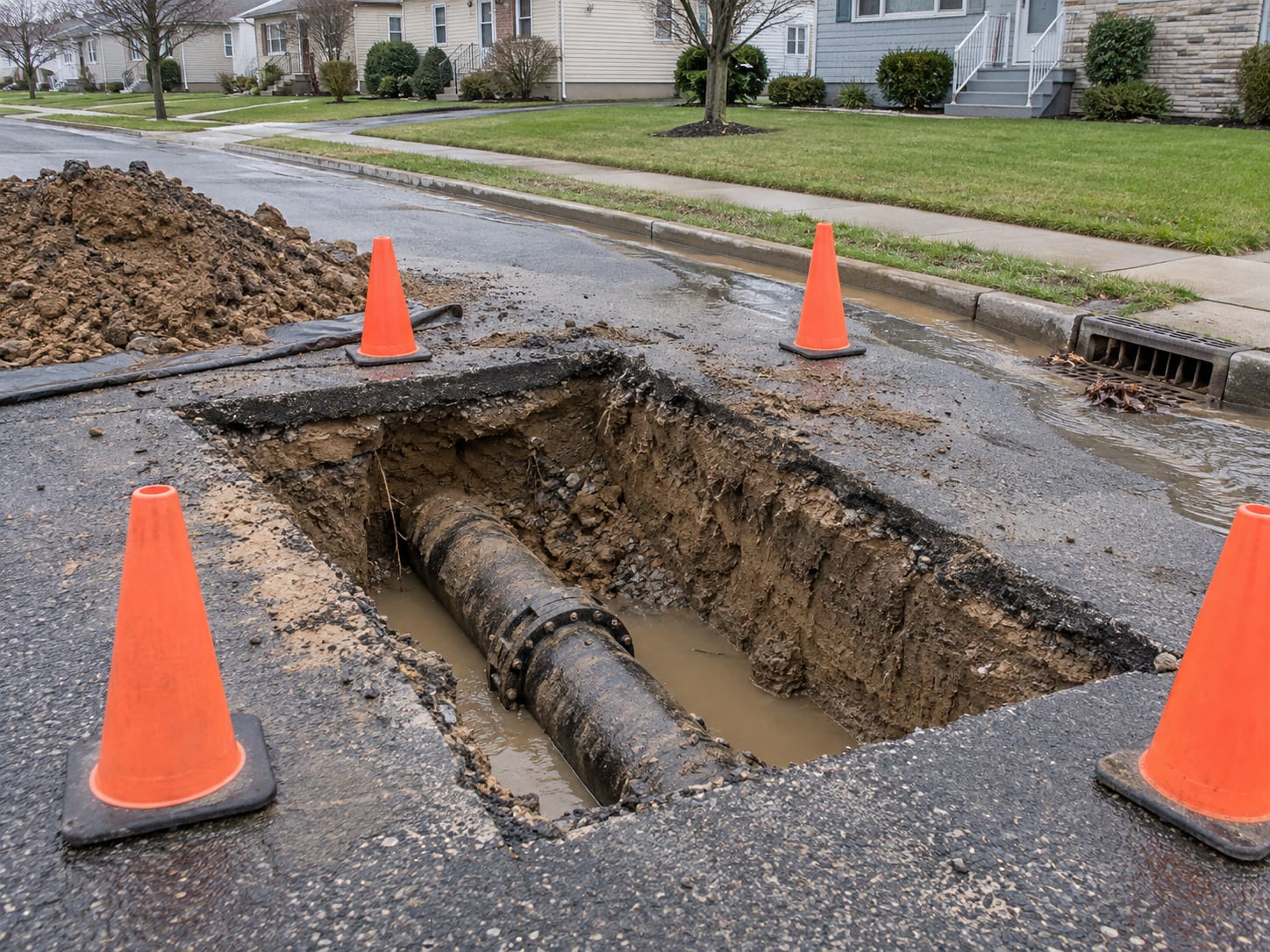
Your insurance comes next. Call your insurer or agent, report the loss and ask how they classify it. Coverage for a particular main-break loss depends on how the water got in and on your policy language, so the adjuster has to make that call. Keep damaged items for inspection when you can, make temporary repairs to prevent more damage, and save every receipt, as NJ DOBI's guidance advises. NJ OEM likewise recommends photographing standing water and damaged property and preserving contents.
One point is worth knowing before that call. New Jersey requires homeowners insurers to state in their notice that homeowners policies do not cover property damage from floods as the regulation defines them, and NJ DOBI says flood coverage is generally separate, through the National Flood Insurance Program or private flood insurance. Whether your loss falls under that definition is a question for your insurer, so ask it directly and get the answer in writing.
This page covers the response steps. Who pays is decided by the utility's claim process and your policy, so ask both and do not assume an outcome.
How Do You Dry the Basement and Head Off Mold?
Speed matters because porous materials that stay wet grow microbes. CDC and EPA both treat drying within roughly 24 to 48 hours as the key target. Here is what a restoration crew does inside that window.
- Assess safety and water path: We check hazards, trace where the water traveled and decide the water category based on what it touched.
- Extract standing water: Pumps and extractors remove the bulk of it first.
- Map moisture: Readings in floors, walls, insulation and subfloors show where water has traveled out of sight.
- Remove what cannot be saved: Wet carpet pad, soaked insulation and swollen drywall come out.
- Dry the structure: Air movers and dehumidifiers run while we log readings until the building reaches dry standards.
- Document everything: Photos, moisture logs, equipment logs and material-removal records go to you and, on request, your insurer and utility.
What a Restoration Crew Does Inside the Drying Window
- 1
Assess safety and water path
Check hazards, trace where the water traveled and decide the water category based on what it touched.
- 2
Extract standing water
Pumps and extractors remove the bulk of it first.
- 3
Map moisture
Readings in floors, walls, insulation and subfloors show where water has traveled out of sight.
- 4
Remove what cannot be saved
Wet carpet pad, soaked insulation and swollen drywall come out.
- 5
Dry the structure
Air movers and dehumidifiers run while readings are logged until the building reaches dry standards.
- 6
Document everything
Photos, moisture logs, equipment logs and material-removal records go to you and, on request, your insurer and utility.
Keep walls and finishes open until drying and the scope of damage are documented. Closing them early can trap moisture in wall cavities and leave you without the proof a claim needs. If drying was delayed or you see or smell growth, the next step is mold remediation, and once the property is dry we handle reconstruction of drywall, flooring, framing and trim.
If your community is under a boil-water advisory, follow the utility's exact wording. NJDEP lists loss of pressure from a main break as a possible trigger. Use boiled-and-cooled or bottled water for drinking, cooking, ice, baby formula, brushing teeth and washing produce, and give pets the same. Toilets can generally be flushed, and healthy people can generally shower if they avoid swallowing water, unless the notice says do not use. Keep following the advisory until the utility announces that testing confirms the water is safe, and check NJDEP's customer FAQ for details on home filters and vulnerable family members. A do-not-use advisory is broader and prohibits use for any purpose.
During a Boil-Water Advisory
Drinking and cooking
Use boiled-and-cooled or bottled water for drinking, cooking, ice, baby formula, brushing teeth and washing produce, and give pets the same.
Toilets
Toilets can generally be flushed, unless the notice says do not use.
Showers
Healthy people can generally shower if they avoid swallowing water, unless the notice says do not use.
When it ends
Keep following the advisory until the utility announces that testing confirms the water is safe.
Do-not-use is broader
A do-not-use advisory prohibits use for any purpose.
What Do You Do in the First Day and the First Week?
Tomorrow morning, have standing water extracted and structural drying started as soon as conditions are safe. Keep a written timeline of when the water appeared, when you notified the utility, when the main was isolated or repaired, when cleanup began and what was removed. Separate damaged from undamaged contents.
Over the following week, collect the utility's incident number, repair details and any written direction on property-damage claims. Send your insurer and the utility your photos, inventories, receipts, moisture documentation, estimates and restoration reports. Watch wall cavities, insulation and subfloors for retained moisture or mold.
Frequently Asked Questions About a Water Main Break Flooding Your New Jersey Basement
Who pays for basement flooding after a water main break?
It depends on the serving utility's claim process and your insurance policy. Newark publishes its own responsibility statement. For New Jersey American Water, report the loss, ask for its property-damage claim procedure in writing, and also notify your insurer.
What should I do after a Newark water main break floods my basement?
Stay out of standing water near electrical equipment, photograph the damage, call Newark Water & Sewer at one of its emergency numbers, get a ticket number and start extraction and drying as soon as it is safe.
Does a boil water advisory change how I handle cleanup?
A boil-water advisory covers drinking and cooking uses of tap water. Cleanup decisions depend on what the floodwater touched, such as soil, sewage, chemicals and building materials. Follow the advisory for drinking water and have a restoration professional assess the basement.
How fast does a basement need to be dry?
EPA and CDC guidance points to roughly 24 to 48 hours. Delays give wet drywall, insulation and wall cavities time to grow mold.
Test Your Main Break Knowledge
1. How is water from a treated main generally handled at the moment it enters a building?
2. What should you ask for before you hang up with the utility?
3. What is the drying target for a wet basement?
4. Does a boil-water advisory make the water already in your basement safe for cleanup?
5. According to Newark's published statement, who is responsible for the line from the city main to the property line?
Pick an answer to begin.
The Bottom Line
Tonight comes down to safety, two calls and photographs. Tomorrow morning, get the water out and drying started. Over the week, gather the ticket number, receipts, moisture readings and inventories in one place. Fast drying and clear records are what protect your basement from mold and your claim from gaps.
Handled in that order, a bad night becomes a manageable project, and your building gets dry before small problems grow.
If water has reached your basement, call ExecPro Restoration & Cleaning in New Jersey. Our team provides 24-hour emergency response, extraction and structural drying under our water damage restoration service, along with moisture documentation for your insurer. Keep your ticket number and photos together, then contact us with what you have, and we will start from there.
Main Break Terms
Tap a term to see what it means.
Category 1 water. Clean water. A pressurized break in a drinking-water main generally starts here, but soil, street runoff, debris, sewage or a contaminated basement can change that.
Related Articles
Water Got Into Your New Jersey Home in the Nor'easter: The First 48 Hours
Water got into your New Jersey home in the September nor'easter? What is safe to touch, what to photograph, and how to start drying in the first 48 hours.
Water Damage Restoration in Robbinsville, NJ: Creek Water, Pipe Water and the Claim File
Where a leak or flood begins decides what can be kept. See how water damage restoration in Robbinsville, NJ sorts pipe water from creek water and the claim.
Water Damage Restoration in Bridgewater, NJ: What Can Be Saved and Who Pays
Which wet materials can be dried and kept depends on the water's category. Bridgewater's two flood maps, what a policy pays and what to photograph first.