Water Damage Restoration in West Windsor, NJ: What the First Hour Decides
Cal HewittPublished Updated
- water damage restoration
- drainage
- insurance claims
- west windsor nj
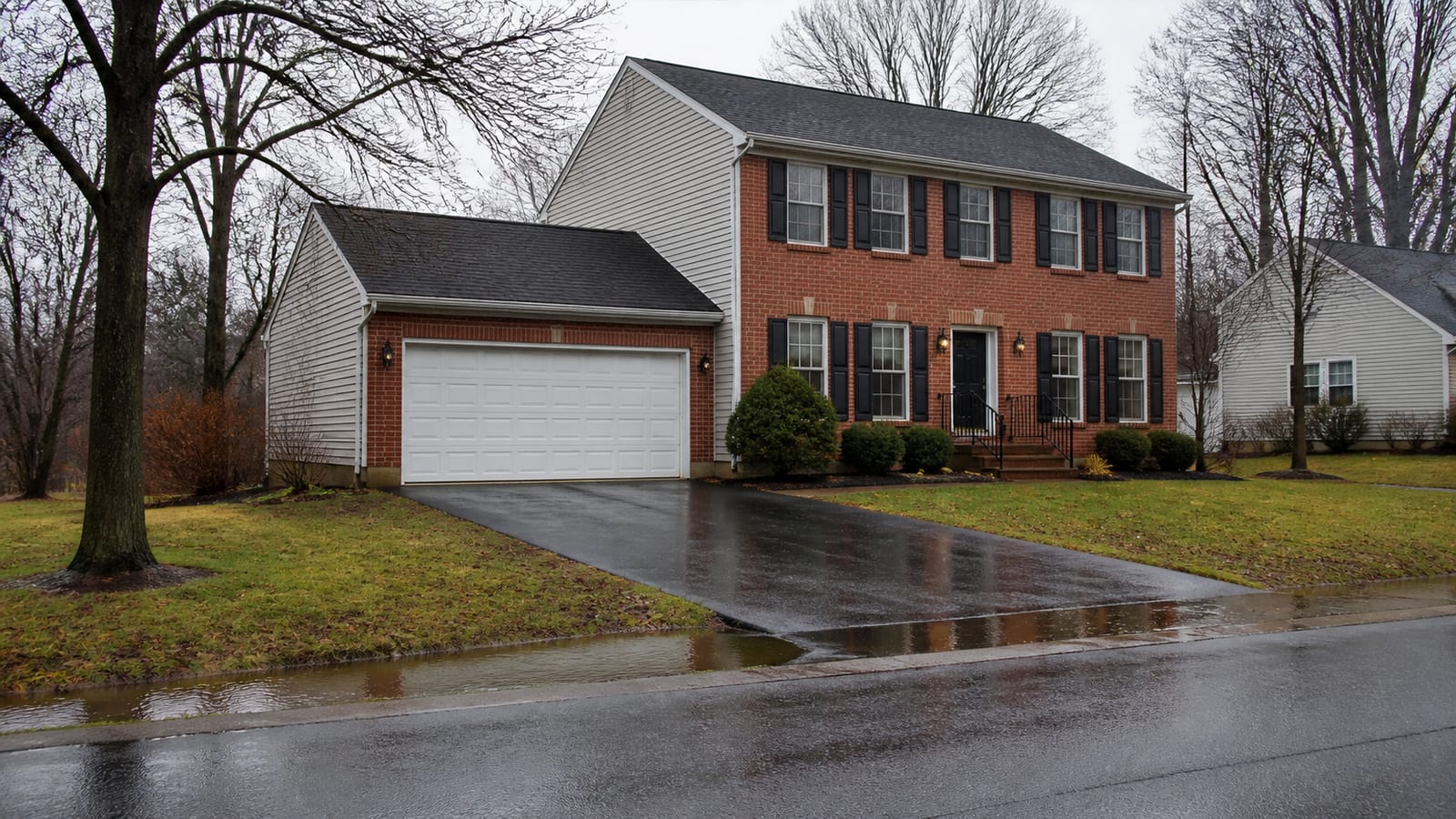
There is water where it should not be, and somewhere behind the panic is a practical question: what in this room is ruined and what can still be saved. The honest answer is that it depends on three things, and only one of them is fixed. The material is what it is. But the source of the water and how long it sits are still partly in your hands right now, and they are what decide whether a floor comes up or dries in place. That is why the first hour matters more than the first day. Most of what gets lost in a water loss is lost to time and to a few well-meant decisions made before anyone worked out what kind of water this actually is.
Key Takeaways
Salvage depends on source, duration and material
no honest page can tell you a wet carpet or floor is saveable without knowing all three.
The EPA's 24 to 48 hour window is clean-water guidance specifically
, not a universal deadline that applies whatever came in.
West Windsor sits on a drainage divide
, so the water question here is genuinely parcel by parcel rather than townwide.
Emergency mitigation is not gated by permit review
work can begin under Uniform Construction Code rules when the Code Enforcement Office is notified as required.
A standard homeowners policy excludes flood
, which the state defines to include unusual or rapid accumulation or runoff of surface water.
The First Hour Decides What Can Be Saved
Three moves, in this order, and the order is the point.
Make it safe, then stop the source. Electrical and structural conditions come before anything else. If a panel, an outlet or an appliance is standing in it, that is a utility or electrician call from dry ground, not a mopping job. Where the source is an accessible interior valve and reaching it is safe, close it.
Photograph before anything moves. Standing water, every affected room, the belongings, and the source area if it can be seen safely. This takes four minutes and it cannot be reconstructed later. Then contact the insurer or agent and record the claim number.
Do not start disposing yet. This is the step people get wrong from good intentions. Hauling the ruined carpet to the kerb before anyone has documented it removes the evidence, and starting permanent repairs before the adjuster has seen the damage complicates the claim. There is a real distinction between preventing further damage, which is expected of you, and beginning the repair, which is not yet your move.
What you are protecting in that hour is the range of options still open. Every one of them narrows as the water sits.
Category Is Established at the Job, Not Guessed From the Puddle
Restoration work classifies water into three categories, and the classification does more to set the scope than the volume does.
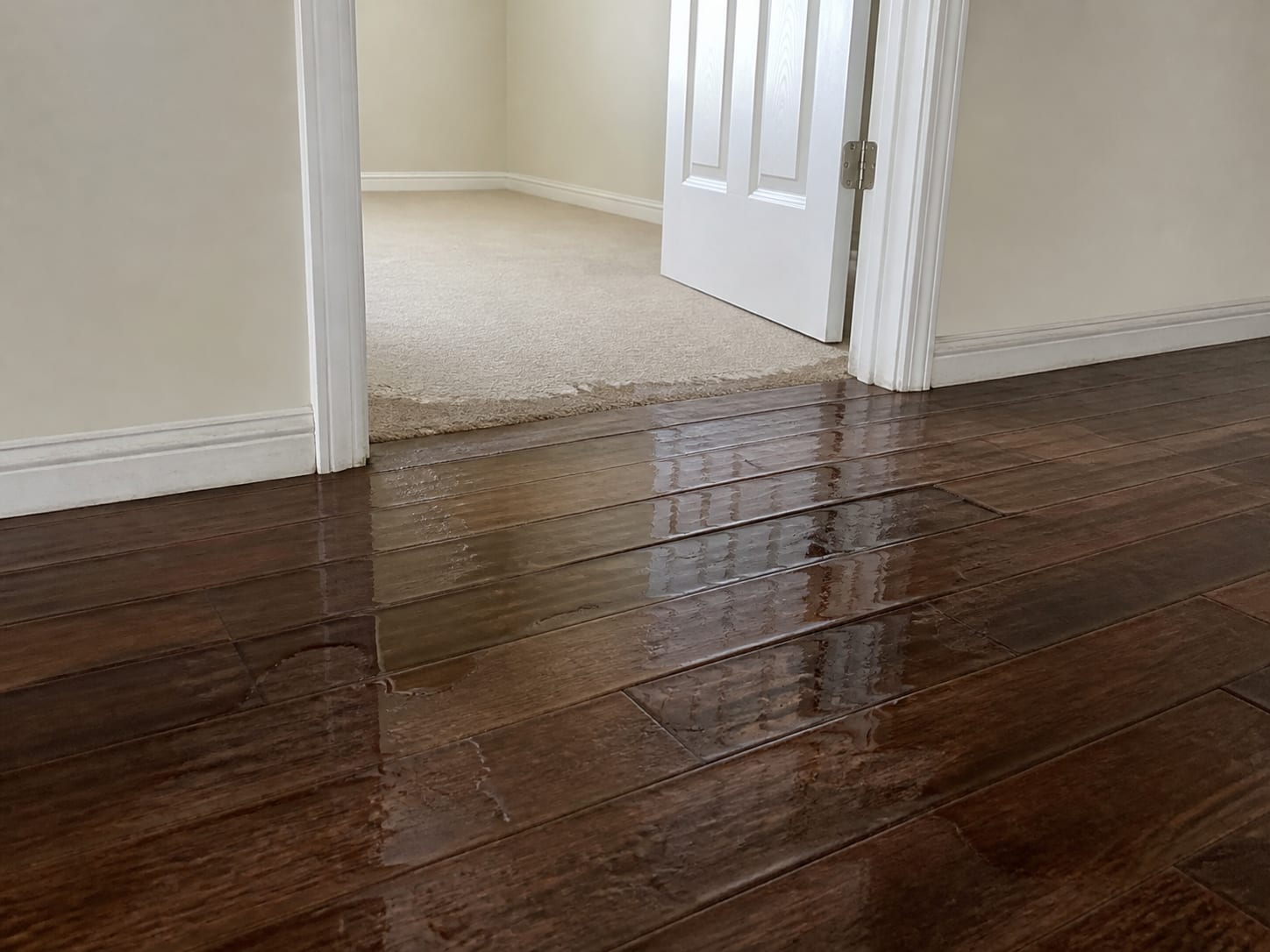
Category 1 comes from a sanitary source: a broken supply line, an uncontaminated overflow. Category 2 carries significant contamination, enough to cause discomfort or sickness. Category 3 is grossly contaminated and may contain harmful agents, and the standard examples are sewage, waste line backflow, rising river or stream water, and weather-driven contaminated water.
Hover or tap a row to highlight it.
| Category | What it means |
|---|---|
| Category 1 | Sanitary source, such as a broken supply line or an uncontaminated overflow |
| Category 2 | Significant contamination, enough to cause discomfort or sickness |
| Category 3 | Grossly contaminated and may contain harmful agents, such as sewage, waste line backflow, rising river or stream water, and weather-driven contaminated water |
Two things about that framework are routinely misunderstood. The first is that category depends on the water quality after contact with job-site materials, not only on where it started, and that time and temperature move it. Clean water sitting in a warm room across a carpet pad does not stay Category 1 indefinitely. The second is that it is established at the property by assessment, not presumed from how the homeowner describes it on the phone. A great many losses reported as "clean water from a pipe" have travelled through a wall cavity and a floor assembly before anyone looked.
This is also where the site's most-quoted number gets misapplied. The EPA's 24 to 48 hour drying guidance is expressly guidance for clean-water damage, given to prevent mold growth. It is not a universal clock that applies to a sewage backup or a stream that came through a door.
The First 24 to 48 Hours Sort the Salvageable From the Rest
Within that clean-water window, the material tells you most of what happens next. The EPA's water damage table sets out actions by material, and two of its calls are worth knowing before anybody arrives: ceiling tile and cellulose or fibreglass insulation are discarded and replaced rather than dried. Its flood guidance adds a caution people rarely hear in time, which is not to run fans where visible mold may be spread by them.
The general rule that follows from all of this is unglamorous. Non-porous and semi-porous materials that were wet briefly by clean water are usually dried in place. Porous materials that held contaminated water, or that held any water long enough, come out. A flooded finished floor is not simply dried; the ruined finish is removed, the structural substrate underneath is assessed and cleaned where appropriate, and that is dried before anything is replaced.
Hover or tap a row to highlight it.
| Material or situation | Usual outcome |
|---|---|
| Ceiling tile | Discarded and replaced rather than dried |
| Cellulose or fibreglass insulation | Discarded and replaced rather than dried |
| Non-porous and semi-porous materials wet briefly by clean water | Usually dried in place |
| Porous materials that held contaminated water, or held any water long enough | Come out |
| A flooded finished floor | The ruined finish is removed, the substrate is assessed and cleaned where appropriate, and that is dried before anything is replaced |
Anybody who tells you at the door that everything can be saved is selling optimism rather than describing the job. Anybody who tells you everything must go before they have measured anything is doing the opposite.
West Windsor Sits on a Drainage Divide
This is the local fact that actually changes a water decision here, and it comes from the Township's own planning material rather than from anything a contractor invented.
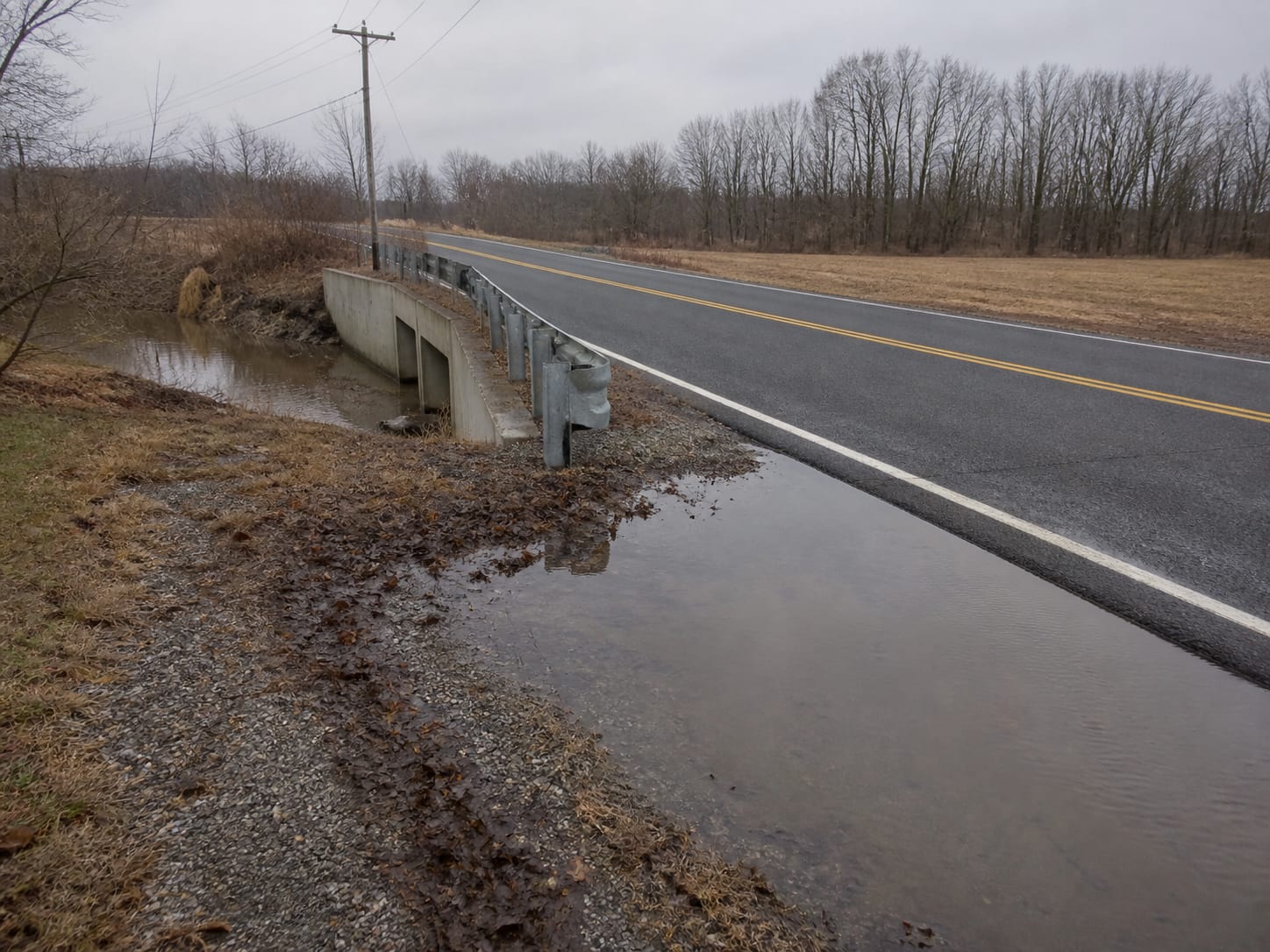
West Windsor lies on a drainage divide. Precipitation falling in the western and southern portions of the Township runs toward Delaware River watercourses; precipitation in the northern and eastern portions drains to the Millstone River. The Utilities Plan also describes the topography as relatively flat and states plainly that development would present substantial flooding opportunity without onsite stormwater management. Two major flood-control facilities carry that load: Grovers Mill Pond Dam on Big Bear Brook, maintained by the Township, and Lake Mercer Dam on Assunpink Creek, maintained by Mercer County.
The Township also records that low-lying roads flood regularly, naming Duck Pond Run, Little Bear Brook, Clarksville Road near Wyeth, and Grovers Mill Pond. And the floodplain code identifies a long list of state-studied waters within the Township, including the Millstone River, Assunpink Creek, Stony Brook, Miry Run, Shipetaukin Creek, Sand Run, Cranbury Brook, Big Bear Brook, Bear Creek, Devils Brook and Little Bear Brook.
Here is the part that stops this becoming a scare paragraph. A Delaware River Basin Commission mapping of FEMA closed losses from 1978 through 2006 shows one repetitive-loss property in West Windsor and zero severe repetitive-loss properties. That is historical and it is not a current count, but it is the opposite of a town-wide flood problem. What it supports is the correct conclusion: exposure here is a parcel question. A regulated flood hazard area can extend beyond the FEMA Special Flood Hazard Area boundary, so the address, not the town, is what settles it.
From Extraction to Rebuild, the Job Has an Order
How a Water Damage Job Actually Proceeds
- 1
Make it safe and stop the source
Electrical and structural conditions first, then the valve if reaching it is safe.
- 2
Document before anything moves
Standing water, rooms, contents, source. Then the insurer and the claim number.
- 3
Establish source, category and extent
Including moisture migration into cavities and under finishes, measured rather than guessed.
- 4
Extract, then remove what cannot be saved
Contaminated and unsalvageable material comes out, cut to a clean line.
- 5
Clean and sanitise as the category requires
What is appropriate for Category 1 is not what a Category 3 loss needs.
- 6
Dry the structural assembly and monitor it
Readings by location, until they fall and hold.
- 7
Permit and inspect where the rebuild needs it
Emergency mitigation is not the same as permitted reconstruction.
- 8
Replace finishes last
After structural drying is verified and any approvals are in hand.
The step people compress is the fifth into the eighth. Replacing a finish over a substrate that is still wet produces a second loss in the same place, usually about six weeks later, and it is not covered by the first claim.
What Changes the Scope and the Cost
No credible published price range exists for water damage restoration specifically in West Windsor. This page will not produce one by borrowing a neighbouring town's figure or a national per-square-foot average, because neither describes your loss. A dated itemised scope for your property is the only thing that answers the question honestly.
What genuinely moves it:
- Source and category, and whether contamination forces removal rather than drying.
- How long materials stayed wet, which is the variable you can still influence.
- How far the water migrated into cavities and under finishes, which is usually further than the visible edge.
- Whether porous materials can be cleaned and dried or have to be discarded.
- Electrical, plumbing, structural and HVAC involvement, each of which can turn mitigation into reconstruction.
- Contents handling, containment, monitoring and documentation.
- The rebuild that follows, which is a separate stage with its own permit path.
Permits, Insurance and the Paper That Follows
Two local rules are worth having straight before anybody starts.
Emergency work is not waiting on a permit. West Windsor requires a construction permit before work unless the work is ordinary maintenance or exempt, and emergency work can begin under Uniform Construction Code rules provided the Code Enforcement Office is notified as required. So mitigation proceeds. The review clocks the Township publishes, 20 business days for an initial or critically deficient resubmission review, seven for an ordinary resubmission and 10 for a complete Certificate of Occupancy application, are rebuild clocks and not a wait before drying. Contractors and subcontractors doing permit-subject work register with the Township, which is a reasonable thing to ask about. Where the work sits in a flood hazard area, the local code coordinates the Floodplain Administrator with the Construction Official.
Hover or tap a row to highlight it.
| Review step | Township target |
|---|---|
| Initial or critically deficient resubmission review | 20 business days |
| Ordinary resubmission | 7 business days |
| Complete Certificate of Occupancy application | 10 business days |
Flood is excluded from a standard homeowners policy. The New Jersey Department of Banking and Insurance says so directly, and the state's definition of flood is broader than most people expect: it takes in overflow of inland waters and the unusual or rapid accumulation or runoff of surface water. A separate flood policy may be available. None of that decides your claim, because a pipe break, a sewer backup endorsement and an appliance failure are three different coverage questions, and only your declarations, endorsements, the cause of loss and the insurer's written position answer them.
Keep the file as you go: dated photographs, the claim number, receipts for temporary protective work, the scope, the moisture records and any inspection or completion documents. In West Windsor, where 65.2% of housing is owner-occupied and the median owner-occupied value sits at $776,400, that file is also what answers a buyer's inspector three years from now.
Where the Water Reaches, Prevention Starts
The loss you just had is the most specific piece of information you will ever get about your own property, so use it before the memory fades. Where did it come in, and what failed to carry it away. Gutters and downspout discharge, grading that has settled back toward the house, window wells, a sump with no tested backup, and the shut-off nobody could find in the dark are the recurring list.
Where the Water Reaches: A Prevention Checklist
Gutters and downspout discharge
Part of the recurring list of ways water reaches a house.
Grading
Ground that has settled back toward the house.
Window wells
Another recurring entry point.
A sump with no tested backup
Worth testing before the next event.
The shut-off nobody could find
Know where it is before you need it in the dark.
Parcel check on a dry day
Find out whether your address sits in a mapped flood hazard area or a regulated area beyond it.
Then do the parcel check on a dry day. Find out whether your address sits in a mapped flood hazard area or a regulated area beyond it, because that answer changes both your insurance decision and what a future rebuild has to satisfy. It is a twenty minute job now and an impossible one at 11pm with water rising.
Frequently Asked Questions About water damage restoration West Windsor NJ
Can my hardwood floor be saved?
It depends on the water's category, how long the floor stayed wet, and the assembly underneath. Clean water caught quickly on a solid floor is often dried in place with monitored readings. Contaminated water, or clean water left long enough to move into the subfloor, usually means the finish comes up so the substrate can be assessed and dried. Anyone answering that question before measuring is guessing.
How fast does someone need to get here?
Same day for an active loss. The EPA's 24 to 48 hour guidance for clean-water damage is about preventing mold growth, and the practical implication is that the salvage decision degrades hour by hour, not day by day. Water damage cleanup in West Windsor is treated as emergency work for that reason.
Is water damage covered by my homeowners insurance?
Flood is not, and New Jersey defines flood to include overflow of inland waters and unusual or rapid accumulation or runoff of surface water. Beyond that, it is a question about your specific policy and the cause of loss. A burst supply line, a sewer backup and surface water entering at a door are three separate coverage questions.
Do I need a permit before anything can start?
Not for emergency mitigation. West Windsor allows emergency work to begin under Uniform Construction Code rules when the Code Enforcement Office is notified as required. The permit question attaches to the reconstruction that follows, and the Township's published review times apply to that stage.
Is my part of West Windsor a flood area?
That is a parcel question and not a township one. The Township sits on a drainage divide with a long list of state-studied waters, and it records regular low-road flooding, but the recorded repetitive-loss history for 1978 to 2006 is a single property. A regulated flood hazard area can also extend past the FEMA boundary, so the address is what settles it.
Should I run fans and a dehumidifier myself while I wait?
Air movement helps on a clean-water loss in an area you can see. Two cautions: the EPA advises against running fans where visible mold may be spread by them, and moving air through a contaminated loss spreads what is in the water. If you do not know the category yet, extraction and documentation are the safer use of the time.
Water Damage Quick Check
1. The EPA's 24 to 48 hour window is guidance for which kind of damage?
2. What happens to ceiling tile and cellulose or fibreglass insulation?
3. What does West Windsor's drainage divide mean for flood exposure?
4. Does emergency mitigation wait for permit review?
5. Is flood covered under a standard homeowners policy?
Pick an answer to begin.
Final Thoughts
What can be saved after water damage is not a fixed property of the material. It is the product of what the water was, how long it stayed, and what was done in the first hour. Establish the category, document before anything moves, extract and remove what has to go, dry the structure to a measurement rather than to the touch, and only then put finishes back. West Windsor adds two useful facts to that: exposure here is genuinely parcel-specific, and emergency mitigation does not wait on the permit desk.
Handled in that order, most water losses are a disruptive fortnight rather than a problem that resurfaces. The properties that see the same damage twice are usually the ones where a finish went back over a substrate nobody measured.
If water has come into your West Windsor home, call us before anything goes to the kerb and we will talk you through what to photograph first. ExecPro Restoration & Cleaning has handled water and mold work across Mercer County since 2015, from our base in Princeton Junction NJ and through West Windsor NJ, Princeton NJ, Plainsboro NJ, Hightstown NJ, Robbinsville NJ and the surrounding towns. Call ExecPro Restoration & Cleaning at (888) 300-3772 or get in touch. We are available 24/7 for emergency extraction, structural drying, mold containment and the build-back that follows.
Water Damage Terms
Tap a term to see what it means.
Category 1 water. Water from a sanitary source, such as a broken supply line.
Serving West Windsor
ExecPro Restoration & Cleaning provides mold remediation services in West Windsor, NJ, from inspection and testing through removal, drying, and post-remediation verification. Call (888) 300-3772 for 24/7 emergency response.
Related Articles
Basement Mold Remediation in West Windsor, NJ: Finding Where It Got In
Visible basement mold is the easy part. How the water route is established, what EPA's area thresholds change about the work, and what stops it returning next spring.
Water Got Into Your New Jersey Home in the Nor'easter: The First 48 Hours
Water got into your New Jersey home in the September nor'easter? What is safe to touch, what to photograph, and how to start drying in the first 48 hours.
A Water Main Break Flooded Your Basement in New Jersey: What to Do First
A water main break put water in your New Jersey basement? What is safe, how to report it to the utility, what to photograph, and how fast to dry.