Water Damage Restoration in Livingston NJ: From Hour Zero to Move-Back Day
Cal HewittPublished
- water damage restoration
- structural drying
- livingston nj
- new jersey
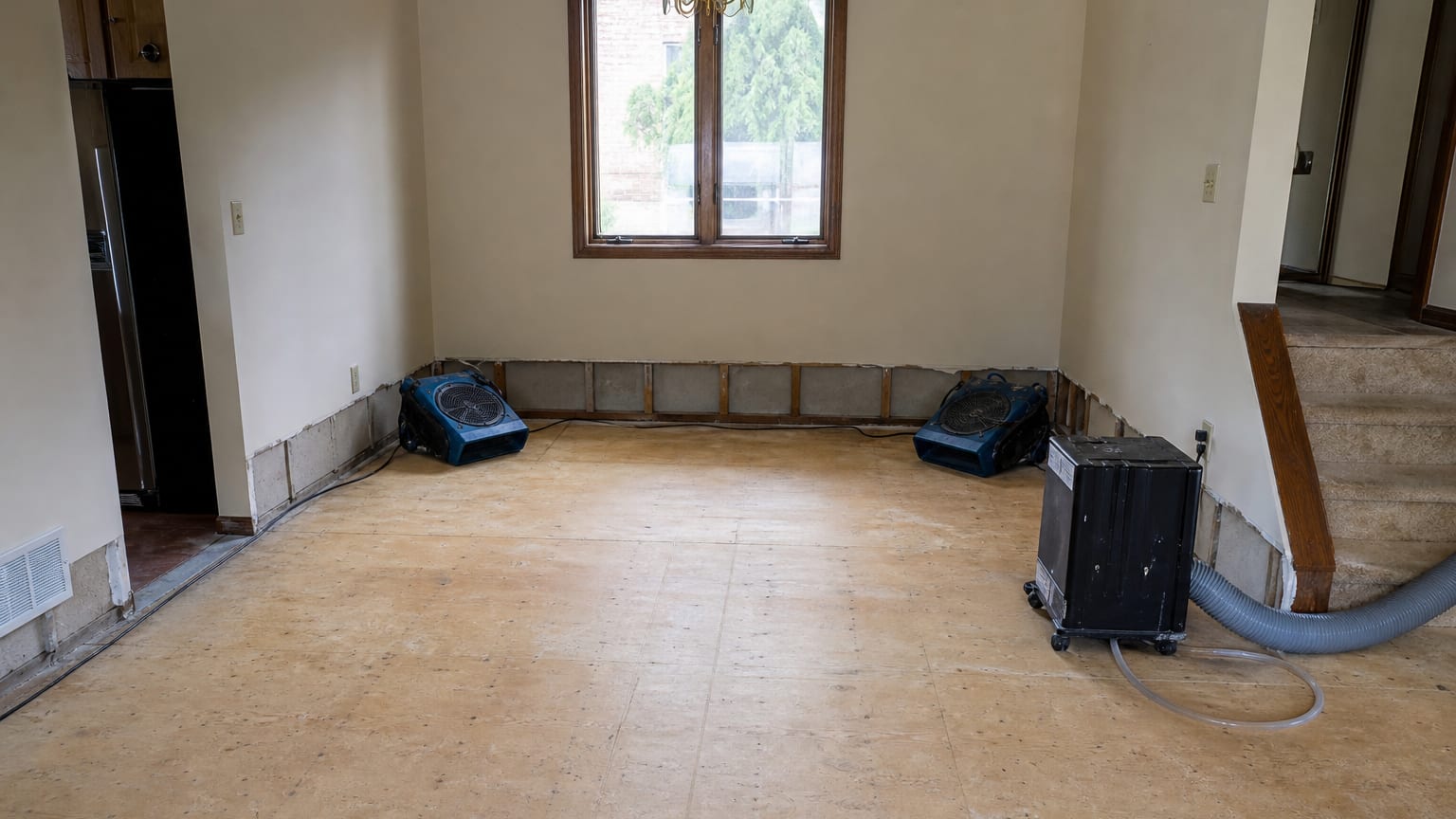
Hour zero is the moment somebody finds the water. A homeowner steps onto a wet basement stair. A tenant calls about a ceiling stain that was not there yesterday. A manager opens a utility closet and hears dripping. Everything after that moment happens in a sequence, and the order is not flexible. Stop the water. Make the space safe. Remove what is standing. Dry what stayed behind. Look at each wet material and decide whether it can be kept. Plan the repairs. Then rebuild. Run two of those steps out of order and the work usually has to be done twice.
That sequence is what water damage restoration means, and it is a longer job than an emergency call. Emergency work deals with the water that is present right now. Restoration deals with what that water did to the building and with the decisions that return the property to normal use. The two overlap for a few hours and then separate. This article follows the longer half of the chain, the part that starts once the standing water is gone and runs through drying, material calls, repair planning, and a documented finish.
The Order a Water Loss Moves Through
- 1
Hour zero, source control and safety
Find where the water is coming from and stop it. Until the source is controlled, everything downstream is temporary. Electrical hazards, slipping, unstable materials, and contaminated water all get checked before anyone works in the space.
- 2
The first day, extraction and setup
Standing water comes out where there is any, equipment goes in, and the affected rooms, floor levels, and materials get identified and recorded.
- 3
The drying days, measurement not guesswork
Moisture readings are taken over time in the same locations so drying is verified rather than assumed. Wood, drywall cavities, and insulation drive this, not how the surface feels.
- 4
The material decisions
Once readings are in, each material is either dried in place, cleaned, or removed. Porous and nonporous materials get handled differently.
- 5
Repair planning
What was removed has to go back. This is where scope, trades, and any permit questions get sorted out before construction starts.
- 6
Documented restoration
Rebuild, then a record of what happened, what was affected, what was mitigated, and what was repaired.
Hour Zero: The Source Comes First, Always
The first question is not how bad the damage is. It is whether water is still arriving. A supply line that is still leaking, a roof that is still letting rain in, or an appliance still cycling will undo drying as fast as it happens. Source control is the gate that everything else waits behind.
Livingston sits inland in Essex County, which shapes what these sources usually are. There is no coastline here and no tidal surge to plan around. The causes that show up at Livingston addresses are the ones a building generates on its own or lets in: rain at the roof or the building envelope, surface or lower level water entry, plumbing and fixture failures, appliance failures, HVAC condensate, and material that was simply left wet. Livingston Township has also noted that blocked storm drains can flood homes, which is a surface water path worth checking after heavy rain rather than assuming the water came from inside.
Safety is checked in the same breath. Water near electrical service, unstable ceilings or flooring, slipping risk, and water that may be contaminated all change how and whether a space can be entered. Federal flood safety guidance exists precisely because standing water hides hazards that look like nothing from a doorway. If you have standing water right now, that is emergency water extraction territory, and it happens before any of the restoration work described here.
The Drying Days: Measured, Not Guessed
This is the part of the job most property owners never see clearly, and it is the part that decides whether the repair holds. Drying is not finished when a floor stops feeling damp. It is finished when readings taken at the same points over several days stop moving and land where they should.
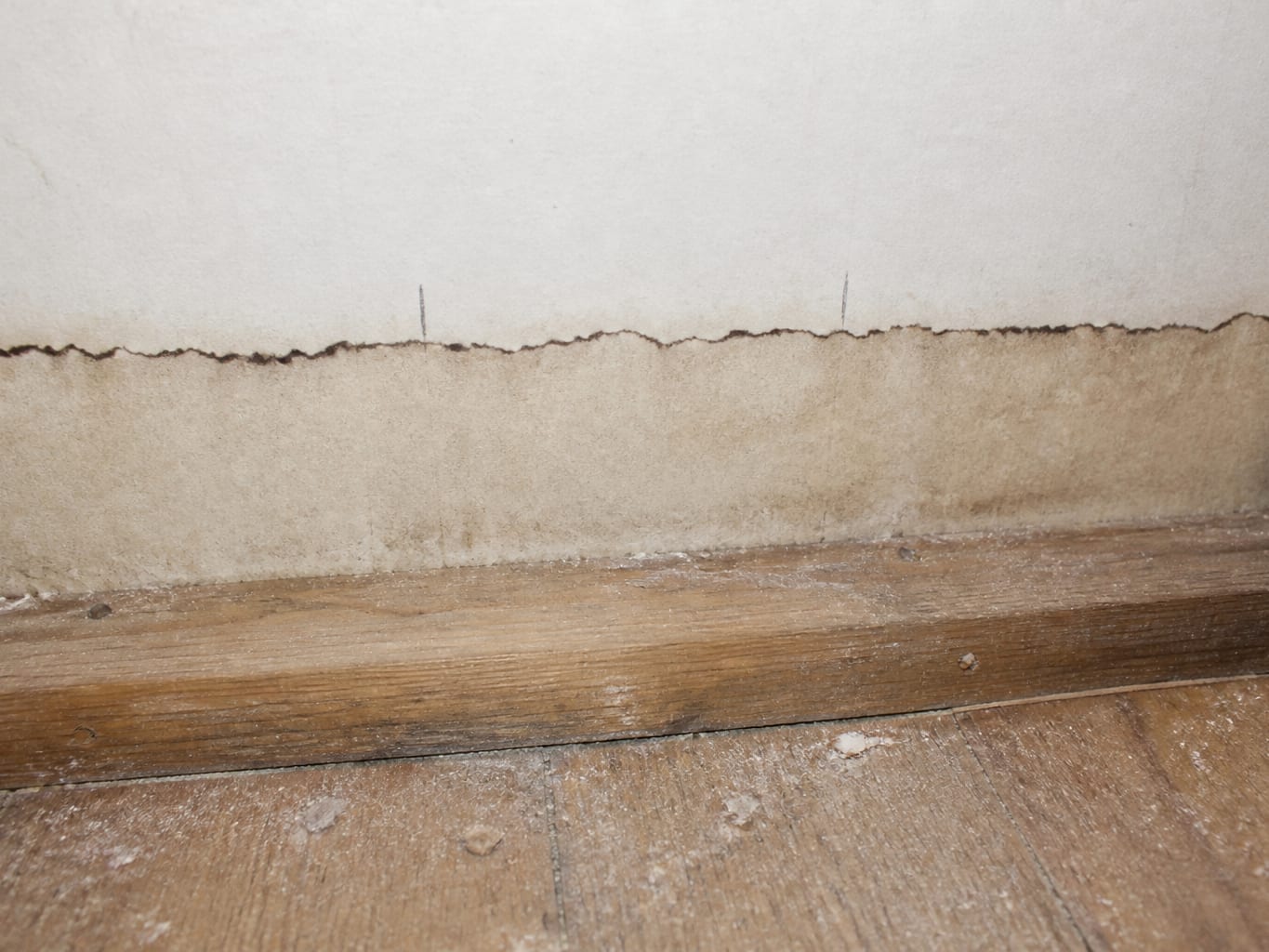
The reason is that visible surfaces do not reveal every affected cavity. Water travels along framing, under flooring, behind baseboards, and into wall cavities where insulation holds it against wood. A wall can look dry on the face and still be wet six inches behind it. Drying only what you can see is one of the most common and most expensive mistakes in this work, because the finish gets restored over a cavity that never dried.
The EPA's guidance on moisture and mold is direct about the principle at work: dry water damaged areas promptly and correct the moisture problem, or conditions for mold growth remain. That is the whole argument for verified drying. It is not paperwork for its own sake. It is the evidence that the building is actually dry before anything gets closed up. Our structural drying process is built around that idea, with equipment placement and monitoring recorded as the readings come in.
The Material Decisions
Once drying data exists, each material gets a decision. Dry in place, clean, or remove. This is where a water loss stops being one event and becomes a list of specific calls about specific building components, and the calls are not the same for every material.
Hover or tap a row to highlight it.
| Material | What drives the decision | Why it matters |
|---|---|---|
| Carpet and padding | Water condition and how long it stayed wet | The padding underneath is a separate material and holds water very differently than the carpet above it |
| Drywall | How high the water wicked and what sits behind the face | The cavity and any insulation behind the surface may still be wet when the face looks fine |
| Insulation | Whether it held water against framing | Wet insulation keeps wood damp and slows the drying of everything around it |
| Wood framing and subfloor | Moisture readings taken over time, not appearance | Wood can still read wet well after a surface feels dry to the hand |
| Cabinetry and built-ins | Whether water reached the base, the back, or the wall behind | The wall behind a cabinet run is often the last thing in the room to dry |
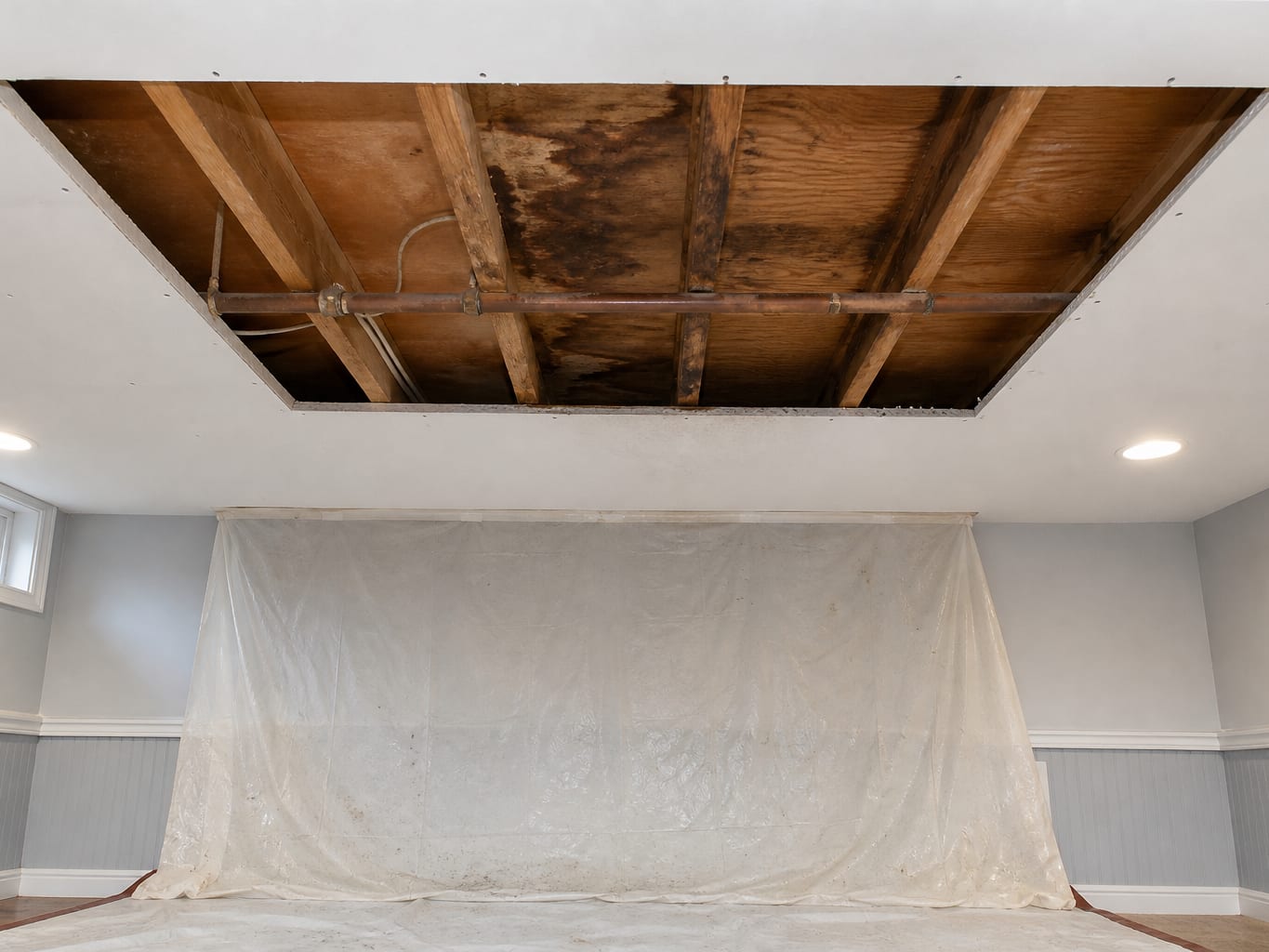
| Ceilings | Whether water passed through from a level above | A ceiling stain marks where water landed, not always where it entered |
| Nonporous surfaces | Cleaning and drying rather than removal | They do not absorb water the way porous materials do |
Notice what is not on that list: the age of the house. Livingston has roughly 10,699 housing units across a wide range of construction eras, and age alone does not tell you what a loss did. Prior renovations, aging components, brand new appliances, hidden cavities, finished basements, and roof or plumbing history all matter, but only where they are actually observed at the property. A stereotype about older homes is not a diagnosis. The conditions at your address are.
Repair Planning and Where the Municipality Enters
Removal creates a rebuild list. Drywall that came out has to go back. Flooring, insulation, trim, cabinetry, and ceilings all need a plan, and that plan is a different stage of work than drying was.
It is worth understanding a line that trips up a lot of owners. Mitigation and drying are one kind of work. Construction that alters plumbing, electrical, mechanical systems, structure, or occupancy is another kind, and that second category is where the township's construction code comes in. The Livingston Building Department is the local resource for code and permit questions on that later work. Their permit record search can show open or closed permits at an address, though a permit record is not evidence that a water loss occurred.
Keeping those stages separate is not bureaucratic tidiness. It is what lets you see what you actually paid for at each phase, and it is why reconstruction after water damage is quoted and scheduled as its own body of work rather than folded invisibly into an emergency invoice.
Property Type Changes the Whole Timeline
Livingston's own municipal records distinguish single family, multifamily, and commercial property, and that distinction changes almost everything about how a restoration runs. It affects access, who has authority to approve work, what contents are involved, whether the space is occupied, and who is responsible for which building systems.
A detached house may have a roof, appliance, bathroom, laundry, basement, or plumbing event, and the owner usually makes every call. A multifamily property can involve shared plumbing or water that started in another unit entirely, which adds a second party to every decision. A commercial space can involve tenant equipment, business records, inventory, ongoing operations, and shared HVAC, so the schedule has to work around a business that still needs to function.
That is a large part of why nobody can hand you a universal completion date. The honest answer depends on whether the source is controlled, how much water there was and how far it spread, which materials are involved, whether power and access are available, which trades are required, how long drying verification takes, how much tenant or business coordination is needed, and whether permits and reconstruction follow.
Where the Cost Actually Comes From
Cost follows condition, not a flat rate. A contained appliance leak in one room is not comparable to water that moved through finished space across several rooms, and pricing them the same way would be dishonest to both.
The drivers are the same list that drives the schedule: the source and how it was controlled, the amount and spread of water, how many floor levels were affected, the condition of the water, the materials and contents involved, safety requirements, extraction and drying equipment, monitoring time, removal work, any plumbing, roofing, or electrical repair, reconstruction, site access, commercial operations, and municipal fees where regulated work applies.
What you should expect to see is an estimate that separates those stages instead of blending them. Emergency mitigation, source repair, drying, any remediation, contents work, rebuild, and municipal fees belong on separate lines, along with the assumptions behind them, what is excluded, and a plain statement that concealed conditions found during the work could change the scope. A restoration estimate is also not an insurance decision and not a permit. Your insurer decides coverage based on your policy and the facts of the loss, and the township decides what construction requirements apply.
What Goes Wrong When the Order Slips
Most bad outcomes in this work trace back to a step taken out of sequence. Waiting while water keeps spreading. Drying only the surfaces you can see. Restoring finishes before the source is controlled. Entering water near electrical hazards. Treating every water event as if the water was equally clean and the materials equally affected.
The question owners ask most often is whether mold will follow. Here is the honest version. Water left in materials creates a moisture condition, and that condition needs prompt correction. Correcting it is exactly what verified drying is for. What no restoration company should do is promise you a medical outcome or predict mold with certainty in either direction. If a documented loss does leave a moisture condition that needs assessment, a mold inspection is the next step, and it is a separate service with its own scope rather than an automatic part of every water loss.
Frequently Asked Questions About Water Damage Restoration in Livingston, NJ
How is water damage restoration different from emergency water extraction?
Extraction deals with the water that is present right now. Restoration deals with what that water did to the building and with the decisions that get the property back into use. Extraction is the first hours. Restoration covers source control, drying, material decisions, repair planning, and reconstruction. Most losses need both, in that order.
How long does water damage restoration take in a Livingston property?
There is no universal answer, and anyone offering one is guessing. The realistic drivers are whether the source is controlled, how much water there was and how far it spread, which materials are affected, whether power and access are available, which trades are needed, how long drying verification takes, and whether permits and reconstruction follow. A contained one room event and a multi level loss are different jobs.
Does a restoration report decide my insurance claim?
No. A contractor report documents property facts: what happened, what was affected, what mitigation was performed, and what still needs repair. Your insurer decides coverage based on your policy and the specific facts of the loss. Good documentation supports your recordkeeping and gives everyone the same set of facts to work from, but it does not promise a claim result.
Do I need a permit for water damage repairs?
Drying and mitigation are not the same as construction that alters plumbing, electrical, mechanical systems, structure, or occupancy. That second category is where township requirements come in, and the Livingston Building Department is the place to confirm what applies to your specific repair. Confirm it before reconstruction starts rather than after.
Will mold grow after a water loss in my home?
Water remaining in building materials creates a moisture condition that needs prompt correction, which is why verified drying matters so much. Nobody should predict a specific outcome for your property or make health claims about it. If a documented loss leaves a condition that needs assessment, that is a separate inspection question, and health questions belong with a clinician rather than a restoration contractor.
Why does drying have to be measured instead of just checked by hand?
Because visible surfaces do not reveal every affected cavity. Water travels along framing, under flooring, and into wall cavities where insulation holds it against wood. A surface can feel dry while the cavity behind it is still wet. Readings taken at the same points over several days are what show whether the building is actually drying, and they are the reason a repair holds instead of failing in a few months.
Check What You Know About Water Loss Recovery
1. What has to happen before drying can accomplish anything?
2. When is drying considered finished?
3. Why is building age not a diagnosis for a water loss?
4. What does a restoration report decide?
5. Which work category can trigger township construction requirements?
Pick an answer to begin.
Getting Back to Normal Use
A durable result comes down to four things done in order: stop the source, document what the water actually affected, manage the moisture until it is verifiably gone, and keep reconstruction and any official approvals as separate, traceable stages. That is the whole method. It is not dramatic, and it does not photograph well, but it is the difference between a property that is genuinely recovered and one that looks fine until next spring.
Livingston property owners deserve to know which stage they are in and what the next one requires. If water has moved through your home or building and you want a clear path from the water you found to a property you can use again, the team at ExecPro Restoration & Cleaning handles the full chain, from source control and verified drying through material decisions, repair planning, and documented rebuild. Call (888) 300-3772 or send us the details of your loss through our contact page and we will start with what actually happened at your address.
Water Restoration Terms Worth Knowing
Tap a term to see what it means.
Source control. Finding and stopping whatever is putting water into the building. Nothing downstream holds until this is done.
Serving Livingston
ExecPro Restoration & Cleaning provides mold remediation services in Livingston, NJ, from inspection and testing through removal, drying, and post-remediation verification. Call (888) 300-3772 for 24/7 emergency response.
Related Articles
Water Got Into Your New Jersey Home in the Nor'easter: The First 48 Hours
Water got into your New Jersey home in the September nor'easter? What is safe to touch, what to photograph, and how to start drying in the first 48 hours.
Flooded Basement Cleanup in New Jersey: The Order of Operations
Flooded basement cleanup in NJ goes in a set order: safety, source, photos, water, wet materials, drying, proof of dry. Here is each step and who to call.
A Water Main Break Flooded Your Basement in New Jersey: What to Do First
A water main break put water in your New Jersey basement? What is safe, how to report it to the utility, what to photograph, and how fast to dry.