How Long Mold Remediation Takes, From Assessment to Rebuild
Cal HewittPublished
- mold remediation
- structural drying
- claim documentation
- new jersey
You have a mold remediation job scheduled or quoted, and you need to know how long it takes so you can plan around it. The honest answer is a range that depends on your building, and it helps to know which phases set the length.
Some of that time is the work itself. Some of it is drying, testing, an insurer's review or a rebuild that comes after the mold is gone. Knowing where each one fits lets you ask for a timeline that covers the whole job and not only the first few days.
Below you will find the phases in the order they run, what can make each one longer, when you can stay home and when you can use the rooms again, and what to do before the crew arrives.
Key Takeaways
ExecPro's range
ExecPro Restoration & Cleaning states on its mold remediation page that most residential projects are completed in one to three days, and that figure is the company's own practice.
Government guidance
EPA and CDC describe the sequence of the work and a 48-hour drying target for wet materials, and that target is not the length of a job.
What adds time
Drying, hidden growth found after walls are opened, heating and cooling system involvement, lab turnaround, insurer approvals and rebuilding can all lengthen a schedule.
Occupancy
Wait to use the space until cleaning, moisture correction and any required verification are complete.
Written timeline
Ask for a written scope that separates assessment, containment, removal, drying, verification and rebuild.
Know What Sets the Length of a Mold Remediation Job
The length of a job comes from the size of the affected area, the materials involved, how wet they are and what is found once the work begins. EPA's remediation guide describes a sequence of assessment, moisture correction, cleaning and drying, removal of materials that cannot be saved, containment and checking for recurrence. That sequence is the same for a closet and a whole basement; the time each step takes is not. The EPA guide says the plan should be adapted to the size and conditions of the problem.
New Jersey's health department adds that remediation includes correcting the moisture, removing or cleaning contaminated materials, and making sure the area is completely dry before renovation or construction begins. NJDOH also says most mold problems come from excess water, so a job that includes tracking down an unclear water source starts with an inspection.
How long does typical mold remediation take?
ExecPro Restoration & Cleaning states on its mold remediation page that most residential projects are completed in one to three days. That range is the company's own practice for the active remediation work and not a government standard. A small, contained project may finish faster, and hidden growth, extensive removal, drying, heating and cooling system involvement, verification and rebuild work can extend the schedule.
EPA, CDC, OSHA and NJDOH describe how the work should be done and in what order, and the total length depends on your building. So, ask for a written, property-specific timeline, and treat any day count as a starting estimate until the assessment is done.
Hover or tap a row to highlight it.
| Figure | Who states it | What it covers |
|---|---|---|
| One to three days | ExecPro, on its mold remediation page | Most residential projects; the company's own practice for the active remediation work |
| 24 to 48 hours | ExecPro, on its build-back services page | Post-remediation clearance testing in most cases; the company's own practice |
| 48 hours | EPA and CDC | A drying target for wet materials, not the length of a job |
| Total job length | Your assessment | Depends on your building, so ask for a written, property-specific timeline |
Use the First Hour, the First Day and the First Week to Keep the Job on Schedule
What you do before the crew arrives affects how smoothly the work runs. NJDOH, NJDOBI and OSHA guidance point to the same early steps. In the first hour:
- Stop the active water source if you can do it safely.
- Keep people away from visibly contaminated or actively wet areas.
- Photograph the affected materials, and note where water entered, when you discovered it and whether heating and cooling equipment serves the area.
- Notify your insurer promptly if the damage may involve a covered water event, and record the claim number, the adjuster's information and any instructions.
- Hold off on discarding damaged property until the insurer has had a chance to inspect it, unless the insurer tells you how to proceed.
By the end of the first day, arrange an assessment that identifies the moisture source, the affected rooms and materials, and whether hidden areas or HVAC components may be involved. Ask for a written scope that separates remediation, drying, verification and reconstruction. Clear furniture and belongings from the work area if the contractor asks for access, and ask whether children, older adults, people with asthma or anyone with a weakened immune system should stay somewhere else. OSHA recommends that extensive work areas be unoccupied.
During the first week, confirm the scope, the containment plan, the documentation and the verification process. Get the insurer's or adjuster's instructions before any permanent repairs, and deal with the plumbing, roof, drainage, foundation, humidity or HVAC problem that caused the moisture. Keep the written assessment, photographs, moisture readings, disposal records, invoices and any clearance or verification documents.
See Each Phase of the Timeline, From Assessment Through Drying
A remediation job runs in a set order, and each phase has its own dependencies. Seeing what happens in each one shows you where time can stretch.
- Assessment and planning: The assessor identifies moisture sources, visible and suspected hidden growth, affected materials, access limits and whether heating and cooling equipment or contents are involved. Hidden mold or newly opened areas can require the plan to be reevaluated.
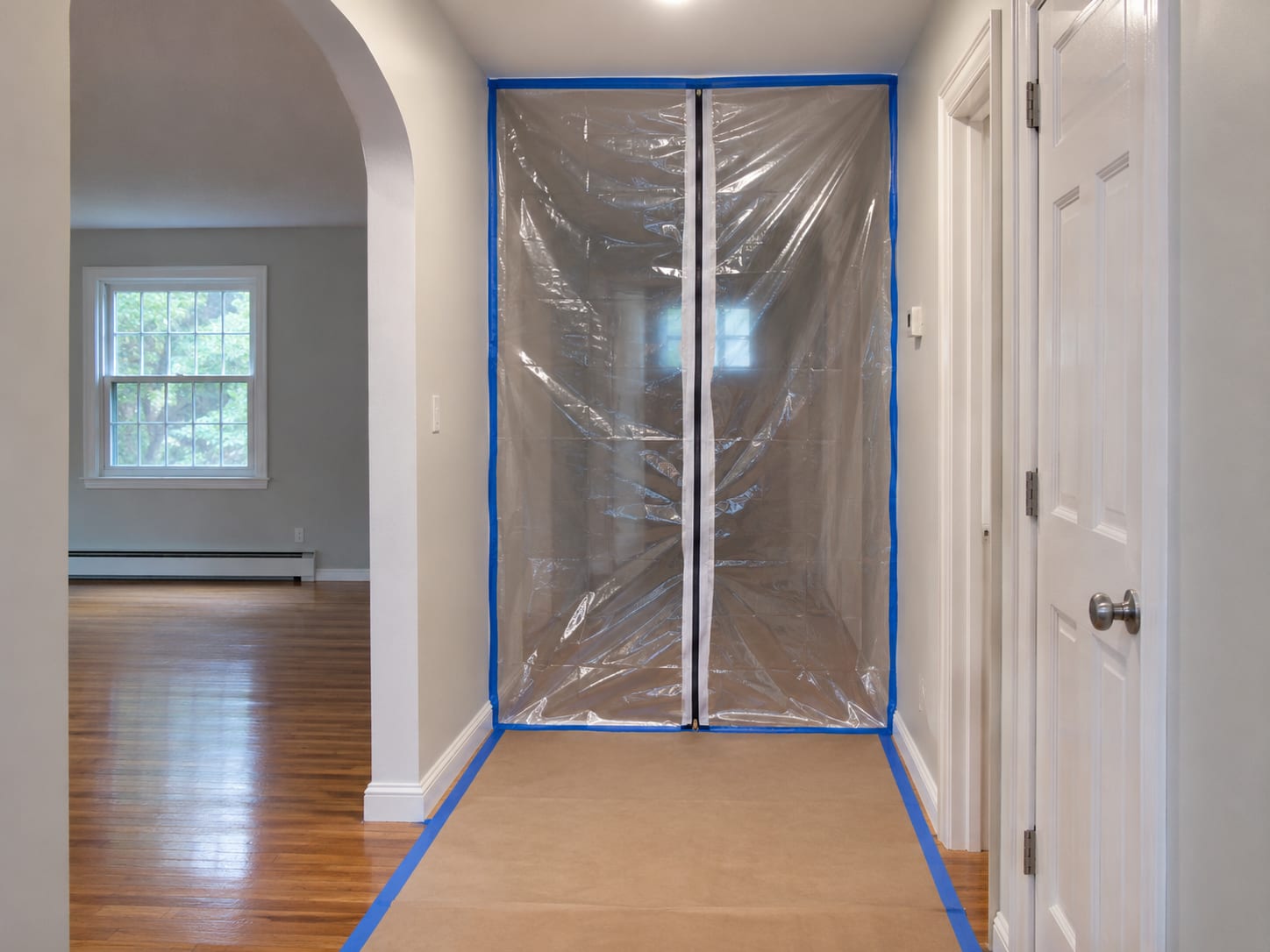
- Containment: The work area is isolated from occupied spaces. OSHA recommends sealed barriers, airlocks for extensive work, negative pressure (which keeps air moving into the work area), HEPA-filtered exhaust and sealed HVAC openings that serve the work area.
- Removal: Porous materials that cannot be saved are taken out and packaged inside containment. EPA identifies physical removal or cleaning as the primary objective, since killing or covering mold alone falls short.
- Cleaning: HEPA vacuuming, damp cleaning and other methods are chosen by material, contamination level and whether a surface can be restored. The area should be free of visible debris and mold odors before the phase is finished.
- Drying: The water source is corrected, and structural materials and contents are dried.
Drying deserves its own note, because the 48-hour figure gets mistaken for a job length. CDC and EPA say wet materials should be dried within 48 hours of becoming wet or removed where appropriate. CDC treats that as a target for wet materials, not a completion time for remediation. The actual drying time depends on the material, how deep the moisture goes, temperature, humidity, airflow and whether water is still coming in. Wet drywall, insulation, framing, subfloors and concealed cavities may need continued dehumidification and monitoring before anything is rebuilt.
The Phases of a Remediation Job, in Order
- 1
Assessment and planning
The assessor identifies moisture sources, visible and suspected hidden growth, affected materials, access limits and any heating and cooling or contents involvement.
- 2
Containment
The work area is isolated from occupied spaces with sealed barriers, negative pressure, HEPA-filtered exhaust and sealed HVAC openings that serve it.
- 3
Removal
Porous materials that cannot be saved are taken out and packaged inside containment.
- 4
Cleaning
HEPA vacuuming, damp cleaning and other methods are chosen by material, until the area is free of visible debris and mold odors.
- 5
Drying
The water source is corrected, and structural materials and contents are dried.
- 6
Verification
Post-remediation verification is generally performed when it is requested or required.
- 7
Rebuild
Drywall, insulation, flooring, trim and finishes go back only after remediation and drying are complete.
Know When You Can Stay Home and When to Leave
Whether you can stay depends on the size of the job, where the work is and how well it is contained. A small job in one room is a different situation from demolition across several rooms. Your assessor can tell you how the work area will be separated from the rest of the home. If anyone in the household has a lung condition or a weakened immune system, ask your healthcare provider as well.
Can I stay in my house during mold remediation?
Sometimes, if the work is small, fully contained in one area and the unaffected rooms stay separated from it. OSHA says extensive work areas should be unoccupied, and it recommends removing infants, people recovering from surgery, people with weakened immune systems and people with chronic inflammatory lung disease or severe allergies from nearby areas. The decision turns on containment, the location of the work, demolition, HVAC connections and the health of the people who live there. Decide ahead of time where family members and pets will stay if the affected area cannot remain occupied.
Can you live in a house after mold remediation?
Occupancy should wait until the affected area has been cleaned, the remaining moisture has been addressed, visible debris has been removed and the applicable post-remediation evaluation or verification is complete. EPA says remediation is complete only after the contamination has been cleaned or removed and the moisture problem has been corrected. Ask your assessor which rooms can be used when, and get the answer in writing alongside the timeline.
Plan for Hidden Mold, HVAC, Testing and Insurance Delays
Most schedule changes come from a short list of causes, and you can ask about each one before work starts. Hidden growth is the most common surprise. EPA advises caution when investigating hidden mold, and NJDOH's workplace mold bulletin says remediation plans may need revision when new facts are discovered, so opening walls, ceilings, cabinets or flooring can widen the scope.
HVAC involvement is another. OSHA recommends shutting down and sealing HVAC equipment that serves the work area, and EPA notes that contaminated return-air plenums, ducts, filters, coils or other components may need separate inspection and cleaning.
Testing and lab time can add days that the contractor does not control. When sampling is requested or required, a laboratory is involved, so ask the lab or the assessor for its turnaround time before you schedule clearance or rebuild work around the results.
Insurance approvals work the same way. NJDOBI advises prompt claim reporting, adjuster inspection, good documentation and waiting for the adjuster to review the damage before permanent repairs. How long an insurer takes to inspect, decide coverage or authorize work depends on the policy and the claim. Reporting the loss early and asking which photographs, estimates, receipts and authorization forms are required keeps that step from holding up the rest.
Hover or tap a row to highlight it.
| Cause of delay | What happens | What to ask before work starts |
|---|---|---|
| Drying | Wet drywall, insulation, framing, subfloors and concealed cavities may need continued dehumidification and monitoring | How drying will be monitored before anything is rebuilt |
| Hidden growth | Opening walls, ceilings, cabinets or flooring can widen the scope, and the plan may need revision | How a change in scope is approved in writing |
| Heating and cooling system | Equipment serving the work area is shut down and sealed, and contaminated components may need separate inspection and cleaning | Who handles any heating and cooling system work |
| Lab turnaround | When sampling is requested or required, a laboratory is involved and adds days the contractor does not control | The lab's or assessor's turnaround time |
| Insurance approvals | Inspection, coverage decisions and authorization depend on the policy and the claim | Which photographs, estimates, receipts and forms are required |
| Rebuild | Reconstruction is its own phase when materials were removed | Who handles the rebuild and when it can start |
Know When Verification and Rebuilding Can Begin
Verification is a separate step that confirms the cleaning worked. IICRC S520, the professional standard for mold remediation, lists post-remediation verification as its own component, generally performed when it is requested or required. EPA says sampling is usually unnecessary when visible mold is present, though surface sampling can help evaluate whether an area was cleaned adequately, and it should be designed and interpreted by experienced professionals. Ask who requires verification in your case, whether that is an insurer, a property manager or you.
ExecPro states on its build-back services page that post-remediation clearance testing is completed in 24 to 48 hours in most cases, and that build-back generally begins after clearance testing confirms the area is free of elevated mold levels. Those figures are the company's own practice. Rebuilding is its own phase whenever drywall, insulation, flooring, trim or finishes were removed, and those materials should go back only after remediation and drying are complete.
What is the success rate of mold remediation?
A single percentage cannot describe every job. CDC says there are no health-based standards for mold in indoor air, and short-term spore counts cannot be read directly as health-risk measurements. A practical decision that the work is complete rests on the moisture source being corrected, the contamination being cleaned or removed, the materials being dry, the visible condition, the documentation, and any verification that was requested or required.
Ask These Questions and Keep These Records Before Work Starts
NJDOH says New Jersey has no state certification program for companies that perform mold or general indoor-air services, so your written agreement carries a lot of weight. Before you approve work, get answers to these:
- Who corrects the moisture source, and when?
- Who handles any heating and cooling system work, verification and the rebuild?
- Does the scope say which materials will be removed, and what happens if more is found?
- How are changes to the scope approved, and in writing?
- Where will occupants and pets stay if the area cannot be used?
ExecPro describes a residential process on its residential mold remediation page that includes locating the moisture source, defining the affected materials, containment, removal of unsalvageable porous materials, cleaning, drying to verified moisture levels, photographs, moisture readings and documentation. Whoever you hire, ask for a record that includes the moisture source, the affected locations, the scope, containment and removal notes, disposal records, drying records, any verification or clearance documents and the rebuild scope. For a workplace or commercial building, New Jersey's indoor air quality page directs managers to EPA's mold remediation guidelines.
Records to Keep From Start to Finish
Assessment record
The record should name the moisture source, the affected locations and the scope of the work.
Work record
It should include containment and removal notes, disposal records and drying records.
Completion record
It should include any verification or clearance documents and the rebuild scope.
Claim file
Keep the written assessment, photographs, moisture readings, invoices and every adjuster instruction together.
Prevent the Next Mold Problem After Remediation
EPA says remediation is complete only after the moisture problem has been corrected, so the repair of the cause belongs on your timeline. Plumbing, roof, drainage, foundation, humidity and HVAC problems that fed the mold need their own fix and their own date. NJDOH says remediation is meant to prevent further property damage and further exposure, which is why the area has to be completely dry before renovation or construction starts.
CDC says mold is common indoors and outdoors and exposure cannot be eliminated completely, so the goal is to address the mold growth and the moisture problem behind it. Keep the final documents for any future buyer, insurer or property manager who asks what was done.
Frequently Asked Questions About Mold Remediation Timelines
How long will my specific rooms be unavailable?
It depends on which rooms are affected, the containment plan, drying and any verification. Ask for a written timeline that names your rooms and separates each phase.
Can rebuilding begin immediately after removal?
Rebuilding should wait until remediation and drying are complete. ExecPro states that build-back generally begins after clearance testing confirms the area is free of elevated mold levels.
Is post-remediation verification required?
IICRC S520 lists it as a separate professional component that is generally performed when requested or required. Ask your insurer, property manager or assessor whether it applies to your job.
What happens if hidden mold is found after demolition?
NJDOH's workplace guidance says remediation plans may need revision when new facts or hidden conditions are discovered. Agree in advance on how a change in scope will be approved and documented.
Does insurance cover mold caused by a burst pipe, storm, flood or long-term seepage?
Coverage depends on the policy and the cause of the water event. NJDOBI says homeowners and most renters policies exclude flood damage, so report the loss promptly and ask what is covered and which documents are required.
Test Your Mold Remediation Timeline Knowledge
1. What does ExecPro state for most residential mold remediation projects?
2. What is the 48-hour figure that EPA and CDC give?
3. When should you wait to use the space again?
4. What does OSHA say about extensive work areas?
5. What does NJDOH say about state certification for mold companies?
Pick an answer to begin.
Wrapping Up
A mold remediation timeline has several parts. ExecPro states that most residential projects are completed in one to three days, and drying, hidden growth, testing, insurer approvals and rebuilding can add to that. Ask for a written scope and timeline that separates assessment, containment, removal, drying, verification and rebuild, and wait to use the space until cleaning, moisture correction and any required verification are done.
Planning around those phases gives you realistic dates for your family, your tenants or your building. It also gives you a record that supports insurance, property and resale decisions later.
If you need a scope and a timeline for your New Jersey property, ExecPro Restoration & Cleaning can start with an assessment of the moisture source and the affected materials. Call us at (888) 300-3772 or reach us through our contact page, and tell us what you have and how soon you need to plan.
Mold Remediation Timeline Terms
Tap a term to see what it means.
Containment. Isolating the work area from occupied spaces, using sealed barriers, airlocks for extensive work and sealed HVAC openings.
Related Articles
Ceiling Mold After a Roof Leak: What to Do and Remove
Ceiling mold after a roof leak can mean water reached the insulation and drywall above. Learn the first steps, what can stay and the repair order.
Flood Damage Cleanup in Trenton, NJ: Backwater, Mud and Checking Your Parcel
After the river or the creek backs up into the street, cleanup starts with power, photos and what to throw out. Then check your parcel's flood status.
Can a House With Mold Be Saved? What Decides the Scope
Whether a New Jersey house with mold can be saved comes down to the moisture source, the structure and the materials. See the steps, limits and next calls.