Open, Closed, or Sectioned Off: Commercial Mold Remediation in Livingston, NJ
Cal HewittPublished
- commercial mold remediation
- commercial mold
- facility management
- business continuity
- new jersey
- livingston
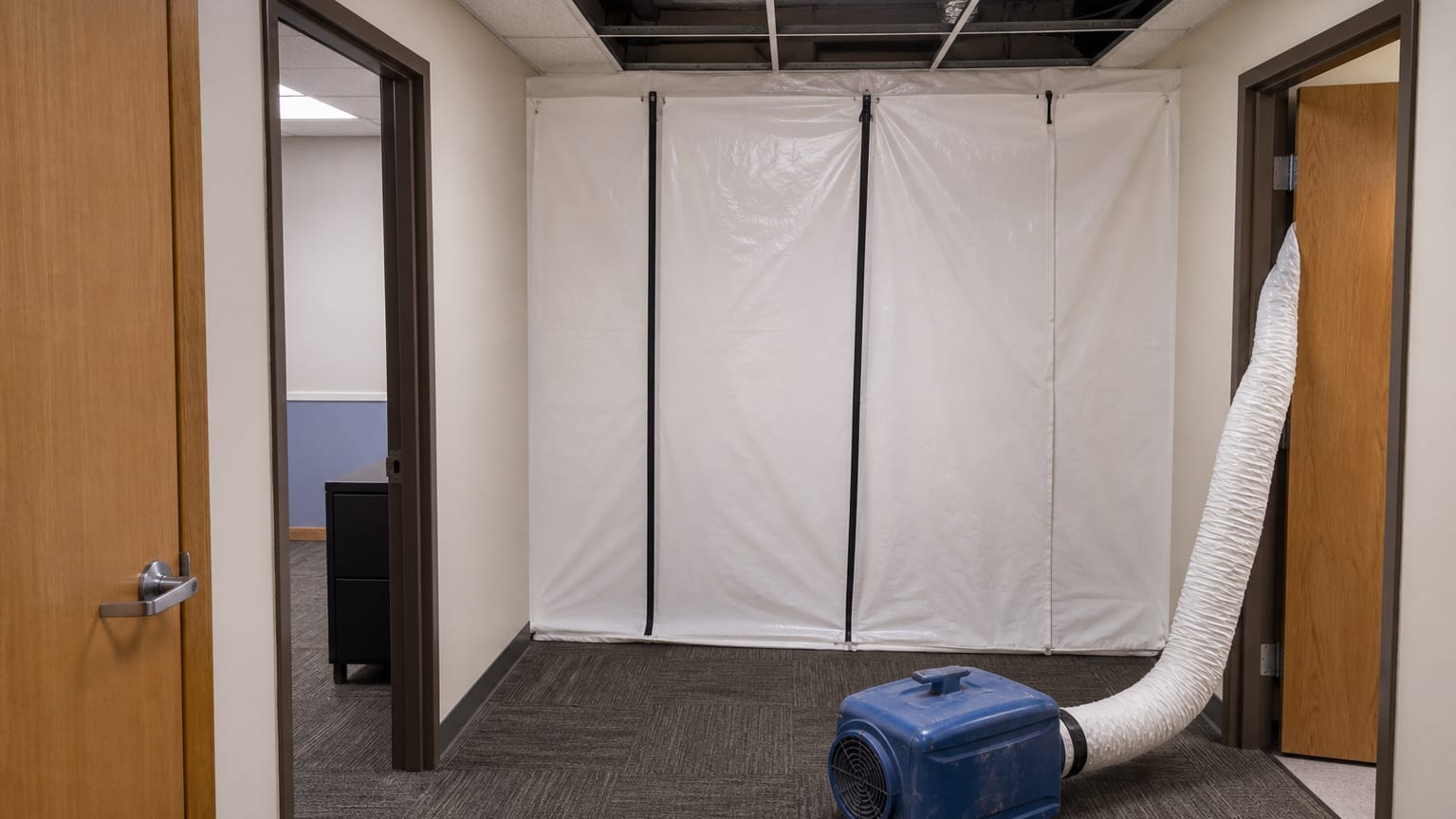
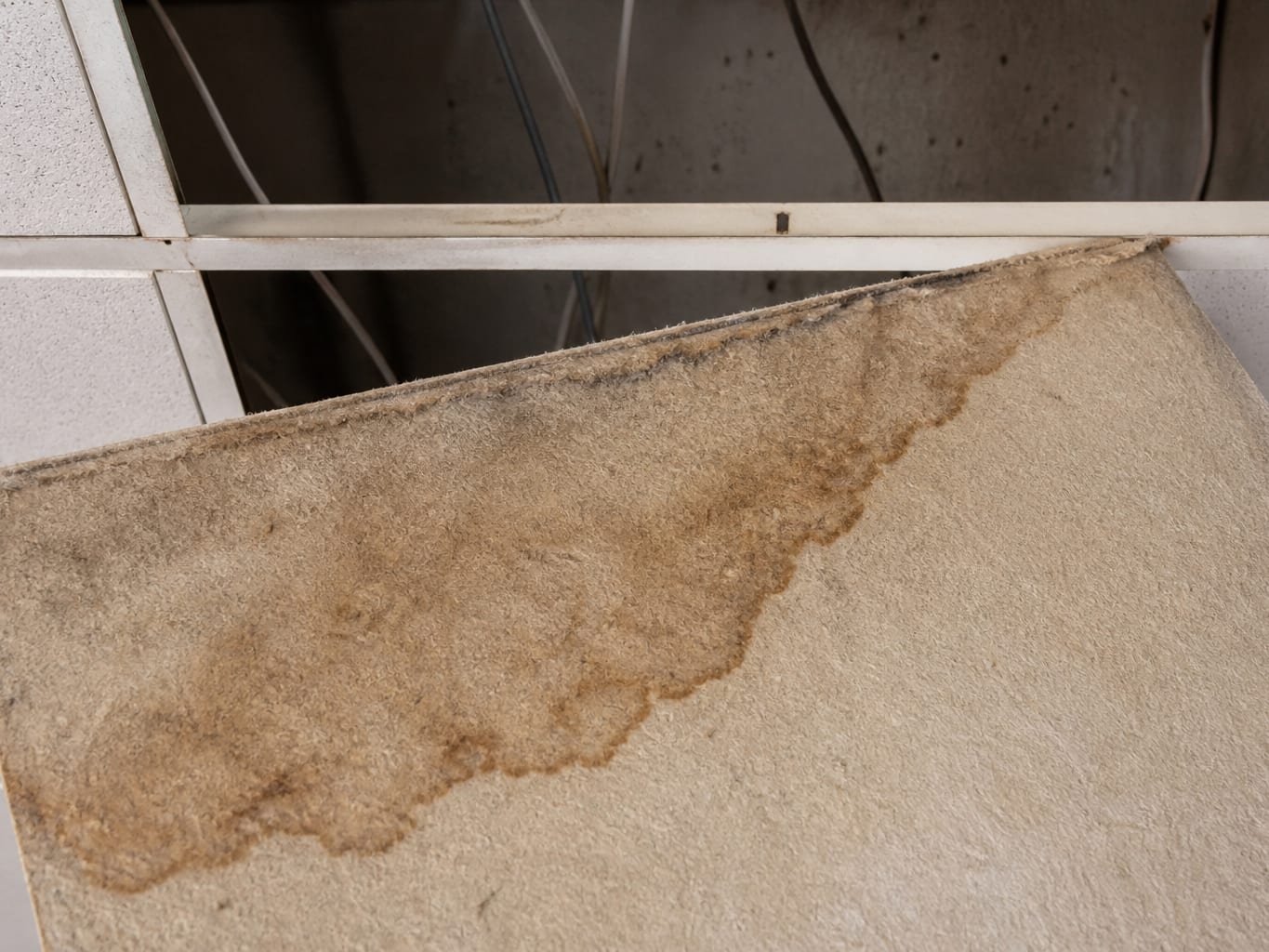
A tenant emails at 7:40 on a Monday. There is a musty smell in the back half of the second floor, and the ceiling tile above the copy room has gone soft. By nine o'clock you have to answer a question that is not really about mold at all. Does that suite stay open today?
That is the decision commercial mold remediation in Livingston actually turns on. A homeowner who finds mold can take a weekend and think about it. A facility manager, a landlord, or a business owner is making an operations call with employees arriving, customers scheduled, inventory sitting in the affected room, and a lease that assigns responsibility to somebody. The mold is the trigger. Continuity is the problem.
The decision is not a coin flip, though. What stays open and what closes comes down to a small set of physical facts about your building, and most of them can be established on the first visit.
What the Open or Closed Call Depends On
Where the water is coming from
The EPA treats moisture control as the core of mold control, so the first fact worth establishing is the water source, not the size of the stain. A source you can shut off changes the plan immediately.
Whether the space can be isolated
A suite with its own walls, its own door, and its own air handling can often be closed off while the rest of the building keeps working. A condition above a shared ceiling grid cannot.
What the affected materials are
Porous materials such as ceiling tile, drywall, carpet, and insulation are handled differently from sealed and nonporous surfaces, and that difference drives how much of the space is disturbed.
Who is authorized to approve access
Landlord, tenant, property manager, and insurer often carry different responsibilities, and work does not start until the party who can grant access and approve the scope is identified.
When people are actually in the space
Operating hours decide whether the work is phased, done overnight, or done during the day behind containment.
What a Commercial Job Involves
The single biggest mistake in commercial work is treating a business address like a residence with more square footage. The physical mold may look identical. The building around it does not behave the same way.
Systems Cross Suite Lines
In a detached house, the roof, the plumbing, and the heating and cooling all belong to one owner and serve one set of rooms. In a commercial building, one roof drain can serve two tenants and a service chase can carry pipes past four. A wet ceiling in Suite 204 may be caused by something that lives entirely outside Suite 204.
That matters for the open or closed decision more than anything else. If the condition and its source both sit inside one tenant's finished space, the disruption can usually be drawn tightly around it. If the source is in a shared roof section, a common riser, or an air handler that moves air between zones, the boundary of the problem is bigger than the boundary of the lease, and the plan has to account for adjacent spaces even when nothing is visible in them yet.
Someone Has to Say Yes
Residential work has one decision maker standing in the room. Commercial work usually has several, and they do not all hold the same authority. A tenant can report a condition and grant access to their own space. A property manager can often authorize the assessment. A building owner typically controls work on common systems and structure. An insurer has a role in a documented claim but does not direct the remediation.
Sorting that out early is what keeps the work from stopping halfway through because nobody could approve opening a ceiling in a corridor that belongs to the building rather than the tenant.
The Assessment Comes Before the Schedule
An authorized assessment establishes the complaint, the affected suites or common areas, the moisture source, the materials, the heating and cooling context, who occupies the space, and what limits access. Only after that does a realistic schedule exist. Committing to a reopening date before anyone has traced the water is how businesses end up closed twice.
What Usually Stays Open and What Usually Closes
There is no universal answer, because the answer is a property of your building rather than of mold in general. What follows is the way the question gets broken down on site.
Hover or tap a row to highlight it.
| What is found | What it changes about access | What the plan has to settle |
|---|---|---|
| Visible growth in an accessible utility or storage room | Often the smallest footprint, since the room can usually be closed on its own | Whether the room feeds air to occupied areas, and where the water came from |
| Wet material above an occupied suspended ceiling grid | The work happens overhead in a space people use, so containment and timing carry the decision | Whether the affected area can be sectioned off or the suite has to be released for a period |
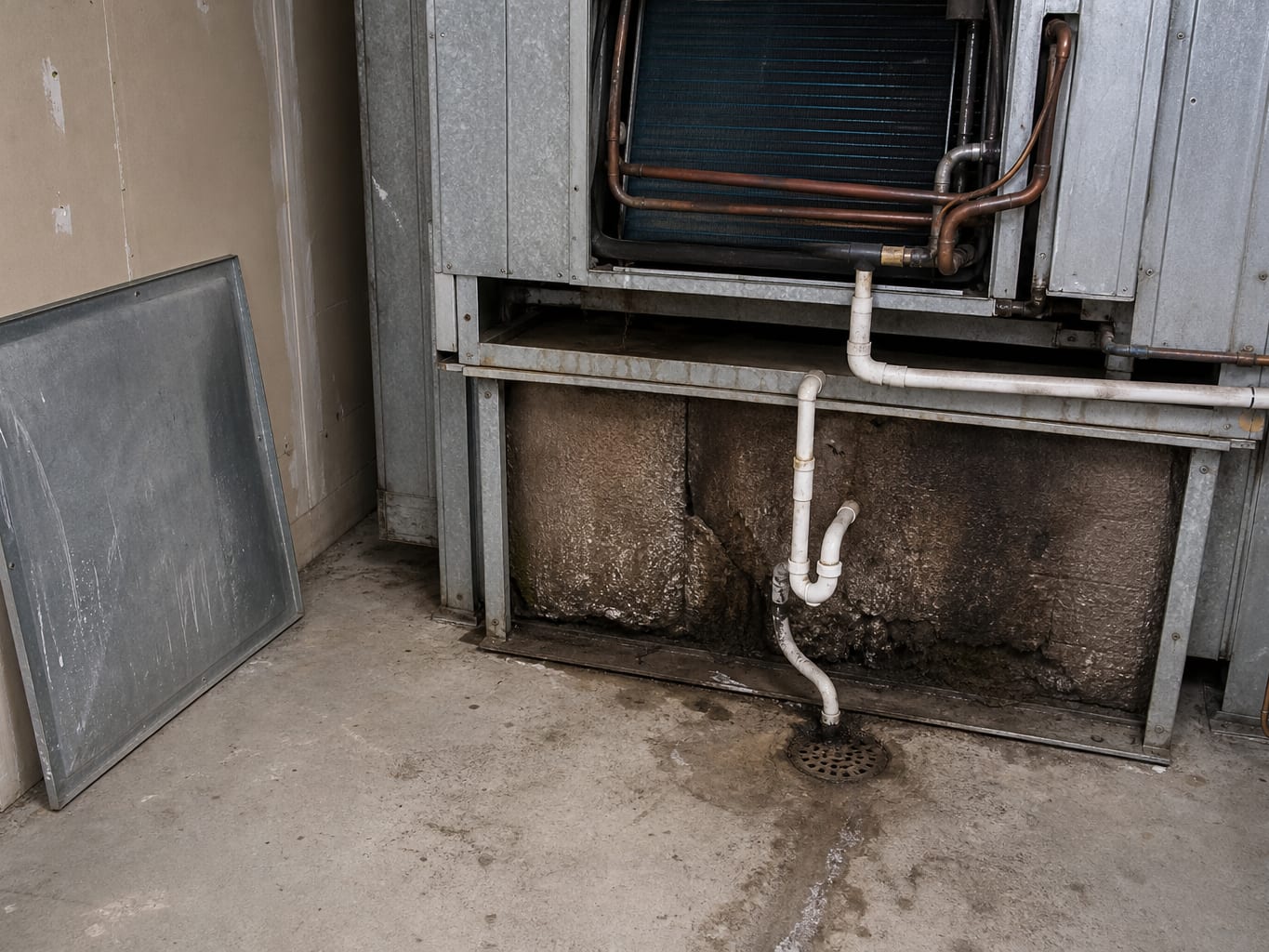
| Moisture inside a shared mechanical or service chase | Reaches beyond one tenant, so the building owner enters the conversation | How air moves between zones and whether adjacent suites need to be assessed |
| Wet finishes after a tenant fit-out or a plumbing failure | Depends on how much of the buildout is porous material | Whether removal triggers later construction work that is separate from remediation |
| Odor reported in a lightly used or seasonal area | Often no operational impact at first, which is exactly why it gets ignored | Whether a source has been running quietly and where it actually sits |
A pattern runs through that table. The tighter the boundary around the water and the materials, the more of your building keeps operating. Widening the boundary is not a sales tactic, it is what a shared source forces. Narrowing it dishonestly is worse, because the work gets torn back open later.
Read the Building Before You Read the Calendar
Livingston sits inland in Essex County, and commercial mold conditions here are building specific rather than regional. Generic New Jersey weather explains nothing useful about your property. The causes worth chasing are water entry through the roof or envelope, plumbing failures, condensate from equipment, ventilation that is not moving enough air, high indoor humidity, and materials that were wet at some point and never fully dried.
Storm history is a fair question rather than an assumption. New Jersey keeps public recovery documentation from major storms, which supports asking whether a known event affected your address. It does not establish that it did. Work orders, leak logs, photographs, and the condition of the materials in front of you are what settle it.
Vacant and lightly used areas deserve a specific mention. A suite between tenants, a storage mezzanine, or a seasonal area can hold a condition for months before anyone reports an odor, simply because nobody is standing in it. Running equipment complicates this further, since it moves air between zones and can carry an odor away from the place the water is.
If the extent or the source is genuinely unclear after the walkthrough, that is the moment for a scoped commercial mold inspection that maps the source and the affected materials rather than a guess dressed up as a proposal.
Sequencing Work Around Your Hours
Once the source and the boundary are known, scheduling becomes a real conversation instead of a hopeful one.
How a Commercial Scope Comes Together
- 1
Authorized assessment
Identify the complaint, the affected spaces, the water source, the materials, the mechanical context, the occupants, and every limit on access. Confirm who can approve what.
- 2
Isolation plan
Decide how the affected area is separated from the parts of the building that keep operating, including how air is handled and how contents, equipment, and records are protected.
- 3
Source correction and removal
Fix the water problem and remove or clean affected material according to what it is made of. Correcting the source is what keeps the condition from coming back after everyone goes home.
- 4
Scheduling around occupancy
Phase the work, move it outside business hours, or release a defined area, based on the isolation plan rather than on a promise made before the walkthrough.
- 5
Documented outcome and handoff
Record what was assessed, what was done, and where the boundary of the work sat. Anything that changes the tenant layout, building systems, or occupancy moves into a separate construction scope.
Overnight and phased work is often the right answer for a space that has to stay available to employees, customers, patients, or tenants, and it belongs in writing rather than in an assumption. Not every condition can be worked around, and a contractor who agrees to any schedule you name before seeing the building is agreeing to something they have not verified.
When the trigger was an active water loss rather than a slow condition, the sequence starts earlier still. Standing water and saturated material are handled first, which is why emergency water extraction and drying belongs in front of any mold scope in that situation.
Where Commercial Cost Actually Comes From
Cost in a commercial building is driven by the environment, not by a per square foot number pulled off a rate sheet. The factors that move it are the number of suites or floors involved, occupancy constraints, access and security procedures, whether mechanical systems can be isolated, ceiling height and ceiling systems, wet inventory and equipment, the amount and type of affected material, containment, off hours labor, source repair, and any reconstruction afterward.
A visible spot in an accessible utility room and contamination above an occupied ceiling grid are two different projects even if the square footage matches. A proposal earns trust by making its boundaries legible: assessment, water source investigation, removal, cleaning, equipment, contents handling, any laboratory work and why it is justified, reporting, verification, and what is excluded. Reconstruction and trade work are commonly excluded, which is fine as long as it is stated rather than discovered later. Municipal fees sit outside the remediation number entirely, since Livingston's published fee schedule for permitted construction work belongs to the construction project.
What the Remediation Record Settles, and What It Does Not
This is where commercial work diverges most sharply from residential, and where businesses get into trouble.
A remediation report documents an environmental condition. It records where growth was observed, what the water source appeared to be, what materials were involved, where the work boundaries sat, what was done, and what remained inaccessible. That is genuinely useful. It is not a code determination, a lease ruling, an insurance decision, or an occupancy approval.
The EPA has not established health based standards for acceptable indoor mold spore levels, which means no contractor's sample result can certify a building as safe. The EPA also notes that routine sampling is often unnecessary when mold is already visible, and that results need context to mean anything. Testing earns its place when it answers a defined question, not as a substitute for finding the water.
Permits work the same way. Livingston's Building Department handles commercial permits for businesses, covering ownership changes, expansions, tenant changes, and signs. A diagnostic assessment is not a tenant improvement. But if the work that follows changes regulated construction, building systems, tenant layout, or occupancy, that project goes through the township's permit and application process, and the certificate of occupancy checklist includes items specific to non residential development. Keep the environmental file and the construction file separate but coordinated and both stay defensible.
Employee health questions have a similar boundary. An environmental report can describe a condition and the measures taken to reduce exposure. It cannot diagnose anyone. Occupant notices that name affected locations and work boundaries without making medical claims are the honest approach, and questions from people with asthma, allergies, or immune suppression belong with a clinician.
Red Flags in a Commercial Proposal
A few things are worth catching before you sign. An undefined promise of "clearance" is the first. If nobody will say what standard is being cleared against, there is not one. A scope that never names the water source is the second, because removal without source correction is temporary by design. A removal plan with no stated containment or access plan is the third, particularly in an occupied building.
The fourth is subtler. If a proposal treats one tenant's space as fully independent when the roof, plumbing, drainage, or mechanical systems are shared, the remediation may be aimed at the wrong place, and the argument over authority that follows costs more time than the work does. A proposal that says plainly which areas or systems were not accessible is more trustworthy than one implying everything was examined.
Frequently Asked Questions About Commercial Mold Remediation in Livingston, NJ
Does my business have to close during commercial mold remediation?
Not automatically. It depends on whether the affected area can be isolated from the spaces that stay in use, what the materials are, and whether the mechanical systems serving the area also serve other parts of the building. A self contained utility room and an occupied ceiling grid produce very different answers. Phased or off hours work is often possible, and it belongs in the plan after the assessment rather than in a promise made before it.
Do I need a permit from Livingston Township for mold remediation?
A diagnostic assessment is not the same thing as a tenant improvement. Where remediation is followed by work that changes regulated construction, building systems, tenant layout, or occupancy, that follow on project is where Livingston's Building Department comes in. The township provides commercial permit services and publishes applications and construction code information, and the responsible party for the project verifies what applies.
Who is responsible, the landlord or the tenant?
That is a lease question rather than an environmental one, and the answer is document specific. What the remediation process establishes is where the condition is, where the water came from, and whether the source sits inside the tenant's space or in a shared building component. That distinction is usually what the responsibility conversation turns on, but the lease decides it.
Will a mold test tell me whether my building is safe for employees?
No. The EPA has not set health based standards for acceptable indoor mold spore levels, so no sample result functions as a safety certification. Sampling has value when it answers a specific question, such as comparing a suspected area to an unaffected one, and the results need interpretation. Where mold is already visible, the EPA's position is that routine sampling is often unnecessary and the priority is correcting the moisture.
How do I tell whether a commercial mold contractor is qualified in New Jersey?
New Jersey does not run a state certification program for mold remediation companies, so a license number is not the screen it would be in some other trades. Judge the proposal instead. Look for a named water source, a written containment and access plan, a clear boundary of what is included and excluded, an honest statement of what could not be accessed, and documentation practices you can actually read afterward.
What if the mold is above a ceiling in a space shared with other tenants?
Then the building owner or manager enters the conversation, because the work reaches past the lease line. Shared ceilings, chases, and air handling mean the affected boundary is defined by the building, not by the tenant map. Assessing adjacent zones is not scope creep in that case, it is the only way to be sure the source is not simply relocating the symptom.
Final Thoughts
Commercial mold remediation in Livingston works best when it is treated as an operations problem with a technical cause. Find the water. Draw an honest boundary around what it touched. Identify who can approve work inside that boundary. Then decide what stays open, what closes, and for how long, based on the building in front of you rather than a general rule about mold.
The businesses that come out of this well usually resisted two temptations: closing more than the condition required, and reopening a space before anyone corrected the source. Both cost more than the middle path.
If you are looking at a soft ceiling tile, a musty suite, or a water event in a Livingston commercial property, ExecPro Restoration & Cleaning can walk the building, trace the source, and give you a scope with its boundaries written down, including commercial mold remediation for occupied buildings that works around your hours. Call (888) 300-3772 or reach our team through the contact page to get the assessment scheduled before the next business day forces the decision for you.
Commercial Remediation Terms
Tap a term to see what it means.
Containment. A sealed work boundary that keeps the remediation area separated from the parts of the building still in use during the work.
Serving Livingston
ExecPro Restoration & Cleaning provides mold remediation services in Livingston, NJ, from inspection and testing through removal, drying, and post-remediation verification. Call (888) 300-3772 for 24/7 emergency response.
Related Articles
One Wing at a Time: Phased Commercial Mold Remediation for Princeton Junction, NJ Buildings That Cannot Close
Commercial mold remediation in Princeton Junction NJ, phased so an office, school, or managed building keeps operating while affected zones are contained and dried.
Open on Time: Commercial Mold Remediation in Deal NJ Before the Season Starts
Commercial mold remediation in Deal NJ, planned around a seasonal reopening. Phased containment, documentation, and the source repairs that keep your doors open.
Mold Behind the Storefront: Commercial Mold Remediation in Princeton NJ Historic Mixed-Use Buildings
Commercial mold remediation in Princeton NJ historic mixed-use buildings: phased containment that protects tenants, historic finishes, and a public-facing storefront.