What a Number Can Settle: Air Quality Testing in East Windsor, NJ
Cal HewittPublished
- air quality testing
- indoor air quality
- mold testing limits
- east windsor nj
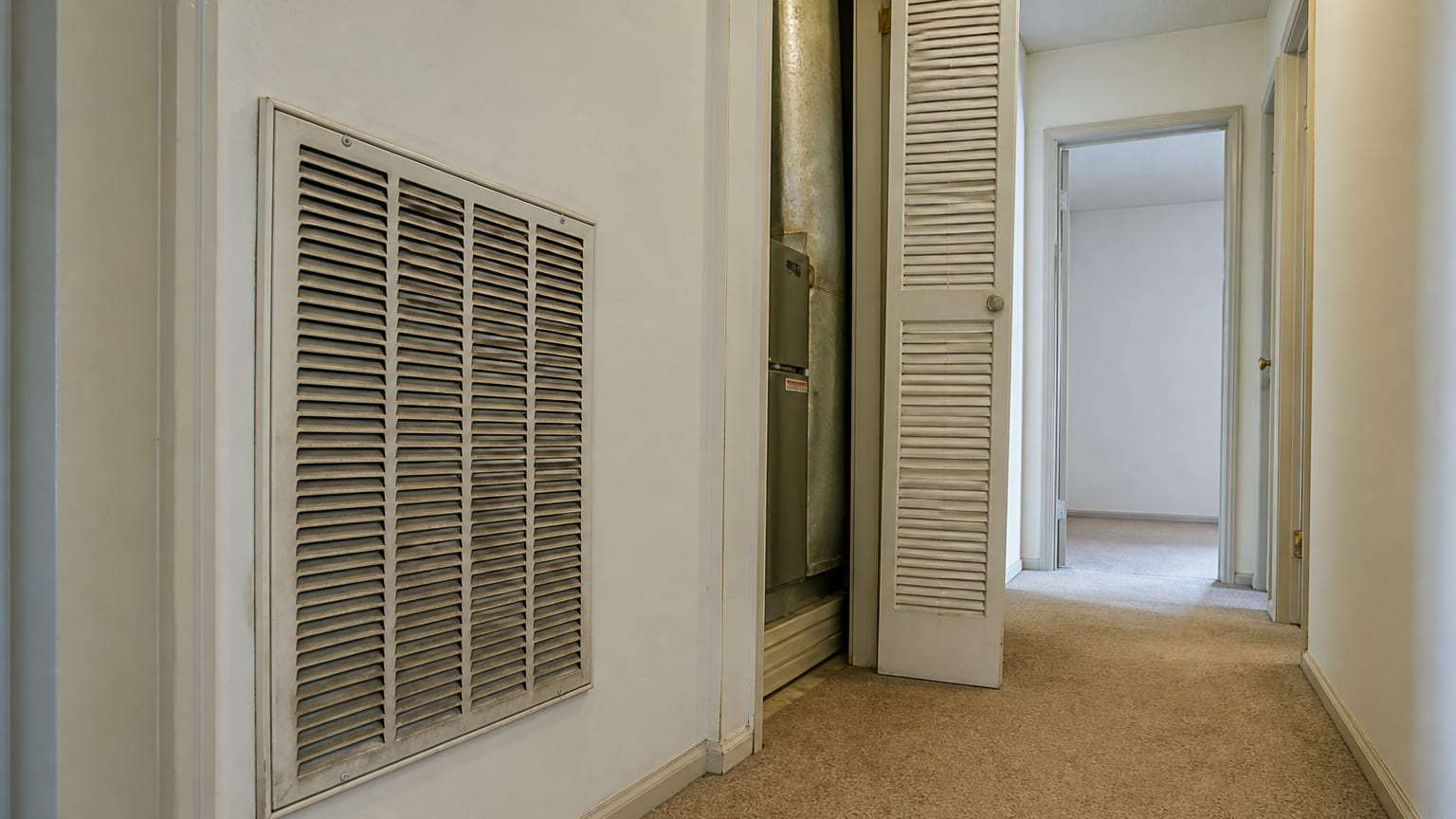
Nobody puts this part in the brochure. When an indoor air sample comes back from a laboratory, the number on the page does not arrive with a line underneath it saying what a safe value would be. For mold and other biological agents, that line does not exist. The National Institute for Occupational Safety and Health states plainly that there are no health-based standards for mold or other biological agents in indoor air, and it does not recommend routine mold air sampling as part of a building evaluation.
That is not a reason to dismiss indoor air testing. It is a reason to understand what kind of tool it is. A measurement can describe a specific thing, in a specific place, at a specific moment, under conditions you record. It can compare an indoor value to an outdoor one. For some pollutants, radon being the clearest case, it can be compared against a published action level. What it cannot do is certify a building as safe, diagnose the people inside it, or substitute for finding the leak, the duct, or the material that is actually causing the problem.
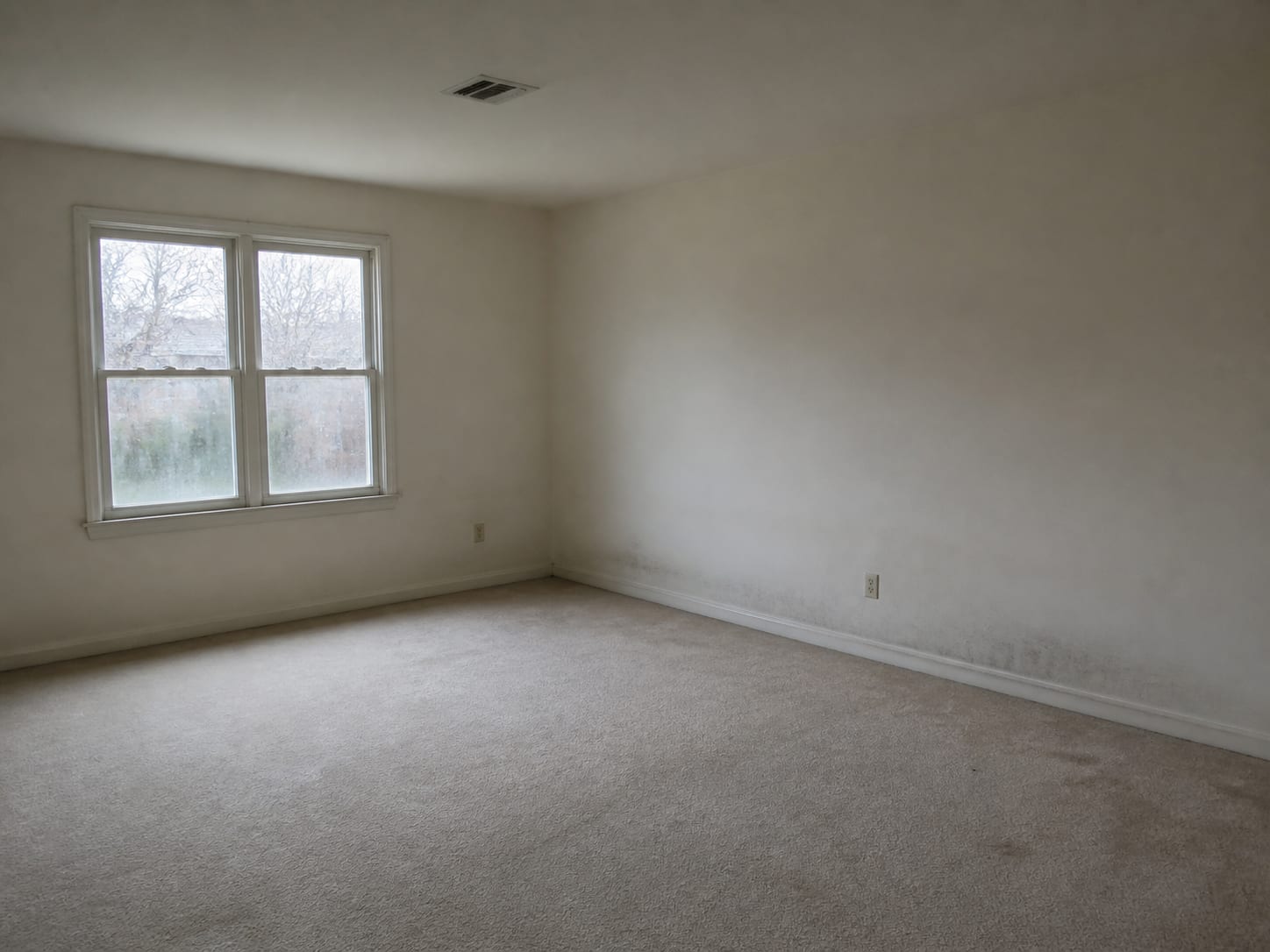
That difference matters more in a place like East Windsor Township than people expect. This is an inland Mercer County community with a mix of detached houses, attached homes, apartments, rentals, and planned communities, which means the source of an indoor air complaint is frequently on the other side of a wall, a ceiling, or an ownership line. A number from one room, taken without a question attached to it, rarely settles anything in that situation. A question, asked well, often does.
Key Takeaways
Mold air results have no pass or fail line
Federal guidance states there are no health-based standards for biological agents in indoor air, so a mold number cannot be scored against a health threshold.
Testing is not the universal first step
Visual inspection and odor detection are generally more reliable for building evaluation, and visible mold usually does not need sampling to confirm what is already visible.
A defined question comes before a method
Radon, combustion byproducts, volatile organic compounds, allergens, and ventilation performance are different investigations with different tools.
Conditions are part of the result
The time, weather, occupancy, ventilation setting, and recent activity in the space all shape a reading, which is why they get recorded alongside it.
One unit is not the whole building
In attached homes and managed communities, a shared duct, hallway, roof, or neighboring unit can be the source you cannot sample from inside your own space.
Public workplaces follow a different rule
New Jersey's indoor air quality standard applies to buildings occupied by public employees during work hours, not to private homes and businesses generally.
Why There Is No Passing Score
People reasonably expect indoor air to work like a water test: send a sample, get a number, compare it to a limit. For some contaminants that model holds. For mold spores in air, it does not, and the reason is not laziness on the part of regulators. Spore counts move constantly with weather, season, time of day, foot traffic, whether a door was open, and whether someone ran a vacuum an hour earlier.
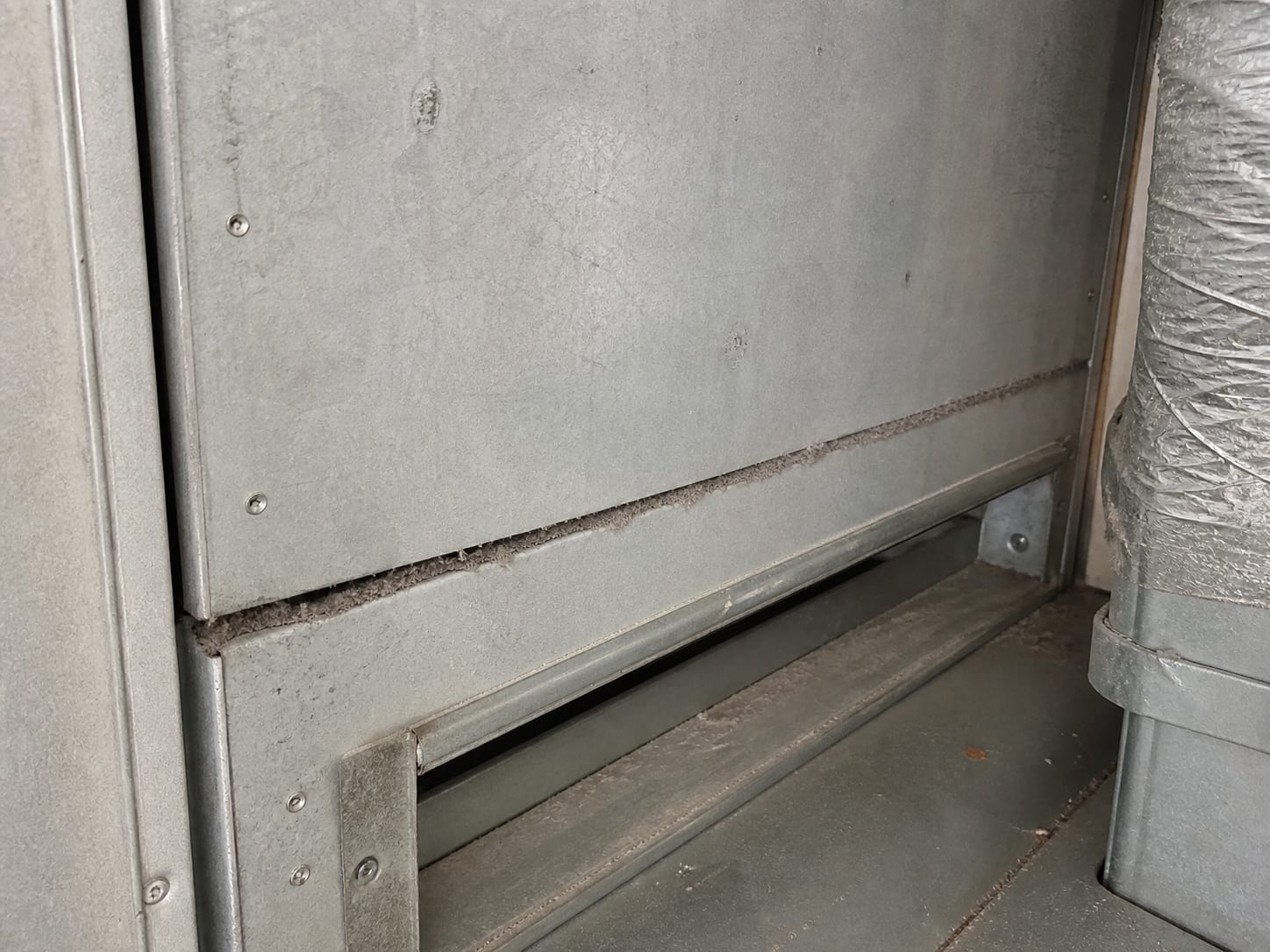
Federal guidance follows from that. NIOSH notes that short term air samples, including results that come back low, may not represent actual exposures and cannot be interpreted in relation to health risk. The EPA takes a parallel position on the practical question, noting that visible mold generally does not require routine sampling, because seeing mold already establishes that mold is present. Spending money to prove what you can see, without learning where the water is coming from, is a common and avoidable purchase.
There is a second layer worth understanding. Indoor air is a mixture with many contributors. The EPA points out that indoor pollution comes both from outdoor air entering a building and from indoor sources, including building materials and furnishings, cleaning and maintenance products, and biological pollutants. It also notes that inadequate ventilation raises pollutant levels, by failing to dilute emissions with outdoor air and failing to carry indoor pollutants out. A single sample sits downstream of all of that at once, which is exactly why it cannot be read backwards to name one cause.
What Testing Settles and What It Does Not
The honest version of this service is a short list of what a measurement can deliver, matched against the questions people usually hope it will answer. Reading those two columns side by side saves a lot of disappointment.
Hover or tap a row to highlight it.
| The question | What a measurement can do | What it cannot do |
|---|---|---|
| Is there mold in this building? | Confirm what is already visible, or compare indoor to outdoor spore conditions at that moment | Produce a pass or fail score, since no health-based standard exists |
| Where is the moisture coming from? | Occasionally point toward a zone worth inspecting | Replace the physical inspection that finds the leak or condensation path |
| Is my family getting sick from this? | Nothing on the health side | Diagnose anyone, which is a question for a clinician |
| Is my radon level a concern? | Give a value comparable against a published action level | Address any other pollutant in the same sample |
| Are solvents, adhesives, or finishes off-gassing? | Identify and quantify specific volatile compounds when that is the defined question | Tell you which product in the room is responsible without further investigation |
| Is the building safe overall? | Nothing that broad | Certify a whole building, in any single test |
| Did the remediation work? | Document the condition of a cleaned area under stated conditions | Guarantee that the original moisture source will not return |
None of that makes testing pointless. It makes testing conditional. The value shows up when a specific question exists and a measurement is the right instrument for it. Radon is the textbook example, because there is a published action level to compare against and no way to detect it by looking. VOC testing is another, when a defined chemical concern follows a renovation, a new floor, or a stored product. Comparing indoor and outdoor conditions during an active complaint can be informative when the sampling context is documented carefully.
The EPA's own advice reflects this. For pollutants other than radon, it directs people to consult a health department or a professional experienced in solving indoor air quality problems before starting to monitor. That is guidance to define the problem first and reach for equipment second.
Starting From the Question, Not the Sample
A good indoor air investigation in East Windsor looks less like a lab appointment and more like a structured interview with a building. What changed, when did it start, who notices it and where, what does it smell like, has there been water, a renovation, a new appliance, a duct change, a roof repair, a season shift?
How a Defined Indoor Air Question Gets Worked
- 1
Write the concern down specifically
An odor in one bedroom after rain is a different investigation from a headache complaint in an office suite or a suspected radon question, and the wording drives everything after it.
- 2
Build the building history
Record recent water events, renovations, new materials, HVAC changes, occupancy patterns, and outdoor conditions that could be pulled indoors.
- 3
Look before measuring
Visual inspection and odor detection are generally more reliable than routine air sampling for finding a building problem, and they cost less to run.
- 4
Measure only what the question requires
Choose the pollutant, the locations, the timing, and any outdoor comparison, and record the conditions in place while sampling.
- 5
Interpret in context and state the limits
Report what was measured, under what conditions, and what the result cannot establish, rather than presenting a number as a verdict.
- 6
Correct the documented source
Where the work identifies a leak, ventilation fault, or material issue, the repair is the outcome, and regulated construction goes through East Windsor's own review.
That sequence explains why the strongest first step is often not a test at all. When the complaint involves musty odor, staining, or a known water event, a mold inspection that maps moisture in the building answers more than a spore count, at lower cost, with a result you can act on. Testing then becomes an optional add on for a narrower question, rather than the opening move.
Cost follows the same logic. There is no standard local price for indoor air testing, and any quoted flat rate is pricing a package rather than a problem. What drives scope is the pollutant in question, the number of locations, the timing and duration, whether outdoor comparison is needed, the laboratory method, and how much source investigation the situation actually calls for. A proposal that separates measurement from investigation and from repair is more useful than one number.
East Windsor Conditions That Shape the Question
Local context changes the question in three concrete ways. The first is geography. East Windsor sits inland in central New Jersey, so outdoor influences on indoor air are the ordinary ones: seasonal humidity, pollen, traffic corridors, and stormwater driven moisture around foundations. It is also worth naming the neighbors clearly, since the names cause real confusion. Hightstown is a separate borough that East Windsor surrounds. West Windsor is a different adjacent township. Repairs and code questions for a property inside East Windsor belong to East Windsor.
The second is housing. Census Reporter estimates roughly 12,422 housing units in the township, about 54 percent of them single unit structures, and Census QuickFacts puts owner occupancy near 61 percent. Twin Rivers, identified by the township as a Planned Unit Development, is the local example most residents know. In attached and managed housing, the source of an odor or a symptom can sit in a neighboring unit, a common hallway, a shared mechanical system, or a roof assembly nobody in the complaining household controls. Sampling inside one unit in that situation can produce a clean looking result while the source continues untouched next door.
The third is who occupies the building. New Jersey's Indoor Air Quality Standard, N.J.A.C. 12:100-13, applies to existing buildings occupied by public employees during regular work hours, administered through the state's PEOSH program. That is a real obligation in the settings it covers, and it does not extend to private residences and private businesses generally. A report that implies every local building is compliant or noncompliant with a public employer rule is describing something that does not apply.
One more local note. The township's environmental health profile includes an ambient air indicator, which describes outdoor conditions across an area. It cannot establish the condition inside any particular room, and it should never be used as if it does.
Where Air Testing Gets Oversold
The clearest red flag is a promise of clearance. No single generic sample can certify an East Windsor building as safe, and a company offering that is selling something the science does not support. A close relative is the health claim, where a result is described as explaining someone's symptoms. Federal guidance is explicit that mold results cannot be interpreted against health based standards, and personal health questions belong with a clinician who can examine the person.
The second failure is a test that replaces source investigation. A number without a leak check, a ventilation review, a look at building materials, or a combustion appliance check has skipped the part that leads to a repair. The reverse mistake also happens: assuming that visible mold demands a test before anything can be done. It generally does not, and money spent confirming the obvious is money not spent on the moisture that caused it.
The third is scope confusion in shared buildings. Testing one unit and declaring the building fine ignores that access and ownership were never resolved. Before sampling in an apartment, condominium, or commercial suite, it is worth establishing who controls the suspected source and who is entitled to act on the findings.
Frequently Asked Questions About Air Quality Testing in East Windsor NJ
Do I need an air test if I can already see mold?
Usually not. EPA guidance holds that visible mold generally does not require routine sampling, because the presence of mold is already established by seeing it. The more useful next question is where the water is coming from and how far the affected materials extend, which is answered by inspection and moisture readings rather than a spore count. Testing may still make sense for a narrow separate question, but it is not the default step.
Is there a safe level of mold in indoor air?
There is no published health-based standard for mold or other biological agents in indoor air, which is why no result can be graded as safe or unsafe. Laboratories report what they find, and any comparison is generally between an indoor sample and a simultaneous outdoor one taken under recorded conditions. Treat any company that quotes a pass or fail threshold for mold with real caution.
What kinds of indoor air testing actually have a benchmark?
Radon is the clearest case, since there is a published action level and no way to detect it without measuring. Certain combustion and chemical questions have established references depending on the compound and the setting. For most general indoor air complaints, particularly mold related ones, the meaningful output is a documented investigation of conditions and sources rather than a scored number.
My apartment smells musty but my neighbor's does not. What should I do?
Document what you notice, when, and under what conditions, including weather and whether the HVAC is running. Then raise it with the landlord, manager, or association, because the source may be in a shared wall, duct, riser, or roof that you cannot access. Testing only inside your own unit in that situation can return a result that looks fine while the actual condition sits outside your boundary.
Does an air quality test require a permit in East Windsor?
No. Testing itself is an assessment, not construction. The township's Construction Department becomes relevant only if the findings lead to regulated repair, such as work on plumbing, mechanical systems, roofing, structural members, or electrical components. At that point the repair scope goes through the township's permit and inspection process, and permit fees are calculated from the applicable subcode fees.
Does my workplace have to meet an indoor air quality standard?
It depends on who occupies it. New Jersey's Indoor Air Quality Standard applies to existing buildings occupied by public employees during regular work hours and is administered through the state's PEOSH program. Private residences and private businesses are not automatically covered by that rule, so a claim that any given East Windsor building must comply with it needs to be checked against who actually works there.
Final Thoughts
The useful way to think about indoor air testing is as one instrument in a larger investigation, not as the investigation itself. It measures well when the question is narrow and the method fits. It measures poorly, or meaninglessly, when it is asked to stand in for looking at a building.
For most East Windsor property owners and tenants, the sequence that produces answers is the plain one: write down exactly what you are noticing and when, gather the building's recent history, look for water and check the ventilation, and only then decide whether a measurement adds something a careful inspection could not. Sometimes the answer is yes, and the test earns its place. Often the answer arrives before anyone opens a sample kit, which is a good outcome rather than a disappointing one.
If you are trying to work out whether a measurement would tell you anything useful about your building, our team at ExecPro Restoration & Cleaning will start with the question and the conditions rather than the price list. You can read more about our approach to indoor air quality testing, call (888) 300-3772 to describe what you are noticing, or reach our team online and we will tell you honestly whether testing is the right next step.
Indoor Air Terms Worth Knowing
Tap a term to see what it means.
Indoor air quality. The condition of air inside a building, shaped by outdoor air entering, indoor sources such as materials and products, biological growth, and how well the space is ventilated.
Serving East Windsor
ExecPro Restoration & Cleaning provides mold remediation services in East Windsor, NJ, from inspection and testing through removal, drying, and post-remediation verification. Call (888) 300-3772 for 24/7 emergency response.
Related Articles
Air Quality Testing in Robbinsville, NJ: A Musty Smell After a Thunderstorm
A musty smell that shows up after heavy rain often means hidden moisture. See what air quality testing in Robbinsville, NJ can tell you and what to check.
Air Quality Testing in Trenton, NJ: Is the Smell Yours or Next Door's?
Rowhomes and twins share a party wall, so a musty smell or symptoms can start next door. See which air quality testing in Trenton fits and what it costs.
Air Quality Testing in Bridgewater, NJ: Odors, Symptoms and Which Test Fits
If the house smells musty after rain or symptoms ease when you leave, see which air quality testing in Bridgewater fits and what a result can change for you.