Mold Remediation in Montclair, NJ
Montclair's floodplain page reports that 810 parcels, about 7.5 percent of roughly 11,000 tax parcels, sit in one or more mapped FEMA flood zones. The number worth thinking about is the other one. Better than nine in ten Montclair properties are not in a mapped flood zone, and water still gets into plenty of them, which tells you that the flood map is not where most of this township's moisture problems come from.
Mold Remediation in Montclair Starts With How the Water Travelled
New Jersey's own health department puts it plainly: mold problems occur where there is excess water, and the water source has to be identified and corrected. That is the order of operations on every job here, and it is the step most often skipped.
In Montclair the credible sources are surface water and street flow reaching a building, runoff on a sloped lot, a stream or culvert backing up during a heavy storm, envelope failures on an older roof or masonry wall, a plumbing or appliance failure that needs water leak detection, and condensation inside assemblies that were built long before anyone thought about vapor. Those look alike once staining shows and they take different repairs, so the diagnosis is not a formality. It is the part of the job that decides whether you pay once or annually.
Street Flow, Culverts, Brooks and 1920s Houses in Montclair
Water That Arrives by Street and Culvert
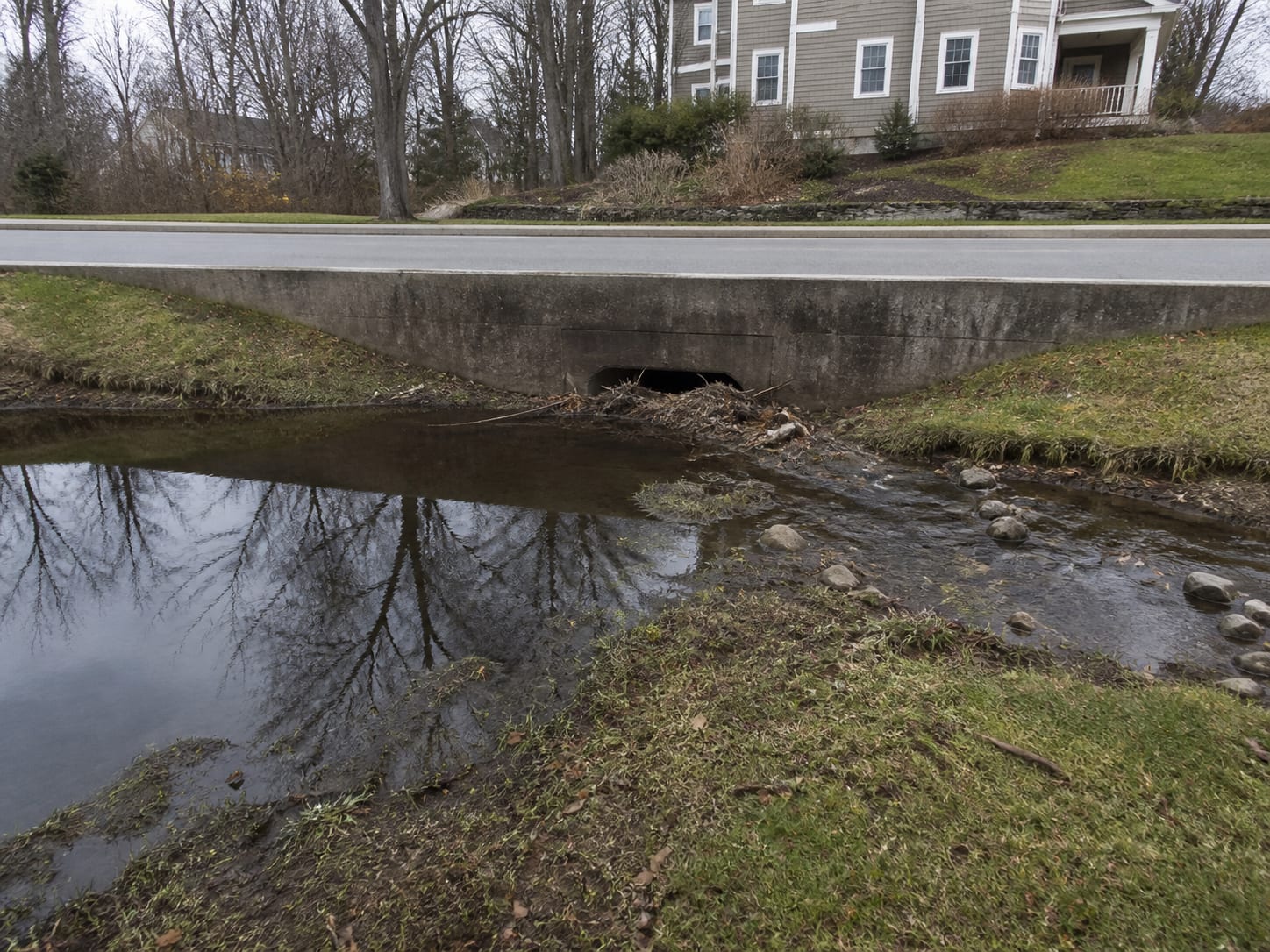
The Township's own explanation of its floodplain conditions points at undersized road culverts and floodway encroachment rather than at rivers overtopping banks. For a building, that means water can arrive at a driveway, a window well or a basement door during a storm without the property ever being in a mapped flood zone. The correction lives outside: where the water is coming from, what is concentrating it, and where it enters the building envelope at grade.
The Slope Off First Watchung Mountain
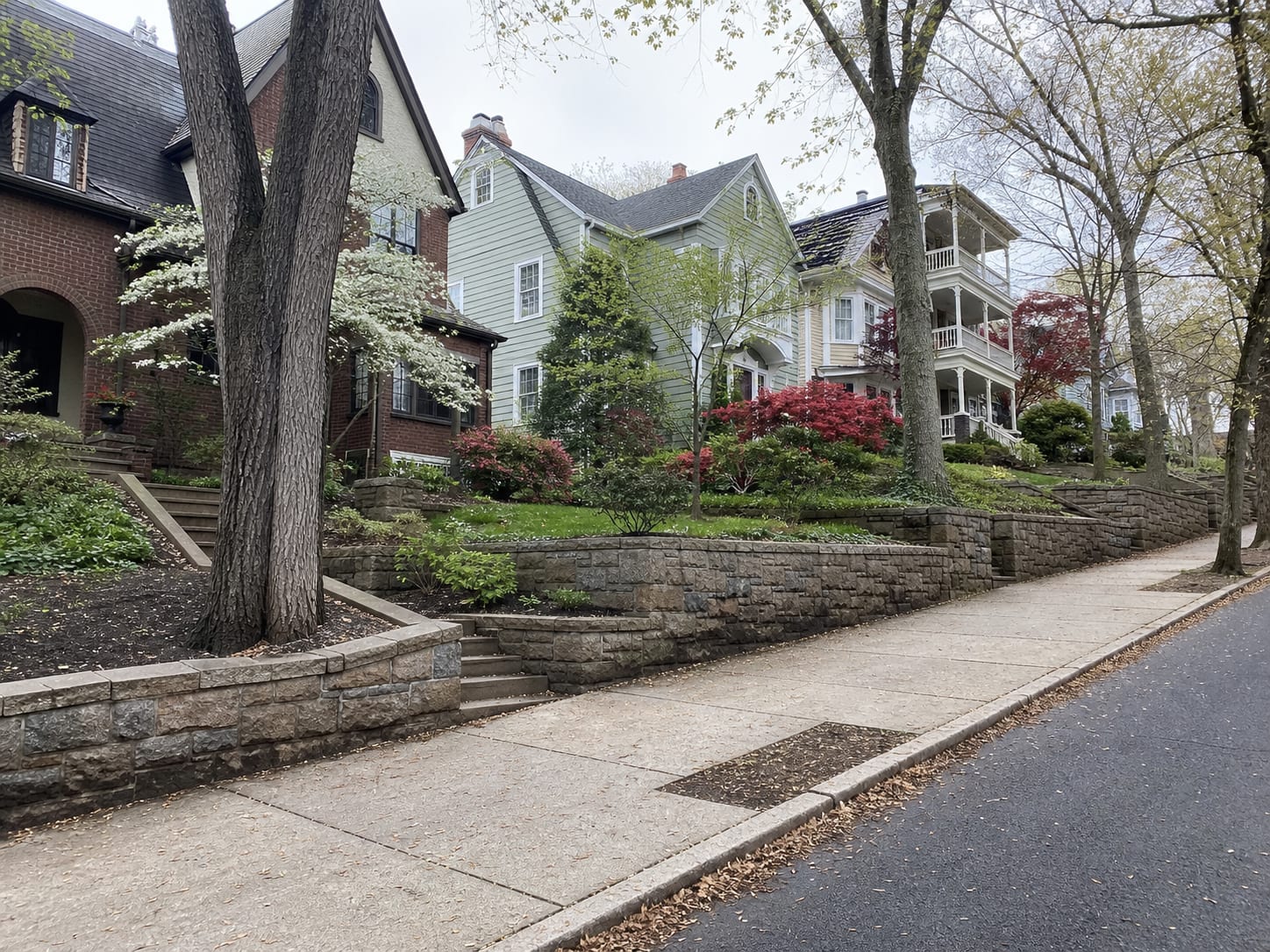
The 2020 Township stormwater plan places Montclair on lowlands and rolling hills adjoining First Watchung Mountain, records a mean elevation of 300 feet, and notes that the Township slopes from west to east with steep slopes along much of its western edge. A steep lot moves water fast, and fast water finds the low point in a foundation, undermines a walk or overwhelms a drain that would have coped on flat ground. On the western side, a moisture assessment that never goes outside is not an assessment.
The Brook Network Underneath It All
Montclair sits in the Passaic River drainage basin, and its stormwater plan names tributaries to the Second River, including Toney's Brook, Nishuane Brook and Crescent Brook, and tributaries to the Third River, including Yantacaw Brook and Wigwam Brook. The Township's floodplain page also identifies the Third River and Pearl Brook among the local watercourses. Properties near those corridors have a genuinely different exposure from properties a few streets uphill, and a rebuild near one should be designed knowing which.
Houses Older Than the Building Codes
With nearly six in ten housing units built in 1939 or earlier, a great many Montclair buildings predate modern flashing details, foundation waterproofing, insulation and vapor control. The Township's Estate Area historic district nomination illustrates the point with a period of significance running from 1885 to 1945 across 308 surveyed tax lots. Old buildings are not fragile, but they are layered, and water tends to find the joints between one era's work and the next one's.
Two Family, Three Family and Apartment Buildings
Montclair is not a township of detached houses alone. Detached homes are the largest single structure type at 7,691 units, about 49.5 percent, while 1,861 units sit in two unit buildings, 1,320 in three and four unit buildings, and 2,212 in structures of twenty units or more. In a building with more than one household, the leak and the damage often belong to different people, and the practical need is access to both sides of an assembly before drying can be done properly. That is where property management mold services earns its place.
Roofs, Attics, Plumbing and Condensation
The unglamorous causes are still the most frequent ones. A blocked gutter overflowing against a wall, failed flashing at a chimney or dormer, a bath fan discharging into an attic instead of outdoors, a shower pan, a supply line, a water heater, or a cold pipe sweating inside a closed wall through a humid stretch. None of them care about the flood map, and the attic cases in particular usually turn out to be ventilation repairs with a cleaning attached, which is why attic mold remediation is scoped that way.
What the Mold Remediation Process Looks Like in Old and Multi Family Buildings
Diagnosis, Readings and an Honest Boundary
The assessment establishes how the water travelled, what it reached and where the wet area truly ends, including inside walls and above ceilings. Readings are taken at the affected materials and at comparable dry ones in the same building so the numbers can be read against something, and any area that could not be opened or accessed is recorded as not inspected rather than presumed dry.
Containment Before Demolition
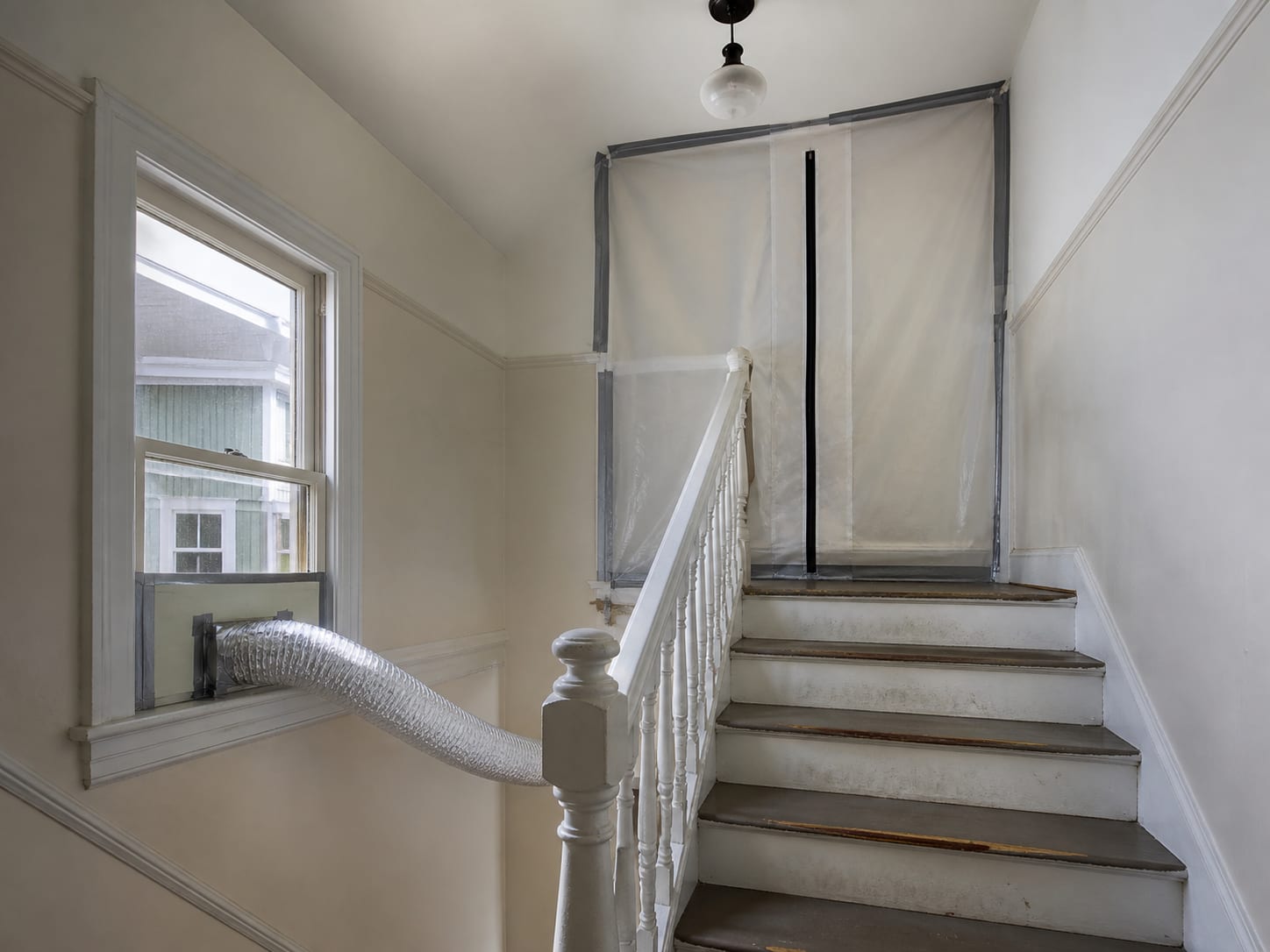
The work area is sealed and controlled before anything is cut, because disturbing growth without containment carries it into rooms that were previously unaffected. In a multi family building that protection extends to the neighbors, who did not agree to any of this. Where the water may have carried wastewater, sewage cleanup governs the handling from the start.
Removal, Cleaning and Drying That Is Measured
Anything porous that held water comes out, cut back to sound dry material rather than to the edge of the stain. Sound hard surfaces are cleaned and retained rather than replaced for appearance. Drying equipment then runs with readings logged per location until they fall and stay down. In a pre 1939 house with plaster and heavy framing this takes longer than an owner expects, and cutting it short is how a job comes back.
Correcting the Source and Documenting the End State
Fixing whatever admitted the water is the step that makes the rest permanent, and in Montclair that is frequently exterior drainage or a roof detail rather than anything indoors. Where a documented finished condition is needed, post remediation verification produces the record, and it is done before the walls are closed rather than afterward.
Services Available for Montclair Basements, Ceilings and Two and Three Family Buildings
Mold Inspection
A written record of what is wet, how it got that way and which materials are involved. Mold inspection is what a real scope is built from, and in an old house it is how the concealed work surfaces before the budget is fixed.
Mold Testing
Sampling has a narrow, useful role. Mold testing is worth paying for when a source will not reveal itself, when a sale or a claim needs documentation, or when a completed cleanup needs a record at the end.
Air Quality Testing
Indoor air quality testing measures an indoor sample against an outdoor reference collected the same day, which is what makes the comparison meaningful. It answers a defined question and it is not a pass or fail certificate.
Black Mold Removal
Color is not a species and does not change the scope. Black mold removal is driven by how much material is affected and by what wet it in the first place.
Basement and Lower Level Work
For a lower level that takes water in storms or stays damp between them, basement mold remediation covers the interior work while the grading and drainage correction outside deals with the cause.
Water Damage Restoration
Where the water arrived as an event rather than a seep, water damage restoration leads and structural drying sets the schedule that the rest of the job fits around.
Ceiling and Concealed Space Cleanup
When the growth is above a ceiling or inside a chase, ceiling mold removal handles the visible half while the repair above it handles the reason it happened.
Multi Family and Commercial Buildings
Buildings with tenants, businesses or an association have occupancy constraints a single family house does not. Commercial mold remediation is scoped around keeping the building usable during the work.
Transactions and Rebuilding
For a sale, home buyer and seller protection covers the documentation side. After the space is verified dry, post mold remediation rebuild and the wider build back services restore the finishes, and affected framing is handled as structural mold repair first.
Montclair's Steep Slope Ordinance, Permits and Documentation
Removing wet material and cleaning what remains is generally not permitted construction work. The rebuild that follows a significant loss usually is, and in Montclair there is a second municipal process that catches owners by surprise, because it applies to the ground rather than to the building.
The Township maintains a steep slope ordinance, and its stated purpose is to reduce hazards from runoff, erosion, soil slippage and flooding. That is squarely relevant here, because the fix for a great many Montclair water problems is exterior site work: regrading, redirecting a downspout run, rebuilding a retaining element, installing drainage. On a property along the western side of the Township, where the plan records steep slopes against the mountain, the site work that solves the water problem is exactly the kind the ordinance is written about. Ask the question before the design is finished, not while a machine is on site.
The flood side has its own logic. Being outside the mapped zones does not mean the water cannot reach you, since the Township attributes much of its flooding to culvert capacity and floodway encroachment. Being inside them means a rebuild has additional considerations attached. Either way, the parcel level answer comes from the Township's mapping rather than from an assumption about the street.
The record you keep is the same in every case. Photographs before anything is moved, the source and category of the water, the affected materials by room, the drying readings that prove the work met a standard, and any permits or approvals that applied. Where an insurer is funding the repair, insurance restoration services is where the scope and the documentation have to line up.
Frequently Asked Questions on Hillside Lots, Flood Zones and Two Family Ownership
Because most Montclair water does not arrive from a mapped flood zone. The Township attributes many of its floodplain conditions to undersized road culverts and to encroachment on natural floodways, and it describes localized street flooding during major storms. Water that runs down a street, along a driveway and into a window well never consults a map. That is diagnosed outside the building, during or right after rain.
Service Area: Montclair Districts and Neighboring Essex County Towns
ExecPro Restoration & Cleaning serves the Township of Montclair, NJ 07042 and 07043, in suburban Essex County about 12 miles west of New York City, with 40,921 residents at the 2020 Census and a Council Manager government under the Faulkner Act. We work across its named districts, including Upper Montclair, Watchung Plaza, Frog Hollow, Walnut-Grove, Montclair Center, Montclair Heights and the South End, and around the parks that shape the neighborhoods near them, among them Edgemont Memorial Park on Valley Road, Nishuane Park on Cedar Avenue, Mountainside Park on Upper Mountain Avenue and the county's Eagle Rock Reservation. We also serve the wider service area across North Jersey, including Short Hills elsewhere in Essex County.
The Township's own plan lists Little Falls, Clifton, Cedar Grove, Verona, Bloomfield, Glen Ridge, West Orange and the City of Orange as municipalities sharing a boundary line with Montclair, with East Orange meeting it at a single point rather than along a border. Getting to a job runs on the county corridors: Bloomfield Avenue is the largest commercial route, with Valley Road, Grove Street, Orange Road, Upper Mountain Avenue, Normal Avenue, Bradford Avenue and Alexander Avenue carrying much of the rest of 97.7 miles of streets. Before a crew is scheduled we confirm the approach, parking and equipment access on a narrow or sloped street, the affected level of the building, where the utilities shut off, and in a multi unit building who can authorize entry to the neighboring space.
Book ExecPro Restoration & Cleaning for a Wet Montclair Lower Level
If you are dealing with storm water in a lower level, a hillside drainage problem, visible growth or a leak nobody has traced in Montclair, NJ, ExecPro Restoration & Cleaning is ready to help. Call (888) 300-3772 or book an assessment on the contact page, and we will find the water before we quote the repair. Emergency services are available 24/7.
About Montclair, NJ
Montclair is a township in Essex County, about twelve miles west of New York City, with 40,921 residents counted in the 2020 census.
Its housing is older and genuinely mixed rather than uniformly detached. The 2025 to 2035 Housing Element reports 16,053 units in 2023, of which 9,446, or 59.8%, were built in 1939 or earlier. One-unit detached houses are the largest single class at 7,691, or 49.5%, alongside substantial two-unit, three-to-four-unit and twenty-plus-unit stock.
Only 810 parcels, about 7.5% of roughly 11,000 tax parcels, sit in a mapped FEMA flood zone. The Township attributes many local floodplain conditions to undersized road culverts and floodway encroachments, and its stormwater plan places Montclair on lowlands and rolling hills adjoining First Watchung Mountain, sloping west to east with steep slopes along much of the western border.
Neighborhoods We Serve in Montclair
Around Montclair
Do not see your neighborhood? We serve all of Montclair and the surrounding area. Reach out and we will confirm coverage.