Mold Remediation in Short Hills, NJ
If your property sits in the Short Hills Park Historic District, the roof, window or siding repair that stops the water needs a Certificate of Appropriateness before it can begin, under Millburn Township's historic preservation ordinance, even where a construction permit is not required. Roofing, windows, materials, paving and additions are all named. The mold cleanup inside is not the regulated part: the ordinance expressly exempts the interior, along with ordinary maintenance and repair in specified circumstances and structural repairs that do not change the exterior appearance.
Mold Remediation on Millburn Township's Planned Commuter Hillside
Growth follows water, so naming the water is the whole job at the start. In Short Hills the realistic sources are surface water and runoff arriving at a structure, seepage into a lower level, envelope failures at the roof, gutters, windows or a masonry wall, a plumbing or appliance failure that needs water leak detection, and condensation where a warm humid space meets a cold surface.
Those produce similar looking damage and take completely different repairs. A finished lower level that is damp because water is arriving from outside and one that is damp because a cold supply line sweats behind the drywall will both grow the same thing on the same paper facing. The distinction is made with readings and with a look at what happens outside during rain, and getting it wrong means paying twice.
Van Winkle Brook Runoff, Seepage and Aging Envelopes in Short Hills Houses
Runoff, Culverts and the Van Winkle Drainage Area
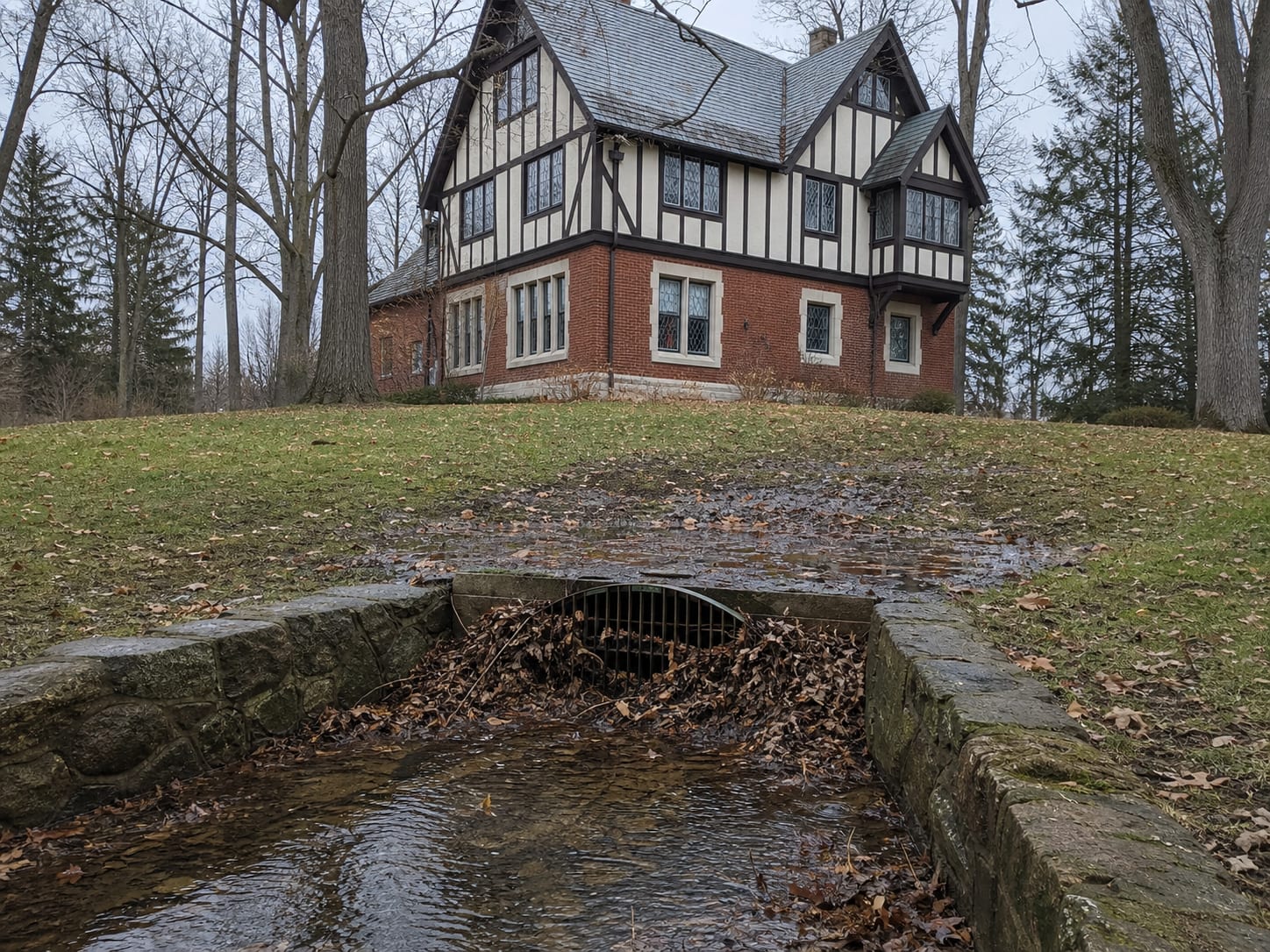
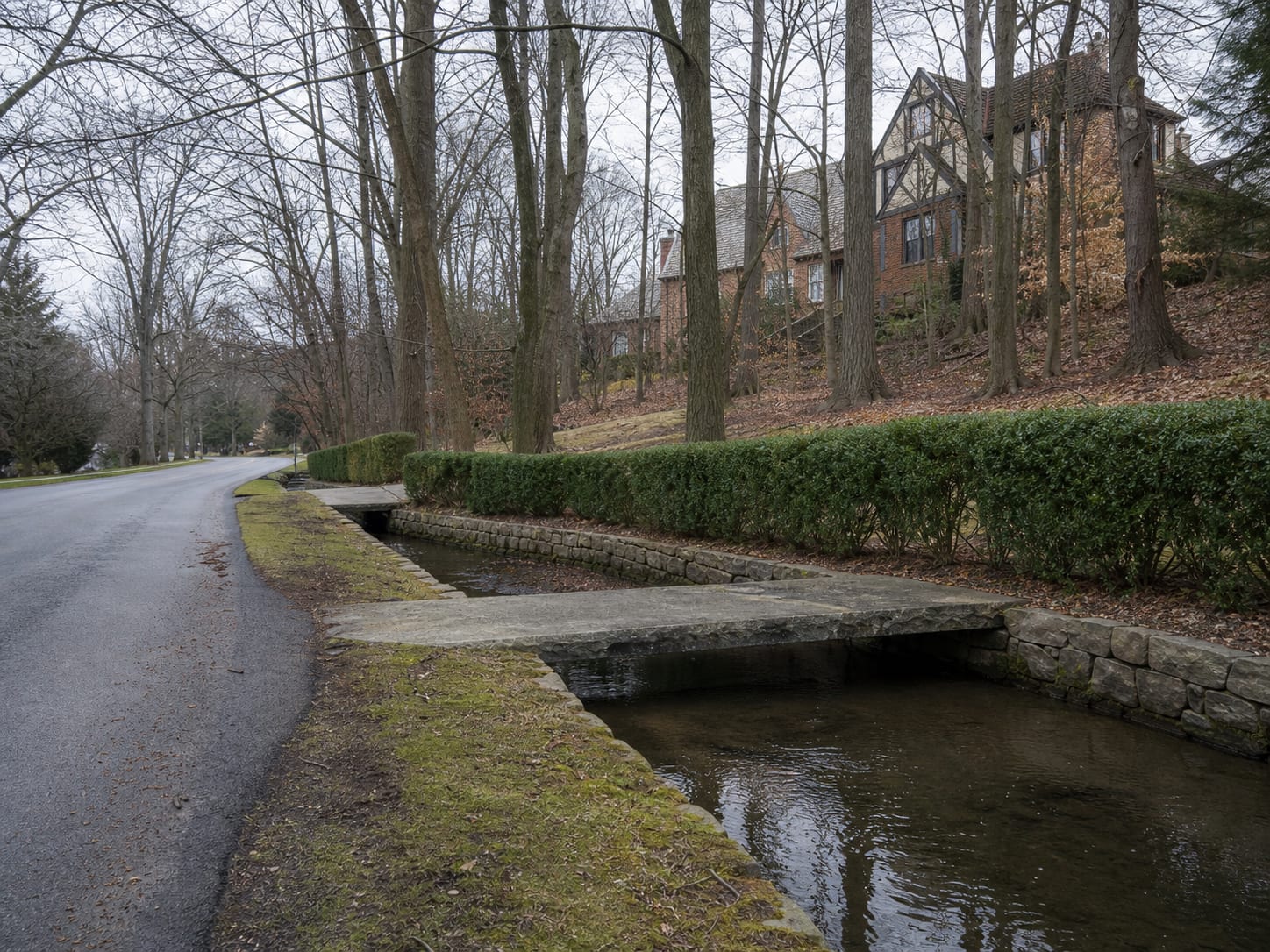
This is a place with an engineered drainage story rather than a vague one. Township flood mitigation material reports that, per USGS StreamStats, about 0.7 square miles of Short Hills naturally drains to the Van Winkle Brook, and that storm sewers redirect almost 20 percent of that drainage area, leaving roughly 0.55 square miles used for modeling the watershed above the Woodland capture. The same material identifies three areas of the Glenwood section as exposed to flooding, with runoff passing by the Hartshorn Arboretum and through pipes and culverts toward Glenwood Drive and Millburn Avenue.
That is a useful frame for a property owner. Water here follows a partly built system, so the question is not whether the town is wet, but whether your lot sits in or drains toward the described path.
What a System Can and Cannot Absorb
The same Township material puts real numbers on the limits. On March 23, 2024 it records 0.8 inch of rain in one hour in Short Hills with no flooding at the 42 inch pipe it was watching. It contrasts that with Hurricane Ida, at 3.8 inches in one hour and 8.3 inches in six hours. That gap is the whole point: drainage that copes comfortably with an ordinary storm can be far outside its range in an exceptional one, and the water that finds a building in the second case is not the same volume that the first case managed. A loss of that kind is storm damage restoration rather than a routine dry out.
Lower Level Seepage
The Township's July 14, 2025 weather debrief reports that some residents experienced basement seepage while widespread damage was not reported, and Township guidance advises people in flood prone locations to clear belongings out of basements and other known flood prone levels. Seepage is a slower, quieter problem than a flood and it is often the one that produces growth, because a lower level that gets damp repeatedly rarely gets dried properly in between. Where that is the picture, basement mold remediation is the relevant scope.
Old Houses, and the Work Done to Them Since
Roughly 90 percent of Short Hills housing units are single unit structures and about 86 percent are owner occupied in recent American Community Survey estimates, but the ages behind that consistency are anything but uniform. The Township's own survey of the Short Hills Park Historic District records houses spanning 1870 to 1928 and names surviving examples from around 1850, 1878, 1880, 1881, 1906 and 1922, alongside others from 1939 to 1941, 1947 to 1948, 1957, 1963 and 1964. A house that has been added to across four eras has four generations of flashing, wall assembly and drainage detailing in it, and water tends to find the seams between them.
Roof, Gutter and Envelope Failures
Undersized or blocked gutters, a valley that has been repaired rather than rebuilt, failed step flashing at a chimney or a dormer, and window perimeters on an exposed elevation all deliver water into a wall or an attic rather than away from the building. On a house with a complicated roof, and there are many here, the entry point and the visible damage can be a floor apart, which is why attic mold remediation so often turns out to be a detailing and ventilation repair with a cleaning attached.
Plumbing, Appliances and Condensation
None of the above is required for a mold problem. A shower pan, a supply line, an ice maker feed, a water heater or a laundry connection will do it alone, and so will a cold pipe or duct sweating inside a closed wall through a humid stretch. These are the cases where the discovery date and the start date are furthest apart, because nothing about them is visible from outside the building, and a late find becomes a 24 hour water damage response rather than a contained repair.
The Mold Remediation Process, From Readings to the Repair That Ends the Moisture
Assessment, Readings and a Written Boundary
The inspection establishes how the water travelled, what it reached and where the wet area genuinely stops, including inside walls and above ceilings. Readings are taken at the suspect materials and at comparable dry ones in the same house so a number has a reference, and whatever could not be opened or reached is recorded as not inspected rather than presumed dry.
Containment First
The affected area is sealed and put under control before any material is cut, because disturbing growth without containment moves it into rooms that were fine. The system serving the area is shut down rather than left running. Where the water may have carried wastewater, sewage cleanup sets the handling requirements instead of a standard water protocol.
Removal and Structural Drying
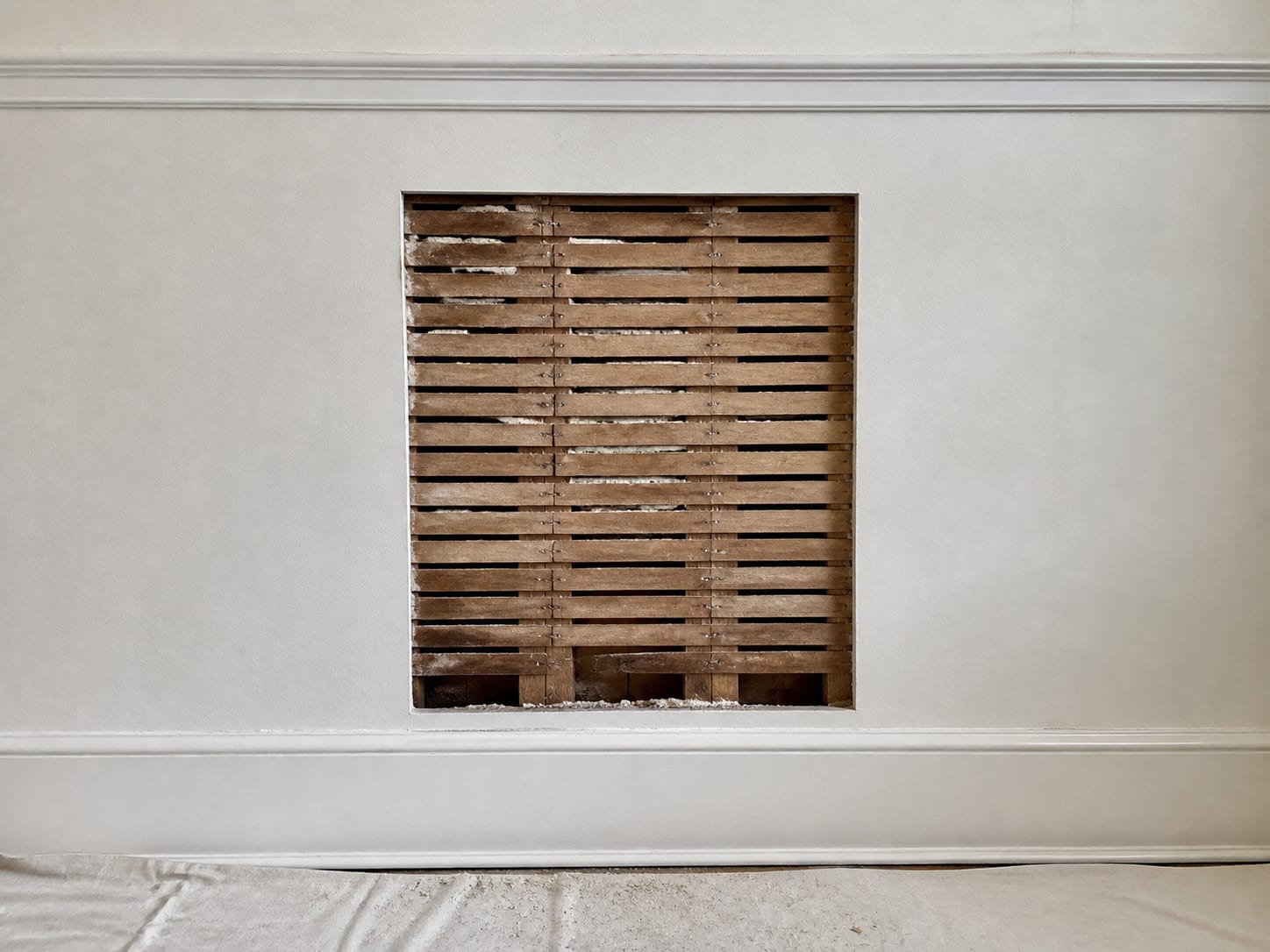
Porous material that stayed wet is cut past the wet line and taken out; sound hard surfaces are cleaned and kept. Equipment then goes in and the readings are logged location by location until they come down and hold. On an older house this stage is usually slower than an owner expects, because plaster, heavy framing and layered assemblies give up water gradually.
The Repair That Actually Ends It
Correcting the water source is the step that determines whether the rest lasts, and in Short Hills that repair is frequently on the outside of the building, which is exactly where the historic review question can arise. Where a documented finished condition is wanted, for a claim, a sale or simply for a file, post remediation verification produces it before anything is closed back up.
Lower Level Drying, Attic Ventilation and Structural Repair for Owners
Mold Inspection
A documented assessment of conditions, the water path and the affected materials. Mold inspection is what a scope should be built on, and on an older house it is also how the surprises get found before the schedule depends on them.
Mold Testing
Sampling does a narrow job well. Mold testing is worth the cost when the source will not show itself, when documentation is needed for a sale or a claim, or when a completed cleanup needs a record.
Air Quality Testing
Indoor air quality testing measures the indoor sample against an outdoor reference taken the same day. It answers a defined question at a moment in time and it is not a certificate that a house has passed.
Black Mold Removal
Color is not a species and does not set a scope. Black mold removal is planned around how much material is affected and where the water came from, which is the only thing that changes the work.
Basement Drying and Lower Level Work
For a lower level that keeps getting damp, basement drying handles the immediate condition while the drainage and grading correction outside deals with the reason.
Water Damage Restoration
Where the water arrived as an event, water damage restoration leads and structural drying sets the timetable for everything that comes after it.
Attic and Ventilation Work
An attic problem is usually a ventilation or a flashing problem wearing a different hat. Attic mold remediation covers the cleaning, and the detailing repair that keeps it from returning is the part worth doing properly.
Real Estate Transactions
A Short Hills sale asks documented questions, especially on an older or historic district property. Real estate inspection services and home buyer and seller protection put those answers on paper before the closing date.
Structural Repair and Build Back
Where framing was affected, structural mold repair precedes any finish work, and once the space is verified dry build back services restore the finishes and systems to match what was there.
Certificates of Appropriateness and Millburn Permits for Short Hills Repairs
Start with a governance fact that matters practically: Short Hills is a community within Millburn Township, not a separate municipal government. The Census identifies it as the Short Hills census designated place, and the Township places itself in the southwest corner of Essex County and names Short Hills sections including Knollwood, Glenwood, Brookhaven, Country Club, Merrywood, Deerfield-Crossroads, Mountaintop, White Oak Ridge and Old Short Hills Estates. Every permit, inspection and approval on your job goes through Millburn Township, whatever the mailing address says.
The historic review is the piece most likely to alter your schedule. Millburn's historic preservation ordinance designates the Short Hills Park Historic District, and for a property within it a Certificate of Appropriateness is required before exterior work begins, even when no construction permit would otherwise be needed. The listed exterior changes include roofing, windows, materials, paving and additions. Interior changes are expressly exempt, as are ordinary maintenance and repair in the circumstances the ordinance specifies and structural repairs that do not alter exterior appearance.
Read carefully, that is a favorable arrangement for remediation work and an inconvenient one for the repair. The mold cleaning inside the house is not what the ordinance is aimed at. The new roof, the replacement window or the regraded walk that actually stops the water may be, if the property is covered. Nothing here says every Short Hills property is in the district or that all mold work needs historic approval; it says the question has to be asked at the beginning, on your specific address, rather than discovered when a crew is standing on a ladder.
For the file itself, the requirements do not change: photographs before anything moves, the source and category of the water, the affected materials by room, the drying readings that show the work met a standard, and any permits, inspections or approvals that applied. Where an insurer is funding the repair, insurance restoration services is where the scope and the documentation have to agree.
Frequently Asked Questions About Historic Approval and Damp Basements in Short Hills
For the interior work, no. Millburn's ordinance expressly exempts interior changes, and it also exempts structural repairs that do not alter the exterior appearance. What can require a Certificate of Appropriateness, on a property in the Short Hills Park Historic District, is exterior work such as roofing, windows, materials, paving or an addition. Since the exterior repair is often the one that stops the water, confirm your property's status before the repair is scheduled rather than after.
Areas We Serve in Short Hills 07078, Millburn Township and Essex County
ExecPro Restoration & Cleaning serves Short Hills, NJ 07078, a community of 14,422 residents at the 2020 Census, within Millburn Township in the southwest corner of Essex County. Short Hills began as a planned commuter village on the 1,552 acres Stewart Hartshorn acquired in the nineteenth century, and that origin is still legible in the street pattern, the lot sizes and the mature landscape around the Cora Hartshorn Arboretum and Bird Sanctuary. We work across its named sections and out into the wider service area in North Jersey, including Livingston to the north in the same county.
Access is straightforward regionally and fiddly locally. Millburn Township describes itself as convenient to Routes 24 and 78, the Garden State Parkway, the New Jersey Turnpike and NJ Transit's Midtown Direct service, while the local network that actually gets a truck to a driveway runs on roads such as Old Short Hills Road, White Oak Ridge Road, Canoe Brook Road, Parsonage Hill Road, Great Hills Road and Morris Turnpike. Before a crew is scheduled we confirm the driveway and equipment access, the affected level of the house, where the utilities shut off, whether the property sits in the historic district, and whether any exterior repair will need review before it can start.
Contact ExecPro Restoration & Cleaning About Seepage or an Unplaced Musty Smell
If you are dealing with lower level seepage, a musty smell you cannot place, visible growth or a leak nobody has traced in Short Hills, NJ, ExecPro Restoration & Cleaning is ready to help. Call (888) 300-3772 or set up an assessment through the contact page, and we will map the water source and the approvals in the same visit. Emergency services are available 24/7.
About Short Hills, NJ
Short Hills is a census-designated place within Millburn Township, in the southwest corner of Essex County, with 14,422 residents counted in the 2020 census. It is a community name rather than a separate municipal government, so the governing municipality is Millburn Township.
The housing is overwhelmingly single-unit and owner-occupied: Census Reporter's presentation of 2024 American Community Survey five-year estimates reports 90% single-unit structures and 86% owner-occupied units. The Short Hills Park Historic District contains houses spanning 1870 to 1928.
Drainage here is documented and specific rather than general. A 2025 Millburn flood mitigation presentation reports that roughly 0.7 square miles of Short Hills naturally drains to the Van Winkle Brook, with storm sewers redirecting almost 20% of that area, and identifies the Glenwood section as having three areas exposed to flooding.
Neighborhoods We Serve in Short Hills
Around Short Hills
Do not see your neighborhood? We serve all of Short Hills and the surrounding area. Reach out and we will confirm coverage.