Water Damage Restoration in Bridgewater, NJ: What Can Be Saved and Who Pays
Cal HewittPublished Updated
- water damage restoration
- flood damage cleanup
- claim documentation
- bridgewater nj
- new jersey
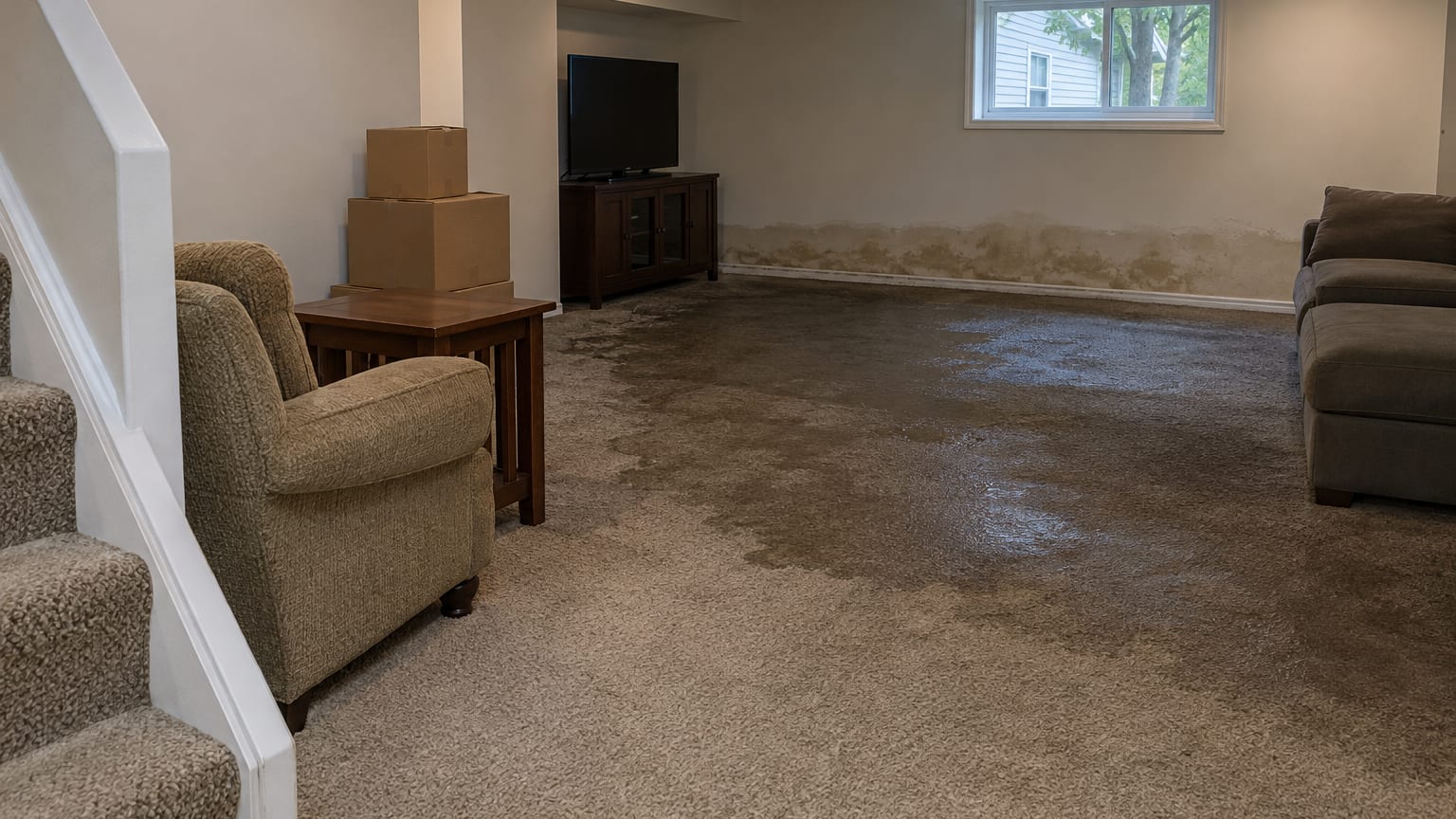
Water damage restoration in Bridgewater, NJ usually begins the same way. You are standing over soaked carpet or a wet stretch of drywall, and every item in the room has turned into a decision. Throw it out and you may lose something an adjuster wanted to see. Keep it and you may be keeping a mold problem. At the same time, you are trying to work out whether your homeowners policy will pay or whether the insurer will call this a flood and decline it. Those questions can feel like they all need answers tonight. Most of them come down to one sorting rule for the first hour and one paperwork rule for tomorrow, and both are laid out below in the order you will need them.
Key Takeaways
Water category decides what stays
Clean supply-line water leaves more materials worth drying, while sewage or river water sends drywall, insulation and carpet padding out of the house.
Photograph before you discard
New Jersey homeowners policies exclude flood, so record the damage and call your insurer before anything major goes to the curb.
Check your parcel against two maps
Bridgewater's floodplain ordinance says the state's flood-hazard area can be broader than FEMA's, and both sets of maps are on file at 100 Commons Way.
Which Wet Materials Can Be Saved, and Which Cannot
Restoration crews sort water into three categories, and the category tells you more about what can stay than how soaked the room looks. The EPA's flood-related cleaning report and its material-by-material table are the guidance behind the rules below. Work out the category first, because the same flooded room sorts differently under each one.
- Category 1: Sanitary water with no significant risk from contact, ingestion or inhalation. Some supply-line leaks fall here.
- Category 2: Significantly contaminated water that may cause illness. A washing-machine or dishwasher overflow, a toilet backup without feces and aquarium water are examples.
- Category 3: Heavily contaminated water that may carry pathogens or toxins. Sewage and river or lake flooding are examples, and so is some storm-driven water.
Drywall shows the difference best. Gypsum board may be restorable after Category 1 or Category 2 exposure in some circumstances, but it has to come out after Category 3. Flood-contaminated insulation is treated the same way: it is removed, not dried in place. Concrete is the other end of the scale, because it is generally recoverable even after Category 3 flooding once it is cleaned and dried.
Contents follow the same logic. Hard, nonporous surfaces such as tile, glass and sealed metal can usually be cleaned and disinfected. Porous items, including carpet padding, mattresses, upholstered furniture, paper products and some toys, may need to be thrown away after contaminated water. If you are unsure which pile something belongs in, photograph it first and leave it where it is until you have talked to your insurer or a restoration technician.
Hover or tap a row to highlight it.
| Material | What the guidance says |
|---|---|
| Drywall | May be restorable after Category 1 or Category 2 exposure in some circumstances, but has to come out after Category 3 |
| Insulation | Flood-contaminated insulation is removed, not dried in place |
| Concrete | Generally recoverable even after Category 3 flooding once it is cleaned and dried |
| Tile, glass and sealed metal | Can usually be cleaned and disinfected |
| Carpet padding, mattresses, upholstered furniture and paper products | May need to be thrown away after contaminated water |
A finished lower level adds one more wrinkle. A flooded finished floor is not automatically a dry-in-place job. If the floor system or its finish cannot be saved, the damaged layers come out and the exposed subfloor or structure is cleaned and dried. What actually happens depends on the material, the contamination, the moisture readings and the condition of the structure underneath.
The First Hour, the First Day and the First Week Each Have a Different Job
You do not need to do everything at once. The work runs in a working order, and each stage protects the next one.
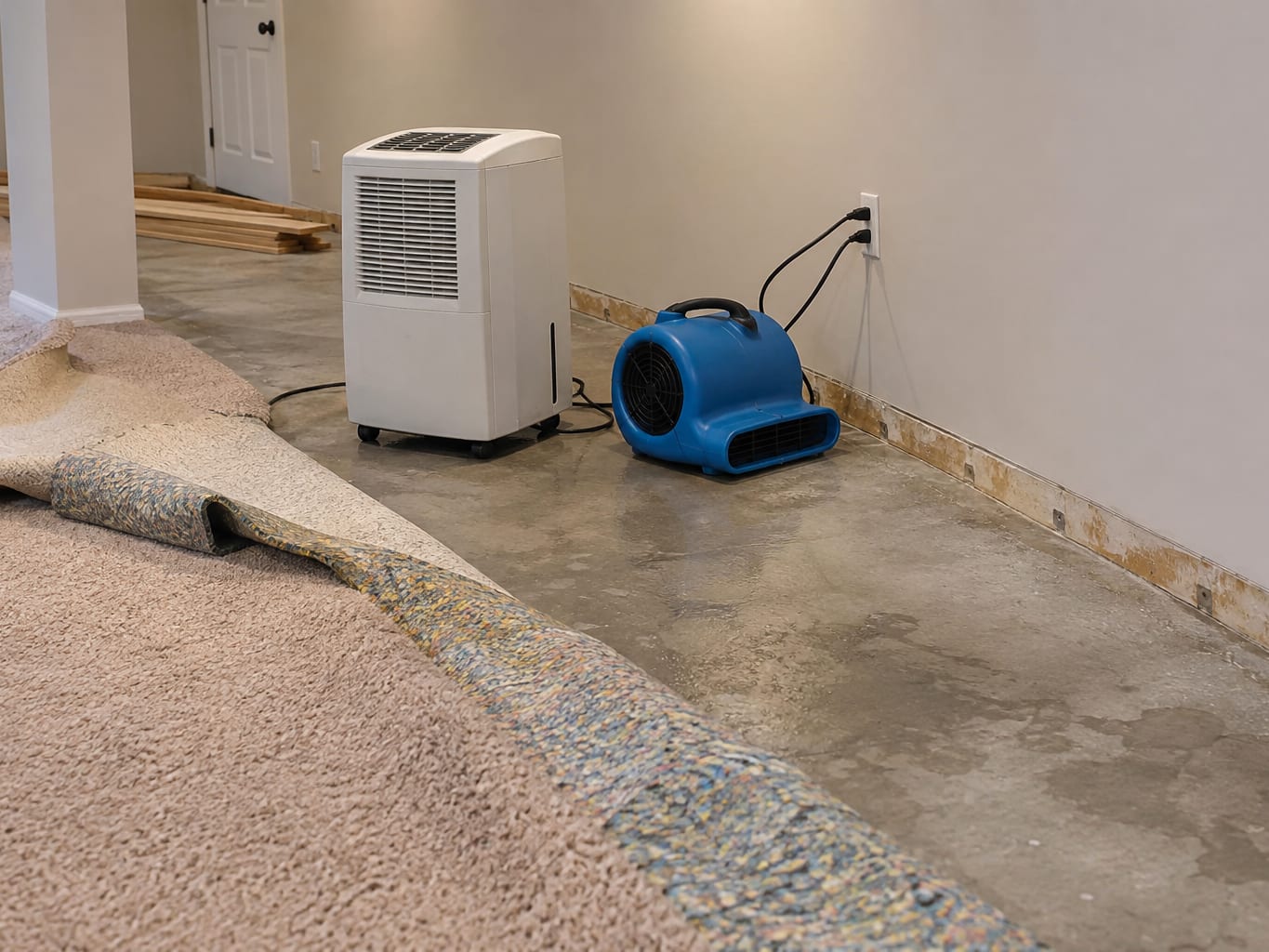
- The first hour: Keep people and pets away from water that may be contaminated or electrically unsafe. Stop the source if you can do it safely. If the power can be shut off from a dry location, shut it off; otherwise call an electrician or the utility and stay out of standing water. Photograph the water and the damage, then call your insurer or agent and a restoration professional.
- The first day: Confirm whether the water is Category 1, 2 or 3. Extract standing water where it is safe to do so, map the moisture in floors, walls, ceilings and contents, and remove what cannot be cleaned or dried. Start dehumidification and controlled air movement, and separate contents that can be saved from those that cannot. Keep a record of equipment, readings, photos, invoices and conversations.
- The first week: Keep monitoring moisture until the materials reach appropriate dry conditions. Finish cleaning, and add antimicrobial or mold work if the readings and conditions call for it. Coordinate any plumbing, electrical, structural, roofing, drainage or sewer repairs, and review permits before rebuilding starts.
The First Hour, the First Day and the First Week
- 1
The first hour
Keep people and pets away from water that may be contaminated or electrically unsafe, and stop the source if you can do it safely. If the power can be shut off from a dry location, shut it off; otherwise call an electrician or the utility. Photograph the water and the damage, then call your insurer or agent and a restoration professional.
- 2
The first day
Confirm whether the water is Category 1, 2 or 3, extract standing water where it is safe, and map the moisture in floors, walls, ceilings and contents. Remove what cannot be cleaned or dried, start dehumidification and controlled air movement, and separate contents that can be saved from those that cannot.
- 3
The first week
Keep monitoring moisture until the materials reach appropriate dry conditions, finish cleaning, and add antimicrobial or mold work if the readings and conditions call for it. Coordinate any plumbing, electrical, structural, roofing, drainage or sewer repairs, and review permits before rebuilding starts.
The CDC's flood safety guidance also covers the safety side of reentry: electrical shock and fire risk where outlets, appliances, furnaces or panels have been under water, gas leaks, hidden floor openings and unstable structure. Children, pets, older adults and anyone with a breathing or immune condition should stay out of the affected area until it has been cleared.
Do not treat river, sewage or floodwater like a plumbing leak. Wear gloves, eye protection and suitable respiratory protection, ventilate the space, and never use bleach in a closed room or mix it with ammonia or another cleaner. Our 24-hour water damage response is set up for exactly this sequence, from extraction through structural drying.
Restoration Comes Before Reconstruction, and the Order Matters
Restoration is the part of the job that gets a building clean and dry. Reconstruction is the part that puts finishes back. A sound water damage restoration job starts with source control and safety, then moves through inspection, water classification, moisture mapping, extraction, material decisions, drying, monitoring, cleaning and documentation. Rebuilding comes only after the structure is clean, dry and safe.
The Order of a Restoration Job
- 1
Source control and safety
Stop the water if it is safe to do so and keep people out of unsafe areas.
- 2
Inspection and water classification
Decide whether the water is Category 1, 2 or 3.
- 3
Moisture mapping
Measure where the water actually went, including behind baseboards, inside wall cavities and under flooring.
- 4
Extraction
Pull out the standing water.
- 5
Material decisions
Decide what can be dried and kept and what has to come out.
- 6
Drying and monitoring
Dehumidification and directed air movement bring framing, subfloor and remaining materials down to appropriate readings.
- 7
Cleaning and documentation
Photo documentation, drying logs and moisture reports record each step.
- 8
Reconstruction
Rebuilding comes only after the structure is clean, dry and safe.
Moisture mapping means measuring where water actually went, including behind baseboards, inside wall cavities and under flooring, instead of judging by the surface. Thermal imaging and moisture meters help with that. Extraction pulls out the standing water, and structural drying uses dehumidification and directed air movement to bring framing, subfloor and remaining materials down to appropriate readings. Photo documentation, drying logs and moisture reports record each step, and those records are the same ones an adjuster will ask for.
Some jobs also need other trades. A plumber may need to fix the line that failed, an electrician may need to check flooded outlets and panels, and a condominium association, landlord or property manager may need to be involved if walls or plumbing are shared. If you are not sure whether a leak is still active behind a wall, leak detection can find it before you close anything up.
Keep the two phases separate on paper as well. Drying, cleaning and material removal may not need the same permits as rebuilding does. Drywall alone may be treated differently from work that involves electrical, plumbing, structural or regulated floodplain changes, and the exact scope decides which applies. New Jersey's building code office guidance sends ordinary construction permits to the municipal construction office, so confirm the scope with Bridgewater's construction official before rebuilding.
The Cost Depends on What the Water Touched
No flat basement price tells you much, because two wet basements in the same neighborhood can need very different work. What sets the number is a list of conditions, and it helps to know them before an estimator arrives.
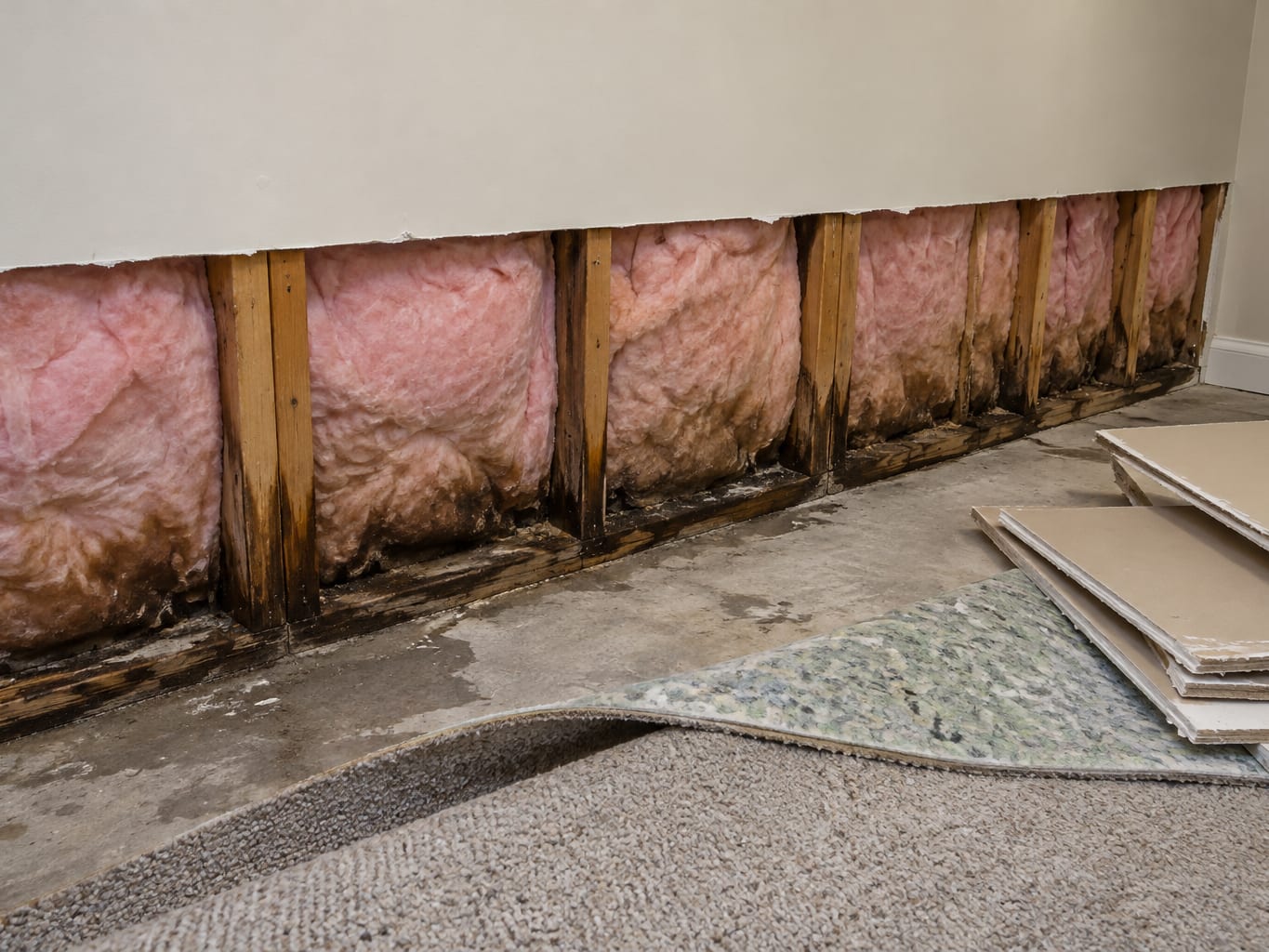
- Water category and contamination: Category 3 water calls for more removal and more careful handling than a clean supply-line leak.
- Area and depth: The total square footage and number of rooms affected, plus how deep the water stood and for how long.
- Whether the source is still active: A leak that is still running has to be stopped before any drying can hold.
- Where the water went: Into walls, ceilings, subfloors, insulation, cabinetry, HVAC systems or electrical components.
- Which materials can be saved: Flooring, drywall, trim, cabinets and contents that can be cleaned and dried cost less than those that must be removed and replaced.
- Finished or unfinished space: A finished basement carries more materials to sort, remove and rebuild.
- Access: How easily equipment and extraction hoses can reach the affected areas.
- Contents handling: Packing, storage or disposal of belongings.
- Repairs and rebuild: Plumbing, electrical, structural, roofing or drainage repairs, and the reconstruction after drying.
- Mold and verification: Whether growth is present and whether clearance testing is needed afterward.
- Occupancy and permits: Whether the property is a house, an apartment building or a commercial space, and whether permit, code, engineering or floodplain requirements apply.
Hover or tap a row to highlight it.
| Factor | Why it matters |
|---|---|
| Water category and contamination | Category 3 water calls for more removal and more careful handling than a clean supply-line leak |
| Whether the source is still active | A leak that is still running has to be stopped before any drying can hold |
| Which materials can be saved | Flooring, drywall, trim, cabinets and contents that can be cleaned and dried cost less than those that must be removed and replaced |
| Finished or unfinished space | A finished basement carries more materials to sort, remove and rebuild |
| Access | How easily equipment and extraction hoses can reach the affected areas |
| Mold and verification | Whether growth is present and whether clearance testing is needed afterward |
Ask each company for a written, itemized scope based on moisture readings and material decisions, not a lump sum given from the doorway. Ask what is included in the drying stage, how readings will be reported, which materials are being removed and why, and what is left for reconstruction. Ask for a timeline too. The right answer depends on water category, drying results, permits and rebuild scope, so a company that quotes a fixed number of days before seeing the building is guessing.
What to Ask Each Company For in Writing
An itemized scope
Based on moisture readings and material decisions, not a lump sum given from the doorway.
What the drying stage includes
And how the readings will be reported to you.
Which materials are being removed and why
So you can compare the reasoning as well as the price.
What is left for reconstruction
The rebuild after drying is a separate phase from restoration.
A timeline
The right answer depends on water category, drying results, permits and rebuild scope, so a fixed number of days quoted before seeing the building is a guess.
Bridgewater Has Two Flood Maps, and Your Parcel Can Sit on Either
Before you decide whether this is an ordinary water loss or a flood, check the property against both sets of maps. The township's floodplain ordinance says flood-hazard determinations have to weigh the effective FEMA maps, the Somerset County Flood Insurance Study, preliminary FEMA mapping and NJDEP delineations, along with state rules. It also says New Jersey's regulated flood-hazard area may be broader and more restrictive than FEMA's Special Flood Hazard Area. In plain terms, a parcel can look clear on the federal map and still fall inside the state's.
The maps and studies are on file with the Director of Municipal Services at 100 Commons Way, Bridgewater, NJ 08807. If your wet space is a finished lower level, that office is worth a call or a visit, ideally before an adjuster classifies the loss. Bring the street address, and ask which flood-hazard designations apply to the parcel.
This is a parcel-by-parcel question. Flooding can also happen outside mapped high-risk areas, through overwhelmed drainage, surface runoff, sewer backup, a failed sump pump or localized water entering a basement. New Jersey emergency-management guidance lists intense short-duration rain, prolonged rain, snowmelt, thunderstorms, tropical storms and ice or debris jams as flood triggers. A property that appears on no map can have a wet basement all the same, and a mapped property may never see water. The maps tell you which rules and which insurance conversation apply, not whether your house will flood.
Housing in the township is mostly detached homes, about 70.6 percent of units in the 2022 housing plan figures, and detached homes commonly have basements, finished lower levels and sump systems. Townhomes, apartments and commercial buildings add shared walls, stacked plumbing and several affected units, which is why an association or property manager often has to be part of the plan. Our Bridgewater mold remediation page covers what we do when moisture has already left growth behind.
Homeowners Policies Exclude Flood, and Flood Policies Wait 30 Days
The map question matters because of how New Jersey insurance divides the same event. The state's homeowner insurance guidance says homeowners policies exclude property damage caused by flood. State law defines flood to include the overflow of inland or tidal waters and the unusual or rapid accumulation or runoff of surface water. A burst pipe and a brook overflowing land on opposite sides of that line, and the cause of the loss decides which policy answers.
Flood insurance is a separate policy and may provide separate building and contents coverage. The state's flood insurance requirements page and NJOEM's flood guidance say a flood policy normally has a 30-day waiting period after purchase. If you carry one, read the effective date. If you are thinking about buying one, ask your agent what the wait means for you.
Hover or tap a row to highlight it.
| Case | What applies |
|---|---|
| Homeowners policy | Excludes property damage caused by flood; state law defines flood to include the overflow of inland or tidal waters and the unusual or rapid accumulation or runoff of surface water |
| Flood insurance | A separate policy that may provide separate building and contents coverage, and normally has a 30-day waiting period after purchase |
| A burst pipe versus a brook overflowing | They land on opposite sides of that line, and the cause of the loss decides which policy answers |
For an active loss, the state's insurance department advises these steps:
- Call the insurer promptly: Write down the claim number and the adjuster's name and contact information.
- Photograph before disposal: Document damaged property first, and keep it when possible until the insurer says otherwise.
- Make temporary repairs: Stop further loss, such as by shutting off the water or covering an opening, and save every receipt.
You also do not have to use the contractor your insurer recommends. Choosing your own restoration company is your decision, and a company that writes a clear scope and keeps drying logs makes the claim easier for everyone. Ask your adjuster what documents they want at each stage instead of guessing.
Mold deserves a place in the first week's plan, because guidance points to drying within 24 to 48 hours to help prevent it. That window is a response target, not a promise that mold will or will not appear, and it does not mean every project finishes in two days. Materials that stay wet longer than that, or that already show growth, need a different approach. The EPA's flood cleanup and indoor air quality resources cover the health side. A musty odor that lingers, dark growth or recurring condensation usually means the wet material is behind the surface, and that calls for an assessment, not another wipe-down.
Frequently Asked Questions About Water Damage Restoration Bridgewater NJ
How much does it cost to clean up a flooded basement in Bridgewater?
The cost depends on the water category, the affected area, how long the water stood, the condition of flooring and drywall, contents, access, drying, disposal, mold, repairs, permits and rebuild. Ask for a written scope based on moisture readings and material decisions rather than a flat basement price.
How long does it take to dry out after water damage?
Response should begin right away, and EPA and CDC guidance uses 24 to 48 hours as the target for cleaning and drying. Active drying can take less or more time depending on water volume, contamination, materials and conditions, and rebuilding takes longer. Ask your restoration company for a timeline based on readings, not a fixed number of days.
Does my homeowners policy cover water damage?
It depends on the cause of the loss and the wording of your policy. New Jersey homeowners policies exclude flood, and flood insurance is a separate policy. Call your insurer promptly, photograph the damage, and ask what documentation they need.
Which wet items should I throw away?
Photograph everything first. After Category 3 water, drywall, insulation and porous items such as carpet padding, mattresses and upholstered furniture generally go. Hard, nonporous surfaces can usually be cleaned and disinfected.
Test Your Water Damage Knowledge
1. What tells you the most about which wet materials can stay?
2. What has to happen to drywall after Category 3 water?
3. Where are Bridgewater's flood-hazard maps and studies on file?
4. What waiting period does a new flood insurance policy normally have?
5. Do New Jersey homeowners policies cover property damage caused by flood?
Pick an answer to begin.
The Bottom Line
Sorting wet materials comes down to the water's category, how long the materials stayed wet and what they are made of. Photograph first, call your insurer, get the water out and drying started within a day or two, and keep a record of every reading, invoice and conversation. Then check your parcel against both flood maps so you know which rules and which policy apply.
Handled in that order, a soaked room becomes a defined project with a clear scope, and you keep the paperwork that supports your claim. That record also helps later if you sell or insure the property.
If water has reached your home, we can help from the first call. ExecPro Restoration & Cleaning responds to Bridgewater, NJ with 24-hour water damage response, structural drying, moisture documentation for your insurer, mold remediation and rebuild coordination. Call (888) 300-3772 or contact us with a few photos and what you know about the water, and we will tell you what to do next.
Water Damage Restoration Terms
Tap a term to see what it means.
Category 1. Sanitary water with no significant risk from contact, ingestion or inhalation. Some supply-line leaks fall here.
Serving Bridgewater
ExecPro Restoration & Cleaning provides mold remediation services in Bridgewater, NJ, from inspection and testing through removal, drying, and post-remediation verification. Call (888) 300-3772 for 24/7 emergency response.
Related Articles
Storm Damage Restoration in Bridgewater, NJ: Roof, Trees and the Claim Clock
After roof, tree or window damage, the house needs protecting before the next rain. Who to call first, what protects your claim and what the township approves.
Flood Damage Cleanup in Bridgewater, NJ: When the Brook or River Comes Inside
When water comes in from outside, it is treated as contaminated. What to throw out, what to keep clear of, and what the township wants before you rebuild.
Flood Damage Cleanup in Robbinsville, NJ: What to Discard, Dry and Document After Creek Water
Soaked carpet, swollen drywall and wet insulation from creek water usually come out. See what flood damage cleanup in Robbinsville, NJ discards and dries.