Post-Remediation Verification in NJ: What the Final Check Covers
Cal HewittPublished
- post remediation verification
- sampling
- documentation
- new jersey
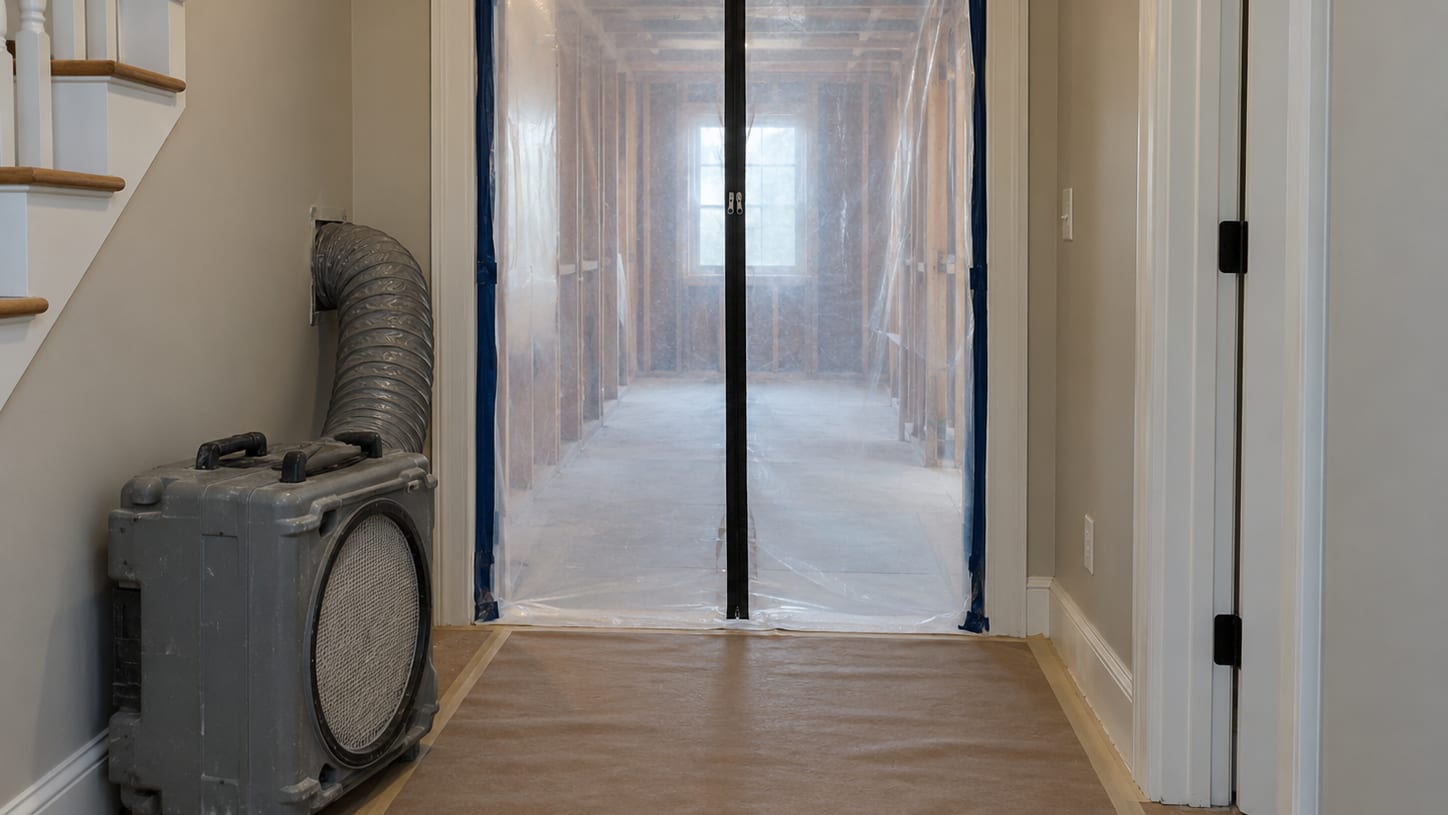
The crew is packing up, the plastic is still on the walls, and someone says the mold is gone. You would like to believe it, and you need more than a handshake before you rebuild, move back in or sign anything. Post-remediation verification is the written, final check that answers one question: did the work meet the completion criteria set for this project? Your next step is to ask, before the containment comes down, who will do that check and what the report will say. Our post-remediation verification service gives the short version of how we handle it for New Jersey properties. Below, we go further: what the check includes, who should perform it, what a good report lists, and what to keep for an insurer, a tenant or a buyer.
Key Takeaways
The water source decides the outcome
EPA says mold can return after cleanup if the moisture problem remains, so a repaired leak and dry materials come before any lab number.
A pass is defined by the report's criteria
EPA states that there are no federal limits for mold or mold spores, and air sampling is usually unnecessary for judging effectiveness, so ask the assessor to state the project's criteria in writing.
The file is the proof
Keep the scope, photographs, moisture readings, any lab reports and the verification report together, because an insurer, a buyer or a tenant may ask for them.
Post-Remediation Verification Is the Final Check Against Written Criteria
Post-remediation verification, often shortened to PRV, is the last evaluation of a remediated area, system or set of contents. Its purpose is to decide whether the work meets the completion criteria written into the project. The check can include a visual inspection, an odor evaluation, moisture readings, temperature and relative humidity measurements, and targeted sampling when the project calls for it. The S520 text used by the industry lists those same categories, and the 2024 edition of ANSI/IICRC S520 includes PRV as part of professional mold remediation in residential, commercial and institutional buildings.
What you get from it is a documented, professional opinion on a specific day, within the limits of what the assessor could see, measure and sample. That is useful, and it is also a snapshot. A building keeps changing as the weather, the plumbing and the humidity change, which is why the later sections cover what to monitor.
The sequence matters too. PRV belongs after cleaning and drying and before walls are closed, finishes go in or the space returns to use. Once drywall and flooring cover a cavity, nobody can look inside it without taking the work apart again.
Where Verification Fits in a Remediation Project
- 1
Finish the removal
The affected material that cannot be cleaned is out.
- 2
Finish the cleaning
The cleaning is complete.
- 3
Dry the materials and repair the water source
The leak, roof opening, drainage problem or condensation has been repaired, not just dried temporarily.
- 4
Verify against the written criteria
The assessor checks the work before containment comes down.
- 5
Close up and return to use
Walls close, finishes go in and the space returns to use only after the final check.
Four Signs Say Remediation Is Ready for a Final Review
Before the assessor arrives, you can check whether the project is at the right point. Four conditions usually line up: the removal is finished, the cleaning is finished, the materials are dry, and the water source has been repaired. If any one of them is still open, a final review gives you a list of open items, not a result.
Use this short list on the day the contractor says the work is done:
- Written scope and completion statement: Ask for the remediation scope, the description of the affected area, the moisture-source diagnosis, the work log and the photographs.
- Repair, not a temporary dry-out: Confirm that the leak, the roof opening, the drainage problem or the condensation was repaired, since drying alone lets the cause return.
- Containment status: Ask whether the containment is still up and whether the assessor has finished the final inspection.
- Odor, dampness and staining: Visible growth, a lingering musty smell, damp material or unexplained moisture all mean the area stays restricted until you have a written explanation.
A verbal "you're cleared" is a good sign and a poor record. If you hear it, ask for it in a report. People with asthma, other lung conditions or weakened immune systems should follow the project's written occupancy instructions and stay out of restricted work areas, and anyone with symptoms should talk with a physician. Only a physician can diagnose an illness, and symptoms can also come from dust, cleaning products or construction materials.
An Independent Verification Visit Covers Six Things
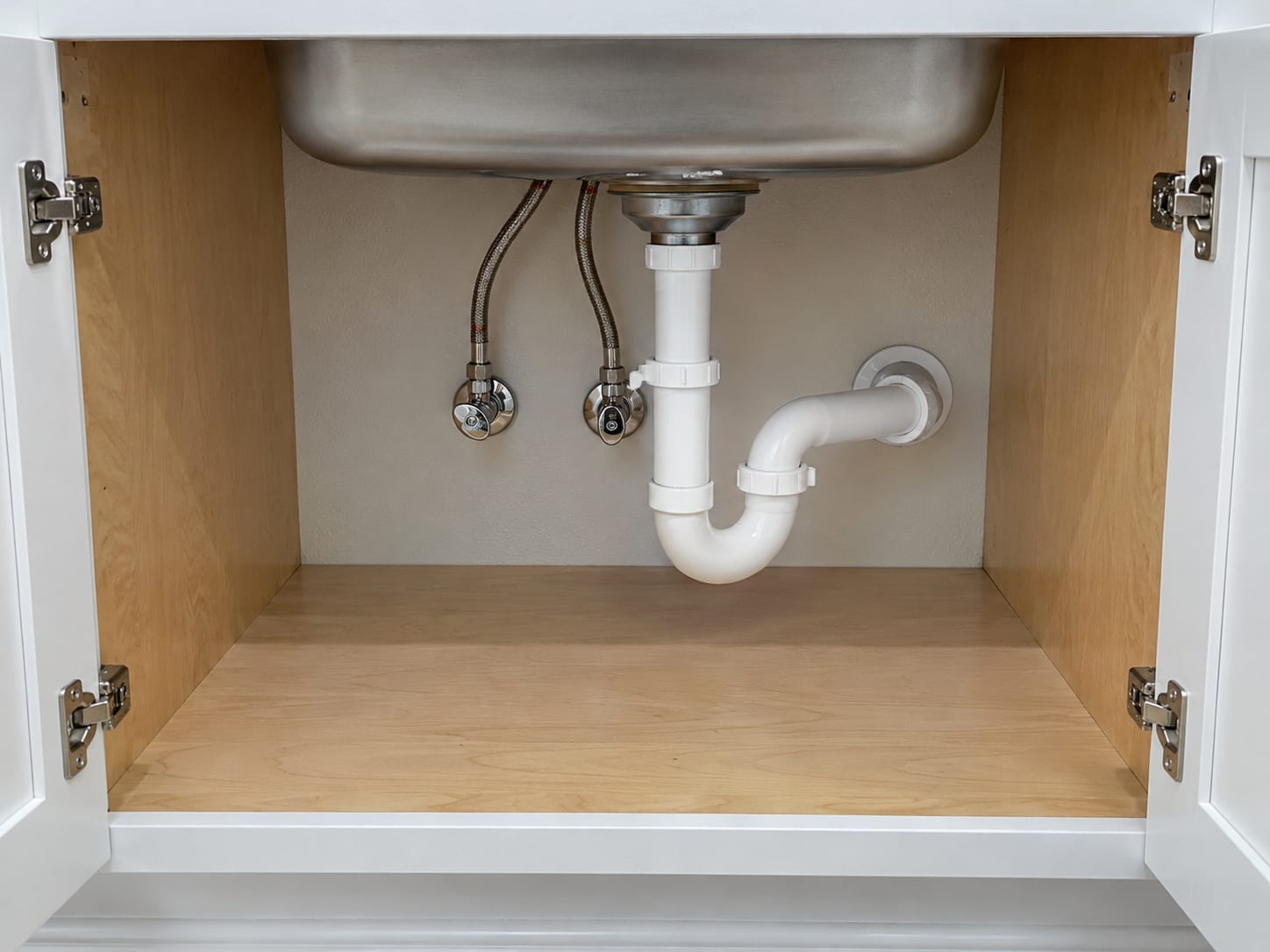
The person who judges the work should have no financial stake in declaring it a success. AIHA says an individual should not hold a stake in both the assessment firm and the remediation firm on the same project, and the S520 text calls for an independent Indoor Environmental Professional when verification is requested or required, with any departure from independence disclosed in writing. An Indoor Environmental Professional, or IEP, is an industrial hygienist, environmental consultant or other trained professional with mold-assessment and sampling experience. If the same company does both jobs, ask for the relationship in writing, then check whether your insurer, your contract or your buyer requires an independent assessor. A thorough visit covers six things:
- Visual inspection: The assessor looks at the remediated rooms, the containment surfaces, remaining materials, adjacent areas and accessible cavities for visible growth, dust, debris, staining, unfinished removal or signs of continuing water entry. EPA describes the goal as an area with no evidence of present or past mold growth.
- Odor evaluation: EPA identifies a persistent moldy odor as a possible sign that growth continues. An odor tells the assessor to keep looking, and tracing where it comes from is part of the job.
- Moisture assessment: Moisture meters, moisture mapping and observations of condensation, leaks or damp materials show whether the water problem was corrected. The S520 text also lists temperature and relative humidity as objective measures.
- Sampling when it answers a question: Surface, bulk or air samples fit when hidden contamination is suspected or when the protocol or insurer calls for them. EPA's sampling guidance says air sampling is usually unnecessary for judging remediation effectiveness and cannot replace a visual inspection.
- Comparison samples: If air samples are taken, the assessor may compare indoor results with outdoor or unaffected-area samples as part of professional interpretation.
- Re-occupancy determination: AIHA describes PRV as a professional evaluation of whether a building can be reoccupied, with limitations, inaccessible areas and unresolved conditions identified.
Ask the assessor to include every connected area, not only the room that was cleaned. If part of the building was inaccessible, the report should name it.
Six Things a Verification Visit Covers
Visual inspection
Remediated rooms, containment surfaces, remaining materials, adjacent areas and accessible cavities.
Odor evaluation
A persistent moldy odor is a possible sign that growth continues, and tracing it is part of the job.
Moisture assessment
Meters, moisture mapping and observations of condensation, leaks or damp materials.
Sampling when it answers a question
Surface, bulk or air samples fit when hidden contamination is suspected or the protocol or insurer calls for them.
Comparison samples
If air samples are taken, indoor results may be compared with outdoor or unaffected-area samples.
Re-occupancy determination
A professional evaluation of whether the building can be reoccupied, with limitations named.
A Repaired Water Source Counts for More Than One Test Result
Everything above rests on moisture. EPA says remediation effectiveness depends first on controlling the moisture source, and it lists visual inspection, the absence of moldy odors and professional judgment as key completion factors. New Jersey's health department says mold grows when moisture is present and recommends identifying and correcting that source before remediation. A clean-looking room with a damp wall behind it is an unfinished job.
That is why a single air-sample result carries limited weight. Because EPA has set no federal limits for mold or mold spores, the pass line comes from the project's written criteria. A lab result becomes meaningful when the assessor reads it beside the visual findings, the moisture readings, the outdoor comparison and the project's written criteria. AIHA treats a final visual inspection as a minimum action and describes bulk or air sampling as a tool for quality control and re-occupancy decisions, with airborne sampling alone discouraged as the sole method. A promise of "guaranteed clearance" based on one spore count deserves a request for the criteria behind it.
A good report states those criteria plainly, for example that the inspected areas were visually clean, dry and suitable for the stated use. That is the sentence you will want in front of an insurer or a buyer.
What should the report contain? Ask for these items:
- Who and where: Property address, client, inspection date, and the assessor's name, company, qualifications and contact information.
- What was done: The original problem, the affected areas, the remediation scope and the documents the assessor reviewed.
- What was inspected: Areas inspected, areas inaccessible or excluded, containment and work-status observations.
- What was found: Visual and odor findings, moisture readings, and temperature and humidity where measured.
- Sampling details, when used: Plan, locations, sample types, dates, laboratory information and any outdoor comparison.
- Conclusions: Limitations, a conclusion tied to the project's criteria, any corrective work required, the assessor's signature and the report date.
If the report flags a failed or open item, fix it before the containment comes down or the walls close.
Hover or tap a row to highlight it.
| Report section | What it should contain |
|---|---|
| Who and where | Property address, client, inspection date, and the assessor's name, company, qualifications and contact information |
| What was done | The original problem, the affected areas, the remediation scope and the documents the assessor reviewed |
| What was inspected | Areas inspected, areas inaccessible or excluded, containment and work-status observations |
| What was found | Visual and odor findings, moisture readings, and temperature and humidity where measured |
| Sampling details, when used | Plan, locations, sample types, dates, laboratory information and any outdoor comparison |
| Conclusions | Limitations, a conclusion tied to the project's criteria, any corrective work required, the assessor's signature and the report date |
Keep One File for the Insurer, the Tenant and the Next Buyer
A complete remediation file makes every later conversation shorter. Build it as the project runs, in paper and digital copies, and include the initial inspection or assessment, photographs and video of the original condition and the work, the moisture-source diagnosis and repair records, the written scope, the contract, change orders, invoices and payments, and the containment, air-filtration and cleaning records. Add disposal records where provided, moisture maps and readings from before, during and after the work, laboratory chain-of-custody forms and reports if samples were taken, the verification report, the re-occupancy instructions and warranty papers, and your correspondence with the insurer, adjuster, landlord, tenant, buyer, seller or property manager. Keep receipts for temporary housing, damaged contents, repairs and reconstruction.
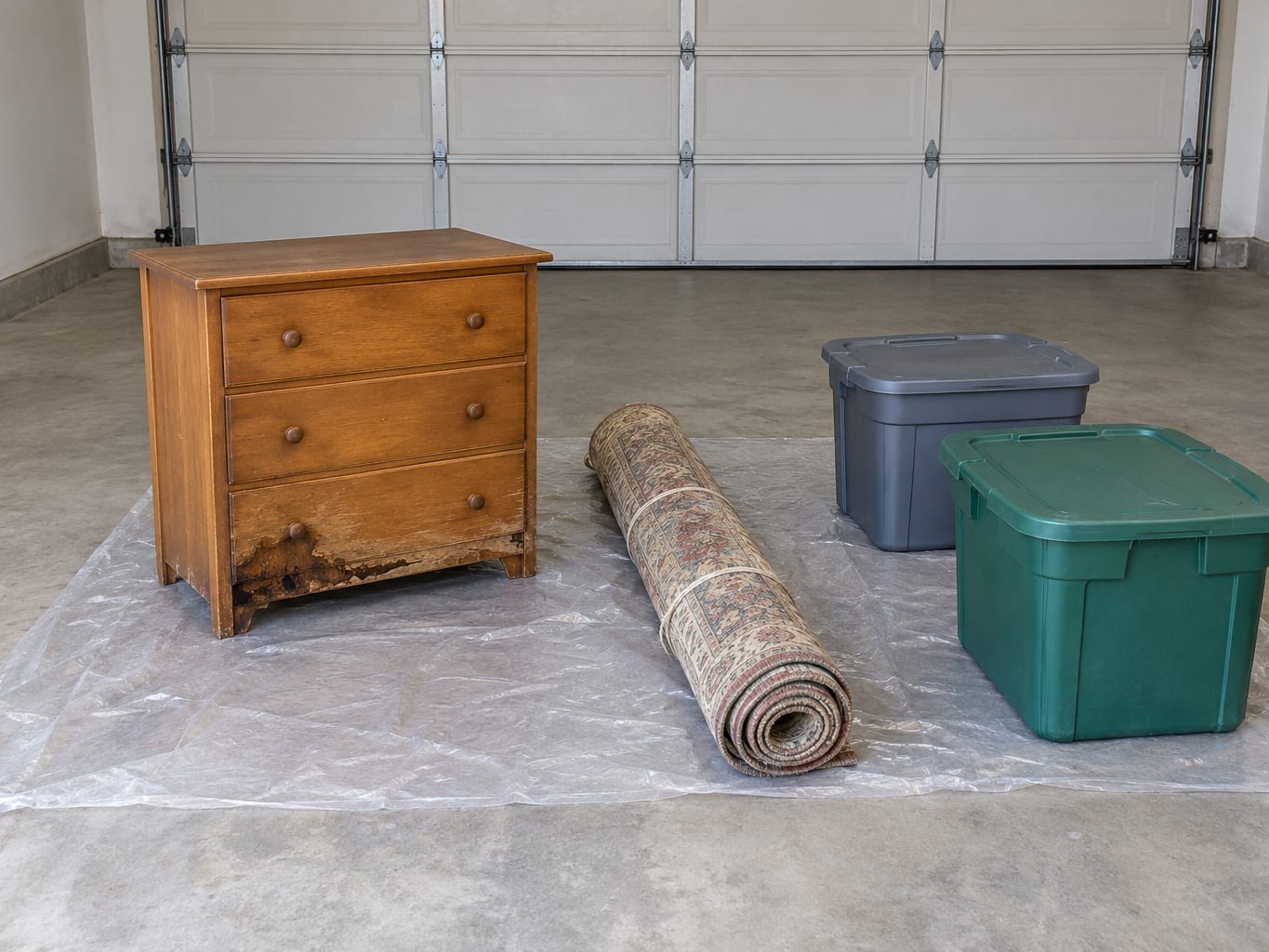
For an insurance claim, give notice promptly. NJDOBI advises policyholders to document damage, keep a written list, photograph it, save receipts and stay in touch with the adjuster, and to ask the insurer what records and forms it requires. Tell the insurer before you discard damaged materials or begin permanent reconstruction. NJDOBI's Bulletin 02-14 describes a $10,000 annual aggregate mold coverage option for ISO-member policies, with optional $25,000 and $50,000 limits, and includes testing costs within that option. Coverage still turns on your policy and the insured peril, so send the insurer the verification report with the rest of the file.
For a sale, hand the records to your real-estate attorney and agent. A remediated property can be sold, and the practical work is complete documentation and accurate disclosure. For a rental, keep the notices, repair dates, occupancy restrictions, verification results and messages that show when the area was made available again.
Hover or tap a row to highlight it.
| Audience | What to give or keep |
|---|---|
| Insurer | Notice promptly, before discarding damaged materials or beginning permanent reconstruction, and send the verification report with the rest of the file |
| Buyer or seller | The records to your real-estate attorney and agent, with complete documentation and accurate disclosure |
| Rental | The notices, repair dates, occupancy restrictions, verification results and messages that show when the area was made available again |
New Jersey Rules Shape What Owners, Landlords and Occupants Do
New Jersey's state health department says the state has no certification program for companies that perform mold or general indoor-air and environmental-health services, and the company lists it publishes are informational. A listing is a directory entry. When you hire a remediator or an assessor, you are checking qualifications, insurance, references and the written scope yourself. Keep remediation and independent verification as separate lines in the contract, with separate documents.
For owners selling a property, the state's seller property-condition disclosure form asks sellers to disclose known conditions. The form says it is a disclosure and is not a warranty, and that buyers may obtain their own professional inspections. Ask your New Jersey real-estate attorney to review your current disclosure obligations, and give that attorney the remediation and verification records.
For renters, the Department of Community Affairs says tenants have a right to safe, sanitary and decent housing and that landlords carry an implied warranty of habitability, as laid out in its habitability bulletin. The health department explains that local offices generally address structural deficiencies such as leaks and plumbing problems rather than mold contamination itself. A tenant's practical path is to notify the landlord in writing, give access for inspection and repairs, contact the local housing or building-code office about structural deficiencies, and get legal advice before withholding rent or using any other remedy. Landlords can help everyone by giving tenants the occupancy instructions, any remaining restrictions and the verification result once the work is finished. When a mold event followed flooding, a state requirement that began on March 20, 2024 also applies: landlords must give prospective renters specified flood-risk and known-flooding information.
Steady Humidity and Quick Repairs Keep Mold From Returning
Verification marks the end of the project and the start of monitoring. Walk the repaired area after rain, after heavy shower use and during the first humid weeks, looking for stains, damp spots and any returning smell. Check the plumbing, roof, drainage and HVAC condensation lines that were part of the original cause. The CDC recommends keeping indoor humidity below 50 percent and fixing leaks promptly, and an inexpensive humidity meter in the basement or bathroom shows you where you stand.
If something does come back, call the contractor and the assessor in that order, bring your file, and ask them to start from the moisture readings. Basements deserve extra attention because of damp foundation walls, so a project that began below grade often benefits from a look at basement mold remediation practices. When rebuilding follows remediation, schedule it after the final check; our build-back services are timed that way.
Verification Terms
Tap a term to see what it means.
Post-remediation verification (PRV). The last evaluation of a remediated area, system or set of contents, to decide whether the work meets the completion criteria written into the project.
Frequently Asked Questions About Post Remediation Verification
What is post-remediation verification?
It is the final evaluation of a remediated area to decide whether the work meets the project's documented completion criteria. It can include visual inspection, odor evaluation, moisture readings, temperature and humidity measurements and targeted sampling, and it gives limited assurance within the limits of the inspection, sampling and analysis.
Can mold return after remediation?
Yes, when moisture returns or was never fixed. EPA says mold can come back if the moisture problem is not solved. Repair leaks, prevent condensation and flooding, dry materials and keep indoor humidity under control.
How do I avoid being scammed by a mold remediation company?
Ask for a written scope that names the affected areas, moisture-source correction, containment, removal or cleaning methods, reconstruction responsibilities, verification criteria and documentation, with itemized pricing. Ask for qualifications, insurance information and references, and keep remediation and independent verification as separate roles.
Is mold remediation a rip-off?
Remediation earns its price when it removes contaminated material, corrects the moisture source, controls spread and documents completion. Proposals built on vague claims, unsupported pass numbers or chemical treatment with no water-damage repair deserve questions.
How long should I stay out of my house after mold remediation?
The length depends on the work scope, containment, cleaning, odors, moisture conditions and the assessor's written recommendations. Follow the written occupancy instructions. EPA says occupants should be able to use the building without health complaints, and the health department advises anyone with severe reactions that improve away from the building to talk with a physician and a consultant about staying.
Is it hard to sell a house after mold remediation?
Disclosure, documentation and the property's current condition shape the sale. Keep the inspection, scope, invoices, photographs, moisture records, lab reports and verification report, and ask a New Jersey real-estate attorney about your disclosure.
Are landlords responsible for mold in New Jersey?
Landlords must keep rentals habitable, and tenants have a right to safe, sanitary and decent housing. Notify the landlord in writing, allow access for repairs, contact the local building-code office about leaks and plumbing, and talk with an attorney before withholding rent.
Test Your Verification Knowledge
1. What does post-remediation verification decide?
2. What does EPA say about federal limits for mold or mold spores?
3. When does verification belong in the project?
4. Who should judge whether the work succeeded?
5. The CDC recommends keeping indoor humidity below what level?
Pick an answer to begin.
Final Thoughts
Post-remediation verification gives you a dated, written answer to a plain question. Ask for it before the containment comes down, ask who will perform it, and ask the assessor to state the criteria in the report. Read the moisture findings first, treat any sampling as one input, and resolve every open item before the walls close.
A repaired water source and a well-kept file pay off long after the crew leaves. They help with the insurer today, with a buyer or tenant later, and with the next humid summer.
If you are close to the end of a remediation project in New Jersey, ExecPro Restoration & Cleaning can walk the finished area with you, explain what the verification should cover, and connect it with mold inspection, remediation, water damage restoration and rebuild work. Call us at (888) 300-3772 or contact us with the address, the scope you were given and where the project stands, and we will tell you which next step fits.
Related Articles
Mold Testing in New Jersey Commercial Buildings: What Gets Sampled and What the Results Mean
Mold testing for a New Jersey commercial building: when sampling helps, how air, surface and bulk tests differ, and how to read the lab report.
Pre-Purchase Mold Inspection in New Jersey: What Buyers Get Before Closing
A pre-purchase mold inspection in NJ covers what a home inspection excludes. See who pays, how long it takes and what to do if mold turns up.
Mold Testing in Trenton, NJ: What a Landlord, Tenant or Buyer Can Do With a Result
Landlord, tenant or buyer: a mold test only helps if the result changes what happens next. See what mold testing in Trenton, NJ can and cannot settle.