Mold in a Commercial Property: A New Jersey Property Manager's First Week
Cal HewittPublished
- property management mold services
- commercial mold
- documentation
- new jersey
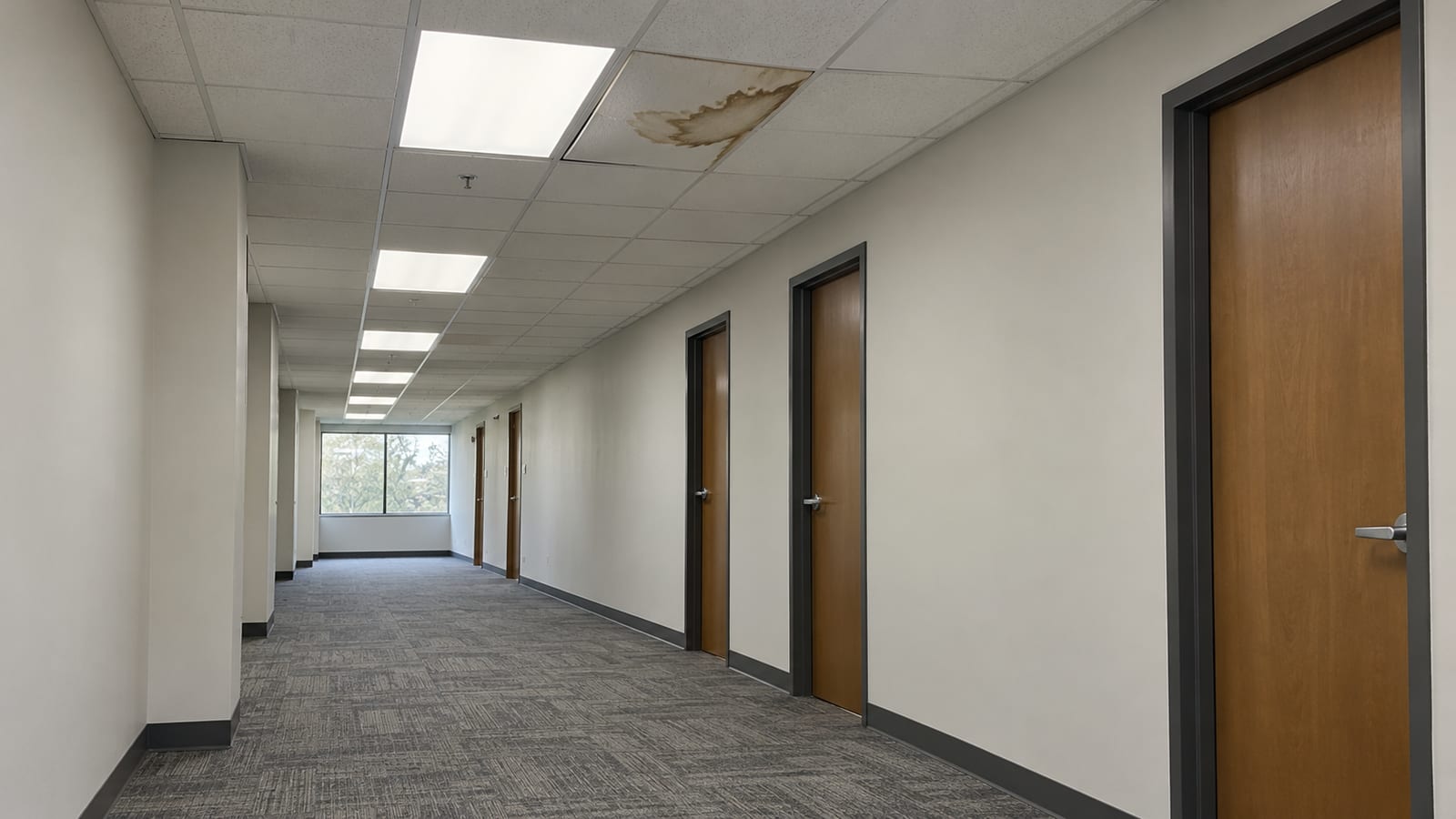
A tenant calls about a dark patch above the bathroom, or your maintenance lead finds soft, stained ceiling tile under a roof drain. You now own a commercial property mold problem in New Jersey, and the next seven days will decide whether it stays a single repair or turns into a vacancy, an insurance dispute, or a pattern across your buildings.
You do not need to know what the growth is, or how much of it there is, to start well. You need a dated record, a photograph, a closed water valve, and a short list of things nobody touches until the area is assessed. After that, the week follows a sequence: find the moisture, protect the people in the building, write a scope, do the work, and close the file with records that hold up later.
Key Takeaways
Start with water
mold needs moisture, so the leak, condensation or humidity problem gets fixed first; cleaning a surface while the source is active only sets up the next complaint.
Photograph before anyone disturbs it
a dated record, photographs and moisture readings protect you with owners, insurers and tenants.
Write the scope in separate lines
source correction, drying, containment, removal, verification and rebuild each get their own line so you can compare bids and check the work.
Keep the file open until closeout is complete
the work order ends with moisture readings, source-correction records and any verification that was specified.
Why does a mold complaint need a same-day response?
Mold needs water to grow, so every hour a wet material stays wet is an hour the problem can get larger. The New Jersey Department of Health says that when mold cannot be traced to a leak, the building should be inspected to find the excess-water source, and that remediation follows once the source is corrected. In a managed building the source is often above or beside the room the tenant describes: a roof flashing, a plumbing chase, a condensate line.
A same-day response also protects the people in the building. The Department of Health notes that children, older adults and people with compromised health can be more sensitive to mold, and recommends a physician for anyone who suspects a health effect. Give occupants a factual update on access and safety, without diagnosing anyone or predicting a legal outcome, and point health questions to a doctor.
Finally, a quick response limits the repair bill. EPA points out that molds gradually destroy the materials they grow on, so a ceiling tile that stays damp becomes drywall, insulation and framing work later, along with vacancy, repeated work orders and a dispute over who knew what and when.
What should you document before anyone touches the area?
Open a dated incident record in the first hour. It does not have to be elaborate; it has to exist before the area changes. Write down the property, building, unit or suite, room, the occupant's contact details, the date and time of the report, any suspected water event, what is visible, any odor, and any health concern the occupant mentioned, in the occupant's own words.
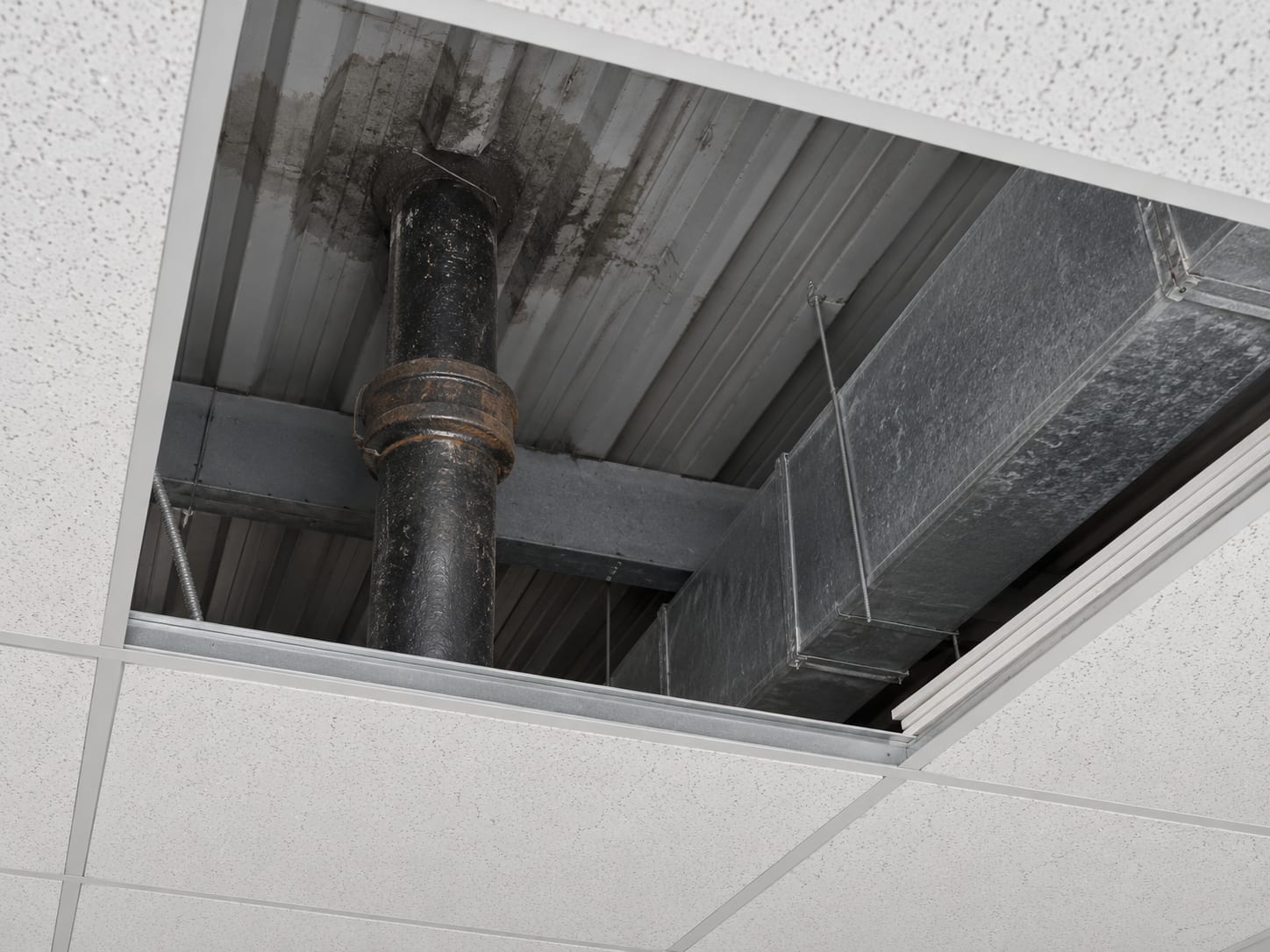
Photograph what you can see, including the stained surface, the nearby water damage, the ceiling above, and the source if it is visible. Take wide shots that show where the room sits, then close shots with a tape measure for scale, without moving anything. EPA notes that mold can hide behind drywall, wallpaper, paneling, carpet, ceiling tiles, pipe chases, roof materials and HVAC components, and that disturbing hidden growth can release spores.
Then set the rules for your own staff. Until the area is assessed:
- Nobody cuts drywall: opening a wall to look turns a small problem into airborne dust and an unplanned demolition.
- Nobody peels wallpaper or brushes the growth: both spread material that was sitting still.
- Nobody runs a suspect HVAC system: EPA says a mold-contaminated HVAC system should not be operated until it has been remediated, because it can distribute mold through the building.
- Nobody wears a respirator without the paperwork: OSHA requires medical clearance, training and fit testing, and a written respiratory-protection program from the employer.
Keep occupants and untrained staff out of affected or wet areas, and shut off the water if you can do it safely.
Until the Area Is Assessed
Nobody cuts drywall
Opening a wall turns a small problem into airborne dust and an unplanned demolition.
Nobody peels wallpaper or brushes the growth
Both spread material that was sitting still.
Nobody runs a suspect HVAC system
EPA says a mold-contaminated HVAC system should not be operated until it has been remediated.
Nobody wears a respirator without the paperwork
OSHA requires medical clearance, training and fit testing, and a written respiratory-protection program from the employer.
What does the first week look like?
The timeline below follows the sequence that EPA's commercial-building guidance and the Department of Health's moisture-first approach support. Your property may compress or stretch it, but the order holds.
The First Week, in Order
- 1
Next hour
Open the incident record, photograph the conditions, stop or isolate the water if it is safe, and keep people away from wet or affected areas.
- 2
Within the day
Arrange an inspection of the visible growth and the moisture source, notify the owner, asset manager, risk manager, insurer or broker, and decide whether rooms or suites need restricted access, temporary relocation or changed work hours.
- 3
Within the week
Get the source corrected, verify the affected materials are dry, and complete the remediation under a written plan sized to the condition.
- 4
Closeout
Collect the completed scope, photographs, moisture readings, source-correction records and any specified verification, and check whether the same moisture path exists in the next unit, suite or building.
- Next hour: open the incident record, photograph the conditions, stop or isolate the water if it is safe to do so, keep people away from wet or affected areas, and decide whether to escalate immediately. Escalate right away when water is still active, sewage is involved, an HVAC system may be affected, the growth looks extensive, occupied areas cannot be isolated, or vulnerable occupants report symptoms.
- Within the day: arrange an inspection of both the visible growth and the moisture source. Check plumbing chases, roof and flashing areas, windows, wall cavities, crawl spaces, condensate pans, supply and return areas, and the space above ceiling tiles, and note which materials are porous, such as drywall, carpet, insulation and ceiling tile. Notify the owner, asset manager, risk manager, insurer or broker according to your reporting procedures, and decide whether rooms or suites need restricted access, temporary relocation or changed work hours.
- Within the week: get the source corrected and verify that the affected materials are dry, then complete the remediation under a written plan sized to the condition. Schedule disruptive work for when occupants are least likely to be in the space, keep daily records of access, photographs, moisture readings, equipment, demolition, disposal, cleaning and repairs, and keep tenants informed about access and restrictions.
- Closeout: collect the completed scope, photographs, moisture readings, source-correction records and any testing or post-remediation verification that was specified, and check whether the same moisture path exists in the next unit, the next suite or another building you manage.
A small, isolated area can sometimes close out faster. OSHA's planning categories run from 10 square feet or less, to more than 10 up to 30, more than 30 up to 100, and more than 100 contiguous square feet. These categories guide planning for protection and containment; they are guidelines, not exposure thresholds, and the water source and materials still decide what the work looks like.
How do moisture investigation, containment and verification work?
The inspection comes first and has two parts: what is growing, and why it is wet. Moisture readings locate wet materials behind finishes, and a visual inspection finds the growth. OSHA says visible mold generally can be assessed visually without routine air sampling, and that sampling should have a clear purpose because testing can be costly and may not change what you do next.
Testing earns its place when a specific decision depends on it: an unclear source or extent, suspected hidden contamination, a baseline or post-remediation record that an owner or insurer asked for, or a transaction or dispute that needs data. If you cannot name the decision the result would change, put the money into the repair and the verification step.
Containment is how the work stays where it starts. EPA describes it as a way to keep mold and debris from spreading beyond the contaminated area. On larger projects that can mean sealed barriers, negative pressure with HEPA-filtered exhaust, airlocks and decontamination procedures. Porous materials that cannot be restored are removed, hard surfaces are cleaned, and the area is HEPA-vacuumed and dried until it is visibly free of contamination and debris.
Verification means confirming that the moisture source was corrected, the affected materials are dry, the work matches the written scope, and any testing you specified is complete. Put the verification requirement into the scope before the work starts, using the owner's, insurer's or project's requirements, so nobody argues about it afterward.
What should your scope, insurance notice and records include?
A usable scope separates its lines. Ask for source correction, drying, containment and work areas, HVAC precautions, demolition, cleaning, disposal, PPE, occupant protection, verification and reconstruction as distinct items, so you can compare bids and tell when a line was skipped.
Insurance deserves a call early. Policies commonly carry prompt-notice requirements, and the actual policy, endorsements, exclusions and deductible control what is covered. The New Jersey Department of Banking and Insurance has published guidelines on mold and fungus coverage for commercial and personal property, including a $10,000 annual aggregate option with optional higher limits of $25,000 and $50,000 when a mold loss results from a covered peril. Tell your insurer or broker promptly, keep photographs and invoices, and do not promise a tenant or owner that coverage will apply. If a closure is possible, ask your broker for the business-interruption coverage summary insurers must provide to commercial property policyholders at renewal or purchase.
Build the file as you go. Keep the original complaint and inspection date; photographs and moisture readings from before, during and after; water-source findings and repair records; access notices and tenant communications; the contractor's qualifications, contract, scope, change orders and invoices; disposal records and any air or surface sampling; and the closeout or verification documents.
Which New Jersey agencies and rules apply to rental and commercial buildings?
Several offices can touch a mold complaint, and they handle different things. New Jersey has no state certification program for companies that perform mold or indoor-air services, and the Department of Health's company lists are informational rather than an endorsement. Local building-code offices generally address structural problems such as leaks and plumbing defects, and they generally do not enforce mold-specific rules. Your municipality has a local health department, and the state lists the local health network of 103 departments serving 564 municipalities. Keep your local health officer's contact in the property emergency plan.
For buildings with three or more dwelling units, the Bureau of Housing Inspection in the Department of Community Affairs administers the Hotel and Multiple Dwelling Law, runs five-year cyclical inspections, and may cite maintenance and fire-safety violations. A commercial office or retail building may instead involve the municipal construction-code office, the local health department, workplace-safety authorities, your lease and your insurer, depending on the condition.
Hover or tap a row to highlight it.
| Office | What it handles |
|---|---|
| Local building-code office | Generally addresses structural problems such as leaks and plumbing defects, and generally does not enforce mold-specific rules |
| Local health department | Your municipality has one; the state lists 103 departments serving 564 municipalities |
| Bureau of Housing Inspection, Department of Community Affairs | For buildings with three or more dwelling units: administers the Hotel and Multiple Dwelling Law, runs five-year cyclical inspections, and may cite maintenance and fire-safety violations |
| Commercial office or retail building | May involve the municipal construction-code office, the local health department, workplace-safety authorities, your lease and your insurer |
| Your insurer or broker | Contact them in every case; policies commonly carry prompt-notice requirements |
How long does a landlord have to deal with mold?
The Bureau's FAQ describes an addendum inspection between cyclical inspections, usually after a complaint, and says owners generally get 60 days to correct cited violations, counted from 10 days after the report is mailed. That is a correction period for cited violations, so it gives you no permission to delay source control on an active leak. Act now, set a written schedule, and ask a New Jersey attorney about any lease, court, municipal or agency deadline specific to your dispute.
Do landlords have to report mold?
An unrepaired leak may belong with the local building-code office, a multiple-dwelling complaint can lead to an addendum inspection, an insurance policy may require prompt notice, and a workplace hazard may involve OSHA. Contact the office that matches the property and the event, and your insurer or broker in every case.
Questions about landlord duty, habitability, tenant fault, rent, relocation or lease enforcement belong with New Jersey counsel. The state's landlord and tenant information points to the Truth in Renting guide as a starting reference.
How do you keep mold from coming back across a portfolio?
Prevention is moisture management, repeated at every building. Start with a written leak-response protocol: emergency contacts, who has authority to enter, where the water shutoffs are, tenant communication templates, photographs and escalation rules. Then track every water incident by property, unit, source, affected materials, drying equipment, repairs and recurrence, so patterns show up before a tenant calls.
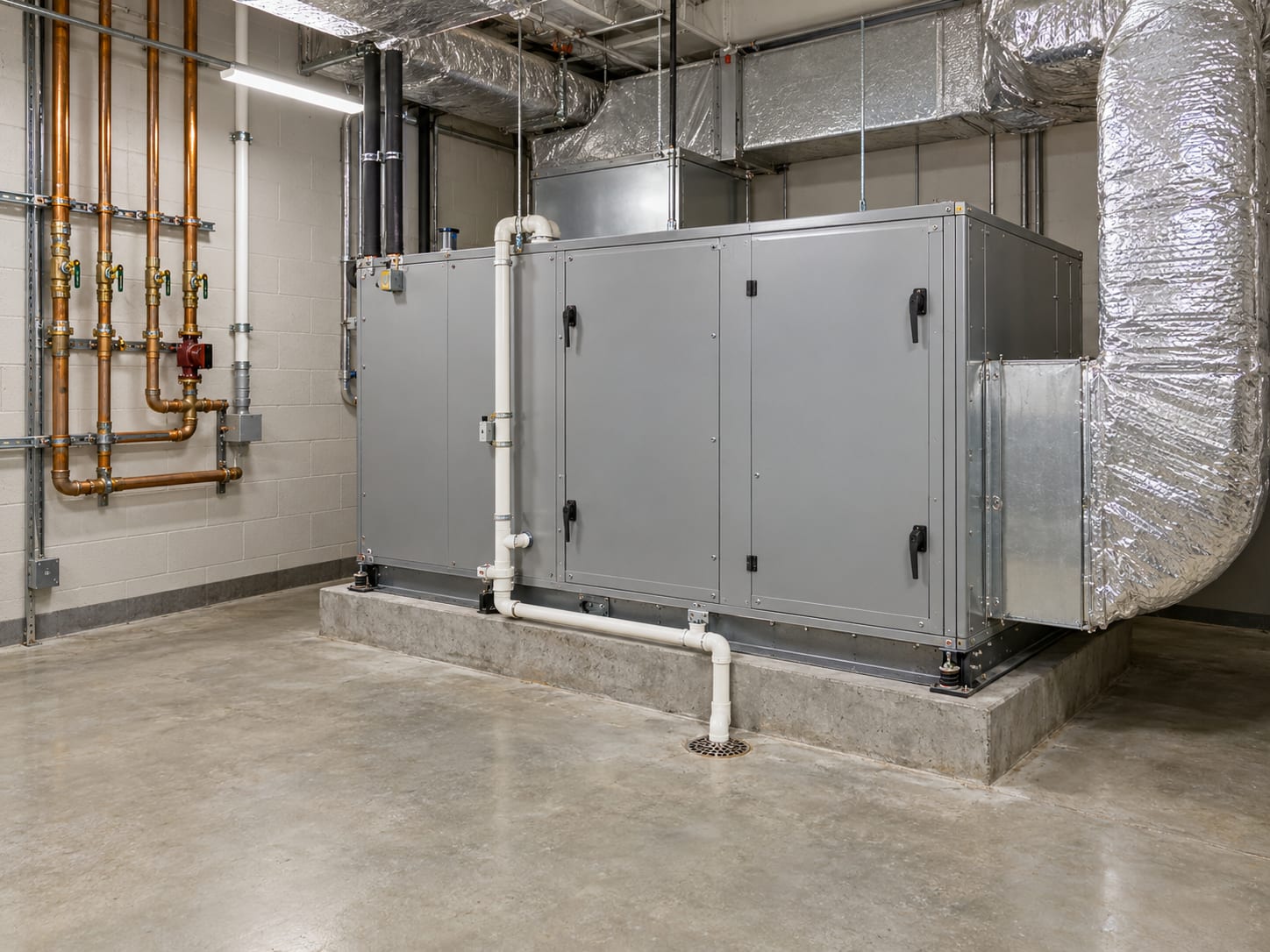
Inspect the places water travels: roof penetrations, flashing, gutters, exterior walls, windows, plumbing chases, mechanical rooms, condensate lines, drain pans and the space above ceiling tiles. Put HVAC filters, condensate drainage, insulation, air handlers, supply areas and return plenums on the preventive-maintenance schedule. EPA recommends regular building and HVAC inspections and maintenance as part of mold prevention.
Use turnover as a checkpoint. Before a new occupant moves in, look for discoloration, musty odors, damaged drywall, damp flooring, failed caulking, condensation and weak bathroom ventilation, and record moisture readings before you close any water-damage ticket.
Review repeat work orders by building and component, because repeated complaints in the same stack, wall, roof area or mechanical zone call for a broader investigation. And hold reconstruction until the moisture problem is corrected, since new drywall over a wet cavity brings the whole job back to the start. EPA treats communication with occupants as part of the remediation process, so tell tenants about access, restrictions and completion.
Portfolio Prevention Checklist
A written leak-response protocol
Emergency contacts, who has authority to enter, water shutoffs, tenant communication templates, photographs and escalation rules.
Incident tracking
Every water incident by property, unit, source, affected materials, drying equipment, repairs and recurrence.
Where water travels
Roof penetrations, flashing, gutters, exterior walls, windows, plumbing chases, mechanical rooms, condensate lines, drain pans and the space above ceiling tiles.
Preventive maintenance
HVAC filters, condensate drainage, insulation, air handlers, supply areas and return plenums.
A turnover checkpoint
Discoloration, musty odors, damaged drywall, damp flooring, failed caulking, condensation and weak bathroom ventilation, checked before a new occupant moves in.
Repeat work orders
Repeated complaints in the same stack, wall, roof area or mechanical zone call for a broader investigation.
Reconstruction last
Hold it until the moisture problem is corrected.
What should you ask a mold contractor before you sign?
Ask for the things you will need to hand to an owner, an insurer or a tenant later. Can the contractor confirm service-area availability, insurance, qualifications, response time, disposal practices, laboratory arrangements if testing is specified, and contract terms before you authorize work? Because New Jersey has no state mold certification, these written confirmations, along with references, are how you compare companies.
Here is how we work with property managers at ExecPro Restoration & Cleaning. We start with a fast intake that captures the property, the unit or suite, the complaint, the water history, the access window and whether it is an emergency. We deliver a written inspection report with photographs, moisture readings, affected locations, the probable moisture source and recommended next steps. Our scope separates investigation, source correction, drying, containment, removal, cleaning, testing if it is justified, verification and rebuild, and we schedule around occupied apartments, offices and retail spaces. We carry the job from water extraction and structural drying through remediation, post-remediation verification, drywall replacement, painting, flooring and final cleaning. Our property management mold services page describes the workflow, and the contract is where each of those items should be confirmed in writing.
Frequently Asked Questions About Commercial Property Mold New Jersey
Does the landlord pay for mold removal?
It depends on the lease, the cause of the moisture, who is responsible for the building component involved, and the insurance policy. Notify your insurer or broker promptly, keep photographs and invoices, and avoid promising a tenant or owner that coverage will apply. If the parties disagree, ask a New Jersey attorney.
Can a landlord blame a tenant for mold?
Mold alone does not tell you who is responsible. Document the moisture path, building conditions, maintenance history, tenant reports, ventilation and lease terms first. If tenant conduct, damage claims or causation are in dispute, get New Jersey legal advice before you assign responsibility.
Is black mold considered uninhabitable?
Color does not decide that. The Department of Health says health risk depends on the person's sensitivity, how much growth there is and its condition, and habitability turns on the actual building conditions, the lease and applicable law. Send health symptoms to a physician and questions of legal status to a New Jersey attorney.
Test Your Commercial Mold Knowledge
1. How can visible mold generally be assessed, according to OSHA?
2. What does EPA say about a mold-contaminated HVAC system?
3. Does the 60-day correction period for cited violations give a manager time to delay source control?
4. Does New Jersey run a state certification program for mold companies?
5. What should a usable scope do?
Pick an answer to begin.
The Bottom Line
A mold complaint in a managed building is manageable when the first hour is handled well: a dated record, photographs, the water stopped, and nobody disturbing the area before it is assessed. From there the week is a short sequence of inspection, a written scope that separates its lines, careful containment and removal, and a closeout file that shows the source was corrected and the materials are dry. The agencies and insurers involved differ by property, so you contact the ones that match your building and your policy.
Doing this once, carefully, gives you a file that helps with owners, insurers and tenants, and an incident log that shows which stack, roof area or mechanical room keeps producing complaints.
If you have a complaint on your desk right now, ExecPro Restoration & Cleaning can help across New Jersey with inspection, moisture-source identification, written scopes, containment, removal, structural drying and rebuild for apartment, office and retail properties. Call us at (888) 300-3772 or use our contact page, and tell us the property, the unit or suite, and what you have seen so far, and we will walk you through the next steps.
Commercial Mold Terms
Tap a term to see what it means.
Incident record. A dated record opened in the first hour, before the area changes, with the property, unit or suite, room, contact details, date and time, suspected water event and what is visible.
Related Articles
How Commercial Mold Remediation Works While a New Jersey Building Stays Open
Commercial mold remediation in New Jersey while tenants and staff stay: containment, after-hours phasing, notice, and the closeout documents to ask for.
Mold Testing in New Jersey Commercial Buildings: What Gets Sampled and What the Results Mean
Mold testing for a New Jersey commercial building: when sampling helps, how air, surface and bulk tests differ, and how to read the lab report.
Pre-Purchase Mold Inspection in New Jersey: What Buyers Get Before Closing
A pre-purchase mold inspection in NJ covers what a home inspection excludes. See who pays, how long it takes and what to do if mold turns up.